Best Multimeters for Homeowners and DIY Electricians
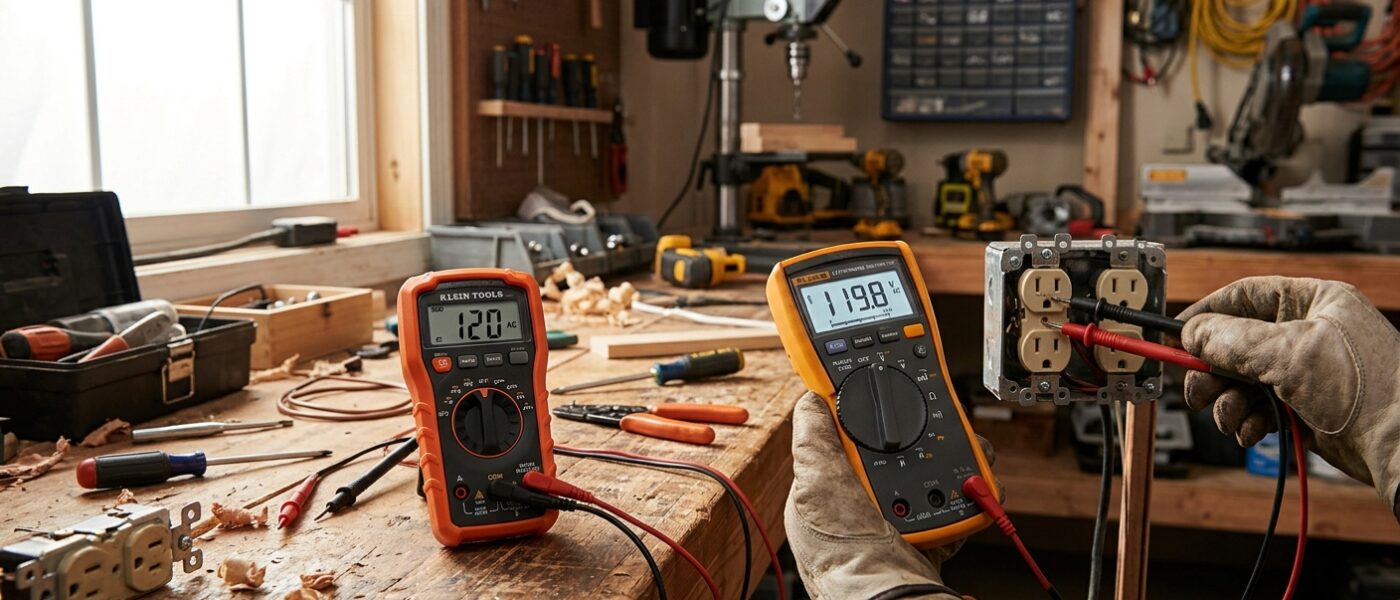
The Fluke 117 is the one multimeter worth buying for any serious electrical work in your home — it will last decades and give accurate, safe readings every use; the Klein MM400 is the best mid-range choice for regular home use.
As an Amazon Associate, we earn from qualifying purchases.
A multimeter is the most fundamental electrical diagnostic tool you can own. It measures voltage, current, and resistance – the three basic electrical quantities that tell you whether a circuit is working, why it is not, and what needs to be fixed. Whether you are testing a dead outlet, diagnosing a wiring problem, checking a battery, or verifying that a circuit is de-energized before working on it, a multimeter is the tool that gives you the answer. Every homeowner and DIYer who ever touches electrical work needs one.
What a Multimeter Measures
Voltage (V)
The electrical potential difference between two points. Measured in volts (V). Two modes: AC (alternating current) for household circuits (110V, 120V, 240V), and DC (direct current) for batteries, solar systems, and low-voltage wiring (12V, 24V). Testing an outlet or switch: measure AC voltage. Testing a battery: measure DC voltage.
Current (A)
The flow of electrical charge. Measured in amperes (A) or milliamperes (mA). Requires inserting the meter into the circuit (series connection). Less commonly used by homeowners than voltage measurement – most DIY electrical diagnostics do not require measuring current directly.
Resistance (Ohms)
Opposition to current flow. Used to test fuses (zero resistance = good, infinite resistance = blown), check wire continuity, and test components. Measured with no power applied to the circuit.
Additional Functions
Quality multimeters add: continuity test (beeps when a circuit is complete), diode test, capacitance, temperature, frequency, and True RMS measurement for accurate readings on non-sinusoidal AC waveforms (important for variable-speed drives and inverters).
Key Features to Look For
Auto-Ranging vs. Manual Ranging
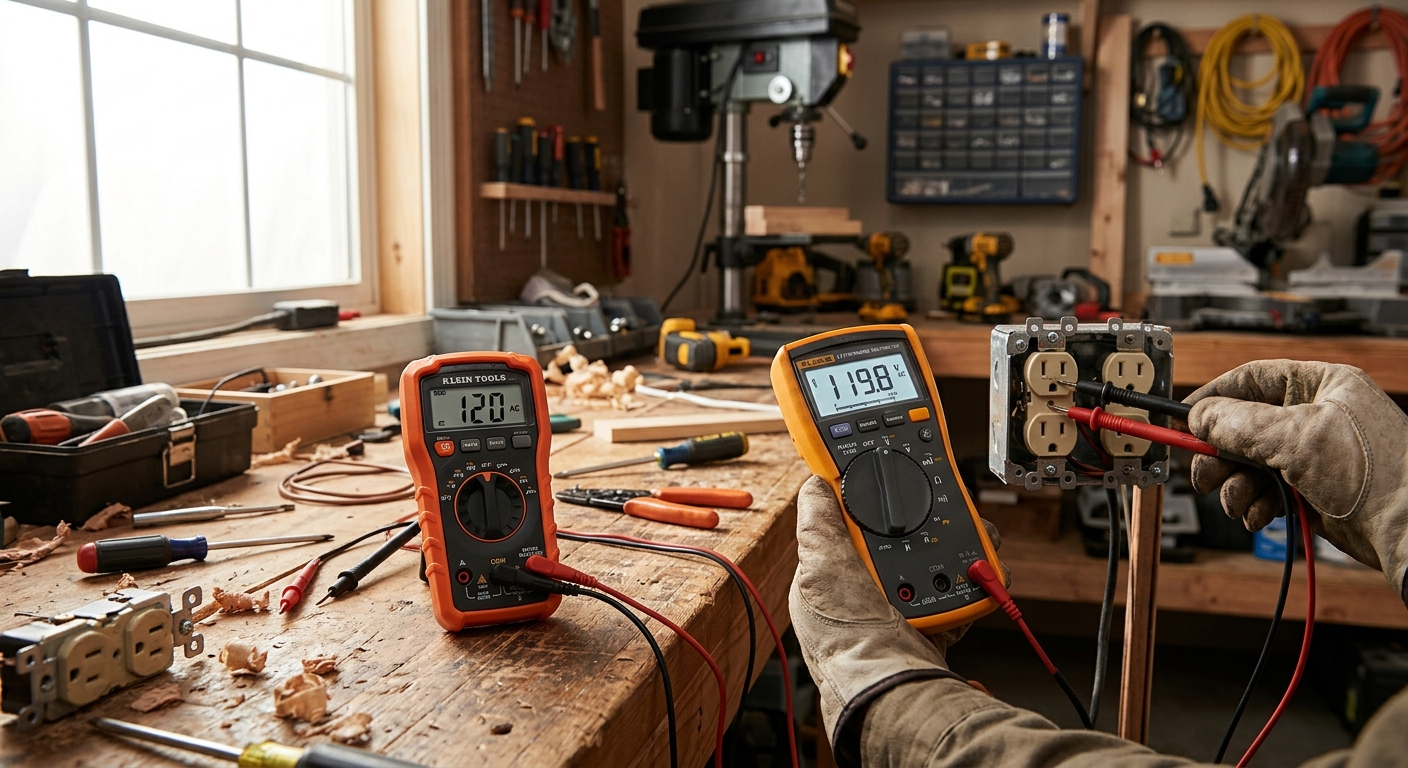
Auto-ranging meters automatically select the correct measurement range – simpler to use and less prone to over-range errors. Manual ranging meters require you to select the range before measuring, which is faster for experienced users but confusing for beginners. Auto-ranging is strongly recommended for homeowners.
True RMS
Average-responding meters (most budget models) read correctly on pure sinusoidal AC signals. True RMS meters read correctly on any waveform – important for testing modern loads with variable-speed drives, dimmers, and switched-mode power supplies. For household outlet testing, average-responding is adequate. For any serious electrical diagnostics, True RMS is worth paying for.
Safety Rating (CAT)
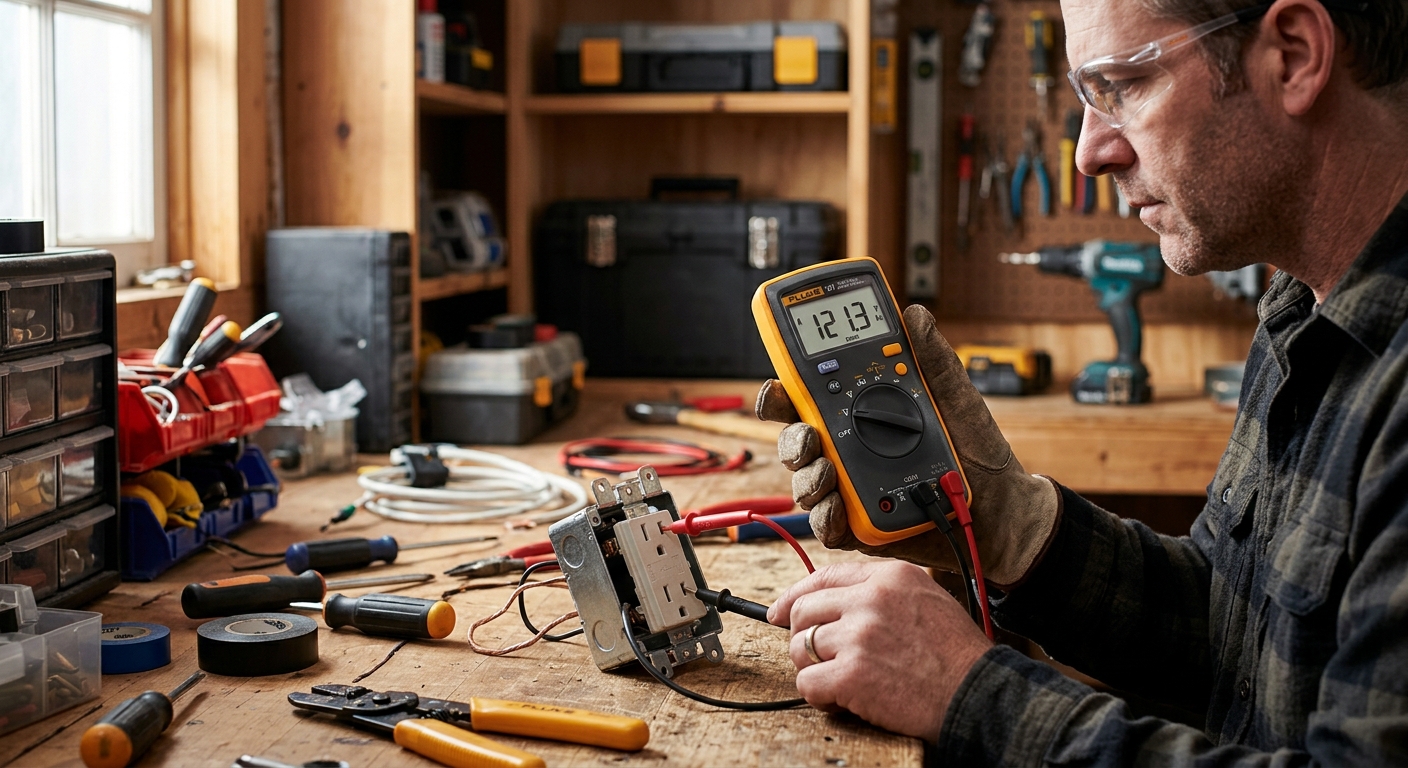
Multimeters carry CAT (category) safety ratings from CAT I (low-voltage electronics) to CAT IV (utility-level service entrance work). For household electrical work (outlets, panels, switches), CAT III 300V or higher is the minimum. CAT IV is required near the main service entrance. Never use a CAT I or CAT II meter for household electrical diagnostics.
Input Protection
Fused current inputs protect the meter from damage when you accidentally measure voltage in the current input. Quality meters fuse both the mA and 10A inputs. Cheap meters may have no fuse or an inadequate fuse, and a connection error destroys the meter or, worse, causes a flash-over.
Display
A backlit display with a count of at least 4000 (preferably 6000 or higher) provides sufficient resolution for most measurements. Counts refers to the number of distinct readings the meter can display – higher counts mean finer resolution.
Our Top Picks
1. Fluke 117 Electricians True RMS Multimeter
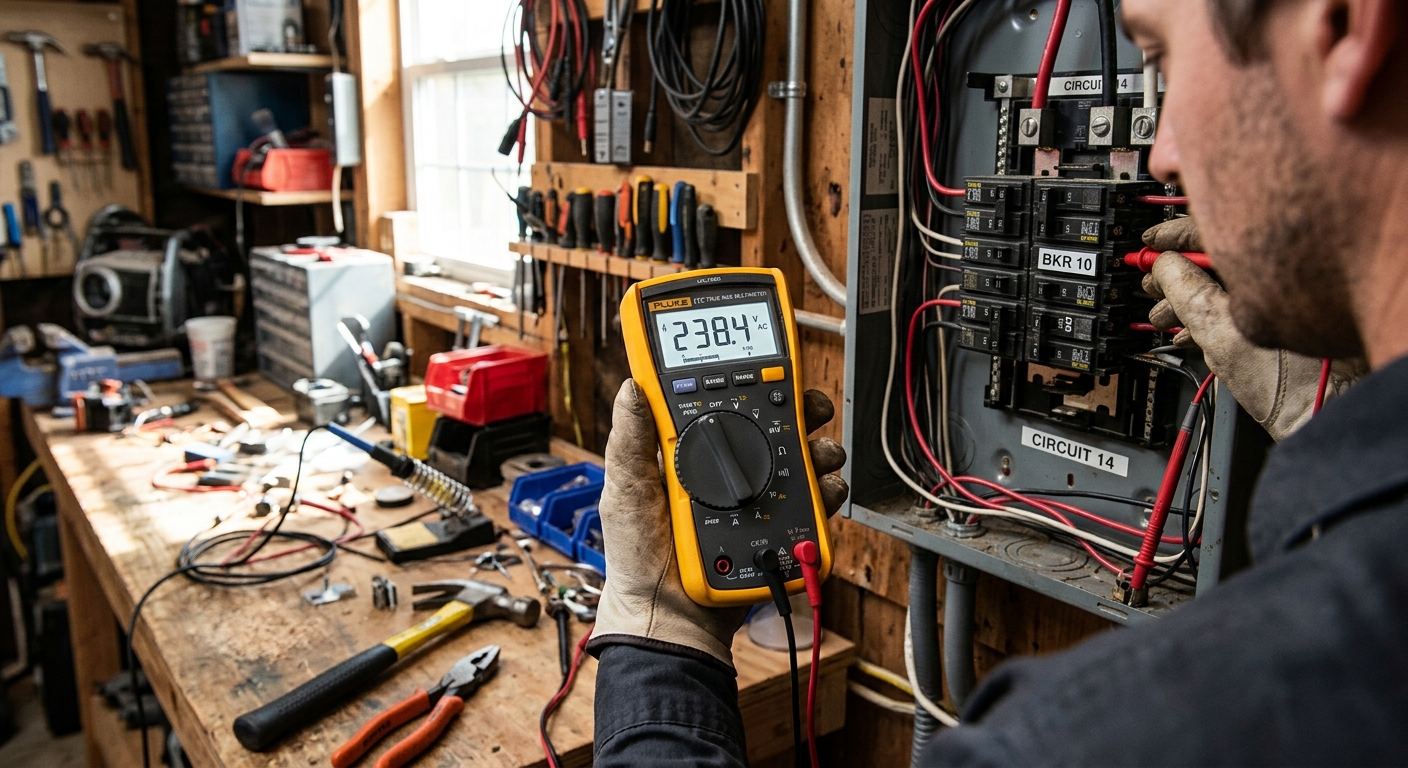
The professional standard for electricians and building trades. The Fluke 117 features True RMS measurement, VoltAlert non-contact voltage detection built in, auto-ranging across all functions, CAT III 600V safety rating, and Fluke’s legendary build quality and accuracy. If you ever work on your own home’s electrical system seriously, this is the investment worth making. It will outlast your house’s wiring.
2. Klein Tools MM400 Auto-Ranging Multimeter
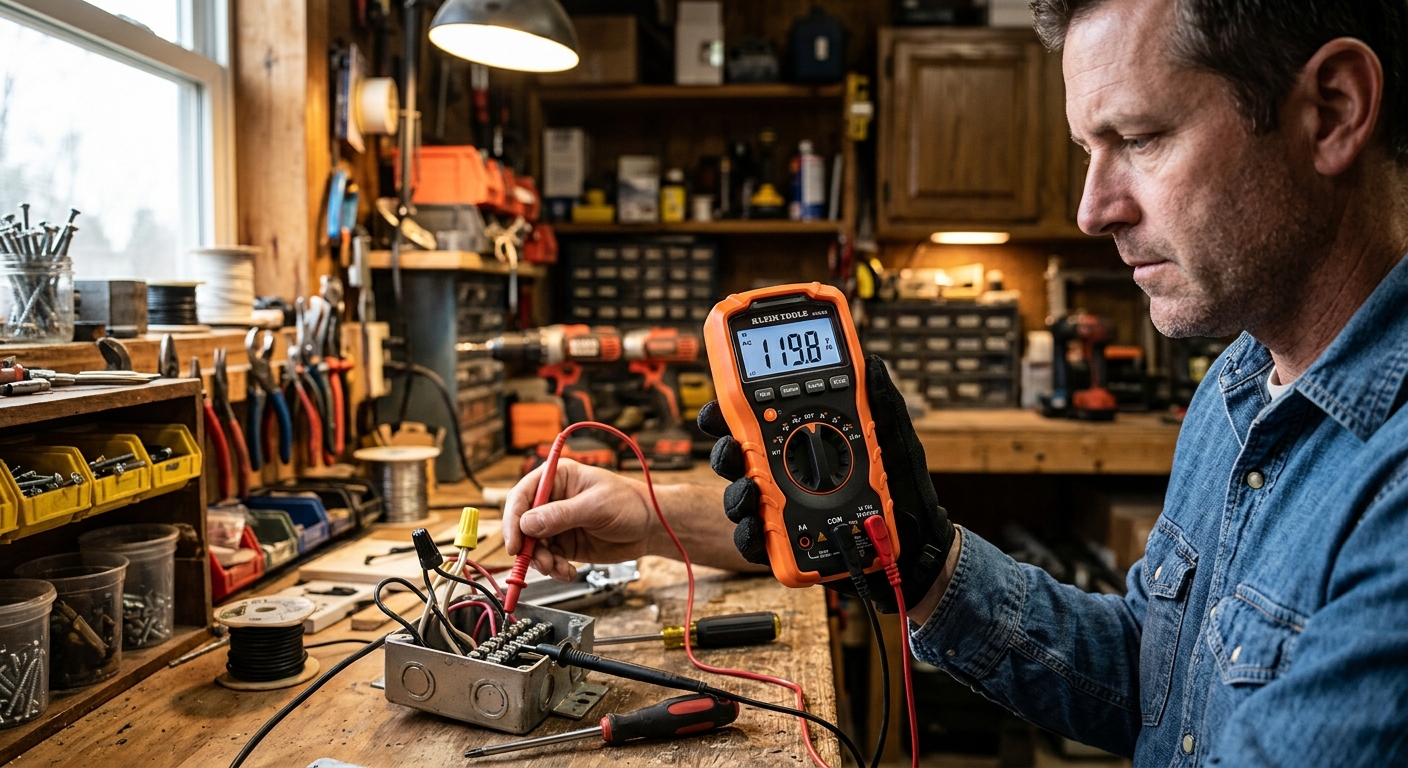
Klein’s multimeter line brings professional-grade features at a mid-range price. The MM400 is True RMS, auto-ranging, CAT III 600V rated, and includes a backlit display, low-impedance voltage mode (prevents ghost voltages), and a convenient magnet/kickstand for hands-free operation. Excellent for homeowners who work on their own electrical systems regularly.
3. Fluke 87V Industrial Multimeter
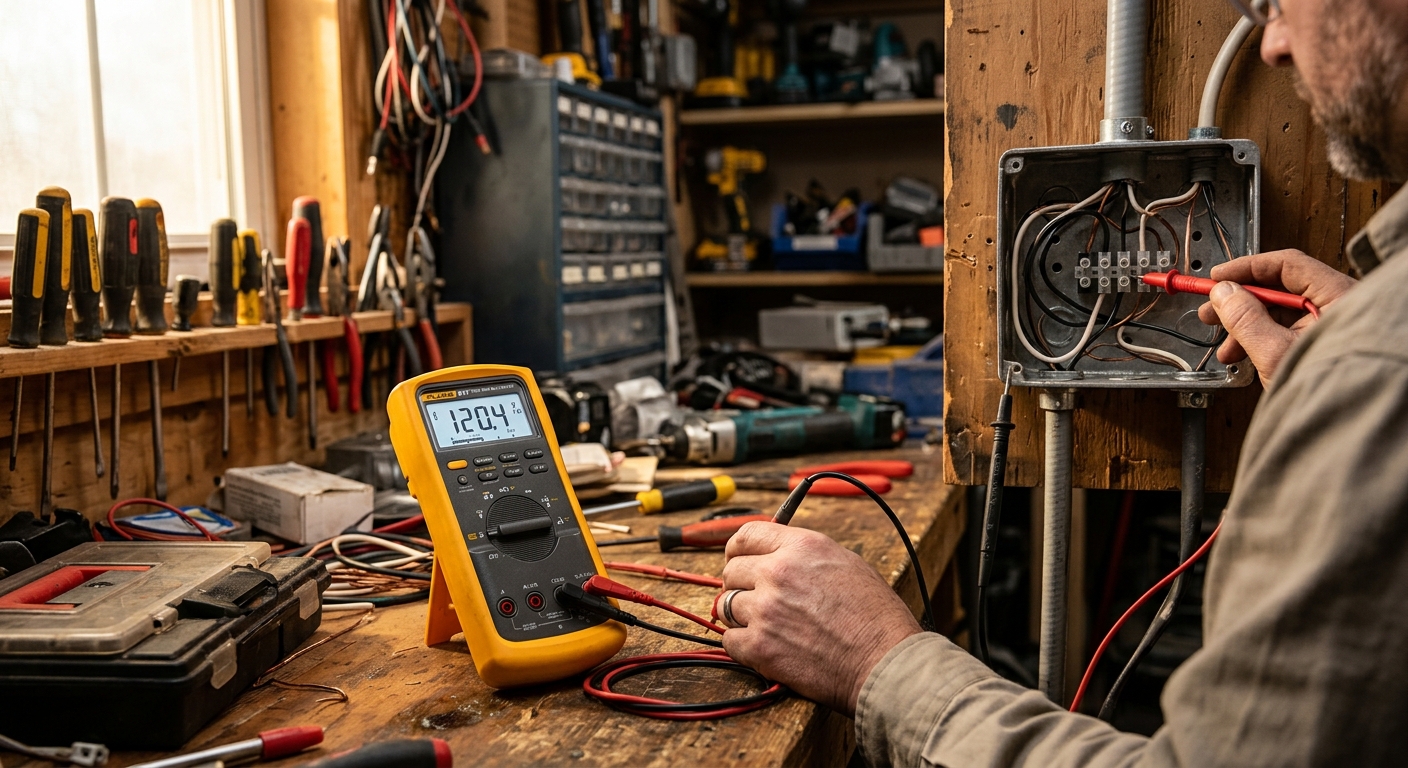
For those who want the best: the Fluke 87V adds 4.5-digit resolution, 20,000 uF capacitance measurement, temperature, and frequency measurement to the Fluke platform. Used by industrial electricians and engineers who need the highest accuracy available in a portable instrument. Significantly more expensive than the 117 but the reference standard in professional measurements.
4. AstroAI WH5000A True RMS Digital Multimeter
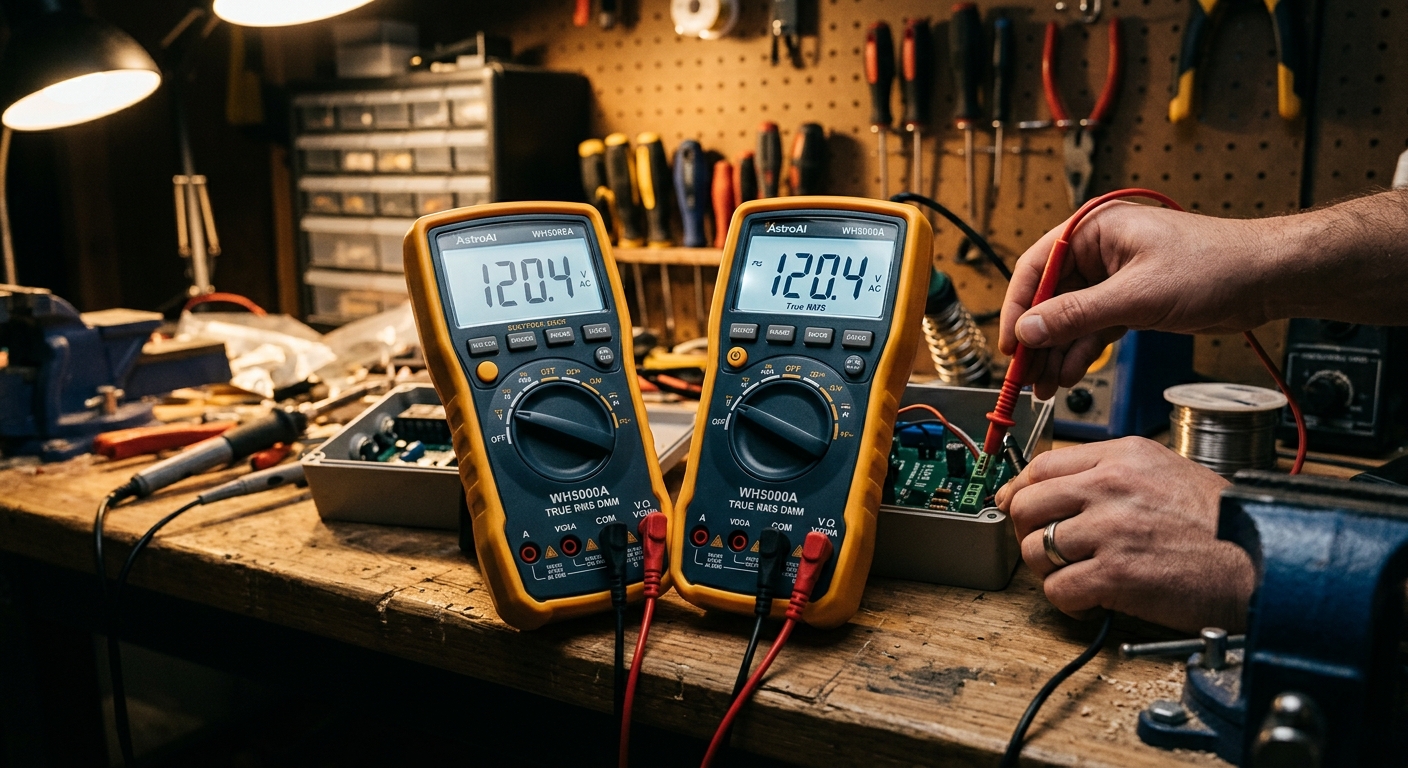
The best budget True RMS multimeter for homeowners. The WH5000A delivers accurate True RMS measurements, auto-ranging, a capacitance mode, temperature with thermocouple, and a backlit display at a price accessible to anyone. Not as rugged or accurate as Fluke, but significantly better than uncertified budget meters that flood online marketplaces.
5. Extech EX330 Mini Multimeter
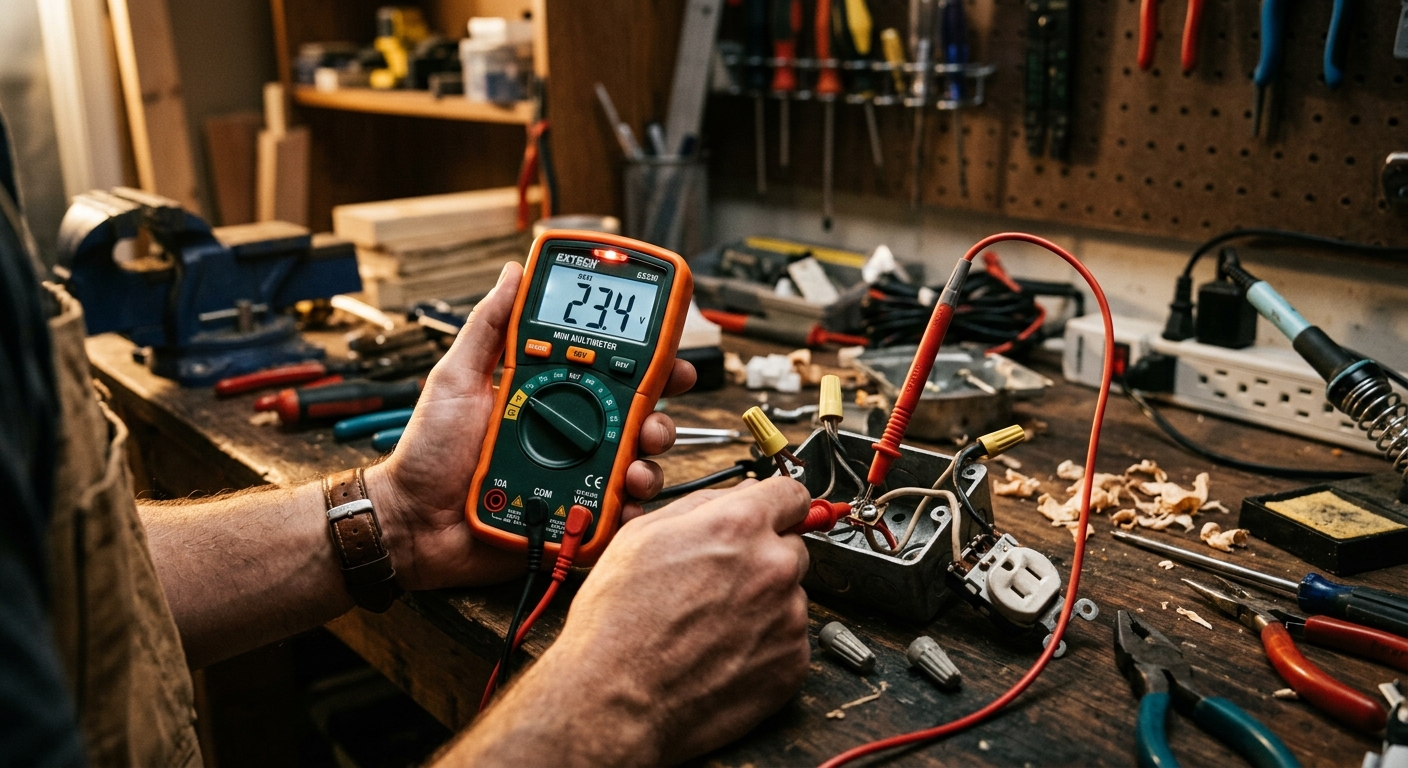
A compact pocket meter for quick voltage checks and battery testing. At this size and price, the EX330 earns a place in every tool bag for the quick checks that do not require setting up a full-size meter. Not True RMS but accurate enough for basic household voltage and resistance measurements.
What to Avoid
- No-name meters with no CAT rating: These are not safety-tested for electrical work and can fail catastrophically when exposed to line voltage or transient surges. Buy from known brands only.
- CAT I or CAT II meters for household electrical work: Inadequate safety margin for line-connected work. CAT III minimum for any outlet or panel work.
- Average-responding meters for variable-speed load diagnostics: They give incorrect readings on non-sinusoidal waveforms. Get True RMS for any serious work.
How to Test an Outlet with a Multimeter
- Set to AC voltage, auto-range or 200V range if manual.
- Insert red probe in the small (hot) slot, black probe in the large (neutral) slot.
- A properly wired 120V outlet should read 110 to 125V AC.
- Test hot to ground (round hole): should match hot-to-neutral reading.
- Test neutral to ground: should read near 0V.
- Large deviations from these values indicate a wiring problem.
FAQ
Do I need a multimeter or a non-contact voltage tester?
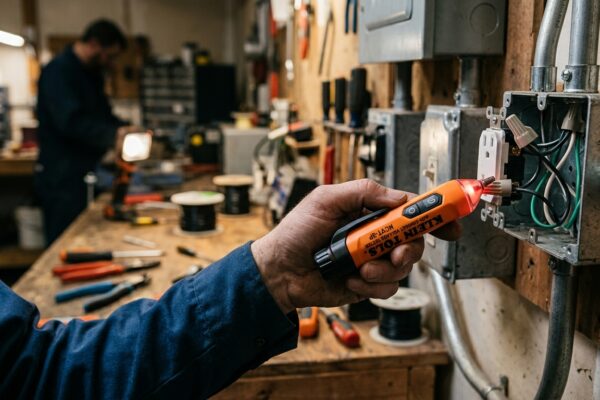
Both. A non-contact voltage tester tells you whether voltage is present – a pass/fail safety check. A multimeter tells you what the voltage is, whether the circuit is properly wired, and what is wrong. Start with a non-contact tester for safety; add a multimeter for diagnostics.
Can a multimeter check if an outlet is properly grounded?
Yes. Test between the hot slot and the ground hole – proper grounding shows voltage at the ground. For detailed ground testing (ground resistance, ground fault protection), use a dedicated outlet tester or GFCI tester.
How do I measure continuity with a multimeter?
Set to continuity mode (usually the diode/beeper symbol). Touch probes to the two ends of the wire or component. A beep indicates continuity – the circuit path is complete. No beep indicates an open circuit – a break in the wire, a blown fuse, or an open switch.
Affiliate Disclosure: DIY Arsenal participates in the Amazon Associates Program and other affiliate programs. When you purchase through links on this site, we may earn a small commission at no additional cost to you. We only recommend products we have personally tested and genuinely believe in.