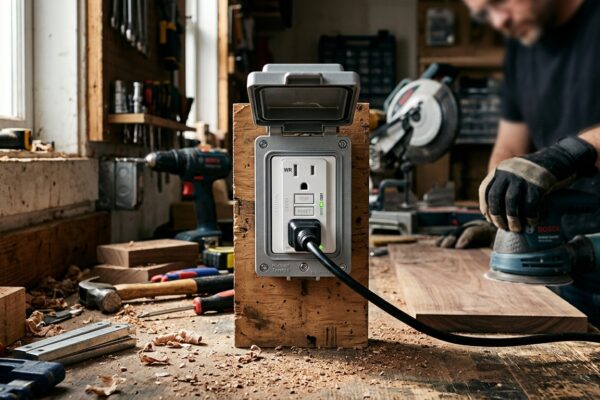
Best Continuity Testers and Circuit Analyzers

Klein non-contact voltage tester plus Sperry outlet analyzer cover the essential electrical safety verification tasks for every homeowner. Never work on a circuit without confirming it is de-energized first.
As an Amazon Associate, we earn from qualifying purchases.
Test Before You Touch: Electrical Verification Tools
Electrical testing tools prevent accidents and diagnose problems that visual inspection can’t reveal. A continuity tester confirms that a switch or fuse opens and closes the circuit correctly. A circuit analyzer tests wiring configuration at an outlet – identifying open ground, reversed polarity, open neutral, and GFCI presence without removing the outlet from the box. These are the basic electrical diagnostic tools that belong in every homeowner’s kit, both for safety verification and for troubleshooting mystery circuits and non-functional outlets.
Key Features to Look For
- Non-contact voltage tester vs. contact tester: Non-contact voltage testers detect live wires through insulation without touching conductors – the safer first verification step before any electrical work. Contact probes measure actual voltage values and are used after initial non-contact verification. Own both types for complete coverage.
- Outlet circuit analyzer: A plug-in outlet tester with LED or display indicators tests standard 120V outlets for wiring errors in seconds. The best models indicate seven wiring conditions (correct, open ground, open neutral, open hot, hot/ground reversed, hot/neutral reversed, neutral/ground reversed). Essential for inspecting all outlets after moving into a new home.
- GFCI testing function: Outlet analyzers that include a GFCI test button verify that a GFCI outlet or GFCI breaker actually trips when a fault is detected – not just that it’s wired correctly. Separate from the monthly test button on the GFCI itself, this provides independent verification.
- Continuity function: A basic continuity tester – either a simple battery and LED circuit or multimeter function – confirms that switches, fuses, circuit breakers, and wire runs have continuous conduction path. Use on de-energized circuits only; never test continuity on live circuits.
- Auto-ranging on multimeters: Auto-ranging multimeters select the correct measurement range automatically – eliminating the wrong-range measurement errors that cause confusion on manual-ranging meters. Worth the small cost premium for general homeowner use.
Top Picks
Klein Tools NCVT-3P Non-Contact Voltage Tester

Klein’s NCVT-3P is the professional non-contact voltage tester that electricians carry daily. The unit detects 12V to 1000V AC through insulation, produces both visual (LED) and audible alerts, and includes a built-in flashlight. The auto-power-off and battery indicator make it reliable even when left unused in a toolbox for months. This is the first tool to use before opening any electrical device – confirm dead before touching, every time, without exception.
Sperry Instruments GFI6302 Outlet Circuit Analyzer with GFCI Tester
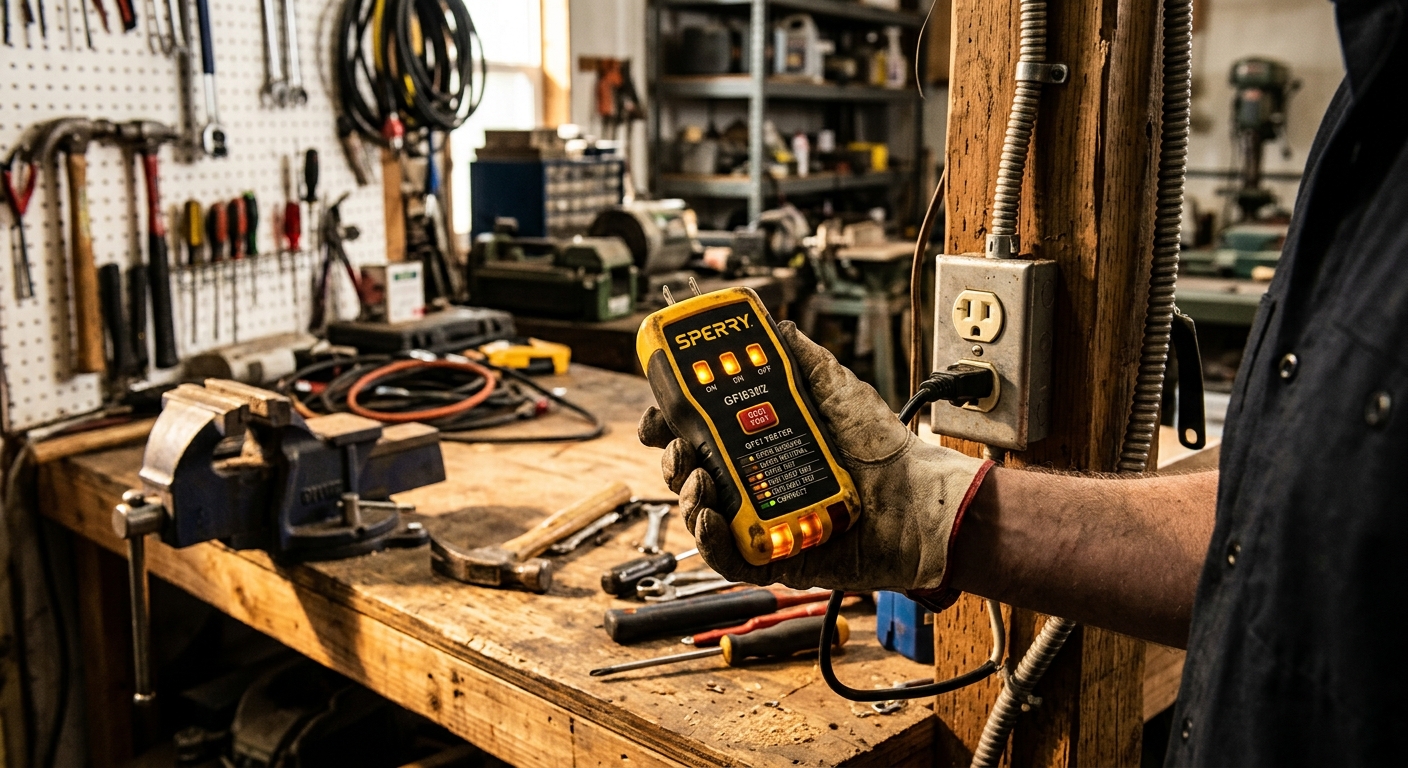
Sperry’s three-light circuit analyzer covers all seven common wiring error conditions with a color-coded indicator legend printed on the face – no reference card needed. The GFCI test button verifies trip function on GFCI outlets and downstream GFCI-protected standard outlets. The ergonomic plug fits tightly enough to make good contact but releases without excessive force. A necessary tool for inspecting every outlet when purchasing or renovating a home.
Fluke 101 Basic Digital Multimeter
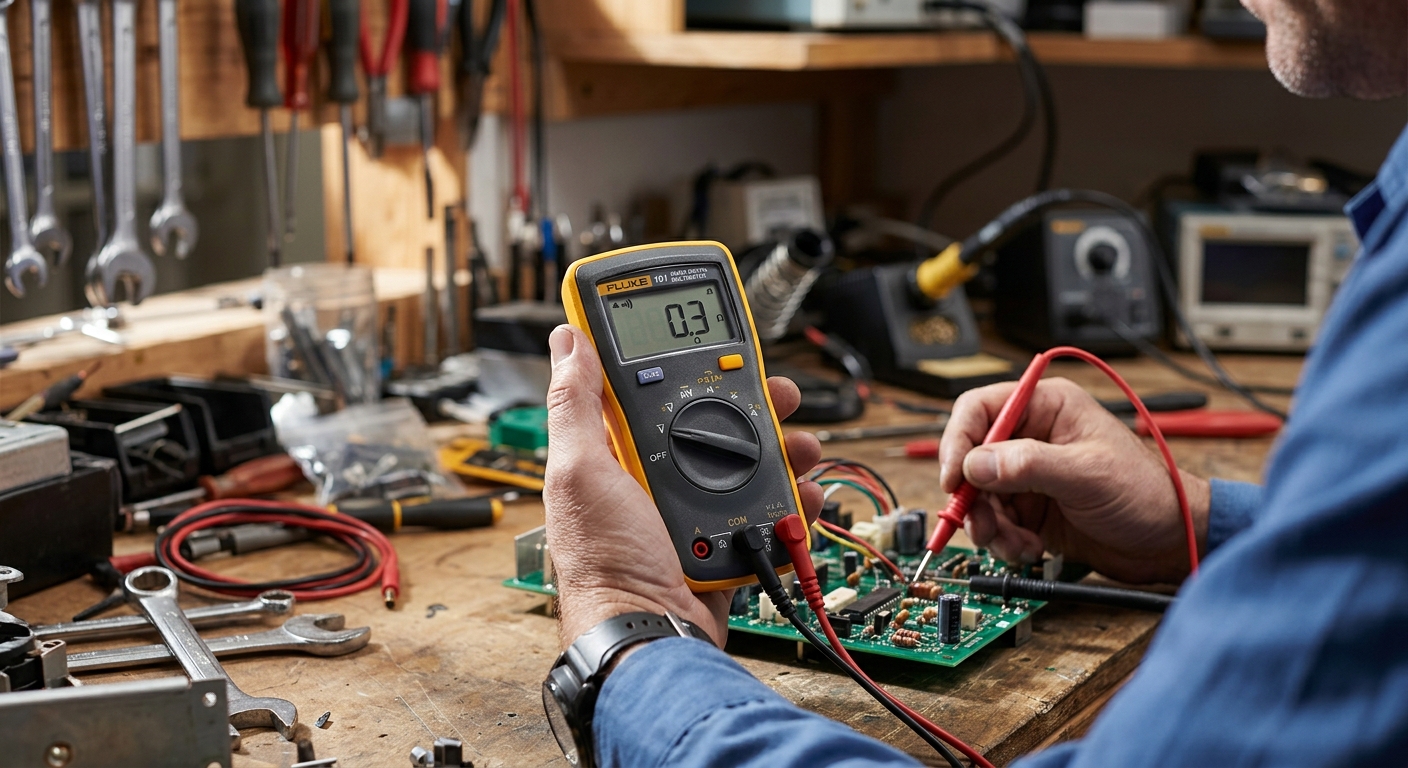
Fluke’s entry-level multimeter brings the reliability of the Fluke brand at a homeowner price point. Auto-ranging across AC/DC voltage, resistance, and diode testing covers every basic electrical measurement a homeowner needs. The CAT III 600V safety rating is appropriate for residential electrical panel work. If you own one meter for the next 20 years, Fluke’s build quality and measurement accuracy make this the right investment over cheaper alternatives that drift or fail prematurely.
Gardner Bender GCT-3330 Continuity Tester
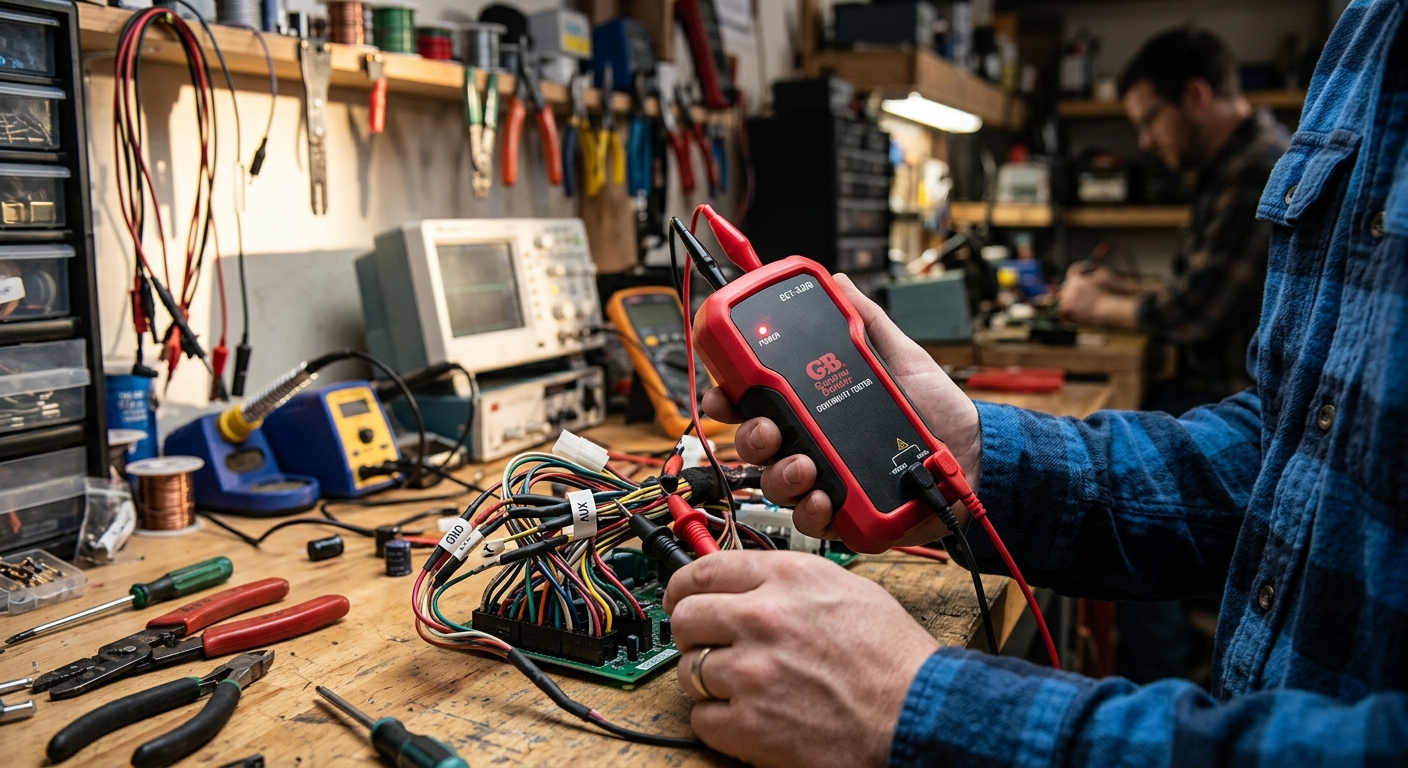
A simple, battery-powered continuity tester for wire runs, switch operation, and fuse verification. The audible tone confirms continuity without looking at a meter face – useful in tight spaces where you’re holding a probe in each hand. Much simpler to use than a full multimeter for continuity-only tasks. Appropriate for homeowners who want a dedicated, foolproof continuity tool rather than a multimeter that requires mode selection.
Frequently Asked Questions
My outlet tester shows open ground – is that safe?
An open ground means the ground conductor in the outlet circuit is absent or disconnected. The outlet functions normally for most loads but provides no fault current path – if a device develops a ground fault, the case becomes live rather than the breaker tripping. Not immediately dangerous but a real safety deficiency. Fix by: tracing the ground conductor back to its disconnection point, or installing a GFCI outlet in place of the ungrounded outlet (with the required “No Equipment Ground” label).
What does reversed polarity mean and why does it matter?
Reversed polarity means the hot and neutral conductors are connected to the wrong terminals on the outlet. Most devices still function with reversed polarity, but lamps become shock hazards when switched off (the socket shell is energized rather than the center contact), and some sensitive electronics have protection devices that depend on correct polarity to function. Fix by: turning off the circuit breaker, removing the outlet, and swapping the black (hot) wire to the brass screw and white (neutral) wire to the silver screw.
How do I test a circuit breaker for proper function?
A circuit breaker in the ON position should show voltage on the load terminals (verify with a multimeter) and should trip when the test button is pressed (on AFCI/GFCI breakers). Overload testing (drawing more current than the rated amperage) requires calibrated test equipment not practical for homeowners. For a breaker that trips immediately under normal load, test the circuit for short circuits and ground faults first – the breaker is usually doing its job correctly.
Affiliate Disclosure: DIY Arsenal participates in the Amazon Associates Program and other affiliate programs. When you purchase through links on this site, we may earn a small commission at no additional cost to you. We only recommend products we have personally tested and genuinely believe in.