Best Wire Strippers for Electrical Work
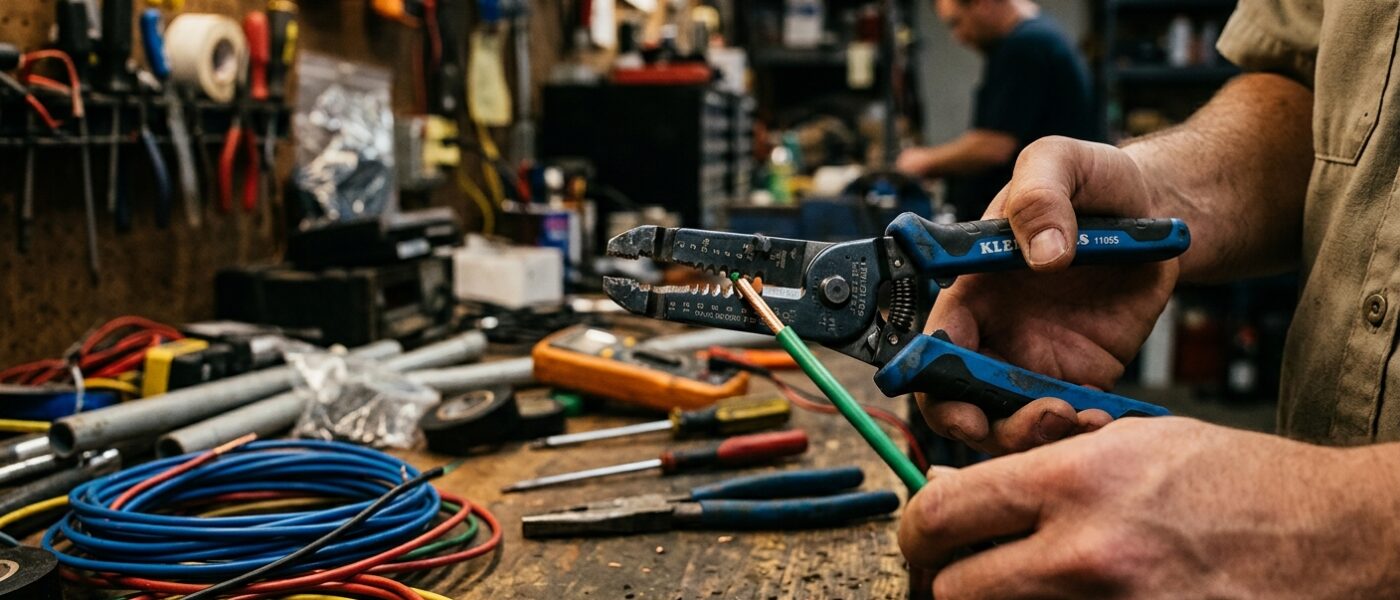
The Klein Tools 11055 self-adjusting stripper is the professional standard for residential electrical work; keep a Channellock 958 as a manual backup and a Klein VDV data stripper for network and low-voltage wiring.
As an Amazon Associate, we earn from qualifying purchases.
Wire stripping is one of the most fundamental skills in electrical work, and wire strippers are the tool that makes it consistent and safe. A poorly stripped wire leaves insulation over the conductor (poor connection), nicks the conductor (creating a weak point that can arc and fail), or removes too much insulation (leaving bare conductor exposed beyond the terminal). A good pair of wire strippers makes every strip clean, accurate, and fast – and protects the wire in the process.
Types of Wire Strippers
Manual Wire Strippers
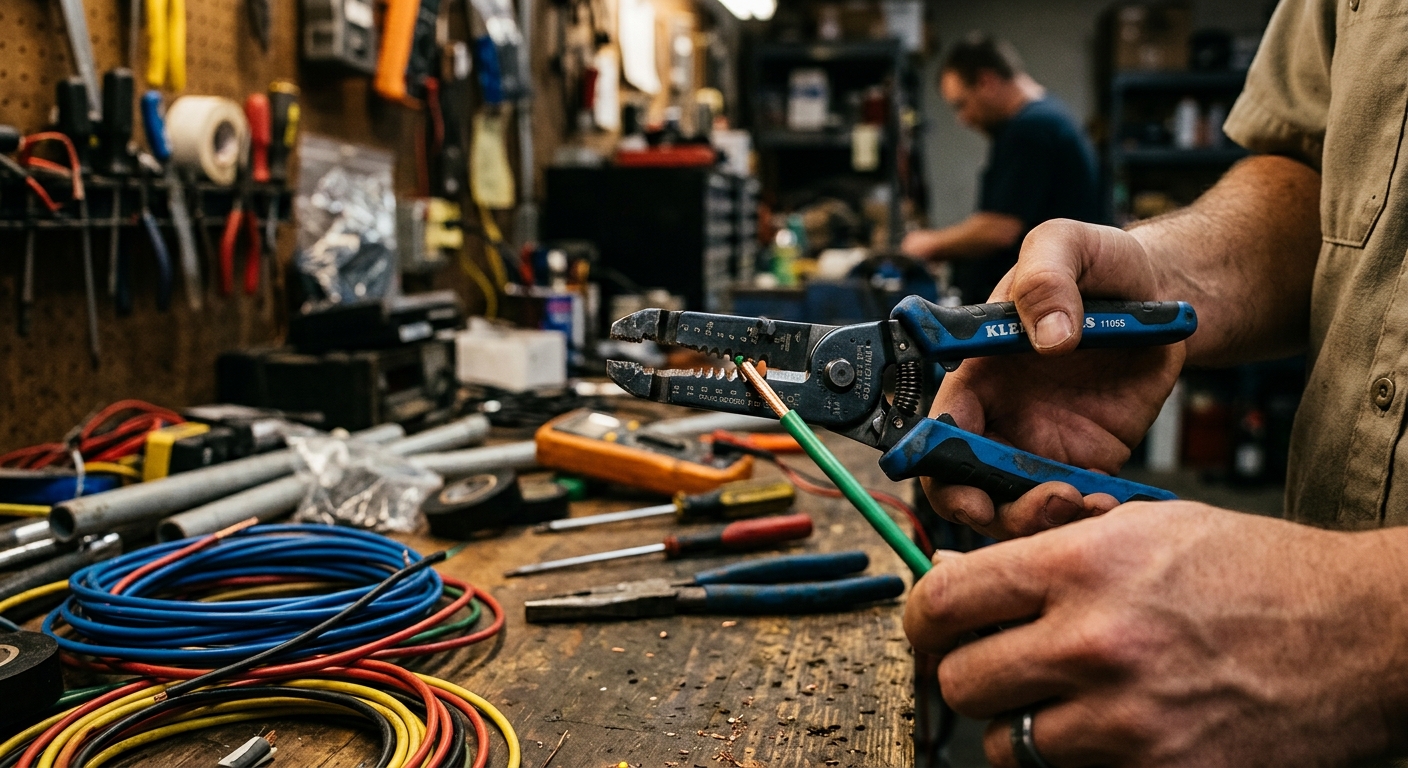
The most common type. A tool that looks like pliers with a series of calibrated notches, each sized for a specific wire gauge. You select the correct notch, place the wire in it, and squeeze the handles to cut through the insulation while the notch prevents the cutting edges from reaching the conductor. Simple, reliable, and the standard for residential electrical work.
Automatic Wire Strippers
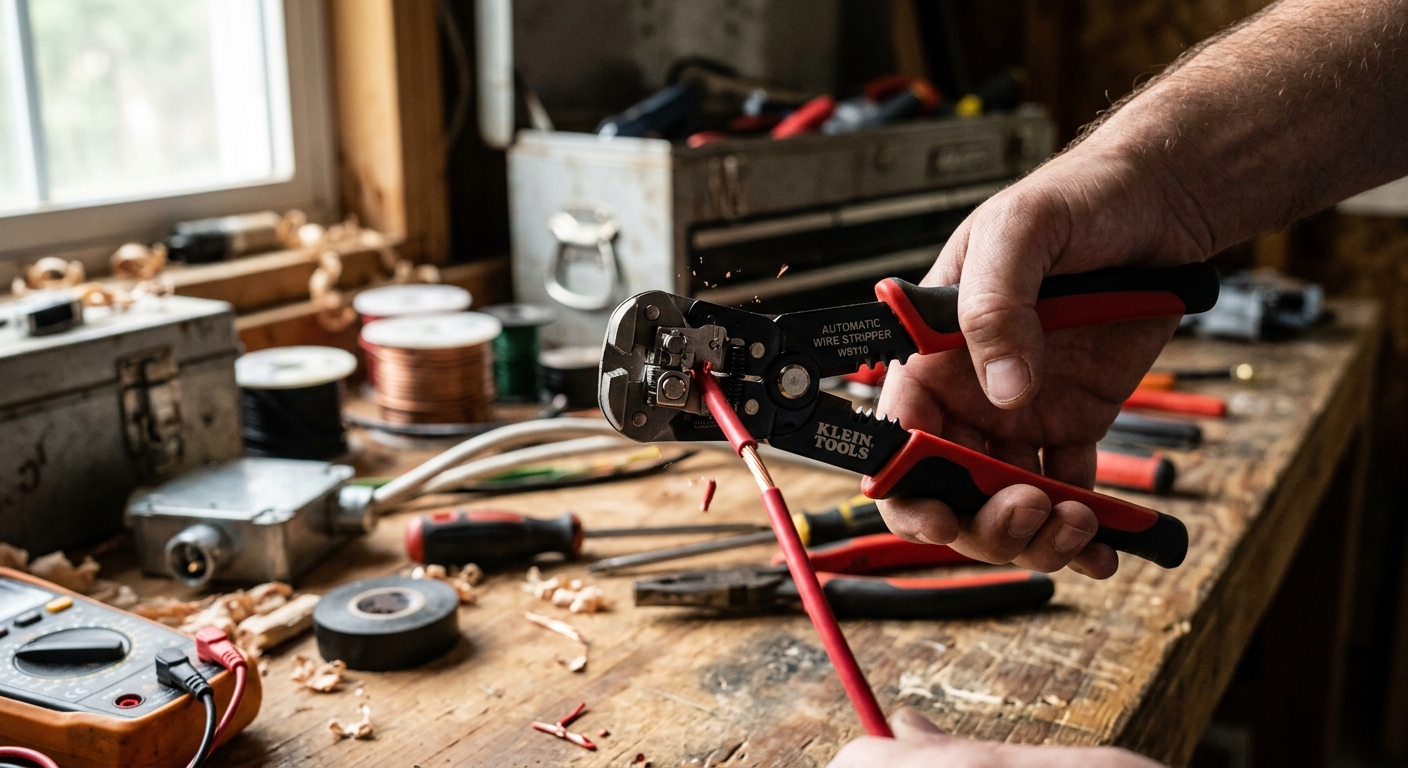
Self-adjusting tools that detect the wire diameter automatically and strip the insulation in a single squeeze without selecting a specific gauge. Faster than manual strippers and less likely to nick the conductor. The tradeoff is higher cost and a mechanism that can fail or wear out.
Coaxial and Data Cable Strippers
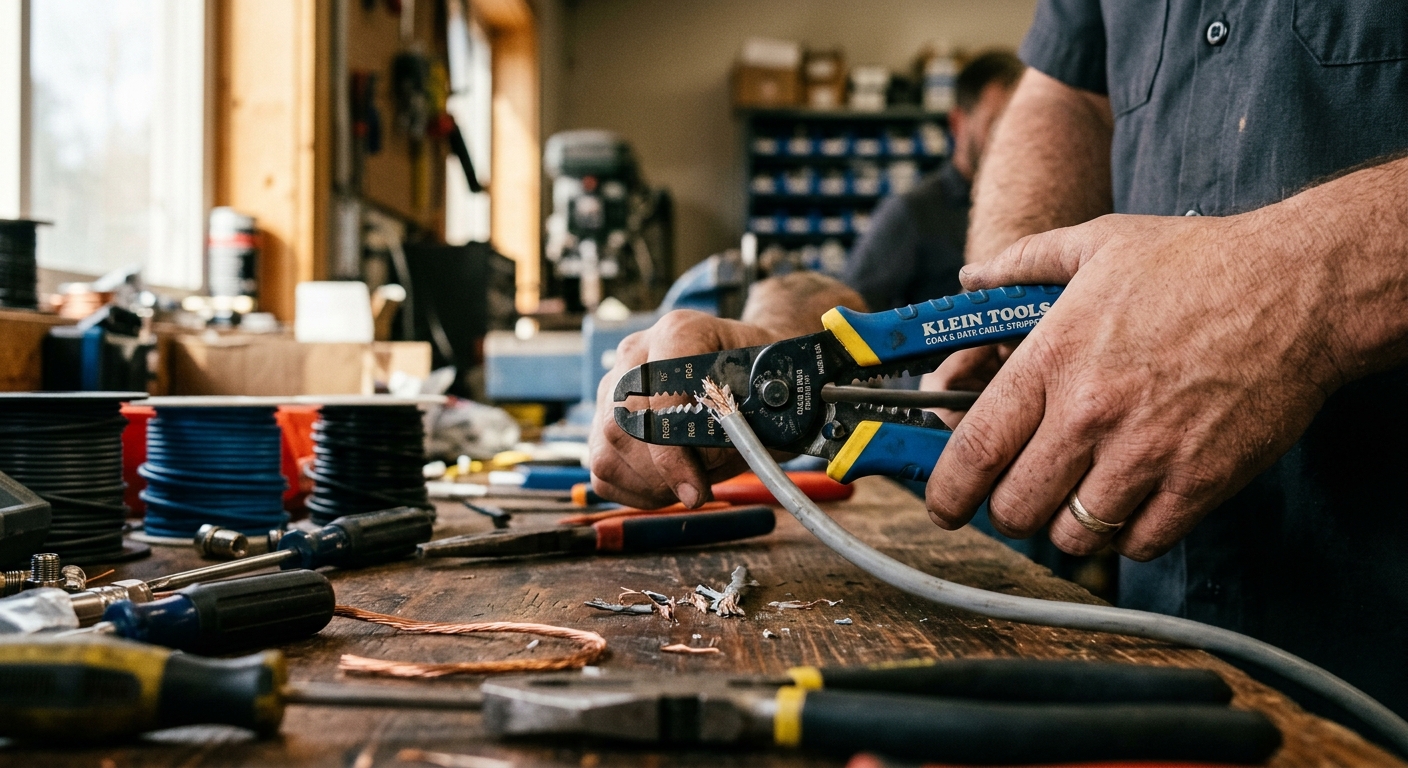
Specialized tools for stripping coaxial cable (RG6, RG11), Ethernet cable (Cat5e, Cat6), and telephone wire. These cables require cutting through outer jacket, braided shield, and inner dielectric to expose the center conductor – a task manual general-purpose strippers cannot do properly.
Wire Strippers/Cutters/Crimpers Combo
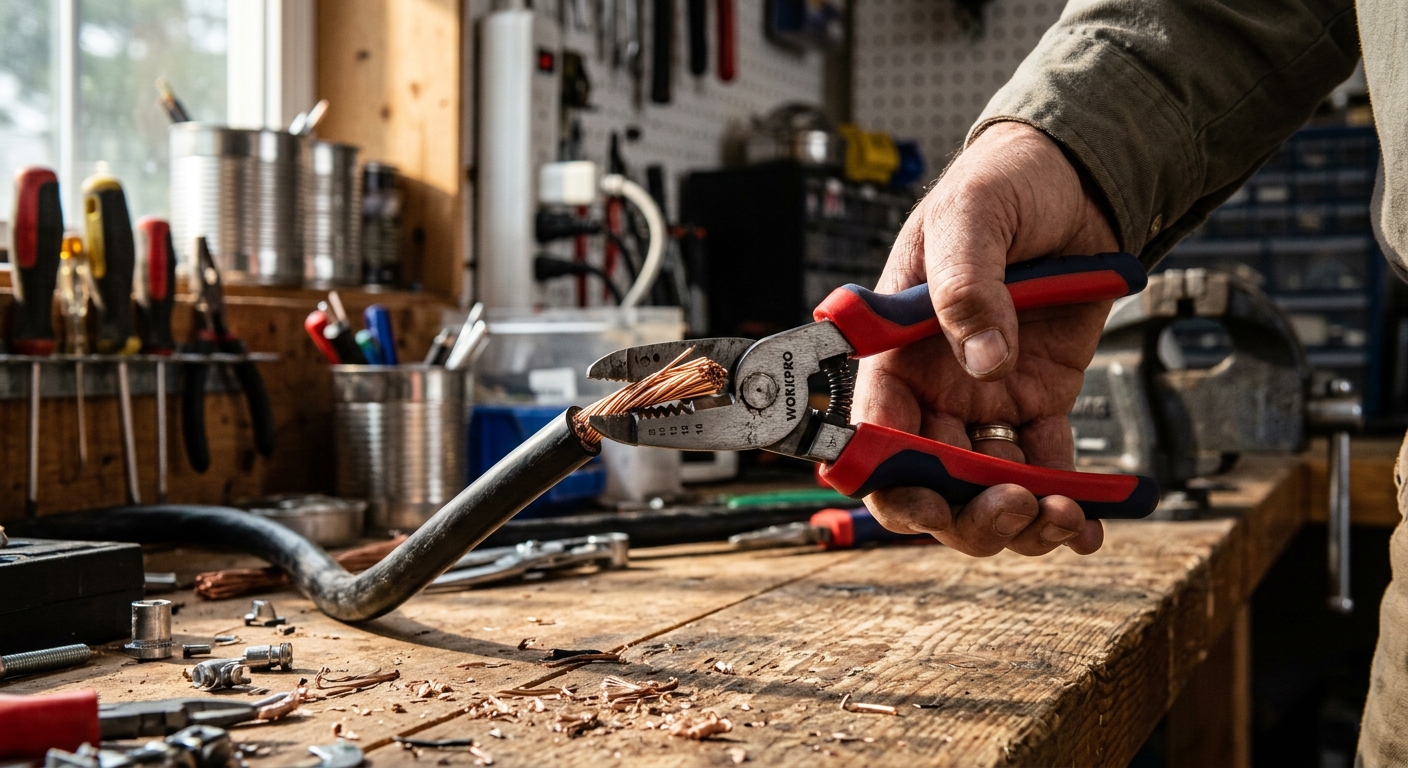
Multi-function pliers that combine wire stripping notches with a wire cutter and, often, a crimping die for insulated connectors. A versatile choice for general electrical work, though dedicated tools in each category typically outperform combination tools in their specific function.
Key Features to Look For
Gauge Range
For residential electrical work, a stripper covering 10 AWG to 22 AWG handles everything from heavy circuit wiring (10 and 12 AWG) to light fixture and control wiring (14 to 22 AWG). Data cable strippers need different notch sets.
Calibration Accuracy
The cutting notch must be sized precisely to cut through insulation without touching the conductor. Poor calibration causes nicking. Buy from reputable tool brands rather than no-name imports where calibration consistency is questionable.
Comfortable Handles
Wire stripping is repetitive work. Spring-loaded returns reduce hand fatigue significantly. Cushioned grips prevent the tool from cutting into your palm during extended use.
Built-In Wire Cutter
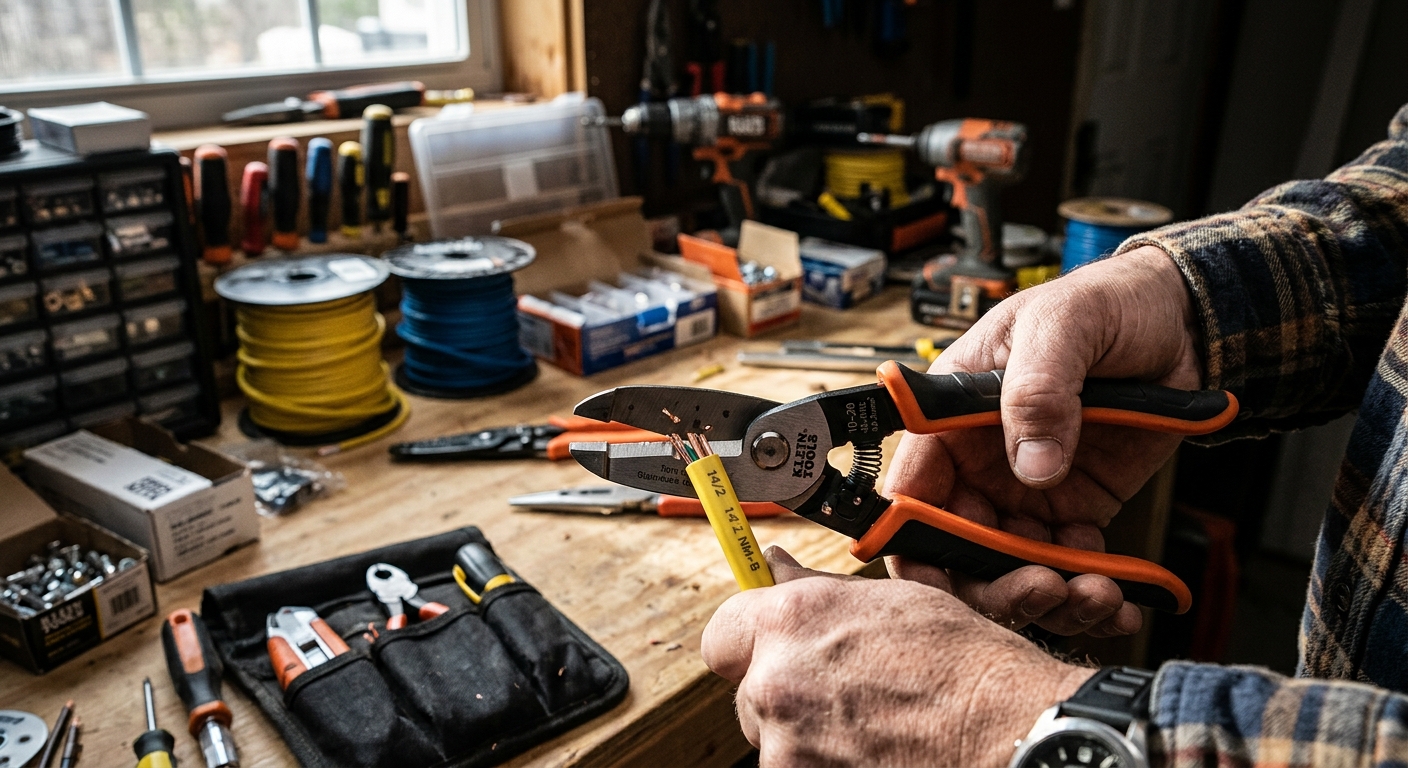
The cutting zone at the tip of the stripper handles lead trimming and cutting without reaching for a separate tool. Look for hardened steel cutting edges that stay sharp through thousands of cuts.
Our Top Picks
1. Klein Tools 11055 Self-Adjusting Wire Stripper (10-20 AWG)
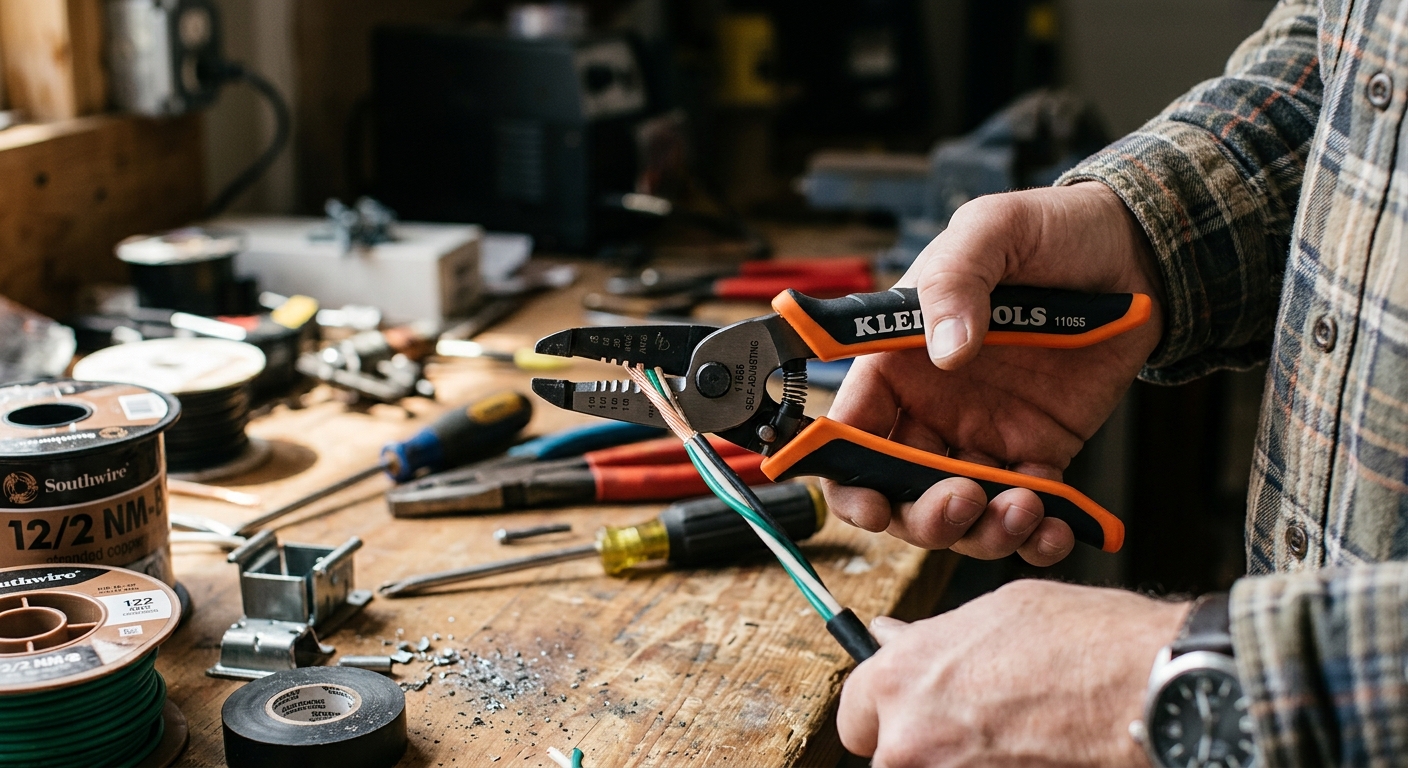
The most recommended wire stripper by professional electricians. The self-adjusting mechanism detects wire size automatically and strips without nicking the conductor. Fast, accurate, and comfortable for extended use. The 11055 handles the full range of residential wiring gauges. Klein builds these for professionals who strip hundreds of wires per day – they hold up to that use.
2. Ideal 45-2031 Reflex Wire Stripper
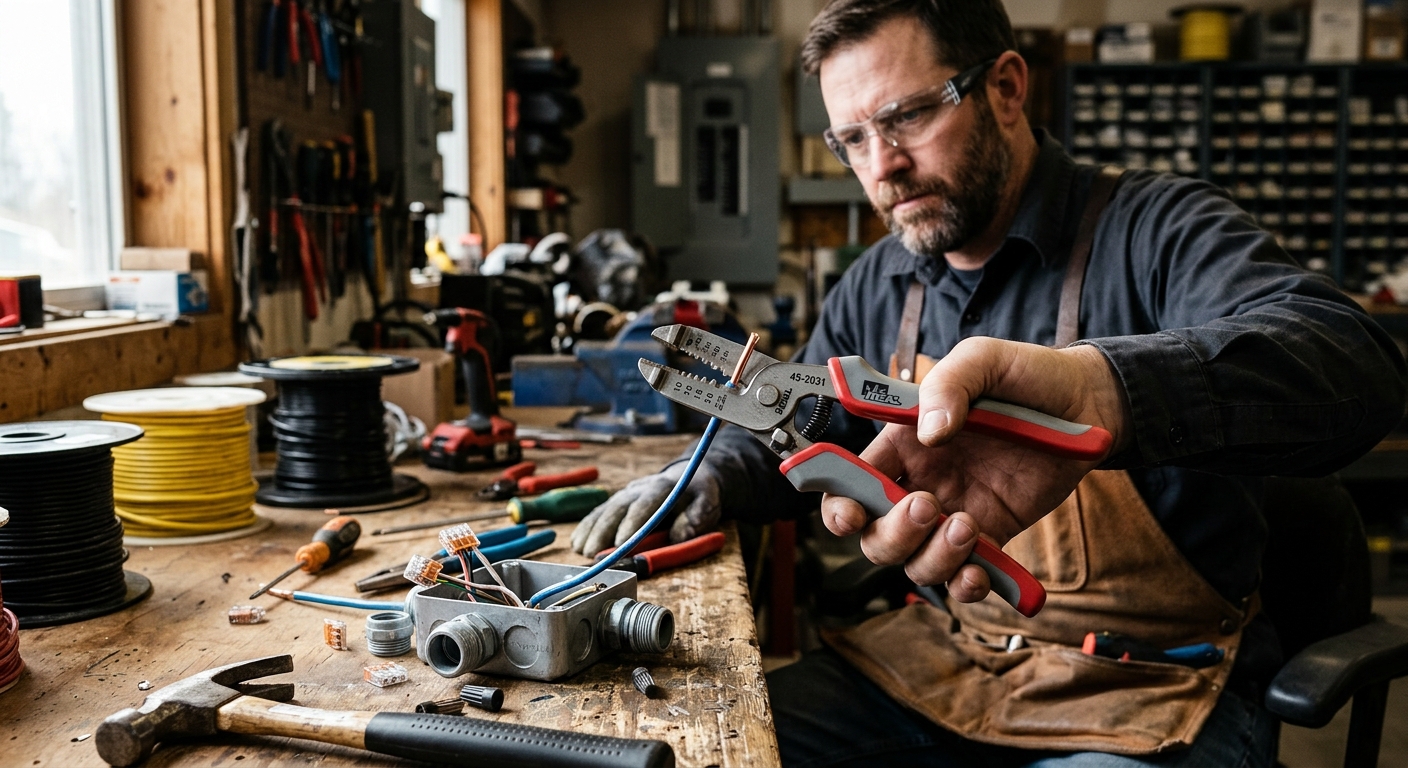
Ideal’s spring-loaded self-adjusting stripper is a direct competitor to the Klein 11055. The Reflex mechanism locks the jaws at the correct diameter, and the adjustment wheel allows fine-tuning for very thick or very thin insulation walls. Equally well-regarded by professional electricians.
3. Channellock 958 Wire Stripper/Cutter
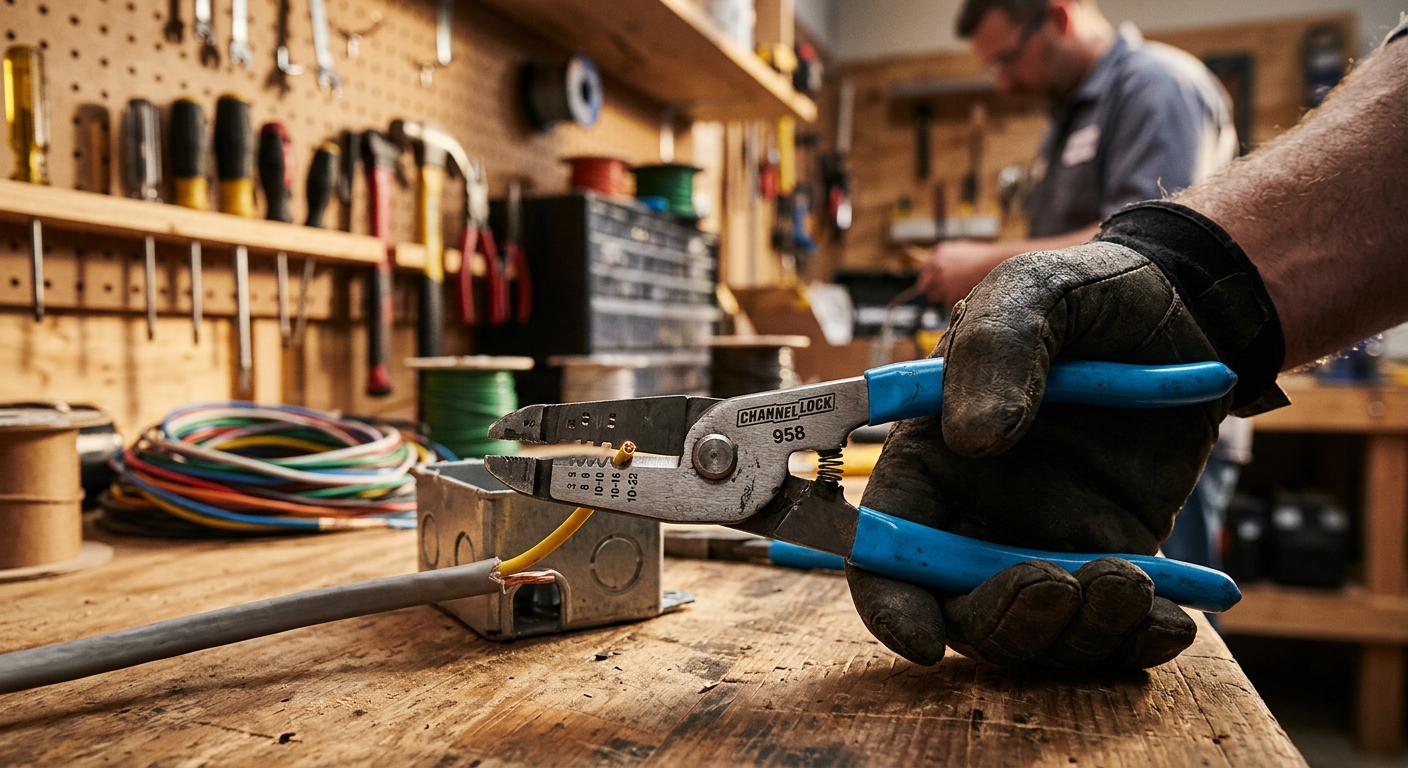
A traditional manual stripper that is one of the best-calibrated in the category. The gauge holes are cleanly finished, the spring return is smooth, and the Channellock quality construction ensures consistent stripping with minimal conductor damage. An excellent choice for DIYers who prefer the simplicity and reliability of a manual stripper.
4. Southwire S1030SOL Adjustable Wire Stripper
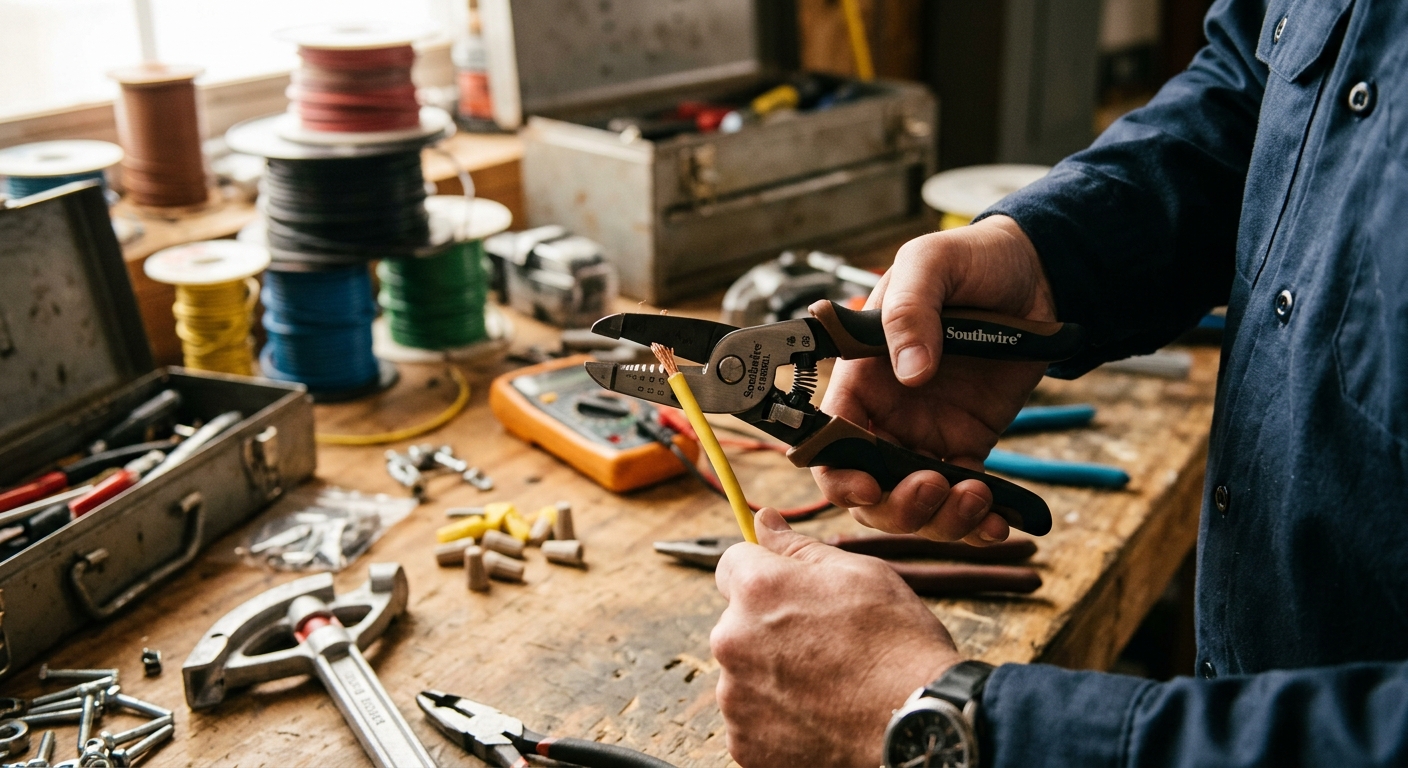
A manual adjustable-blade stripper that works by setting a blade gap rather than selecting a specific gauge notch. More flexible than fixed-notch strippers for non-standard wire gauges and multi-conductor cables. The adjustment mechanism maintains its setting accurately through many stripping cycles.
5. Klein Tools VDV110-095 Pass-Thru Modular Data/Voice Stripper
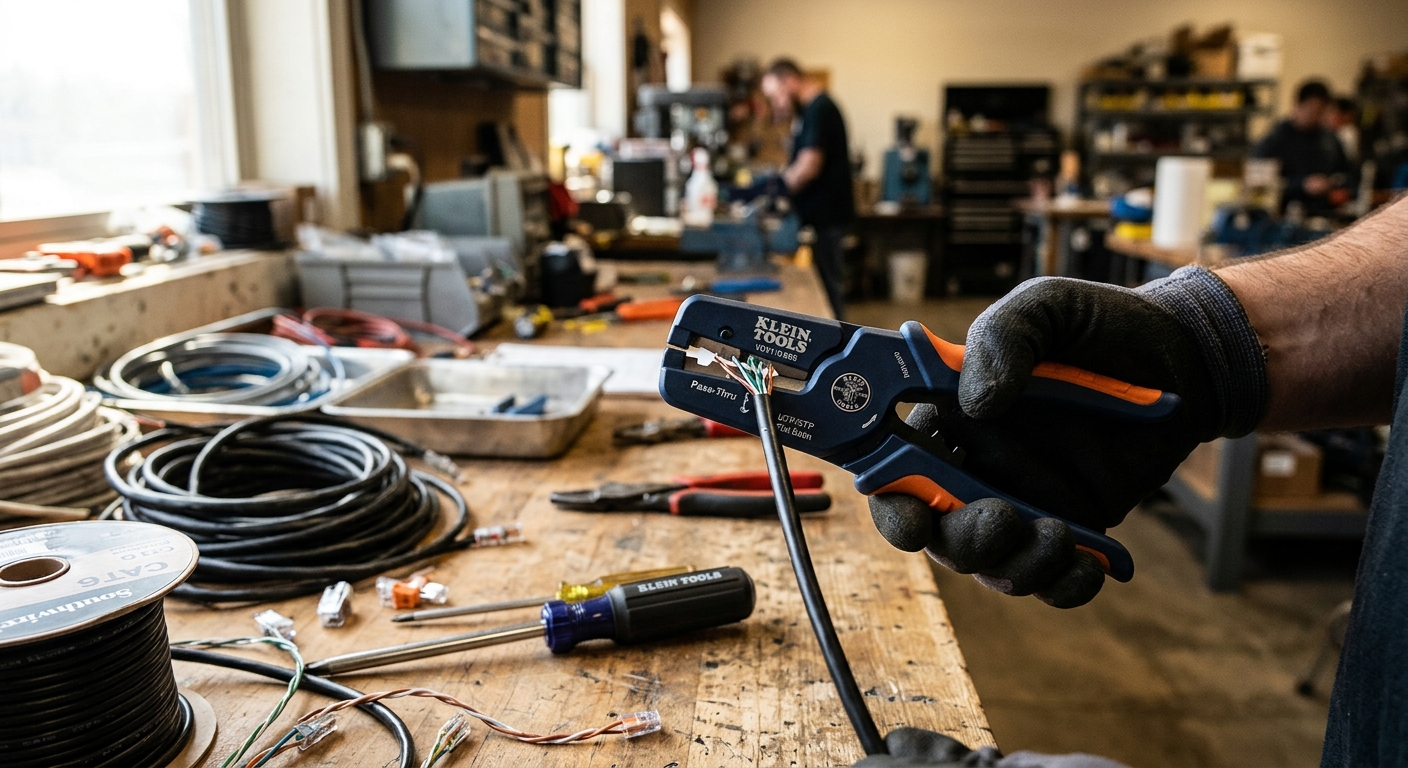
For data and voice cable (Cat5e, Cat6, telephone): Klein’s VDV-series stripper handles the outer jacket removal precisely without damaging the conductor pairs inside. A necessary tool for any work involving structured cabling, home networking, or telephone wiring.
Wire Gauges and Their Uses
- 14 AWG: 15-amp household circuits (lighting, outlets)
- 12 AWG: 20-amp circuits (kitchen outlets, bathroom GFCIs)
- 10 AWG: 30-amp circuits (dryers, water heaters)
- 8 AWG: 40-amp circuits (electric ranges)
- 22-18 AWG: Low-voltage wiring (doorbells, thermostats, control circuits)
What to Avoid
- Utility knife or box cutter for wire stripping: Extremely prone to nicking or cutting through the conductor. A momentary slip and the wire is damaged. Use a wire stripper.
- Strippers with dull or poorly calibrated notches: They tear rather than cut insulation, requiring multiple attempts and often damaging the conductor.
- Over-stripping: Removing more insulation than the terminal requires leaves bare conductor exposed. Leave just enough bare conductor to reach the terminal – typically 3/4 inch for residential terminals.
FAQ
How much insulation should I strip?
For wire nut connections: strip 3/4 to 1 inch. For screw terminals: strip 3/4 inch. For push-in (backstab) connectors: follow the strip gauge on the outlet face, usually 1/2 to 5/8 inch. For lever-nut connectors: follow the lever-nut manufacturer specification, typically 1/2 inch.
Can I use a wire stripper on coaxial cable?
Not a standard wire stripper. Coaxial cable (RG6, RG11) requires a rotary coax stripper that removes the outer jacket, braided shield, and dielectric in one or two calibrated cuts. Using a wire stripper on coax crushes the center conductor and ruins the cable.
My wire stripper is nicking the conductor. What is wrong?
The notch is too small for the wire gauge being stripped. Select the next larger notch size. If the tool has no larger notch that fits, you need a stripper with a larger gauge range.
Affiliate Disclosure: DIY Arsenal participates in the Amazon Associates Program and other affiliate programs. When you purchase through links on this site, we may earn a small commission at no additional cost to you. We only recommend products we have personally tested and genuinely believe in.