Best Electrical Fish Sticks and Glow Rods for Walls and Ceilings
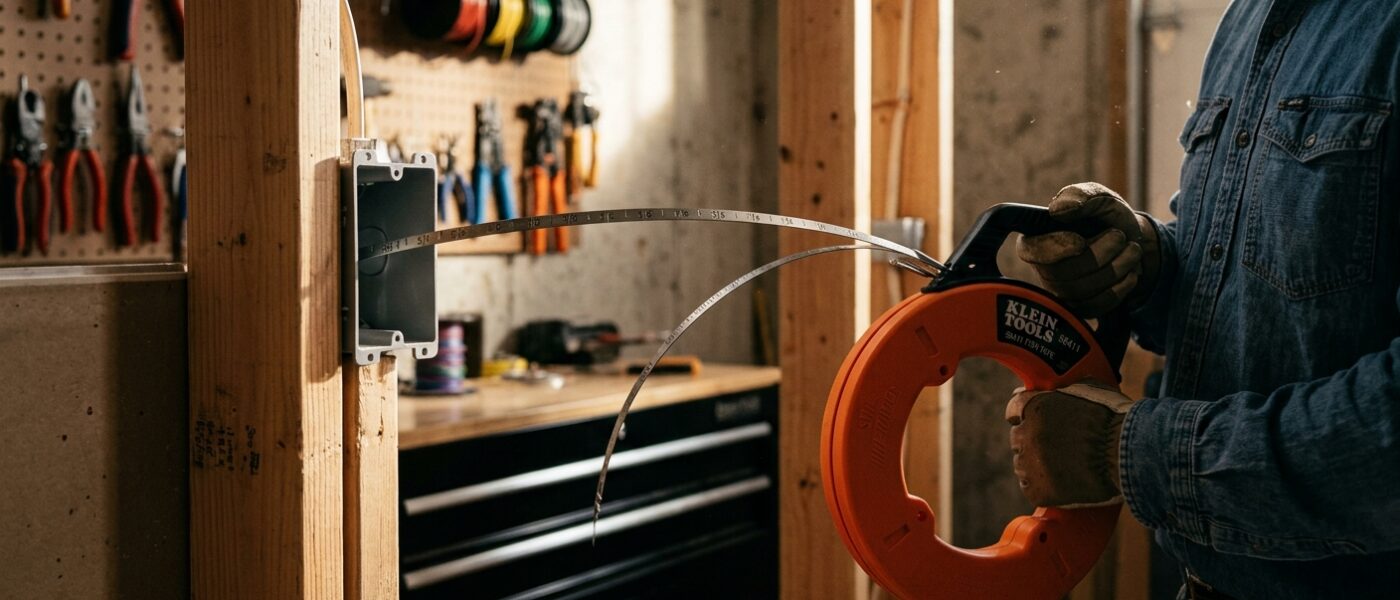
Klein steel fish tape for straight conduit runs; Southwire glow rods for fishing through open wall and ceiling cavities in residential retrofit work.
As an Amazon Associate, we earn from qualifying purchases.
Running wire through walls, ceilings, and conduit is one of the most physically demanding parts of electrical work. Fish tape, fish sticks, and glow rods make it manageable. The right tool depends on the distance, the route, and whether you are fishing through conduit or through open stud bays and wall cavities.
Types of Wire-Fishing Tools
- Fish tape (steel or fiberglass): A flat, springy tape that pushes through conduit. Steel fish tape is stiffer and better for straight conduit runs. Fiberglass tape is non-conductive and better for bending through conduit with multiple turns.
- Glow rods (fiberglass poles): Rigid, lighted extension rods for pushing wire through open wall and ceiling cavities. Especially useful for fishing horizontally between floors or through insulated walls.
- Magnetic fishing systems: Use a rare-earth magnet on one end of the wire and a magnetic probe on the other side to pass the wire through a blind cavity.
Top Picks
Klein Tools 56411 Fish Tape (50 ft steel)
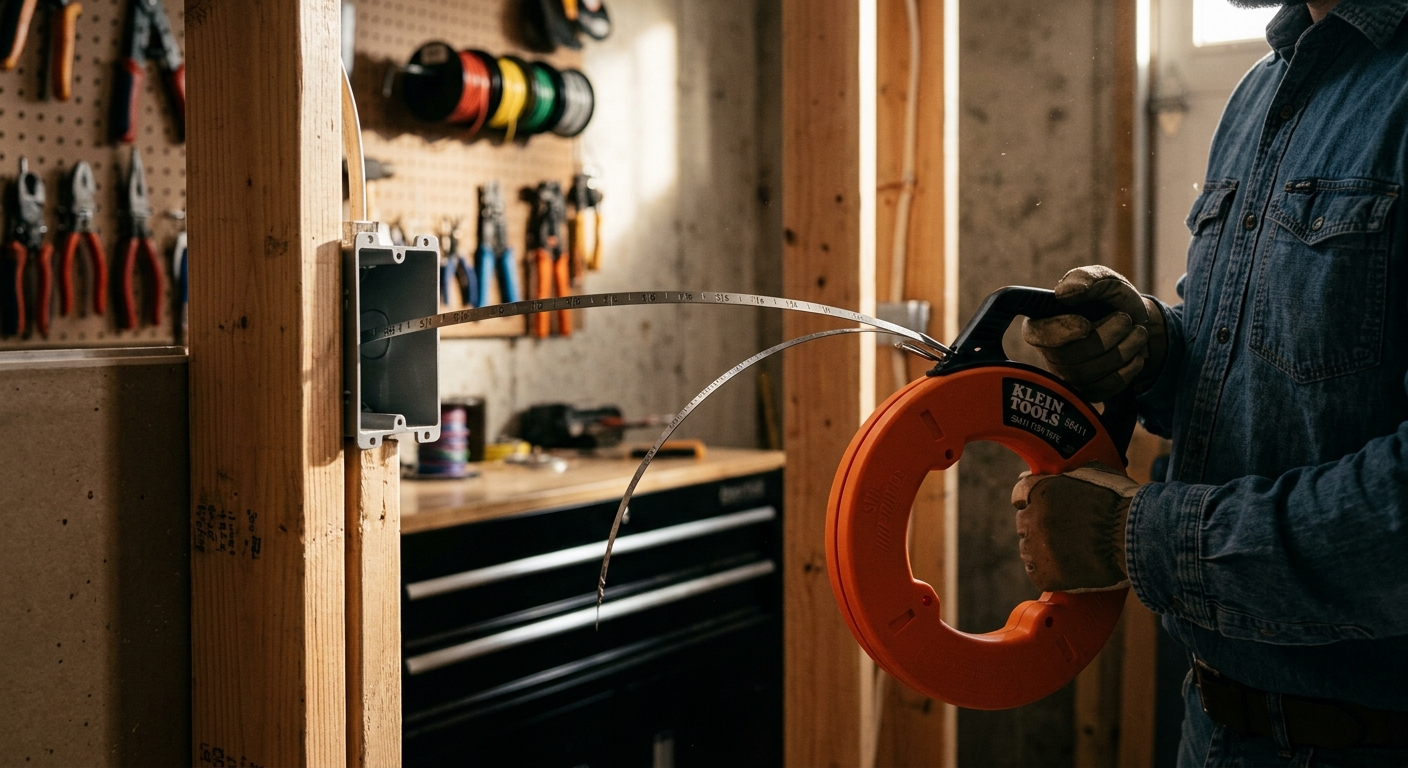
The professional standard for conduit fishing. 1/8-inch wide steel tape with a looped end for wire attachment. The enclosed reel keeps the tape coiled and protected between uses.
Southwire Glow Rods (6-piece)
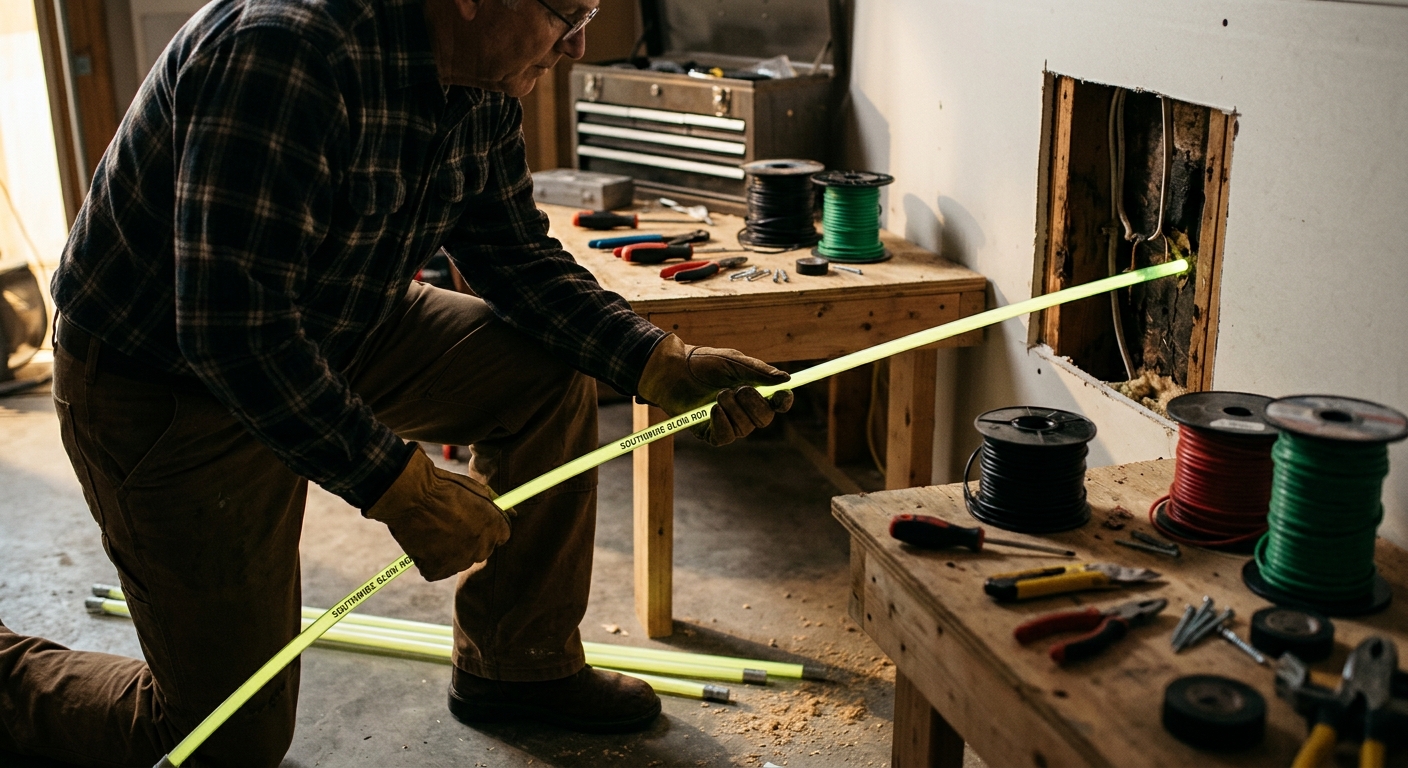
Six 3-foot fiberglass rods that thread together for up to 18 feet of reach. LED tip illuminates the cavity so you can see the rod end through drilled holes. The most useful wall-fishing tool for residential retrofit work.
FAQ
My fish tape keeps kinking in the conduit. How do I fix this?
Kinking happens at sharp bends. Fiberglass tape handles 90-degree elbows better than steel. Apply wire pulling lubricant to the tape before feeding it through multiple bends. If the conduit has more than 360 degrees of bends total, you will need to pull from an intermediate junction box.
Affiliate Disclosure: DIY Arsenal participates in the Amazon Associates Program and other affiliate programs. When you purchase through links on this site, we may earn a small commission at no additional cost to you. We only recommend products we have personally tested and genuinely believe in.