Best Table Saws for DIY – Jobsite, Contractor, and Hybrid
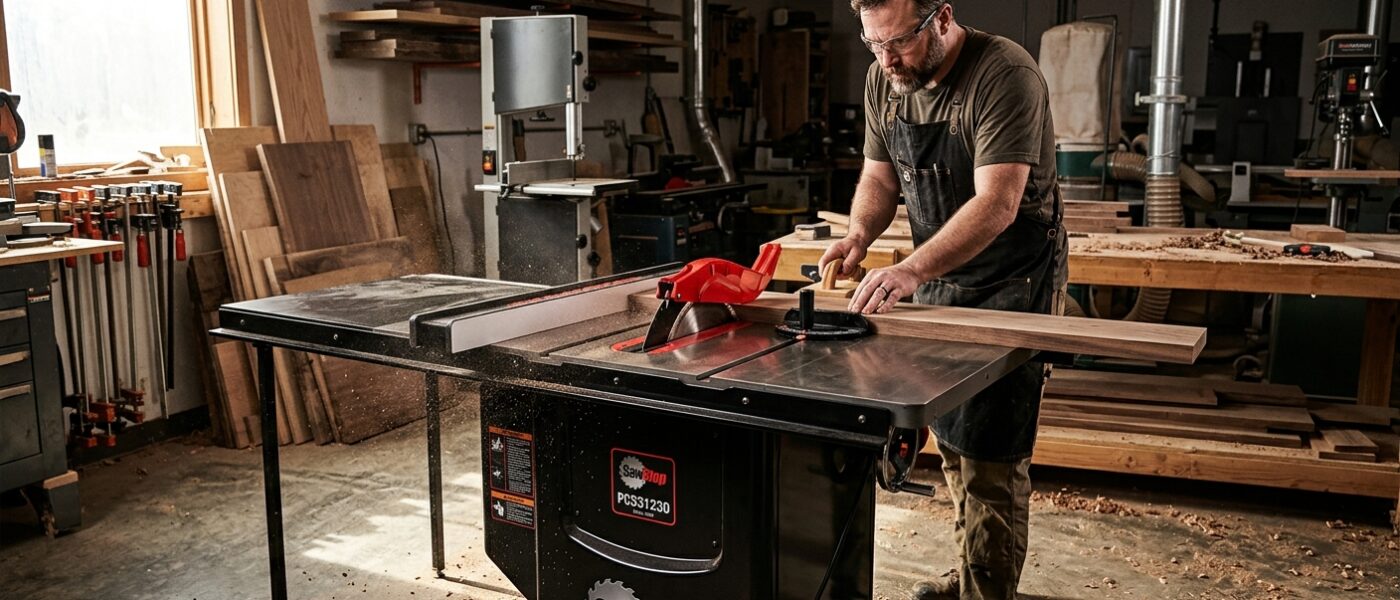
SawStop leads for safety and quality; DeWalt DWE7491RS is the best portable saw for job-site and small-shop use.
A table saw is the heart of a serious woodworking shop. No other tool makes as many cuts as accurately or as repeatedly – ripping boards to width, cutting sheet goods to size, making dadoes and rabbets, cutting tenons, and dozens of other operations that would be tedious or impossible with hand tools or other power tools. For woodworkers who build furniture, cabinetry, or do serious finish work, a table saw is the tool that enables everything else.
The DIY table saw market has three main categories: portable jobsite saws, contractor saws, and hybrid saws. Choosing among them is primarily a decision about workspace, budget, and what you’re actually building. This guide explains the differences and covers the best options in each category for 2026.
How We Evaluate Table Saws
Fence system quality: The fence is the most important accuracy component on a table saw. It must lock parallel to the blade, stay locked under lateral pressure, and release cleanly without bumping the fence out of position. The Biesemeyer-style fence (rack-and-pinion locking, full rail support) is the industry standard for quality. Many budget saws have wobbly, inaccurate fences that make precise work genuinely difficult.
Throat plate and blade alignment: The blade must be parallel to the miter slots (and therefore the fence) for accurate, safe cuts. Quality saws have adjustment mechanisms for this alignment; budget saws often don’t, which can cause kickback. Before purchasing, check reviewer comments about out-of-box alignment and ease of adjustment.
Riving knife and safety features: Modern table saws should have a riving knife (or splitter) that keeps the kerf open behind the blade, preventing the workpiece from pinching and kicking back. Anti-kickback pawls and blade guards are also standard. Never remove these – they exist for life-safety reasons.
Motor power and type: Jobsite saws typically use universal motors (high RPM, loud). Contractor saws use open induction motors (quieter, more powerful). Hybrid saws use enclosed induction motors. For fine woodworking and sustained use, induction motors deliver better results and longer life.
Portability vs capacity: Jobsite saws weigh 45–70 lbs and fold for transport. Contractor and hybrid saws weigh 200–400+ lbs and stay in place. If you work on multiple job sites, portability matters. If you work in a dedicated shop, a heavier saw’s stability and capacity justify the weight.
Top Picks
1. SawStop PCS31230 – Best Professional Hybrid
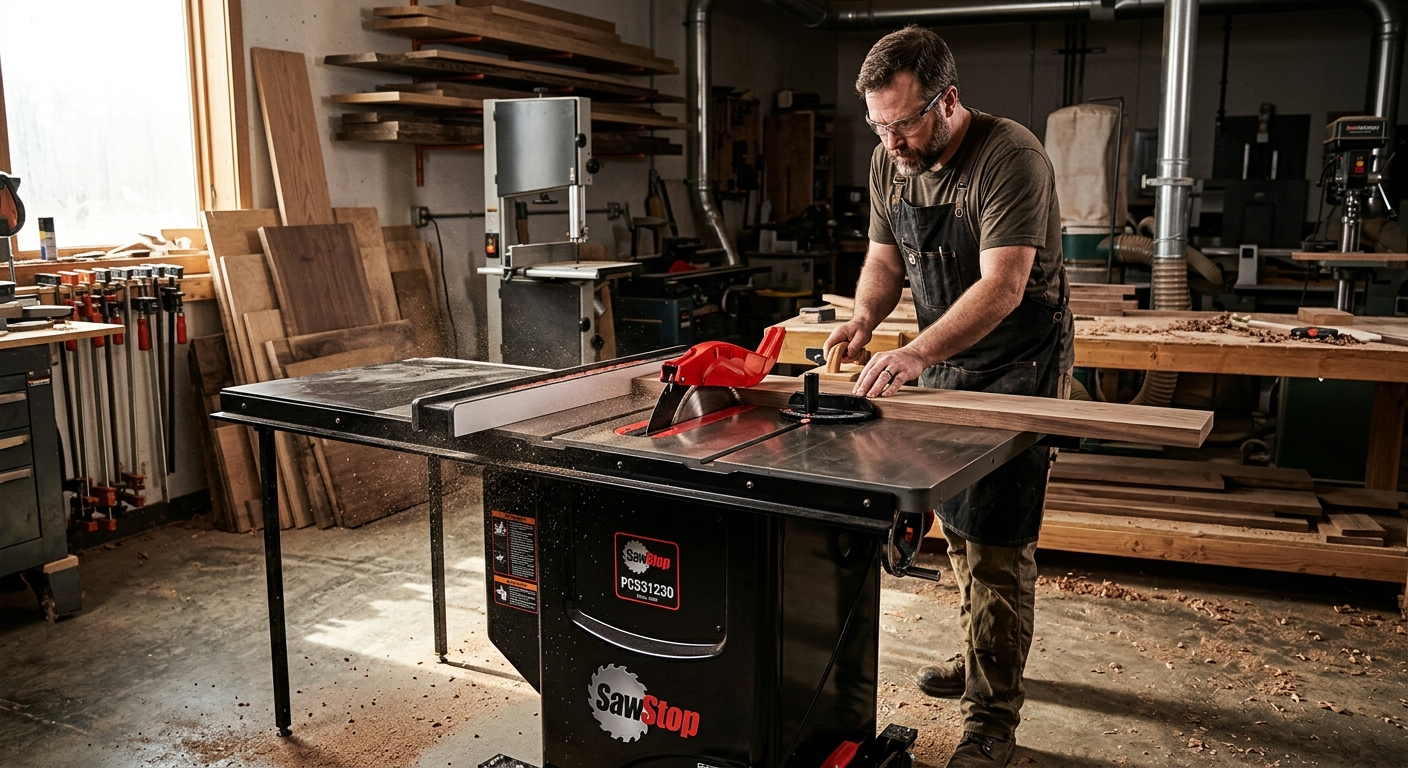
SawStop’s cabinet and professional contractor saws deserve the top spot for one reason that overshadows everything else: the flesh-detection system that stops the blade within 5 milliseconds of skin contact, preventing catastrophic injury. Woodworkers lose fingers to table saws every day – SawStop’s technology, which uses electrical detection of human tissue conductivity, has saved thousands of fingers. The PCS31230 is also an excellent saw independent of the safety system: a 3-hp motor, 30-inch fence, and cast iron table make it the shop standard for serious woodworkers.
At $1,799–$2,099, it’s a significant investment. But for anyone who uses a table saw regularly – especially anyone teaching others or working in a shared shop – the safety system’s value is incalculable.
- Pros: Industry-leading blade brake safety, excellent 30-inch fence, 3-hp motor, cast iron build
- Cons: Very high price, detection cartridge ($99) must be replaced if triggered
- Price range: $1,799–$2,099
2. DeWalt DWE7491RS – Best Jobsite Table Saw
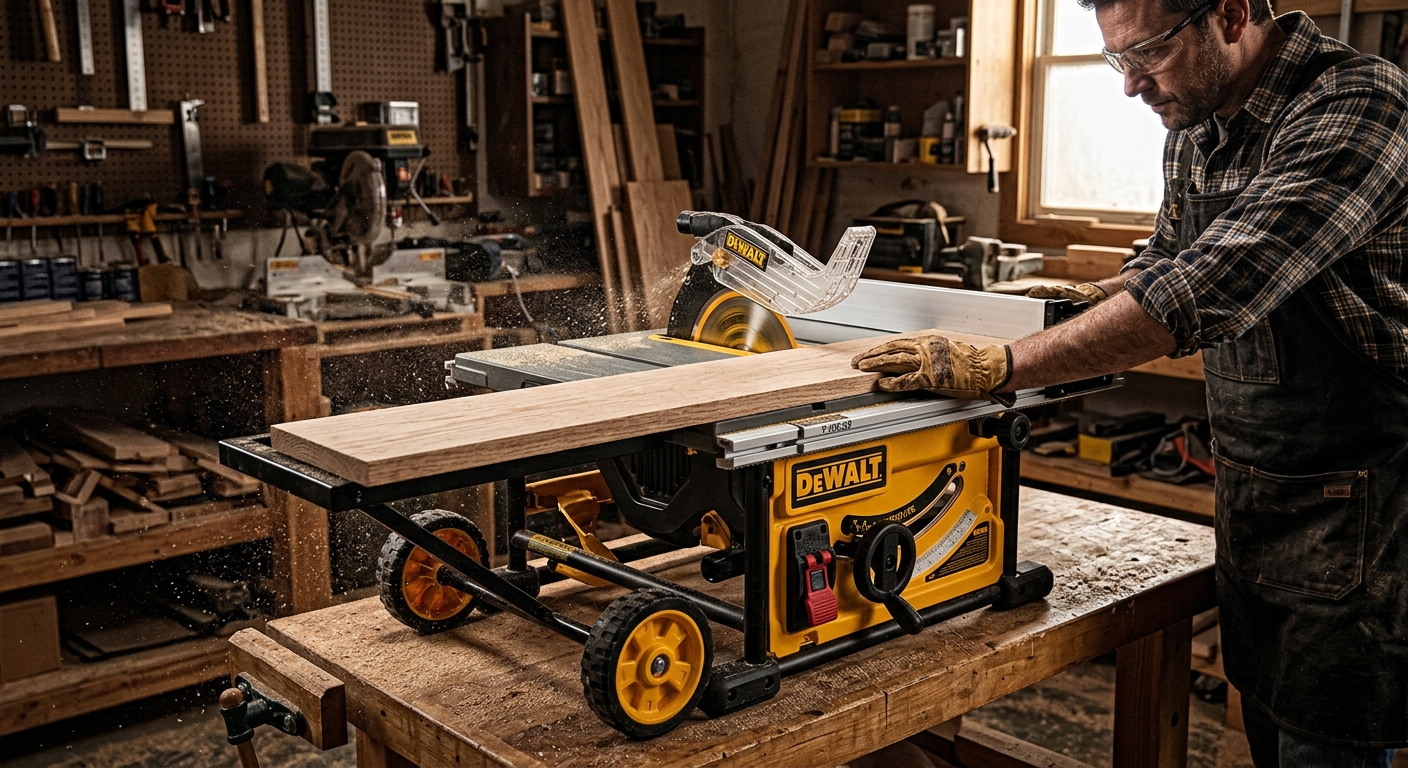
For woodworkers who need to bring their table saw to a job site – or who have limited garage space and need to fold the saw for storage – the DeWalt DWE7491RS is the clear choice. Its 15-amp motor, 32.5-inch rip capacity, and rack-and-pinion fence system (a standout feature at this price) deliver accuracy and capacity that rival stationary saws. The rolling stand folds in seconds with one hand and the full assembly weighs 90 lbs – manageable for one person.
At $499–$599, it’s the most capable portable saw available. For small-shop woodworkers who occasionally need to work on-site, or anyone who does install work and needs accurate rips and crosscuts at the job, this is the right tool.
- Pros: Best fence in portable class, 32.5-inch rip capacity, excellent one-hand folding stand, reliable motor
- Cons: Universal motor is loud, no dust collection port (dust goes everywhere), not for heavy production use
- Price range: $499–$599
3. RIDGID R4520 – Best Mid-Range Contractor Saw
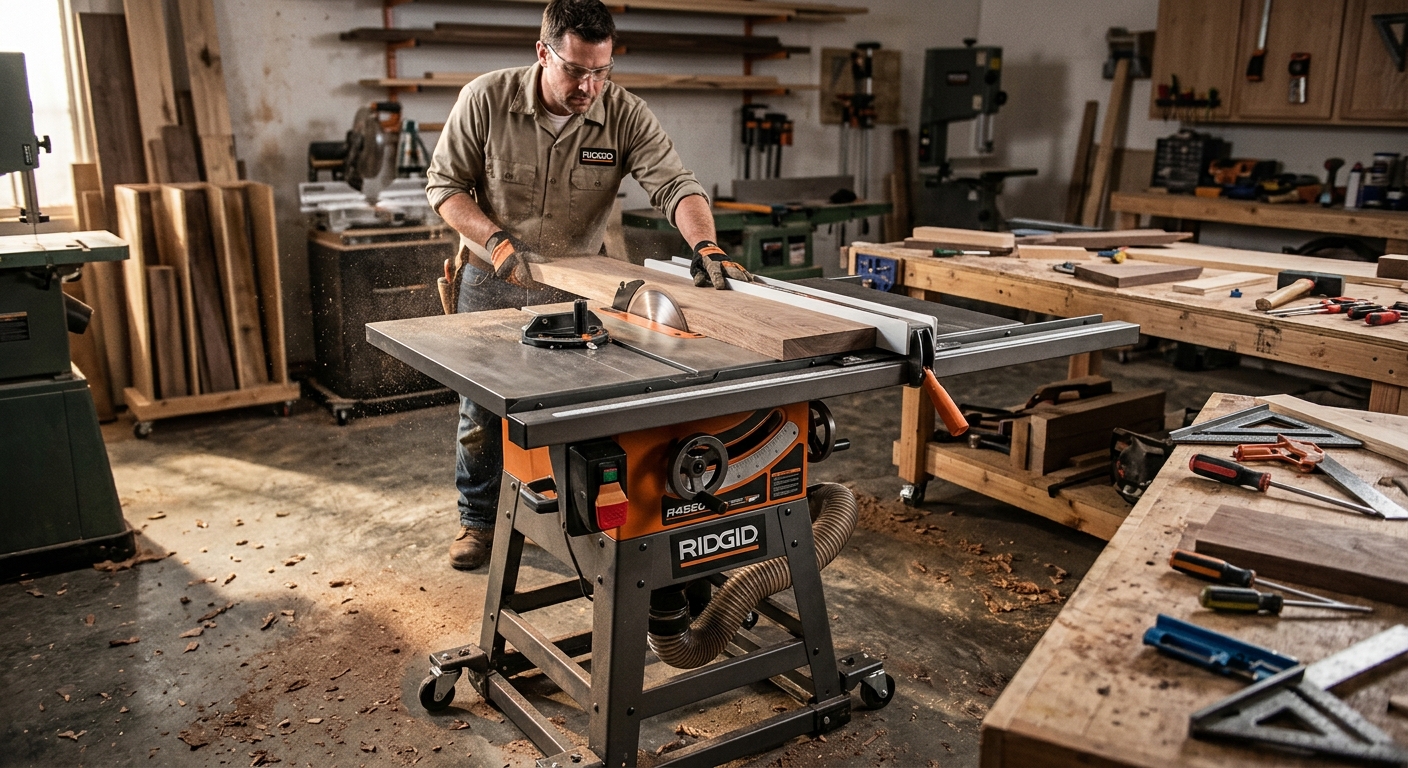
Ridgid’s R4520 bridges the gap between portable jobsite saws and full stationary contractor saws. At 222 lbs, it stays in place but doesn’t require a dedicated cabinet saw space. The 13-amp motor, 30-inch rip capacity, and extruded aluminum fence deliver genuine shop-quality performance for furniture and cabinet making. At $599–$699, it’s an excellent value in the stationary saw category.
- Pros: Solid stationary saw at mid-range price, 30-inch rip capacity, Ridgid LSA warranty
- Cons: Heavy but not castored, motor less powerful than cabinet saws, setup requires space
- Price range: $599–$699
4. RYOBI RTS21G – Best Budget Table Saw
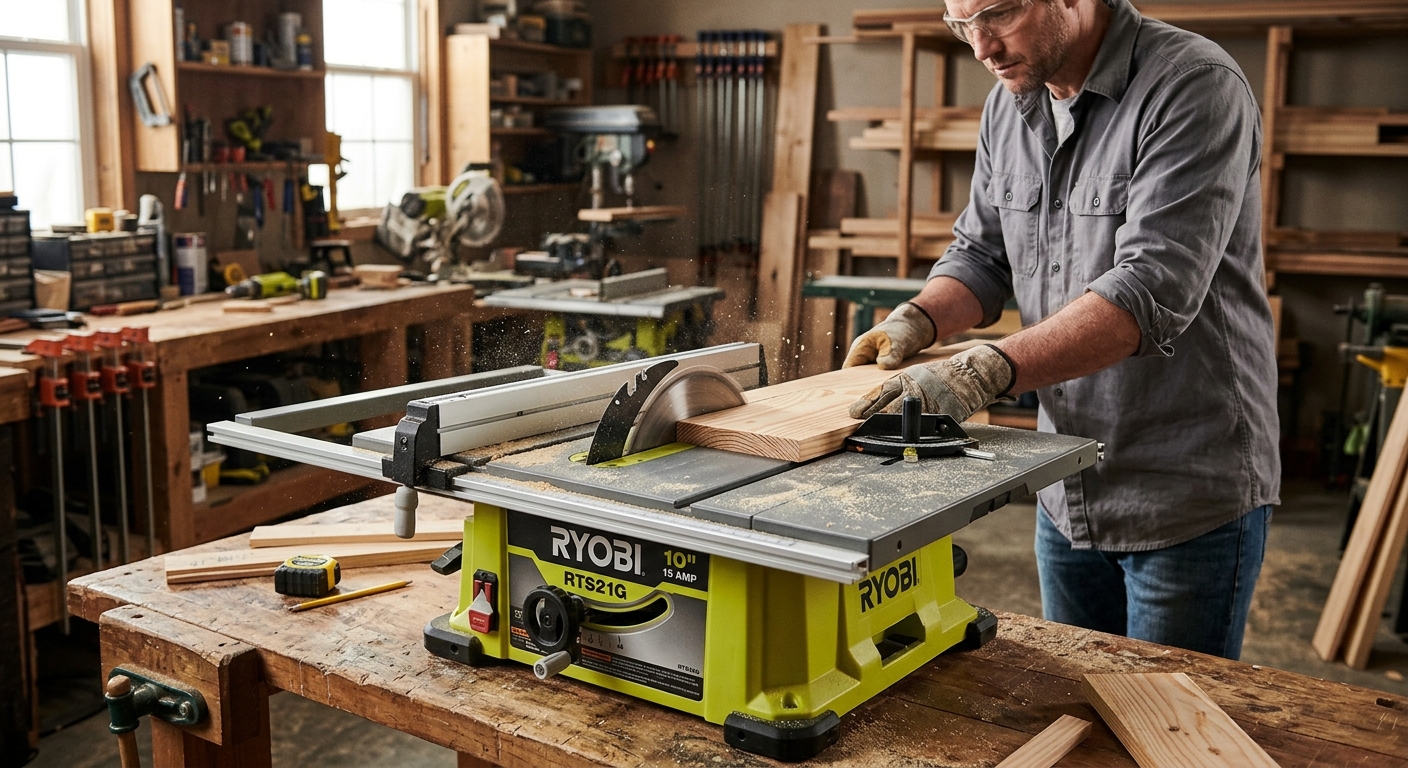
The RYOBI RTS21G is the entry point for DIYers who need to rip boards to width and cut plywood panels without the budget for DeWalt or Ridgid. At $199–$249, it’s the lowest-priced table saw worth recommending. The fence is basic but functional, rip capacity is 13 inches (limiting for wide sheet goods), and the stand is included. For home projects involving dimensional lumber and occasional plywood cuts, it serves adequately. For furniture building or any work requiring accuracy under load, step up.
- Pros: Lowest cost with stand included, adequate for basic ripping, compact footprint
- Cons: Narrow rip capacity, fence accuracy is limited, motor bogs under sustained load
- Price range: $199–$249
5. Bosch GTS18V-08N – Best Cordless Jobsite Saw
Bosch’s 18V cordless table saw is a genuine marvel of engineering – a table saw that runs on an 18V PROFACTOR battery and cuts through 3/4-inch plywood cleanly. At $349–$399 (tool only), it’s expensive for what it is, but its value lies entirely in the cordless format: outdoor install work, job sites without power, and situations where pulling 120V power for a table saw isn’t practical. Not a shop replacement – a job-site complement.
- Pros: Truly cordless, compact, serious capability for job-site use
- Cons’=>’High price, limited rip capacity, not a shop replacement, requires PROFACTOR battery
- Price range: $349–$399 (tool only)
FAQ
Is a table saw dangerous for beginners?
It requires respect and proper technique, not fear. Always use the riving knife and blade guard. Never reach over or behind a spinning blade. Stand to the side of the cut line, not behind it. Use a push stick for narrow rips. Take a class or watch quality instructional videos before your first cuts. More table saw injuries come from improper technique than from equipment failure.
What’s the difference between a contractor saw and a cabinet saw?
Contractor saws have open stands and open induction motors – they’re lighter (150–200 lbs) and more affordable ($600–$1,200). Cabinet saws have enclosed bases with the motor mounted inside, a sealed belt-drive system, and typically 3–5 hp motors – they’re heavier (300–600+ lbs), more powerful, and produce less vibration. Cabinet saws are the professional woodworker’s choice; contractor saws handle serious DIY with excellent results.
How do I safely rip narrow boards (under 3 inches)?
Use a dedicated push stick or push block – never use your fingers within 6 inches of the blade. A featherboard clamped to the fence before the blade keeps the workpiece flat against the fence during the cut. For stock under 1.5 inches wide, a sled with a clamp is safer than passing the stock between the fence and blade freehand.
Bottom Line
For dedicated shop woodworkers who use their saw regularly, the SawStop PCS31230 is the best saw to own – the safety system alone justifies the investment. Woodworkers who need portability without sacrificing too much capability should choose the DeWalt DWE7491RS; its rack-and-pinion fence makes it the most accurate portable saw available. Budget-conscious beginners who want to start making cuts can start with the RYOBI RTS21G and understand its limitations.
Affiliate Disclosure: DIY Arsenal participates in the Amazon Associates Program and other affiliate programs. When you purchase through links on this site, we may earn a small commission at no additional cost to you. We only recommend products we have personally tested and genuinely believe in.