Best Stud Finders for Drywall and Plaster
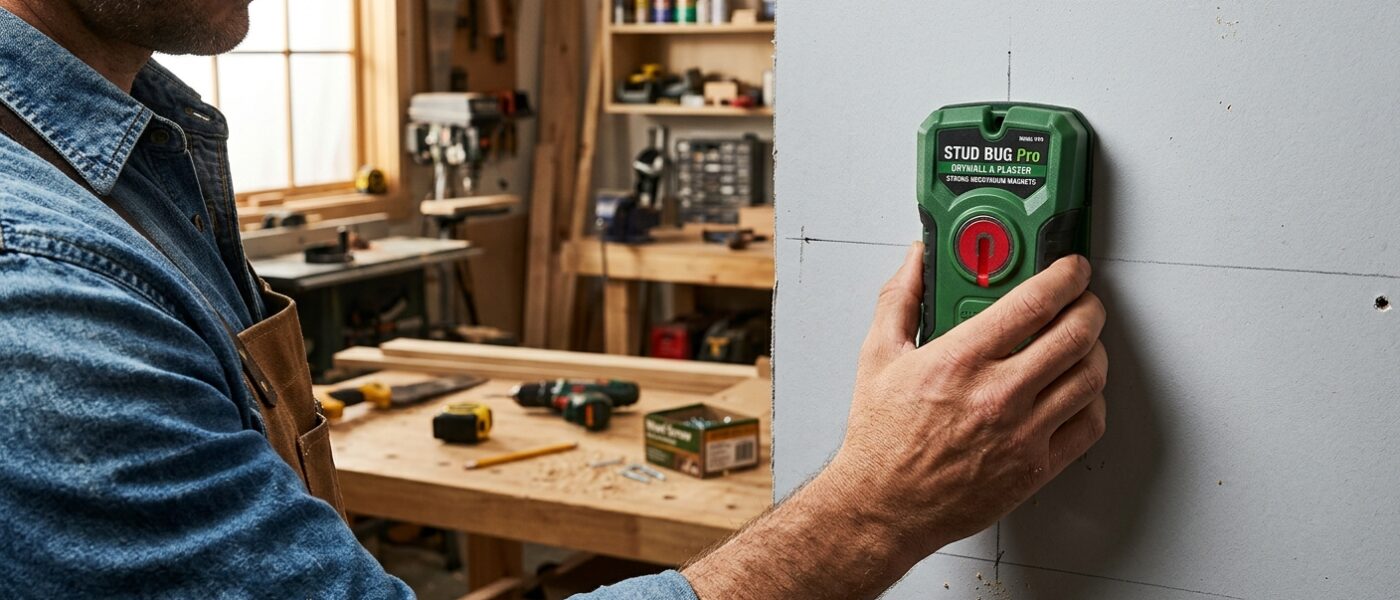
The Franklin Sensors ProSensor 710+ eliminates false readings with its multi-sensor array and is the most reliable electronic stud finder available; the CH Hanson magnetic model is the foolproof backup that never needs batteries.
As an Amazon Associate, we earn from qualifying purchases.
Hanging a picture on a hollow-wall drywall surface requires hitting a stud – otherwise your anchor pulls through at the first test. Mounting a TV, installing floating shelves, or securing heavy cabinet hardware all demand the same knowledge: where exactly is the structural wood behind this drywall? A stud finder answers that question quickly and reliably, but only if you choose the right one. This guide explains what to look for and which models consistently deliver accurate results.
How Stud Finders Work
Magnetic Stud Finders
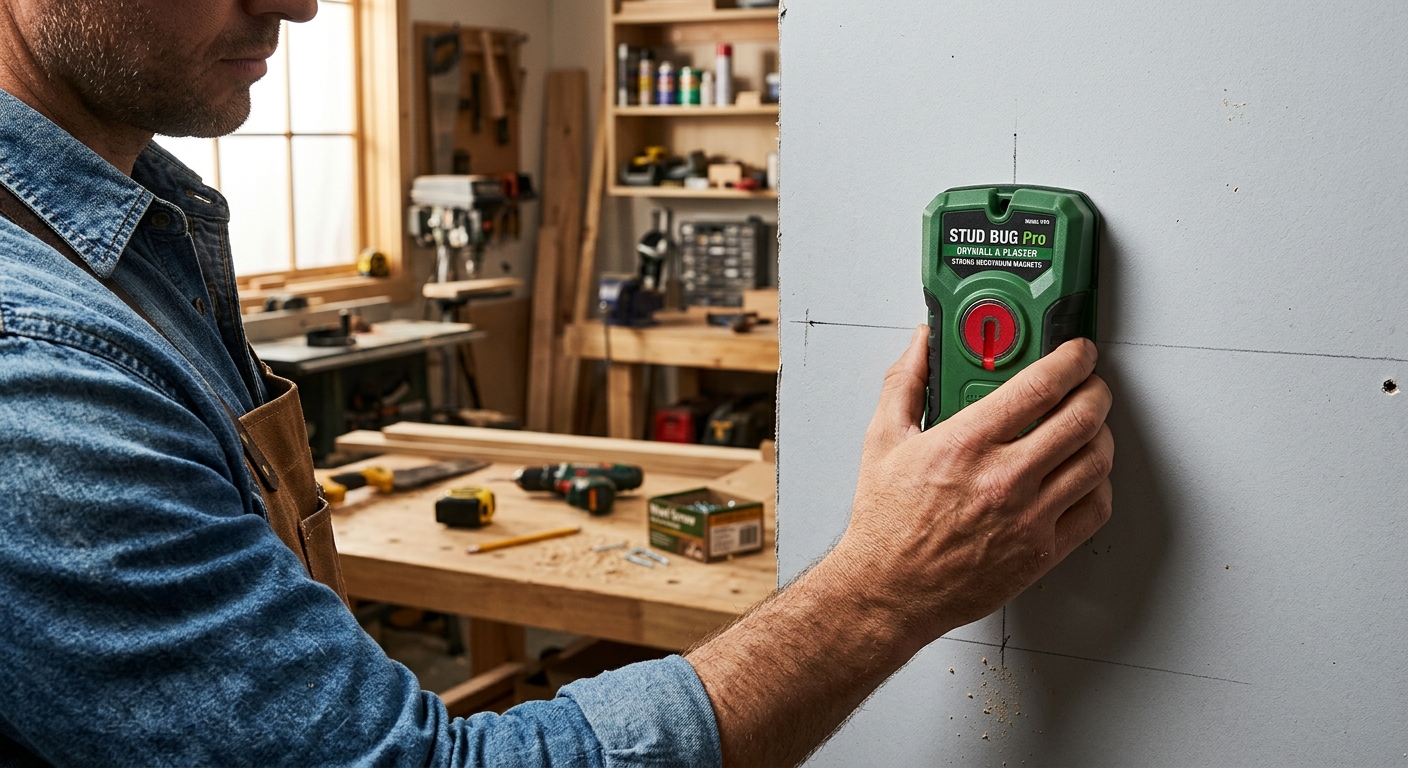
The simplest design: a strong magnet mounted in a sliding housing detects the nails and screws fastening the drywall to the stud. No batteries required. They work reliably and never have false readings, but they require you to scan slowly in a grid pattern, and they only locate the fasteners – not the full width of the stud.
Electronic (Capacitive) Stud Finders
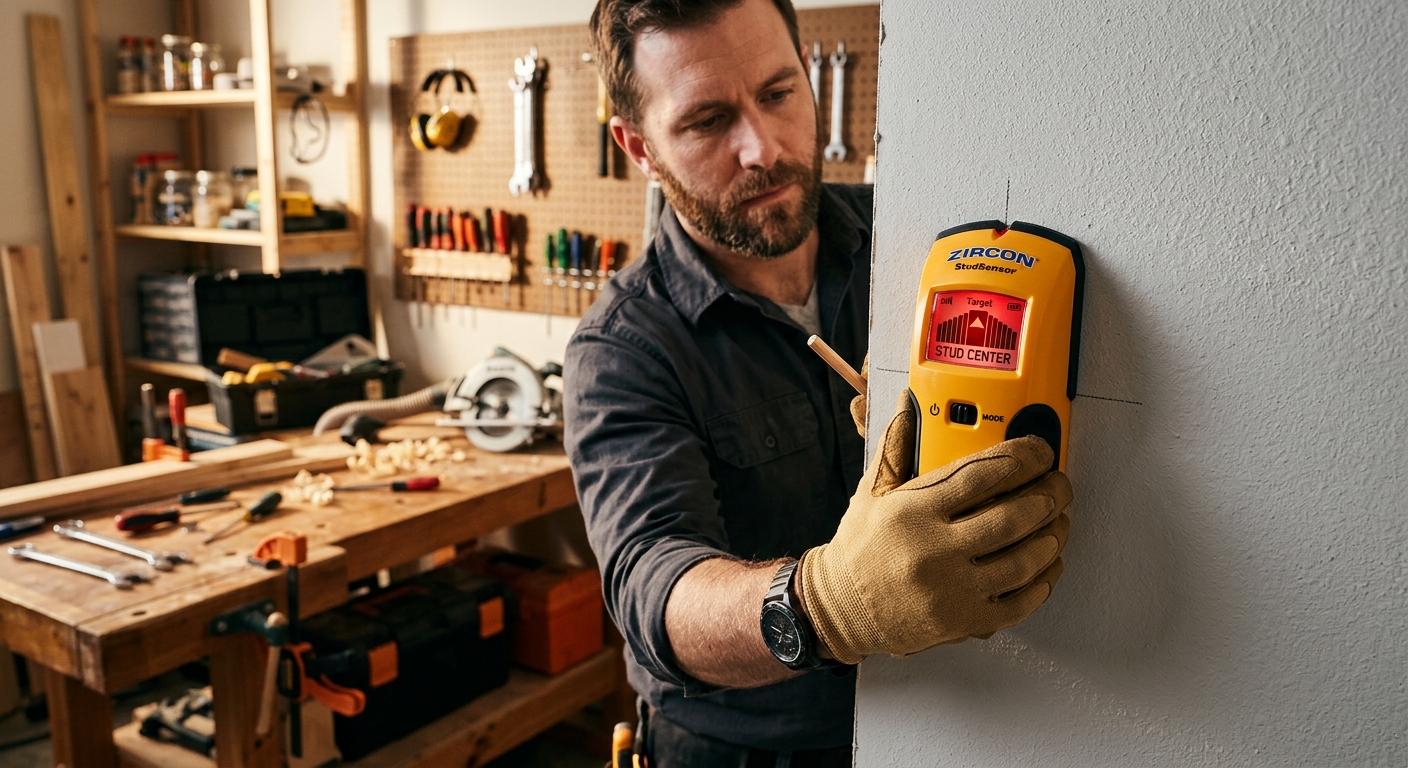
Detect changes in wall density using a capacitive sensor. As the sensor passes from drywall (low density) to framing (higher density) and back to drywall, the electronics trigger an alert – a beep, a light, or both. More convenient than magnetic tools but require calibration and can give false readings over pipes, wires, and voids.
AC Detection
Many electronic stud finders include an AC wire detection mode that alerts you when the sensor is near live electrical wiring. This is a genuinely useful safety feature when drilling into walls.
Radar-Based Finders
The most advanced (and expensive) category uses a small radar array to create a density map of the wall, showing framing, pipes, and wires on a display. The Bosch D-Tect 120 is the benchmark in this category – used by professionals who cannot afford mistakes.
Key Features to Look For
Dual Scan (Edge-Finding vs. Center-Finding)
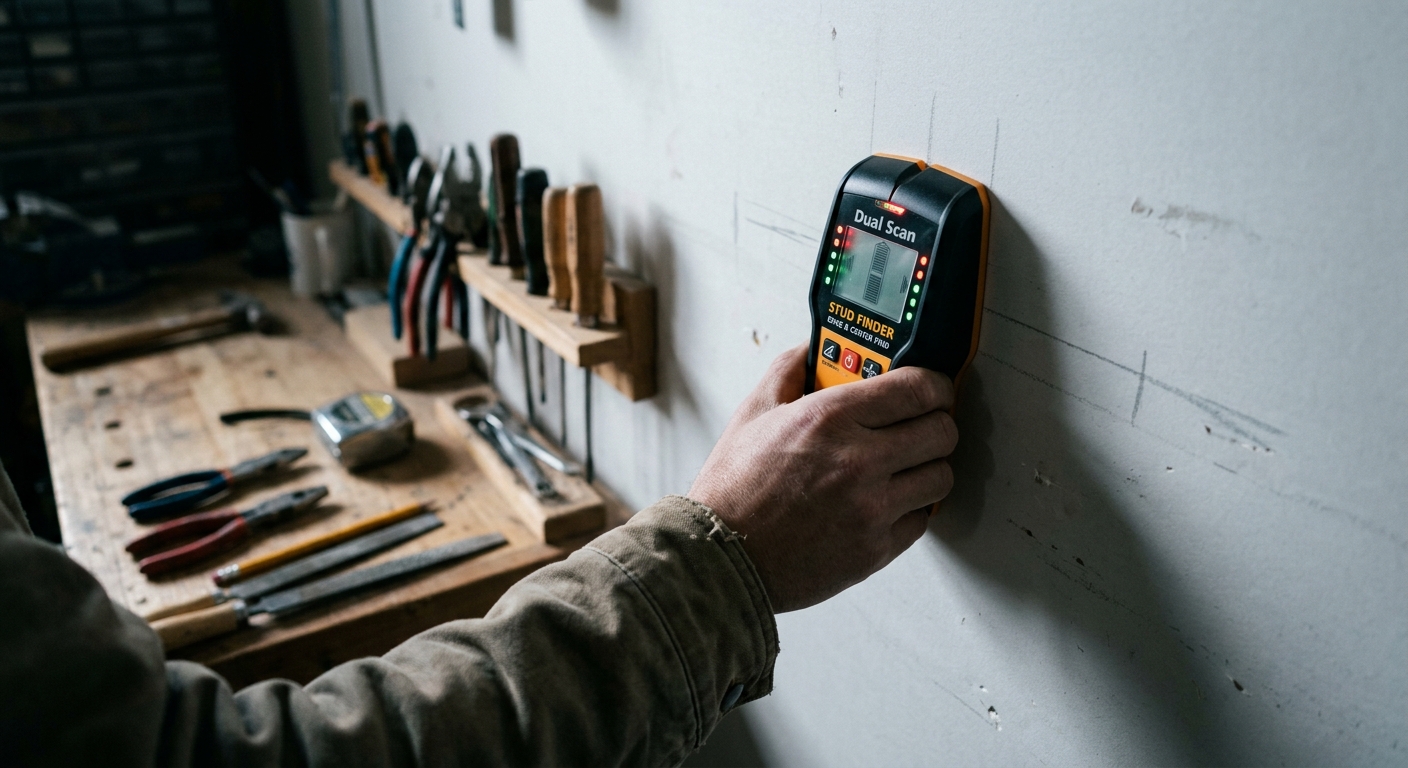
Edge-finding scans locate the edges of the stud; you mark both and find the center yourself. Center-finding modes locate the stud center directly. Both work; center-finding is faster once you learn to trust it.
Deep Scan Mode
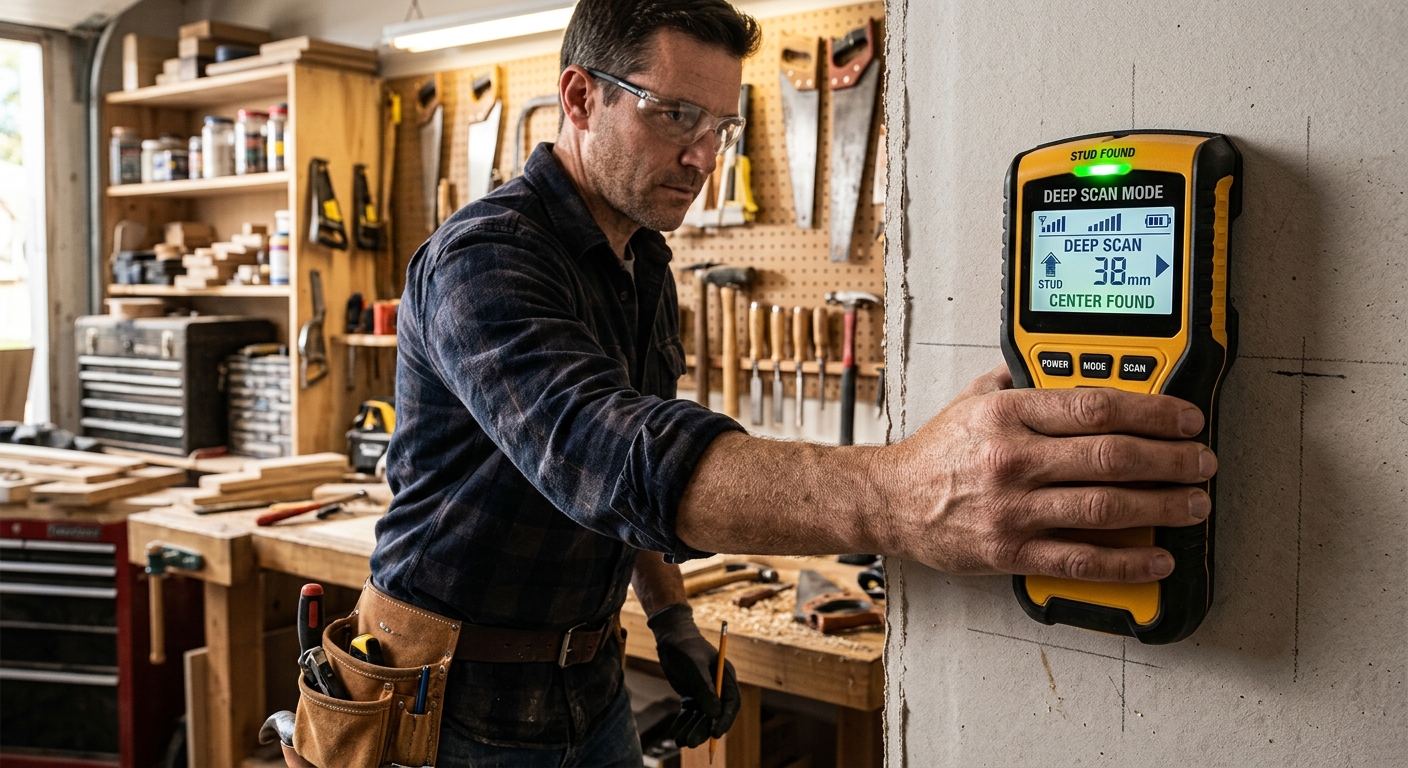
Standard mode works on 1/2-inch or 5/8-inch drywall. Deep scan penetrates up to 1-1/2 inches for thick walls, double drywall, or plaster over lath.
AC Detection
A critical safety feature. Never skip this check before drilling into an unknown wall.
Calibration
Electronic finders must be calibrated against a clear area of wall before each use. Tools with slow or unreliable calibration routines are frustrating. The best tools calibrate in 1 to 2 seconds.
Our Top Picks
1. Franklin Sensors ProSensor 710+
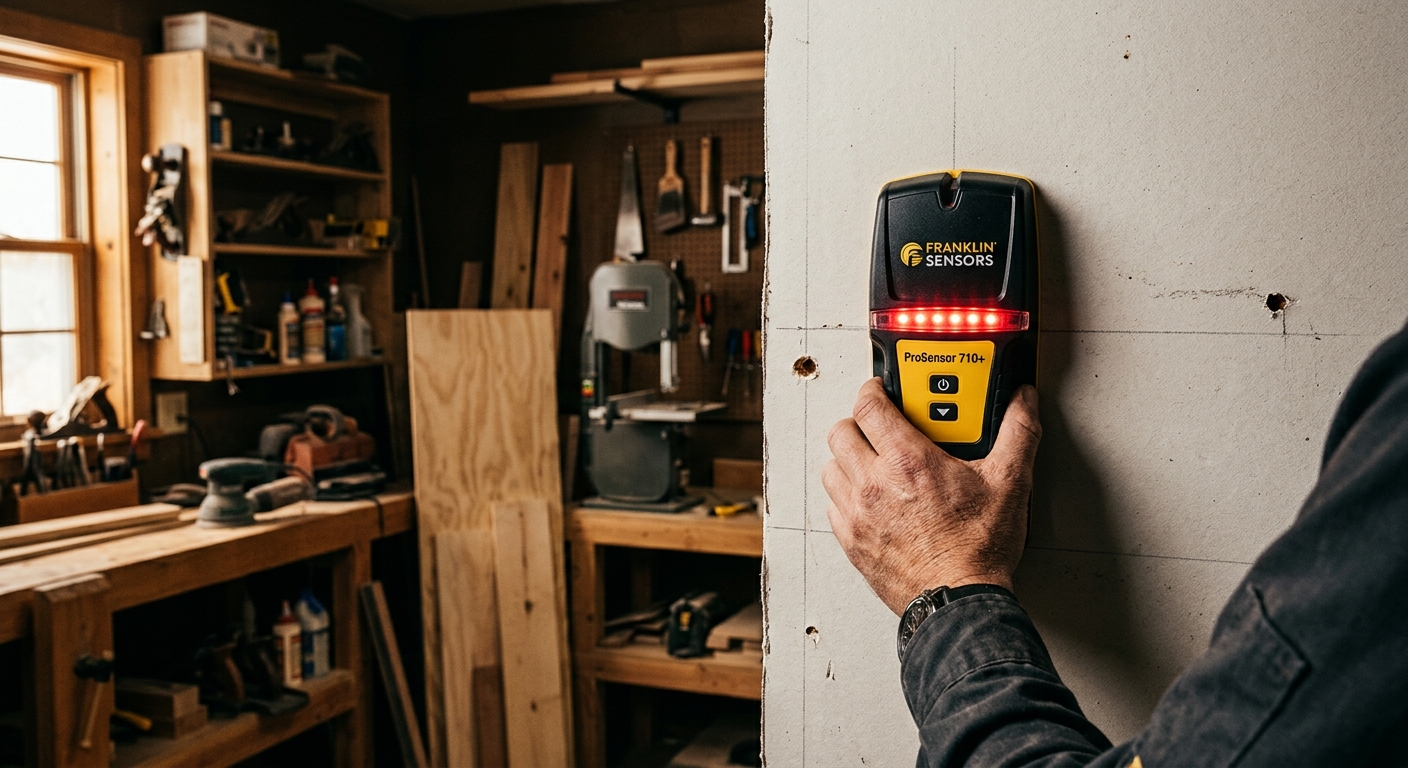
The best electronic stud finder for most users, period. Instead of a single sensor, the ProSensor uses a row of 13 sensors that simultaneously display the stud’s full width on an LED bar – no slow scanning required. Place it on the wall, press the button, and LEDs light up across the full width of the stud instantly. No calibration errors, no false readings from wiring (though it includes AC detection). Game-changing accuracy.
2. Zircon e50-FFP Electronic Stud Finder
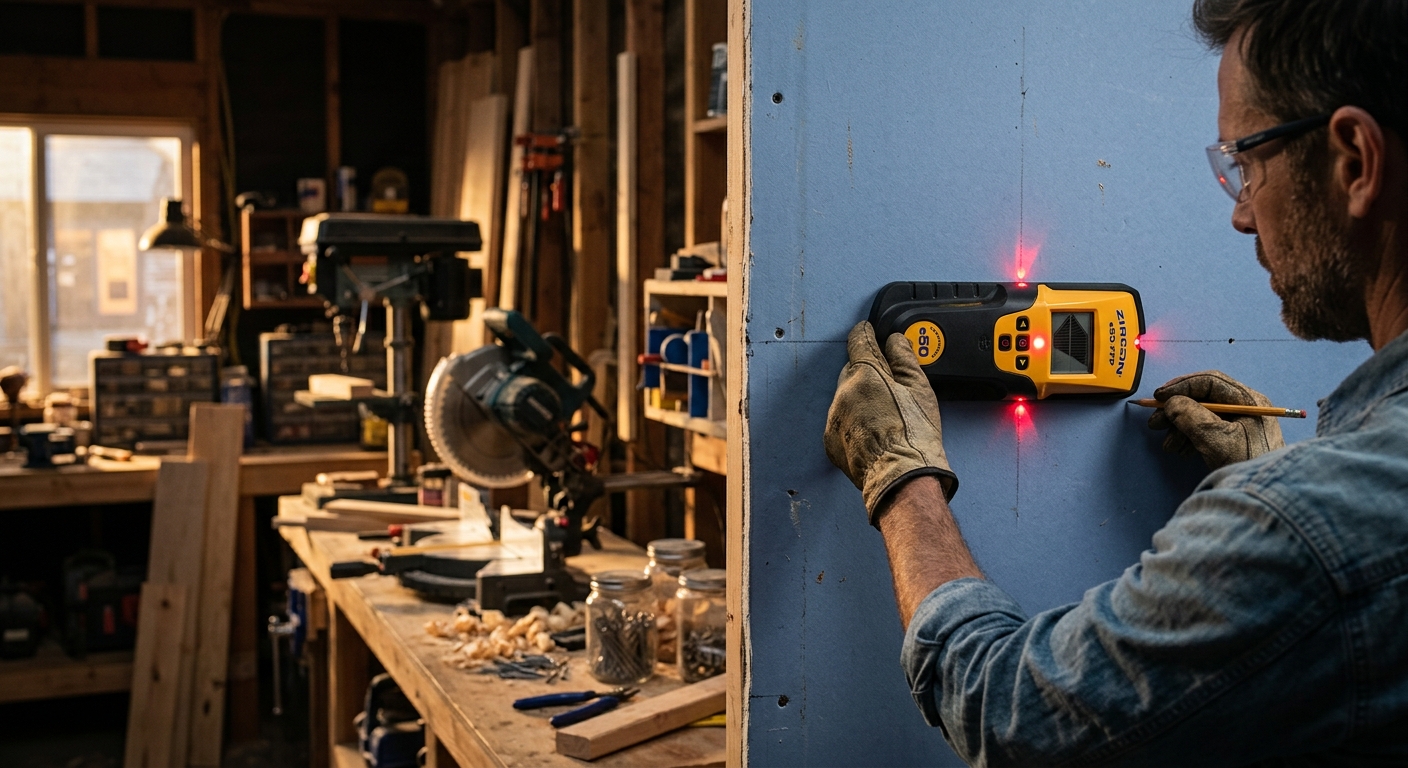
Zircon essentially invented the electronic stud finder and still makes excellent tools. The e50 is their workhorse: reliable edge detection, deep scan mode, AC wire alert, and a clear audio/visual indicator. The most widely used stud finder in hardware stores for a reason.
3. Bosch GMS120 Digital Multi-Scanner
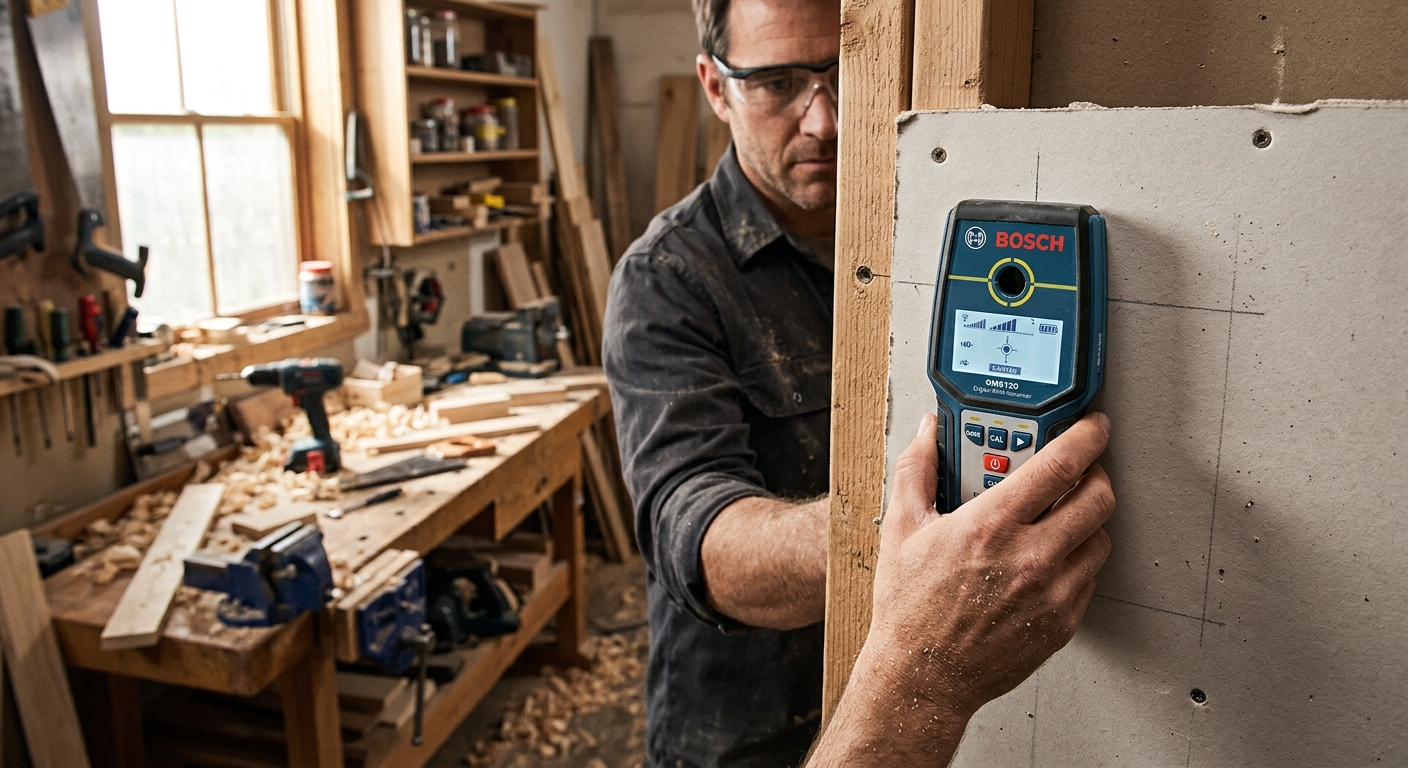
Bosch’s mid-range stud finder detects wood studs, metal framing, rebar, and live wires behind walls up to 4-3/4 inches thick. Color-coded LED display makes mode indication clear. A reliable choice for users with unusual wall types (tile over concrete, double drywall).
4. Tavool Stud Finder 4-in-1
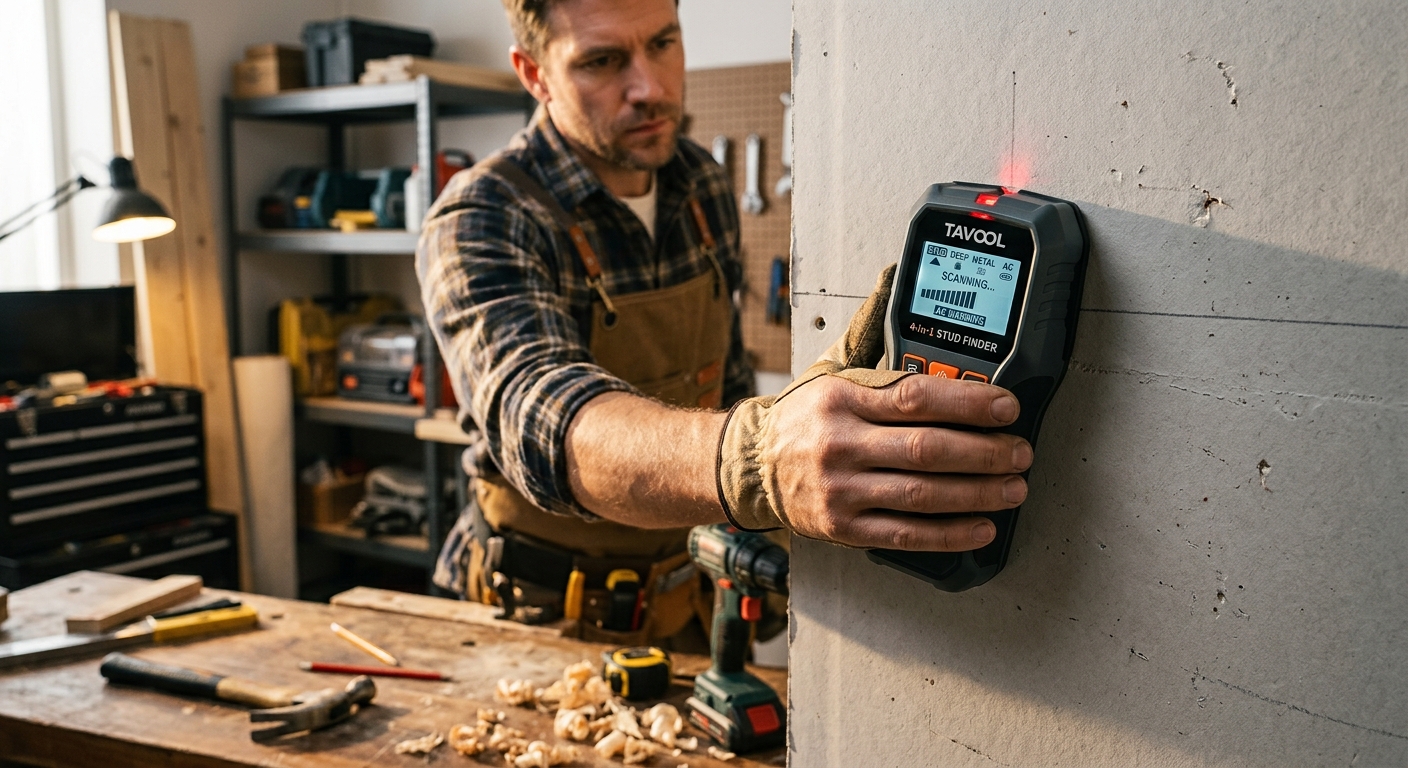
The best budget electronic stud finder. Detects wood studs, metal studs, AC wires, and deep studs, with clear LED indicators and a buzzer. Calibration is quick and the readings are more consistent than most competitors at this price.
5. CH Hanson 03040 Magnetic Stud Finder

For users who do not want batteries, calibration hassles, or false readings: the CH Hanson magnetic stud finder is a revelation. A powerful rare-earth magnet in a rolling housing snaps to fasteners through drywall with a satisfying click. Completely reliable, completely simple, and costs less than a cup of coffee.
What to Avoid
- Generic single-sensor scanners: Difficult to calibrate and prone to false readings that leave you drilling into empty wall cavities.
- Stud finders with no AC detection: You should always know if live wiring is present before drilling.
- Tools that require 10+ seconds of scanning motion to calibrate: In the field, this becomes tedious and errors creep in.
FAQ
Why does my stud finder beep everywhere?
The most common cause is calibrating over a stud (the tool thinks the stud is the baseline). Start calibrating on a clear area of wall, away from where you expect studs. Also check the battery – low batteries cause false readings.
How far apart are studs typically spaced?
In most residential construction, studs are 16 inches on center. Older homes sometimes use 24-inch spacing. Bathrooms and closets may have irregular spacing around windows and doors.
Can I find studs through tile?
Ceramic tile over drywall: yes, with a deep scan mode. Tile over concrete: no – you will need a radar scanner or must remove the tile to inspect the wall structure.
Affiliate Disclosure: DIY Arsenal participates in the Amazon Associates Program and other affiliate programs. When you purchase through links on this site, we may earn a small commission at no additional cost to you. We only recommend products we have personally tested and genuinely believe in.