Best Framing Squares – Steel vs Aluminum for Layout
The Swanson TB132 aluminum square is the best all-around framing square for most framers — light enough to carry comfortably, accurate enough for professional rafter and stringer layout; the Empire 1190 steel square is the choice for the heaviest-duty structural work.
As an Amazon Associate, we earn from qualifying purchases.
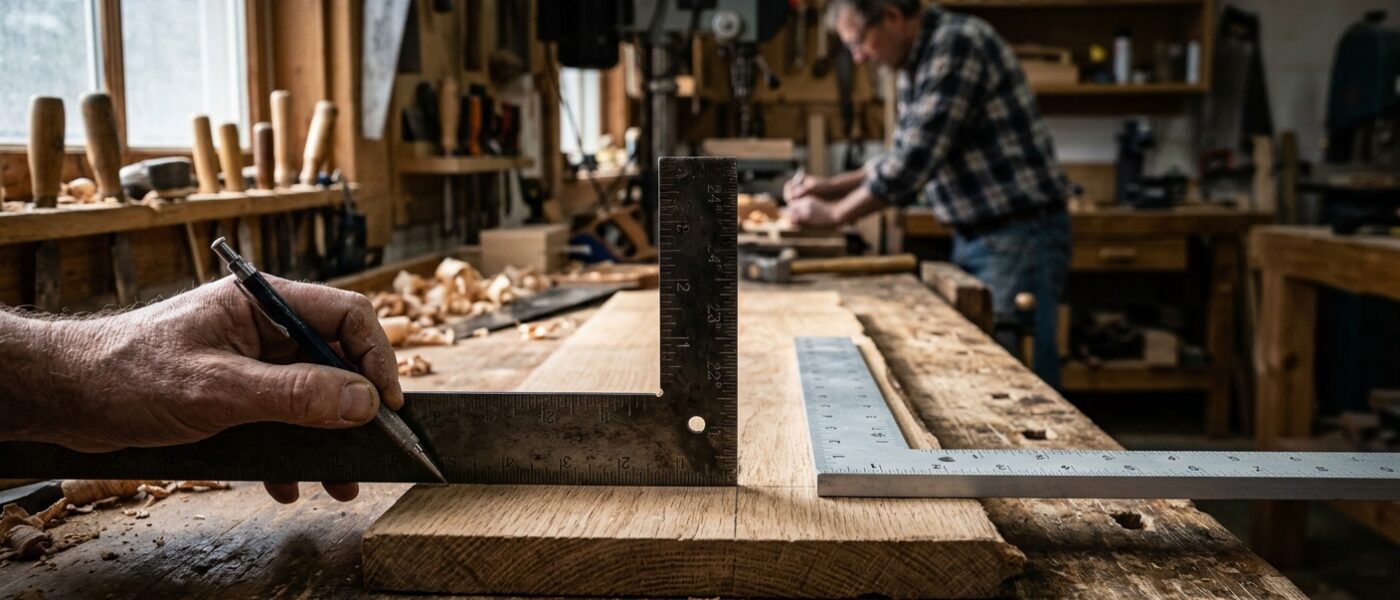
A framing square (also called a steel square or rafter square) is one of the most information-dense tools in the carpenter trade. The flat L-shaped steel body looks simple, but the tables stamped across its face – rafter tables, Essex board measure, octagon scale, and brace measure – contain the calculations that professional framers once had to do by hand. For framing walls, cutting rafters, laying out staircases, and solving geometry problems in structural carpentry, the framing square is the reference tool that cuts out the math.
Reading a Framing Square
Body and Tongue
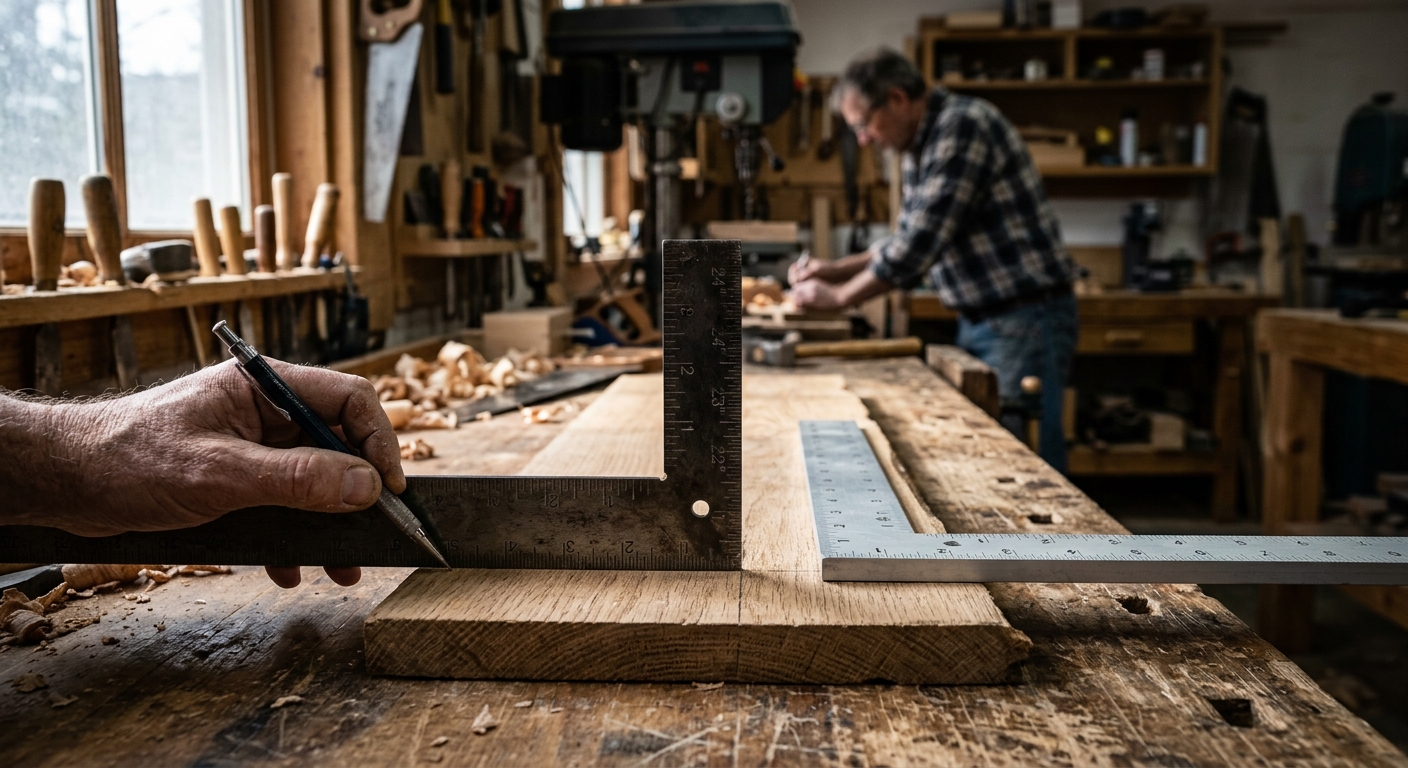
The long arm of the L is the body (24 inches long, 2 inches wide). The short arm is the tongue (16 inches long, 1.5 inches wide). Both carry measurement scales on front and back faces in inch fractions and in 1/10 and 1/12 inch units for specific calculations.
Rafter Tables
Tables on the face of the body give the unit length of common, hip/valley, and jack rafters for each inch of run per foot – eliminating trigonometry from rafter layout. These tables are why professional framers can lay out a complex roof quickly without a calculator.
Essex Board Measure
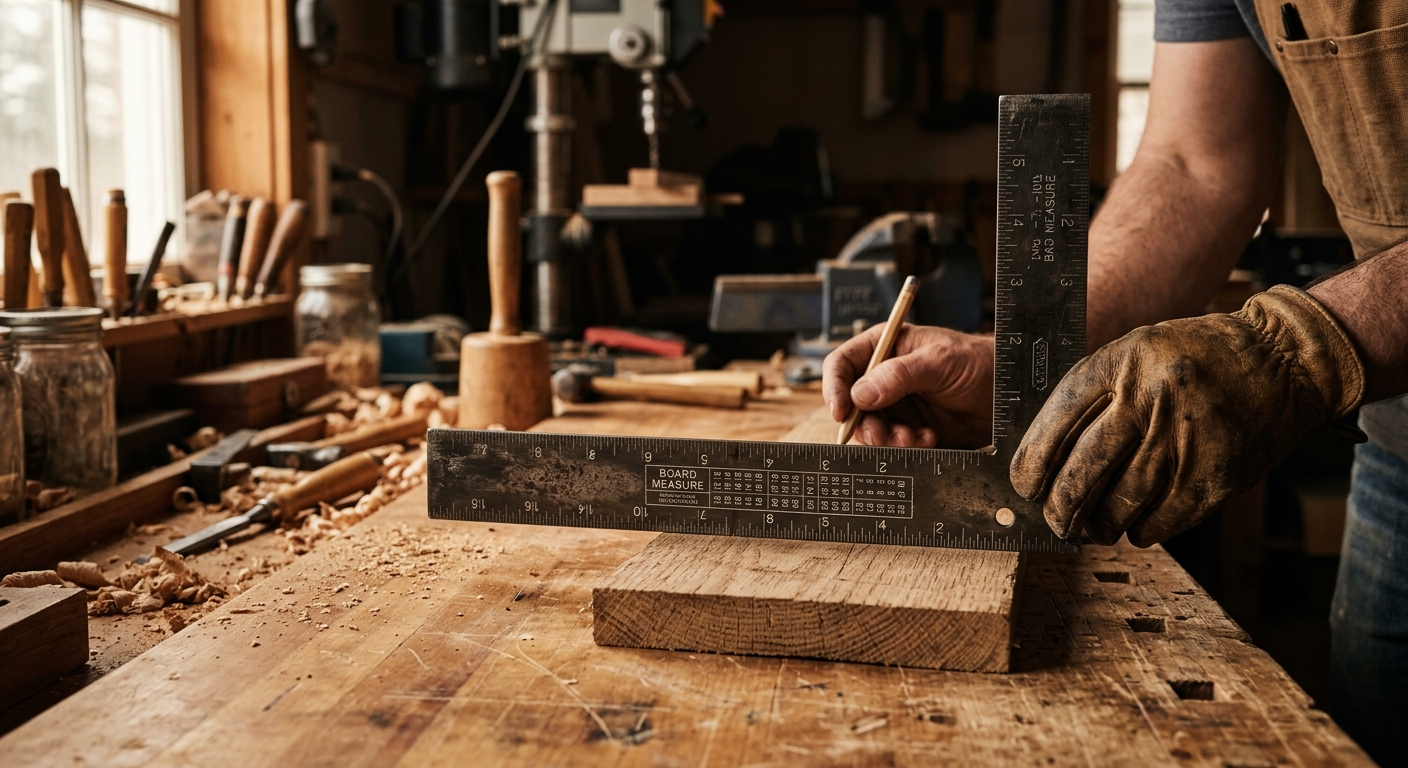
A scale for calculating board feet of lumber from dimensions – useful for estimating and ordering materials.
Steel vs. Aluminum Framing Squares
Traditional framing squares are made from cold-rolled steel – heavy, rust-susceptible, but extremely rigid. Aluminum squares are lighter (significant when carrying a 24-inch square up a ladder repeatedly) and do not rust, but are slightly less rigid. For most framing applications, aluminum squares are adequate. For laying out cutting lines that require very flat reference on both faces simultaneously (large timbers), steel’s extra rigidity is measurable.
Key Features to Look For
Accuracy
The 90-degree corner must be true. Test by marking a line, flipping the square, and checking alignment. Better squares are machined to closer tolerances at the corner. Cheap framing squares often have the corner stamped out of spec – a serious problem when laying out structural members.
Graduated Scales
Scales should be stamped or etched, not printed. Printed scales wear off within a season of field use. Stamped or etched scales survive indefinitely.
Stairgage Fence Compatibility
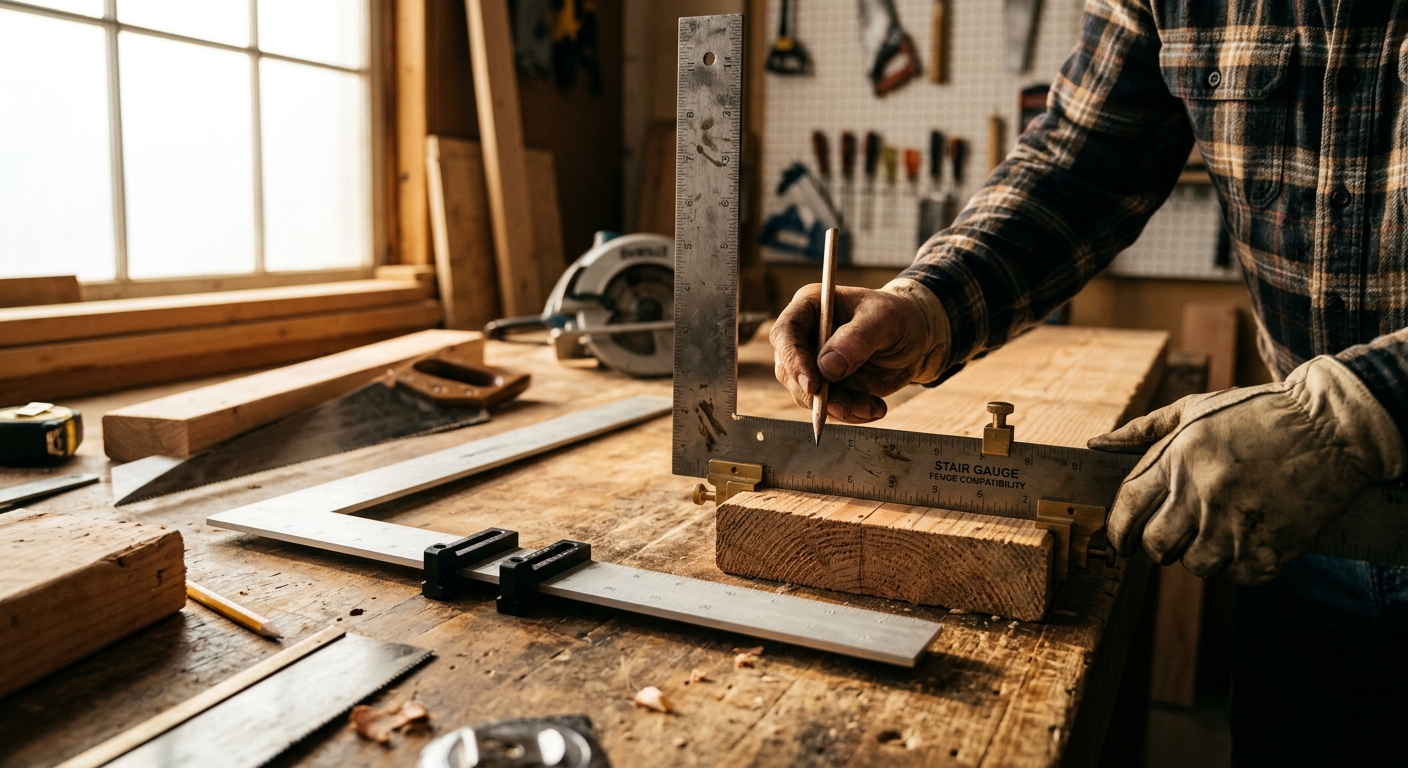
Stair gauges are small clamps that attach to the framing square at specific rise and run measurements, allowing the square to be repositioned consistently along a stringer for repeated layout. The square body must be compatible with standard stair gauge clamps – most are, but verify if purchasing a non-standard square.
Our Top Picks
1. Swanson Tool S0107 Speed Square (12-Inch)
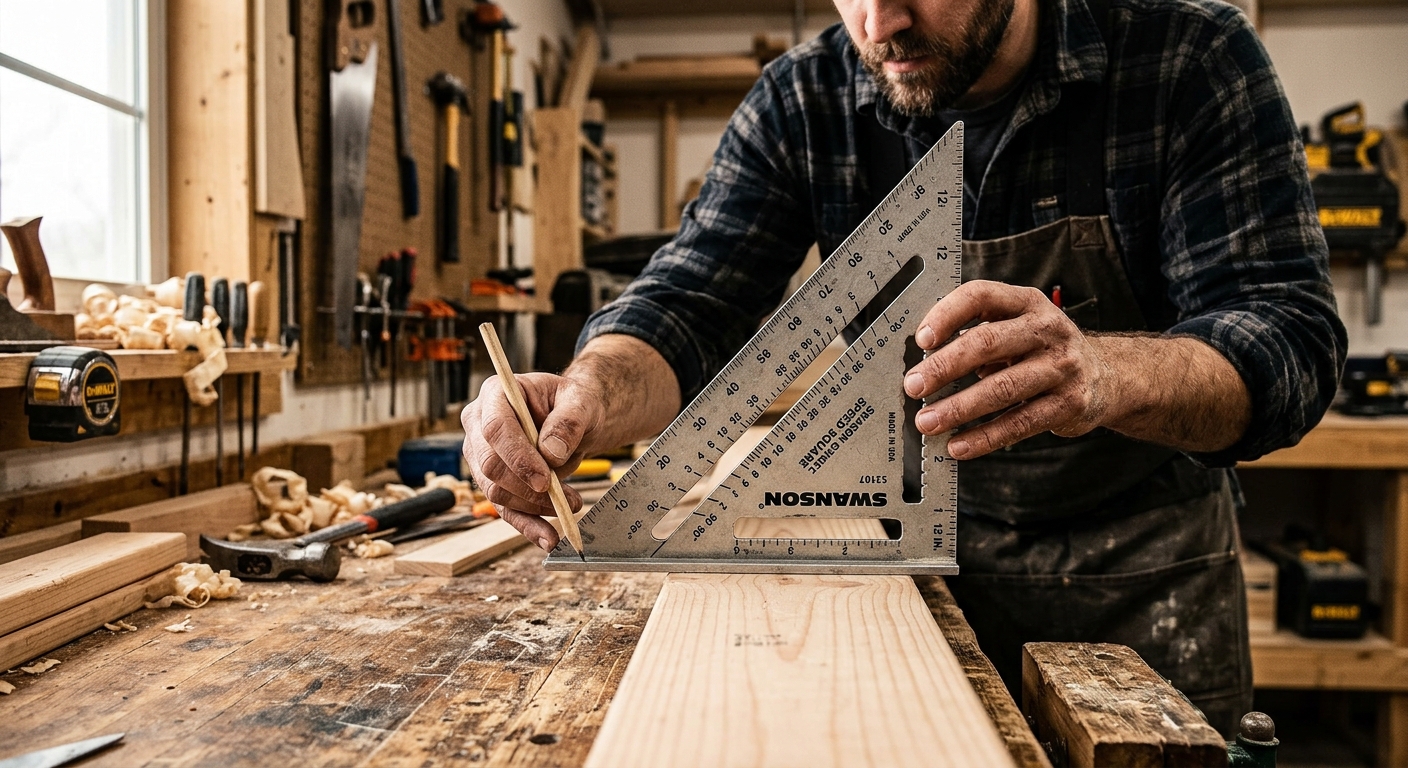
For most framing layout, the 12-inch speed square handles what the full framing square does for shorter lumber. Already recommended in the speed square guide – mentioned here for the user who is deciding between the two.
2. Empire Level 1190 Heavy Duty Framing Square (16×24)
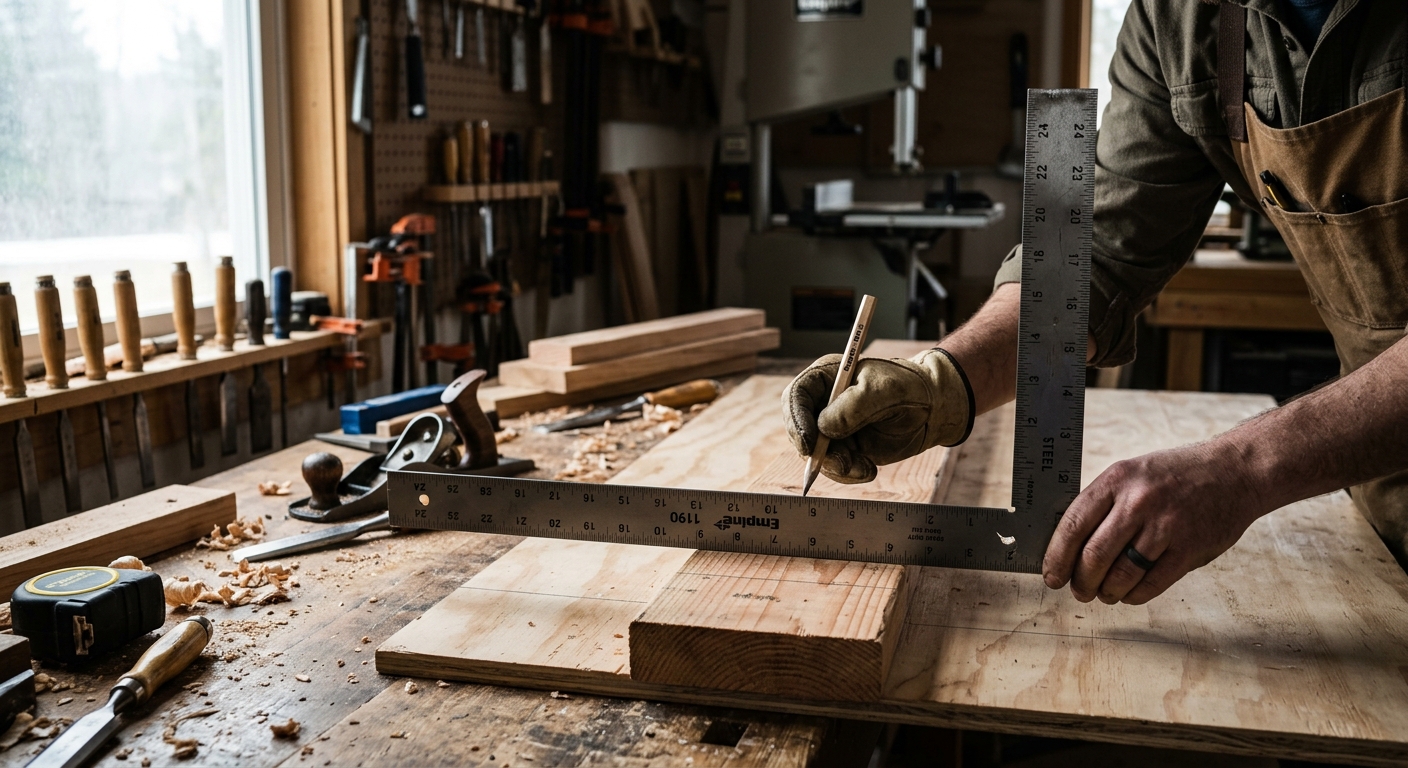
A professional-grade steel framing square with etched scales on front and back, rafter tables, Essex board measure, and brace measure stamped across both arms. The heavy-gauge steel is rigid under the heaviest framing use. One of the best framing squares available at a fair price.
3. Swanson Tool TB132 Big 12 Aluminum Framing Square
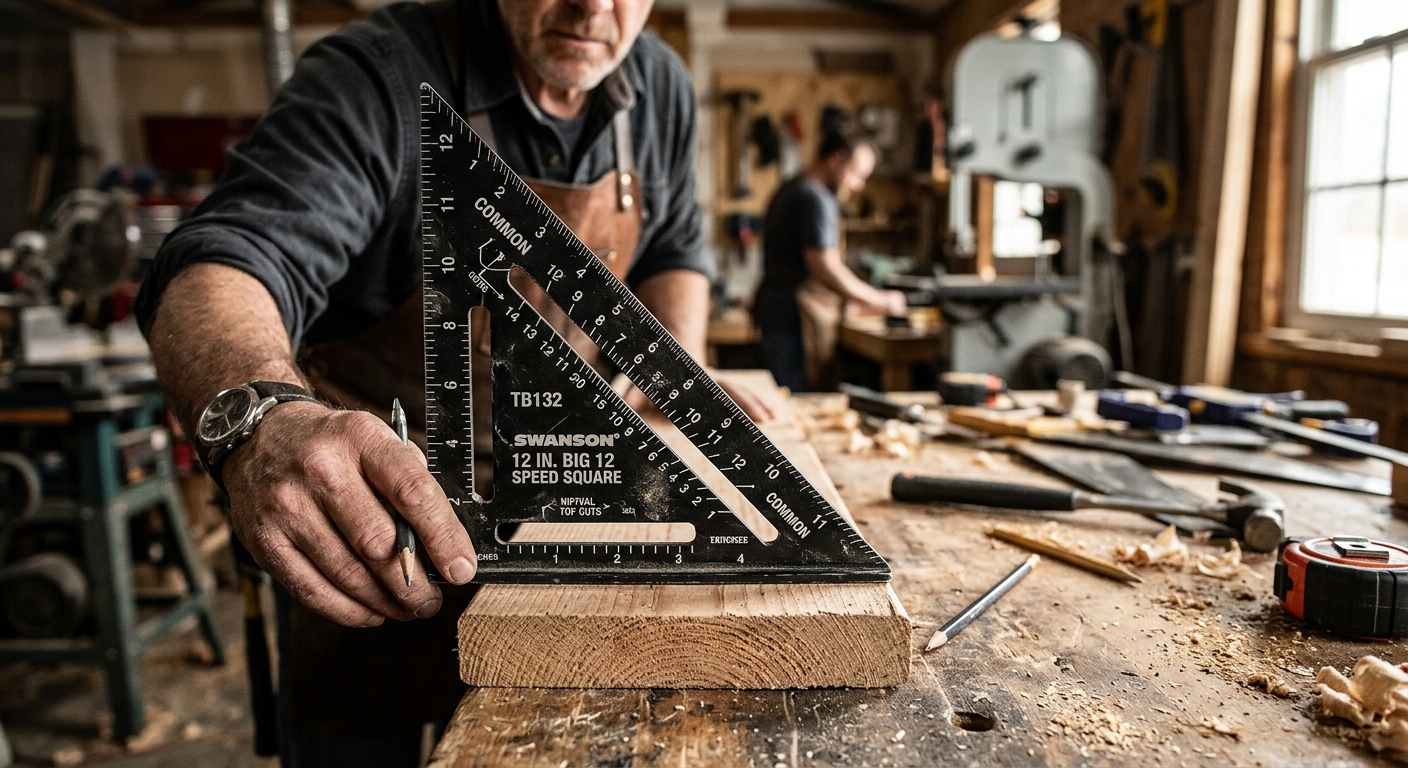
A 12×24 aluminum framing square from Swanson – the brand that defined the category. The aluminum construction saves significant weight while maintaining adequate rigidity for rafter and stringer layout. The rafter tables and angles are clearly stamped. A favorite among professional framers who carry the square up and down ladders repeatedly.
4. Stanley 45-500 Aluminum Rafter Square
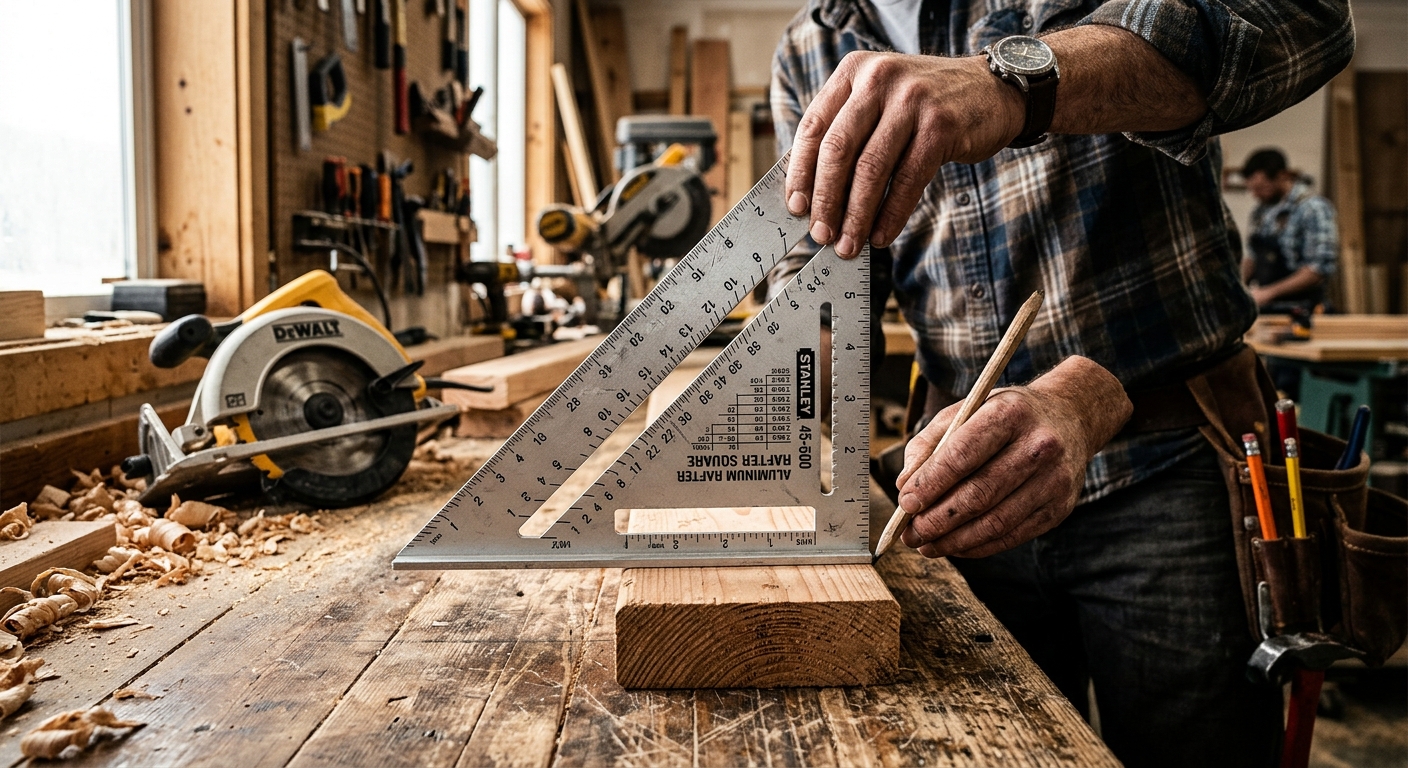
A quality aluminum framing square with clearly stamped rafter tables and measurement scales. Stanley quality at an accessible price. A solid entry-level framing square for homeowners who frame occasionally and want a reliable layout reference.
5. Johnson Level 1905 Aluminum Rafter Angle Square
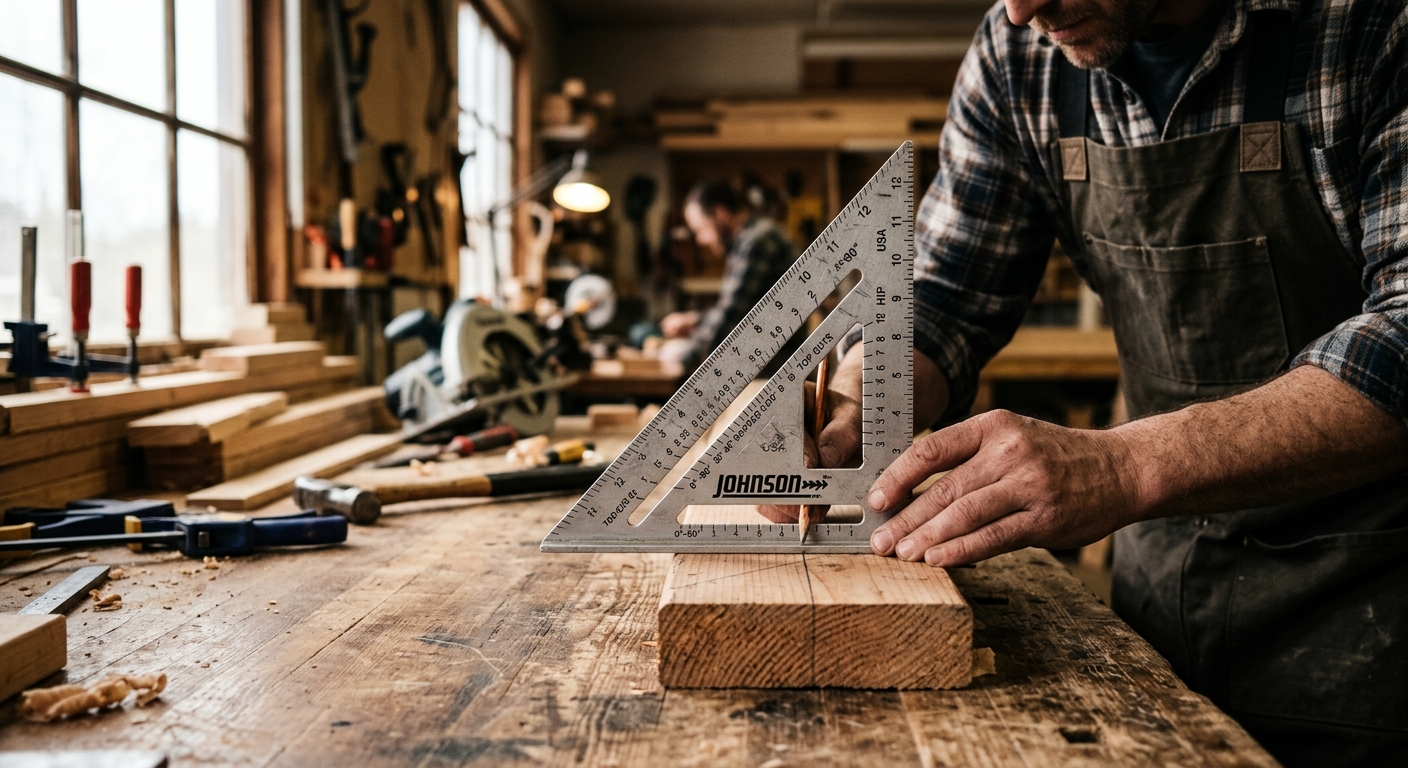
A slightly smaller aluminum rafter square with rafter tables and a straightforward layout that is easy to read under field conditions. A practical alternative to Swanson for those looking for a mid-range option.
FAQ
What is the difference between a framing square and a speed square?
A framing square is an L-shaped reference tool with extended arms for rafter tables and large-scale layout. A speed square is a small triangular tool for marking cut lines quickly. Framing squares are used for rafter layout and stair stringer layout; speed squares are used for marking crosscut and rafter cut lines on individual boards. Most framers use both.
Do I need to understand rafter tables to use a framing square?
For basic square crosscut marking, no. For rafter layout and stringer layout, yes. The rafter tables are extremely useful once you understand the rise/run calculation, but they require learning to use. Swanson publishes a free booklet explaining their speed and framing square tables.
How do I check if my framing square is accurate?
Place the square corner against a known straight edge, mark a line along the tongue. Flip the square to the other side of the same edge and check the tongue alignment against your mark. Any deviation indicates the corner is not 90 degrees. Framing squares can be corrected by peening the inside or outside of the corner with a center punch – an old technique that adjusts the corner angle by controlled deformation of the metal.
Affiliate Disclosure: DIY Arsenal participates in the Amazon Associates Program and other affiliate programs. When you purchase through links on this site, we may earn a small commission at no additional cost to you. We only recommend products we have personally tested and genuinely believe in.