Best Soldering Irons for Electronics and Electrical Repair
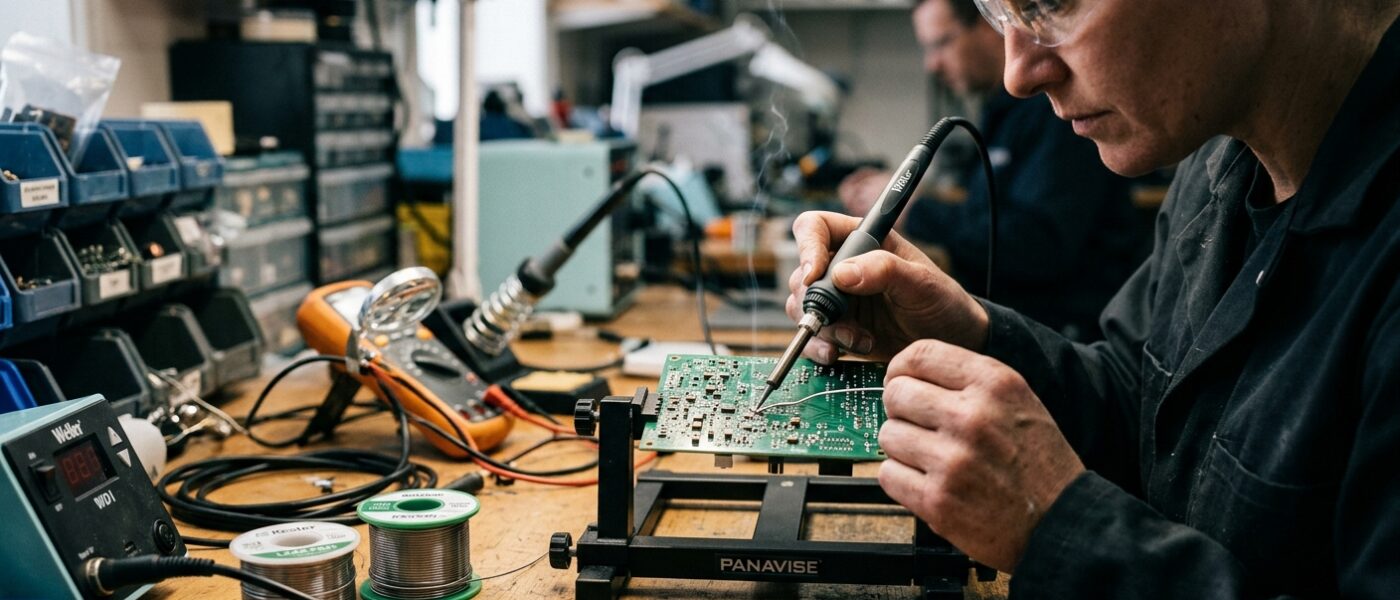
The Hakko FX-888D is the best all-around soldering station for DIY electronics and professional work alike; beginners on a budget should start with the Weller SP40N and upgrade to a station when the work demands more precision.
As an Amazon Associate, we earn from qualifying purchases.
A soldering iron is the fundamental tool for electronics repair, circuit board work, low-voltage wiring connections, and jewelry making. Whether you are replacing a capacitor in an amplifier, joining audio cables, making a custom electrical harness, or repairing a circuit board, a properly selected soldering iron makes the work clean, reliable, and repeatable. The right iron for a beginner is very different from the right iron for a professional – this guide covers both ends of the spectrum.
Types of Soldering Tools
Pencil Soldering Irons
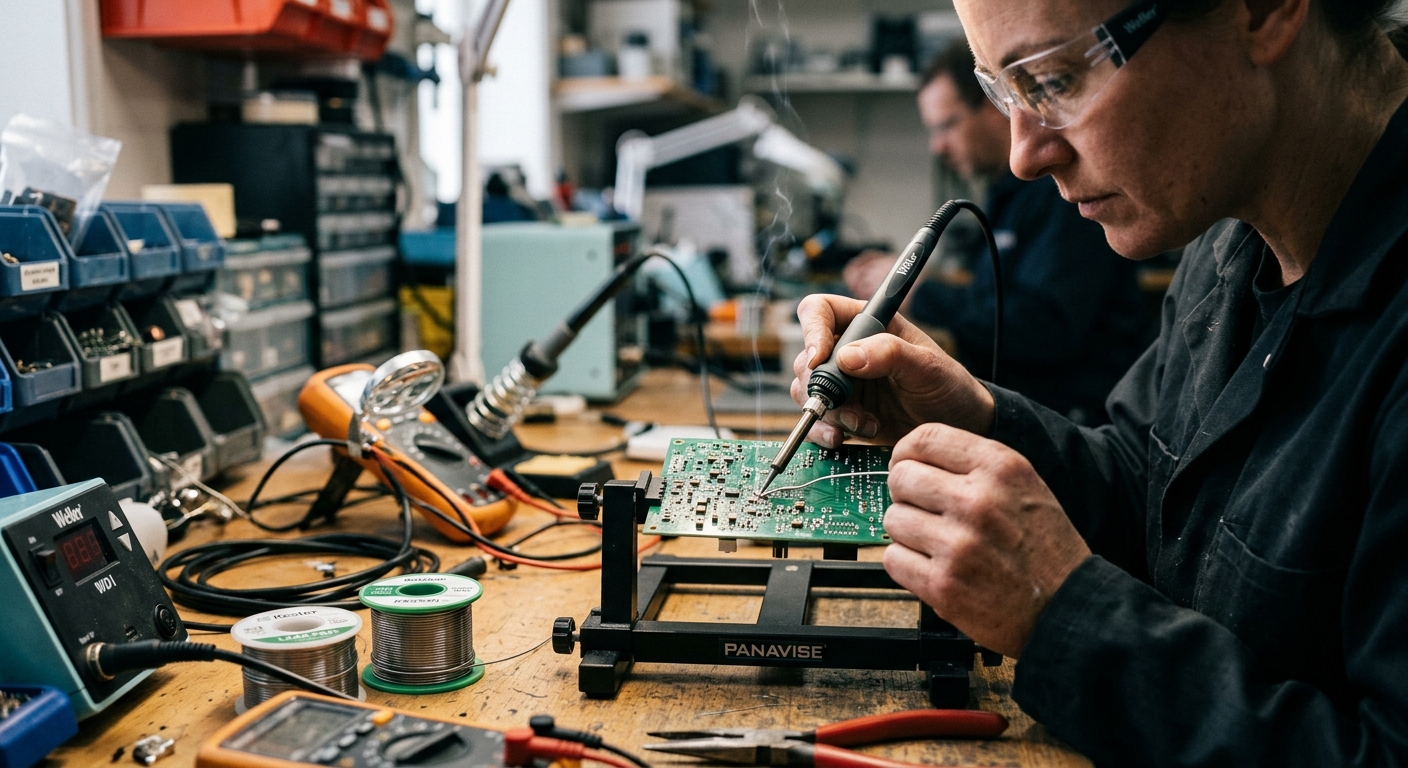
A simple pen-shaped tool with a heating element and replaceable tip. Available in fixed wattage (15W to 60W) for basic work, or variable temperature. The entry-level tool for electronics work. Lightweight, inexpensive, and adequate for through-hole components, wire connections, and simple repairs.
Soldering Stations
A bench-top unit with a separate power supply/control unit and a connected iron. Provides precise temperature control, fast heat recovery after each joint, and usually a tip cleaner, iron holder, and tip storage. The professional standard for electronics work. Hakko, Weller, and JBC are the recognized brands.
Soldering Guns
Trigger-operated, high-wattage tools (100W to 250W) that heat to working temperature in seconds and cool equally quickly. Better suited for heavy-gauge wire connections and automotive work than for delicate electronics where the large tip and high heat can damage components. Not the right tool for circuit board work.
Hot Air Stations
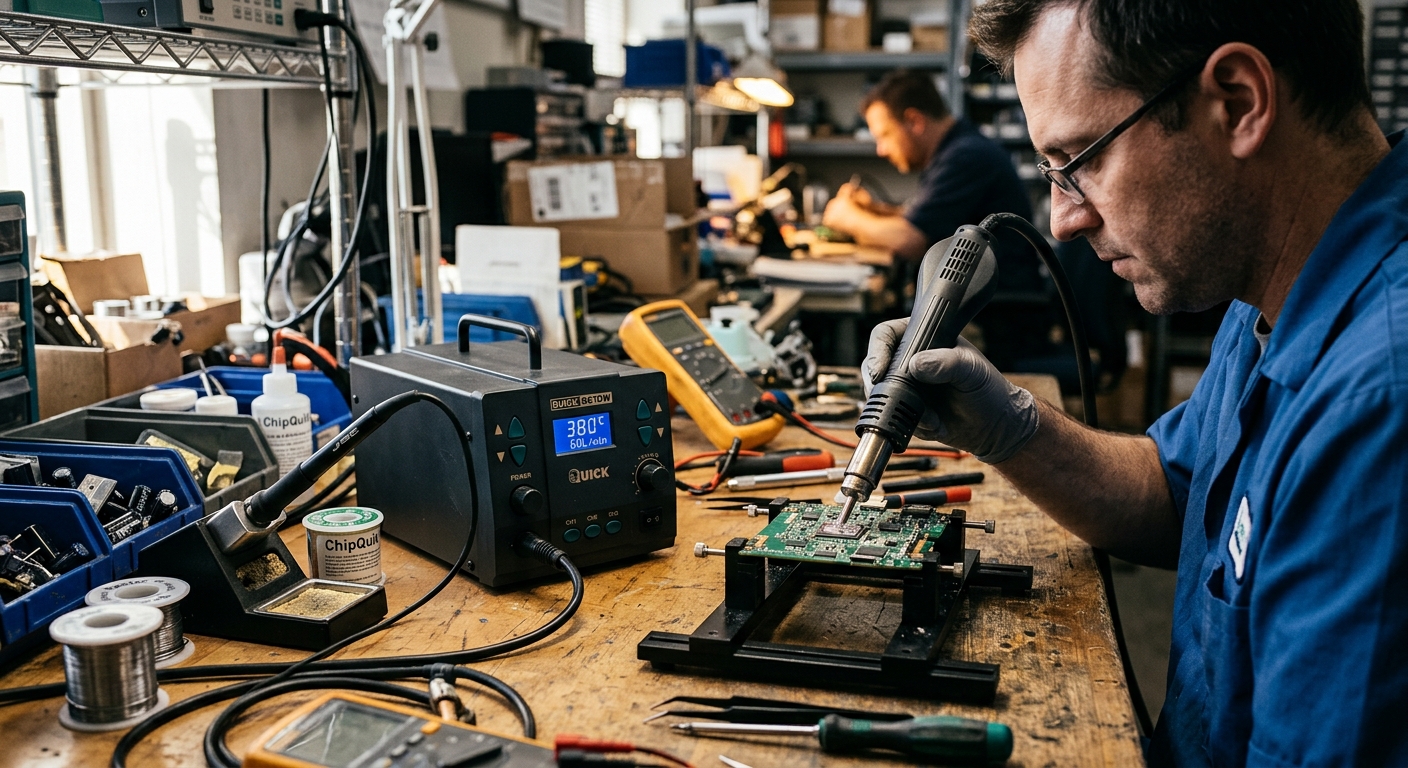
A station that blows precisely heated air rather than using a contact tip. Essential for surface-mount (SMD) electronics work where the tiny components require reflow techniques that a tip cannot perform. Advanced tool for experienced electronics workers.
Key Features to Look For
Temperature Control
The most important feature. Lead-free solder requires higher temperatures (350 to 370 degrees Celsius) than traditional leaded solder (315 to 340 degrees Celsius). A temperature-controlled iron maintains consistent heat rather than drifting high and low, which produces unreliable joints and can damage components.
Wattage
Higher wattage provides better heat recovery – the ability to return to set temperature quickly after making a joint that draws heat from the tip. A 40W fixed-temperature iron is adequate for light work; 60W to 80W handles most electronics work; stations with fast heat recovery outperform wattage comparisons by maintaining temperature more consistently.
Tip Size and Shape
The right tip for the job matters more than almost any other specification. Conical tips are the most versatile for through-hole work. Chisel tips transfer heat to larger joint areas efficiently. Beveled tips are favored for drag-soldering IC leads. Most stations accept interchangeable tips – buy a selection.
Tip Quality and Longevity
Quality tips from brands like Hakko, Weller, and JBC last far longer than generic replacements. The tip plating (usually iron over copper with a solder-able coating) wears away with use – poor-quality tips require replacement monthly; quality tips last a year or more of daily use.
Our Top Picks
1. Hakko FX-888D Digital Soldering Station
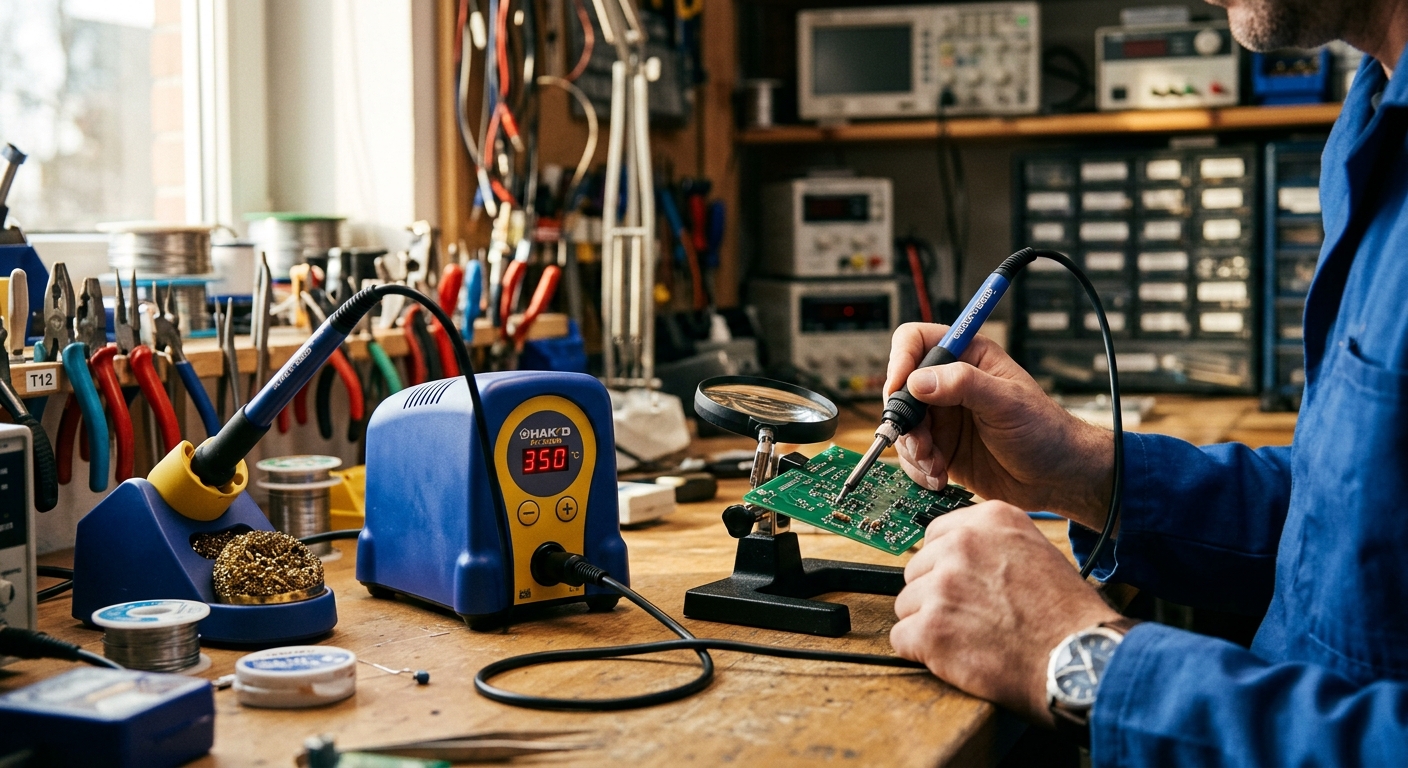
The most recommended soldering station in the electronics community for the past decade. The FX-888D heats to set temperature in 30 seconds, holds temperature within 1 degree Celsius under typical load, accepts the enormous Hakko T18 tip ecosystem, and the display confirms both set and actual temperature. An investment that professional electronics technicians make once and do not revisit for years.
2. Weller WE1010NA Digital Soldering Station
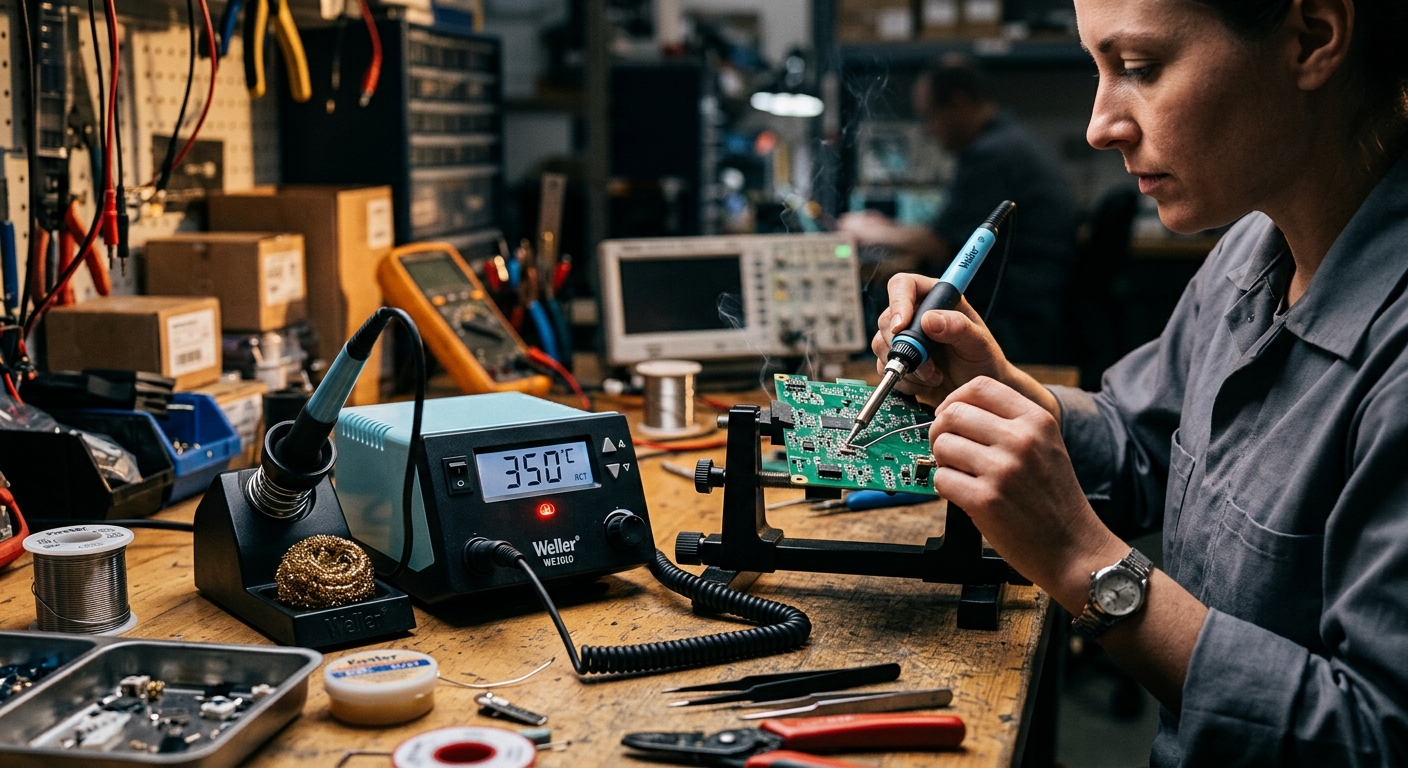
Weller is the other half of the premium soldering station duopoly. The WE1010NA is 70W for fast heat recovery, features a large LED display, and accepts Weller’s extensive ET tip series. Equal to the Hakko in performance; choosing between them often comes down to tip availability and personal preference. Both are exceptional.
3. PINECIL Smart Mini Portable Soldering Iron (USB-C/DC Powered)
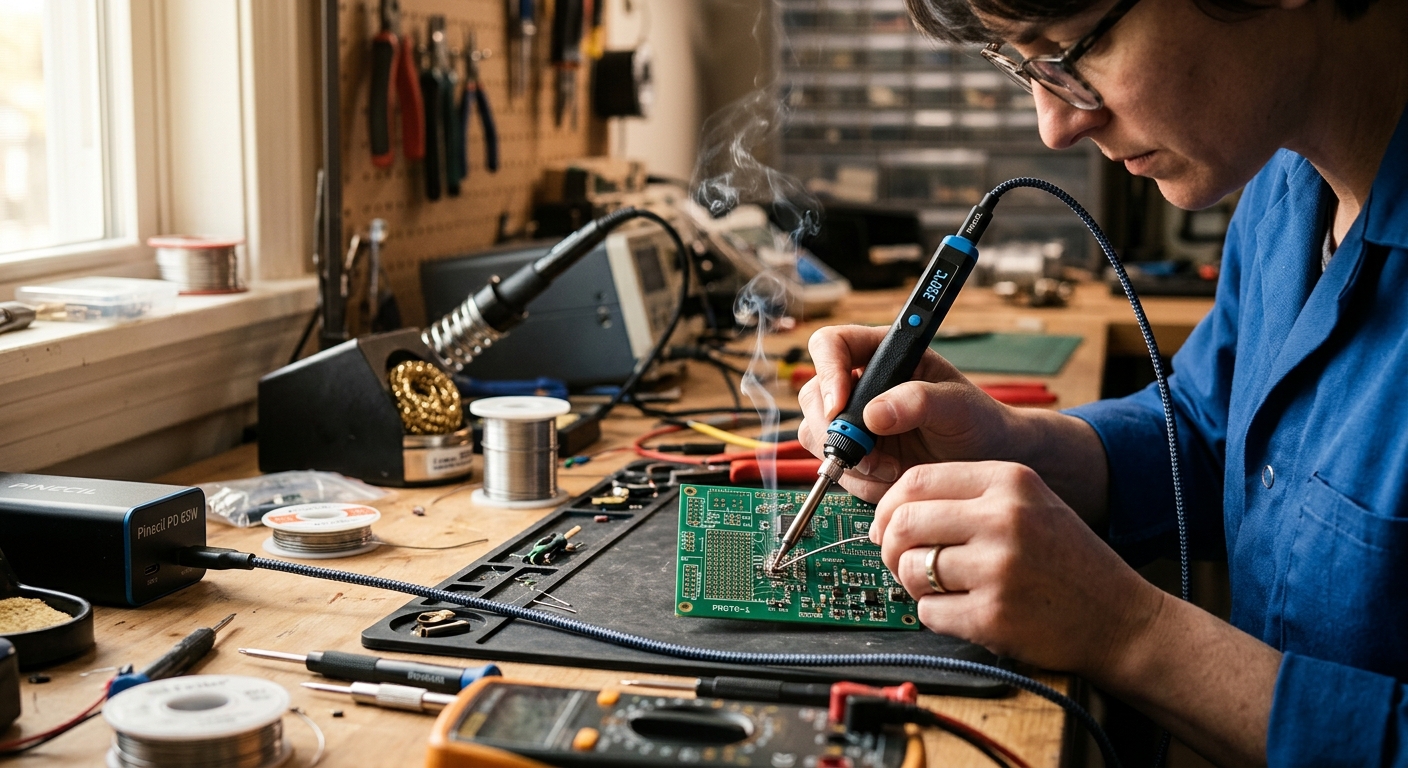
A remarkably capable portable iron that runs on a USB-C PD power supply or a DC barrel jack from a bench supply. Developed by the Pine64 community, the PINECIL reaches operating temperature in 6 seconds, displays temperature on an OLED screen, and accepts the popular TS100/TS80P compatible tip ecosystem. The best portable iron for traveling technicians and makers who want bench-iron performance in a pocket-sized package.
4. Weller SP40NKUS 40W Soldering Iron
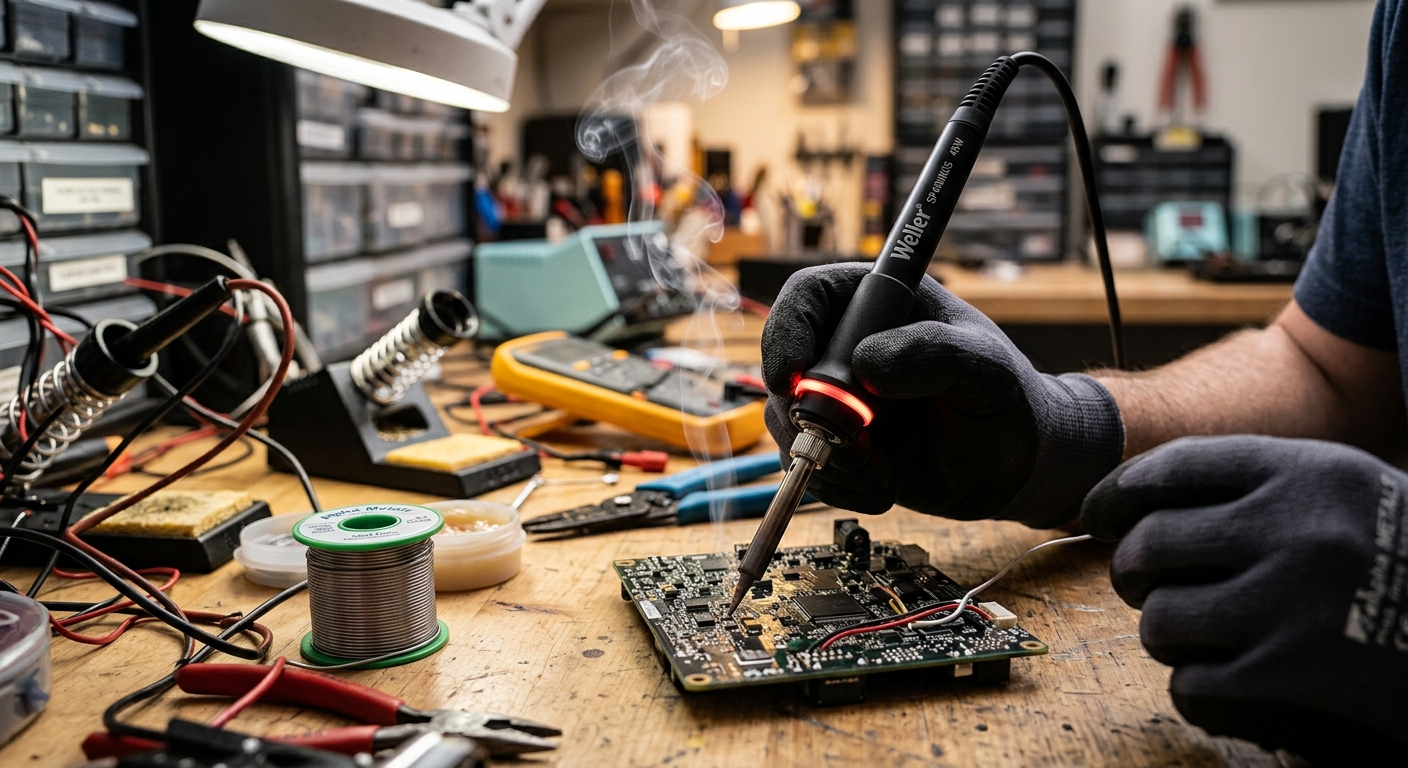
For beginners who want a reliable, simple pencil iron before committing to a full station: the Weller SP40N is a fixed-temperature 40W iron with a replaceable tip and the build quality Weller is known for. Not temperature-controlled, but produces consistent results for basic through-hole work and wire connections. A trustworthy entry into soldering.
5. Metcal MX-5000 Soldering System
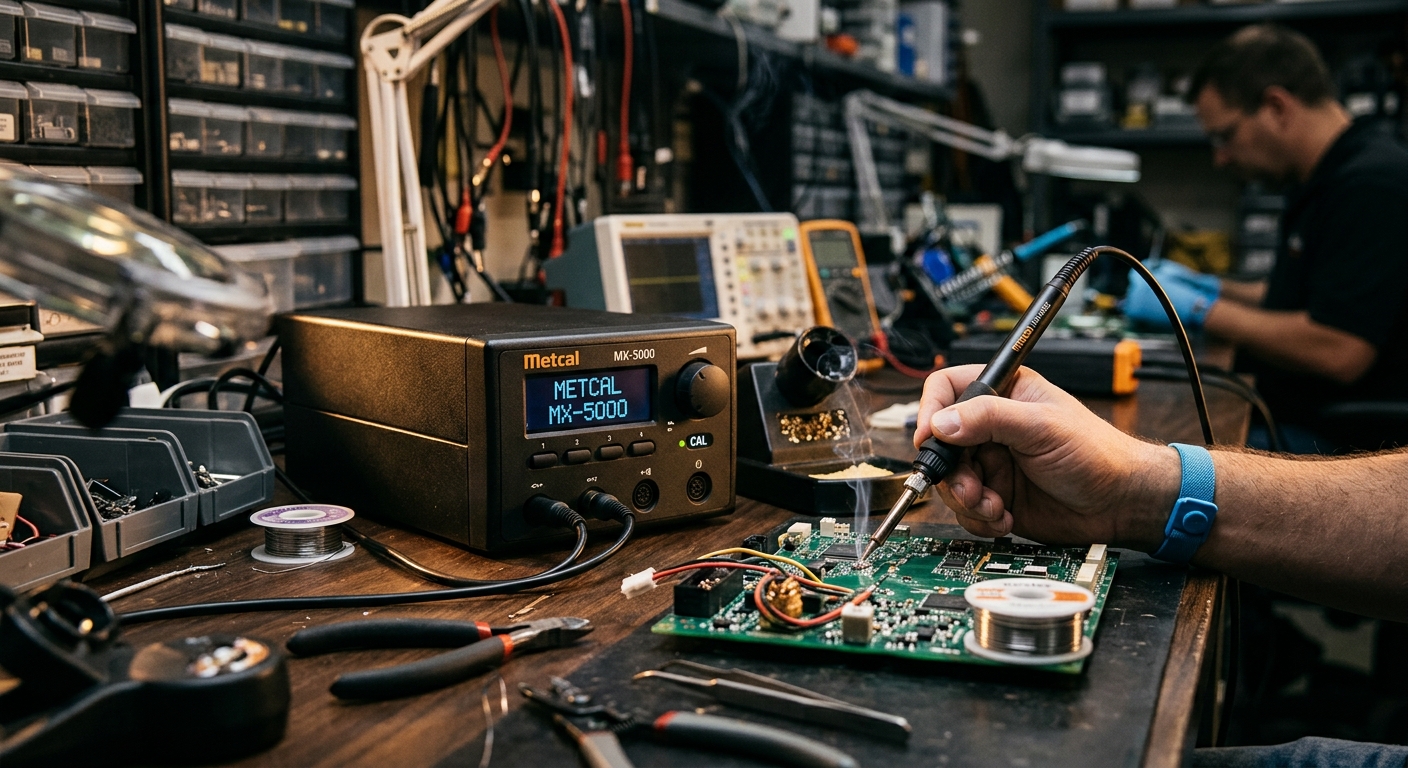
For professional electronics repair shops: the Metcal system uses SmartHeat technology – the tip material itself self-regulates to the designed temperature using the Curie point effect. No temperature control dial needed; the tip heats to exactly the design temperature and maintains it without drift. The fastest heat recovery and best temperature consistency available. Used in professional PCB rework and assembly facilities.
Soldering Best Practices
- Tin the tip before first use and at the start of every session by melting solder onto the clean tip until fully coated.
- Clean the tip frequently during work on a damp brass wool pad (better than a wet sponge – brass wool cleans without the thermal shock of water).
- Heat the joint, not the solder. Touch the iron to the pad and component simultaneously, then feed solder to the joint – not to the iron tip.
- A good joint should look shiny and smooth, not dull or granular. Dull joints indicate cold or contaminated solder.
FAQ
Do I need lead-free solder?
For environmental and health reasons, lead-free solder (SAC305: 96.5% tin, 3% silver, 0.5% copper) is the standard for new electronics manufacturing. For repair work on existing boards, matching the original solder type (lead or lead-free) produces better results. Leaded solder (63/37 or 60/40 tin-lead) is still available and many hobbyists prefer it for its lower working temperature and excellent wettability.
What wattage iron do I need?
For electronics PCB work: 40 to 60W in a temperature-controlled station is ideal. For heavy wire connections and chassis work: 60 to 100W. For soldering guns in automotive and heavy electrical work: 100 to 250W.
My solder joints look dull and granular. What is wrong?
This is a cold solder joint – the most common soldering defect. Causes: insufficient heat at the joint (need more wattage or slower work), movement of the joint before the solder solidified (hold still until solder freezes), or contaminated surfaces (clean pads and leads before soldering). Reheat and re-flow the joint.
Affiliate Disclosure: DIY Arsenal participates in the Amazon Associates Program and other affiliate programs. When you purchase through links on this site, we may earn a small commission at no additional cost to you. We only recommend products we have personally tested and genuinely believe in.