Best Random Orbital Sanders – Tested and Compared
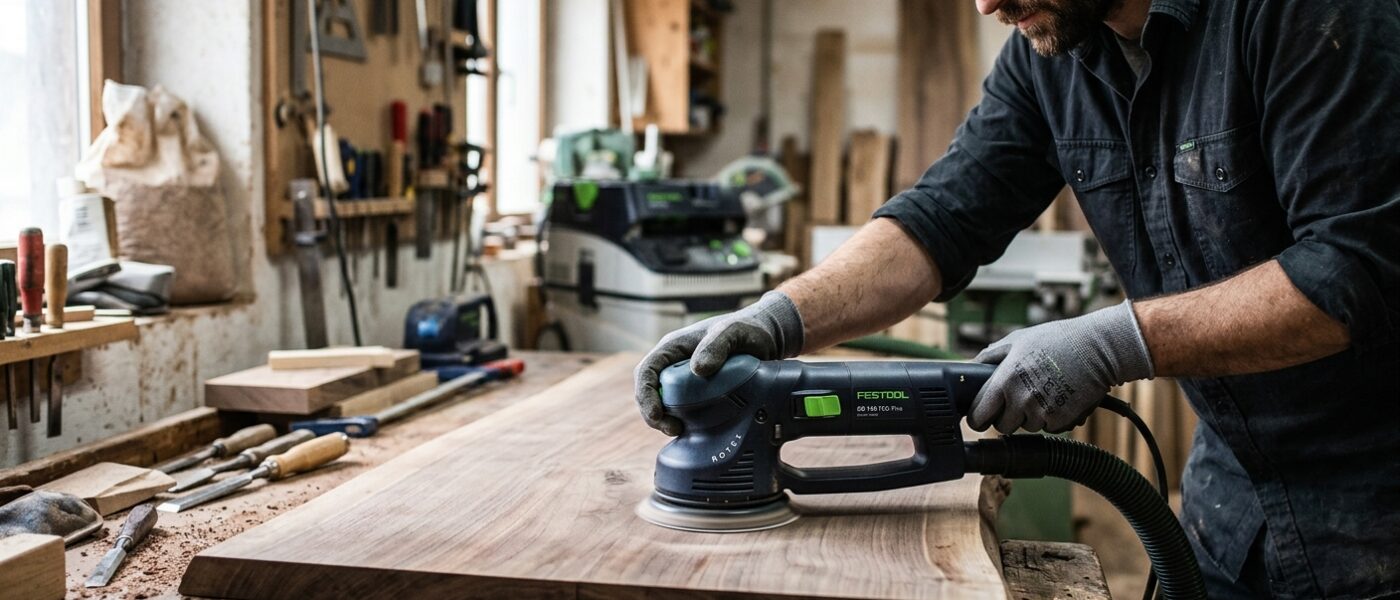
Bosch ROS20VSC is the best value for serious DIYers; Festool RO 150 is the professional standard.
Sandpaper and a sanding block have their place, but for any surface larger than a small box, a random orbital sander is the tool that should be in your hands. Unlike straight-line orbital sanders that leave swirl marks, or belt sanders that aggressively remove material in one direction, a random orbital sander moves its pad in a simultaneous rotary and orbital path – a combination that cuts fast, leaves minimal swirl marks, and finishes to a surface quality that’s genuinely ready for stain or paint without extensive hand-sanding follow-up.
The market spans $30 to $250+, and the differences are real. Dust collection efficiency, pad quality, backing plate stiffness, variable speed, and ergonomics all separate the tools that leave you satisfied from the ones that leave you with sore wrists and a cloudy finish. This guide covers the best options across all price points and use cases.
How We Evaluate Random Orbital Sanders
Dust collection efficiency: This is arguably the most important criterion for a sander. Poor dust collection leaves abrasive grit loose on the work surface, causing it to re-scratch the finish you’re trying to create. Great dust collection (Festool’s CT-series integration, Milwaukee’s sealed-motor design) keeps the surface clean and makes grit last longer. Look for sanders with high-flow ports that connect to a shop vac or dedicated sander.
Pad size and orbit diameter: Standard 5-inch pads are the universal choice for furniture, floors, and flat panels. Six-inch pads remove material faster on large surfaces. Orbit diameter (3/16″, 5/32″) affects the balance between stock removal and swirl prevention – larger orbit diameter removes material faster; smaller leaves a finer finish.
Backing plate stiffness: A stiffer backing plate distributes pressure more evenly, preventing dish-in on flat surfaces. Softer pads conform better to slight curves but can round over edges. For flat surfaces, stiffer backing is better. For contoured work, consider a sander with interchangeable pad options.
Variable speed: Most quality sanders offer 4,000–12,000 OPM variable speed. Slower speeds for finish sanding with fine grits (180+); higher speeds for material removal with coarse grits (40–80). Fixed-speed sanders force compromises that variable speed eliminates.
Vibration control: Extended sanding sessions create significant hand fatigue from vibration. Counterweighted designs and rubber grip panels substantially reduce transmitted vibration. Try holding the tool at the store if possible – the comfort difference between models is palpable.
Top Picks
1. Festool RO 150 FEQ-Plus – Best Professional Sander
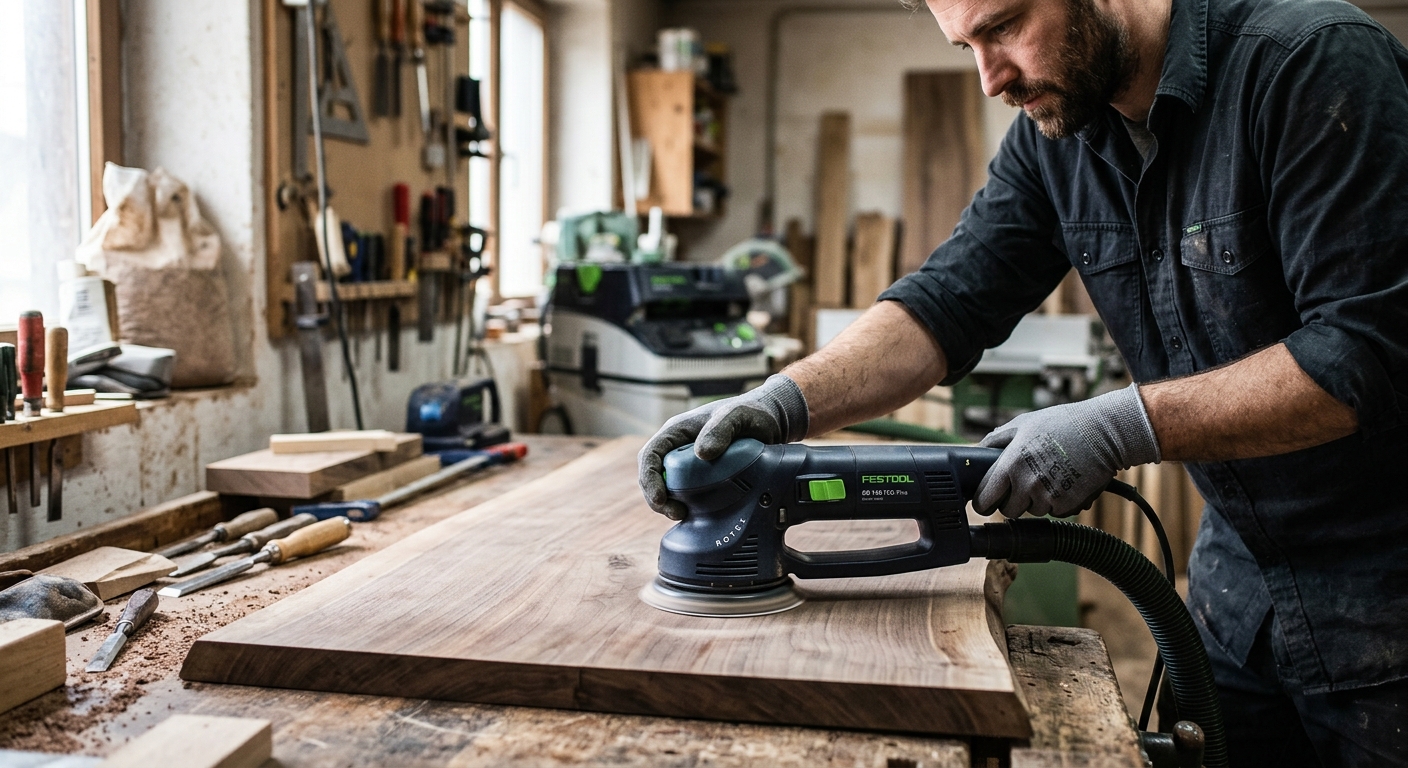
The Festool RO 150 is the sander professional furniture makers, cabinetmakers, and automotive refinishers reach for when the result has to be right. It operates in three modes: random orbital (finest finish), rotary (fastest material removal), and gear-driven (intermediate). Its dust collection, especially integrated with a Festool CT vacuum, is the best available – the surface stays virtually dust-free during sanding, which visibly improves final finish quality.
At $499–$549, it’s an investment, not an impulse buy. But for anyone whose finished surfaces represent their reputation – custom furniture builders, finish carpenters, professional painters – the RO 150 earns its price in result quality and long-term durability.
- Pros: Three operating modes, best-in-class dust collection, exceptional build quality, lowest vibration
- Cons: Very high price, proprietary Festool accessories, heavy at 5.5 lbs
- Price range: $499–$549
2. Bosch ROS20VSC – Best Value Mid-Range
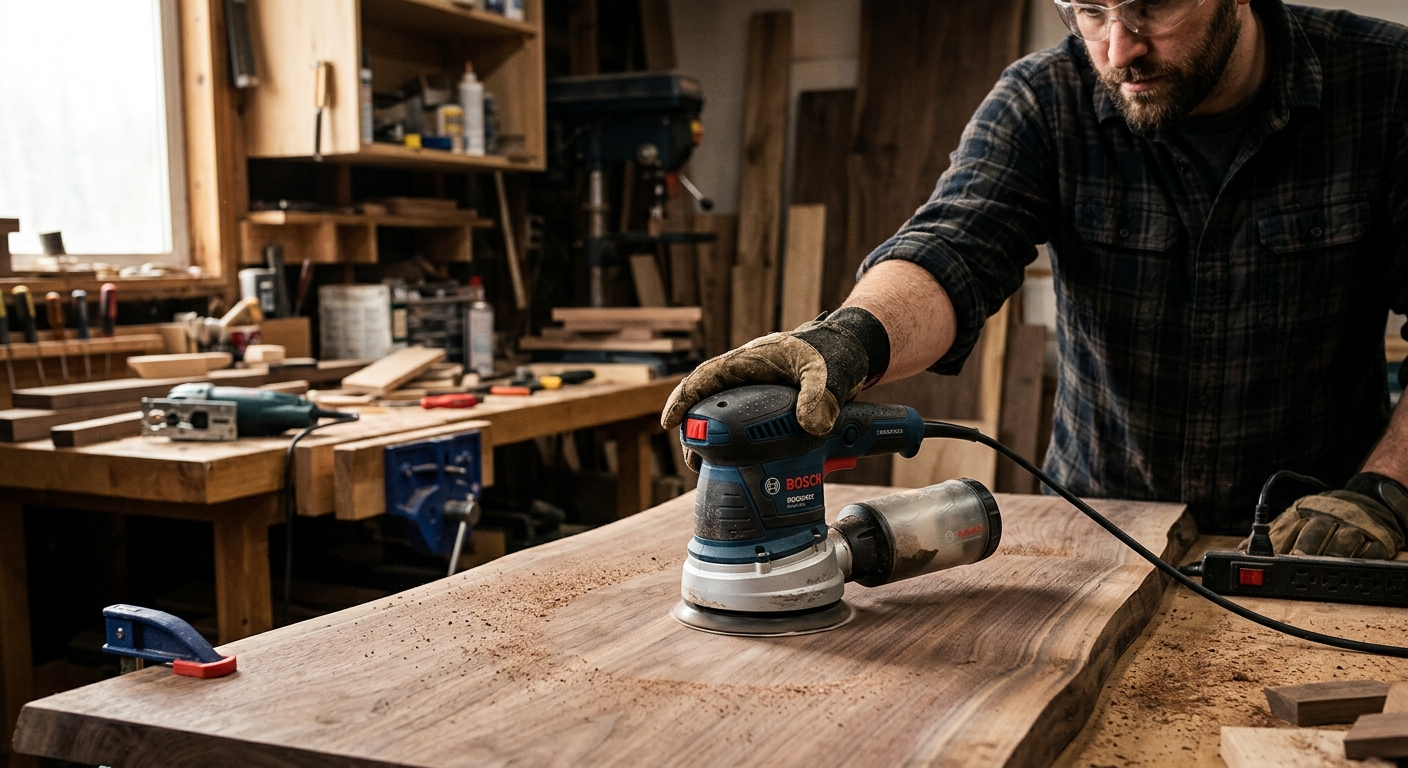
The Bosch ROS20VSC is the sander that appears in the most professional finishing shops at the best value. Its microfilter dust canister captures fine particles with impressive efficiency without requiring a shop vac hookup (though the vacuum port is included). Variable speed from 7,500–12,000 OPM, a well-balanced 5-inch pad, and a low vibration design make it comfortable for long sessions. At $69–$89, it punches well above its price class.
This is the default recommendation for DIYers who sand furniture, decks, and woodworking projects regularly. It doesn’t have the professional polish of the Festool, but it produces excellent results at a fraction of the price.
- Pros: Excellent dust collection at this price, variable speed, low vibration, durable build
- Cons: Microfilter bag fills fast with coarse grit, shop vac connection required for best dust control
- Price range: $69–$89
3. Milwaukee 2648-20 M18 – Best Cordless Sander
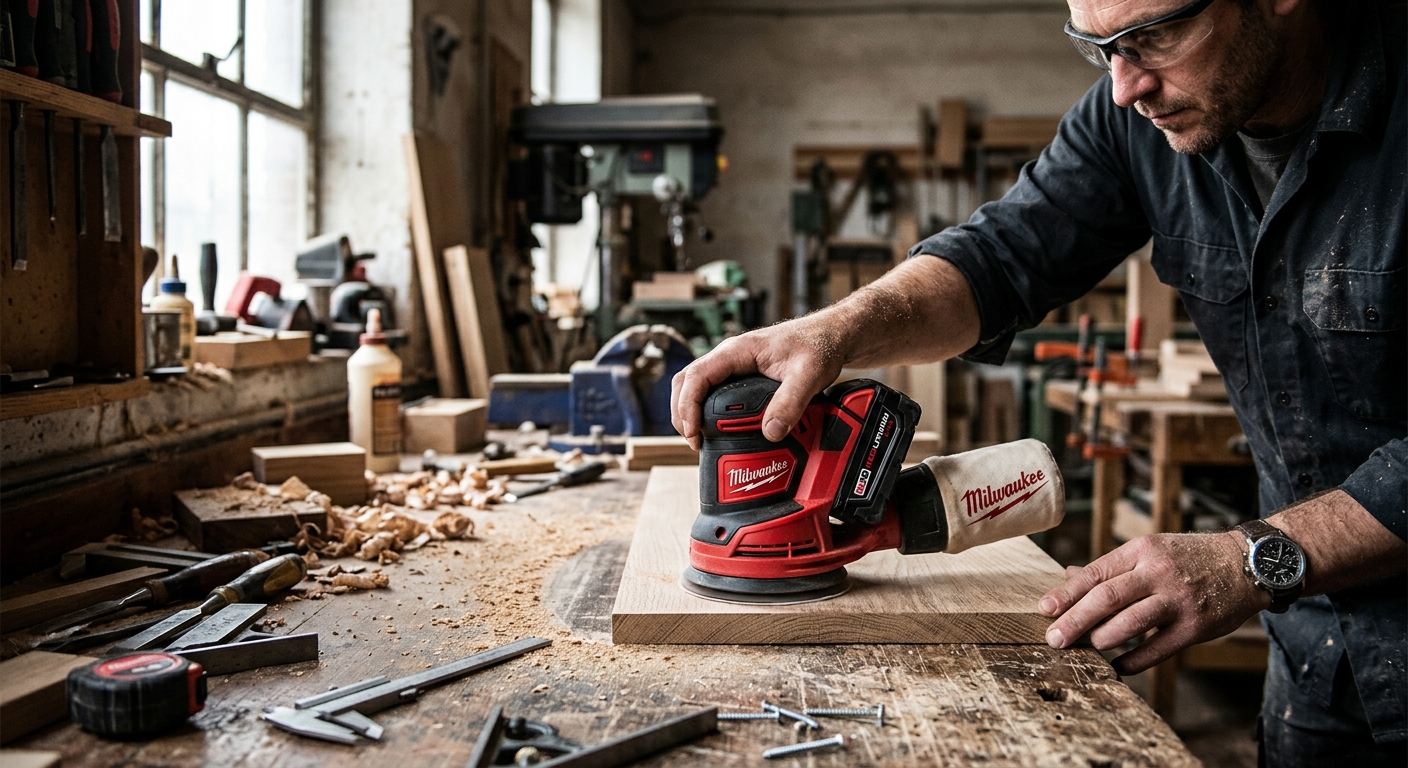
Milwaukee’s M18 cordless random orbital sander brings the convenience of battery operation to a category that’s traditionally been all-corded. The M18 battery lasts a surprisingly long time – often 30–45 minutes of actual sanding per charge with a 5.0Ah battery – and the dust collection port connects to standard shop-vac fittings. For deck refinishing, sanding outdoor furniture, or any situation far from an outlet, it’s the right tool. Expect slightly reduced power compared to corded models when loaded.
- Pros: Cordless freedom, M18 compatible, excellent for outdoor and remote work
- Cons: Reduced sanding time vs corded, battery adds weight
- Price range: $79–$99 (tool only)
4. DEWALT DCW210B – Best Cordless Runner-Up
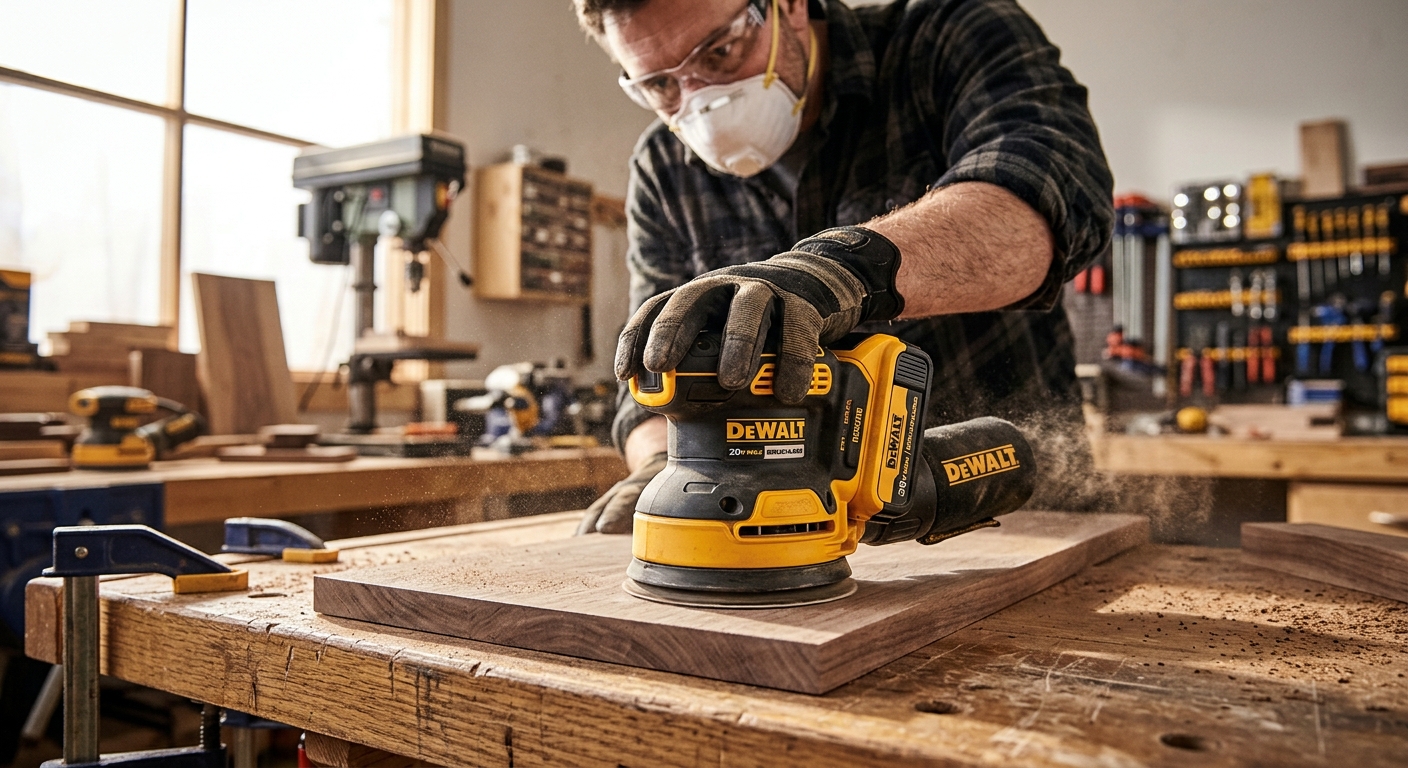
DeWalt’s 20V MAX XR random orbital sander at $89–$109 (tool only) matches the Milwaukee’s cordless convenience with excellent dust collection through the onboard bag and shop-vac port. The paper clamp edge design makes it accept standard 1/4-sheet paper cut to size – handy when you run out of hook-and-loop discs. Pad brake stops the disc quickly when you lift the tool, preventing accidental swirl marks on the surface from a spinning pad.
- Pros: Accepts standard cut sheet paper, pad brake, excellent dust port, DeWalt 20V compatible
- Cons: Slightly heavier than Bosch corded equivalent with battery installed
- Price range: $89–$109 (tool only)
5. Makita BO5041K – Best Corded Runner-Up
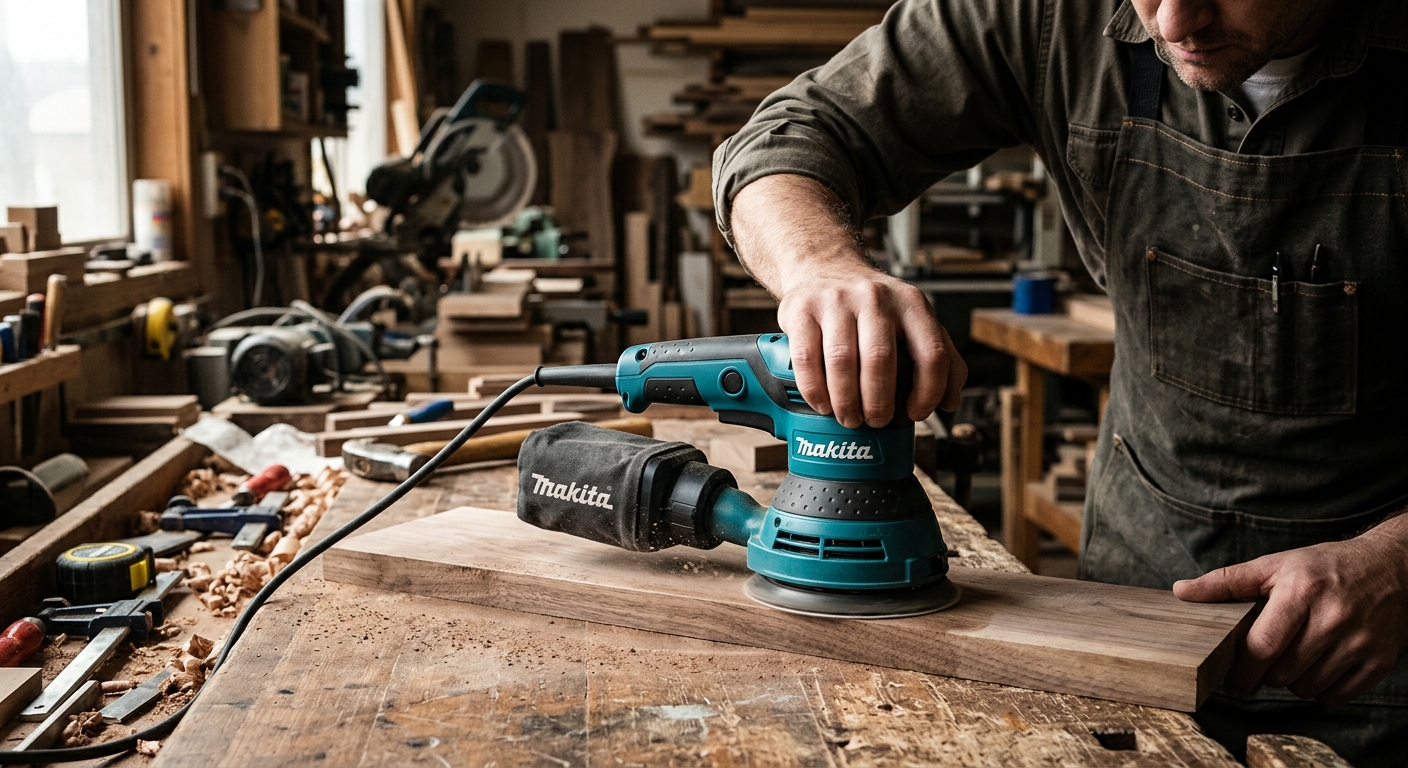
Makita’s BO5041K is the other sander that finishers recommend alongside the Bosch ROS20VSC. Its three-mode dial (low/medium/high) simplifies speed selection, the two-finger trigger provides excellent control, and the built-in dust bag with vacuum port is effective. At $79–$99, it’s in the same competitive tier as the Bosch and wins on a slightly lighter weight and quieter operation.
- Pros: Quiet motor, effective dust system, excellent ergonomics, solid Makita build quality
- Cons: Three speed modes rather than fully variable, dust bag smaller than Bosch
- Price range: $79–$99
6. RYOBI P411 ONE+ – Best Budget Cordless
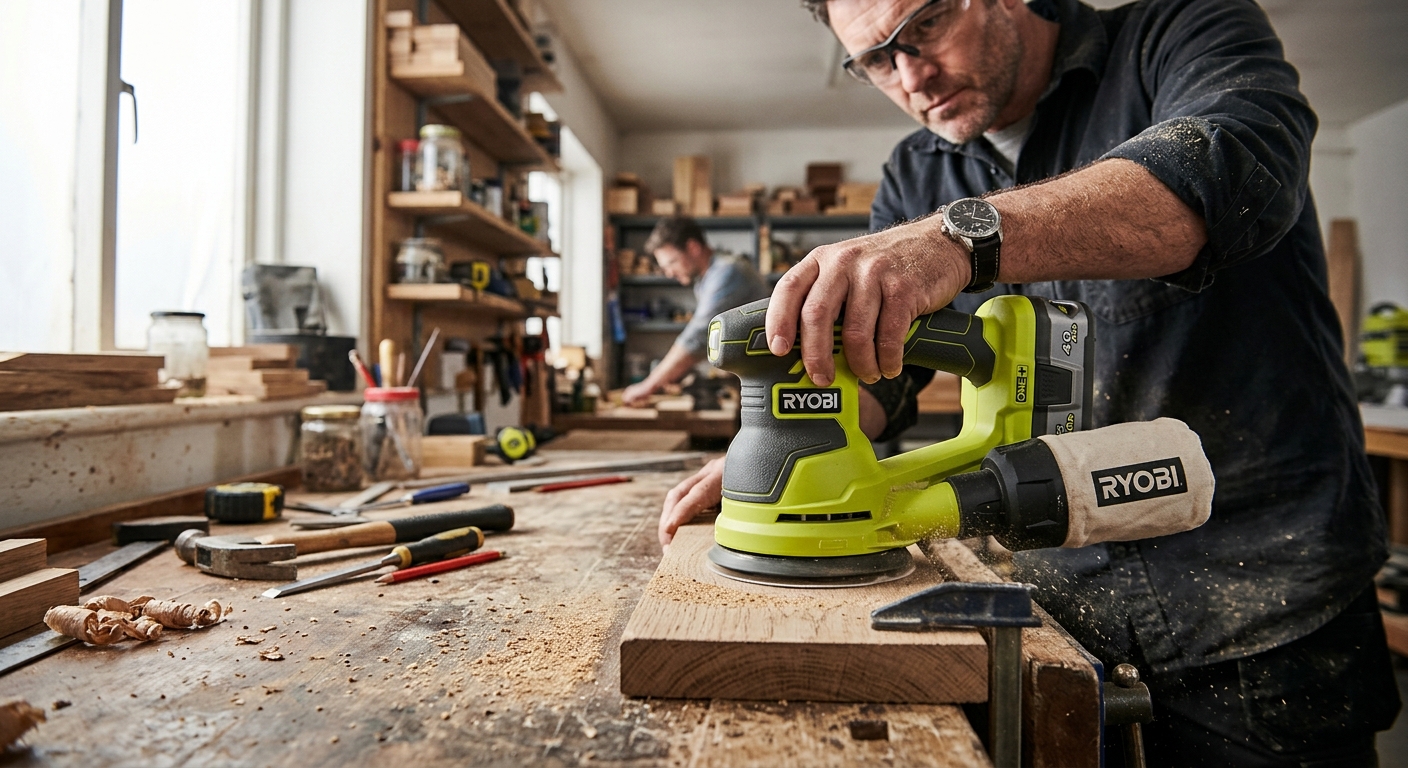
For light finish sanding tasks and those already in the RYOBI ONE+ ecosystem, the P411 at $39–$49 (tool only) delivers acceptable results for furniture touch-ups and light prep work. It lacks the variable speed and dust collection quality of mid-range options, but for occasional sanding of painted surfaces before repainting, it’s entirely capable.
- Pros: Budget price, ONE+ battery compatible, fine for occasional light sanding
- Cons: No variable speed, limited dust collection, not for production sanding
- Price range: $39–$49 (tool only)
FAQ
What grit sequence should I use for finishing furniture?
Start at 80 grit to remove mill marks, old finish, or high spots. Move to 120 to remove the 80-grit scratches. Finish at 180–220 before staining or painting. If applying a clear coat, sand to 220 between coats. Never skip more than one grit in sequence – jumping from 80 to 220 leaves 80-grit scratches visible under finish.
Why does my finished surface still show swirl marks?
Swirl marks after random orbital sanding usually result from stopping the sander while the pad is still in contact with the surface, using worn-out abrasive discs, or sanding at too high a speed with too fine a grit. Always keep the sander moving, replace discs when they stop cutting efficiently, and finish at lower speed settings with your finest grit.
Can I use a random orbital sander on painted walls?
Yes, for scuff-sanding between coats or smoothing patched drywall. Use 120–150 grit at low speed, and connect to a shop vac – the dust volume from wall sanding is extreme. Wear a respirator rated for fine dust.
Bottom Line
For serious woodworkers and finish-quality projects, the Bosch ROS20VSC at $69–$89 delivers near-professional results at a genuinely affordable price – it’s the default recommendation. Festool’s RO 150 is the upgrade path when quality of finish is genuinely critical and budget is secondary. Cordless users on Milwaukee M18 or DeWalt 20V MAX can sand away from outlets without meaningful performance sacrifice. Budget users doing occasional light sanding should try the RYOBI ONE+ P411 without overthinking it.
Affiliate Disclosure: DIY Arsenal participates in the Amazon Associates Program and other affiliate programs. When you purchase through links on this site, we may earn a small commission at no additional cost to you. We only recommend products we have personally tested and genuinely believe in.