Best Pliers Sets – Combination, Needle-Nose, Tongue-and-Groove, and Locking
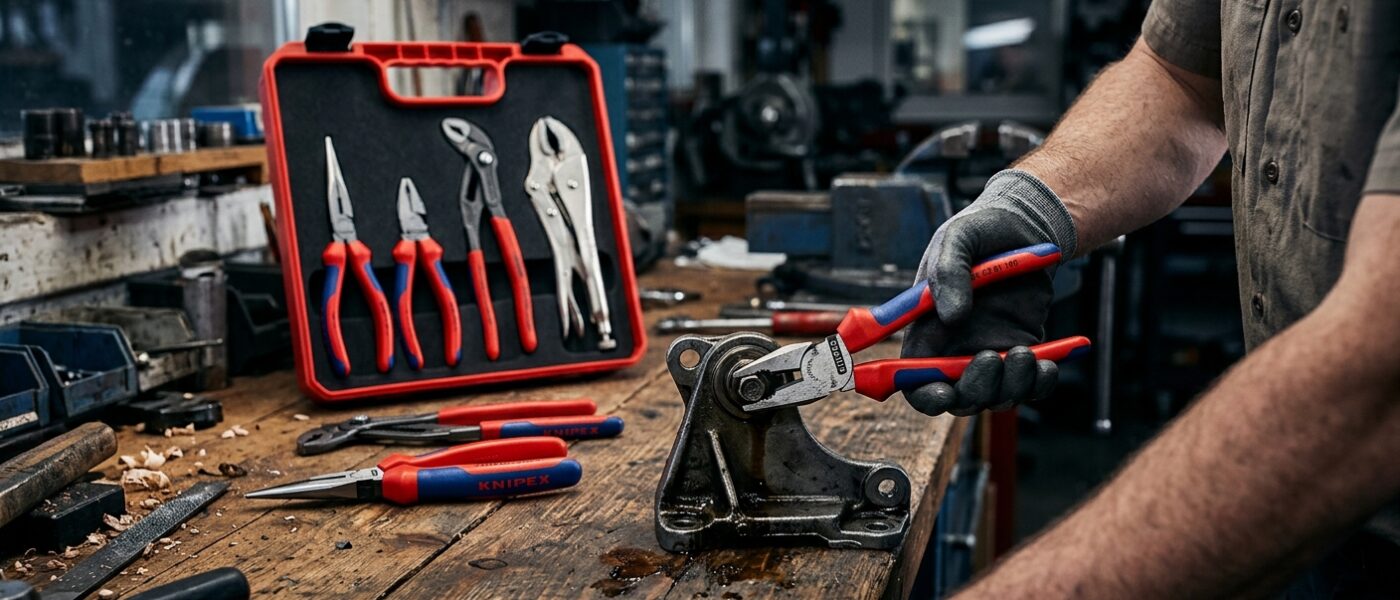
Knipex sets the global standard for plier quality that every other brand measures itself against
Pliers are one of those tools you’ll reach for dozens of times before a project is done – gripping, bending, twisting, cutting, and holding. The difference between cheap and quality pliers shows up most in jaw grip, pivot smoothness, spring return strength, and whether the handles hold up under daily abuse. This guide covers the best pliers for every DIY and trade application.
How We Evaluate Pliers
We tested pliers for jaw grip at multiple opening widths, pivot quality and smoothness, spring return tension, handle comfort and insulation quality, cutting edge durability (for combination pliers), and overall build quality. A plier that slips under load or has a wobbly pivot transfers forces unpredictably and damages both the workpiece and your knuckles.
Top Picks
Knipex 00 20 08 US1 Pliers Set – Best Overall
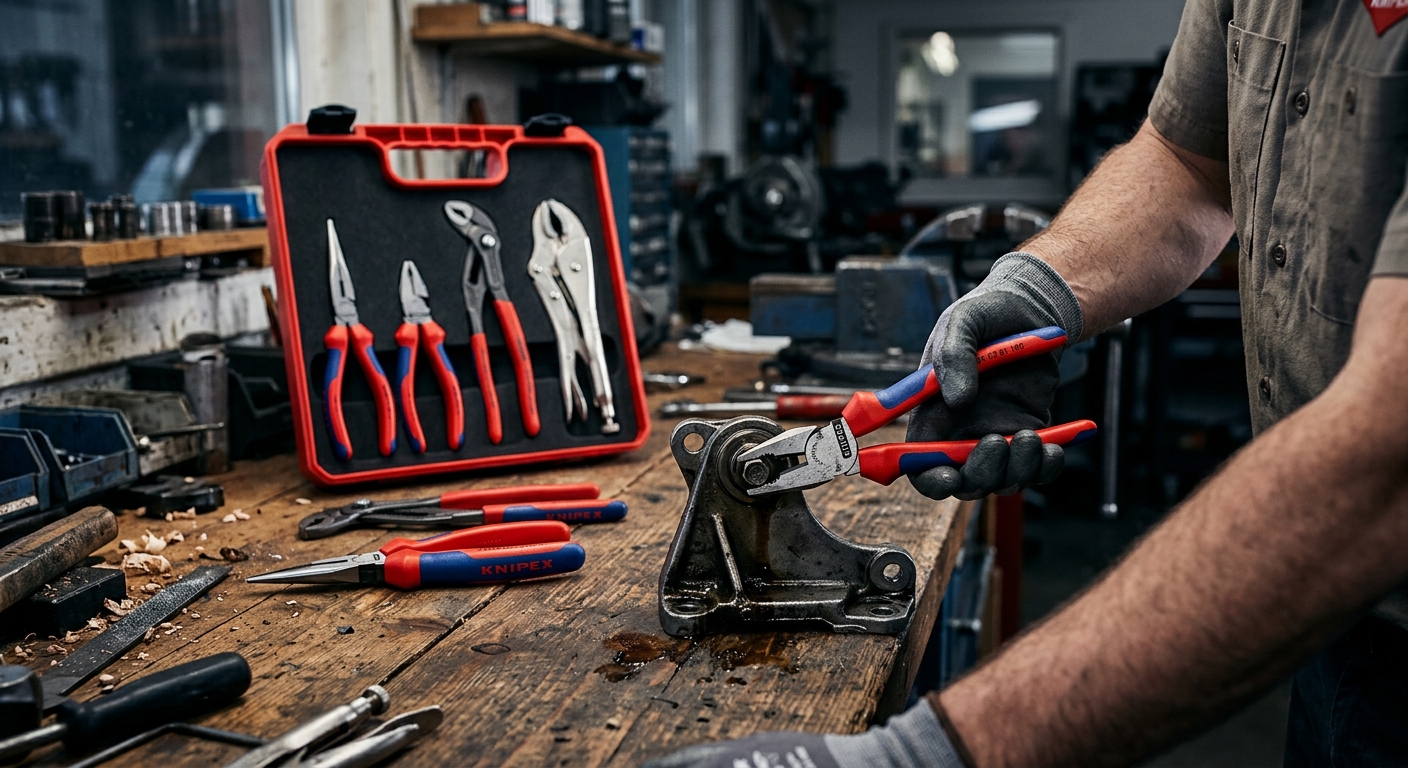
German-made Knipex pliers are the professional benchmark worldwide. This three-piece set includes combination pliers, needle-nose pliers, and diagonal cutters – the three most commonly needed types. The jaw serrations grip without slipping, the pivots are buttery smooth, and the spring steel returns the handles automatically. Knipex pliers feel substantially better than any American or Chinese competition. Once you use them, cheap pliers feel like toys.
- Pros: Superb German quality, smooth pivots, excellent grip, spring return, comprehensive set, lifetime durability
- Cons: Expensive vs domestic brands, overkill for purely occasional use
Channellock 526 6.5-Inch Tongue-and-Groove – Best Tongue-and-Groove
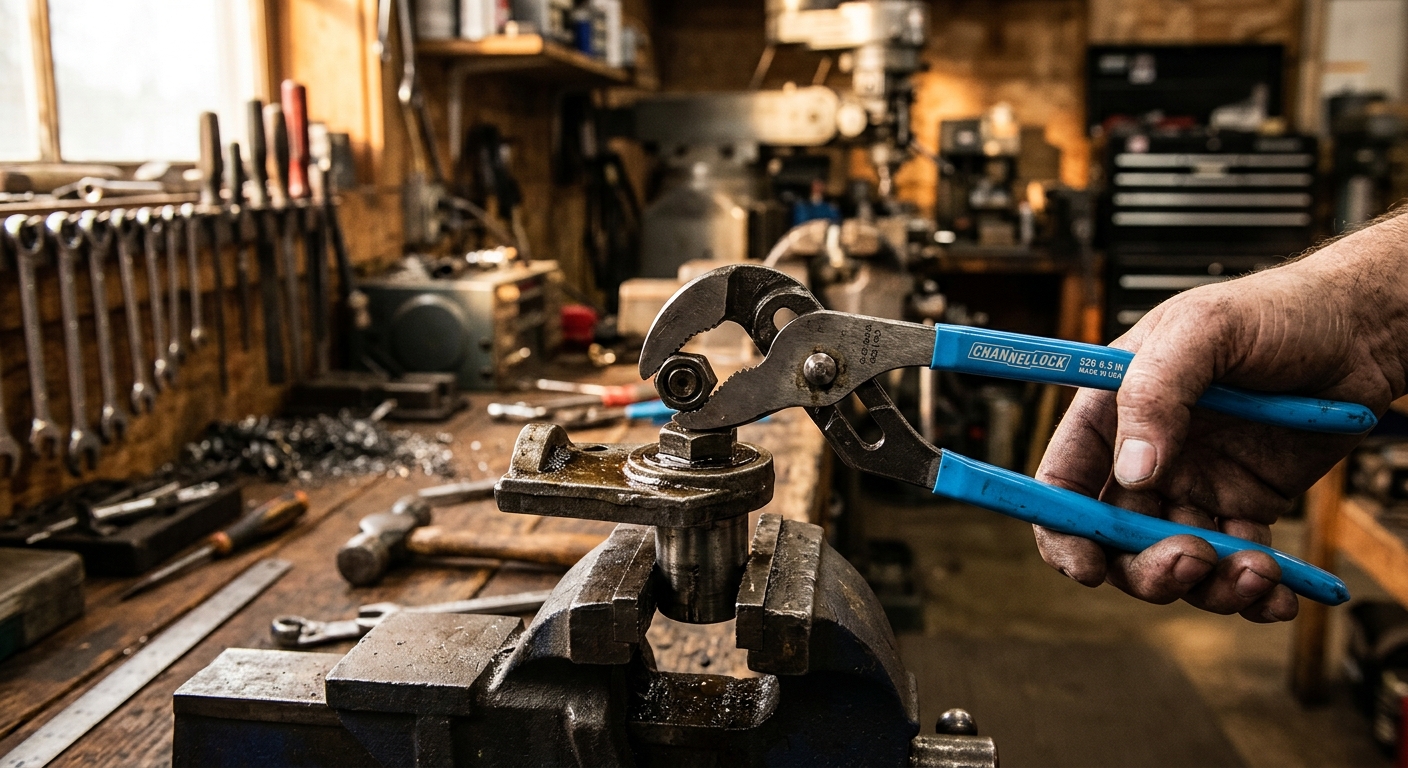
Channellock essentially invented tongue-and-groove pliers and still makes the benchmark product in the USA. The 526’s angled head provides better access in tight spaces, the angled jaw surfaces grip pipe and hex fittings without slipping, and the blue grip handles are comfortable. Available from 6 to 16 inches – buy at least a 9-inch and 12-inch for general plumbing and mechanical work.
- Pros: American-made, angled jaw for access, excellent grip on round stock, durable, multiple sizes available
- Cons: Can round hex fittings (use a wrench instead when possible), bulky for tight spaces
Klein Tools J2000-9NETP 9-Inch Needle Nose – Best Needle Nose
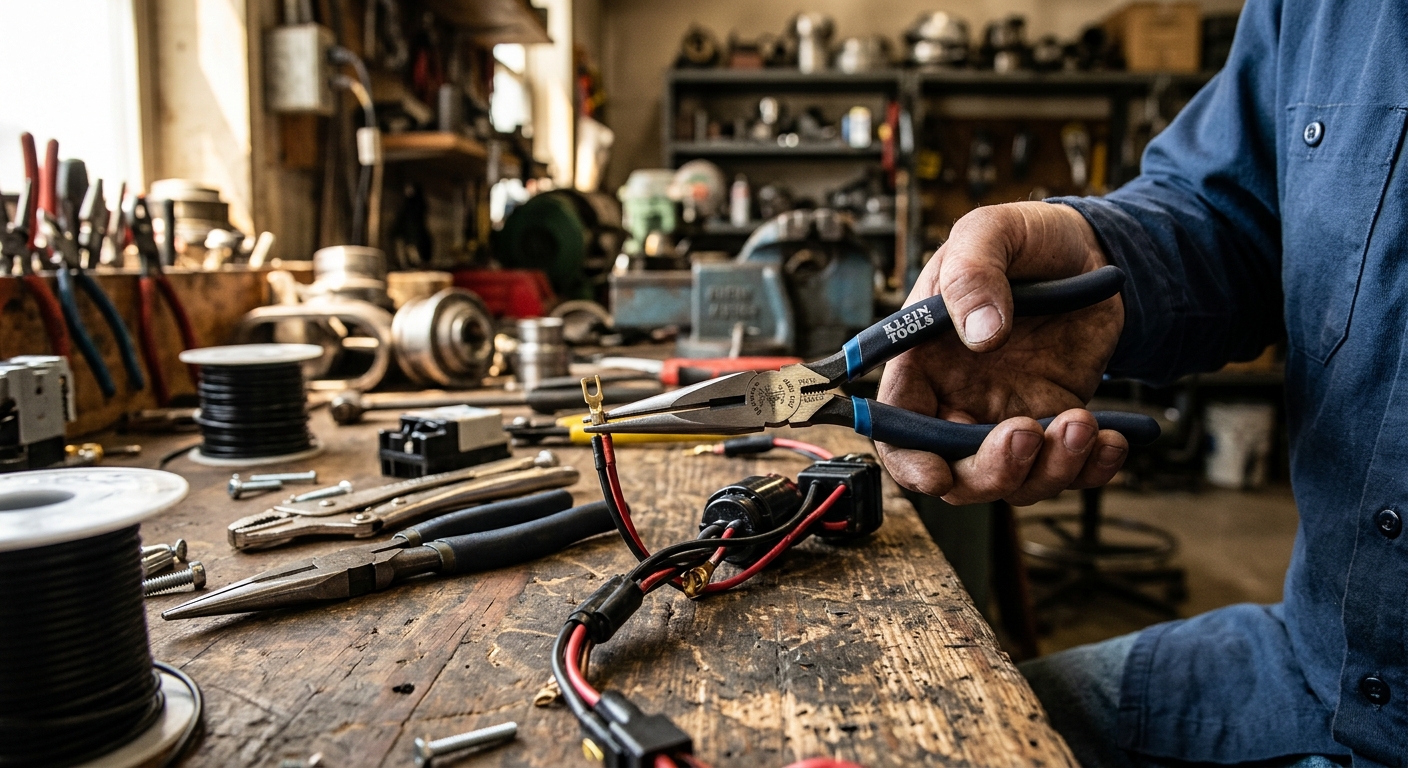
Klein’s needle-nose pliers are the electrician’s standard. The slim jaws reach into conduit boxes, the cutting edges strip wire (not just cut), and the handles are rated for 1,000V when you need insulated work. The induction-hardened cutting edges stay sharp longer than standard steel. An essential for any electrical work or fine-detail gripping.
- Pros: Slim jaw reaches tight spaces, induction-hardened cutters, 1000V rated handles, wire stripping capability
- Cons’=>’Jaw tips can bend if used as a pry tool, limited gripping force vs larger pliers
Irwin Vise-Grip 2-Piece Locking Pliers Set – Best Locking Pliers
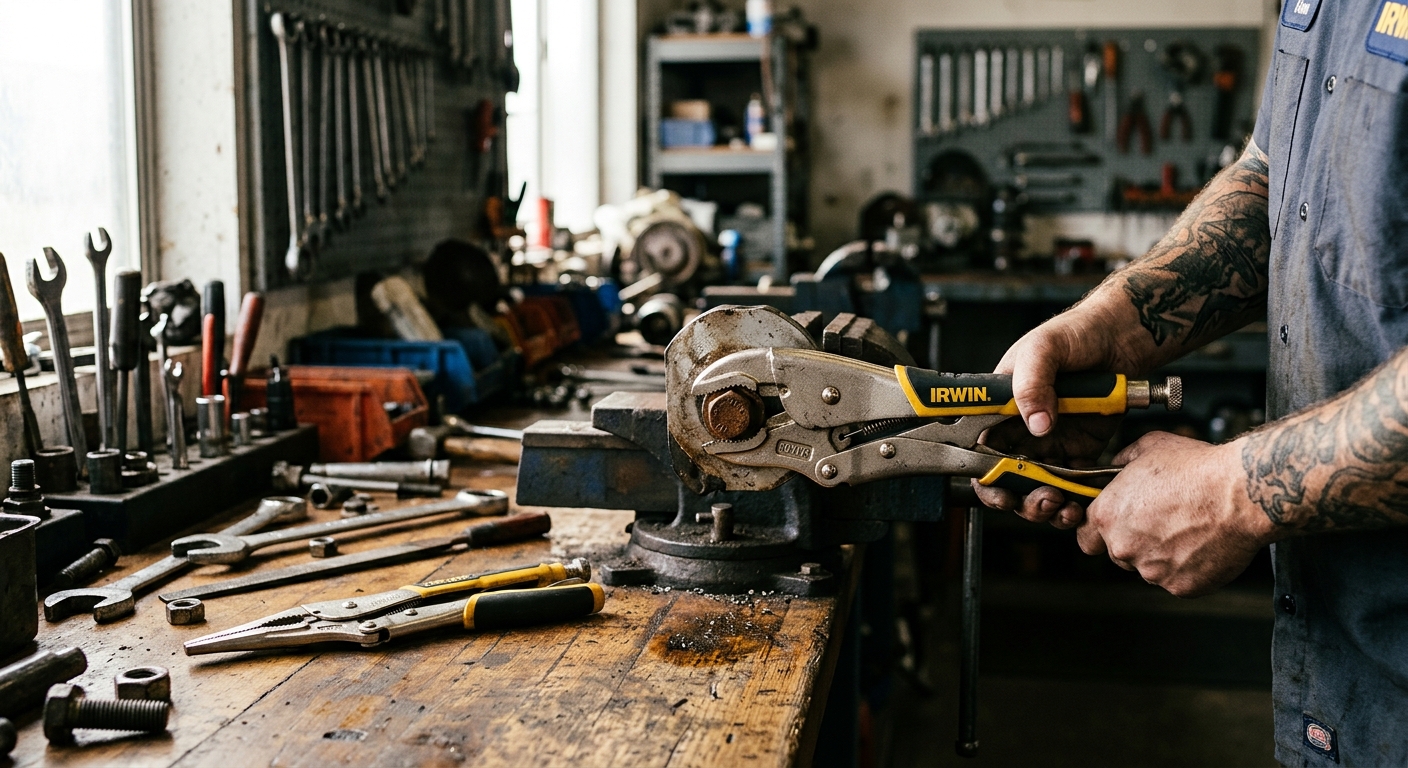
Vise-Grips are the original locking pliers – invented in Nebraska and still the benchmark. The adjusting screw sets jaw width, the over-center locking mechanism clamps with hundreds of pounds of force without continuous hand pressure, and the release lever opens instantly. This two-piece set includes the standard curved-jaw model and the long-nose version. Essential for stripped bolt heads, pipe work, and holding irregular shapes.
- Pros: Hands-free clamping force, over-center lock holds securely, standard and long-nose in one kit, versatile
- Cons: Can damage soft surfaces if overtightened, replaced by dedicated tools when precision matters
Stanley FatMax 8-Inch Combination Pliers – Best Budget
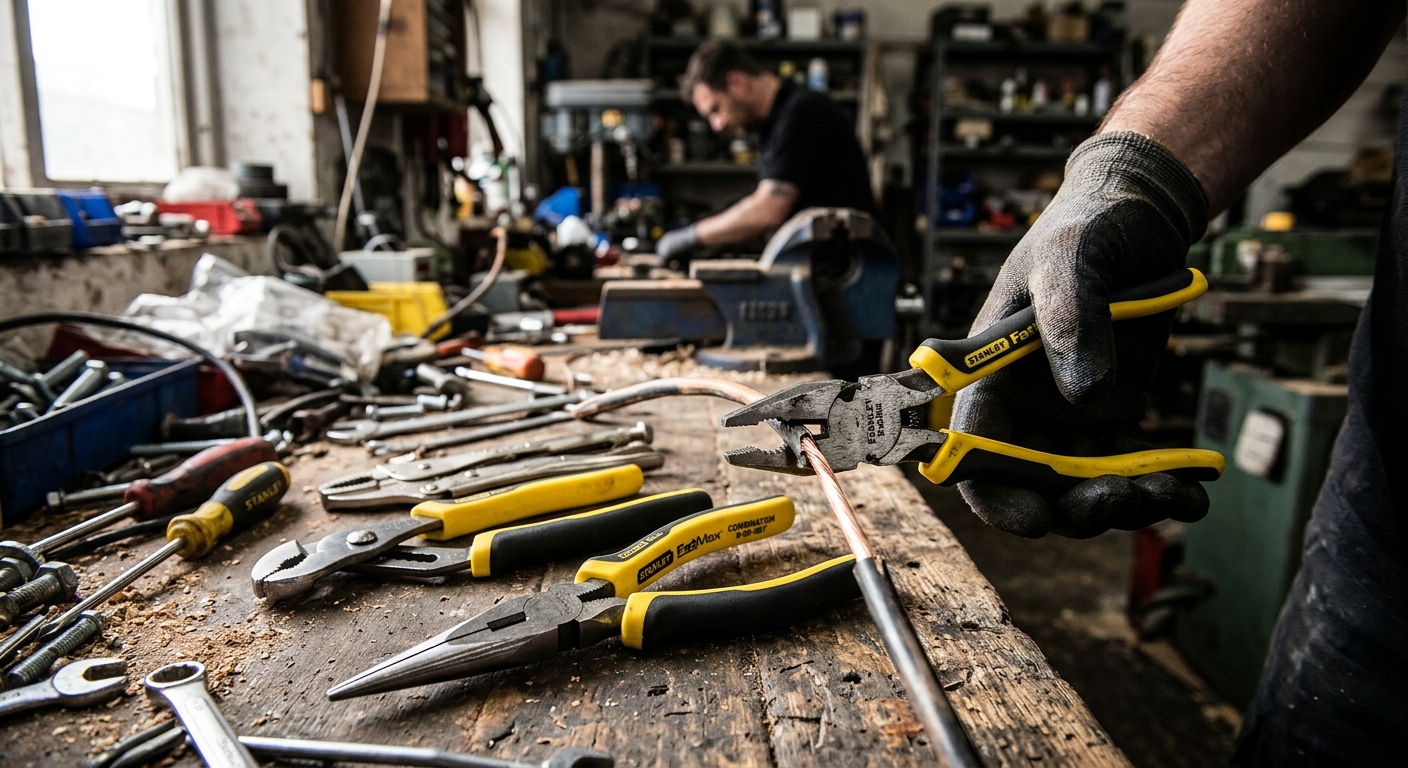
Stanley’s FatMax combination pliers deliver adequate performance for general DIY use at a fraction of the Knipex price. The bi-material handles are comfortable, the serrated jaws grip adequately, and the cutting edges handle wire and thin stock. For a homeowner who uses pliers occasionally, these are completely sufficient without the premium investment.
- Pros: Affordable, comfortable handles, adequate grip and cutting, widely available
- Cons: Not as smooth or precise as Knipex, pivot loosens more quickly with heavy use
Frequently Asked Questions
Can I use pliers on hex bolts? Technically yes, but pliers round hex bolt heads, making future removal harder. Use a wrench or socket instead whenever possible. Save pliers for when no wrench fits.
What’s the difference between combination and lineman’s pliers? Lineman’s pliers have a wider, heavier jaw designed for gripping and twisting wire. Combination pliers are lighter general-purpose. Lineman’s pliers are an electrician’s primary tool.
Are insulated pliers necessary? If you work on live circuits, yes – use pliers rated for 1,000V or higher. For general DIY, non-insulated is fine as long as you de-energize circuits before working.
How do I keep pliers working smoothly? Apply a drop of machine oil to the pivot periodically. Clean off rust with light wire brush work and reoil. Knipex pliers rarely need this attention; cheap pliers need it constantly.
Bottom Line
Knipex’s three-piece set earns Best Overall for its precision and durability that simply outperforms anything else in the market. Channellock tongue-and-groove pliers are essential for plumbing, and Vise-Grips solve countless clamping and stripped-fastener problems. If you buy one set and never upgrade, get the Knipex – it’s the last pliers purchase you’ll need to make.
Affiliate Disclosure: DIY Arsenal participates in the Amazon Associates Program and other affiliate programs. When you purchase through links on this site, we may earn a small commission at no additional cost to you. We only recommend products we have personally tested and genuinely believe in.