Best Marking Gauges for Woodworking
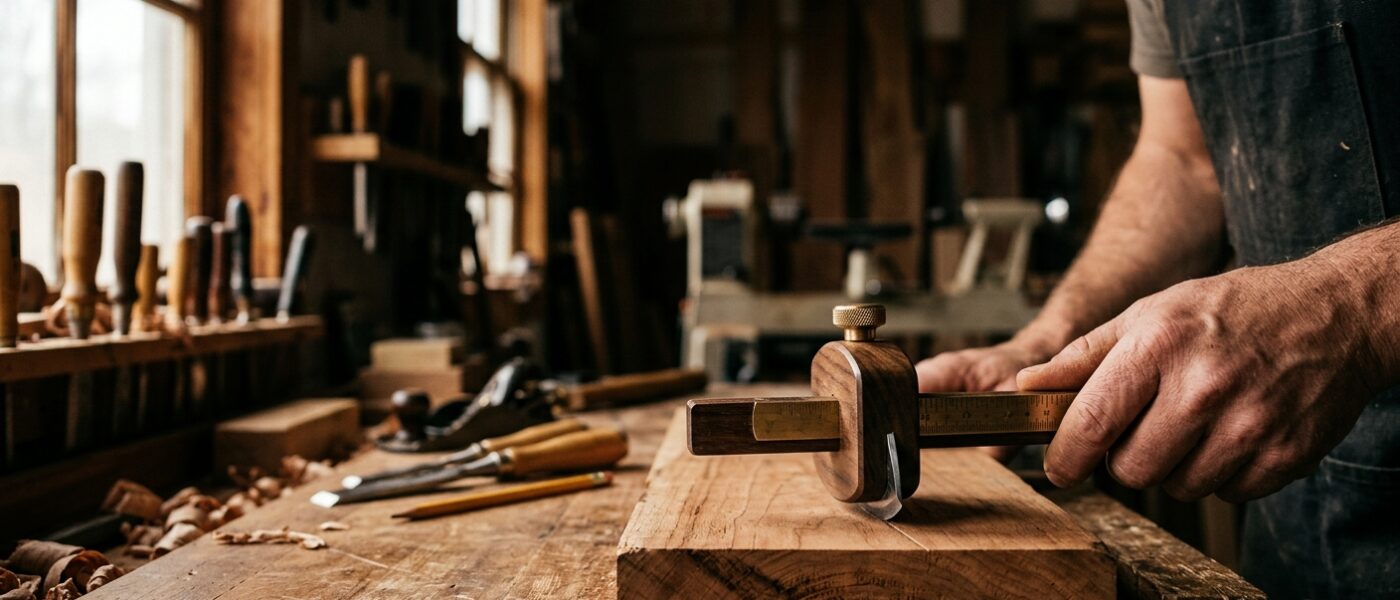
The Veritas Wheel Marking Gauge is the top recommendation for serious woodworkers — clean cuts in any species, precise micro-adjust, and built to last decades in regular use.
As an Amazon Associate, we earn from qualifying purchases.
A marking gauge is the tool that woodworkers reach for when they need to scribe a line parallel to an edge – for cutting a tenon cheek, marking a rabbet depth, setting a mortise width, or scribing a rip line. The gauge rides against the face or edge of the board and a marking element (pin, knife, or wheel) scribes a line at a precise, consistent distance. Work that requires marking gauges – hand tool joinery, traditional furniture making, cabinet work – cannot be done accurately without them.
Types of Marking Gauges
Pin/Scratch Gauges
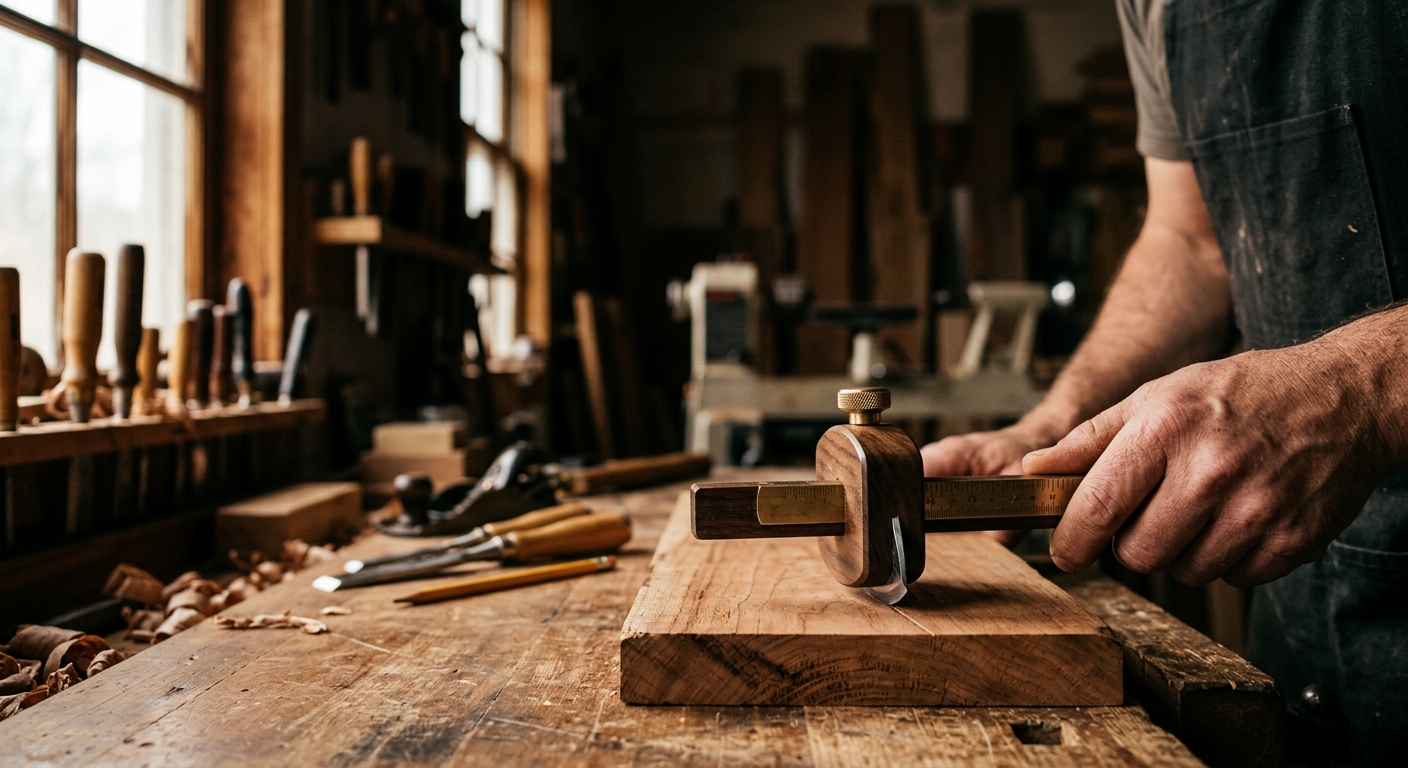
The traditional design: a sharpened steel pin mounted in a beam. The pin scores the wood surface as the gauge is pushed or pulled along the board edge. Simple, inexpensive, and effective for softwoods. The pin tears slightly on hardwoods, especially when crossing grain, leaving a slightly ragged line that may be difficult to work from precisely.
Cutting Gauges (Knife Gauges)
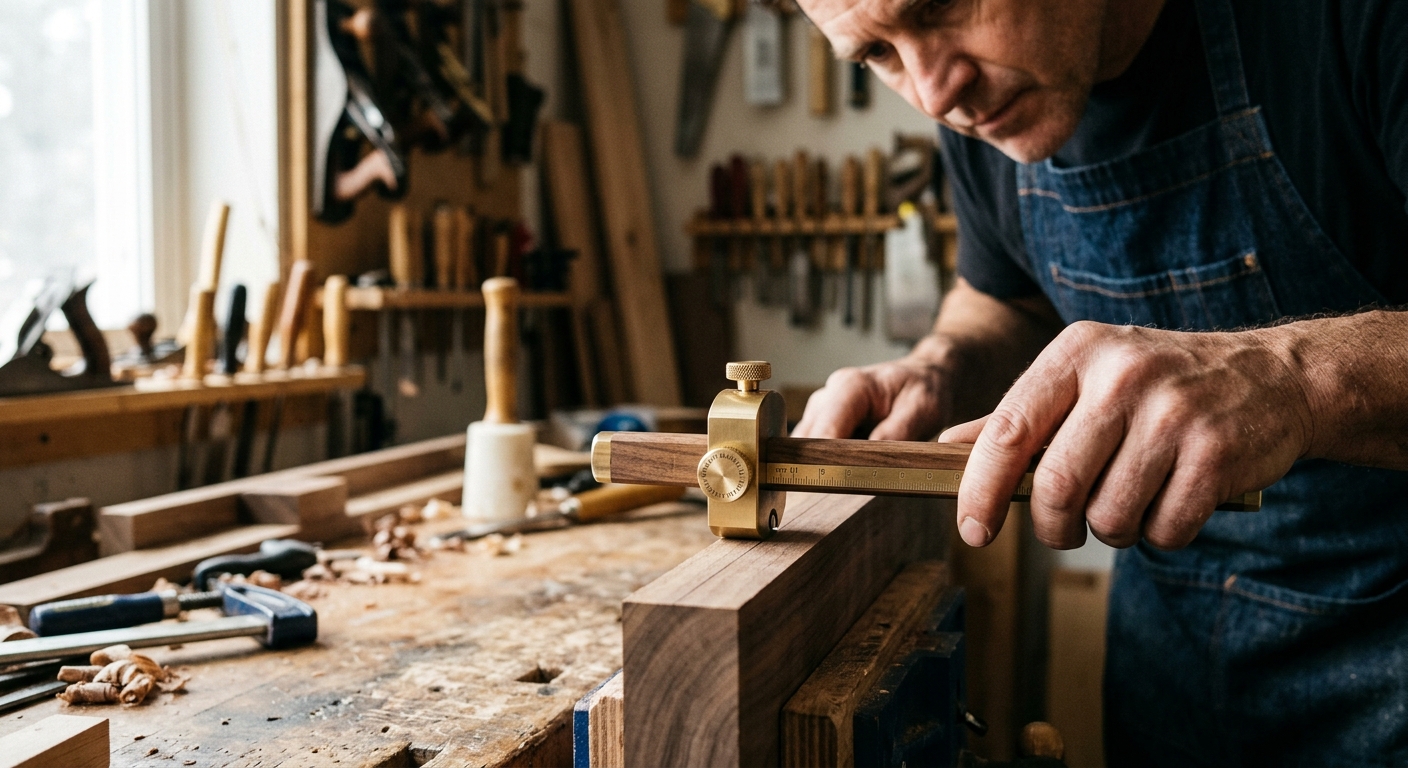
Replace the pin with a small knife or blade that slices fibers rather than tearing them. Produces a clean, crisp line on both soft and hard woods, across and with the grain. The preferred gauge for fine joinery work.
Wheel Gauges
Use a circular cutting wheel rather than a pin or knife. The wheel rolls along the wood rather than dragging, reducing tearing on cross-grain lines. Excellent for marking across the grain on hardwoods. Less precise for very long lines with the grain where the wheel can follow grain lines.
Mortise Gauges
Double-stemmed gauges with two marking elements that scribe two parallel lines simultaneously. Set the spacing equal to the chisel width used for the mortise, and the gauge marks both walls of the mortise in one pass. Essential for accurate mortise layout.
Key Features to Look For
Fence Adjustment
The fence (the sliding part that rides against the board edge) must lock firmly at any setting without drifting. A fence that moves slightly under pressure produces inconsistent marks. Look for thumbscrew or wedge locks that hold the setting positively.
Beam Material
Hardwood or metal beams hold their calibration better than softwood. Rosewood, ebony, and dense fruitwoods are traditional choices. Metal beams (aluminum, steel) are more dimensionally stable and increasingly common in modern premium gauges.
Marking Element Quality
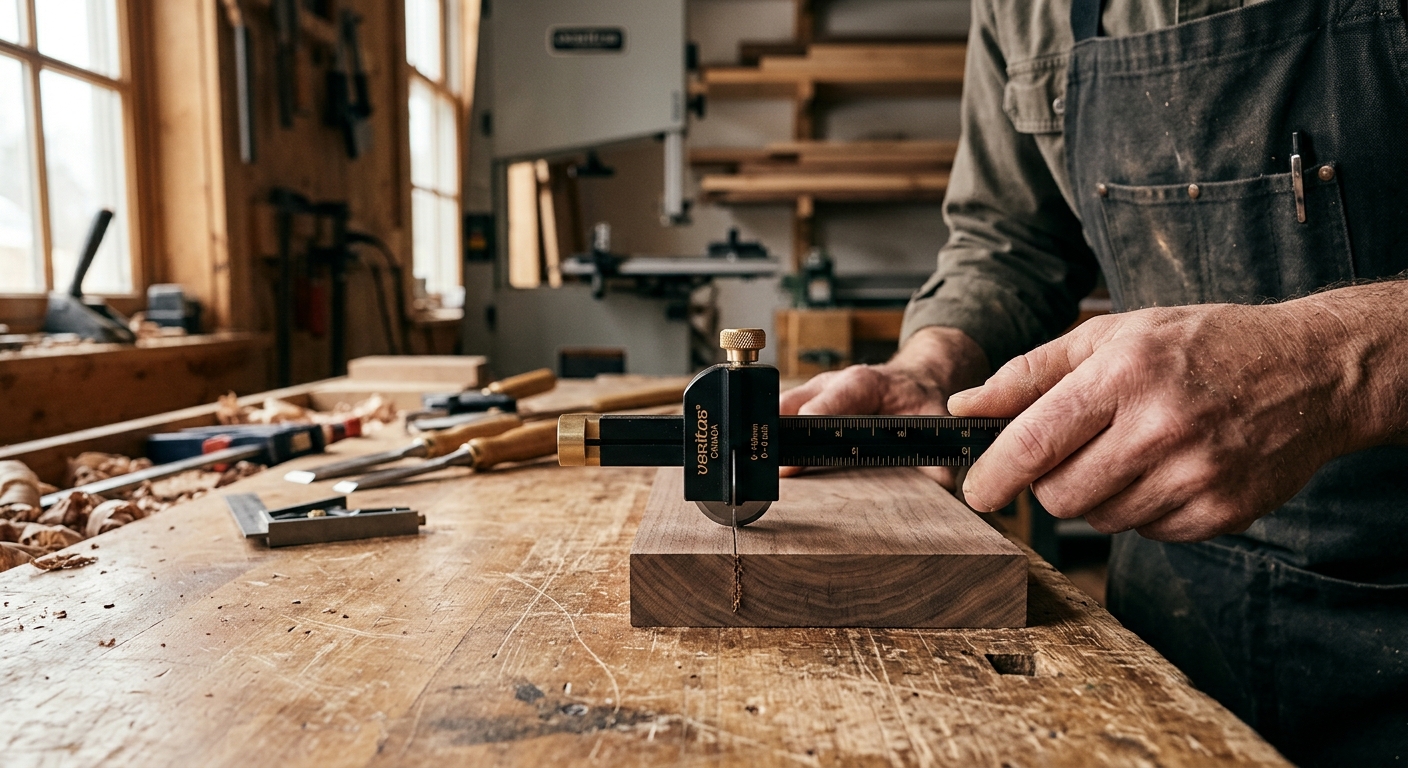
The knife or pin must be sharp and remain sharp through repeated use. Replaceable blades (as used in some wheel gauges) allow fresh cutting geometry when the blade dulls. Fixed pins must be resharpened periodically.
Our Top Picks
1. Veritas Wheel Marking Gauge
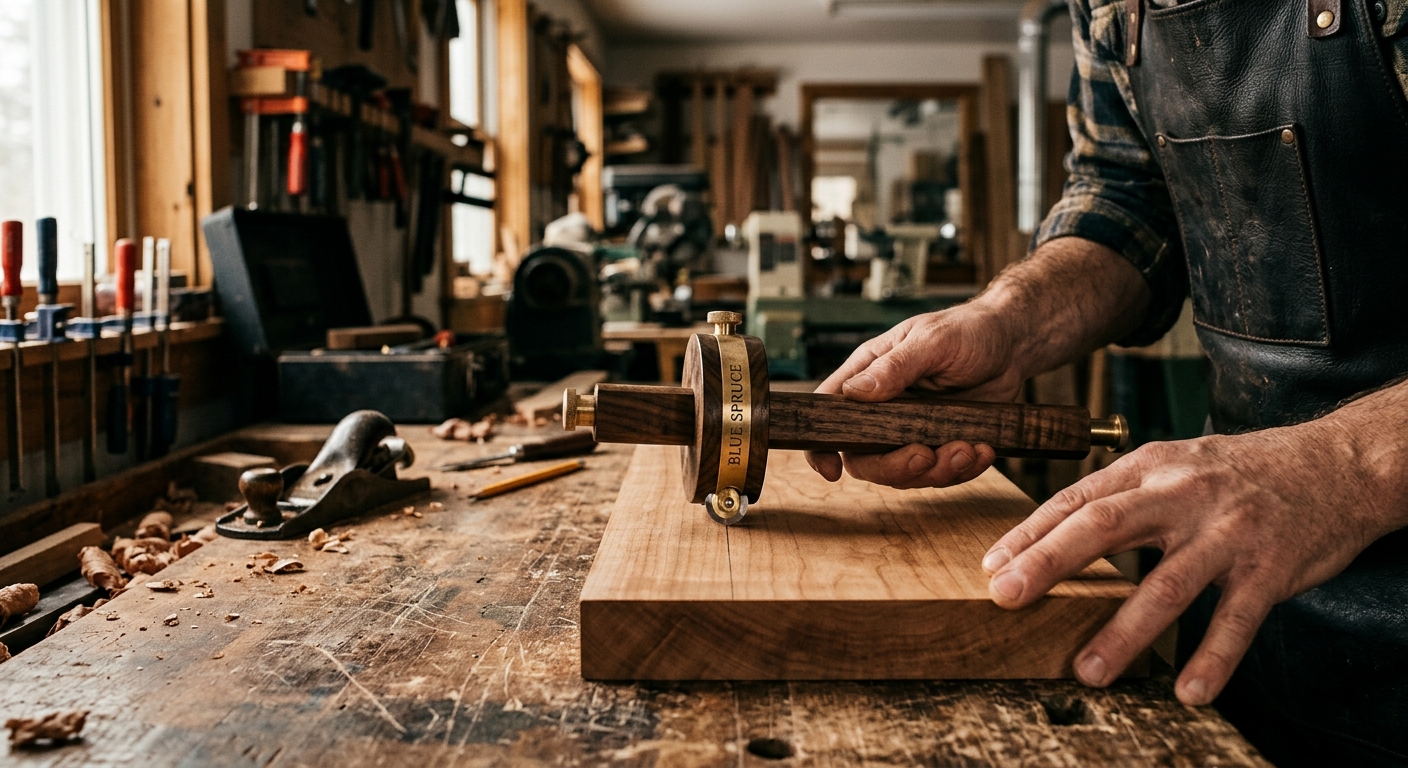
The most recommended marking gauge in the hand tool woodworking community. Veritas (Lee Valley) designed the wheel gauge from scratch with a hardened steel wheel that cuts cleanly in any wood species and grain direction, a robust micro-adjust mechanism for precise setting, and a large comfortable fence that rides stably against board edges. The single best marking gauge for general woodworking use.
2. Blue Spruce Marking Gauge
A premium American-made gauge from a small tool maker who has become one of the most respected names in hand tool accessories. Blue Spruce gauges are machined to tight tolerances, use beautiful wood and metal combinations, and mark with exceptional precision. An heirloom tool that woodworkers buy once.
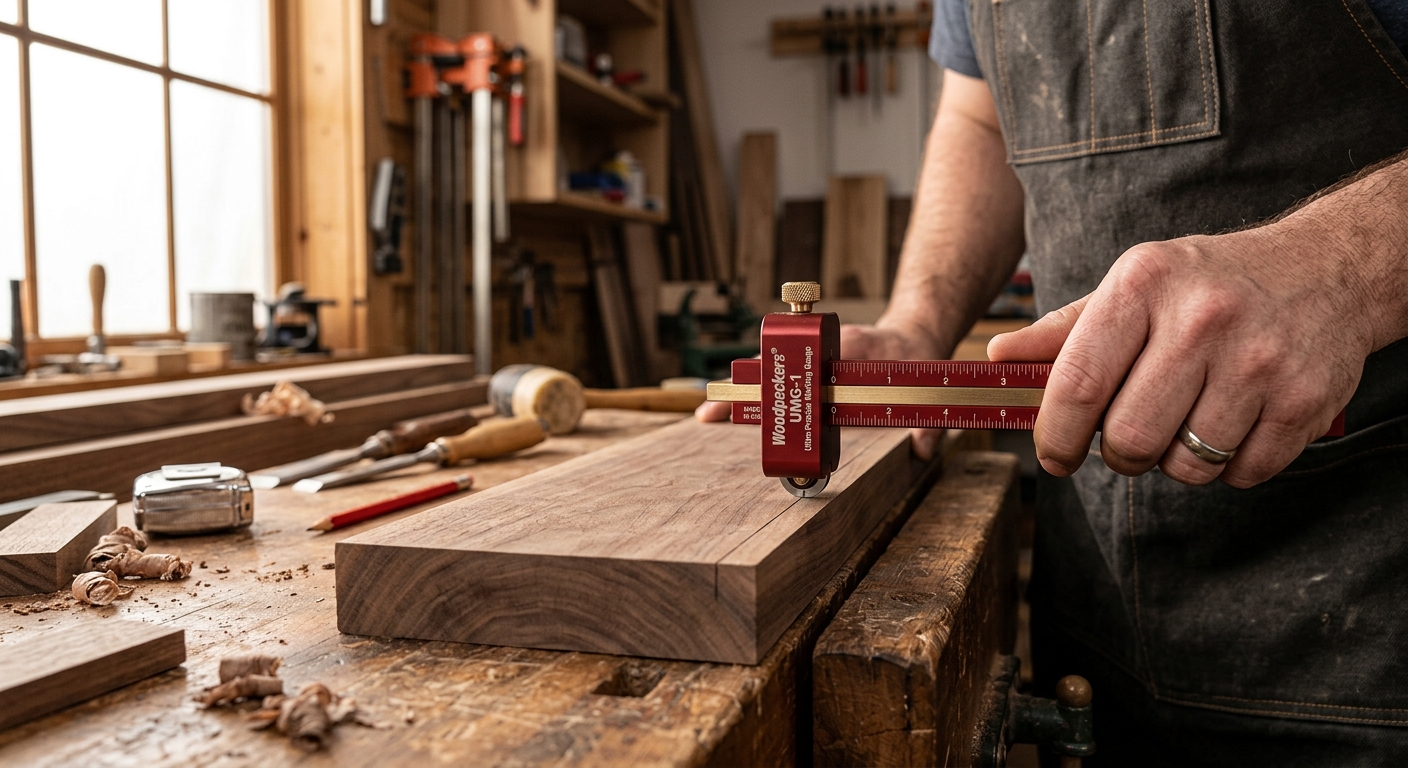
3. Woodpeckers UMG-1 Ultra-Precise Marking Gauge

Woodpeckers makes high-tolerance specialty tools. The UMG-1 uses anodized aluminum construction, a precision leadscrew adjustment, and a very fine marking wheel. For woodworkers who demand the tightest possible tolerance in marking gauge work, this is the tool.
4. Crown Tool 170 Ebony Marking Gauge
A traditional pin gauge in ebony wood – beautiful, well-made, and effective for the large portion of marking gauge use (with-the-grain rip lines) where the pin-vs-wheel distinction matters less. An excellent traditional gauge at a reasonable price.
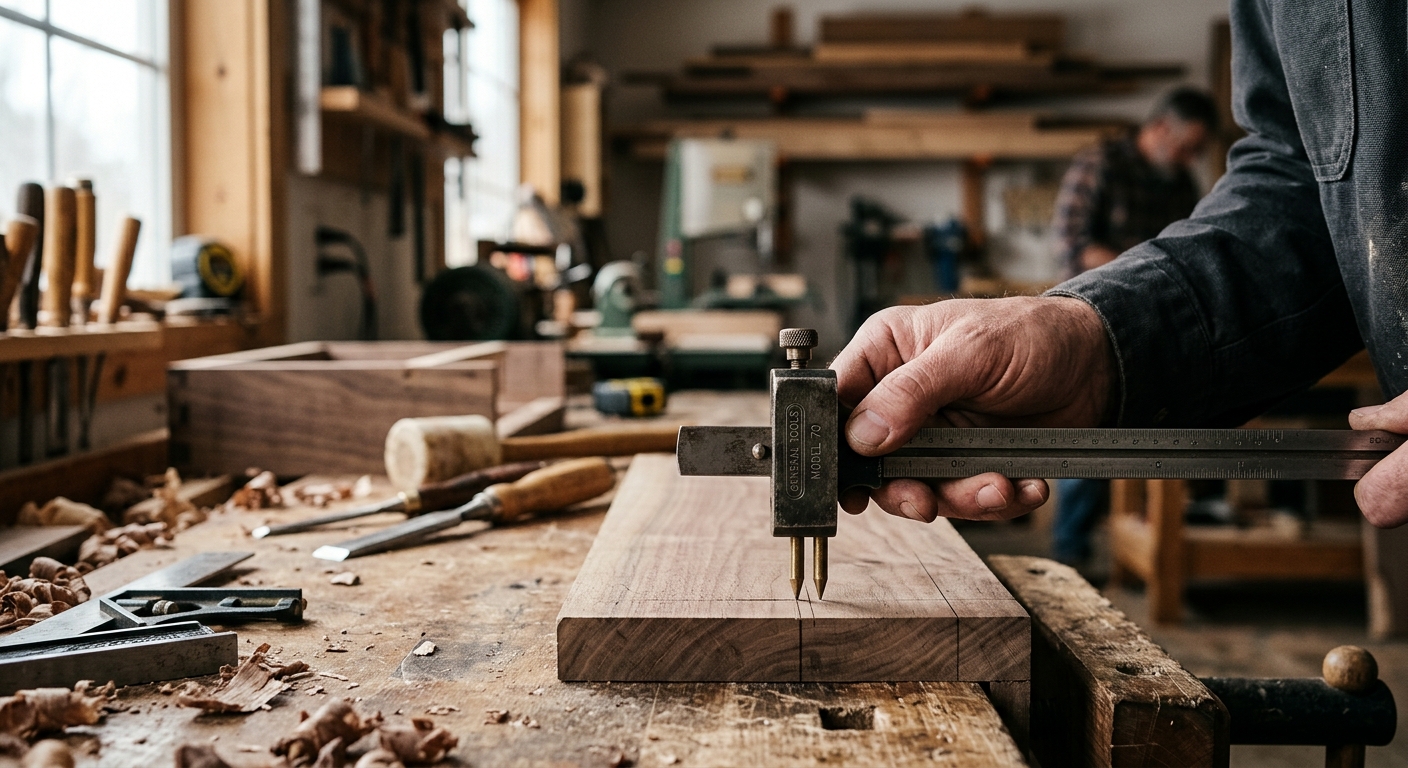
5. General Tools 70 Marking and Mortise Gauge
A functional combination marking and mortise gauge for woodworkers who want both functions in one tool at a budget price. Not as precise as the Veritas or Blue Spruce, but adequate for general joinery work and an excellent entry point into gauge-assisted layout.
FAQ
Should I use a pin gauge or a wheel gauge?
For most work: wheel gauge. The cutting wheel produces cleaner lines on hardwoods and across the grain than a pin. For very light work on softwoods where tearing is not an issue, a pin gauge is simpler and equally effective.
How do I set a marking gauge accurately?
Use a precision rule to set the distance from the fence to the cutting element directly. For mortises, use the actual chisel that will cut the mortise to set the gap between the double cutters of a mortise gauge – this ensures the gauge marks exactly match the chisel width.
Can I use a marking gauge on plywood?
Yes, but the glue-filled veneers dull marking gauge wheels faster than solid wood. A wheel gauge is much better than a pin gauge on plywood surfaces, as the wheel rolls over the harder glue lines where a pin would skip and tear.
Affiliate Disclosure: DIY Arsenal participates in the Amazon Associates Program and other affiliate programs. When you purchase through links on this site, we may earn a small commission at no additional cost to you. We only recommend products we have personally tested and genuinely believe in.