Best Fish Tape and Wire-Pulling Tools
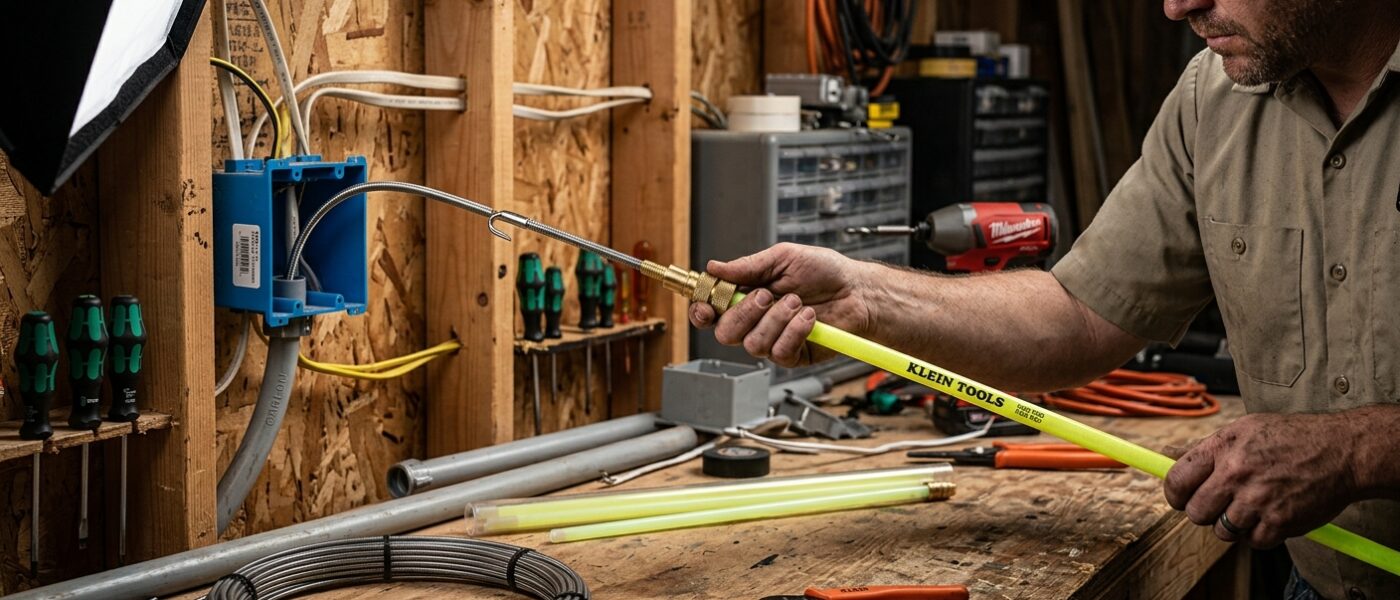
The Klein Tools 56005 100-foot steel fish tape is the professional standard for conduit work; use the Ideal fiberglass tape when working in or near energized panels and conduit systems.
As an Amazon Associate, we earn from qualifying purchases.
Pulling wire through conduit, finished walls, attic spaces, and between floors is one of the most physically demanding and time-consuming parts of electrical work. Fish tape and wire-pulling tools take a job that used to require two people, blind luck, and a prayer, and make it manageable for a single DIYer. The right pulling tool can mean the difference between a full day of frustration and a two-hour success.
Types of Wire Pulling Tools
Fish Tape
A coil of flat steel or fiberglass ribbon stored in a circular case with a handle. You push the tape through conduit or inside walls, attach the wire to the hook at the end, and pull the tape back – dragging the wire with it. The standard tool for conduit work and in-wall cable fishing.
Fish Sticks and Fiberglass Glow Rods
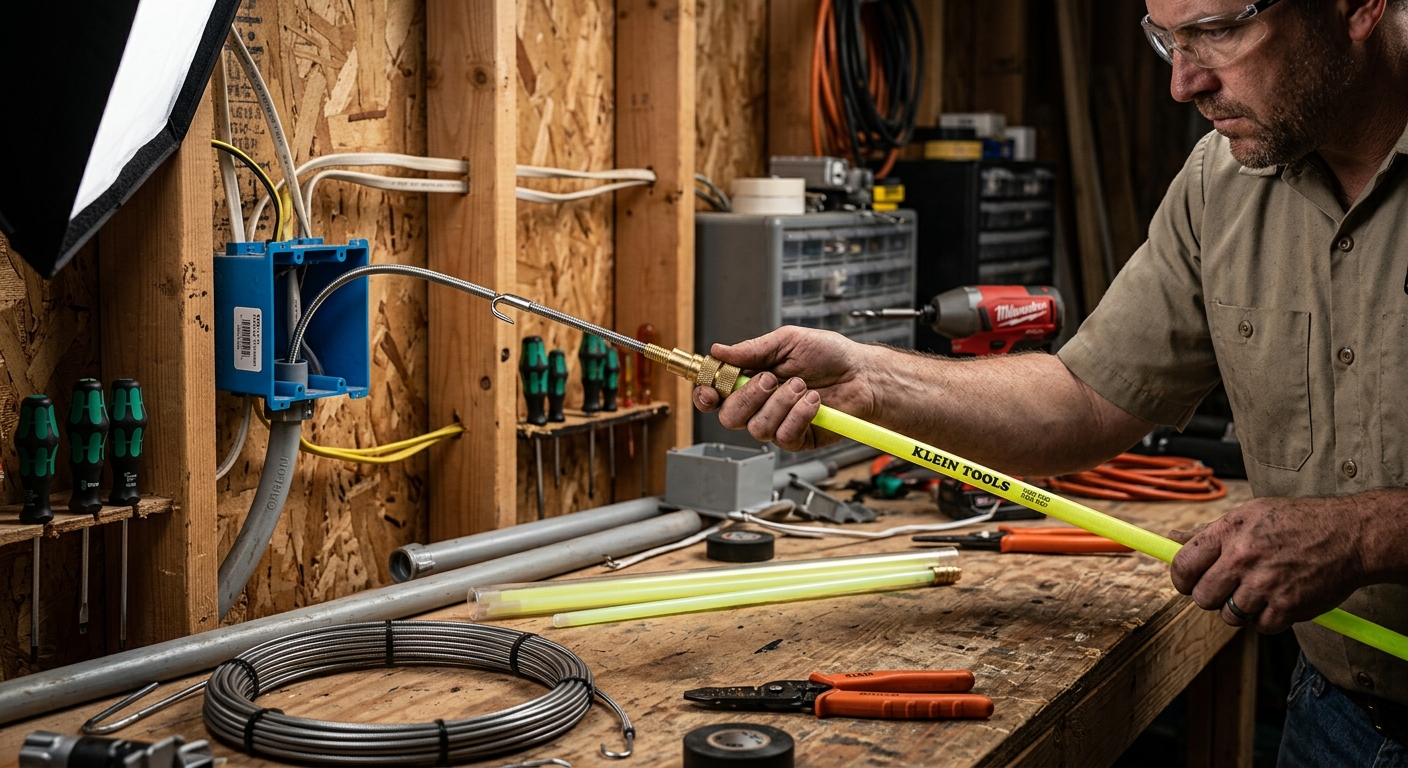
Rigid or semi-rigid fiberglass rods that push through open cavities (attic spaces, stud bays, and open conduit). Glow rods are fluorescent so they can be seen in dark attic spaces through small holes. Used where the path is mostly open and you need to push rather than pull.
Flexible Drill Bits (Ship Augers)
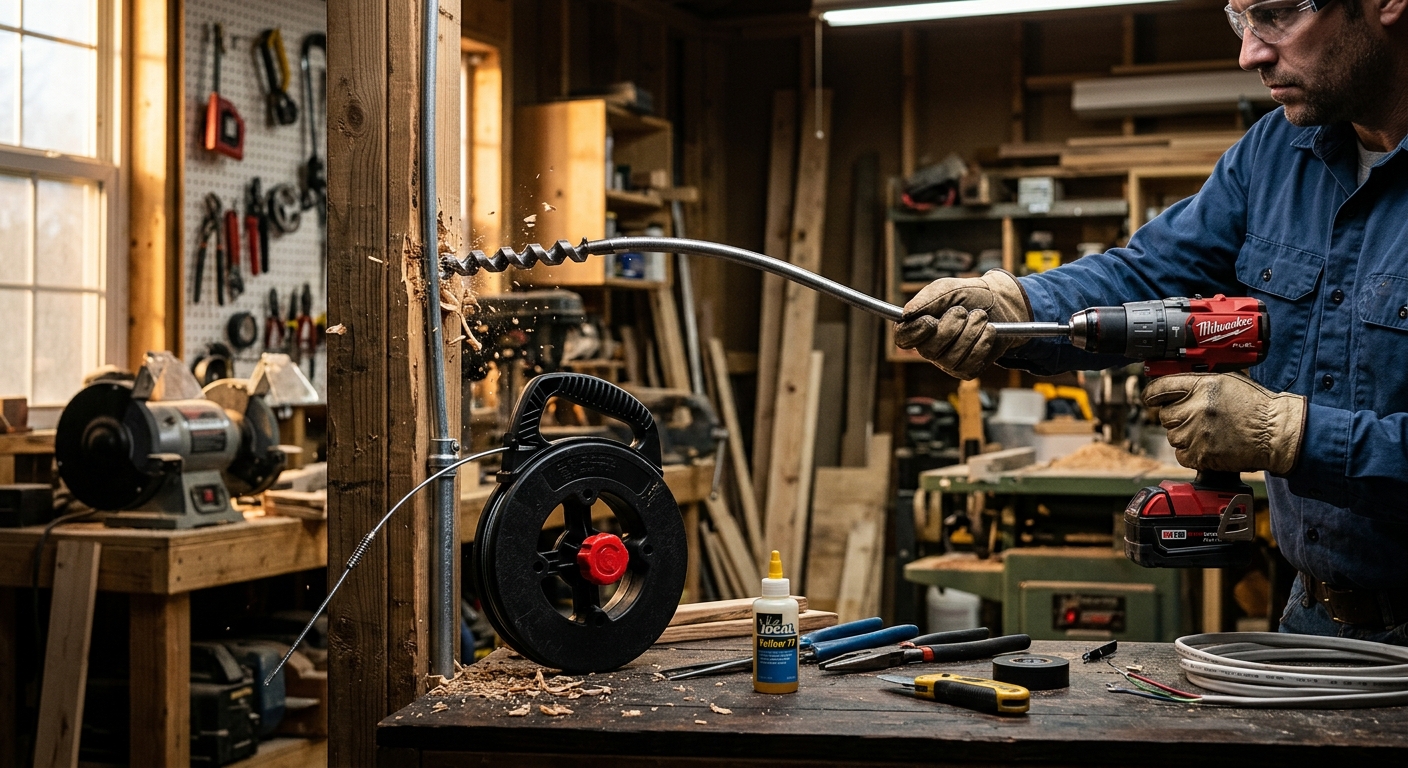
Long flexible shaft bits used to drill through fire blocking and structural members in existing walls. Combined with a wire attachment at the drill bit end, they can both drill the necessary hole and start the wire pull in one operation.
Wire-Pulling Lubricants
Applied to wire before pulling through conduit to reduce friction. Essential for long conduit runs and for pulling multiple conductors simultaneously. Covered separately in this series.
Key Features to Look For
Fish Tape: Steel vs. Fiberglass
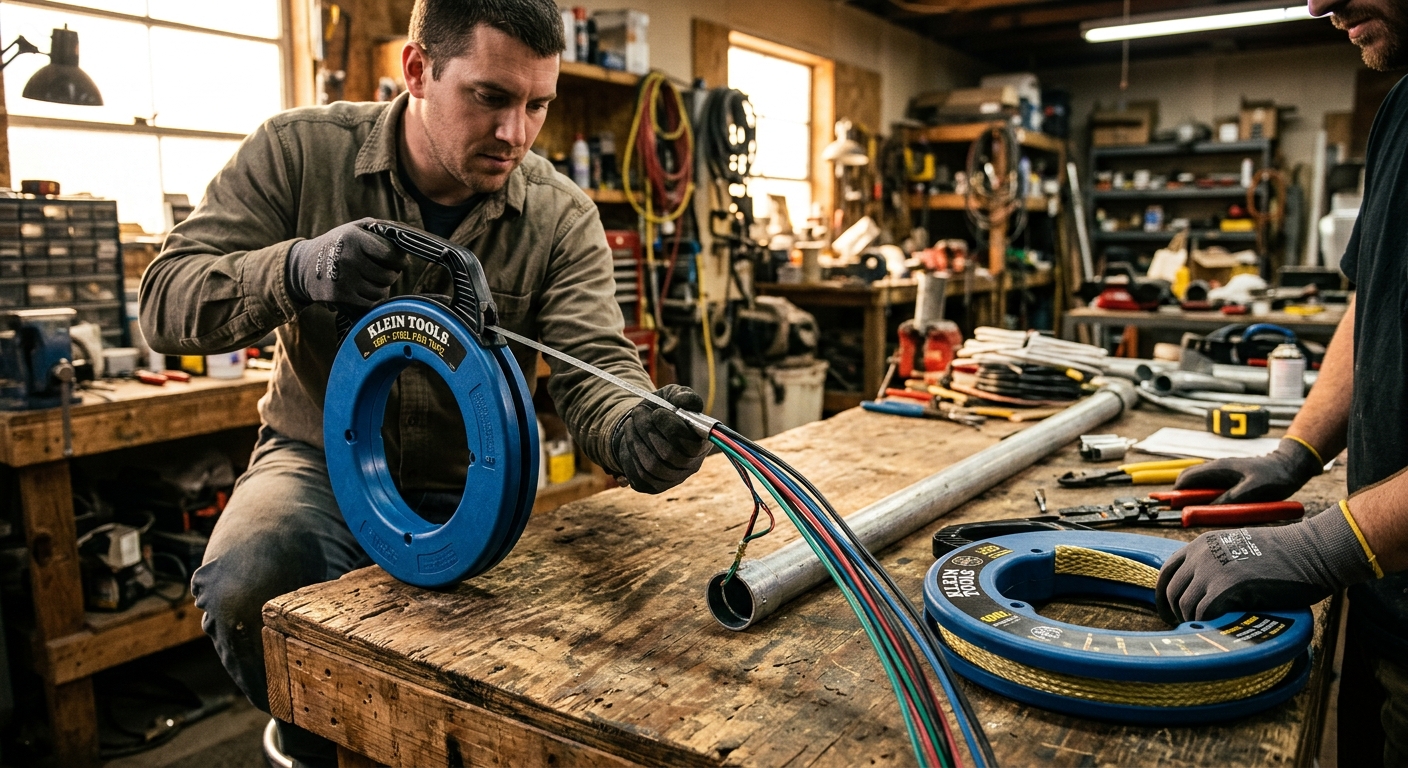
Steel fish tape is stronger and better at pushing through long conduit runs where fiberglass might kink. However, steel tape conducts electricity – a serious hazard if you accidentally encounter a live conductor. Fiberglass tape is non-conductive (the correct choice when working in energized or partially energized conduit) but requires more careful handling to avoid kinking at tight radius bends.
Tape Length
50-foot tape handles most residential conduit runs. 100-foot tape is necessary for commercial work and long runs from panel to remote junction boxes. More tape means heavier, bulkier reel – buy the length you actually need.
Case Design
The reel case should rotate smoothly and feed tape without twisting or kinking. High-quality cases also provide a comfortable grip and protect the reel during storage and transport. The hook end attachment point is a common failure point on cheap tapes – look for properly formed, hardened steel hooks.
Glow Rods: Flexibility
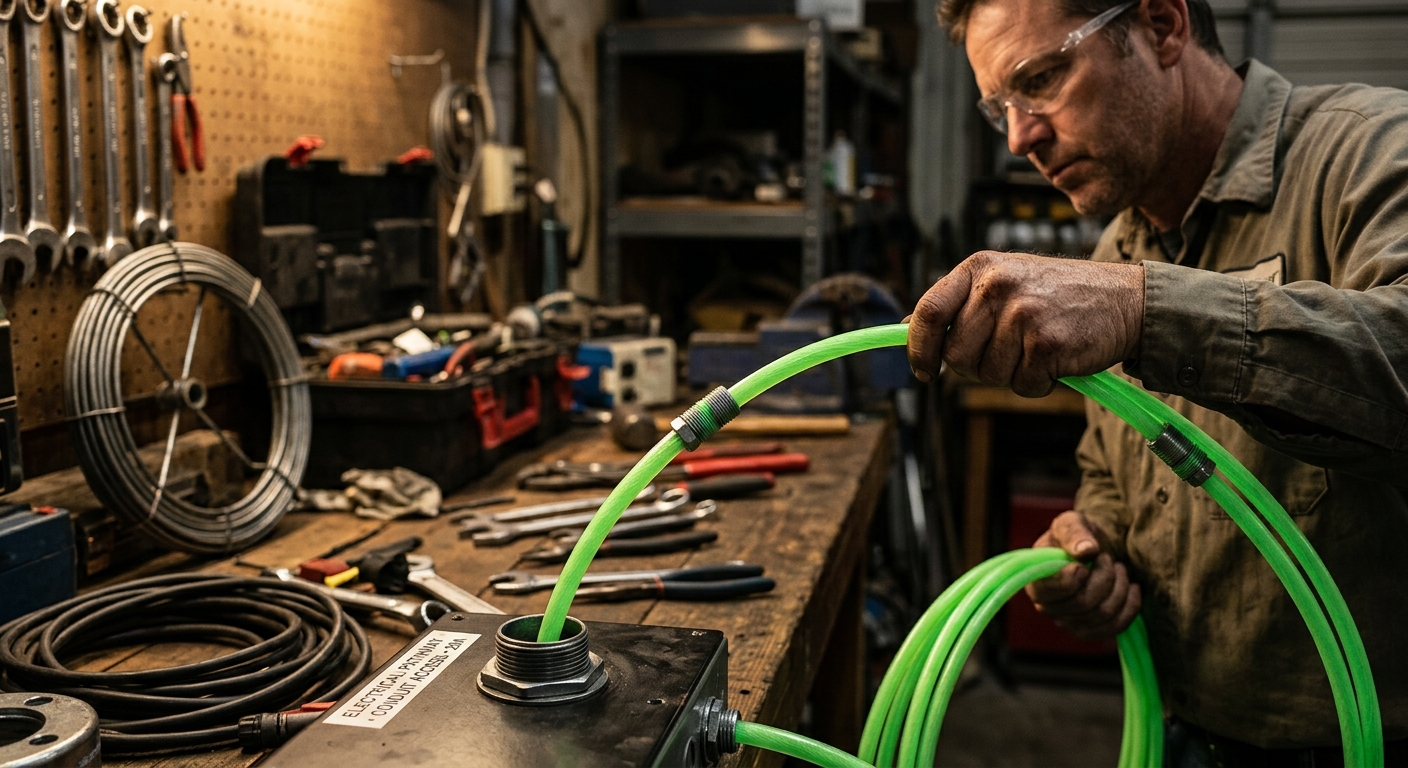
Semi-rigid rods that flex around corners but spring back to straight are far more useful than completely rigid rods. A 4-to-6 degree bend radius allows navigation around single-corner obstructions in attic and wall spaces.
Our Top Picks
1. Klein Tools 56005 100-Foot Steel Fish Tape
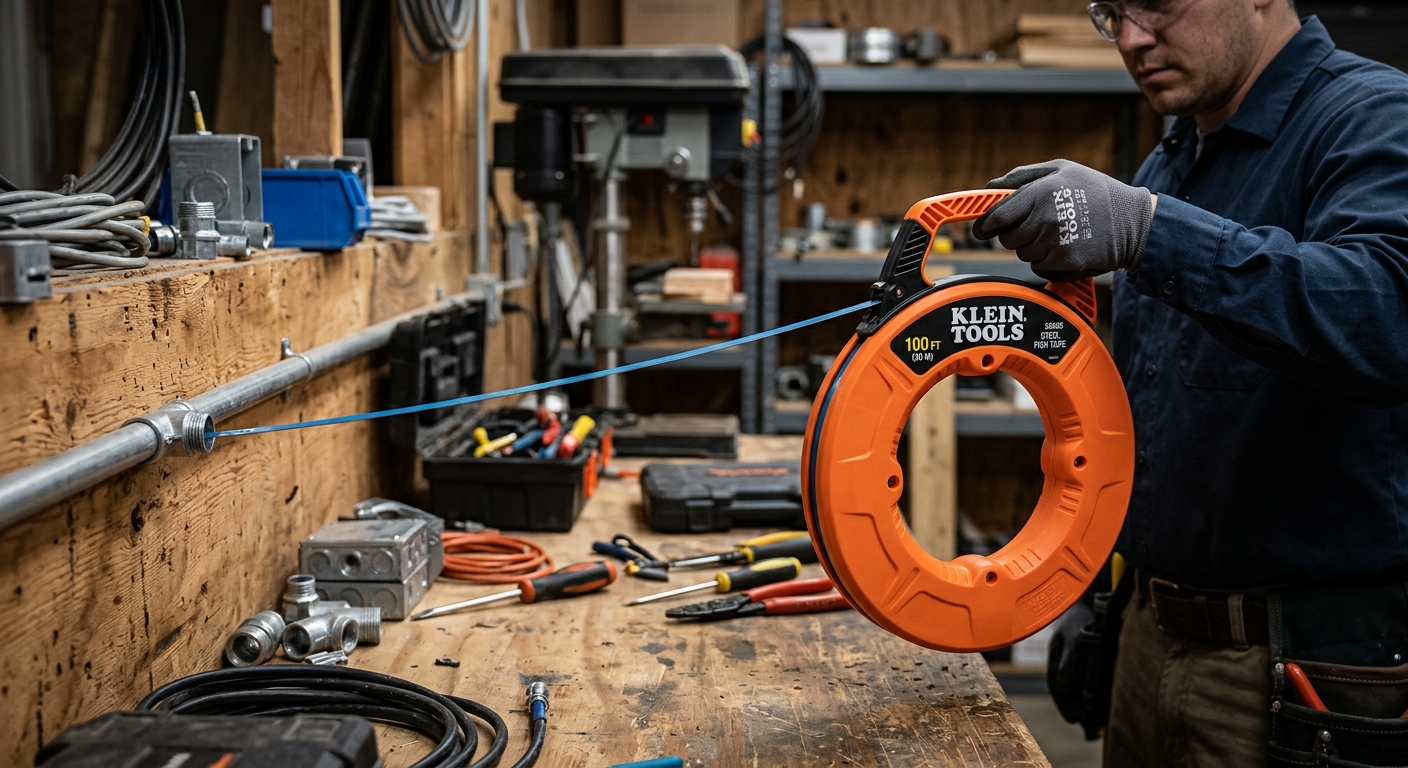
The professional standard in fish tape. Klein has made electrical tools for over 160 years, and the 56005 represents decades of refinement. The hardened steel tape feeds smoothly from the die-cast case, the hook end is properly formed and durable, and the case handle is comfortable for extended use. If you do any amount of conduit work, this is the fish tape to own.
2. Ideal Industries 31-058 50-Foot Fiberglass Fish Tape
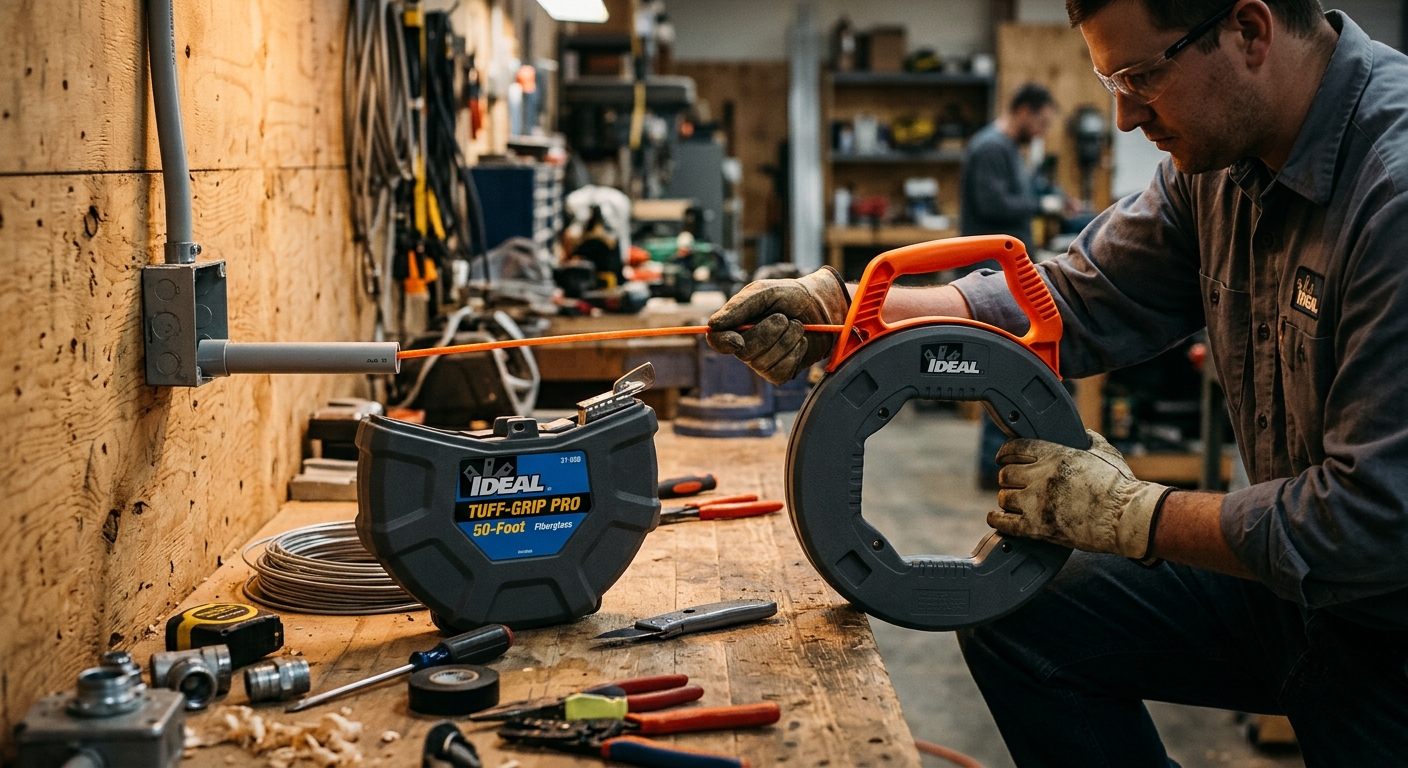
The best fiberglass tape for electricians who work near live conductors. The fiberglass construction is non-conductive (rated up to 35,000 volts), slightly kink-resistant, and UV-stable. The 50-foot length handles most residential conduit runs. Ideal makes excellent electrical tools and this tape reflects that quality.
3. Southwire FTS100 100-Foot Steel Fish Tape
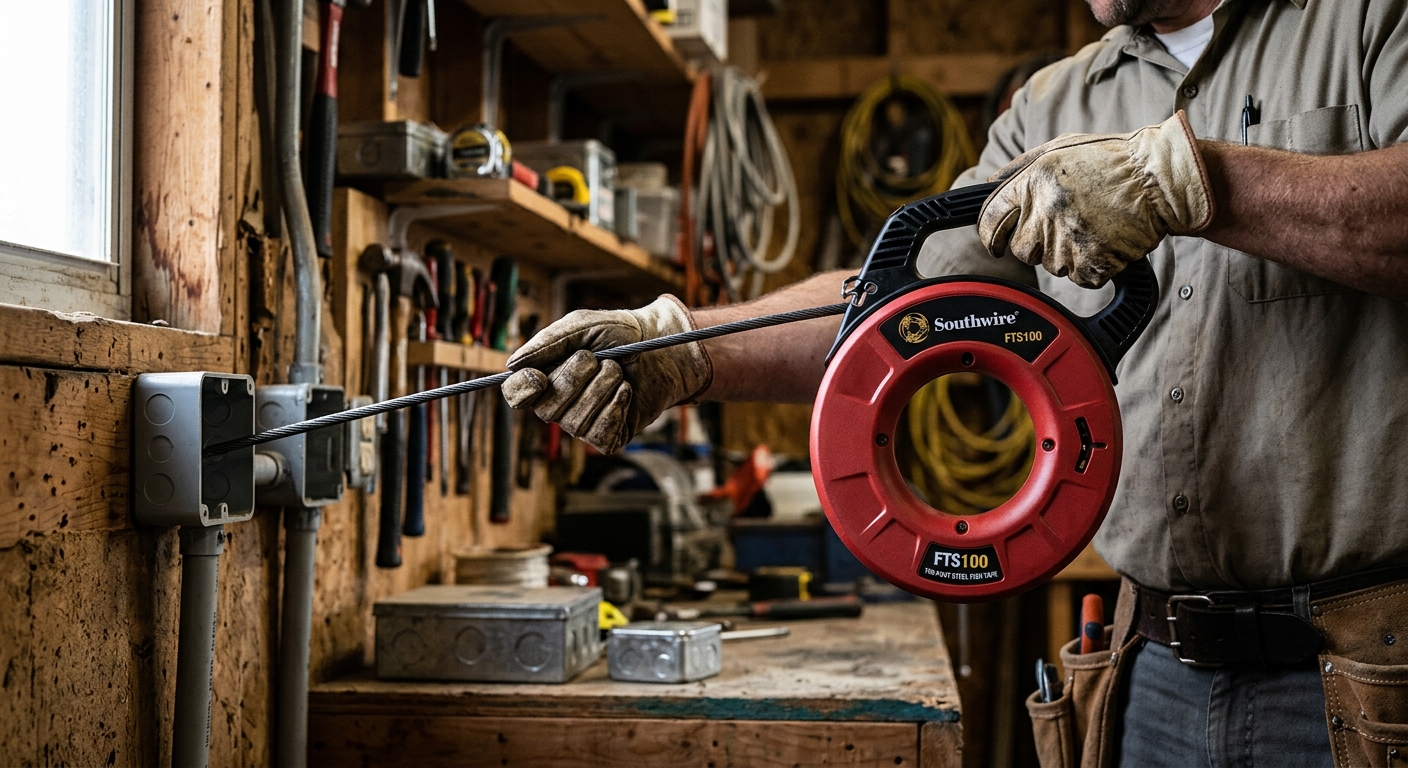
Southwire brings a slightly heavier-gauge tape and a comfortable grip case to the 100-foot category. The tape feeds more consistently than some competitors at this length, and the case design reduces kinking during retrieval. An excellent alternative to Klein at a slightly lower price.
4. Aukvi Fish Tape and Glow Rod Combo Kit
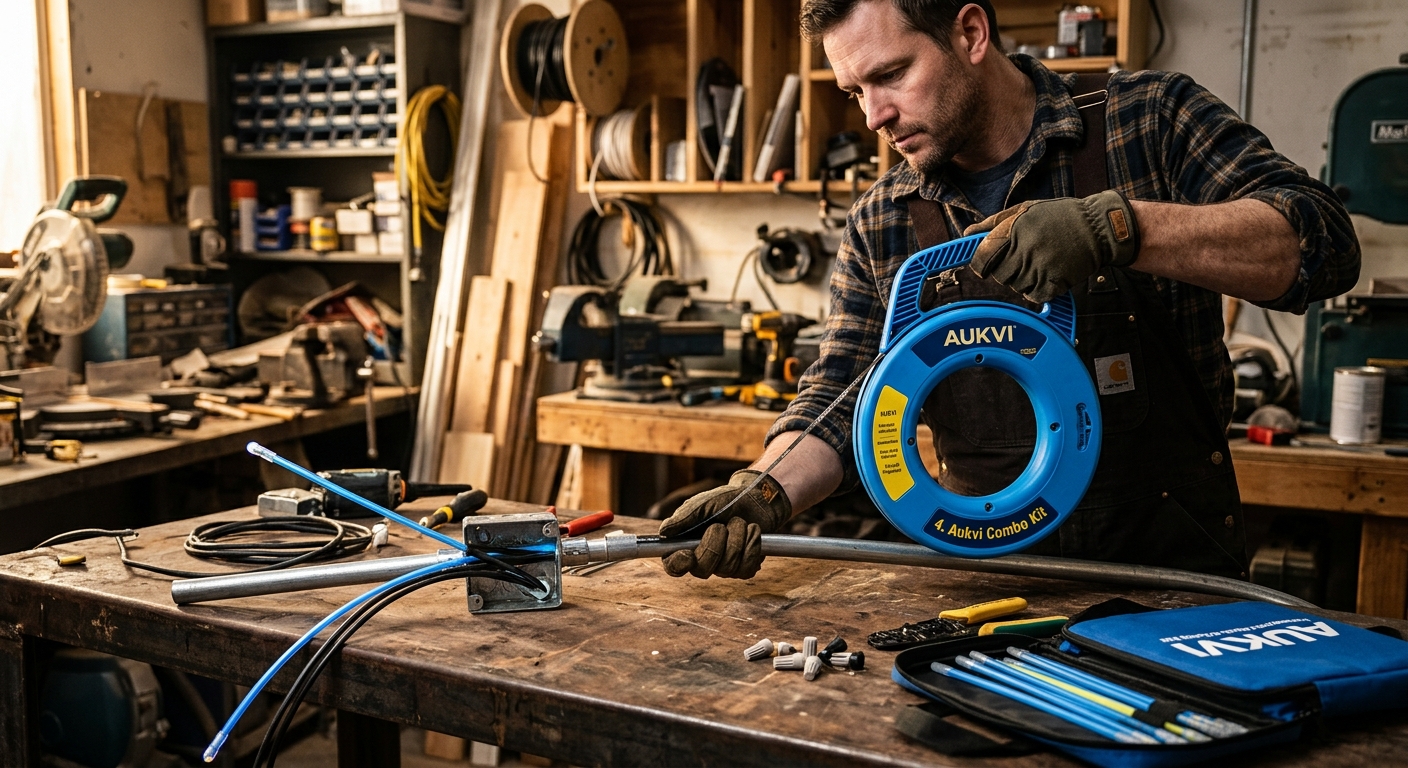
For DIYers who need both in one purchase: this combination kit includes fish sticks (glow rods) in multiple sizes and a basic fish tape in a single package. Not professional grade, but adequate for occasional residential wiring projects at a very accessible price.
5. Jonard Tools FPS-50 Slim Fish Tape (Fiberglass)
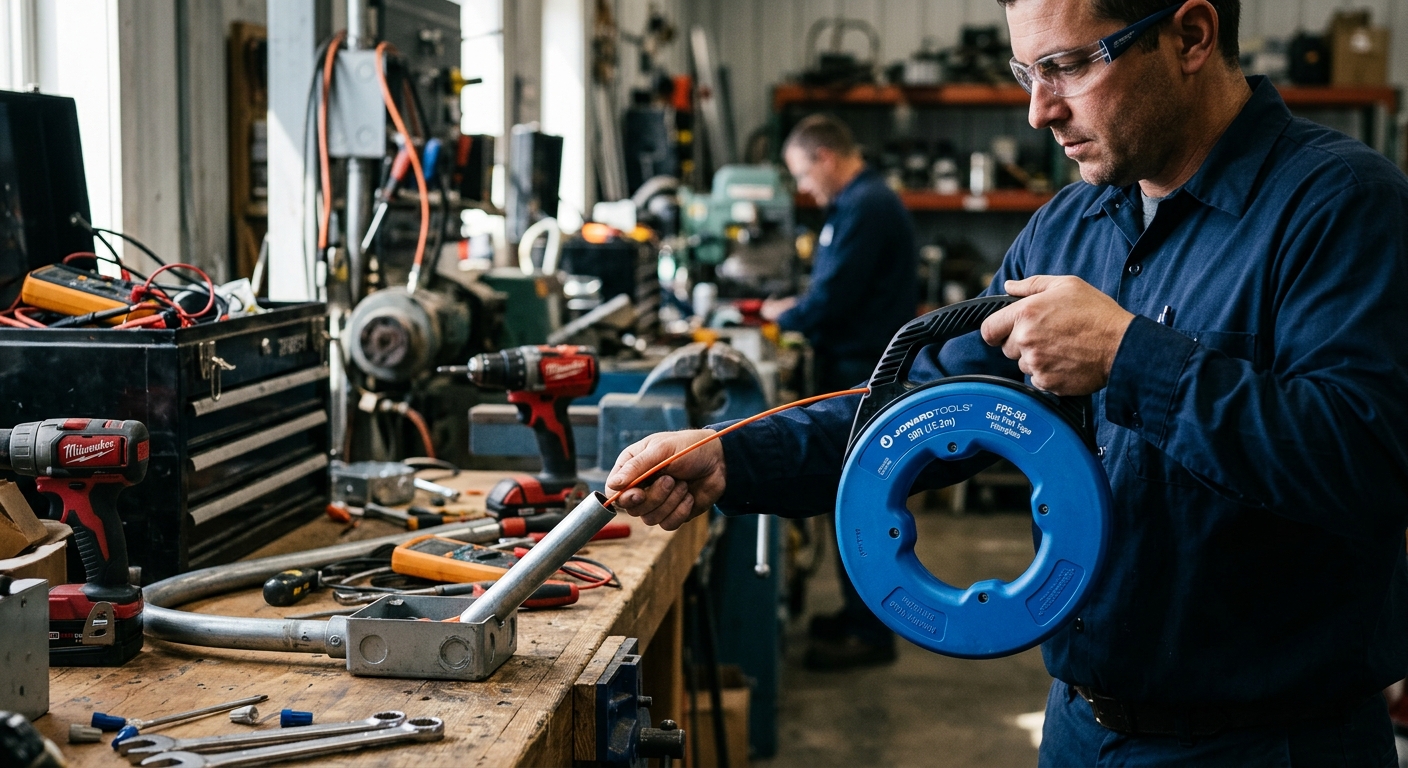
A slim-profile fiberglass tape that fits through smaller conduit openings and tighter paths than standard-gauge tapes. Particularly useful for 1/2-inch EMT conduit where the standard tape profile is too thick for comfortable passage.
Wire Pulling Tips
- Always tape the wire to the fish tape hook securely – a bare hook-wire connection will catch on every conduit connector and pull apart at the worst moment.
- Use electrical tape to create a smooth, tapered connection between fish tape and wire(s) – this reduces the catch points that snag on conduit fittings.
- Apply wire-pulling lubricant to the wire before inserting it into conduit for long runs – the friction reduction is dramatic and reduces the risk of overheating insulation on tight bends.
- Have a helper feed the wire while you pull on long runs – trying to both feed and pull simultaneously causes kinks and binding.
FAQ
What is the maximum wire pull through conduit?
NEC Article 358 limits conduit fill to 40% of the conduit interior cross-section for multiple conductors. More practically, most DIYers find three 12 AWG conductors in 1/2-inch EMT about the limit for comfortable pulling without a mechanical pulling device.
Can I use fish tape in existing walls without conduit?
Yes, but it is more challenging. In existing drywalled walls, you push the tape from an access hole and fish it to another opening. Fire blocking at mid-wall height (required in many homes) stops the tape, requiring additional access holes. This is where fish sticks and flexible drill bits are more practical than standard fish tape.
How do I prevent fish tape from kinking?
Never pull fish tape completely off the reel – always leave at least a few loops wound. Retrieve tape steadily and evenly, guiding it back onto the spool rather than letting it pile up. Avoid bends tighter than the tape manufacturer specifies.
Affiliate Disclosure: DIY Arsenal participates in the Amazon Associates Program and other affiliate programs. When you purchase through links on this site, we may earn a small commission at no additional cost to you. We only recommend products we have personally tested and genuinely believe in.