Best Electrical Panel Finders and Circuit Tracers
The Klein Tools ET310 is the most reliable and accurate circuit breaker finder for residential use; every homeowner who works on their own electrical system should own one and use it to create a complete, verified panel directory.
As an Amazon Associate, we earn from qualifying purchases.
An electrical panel, also called a breaker panel or load center, contains 20, 30, or more circuit breakers in a compact enclosure. Finding which breaker controls which outlet, appliance, or fixture is the job of a circuit tracer or panel finder. Without one, identifying circuits requires two people (one at the panel flipping breakers, one in the house calling out when power goes off) or repeated trips back and forth. A circuit tracer cuts this to a one-person, one-trip job that takes minutes instead of an afternoon.
Types of Circuit Tracers and Panel Finders
Outlet-Based Circuit Tracers
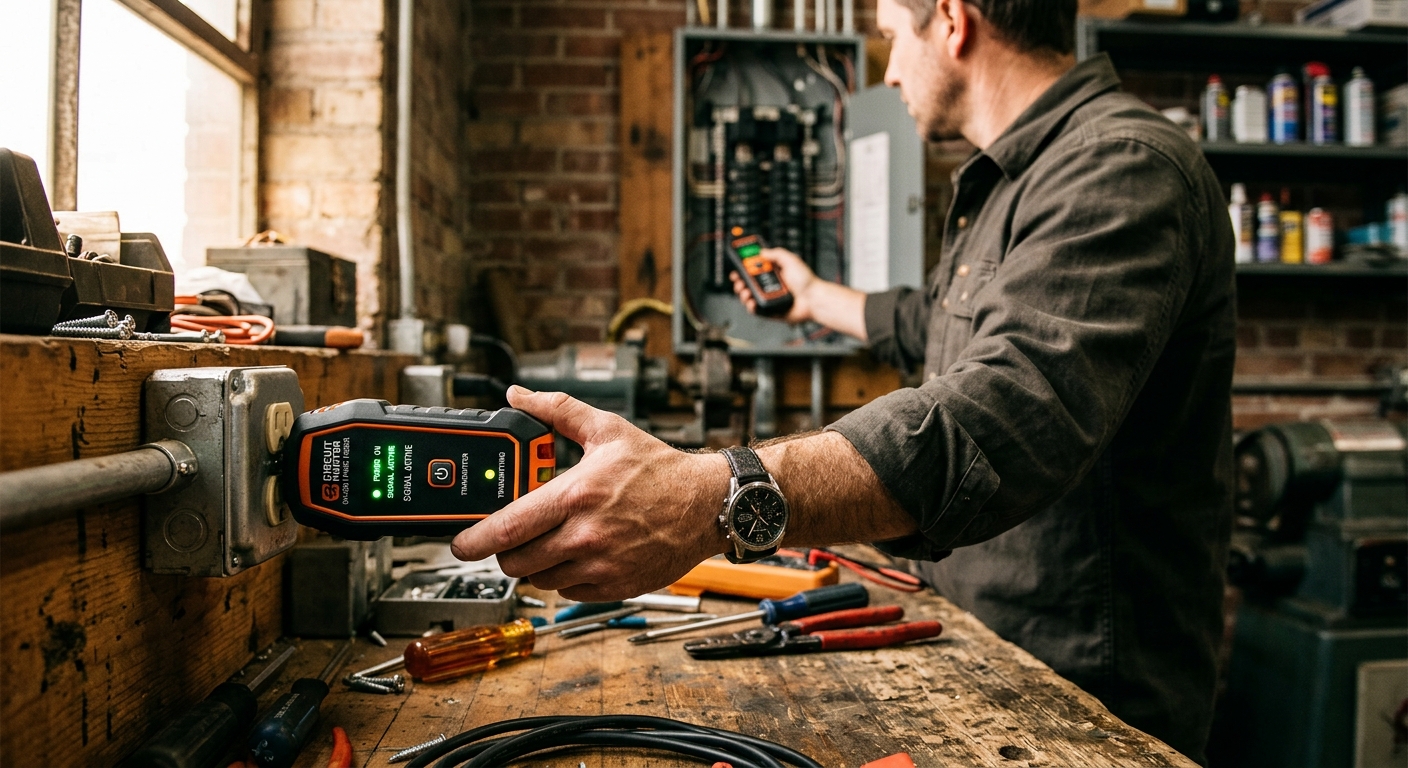
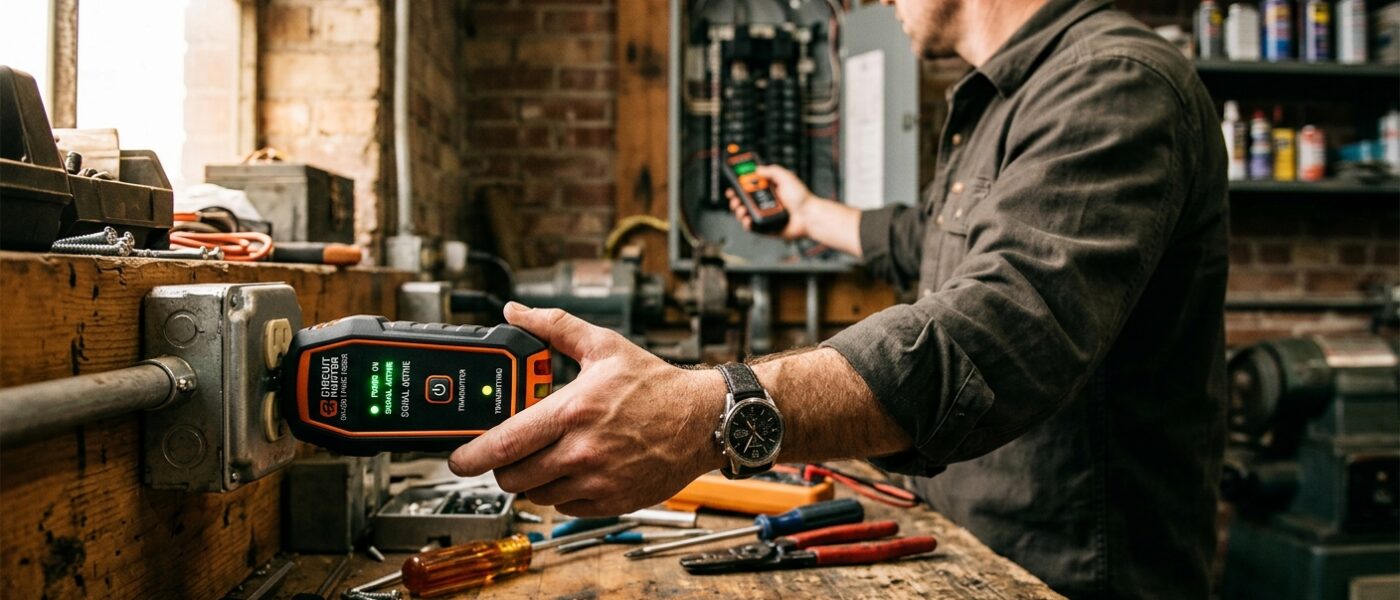
A transmitter that plugs into a 120V outlet sends a coded signal through the house wiring. A receiver probe held near each breaker in the panel detects the signal and identifies the correct breaker. The most common and practical type for homeowners. Works without shutting off power and can identify circuits in minutes.
Probe and Wire Tracers
More sophisticated tools that inject a signal onto a wire at one end and trace it through walls and conduit to the other end. Used by electricians to trace wire runs in finished walls, identify which conduit a wire is in, and trace wiring from fixture back to panel.
Non-Contact Current Detectors
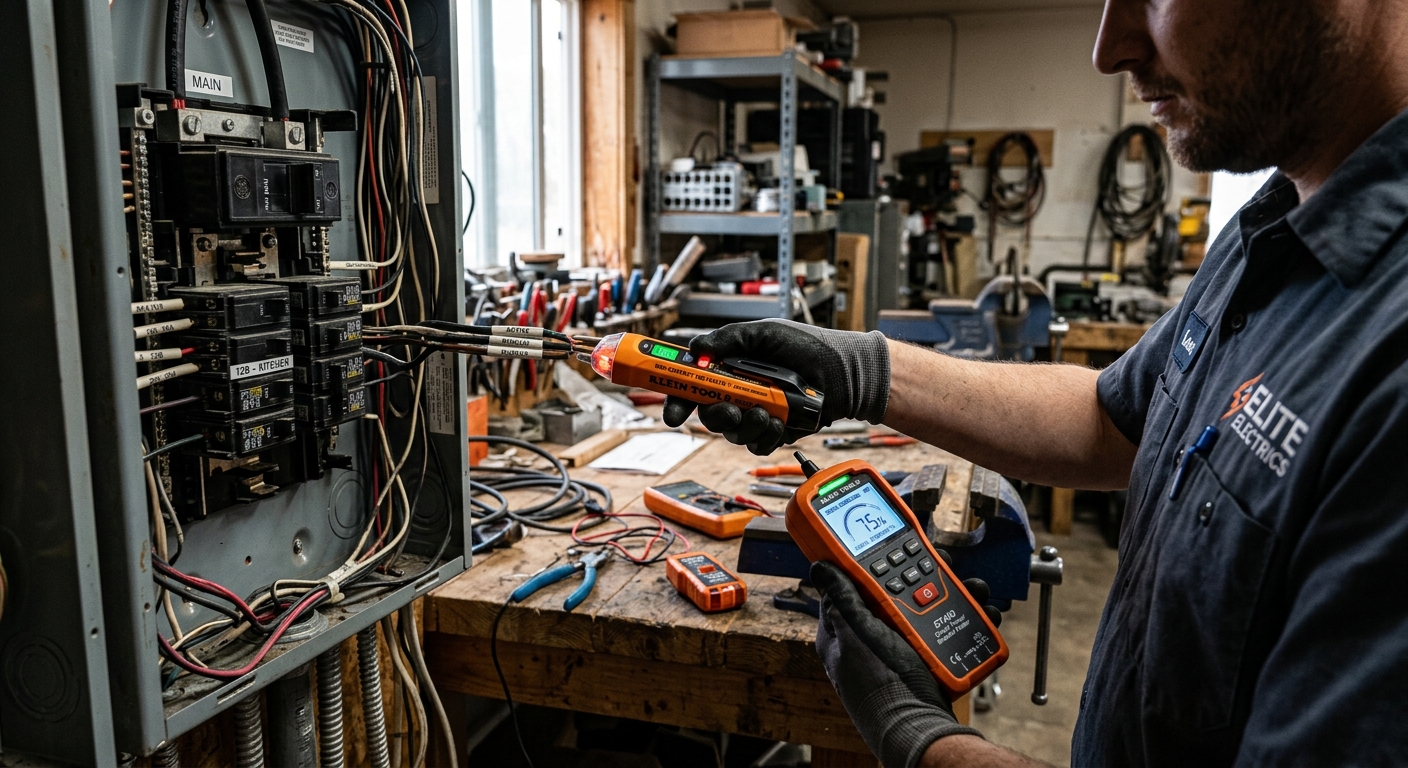
Can indicate which circuit is carrying current (and therefore which breaker controls it) by detecting the electromagnetic field around current-carrying conductors. Less systematic than a dedicated circuit tracer but useful for quick identification.
Key Features to Look For
Breaker Finder Accuracy
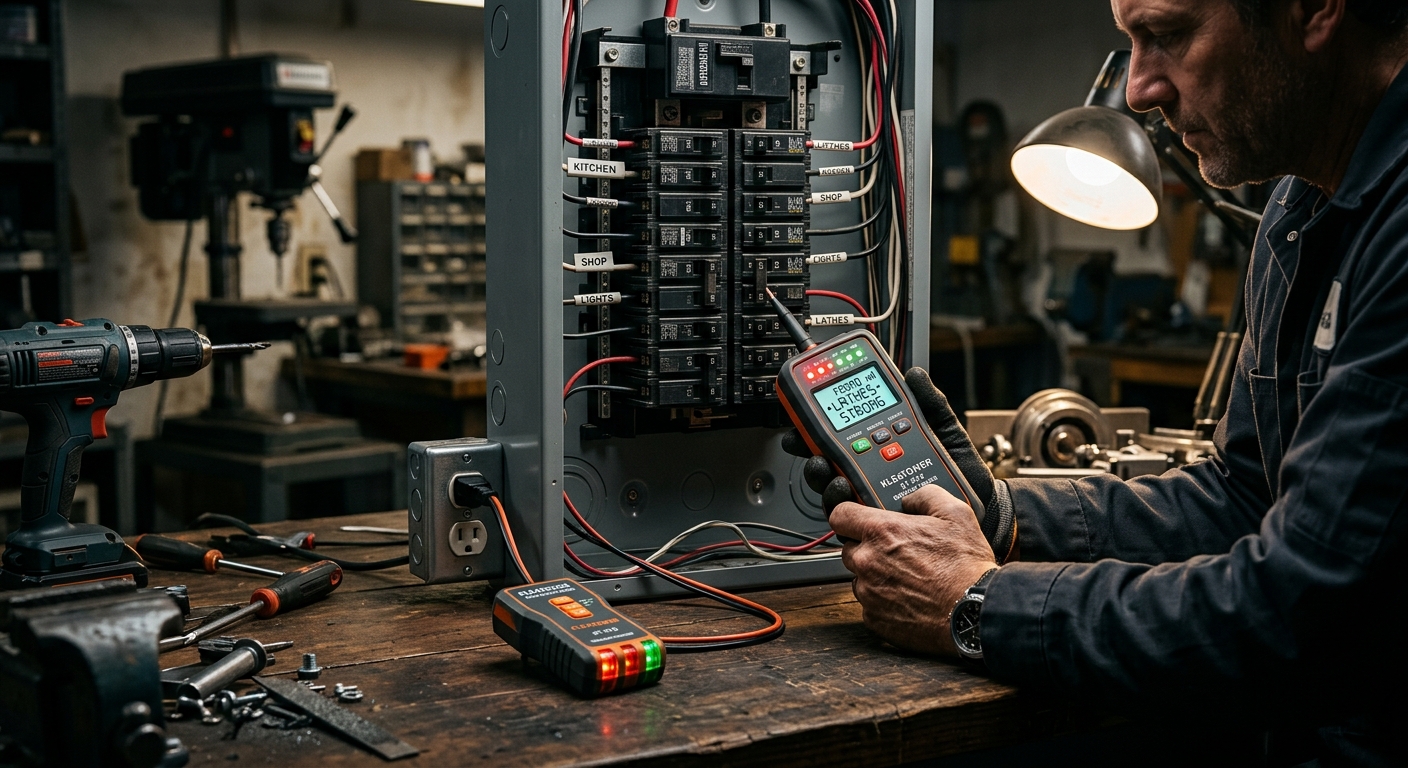
The transmitter signal must be strong enough and the receiver sensitive enough to clearly distinguish the circuit carrying the signal from adjacent circuits in the same panel. Poor discrimination leads to ambiguous results where two adjacent breakers both show a positive signal.
GFCI-Compatible Transmitter
Some transmitters do not work on GFCI-protected circuits because the GFCI device modifies the test signal in a way the receiver cannot detect. Look specifically for circuit tracers rated GFCI compatible if you need to identify kitchen, bathroom, or garage circuits.
Transmitter Power
Some transmitters can be used on energized 120V and 240V circuits; others require the circuit to be de-energized. Most homeowner-oriented tools use the plug-in design (for energized 120V circuits) which is the most practical and safe option.
Audible and Visual Signal
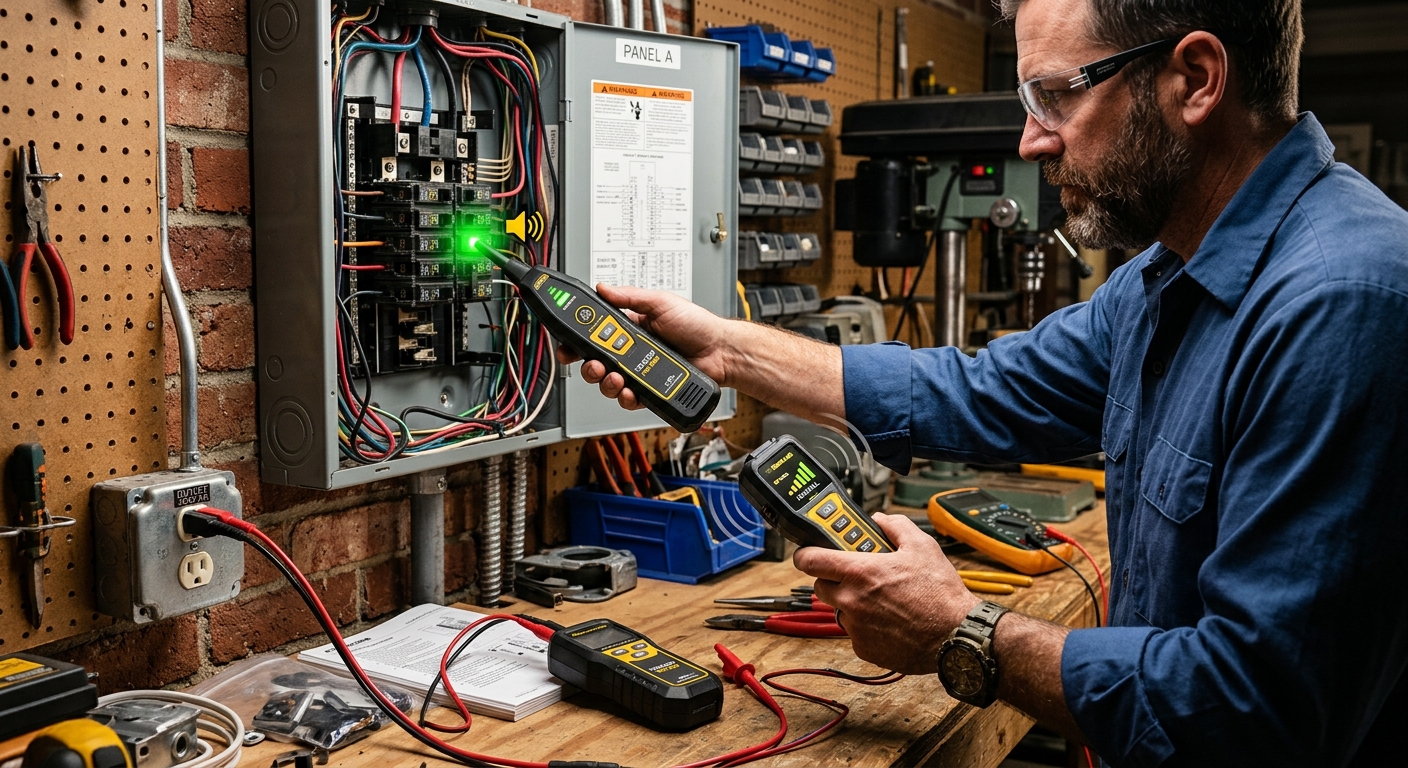
Working inside a panel box with poor lighting while trying to read a subtle LED indicator is not ideal. The strongest receivers have both a clear LED indicator and an audible tone that changes pitch as the probe approaches the correct breaker.
Our Top Picks
1. Klein Tools ET310 Digital Circuit Breaker Finder
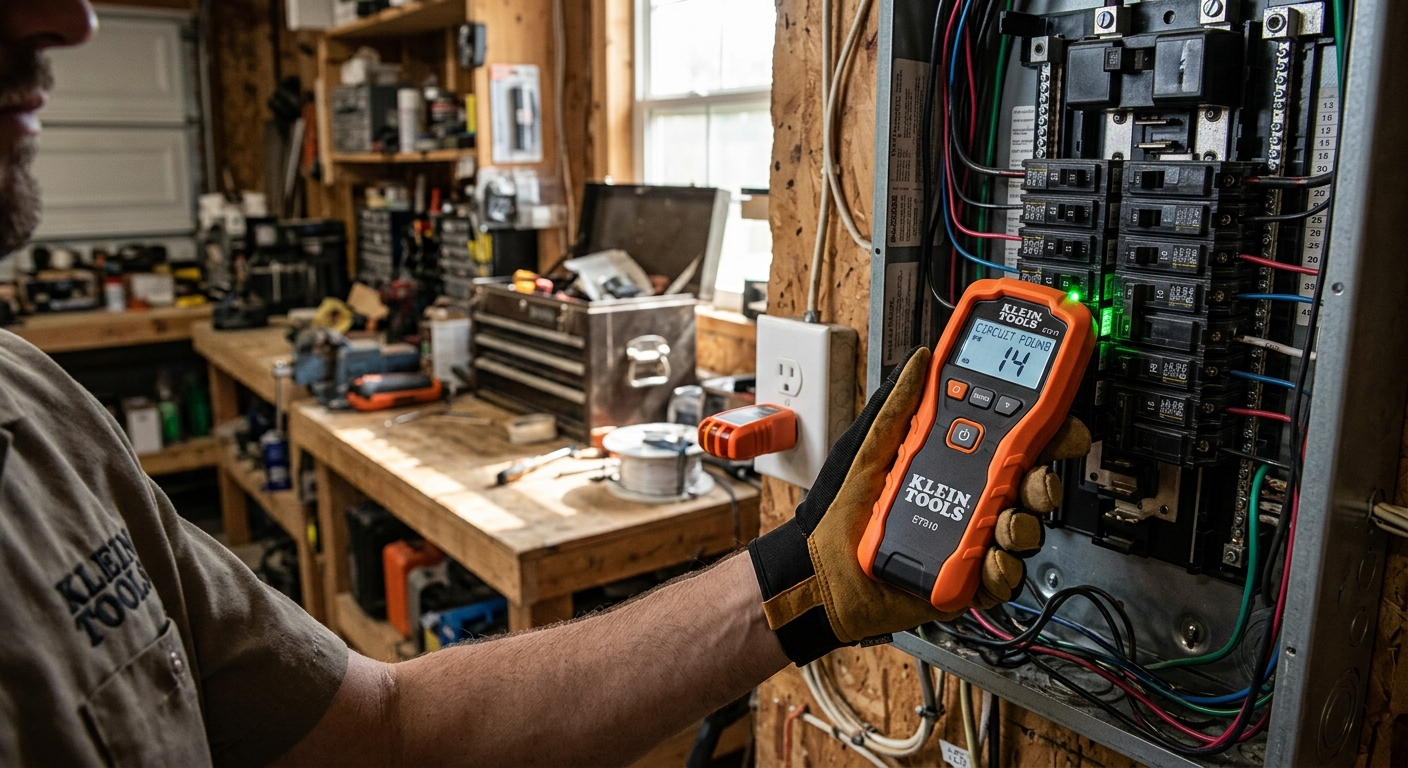
The most recommended circuit tracer for homeowners and electricians. The ET310 uses a digital receiver that provides a clear beeping tone (faster as you approach the correct breaker) and a digital readout. GFCI compatible. The transmitter plugs into any standard 120V outlet and sends a strong, clear signal that the receiver discriminates well from adjacent circuits. Very reliable results in typical residential panels.
2. Sperry Instruments CS61200 Circuit Breaker Finder
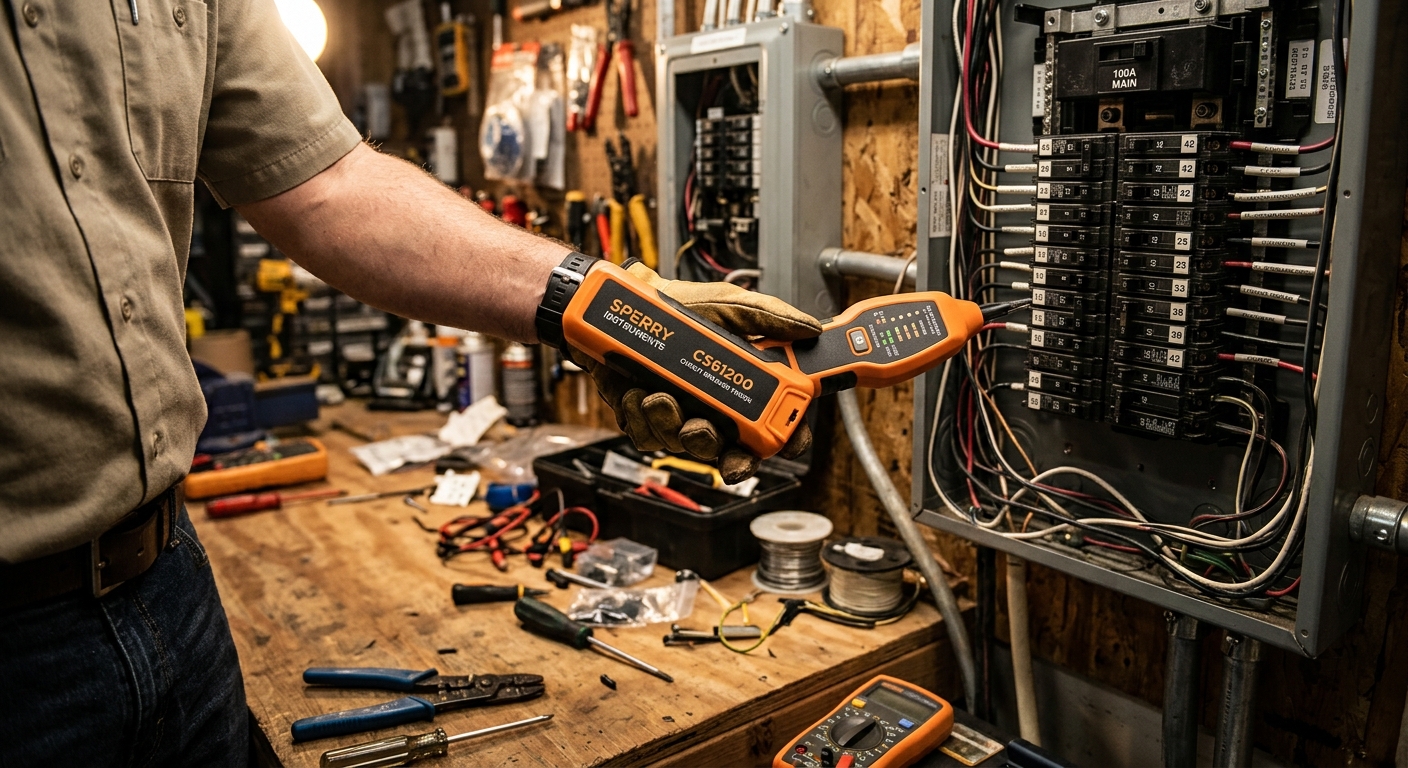
The most widely available consumer-grade circuit finder. The Sperry uses an analog-style needle meter on the receiver and a beeper. Works well on standard residential circuits and is widely available at hardware stores for a very accessible price. Less accurate than the Klein ET310 on closely spaced breakers in crowded panels, but adequate for most homeowner use.
3. Southwire 41020S Circuit Breaker Finder
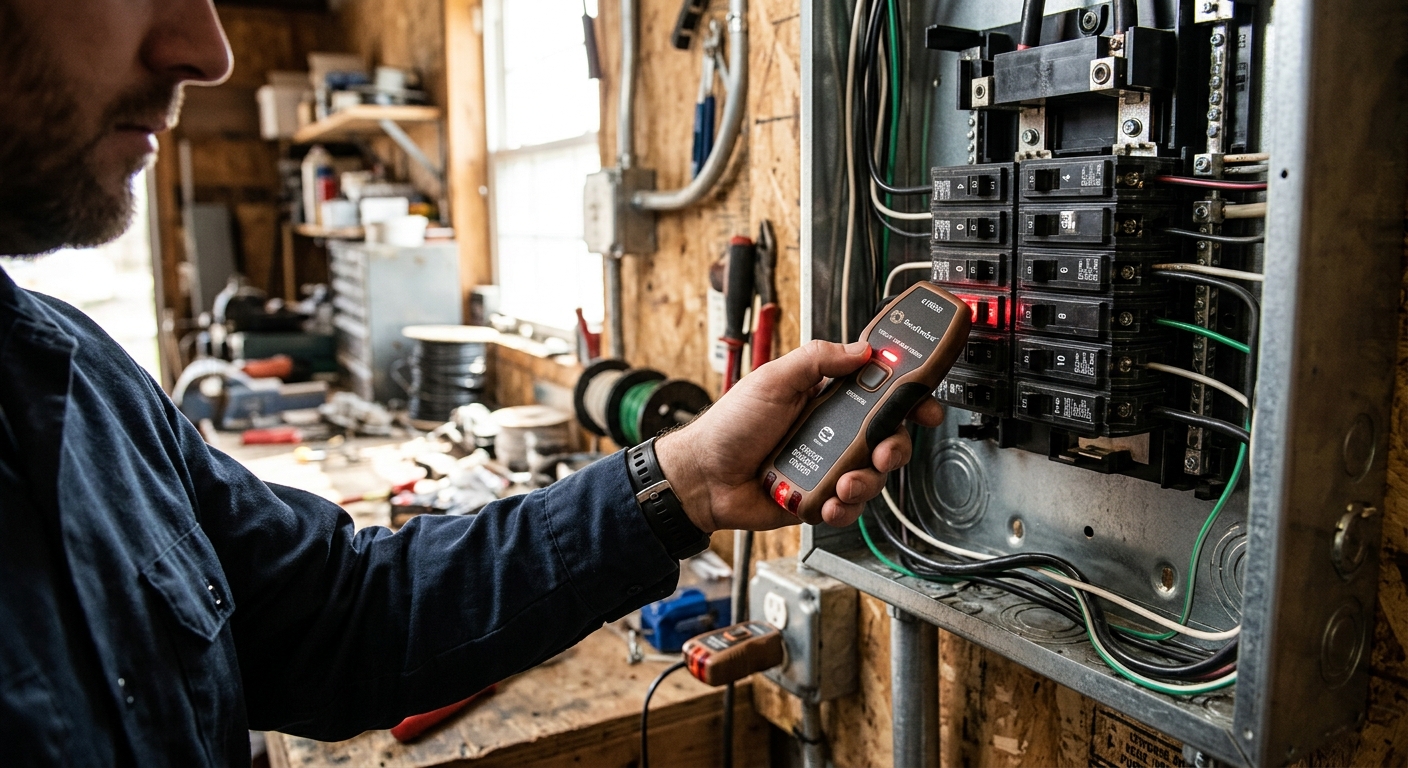
Southwire’s circuit finder features a transmitter that works on both energized and de-energized circuits, a digital display, and sensitivity adjustment that helps with discrimination in crowded panels. A solid mid-range option with good build quality.
4. Triplett 9650 Professional Digital Circuit Breaker Finder
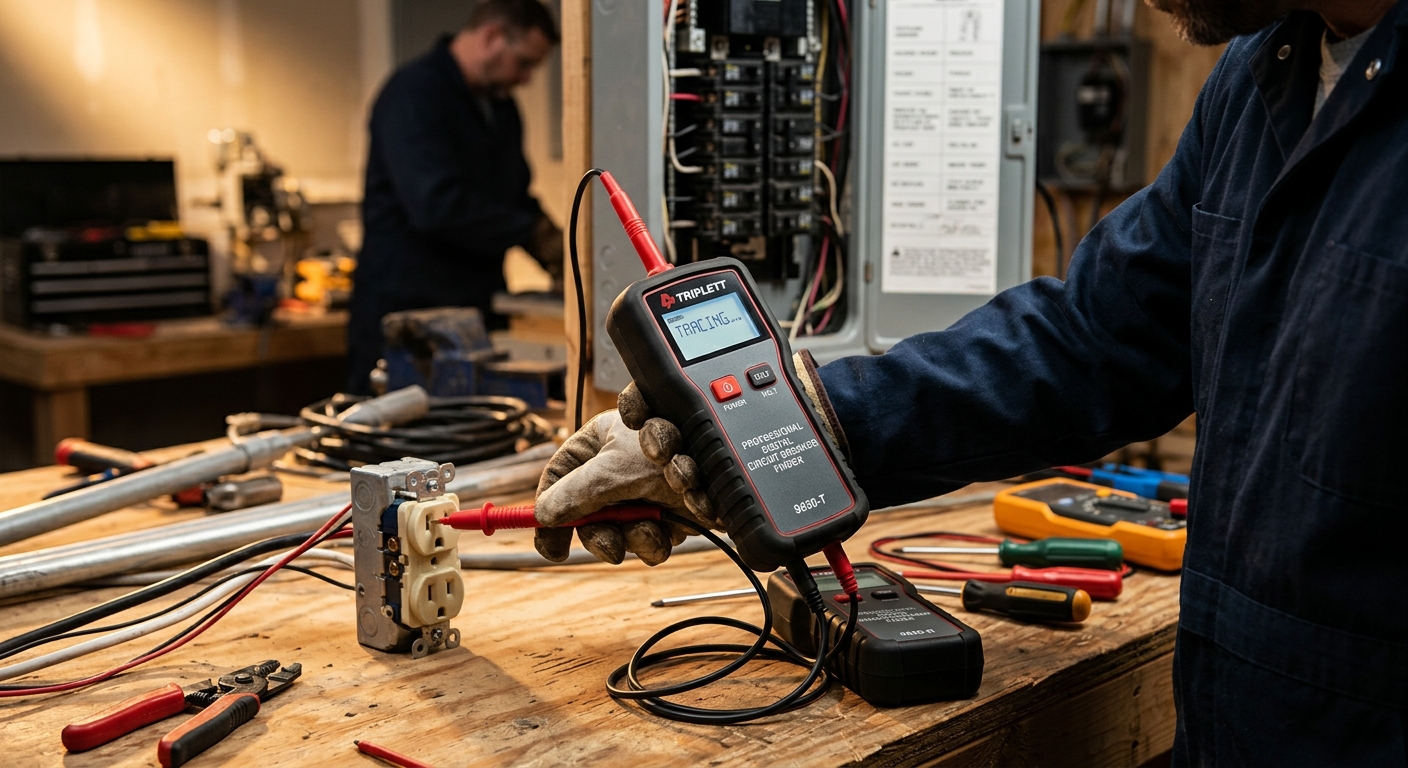
A more professional instrument with higher signal strength, better discrimination between adjacent circuits, and compatibility with GFCI circuits. The right choice for electricians who identify circuits as a regular professional task and need reliable results on difficult panels.
5. Fluke Networks PRO3000 Tone and Probe Kit
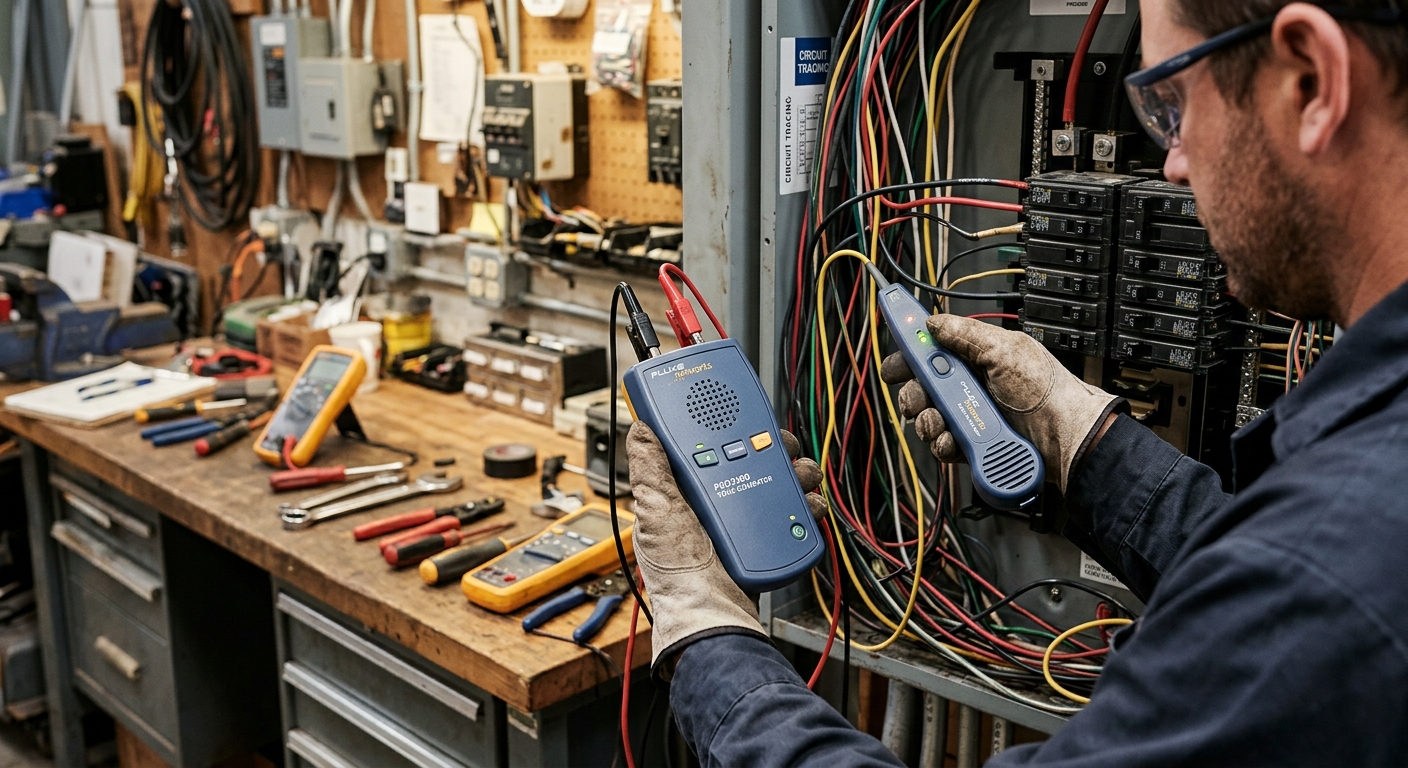
For tracing individual wires through walls and conduit: the Fluke PRO3000 is the industry standard in tone-and-probe wire tracing. Used by telecommunications and network installers to trace cable runs, it also traces electrical wires when working with de-energized circuits. A different tool from an outlet-based circuit finder but essential for tracing unknown wire runs.
How to Label Your Panel Properly
Once you identify each circuit:
- Write the circuit description clearly on adhesive label tape (Klein, Brady) directly on the panel face beside each breaker.
- Use a consistent, specific format: “Master Bath GFCI” rather than “Bath” – specificity prevents confusion when a panel has multiple bathrooms.
- Note the amperage of each breaker: “Kitchen Counter 20A” vs “Kitchen Light 15A”.
- Take a photograph of the completed panel directory and store it in home maintenance records.
What to Avoid
- Using a non-GFCI-compatible tracer on GFCI circuits: You will get no signal or false readings on protected circuits.
- Relying on the panel’s existing paper directory: Factory directories are frequently wrong or incomplete. Verify by testing, then update.
- Testing with the same circuit breaker in two positions (on/off) without re-running the transmitter: The transmitter signal diminishes as the battery depletes. Always use fresh batteries for each session.
FAQ
Can a circuit tracer work on 240V circuits?
Most homeowner-grade tracers use a 120V transmitter that only tests single-pole 120V circuits. Some professional tracers (Triplett, Extech) include adapters or separate transmitters for 240V double-pole circuit identification. Most double-pole circuits (ranges, dryers, water heaters) are easier to identify by their load (large appliance in the corresponding location) than by a circuit tracer.
Why does my circuit tracer show a signal at every breaker?
The receiver sensitivity is too high, or the transmitter battery is weak (producing a distorted signal). Reduce receiver sensitivity if adjustable, replace transmitter batteries, and re-test. A weak or distorted signal leaks into adjacent conductors in the same panel and produces false positives across multiple breakers.
Can I use a circuit tracer to find wires inside walls?
The outlet-based tracers are designed for panel circuit identification only. Wire-tracing through walls requires a tone-and-probe instrument (like the Fluke PRO3000) that injects a signal directly onto the wire and traces it with a sensitive inductive probe.
Affiliate Disclosure: DIY Arsenal participates in the Amazon Associates Program and other affiliate programs. When you purchase through links on this site, we may earn a small commission at no additional cost to you. We only recommend products we have personally tested and genuinely believe in.