Best Cord Reels and Extension Cord Storage
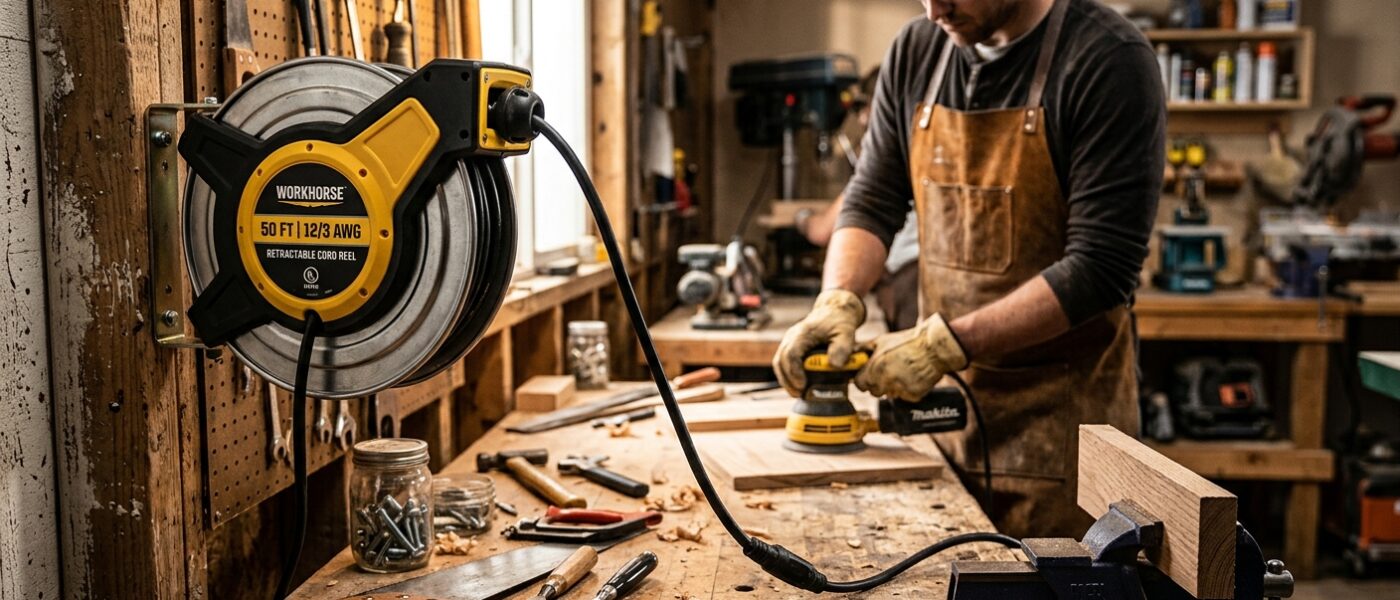
The Bayco SL-8906 retractable reel is the cleanest and most convenient workshop cord solution; a set of Velcro ONE-WRAP ties should be in every shop for cord management throughout the workspace.
As an Amazon Associate, we earn from qualifying purchases.
Extension cords are one of the most poorly organized items in the average garage or shop. They get wrapped around themselves, kink, tangle with other cords, and end up as an impenetrable nest on a shelf or floor corner. Proper cord storage is not just about neatness – tangled cords develop insulation cracks at kink points, which are genuine fire and shock hazards. This guide covers the cord reels, wraps, and storage solutions that keep power delivered safely and accessibly.
Types of Cord Storage
Retractable Cord Reels
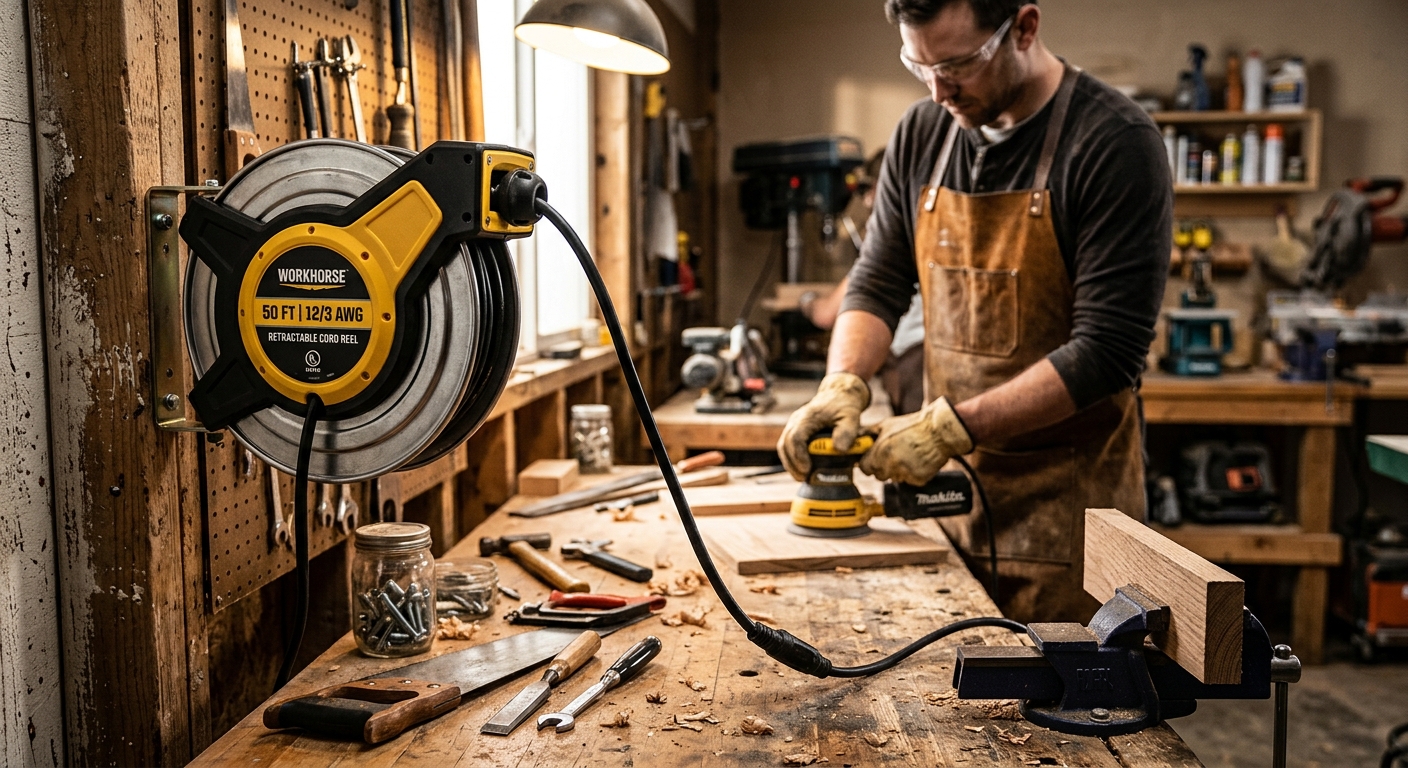
Wall or ceiling-mounted units that dispense and retract the cord automatically with a tug-to-extend, tug-to-lock, full-tug-to-retract mechanism. The most convenient cord storage for workshop power delivery – the cord always returns to the same length, is never tangled, and stays off the floor. The built-in cord is the tradeoff: you cannot swap it for a different gauge or length.
Manual Cord Reels and Hose Reels
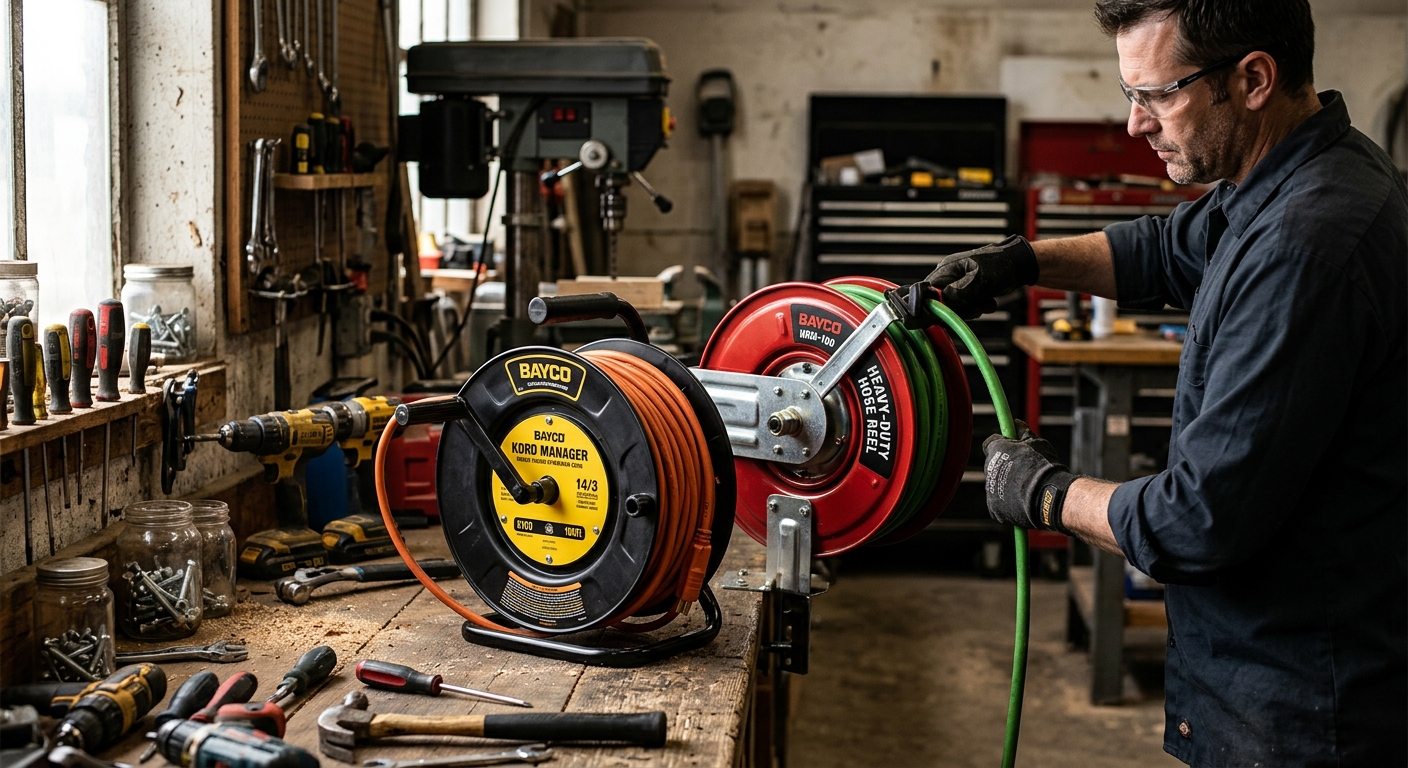
Hand-crank or auto-retract reels for storing your own extension cords. You coil the cord onto the reel and mount it. Less convenient than fully automatic retractable reels but allows you to choose the specific cord you prefer (gauge, length, rating).
Wall-Mounted Cord Hooks

Simple hooks or brackets that hold a coiled cord on the wall. The most basic solution: hang the cord, unhang to use. No mechanism to fail, very low cost, and effective if you discipline yourself to coil properly after each use.
Cord Organizers and Wraps
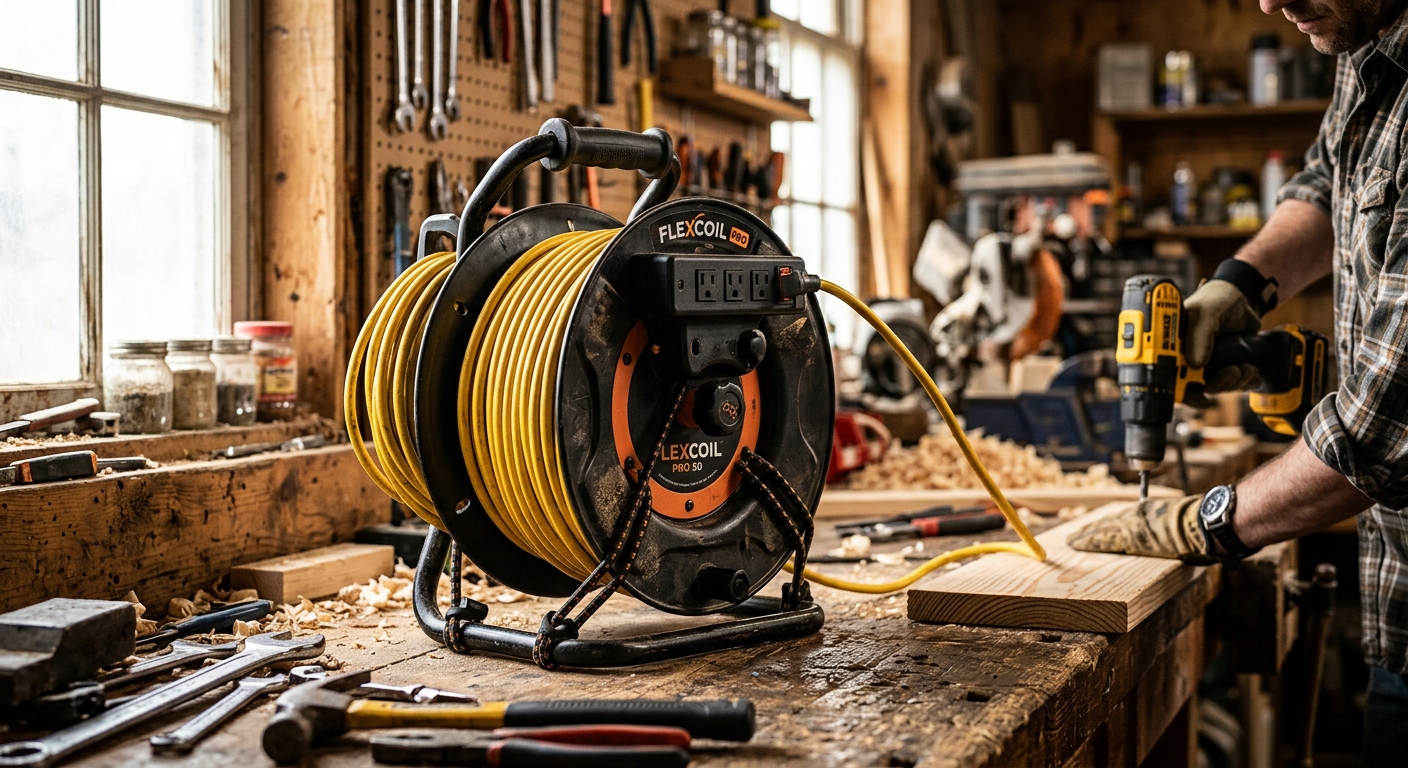
Velcro ties, hook-and-loop wraps, and figure-8 winding guides that keep cords neatly coiled during storage and transport. Best for extension cords that travel with a tool bag rather than staying in the shop.
Key Features to Look For
Retractable Reels: Cord Gauge and Length
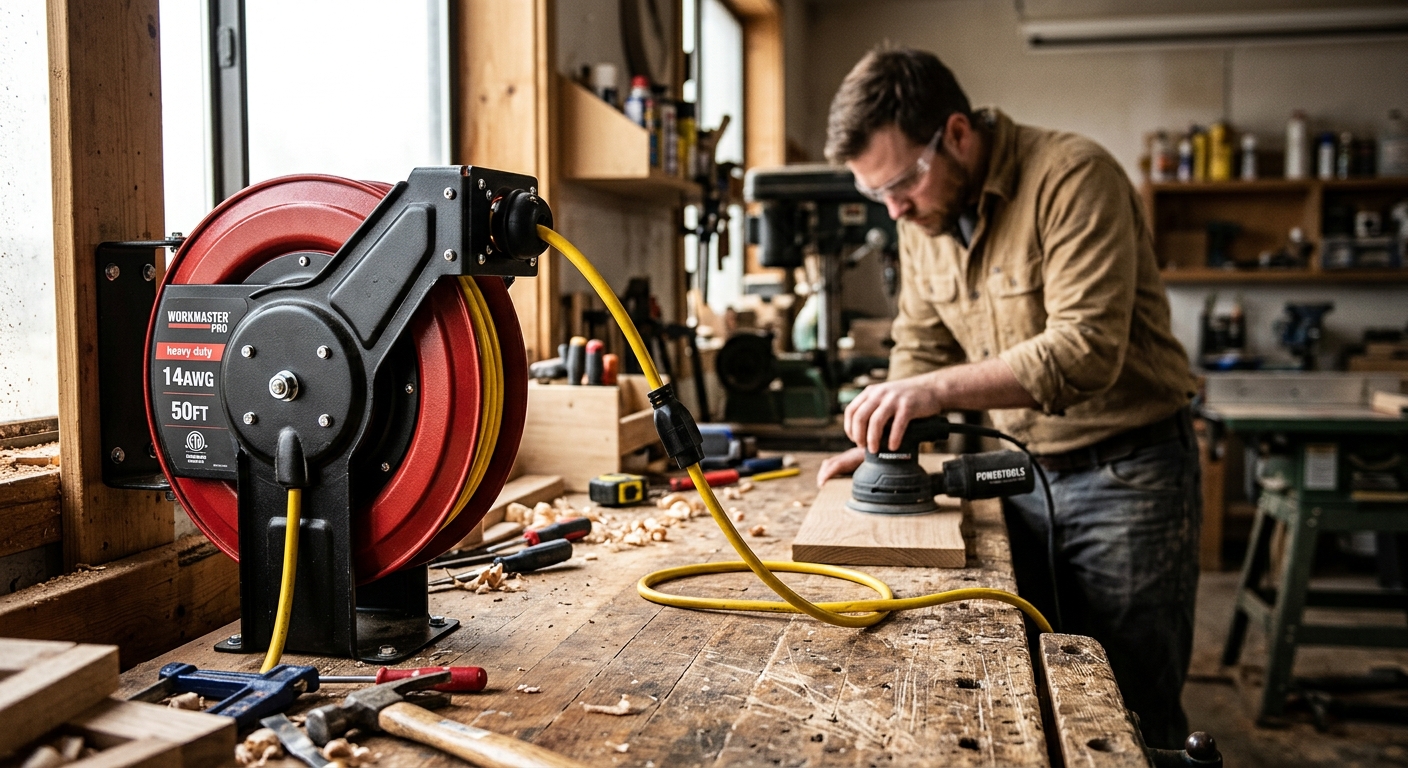
The cord inside a retractable reel must be rated for the amperage draw of your tools. A 16-gauge cord handles 13 amps (most circular saws, routers, sanders). A 14-gauge cord handles 15 amps (shop vacs, some planers). A 12-gauge handles 20 amps (table saws, large compressors). Match the reel to your highest-draw tool.
Mounting Configuration
Ceiling-mount puts the cord exactly where you want it – descending from above keeps the floor clear and swings to follow you around the bench. Wall-mount is easier to install and serves most shop configurations adequately.
Number of Outlets
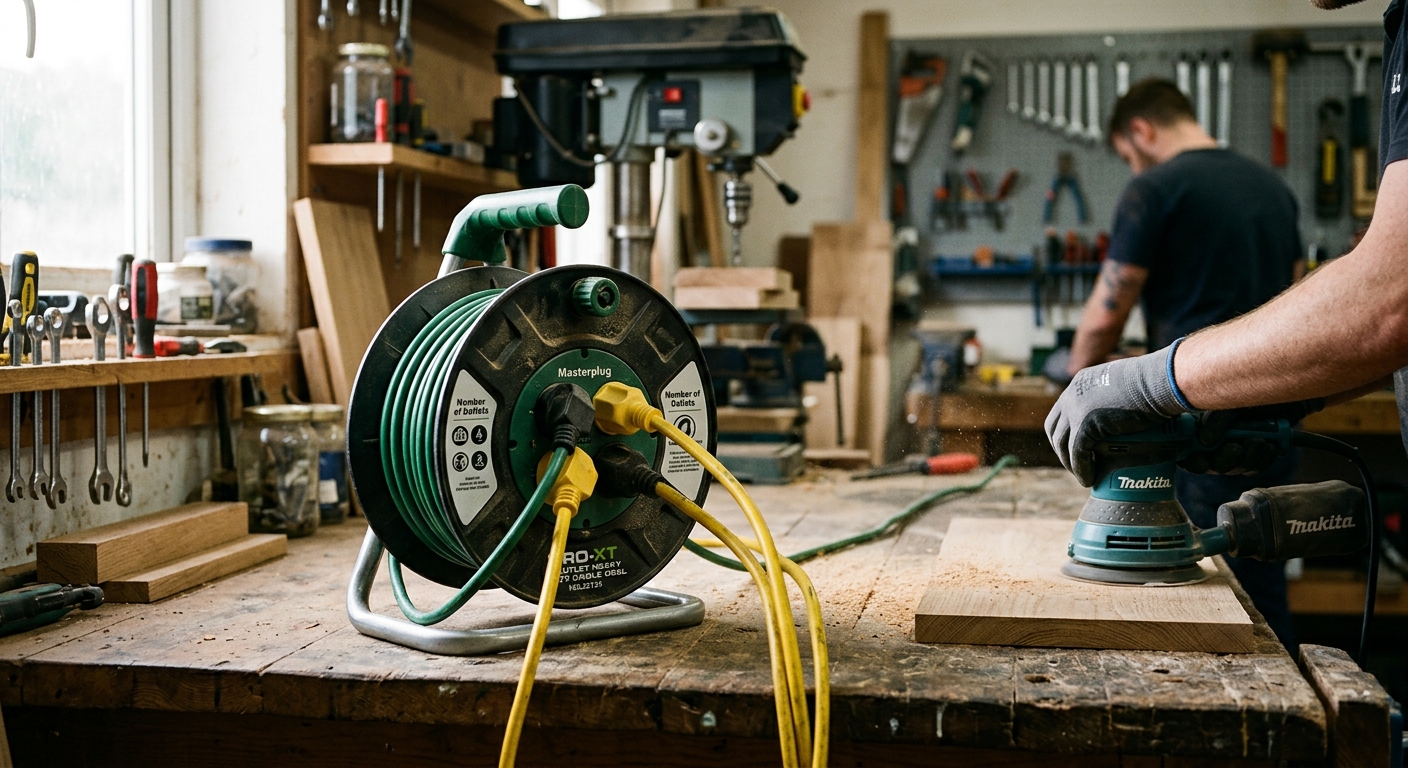
Some retractable reels include a multi-outlet receptacle at the end of the cord rather than a single outlet, eliminating the need for additional power strips.
Cord Length
For a 20 by 20-foot shop, a 50-foot retractable reel covers the full area with slack. 30-foot reels are sufficient for smaller shops. Always choose the longer option – a cord that cannot reach is useless, and excess cord retracts out of the way.
Our Top Picks
1. Bayco SL-8906 Auto-Rewind Retractable Extension Cord Reel
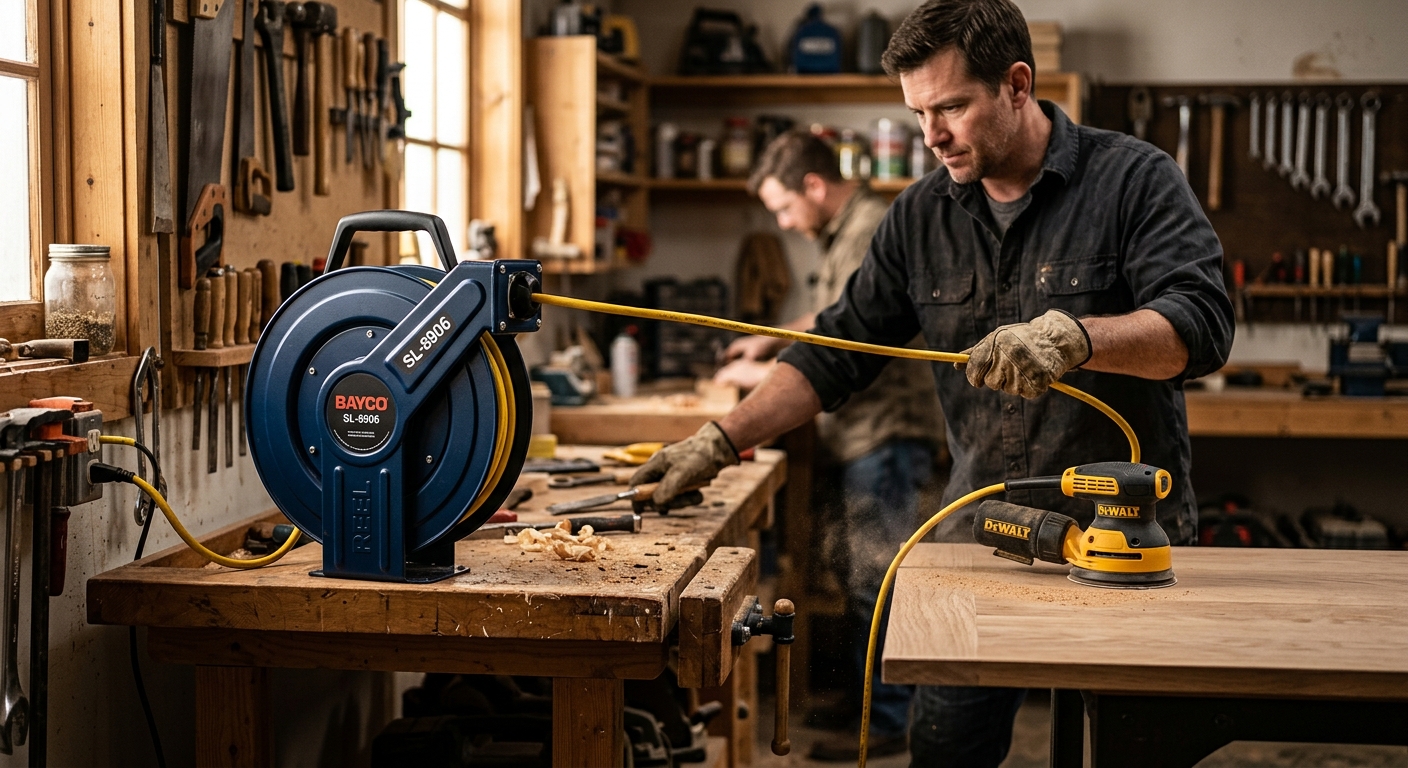
The most popular professional retractable cord reel in the workshop category. The SL-8906 delivers 40 feet of 14-gauge cord on an auto-retracting spring-loaded reel. Ceiling or wall mount, 3-outlet end receptacle, and a locking mechanism that holds the cord at any extended length. The cord retracts smoothly and consistently through years of use. The professional standard.
2. Alert Stamping 8067-06 Hand Held Cord Reel
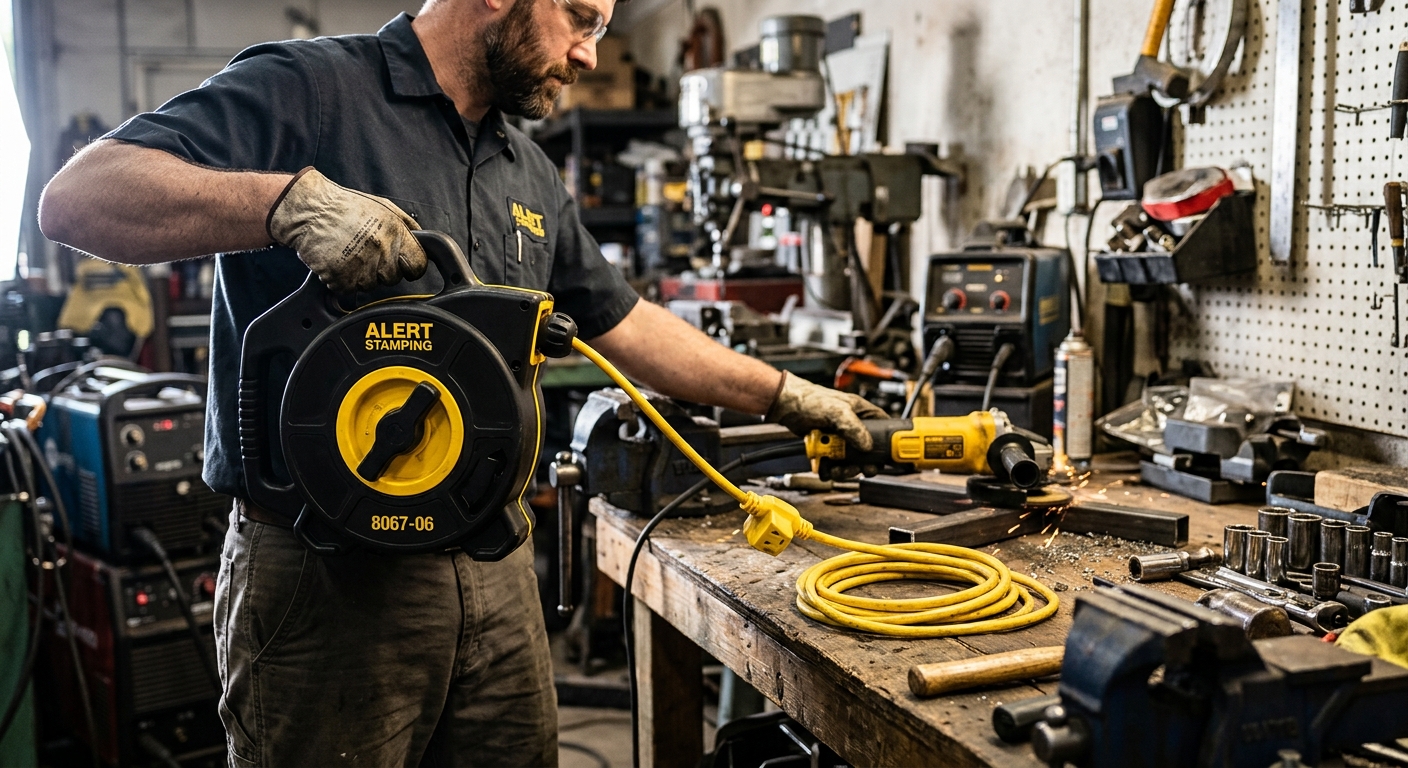
A simple, durable hand-crank reel for your own extension cords. The ABS housing snaps onto the included wall bracket, the cord capacity is substantial, and the price is very low. Wind your own 12-gauge 50-foot cord onto it and you have a workshop power solution that matches any retractable reel in durability, at lower cost.
3. Reelcraft L 5435 123 3S Retractable Cord Reel

A commercial-grade retractable reel from a company that has made industrial reels for 100 years. Spring-driven retraction, 35 feet of 12-gauge cord, and construction that handles decades of daily industrial use. More expensive than consumer reels but the choice for shops where the reel will be used multiple times every day for years.
4. Velcro Brand ONE-WRAP Thin Ties (100 Pack)
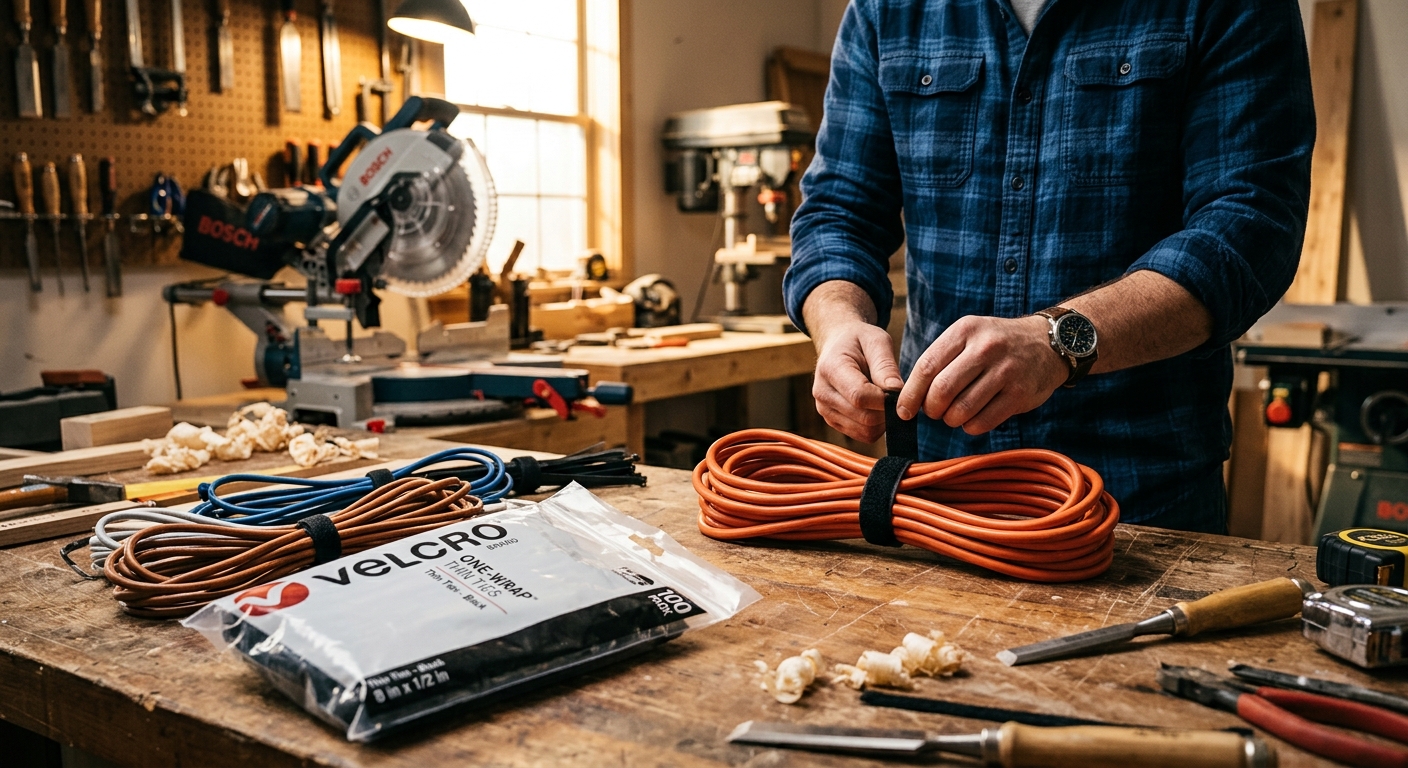
The simplest and most universally useful cord organization product. These reusable hook-and-loop ties organize cords, hoses, and cables anywhere. A pack of 100 covers the entire shop – tool cords, extension cords, air hoses, dust collection hoses, and anything else that needs tidying. At the price, buy two packs.
5. Southwire 0693SW Tool Pouches and Cord Wraps
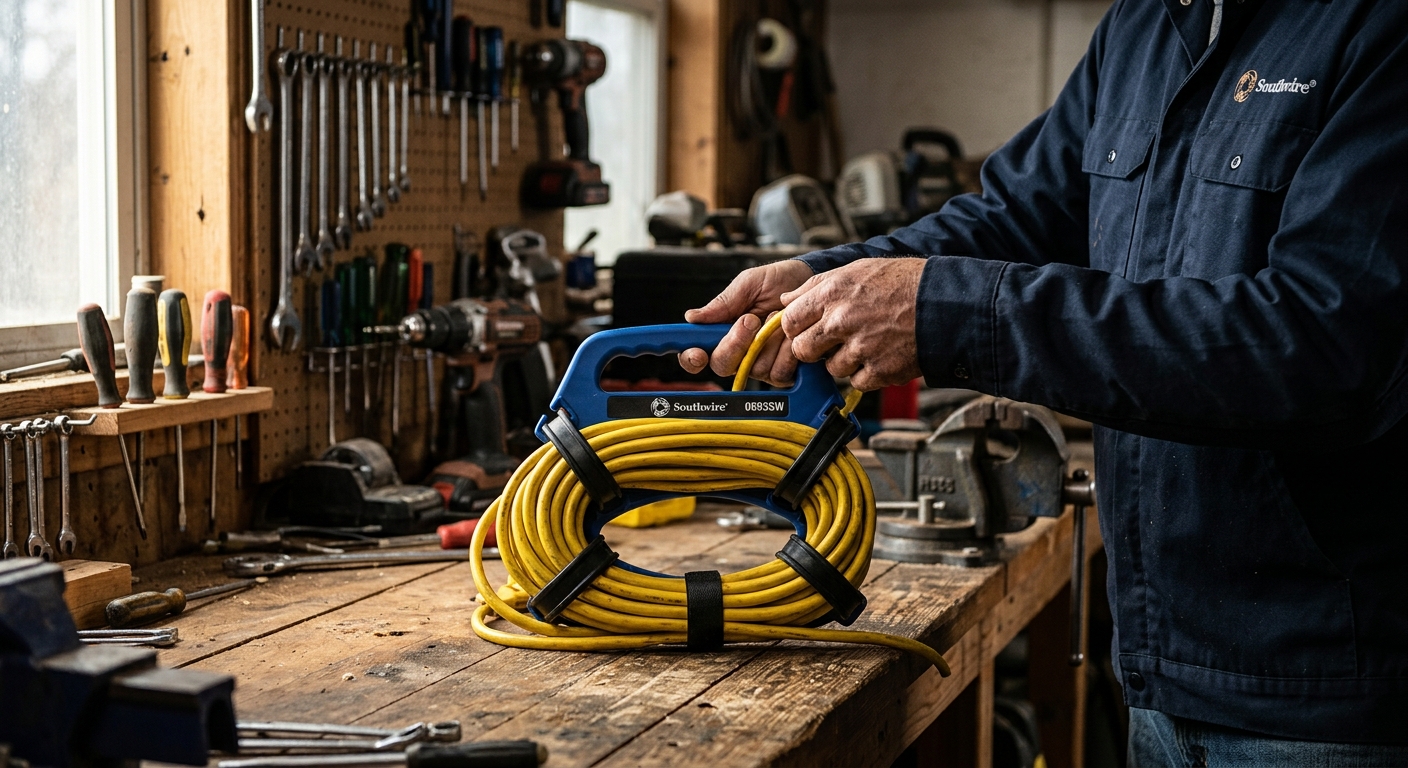
Southwire makes excellent extension cords and excellent cord wraps to match. Their figure-8 cord winder maintains the proper coil geometry that prevents kinking and tangle. Includes a hook for wall or pegboard hanging. The best solution for extension cords that travel to job sites and back.
Proper Cord Coiling Technique
The “over-under” coiling method prevents twist accumulation in extension cords:
- First loop: a normal forward-facing loop.
- Second loop: rotate the cord away from you (creating a backward loop) before forming the loop.
- Alternate forward and backward loops through the entire coil.
Cords coiled this way lie flat, feed without twisting, and never develop the springy pig-tail curl that indicates torsional stress in the insulation.
FAQ
Why does my extension cord get tangled even when I coil it?
Standard circular coiling introduces one twist per loop into the cord. Over 50 loops on a 50-foot cord, that adds up to significant accumulated twist that causes tangles. Use the over-under technique to eliminate twist accumulation.
How long can an extension cord be before it causes a voltage drop?
Voltage drop depends on both length and wire gauge. A 12-gauge 50-foot cord loses approximately 3% voltage – acceptable for most tools. A 16-gauge 100-foot cord can lose enough voltage to damage motor-driven tools. Always use the shortest cord that reaches, and always use the heaviest gauge practical for the length.
Can I use a retractable reel cord with any tool?
Only if the cord gauge matches the tool requirement. Check the amperage rating on the tool nameplate and match to a cord rated for at least that amperage. A 16-gauge cord on a 15-amp table saw is a fire hazard.
Affiliate Disclosure: DIY Arsenal participates in the Amazon Associates Program and other affiliate programs. When you purchase through links on this site, we may earn a small commission at no additional cost to you. We only recommend products we have personally tested and genuinely believe in.