Best Conduit – PVC, EMT, and Flexible Options for Homeowners
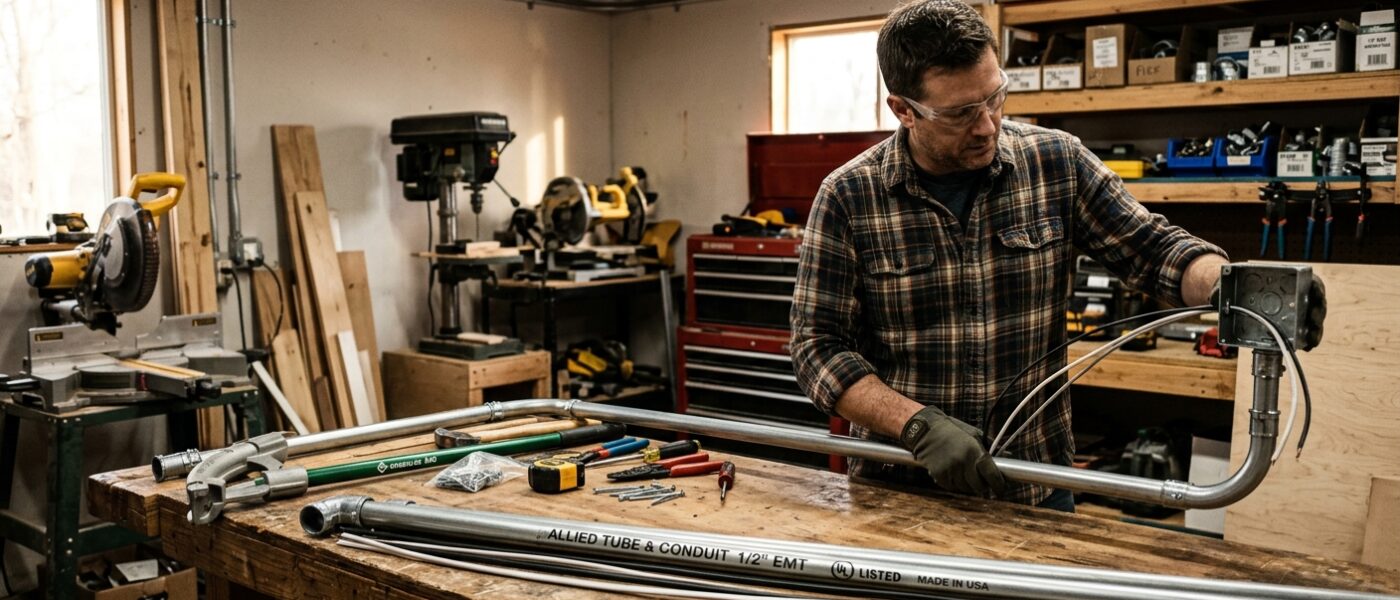
EMT for interior exposed work, Schedule 40 PVC for outdoor and underground runs, liquid-tight flex for outdoor final connections. Match conduit type to location and always check NEC fill tables before sizing.
As an Amazon Associate, we earn from qualifying purchases.
Choosing the Right Conduit for Every Application
Conduit selection is one of the decisions that separates a code-compliant electrical installation from one that creates problems – during inspection, over time, or in a safety incident. PVC, EMT, and flexible conduit each have specific applications where they’re the correct choice and others where they’re either prohibited by code or simply impractical. Understanding which conduit type serves each installation scenario saves both time and money and produces an installation that meets inspection requirements on the first pass.
Key Features to Look For
- Schedule and wall thickness: Schedule 40 PVC is the standard for most above-ground and underground installations. Schedule 80 PVC has thicker walls for mechanical protection in high-traffic areas. EMT is thin-wall metal conduit – lighter than rigid steel, suitable for interior exposed runs. Rigid metal conduit (RMC) is heavy-wall steel for maximum mechanical protection.
- Trade size vs. actual dimensions: Conduit trade sizes (1/2″, 3/4″, 1″) don’t match actual outside dimensions – just like pipe. Plan your fittings, boxes, and knockouts based on trade size, which is consistent across conduit types of the same trade size.
- Temperature ratings and UV resistance: PVC conduit for above-ground outdoor applications must be rated for UV exposure – standard grey Schedule 40 is UV-stabilized for outdoor use. Buried PVC conduit must meet the additional burial depth requirements in NEC table 300.5. EMT is not rated for direct earth burial or concrete encasement; use PVC or rigid for those applications.
- Fill capacity: NEC conduit fill rules limit wires to 40% of conduit cross-sectional area for three or more wires. Conduit fill tables (NEC Annex C) tell you exactly how many wires of each gauge fit in each conduit size – consult them before selecting conduit size for a run.
- Fitting and connector selection: Conduit fittings must match conduit type – EMT connectors and couplings are not interchangeable with PVC fittings. Set screw connectors work for dry interior EMT; compression fittings are required for wet or outdoor EMT locations.
Top Picks
Allied Tube and Conduit 1/2-Inch EMT (10-Foot Sticks)
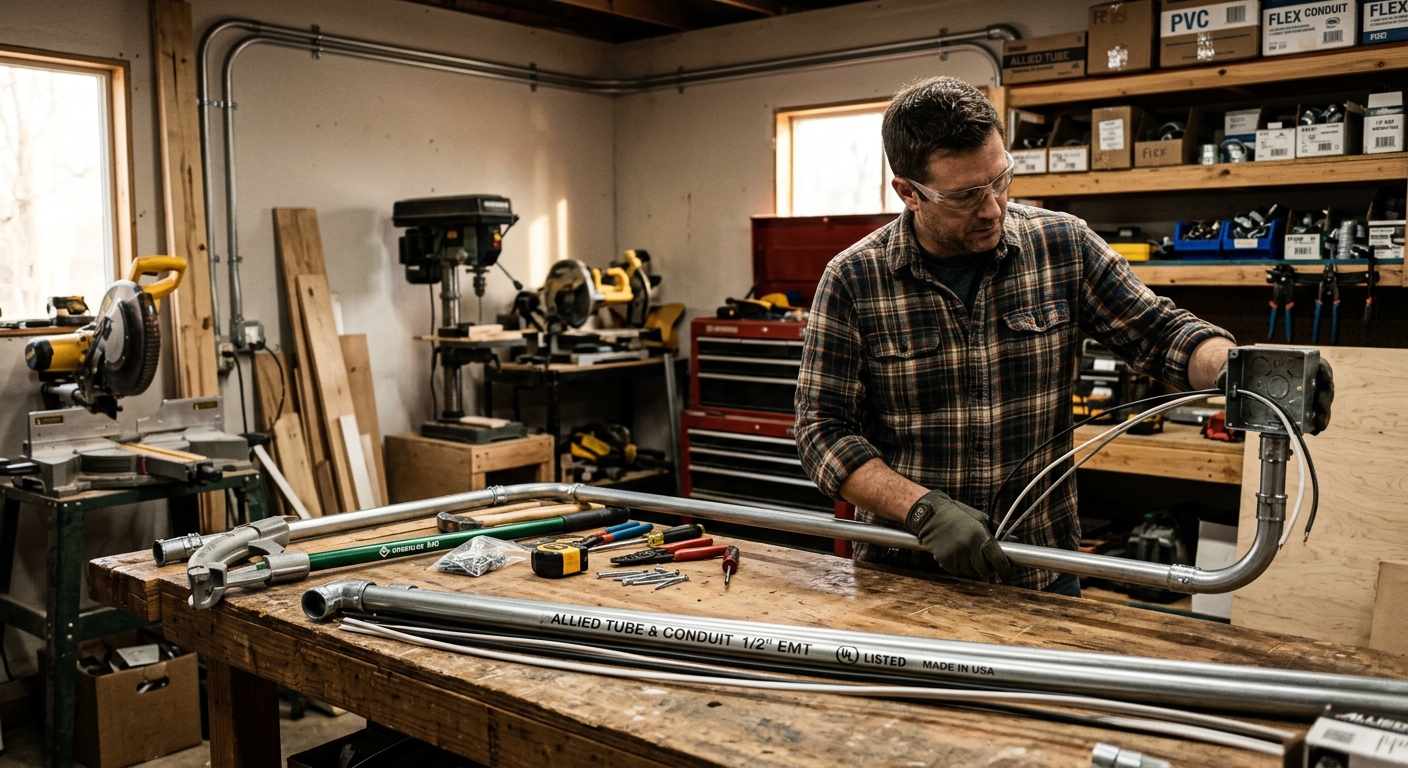
EMT is the go-to conduit for interior exposed electrical installations – panel feeders, exposed basement wiring, garage workshop circuits. The thin steel wall is workable with a hand bender, cuts with a hacksaw or tube cutter, and produces a clean installation. Allied’s EMT is the industry standard specification – available at any electrical supply house and most home centers. Buy the trade-size quantity appropriate for your run plus 10% for waste and cuts.
Cantex Schedule 40 PVC Conduit 1/2-Inch (10-Foot)
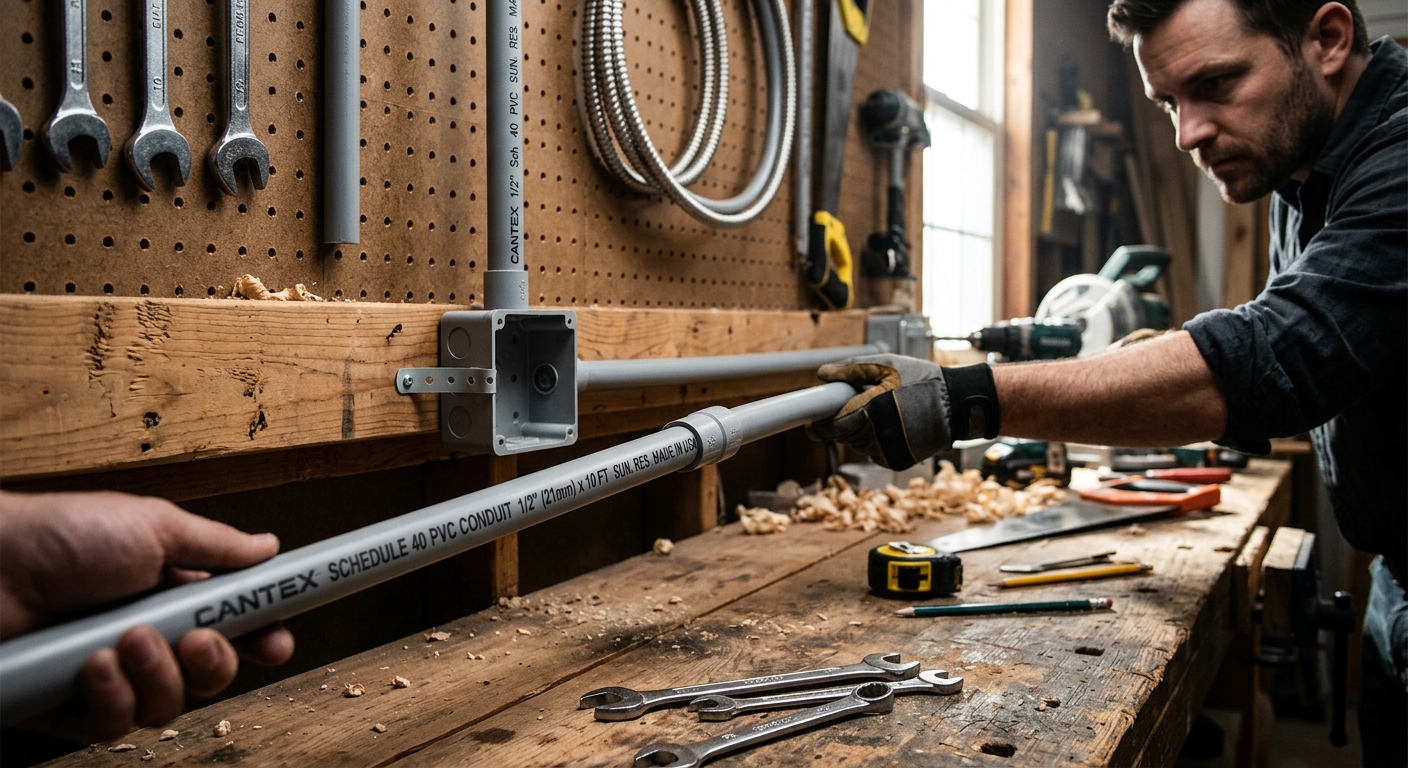
Grey Schedule 40 PVC for underground and outdoor applications where EMT is prohibited. Cantex is a leading PVC conduit manufacturer with consistent wall thickness and clean internal bore surfaces. The grey color is UV-stabilized for above-ground outdoor exposure. Cut with PVC pipe cutter or hacksaw, join with PVC conduit cement and primer (conduit-specific cement, not plumbing cement), and sweep fittings for all direction changes to maintain pull tension within acceptable limits.
AFC Cable Systems 1/2-Inch Flexible Metal Conduit (FMC)
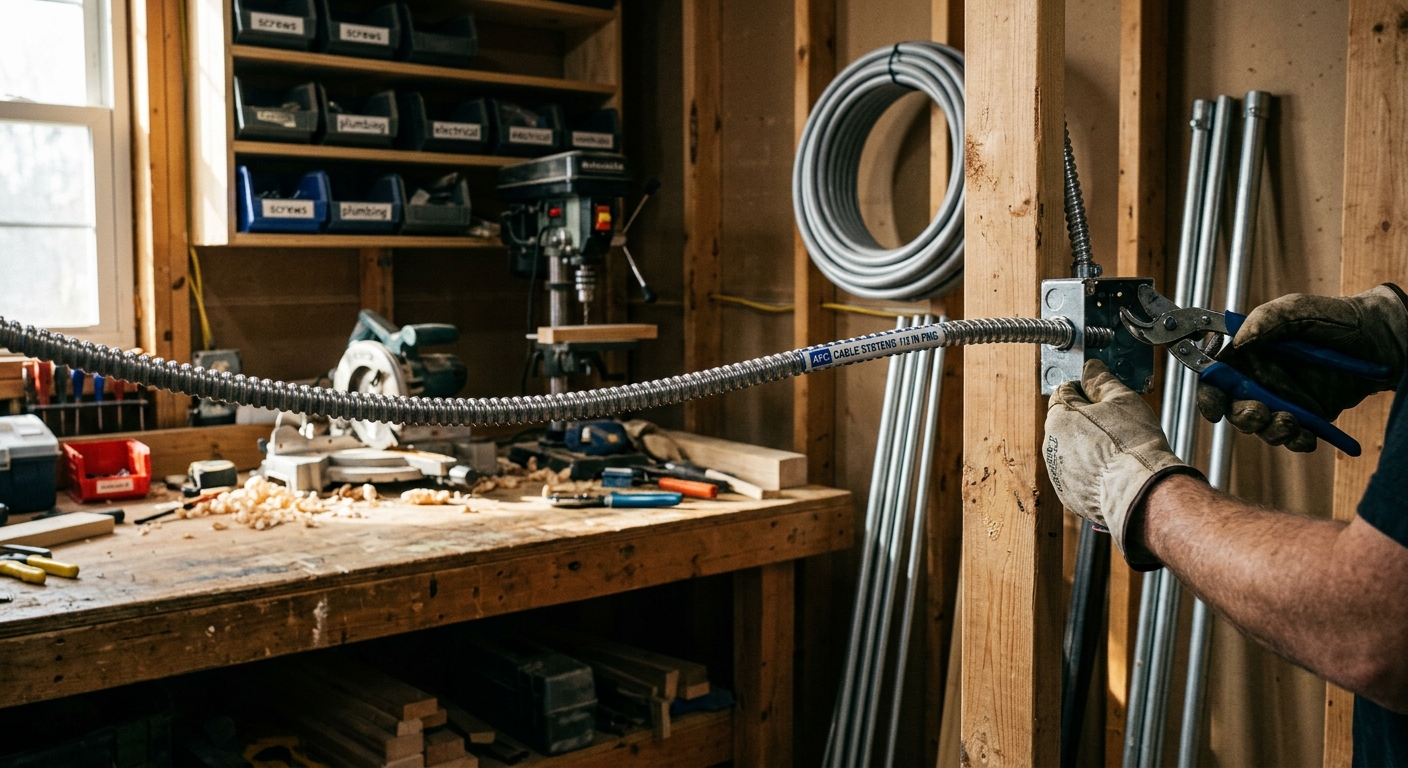
Flexible metal conduit for motor connections, appliance final connections, and anywhere vibration or movement would make rigid conduit impractical. NEC limits FMC runs to 6 feet in most applications – it’s a final connection material, not a run material. AFC’s FMC has clean, consistent spiral construction that produces a smooth interior bore and a clean appearance. Used correctly (at final connections only), FMC is the right tool; used as a substitute for rigid conduit in long runs, it’s a code violation.
Carlon Liquid-Tight Flexible Nonmetallic Conduit
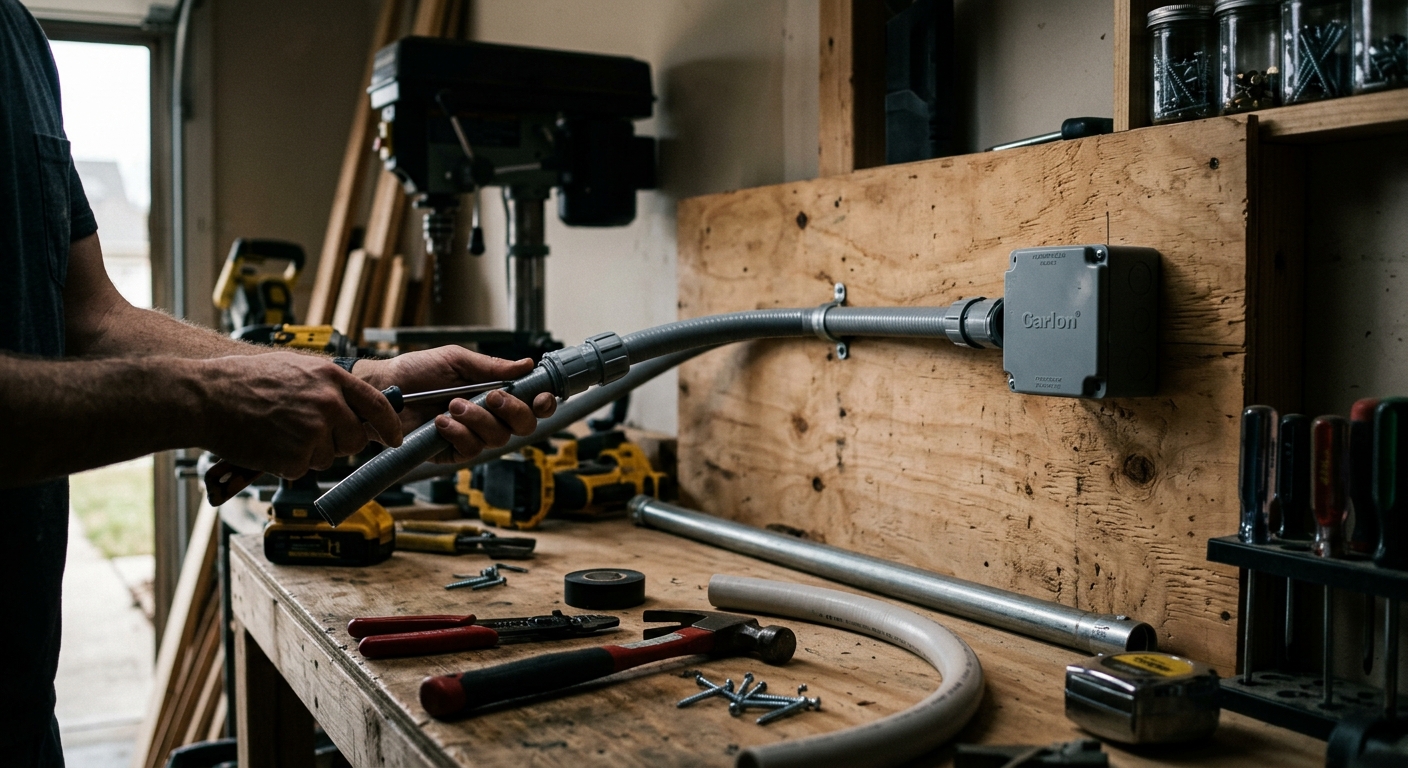
LFNC (liquid-tight flexible non-metallic conduit) for outdoor final connections and damp location motor terminations where FMC isn’t appropriate. The plastic jacket over the spiral armor is watertight when used with liquid-tight connectors. Required for outdoor equipment connections – air conditioner disconnects, pool equipment, and irrigation pump connections where both flexibility and moisture protection are needed. Carlon’s version is consistently available in 1/2″ and 3/4″ trade sizes for residential applications.
Frequently Asked Questions
Can I run PVC conduit inside walls in a finished basement?
PVC conduit is permitted inside walls but many inspectors and local codes prefer EMT or NM cable for interior concealed wiring. Check your local amendment to the NEC before using PVC inside finished walls – some jurisdictions restrict PVC to specific applications. For exposed basement conduit (on the outside of an unfinished wall), Schedule 40 grey PVC is appropriate and commonly used.
What conduit do I use for a subpanel feeder?
For an indoor subpanel feeder through finished areas, EMT with the appropriate trade size for the conductor count is the standard approach. For an outdoor or underground feeder, Schedule 40 PVC is the most common specification. Minimum burial depth for PVC conduit under a slab is 6 inches; under lawn or landscaping areas not subject to vehicle traffic, 18 inches. Consult NEC table 300.5 for the specific burial depth requirement for your installation scenario.
How do I calculate what size conduit I need?
Use NEC Annex C conduit fill tables: identify your wire type (THHN/THWN), wire count, and AWG size, then look up the maximum number of those wires permitted in each conduit trade size. For example, three 12 AWG THHN wires fit in 1/2″ EMT. More wires or larger gauges require stepping up conduit size. Online NEC fill calculators (like those on Southwire’s website) make this fast without manual table lookup.
Affiliate Disclosure: DIY Arsenal participates in the Amazon Associates Program and other affiliate programs. When you purchase through links on this site, we may earn a small commission at no additional cost to you. We only recommend products we have personally tested and genuinely believe in.