Best Clamp Meters for Current Measurement Without Cutting Wires
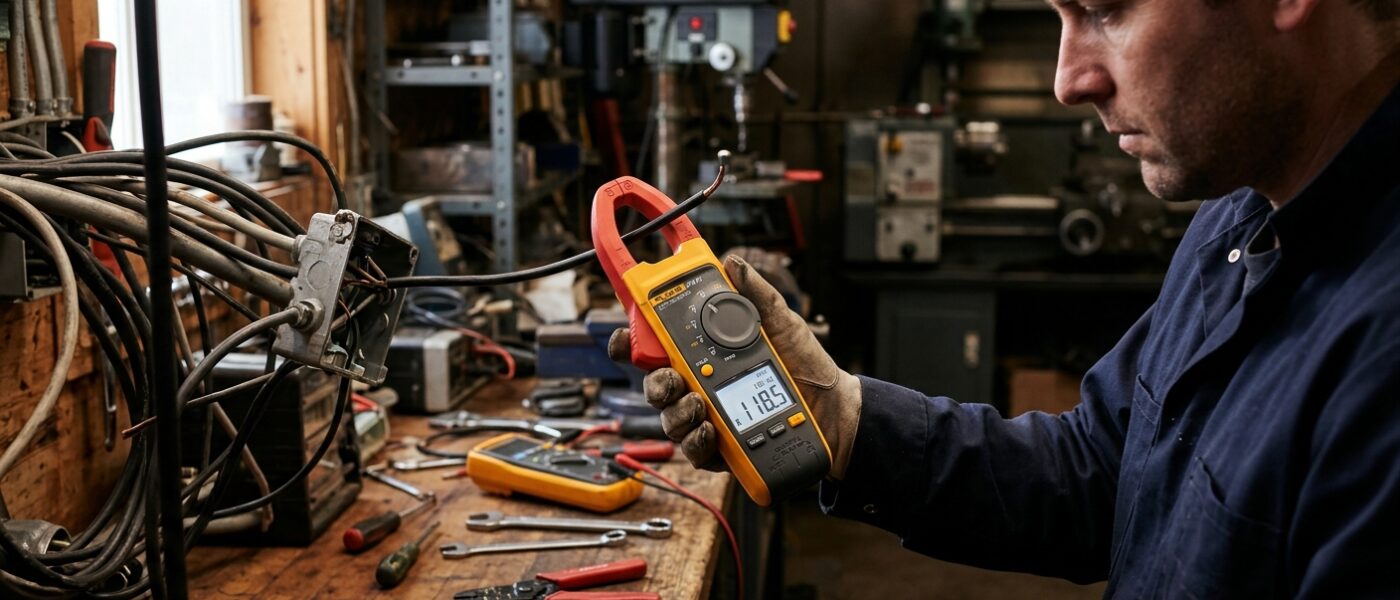
The Klein Tools CL800 is the best value True RMS clamp meter for residential electrical work; the Fluke 376 is the professional standard for accuracy, safety, and long-term reliability.
As an Amazon Associate, we earn from qualifying purchases.
A clamp meter is a multimeter with a jaw that clamps around a conductor to measure current without breaking the circuit – one of the most important distinctions from a standard multimeter. Standard multimeters measure current by inserting the meter in series with the circuit (requiring disconnection). A clamp meter measures current by detecting the magnetic field around the conductor with the jaws – completely non-invasive and safe to use on live conductors. For homeowners troubleshooting circuit loads, HVAC systems, or motor performance, a clamp meter is an indispensable diagnostic tool.
How Clamp Meters Work
The jaw of a clamp meter contains a Hall effect sensor or coil that detects the magnetic field produced by current flowing through a conductor. The meter converts the field strength to a current reading and displays it. For AC current (which alternates direction 60 times per second in the US), this inductive measurement works on any single conductor. For DC current, the Hall effect sensor measures the static magnetic field produced by constant-direction current flow.
The jaw must clamp around a single conductor for an accurate reading. Clamping around a two-conductor cable (where current flows in opposite directions in the two conductors) produces a reading of near zero – the opposing fields cancel. Always separate conductors before measuring.
Key Features to Look For
AC vs. DC Current Measurement
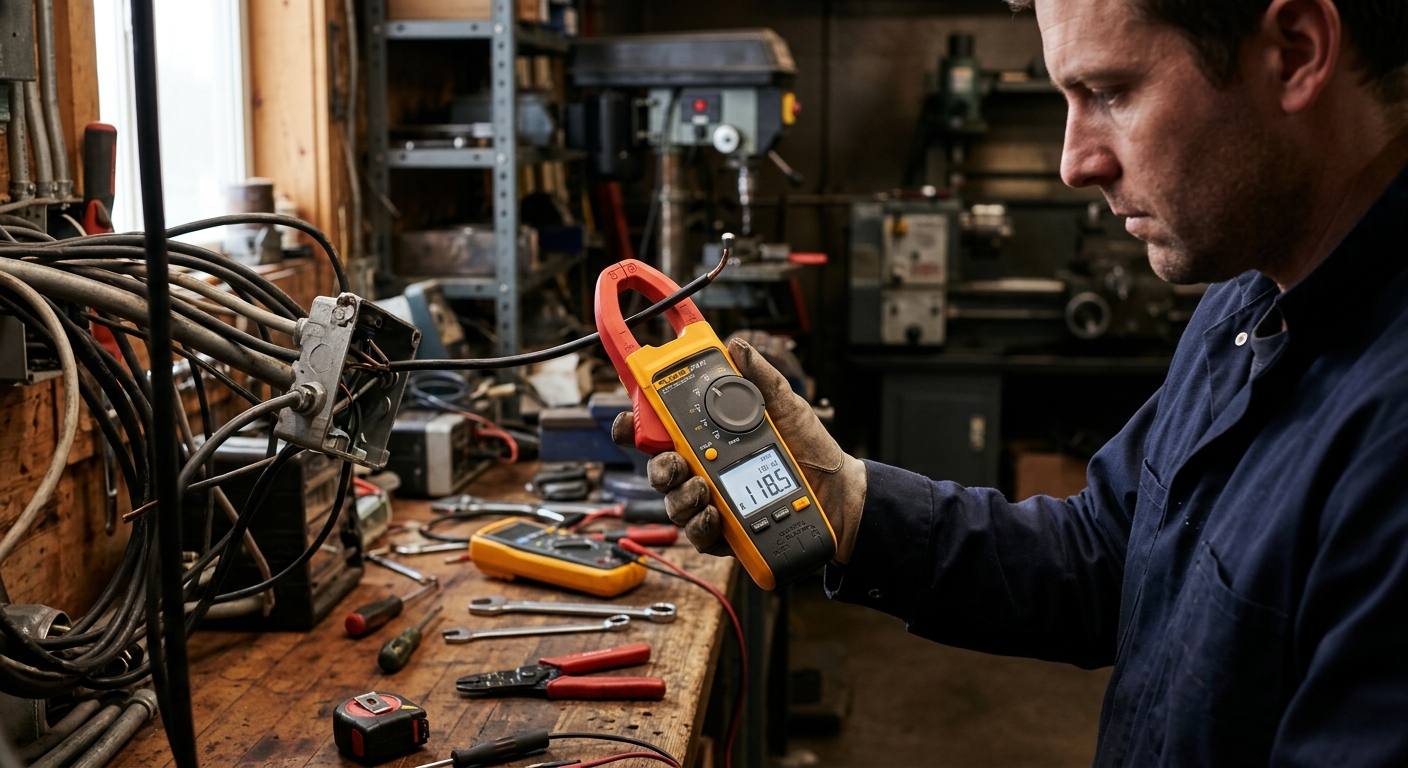
All clamp meters measure AC current. Only better models also measure DC current (via a Hall effect sensor). For residential electrical work, AC current measurement is all most DIYers need. For automotive, solar, and battery system work, DC current measurement is essential.
Current Range
Standard residential clamp meters read up to 200A or 400A AC – adequate for measuring branch circuit currents (15A or 20A circuits) and main service current (100A to 200A panels). HVAC and motor work occasionally requires 400A to 600A range.
Jaw Size
The jaw opening must be large enough to clamp around the conductors you need to measure. Most consumer clamp meters have 1.5 to 2-inch jaw openings, accommodating conductors up to about 2/0 AWG. For larger service conductors, you need a larger jaw.
True RMS Measurement
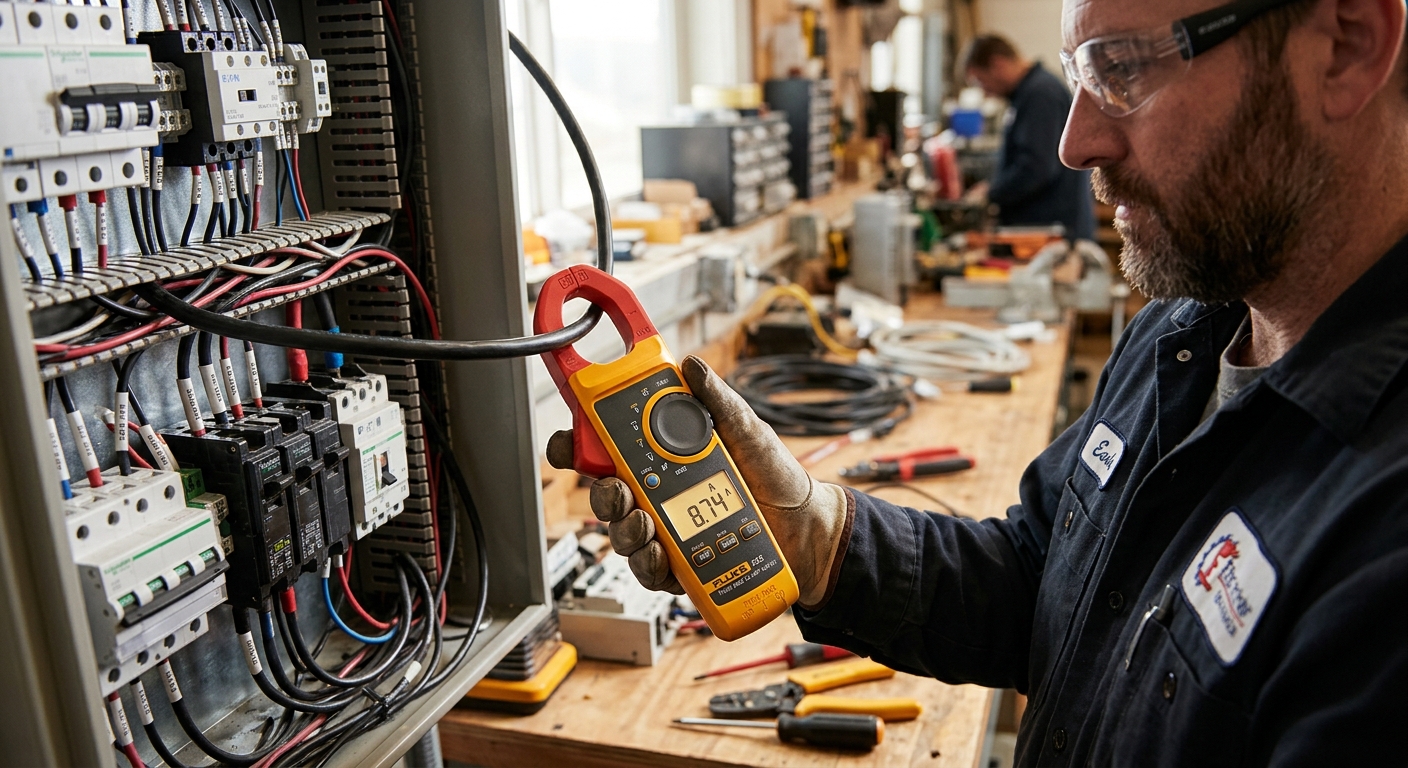
As with multimeters, True RMS is the correct measurement for non-sinusoidal loads (variable-speed motor drives, dimmers, inverters, and most modern electronics). Average-responding clamp meters read incorrectly on these loads. Buy True RMS for any serious diagnostics.
Additional Multimeter Functions
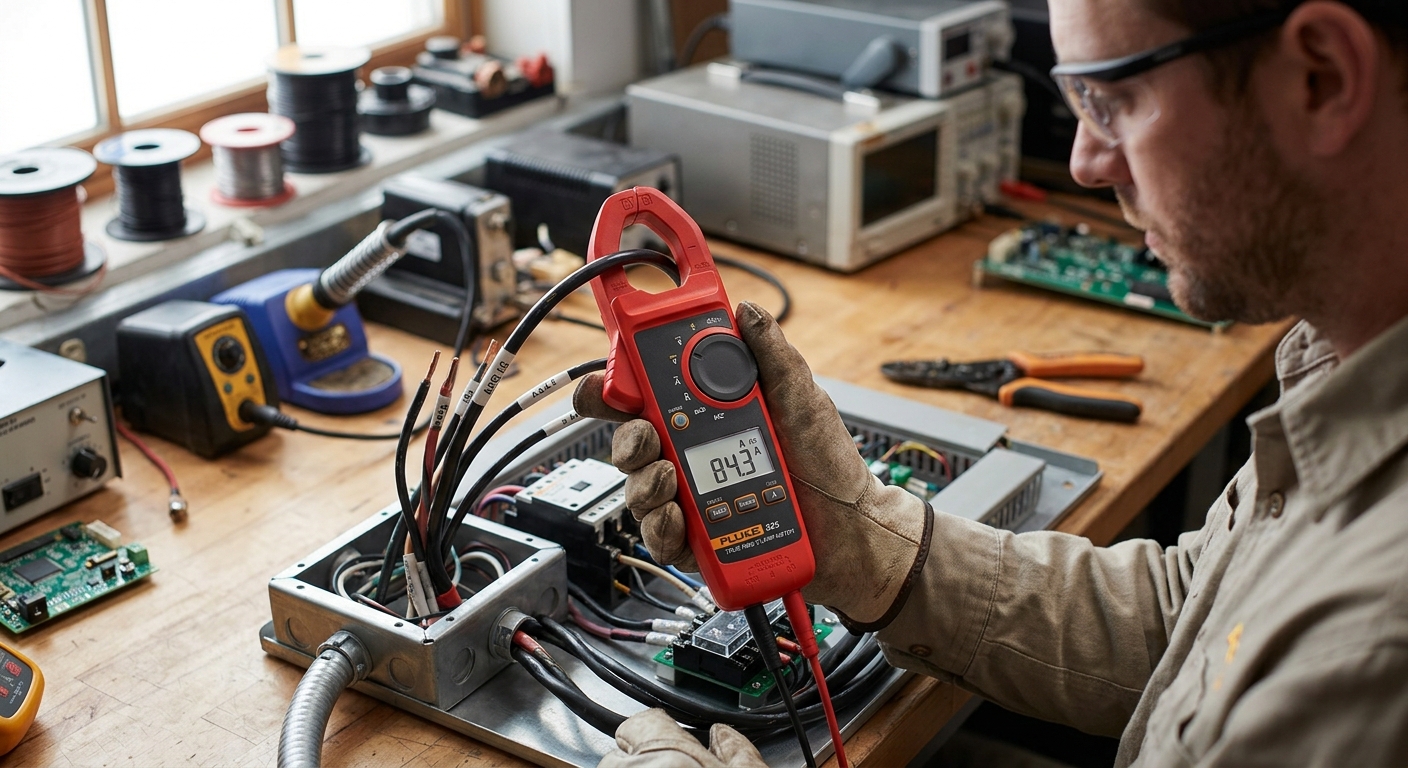
Good clamp meters add multimeter functions – voltage, resistance, continuity, and diode test – making them a combined instrument. A clamp meter with full multimeter functions replaces both instruments for most field applications.
Our Top Picks
1. Fluke 376 FC True RMS AC/DC Clamp Meter
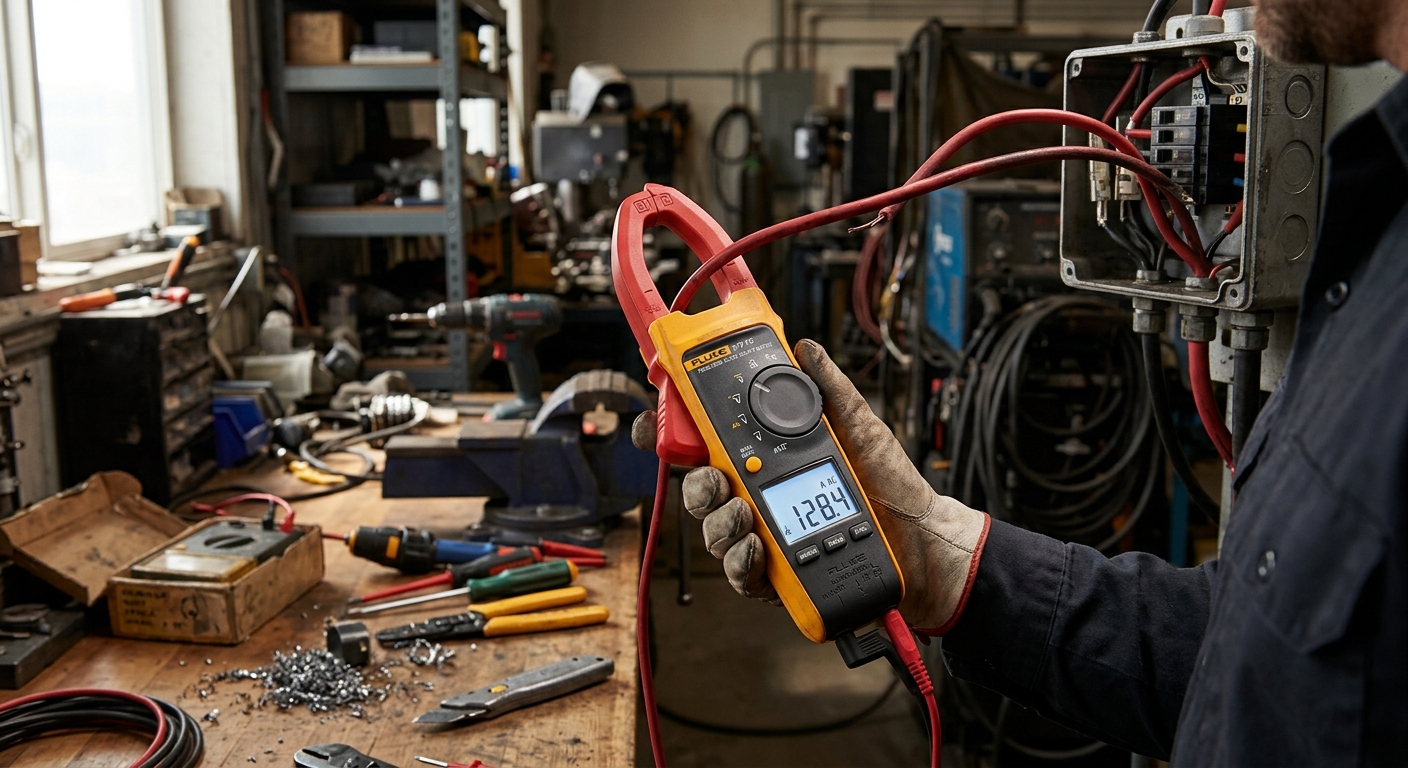
The professional standard. The Fluke 376 measures both AC and DC current up to 2500A (with the included flexible iFlex probe), True RMS, and connects to Fluke Connect for smartphone data logging. The build quality, accuracy, and safety ratings (CAT III 1000V, CAT IV 600V) represent Fluke’s commitment to instruments that professionals bet their safety on. An investment, but a justified one.
2. Klein Tools CL800 True RMS AC/DC Clamp Meter
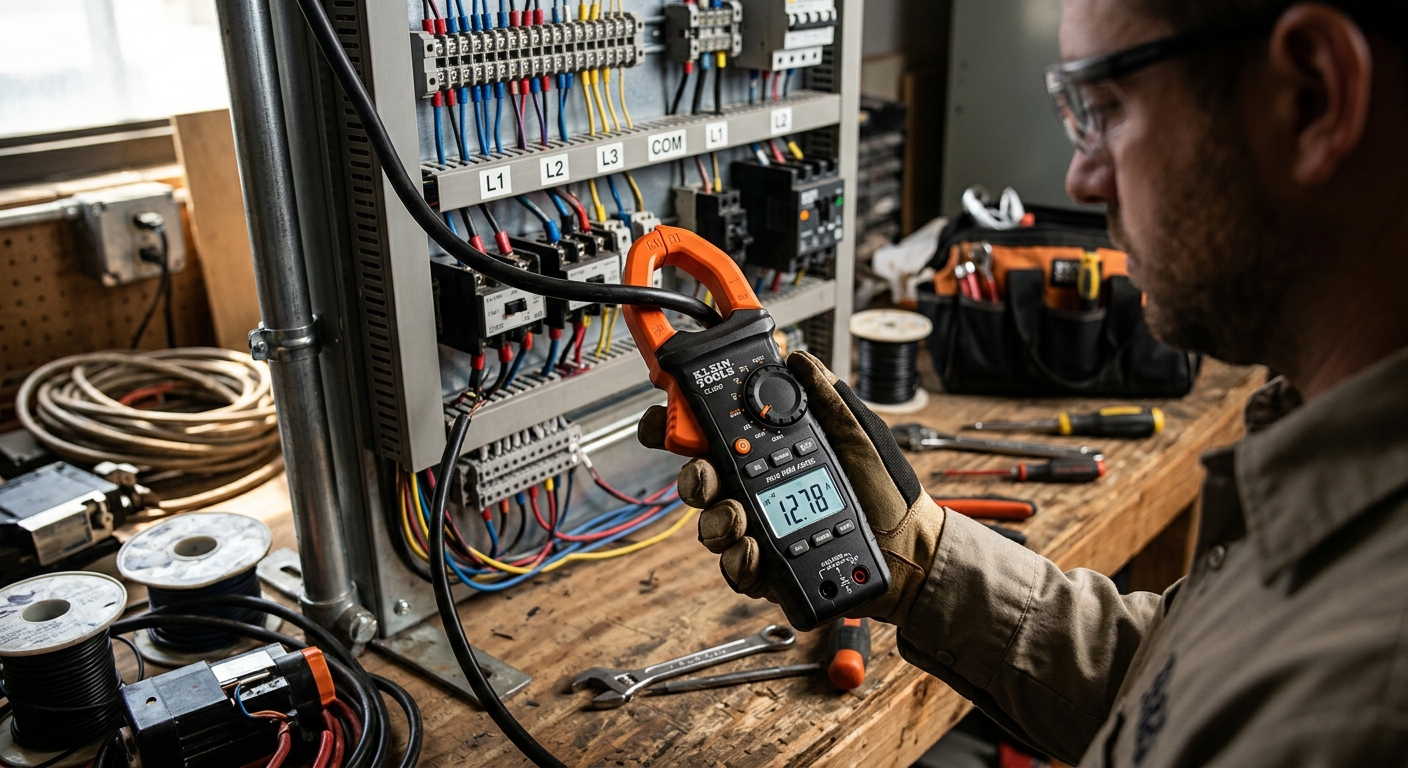
Klein’s professional clamp meter combines AC and DC current measurement, True RMS, a large backlit display, and full multimeter functions (voltage, resistance, continuity, temperature) in a package that fits in an electrician’s tool bag. CAT III 600V rated and very accurate. The best mid-range clamp meter for residential and light commercial electrical work.
3. Extech EX623 True RMS Clamp Meter
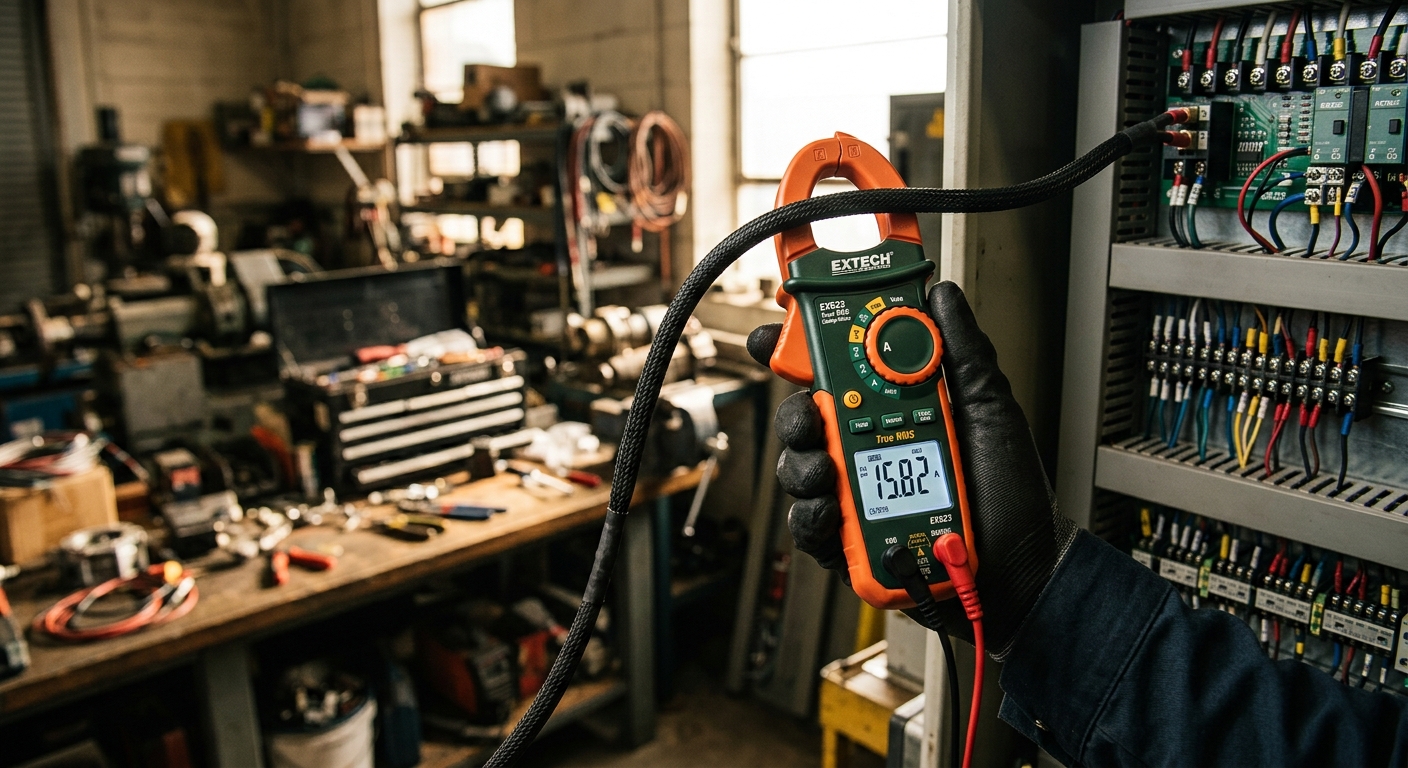
An excellent value True RMS clamp meter with both AC and DC current measurement, a 600A AC range, and a 1000V measurement capability. The jaw opens to 1.5 inches – adequate for most residential conductors. A reliable choice for homeowners who want professional features without professional-level pricing.
4. AstroAI TRMS 6000 Auto-Ranging Clamp Meter
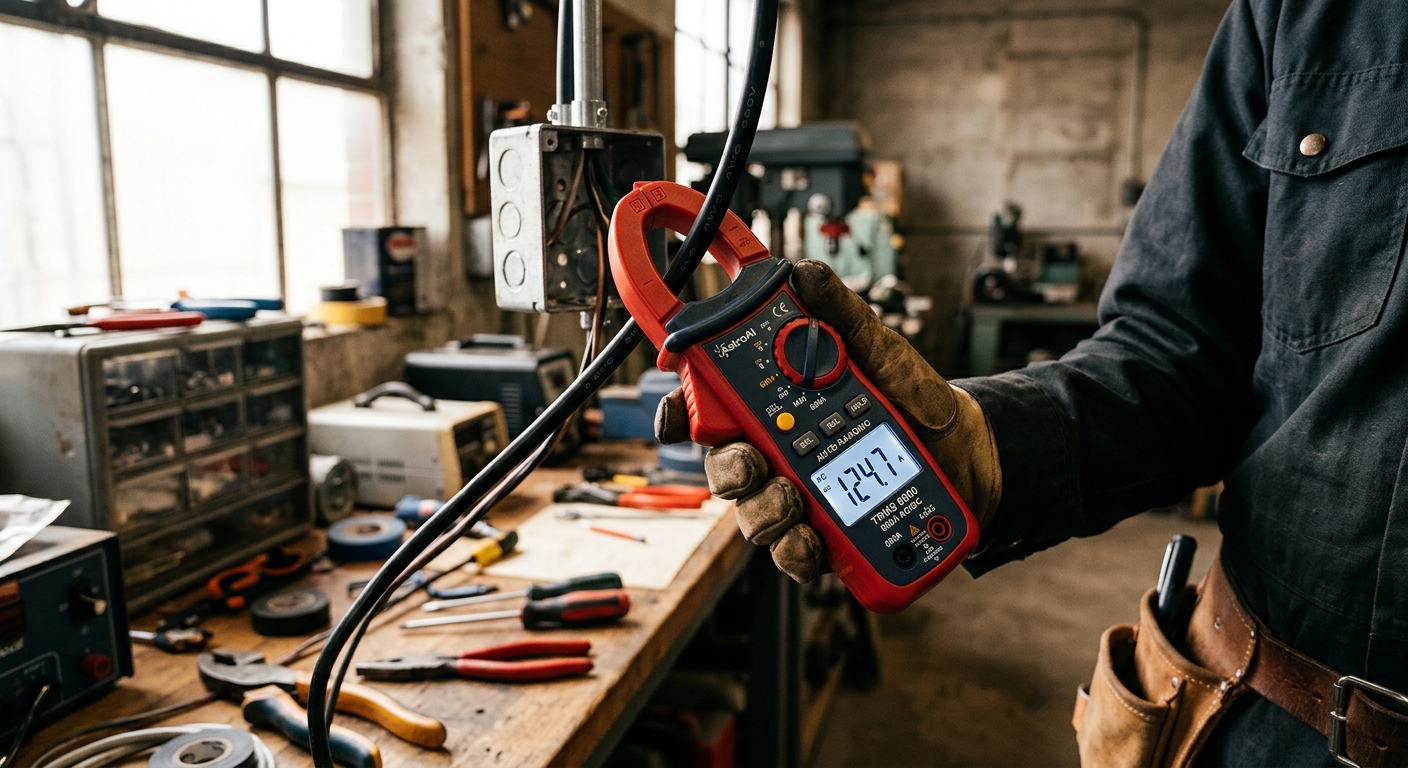
The best budget clamp meter for homeowners doing their first electrical diagnostics. Auto-ranging True RMS measurement, AC and DC voltage, resistance, continuity, and AC current measurement up to 600A. Not as accurate or durable as Fluke or Klein, but significantly better than uncertified no-name meters.
5. Milwaukee 2235-20 400A AC Clamp Meter
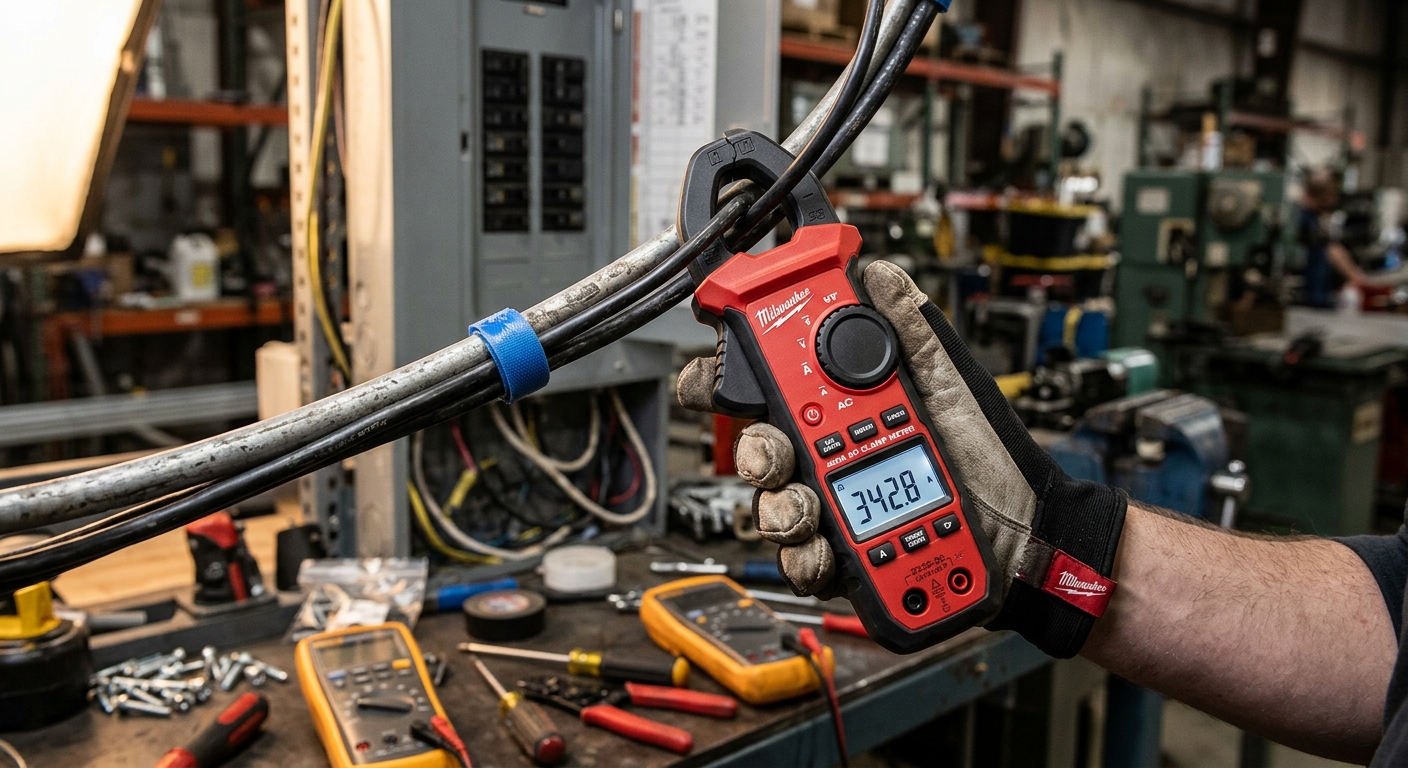
Milwaukee’s compact clamp meter is sized for tight spaces where larger jaw meters will not fit – particularly useful in crowded electrical panels. 400A AC current range, full multimeter functions, and Milwaukee’s job-site durability in a very compact package. The slim jaw profile is the standout feature for panel work.
What to Avoid
- Average-responding clamp meters for HVAC and motor work: These give incorrect readings on non-sinusoidal loads. Always True RMS for any motor diagnostic.
- Clamp meters with no safety rating: Working around live conductors with unrated instruments is a real hazard. CAT III minimum for residential panel work.
- Clamp meters that only measure current: A combined current/voltage/resistance instrument is far more useful in field diagnostics than a current-only tool.
Practical Uses for Clamp Meters
- Verifying circuit load: Measure current on a branch circuit to confirm load is within the breaker rating.
- HVAC diagnostics: Measure compressor startup and running current to diagnose failing components.
- Main service load: Clamp around the main service conductors to measure total household load.
- Motor diagnostics: High running current indicates a struggling motor (failed capacitor, worn bearings, mechanical overload).
FAQ
What is the difference between a clamp meter and a multimeter?
A clamp meter adds non-invasive current measurement via a clamping jaw to the standard multimeter functions. A multimeter measures current only with the meter inserted in series with the circuit. A clamp meter is easier and safer to use for current measurement on live conductors in most field situations.
Can I use a clamp meter on low-voltage DC systems (12V car batteries, solar)?
Only if the meter measures DC current (not all do). The AC clamp measurement principle does not work for DC. Look for a meter with a Hall effect sensor specifically for DC current measurement.
Why does my clamp meter read near zero when I clamp around an extension cord?
An extension cord has two or three conductors carrying current in opposite directions – the hot and neutral currents cancel each other out, producing a near-zero reading. Always separate the individual conductors before clamping for an accurate measurement.
Affiliate Disclosure: DIY Arsenal participates in the Amazon Associates Program and other affiliate programs. When you purchase through links on this site, we may earn a small commission at no additional cost to you. We only recommend products we have personally tested and genuinely believe in.