12V vs 18V vs 20V Cordless Tools – Which Voltage for Which Job?
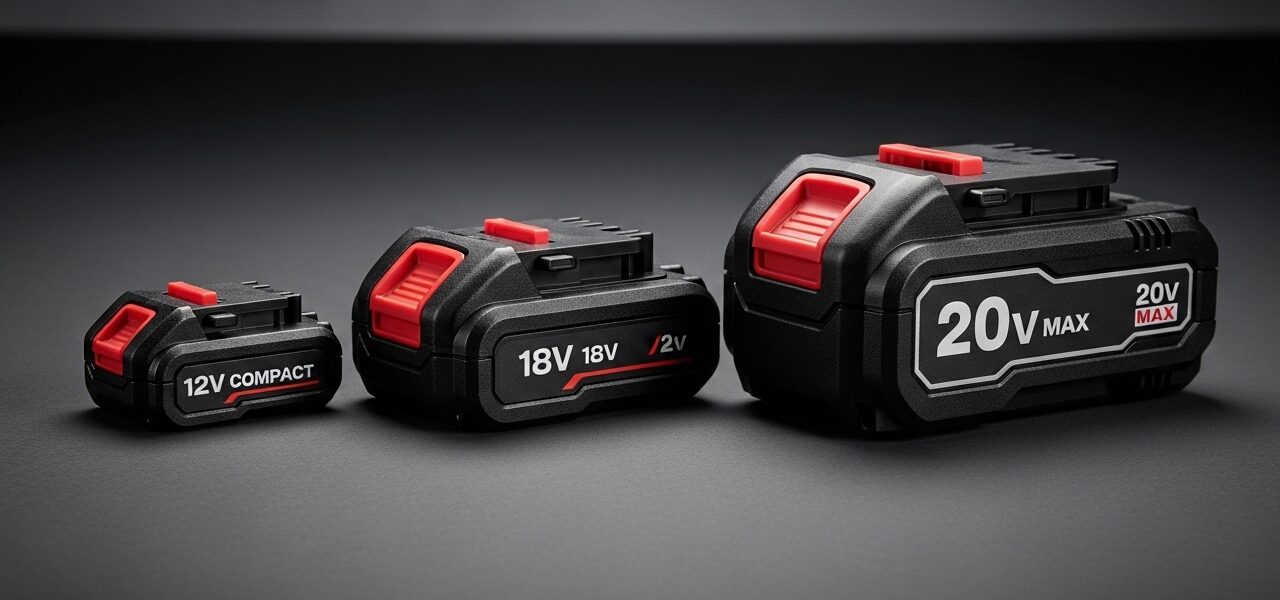
18V is the right foundation for most DIYers; 12V adds value for compact precision work; 40V/60V for specific high-demand tools only.
Walk into any hardware store and you’ll see cordless tools labeled 12V, 18V, 20V MAX, and even 40V or 80V for outdoor equipment. The voltage number seems like a straightforward performance indicator – higher is better, right? The reality is more nuanced. Voltage is only one factor in actual tool performance, and the “right” voltage depends entirely on what tasks you’re doing. Choosing 18V when 12V would serve you better wastes money and adds unnecessary weight. Choosing 12V when you need 18V means frustrating tool stalls and battery drain.
This guide cuts through the marketing to explain what voltage actually determines, where each voltage class performs best, and how to match voltage to your real-world needs.
What Voltage Actually Measures
Voltage measures electrical potential – the “pressure” behind the current flowing to the motor. Higher voltage, all else equal, allows a motor to deliver more power. But total power is voltage times current (amps), so a high-voltage tool with a low-capacity battery can deliver less usable energy than a lower-voltage tool with a higher-capacity battery. The nominal vs peak voltage confusion (DeWalt’s “20V MAX” is 18V nominal; Milwaukee “18V” is also 18V nominal) adds marketing noise to what should be a simple comparison.
For consumers, the practical difference between voltage classes shows up as: how much torque the tool generates under load, how long the battery lasts doing specific tasks, and what size battery pack is required for a useful runtime.
12V Tools: The Right Choice for Light Work
Twelve-volt cordless tools (Milwaukee M12, Makita CXT, DeWalt 12V MAX) are the lightest and most compact option in each tool category. A 12V drill weighs 2.0–2.5 lbs with battery versus 3.5–5 lbs for an 18V equivalent. That weight difference matters enormously for tasks done overhead, in tight spaces, or over long periods.
Where 12V excels: driving screws in soft materials, drilling pilot holes and small-diameter holes (under 1/2 inch), precision work in electronics and fine woodworking, work in extremely tight spaces, and any application where a drill sits in your hand for hours at a time (electricians pulling wiring, cabinetmakers driving assembly screws). Milwaukee’s M12 platform includes a surprising range of full-featured tools – drill, impact driver, jigsaw, oscillating tool, rotary hammer – all in the compact 12V form factor.
Where 12V falls short: 1-inch+ hole saws in hardwood, driving large lag bolts, cutting dense material with a circular saw, or any task that demands sustained high-torque output. Under heavy load, 12V tools overheat faster and drain batteries more quickly than their 18V equivalents doing the same work.
18V/20V Tools: The Standard for General DIY
Eighteen-volt (nominal) tools – sold as 18V by Milwaukee, Makita, and Ridgid, and as “20V MAX” by DeWalt – are the industry standard for general cordless tool use. They deliver enough torque for 95% of DIY tasks: drilling large holes, driving long screws, cutting lumber and sheet goods, sanding, nailing, and more. The battery packs are manageable in size (2.0Ah to 6.0Ah in mainstream sizes) and the ecosystem of compatible tools in each platform is enormous.
This is the voltage to build your primary tool collection around. If you own one battery platform, it should be 18V/20V. The number of available tools, the breadth of aftermarket accessories, and the maturity of the charging infrastructure all favor 18V as the foundation for a DIY workshop.
Higher Voltage (40V, 60V, 80V): Corded Replacement Territory
Higher-voltage platforms exist primarily for outdoor equipment (40V and 80V lawn mowers, blowers, and string trimmers) and high-demand trade tools (DeWalt FLEXVOLT 60V table saw, circular saw, miter saw). These tools exist at the high end because their tasks genuinely exceed 18V capacity under sustained load.
Milwaukee’s HIGH OUTPUT batteries (which deliver more current within the same 18V framework) solve a similar problem differently – by increasing amp-hour capacity rather than voltage. The result is similar: more sustained power for demanding applications without a separate voltage class.
For most DIYers: 40V/60V is not necessary unless you specifically need a cordless table saw, large miter saw, or are replacing a gasoline-powered outdoor tool. The cost and weight of 60V batteries are significant, and the tool selection at these voltages is limited compared to 18V.
Practical Decision Framework
Choose 12V if: you primarily drive screws, drill small holes, and do finish/assembly work. You want the lightest possible tool for overhead or extended-session tasks. You’re an electrician, plumber, or finish carpenter who needs compact tools for tight spaces.
Choose 18V if: you’re building a general-purpose tool collection, you do a mix of drilling, driving, cutting, and sanding, or you need one battery platform that covers the widest range of tasks. The right default for most homeowners and DIYers.
Choose 40V/60V only if: you need a specific tool that genuinely requires it (outdoor mower, cordless table saw) and you’re willing to maintain a separate battery platform for those tools.
FAQ
Is DeWalt 20V MAX more powerful than Milwaukee 18V?
No – “20V MAX” is DeWalt’s marketing name for 18V nominal. Under load, both are effectively 18V. The actual power difference between equivalent tools comes from motor design, brushless electronics, and battery cell quality – not from the voltage name. Don’t choose a platform based on the voltage label.
Can I use 12V batteries in 18V tools?
No. Even within the same brand, 12V and 18V batteries use different connectors and are not interchangeable. Milwaukee M12 batteries don’t fit M18 tools, and Makita CXT batteries don’t fit LXT tools. Voltage platforms are separate ecosystems within each brand.
Why do outdoor tools need 40V or 80V?
Lawn mowers, chain saws, and powerful blowers need to sustain high power output for minutes at a time – far longer than a cordless drill’s typical brief drilling or driving cycle. At 18V, maintaining that power level would require battery packs so large they’d be impractical. Higher voltage with proportionally sized battery packs is a better engineering solution for sustained high-power outdoor applications.
Bottom Line
For most DIYers: build your core tool collection around 18V. It’s the broadest, most versatile voltage class with the widest tool and accessory selection. Consider adding a 12V drill or driver if you regularly work overhead, in tight spaces, or do precision finish work – the weight difference is worth a separate small battery investment for those specific tasks. Only buy 40V or 60V when you have a specific tool need that genuinely requires it. Voltage is a means to the work you need to do, not a prestige indicator.
Affiliate Disclosure: DIY Arsenal participates in the Amazon Associates Program and other affiliate programs. When you purchase through links on this site, we may earn a small commission at no additional cost to you. We only recommend products we have personally tested and genuinely believe in.