Best Routers for DIY – Fixed-Base vs Plunge vs Combo Kit

Bosch 1617EVSPK combo kit is the best all-in-one value; DeWalt DWP611PK wins for compact edge work.
A router is one of the most versatile tools in woodworking. It shapes edges, cuts joinery (dadoes, rabbets, mortises), makes decorative profiles, flushes laminate, and – with jigs – creates template-guided shapes that would be nearly impossible by other means. The challenge for DIYers is that routers come in three main configurations (fixed-base, plunge, and combo kits), multiple sizes (compact/trim, mid-size, full-size), and a daunting variety of bits. Choosing the right router and understanding what it can do transforms the learning curve from frustrating to genuinely rewarding.
This guide focuses on what DIYers actually need: a router that handles edge profiling, dado cutting, laminate flushing, and occasional template work without requiring a lifelong investment in professional woodworking infrastructure.
How We Evaluate Routers
Fixed-base vs plunge base: A fixed-base router locks the bit depth before routing begins. It’s ideal for edge work, dado cutting in a router table, and applications where consistent depth across the entire cut is required. A plunge router allows you to lower the spinning bit into the material mid-cut – essential for mortises, interior cutouts (like inlay pockets), and any stopped cut that doesn’t exit at the edge. Combo kits include both base types sharing one motor.
Motor size (HP and amps): Compact/trim routers (1–1.5 HP) handle edge profiling, light dado work, and laminate trimming. Mid-size routers (1.75–2.25 HP) cover most DIY woodworking. Full-size routers (2.5–3.5 HP) are for heavy mortising, large panel work, and dedicated router table use. Most DIYers start with a mid-size router and never need larger.
Collet size (1/4″ vs 1/2″): A 1/4-inch collet accepts the vast majority of router bits for DIY use. A 1/2-inch collet is needed for large-diameter, heavy-duty bits (large panel-raising bits, big spiral upcuts). A 1/2-inch collet also grips bits more securely during heavy cuts. Routers with both collet sizes offer maximum flexibility.
Depth adjustment mechanism: Rack-and-pinion depth adjustment (with a calibrated dial) gives precise depth setting to 1/64″ increments. Simpler clamp mechanisms require trial and error. For joinery, precision depth adjustment is critical.
Router table compatibility: If you ever plan to use your router in a table (which dramatically expands its capabilities for edge profiling, raised panels, and box joints), confirm the router base has standard mounting holes or a removable sub-base for table inserts.
Top Picks
1. Bosch 1617EVSPK – Best Overall Combo Kit
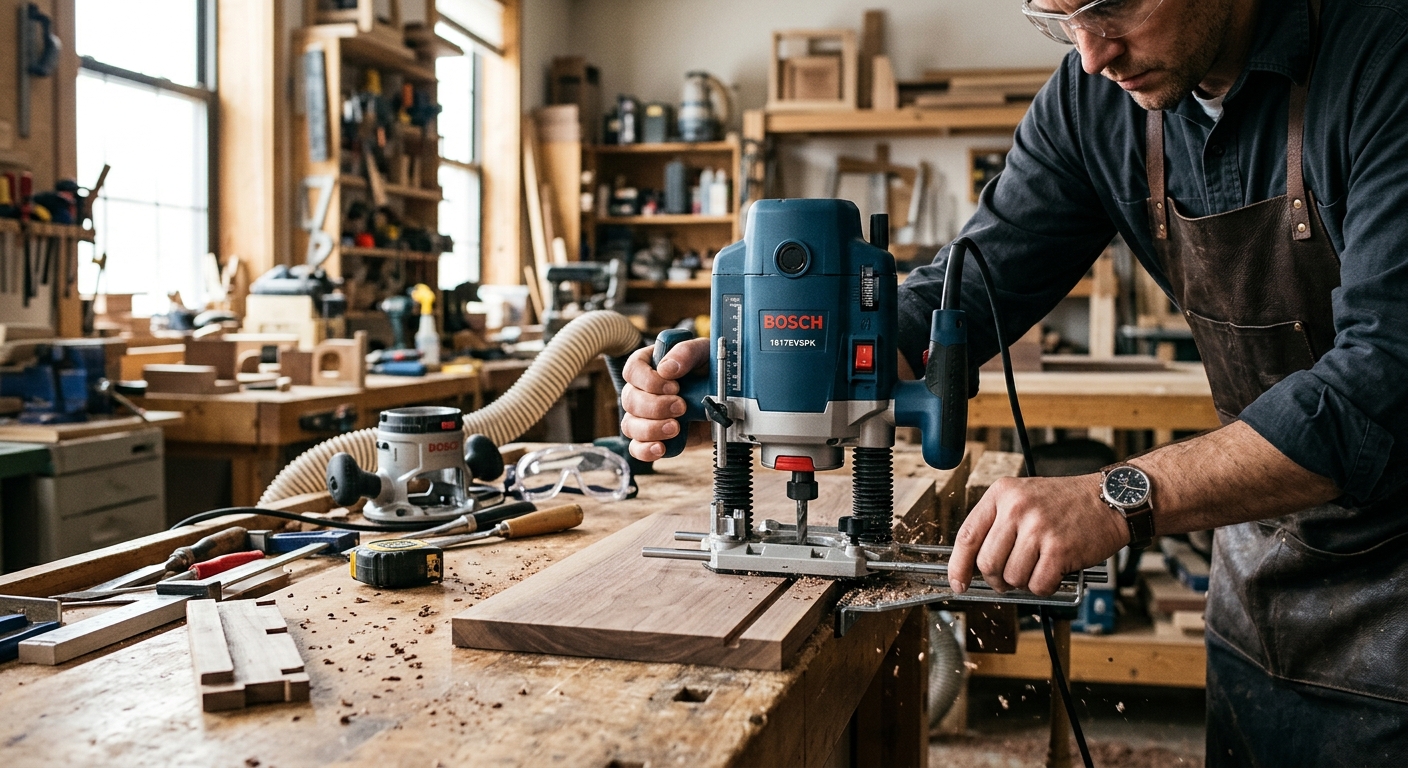
The Bosch 1617EVSPK is the most recommended router for DIYers who want a full kit without buying a second motor. The 2.25 HP motor sits in both a fixed base (for edge work and table use) and a plunge base (for interior cuts and mortises), giving you two tools for one motor investment. The variable speed (8,000–25,000 RPM) handles everything from small detail bits at low speed to large panel-raising bits at appropriate speed. The above/below-the-table bit change design is excellent for table routing.
At $189–$219 for the combo kit, it represents excellent value against buying a fixed and plunge base separately. The 1617 platform has been in production for over two decades, meaning replacement parts and accessories are widely available.
- Pros: Both base types included, 2.25 HP motor, excellent variable speed, router table compatible, mature platform
- Cons: Plunge base depth adjustment isn’t as precise as Festool or Triton, motor is on the heavier side
- Price range: $189–$219
2. DeWalt DWP611PK – Best Compact Combo Kit
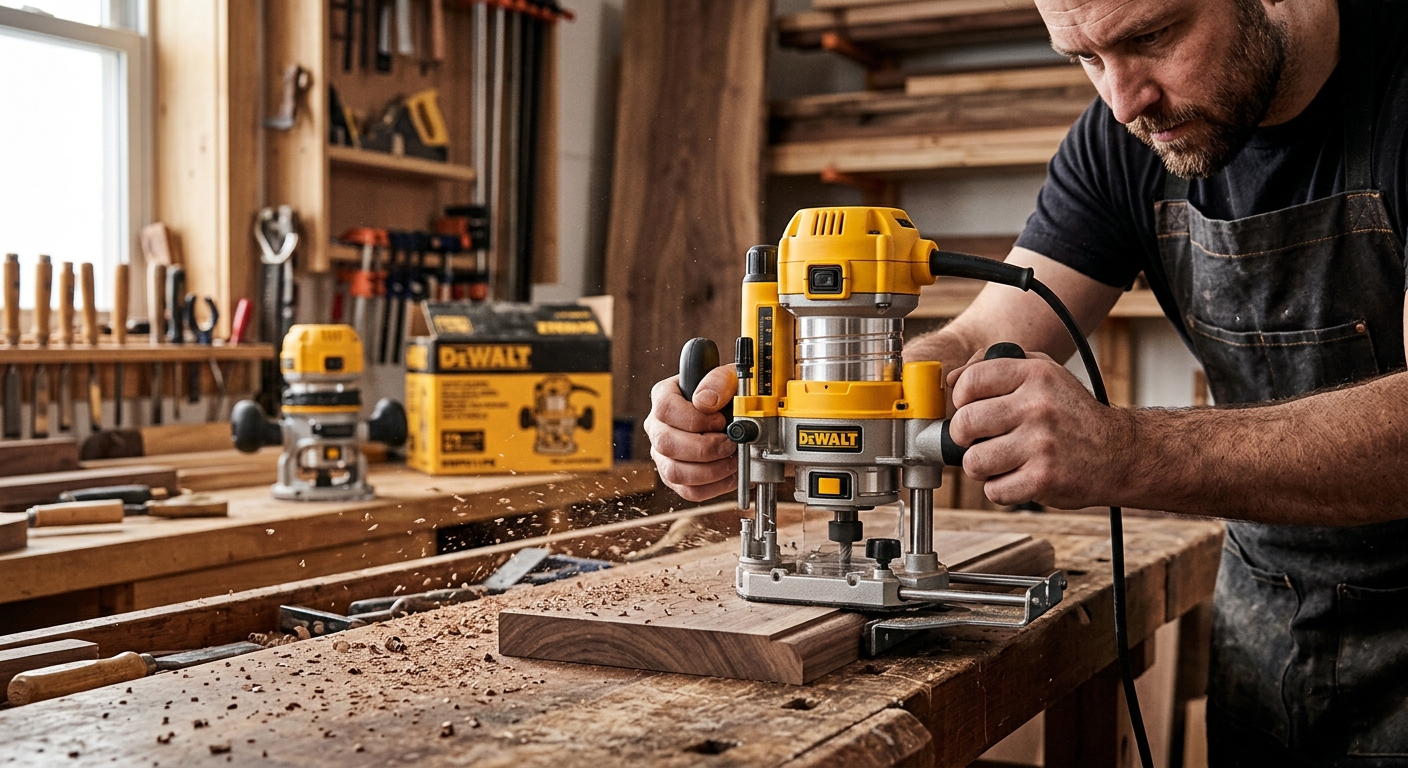
DeWalt’s 1.25 HP compact router combo kit is the best choice for DIYers who primarily do edge profiling and laminate work and want something lighter and easier to control freehand. The LED ring lights illuminate the bit and base plate simultaneously – genuinely useful for following pencil lines. Variable speed from 16,000–27,000 RPM, both fixed and plunge bases in the kit, and a smooth depth-adjustment mechanism make this the most user-friendly router available at $149–$179.
The limitation is the 1/4-inch-only collet – this eliminates heavy-duty large-bit work. But for the 90% of router tasks most DIYers encounter, the DWP611PK handles everything well.
- Pros: LED work lights, compact and lightweight, smooth depth adjustment, both bases included
- Cons: 1/4-inch collet only – no 1/2-inch shank bits, lower power for heavy bits
- Price range: $149–$179
3. Makita RT0701CX7 – Best Trim Router Kit

Makita’s compact trim router has become legendary for its precision, balance, and the remarkable variety of bases available for it – fixed, plunge, tilt, offset, and D-handle bases are all available. At 1.25 HP and 10,000–30,000 RPM, it handles edge profiling, laminate trimming, and light joinery with a quality of feel that exceeds its price ($139–$169 for the kit). For furniture makers who want a secondary light-duty router, this is the obvious choice.
- Pros: Most base accessories available of any compact router, excellent ergonomics, precise speed control, good build quality
- Cons: Lower power limits heavy joinery bits, 1/4-inch only, no D-handle in base kit
- Price range: $139–$169
4. Triton TRA001 – Best Full-Size Plunge Router

For DIYers who want a dedicated full-size plunge router for mortising, panel work, and heavy joinery, Triton’s TRA001 is the choice. Its unique micro-winder depth adjuster allows precise depth changes while the router is running and plunged – invaluable for taking light passes on deep mortises. At 2.4 HP, it handles any bit without bogging. The dual-column plunge mechanism is rock-solid. At $229–$279, it’s a serious but fair investment for dedicated woodworkers.
- Pros: Running depth adjustment, solid dual-column plunge, powerful 2.4 HP, excellent router table performance
- Cons: Expensive, no fixed-base option, heavier than mid-size routers
- Price range: $229–$279
5. RYOBI RE180PL1G – Best Budget Mid-Size
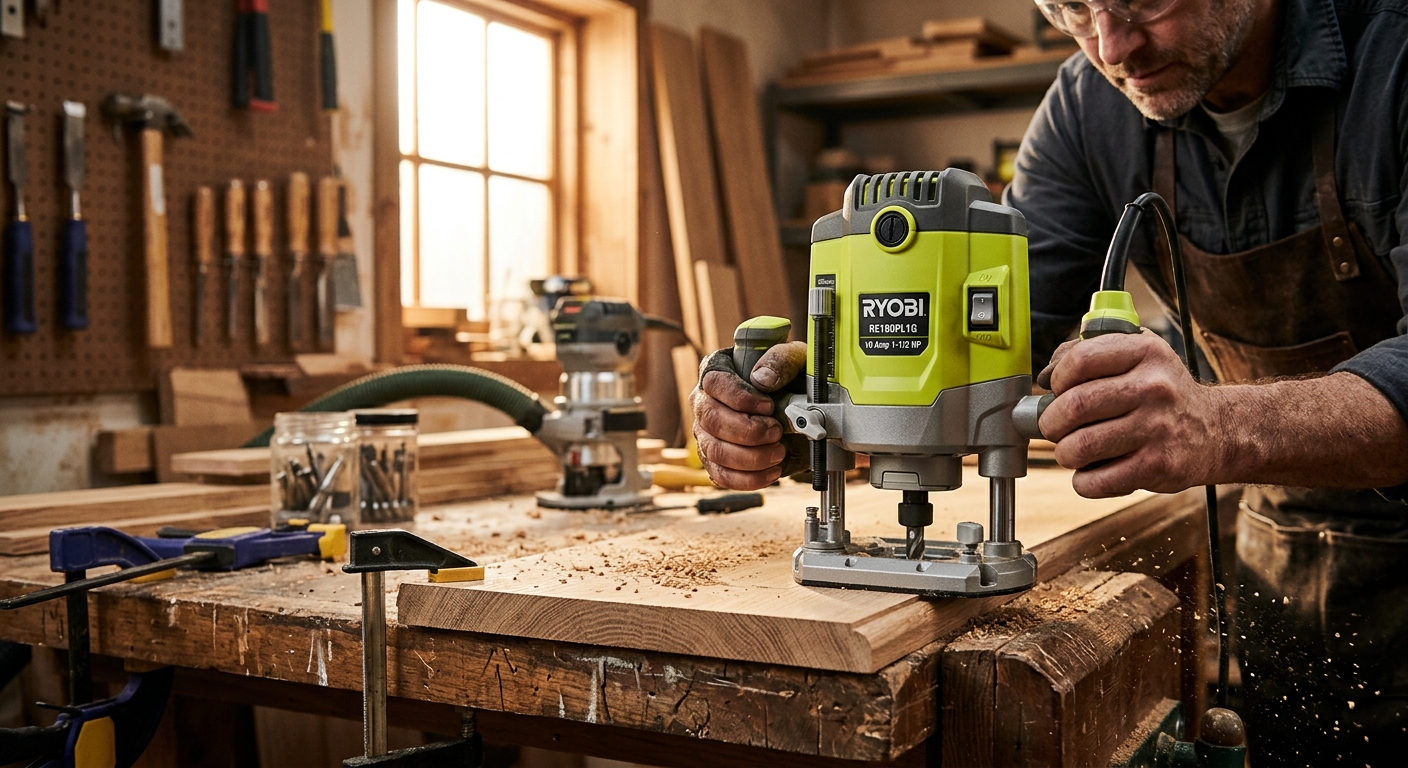
RYOBI’s 1.8 HP fixed-base router at $59–$79 gives budget-conscious woodworkers entry into router joinery and edge profiling without significant investment. The 1-3/4 HP motor handles standard 1/2-inch and 1/4-inch bits for edge work, dado cutting, and rabbit joints. Depth adjustment is a simple twist-and-lock – less precise than rack-and-pinion but functional for most DIY tasks. Highly recommended as a first router for those testing the waters of woodworking.
- Pros: Very affordable, adequate power for most DIY joinery, accepts 1/2-inch bits
- Cons: Fixed base only, less precise depth adjustment, build quality reflects the price
- Price range: $59–$79
FAQ
What router bits should I buy first?
Start with a 1/2-inch straight bit for dado and rabbet cuts, a round-over bit (1/4″ radius) for softening edges, and a flush-trim bit for template work and laminate. These three bits handle 80% of typical beginner woodworking router tasks. Add a cove, chamfer, and Roman ogee as projects demand them.
Do I need a router table?
Not immediately. Freehand routing handles most edge work, dado cuts (with a straightedge guide), and template operations. A router table becomes valuable when you need to run multiple pieces through a consistent profile quickly, rout small pieces safely (where freehand is dangerous), and make raised panel doors. Many woodworkers build a simple table from MDF with a router plate insert for under $100.
Why does my router bit burn the wood?
Burning is caused by moving too slowly, running the router at too high a speed for the bit diameter, using a dull bit, or cutting too deep in one pass. Move the router at a consistent feed rate – the bit should be cutting, not rubbing. For large bits (over 1.5-inch diameter), slow the router to 15,000 RPM or below. Take multiple shallow passes instead of one deep pass for heavy material removal.
Bottom Line
For most DIYers who want a full-featured router capable of both fixed-base and plunge operations, the Bosch 1617EVSPK combo kit is the default recommendation – it’s been the standard mid-range router for decades for good reason. Those who primarily do edge work and laminate flushing will prefer the lighter DeWalt DWP611PK or Makita RT0701CX7. Budget beginners should start with the RYOBI RE180PL1G and understand they’ll likely upgrade within a year as their projects grow more ambitious.
Affiliate Disclosure: DIY Arsenal participates in the Amazon Associates Program and other affiliate programs. When you purchase through links on this site, we may earn a small commission at no additional cost to you. We only recommend products we have personally tested and genuinely believe in.