Best Miter Saws – Compound, Sliding, and Dual-Bevel Explained
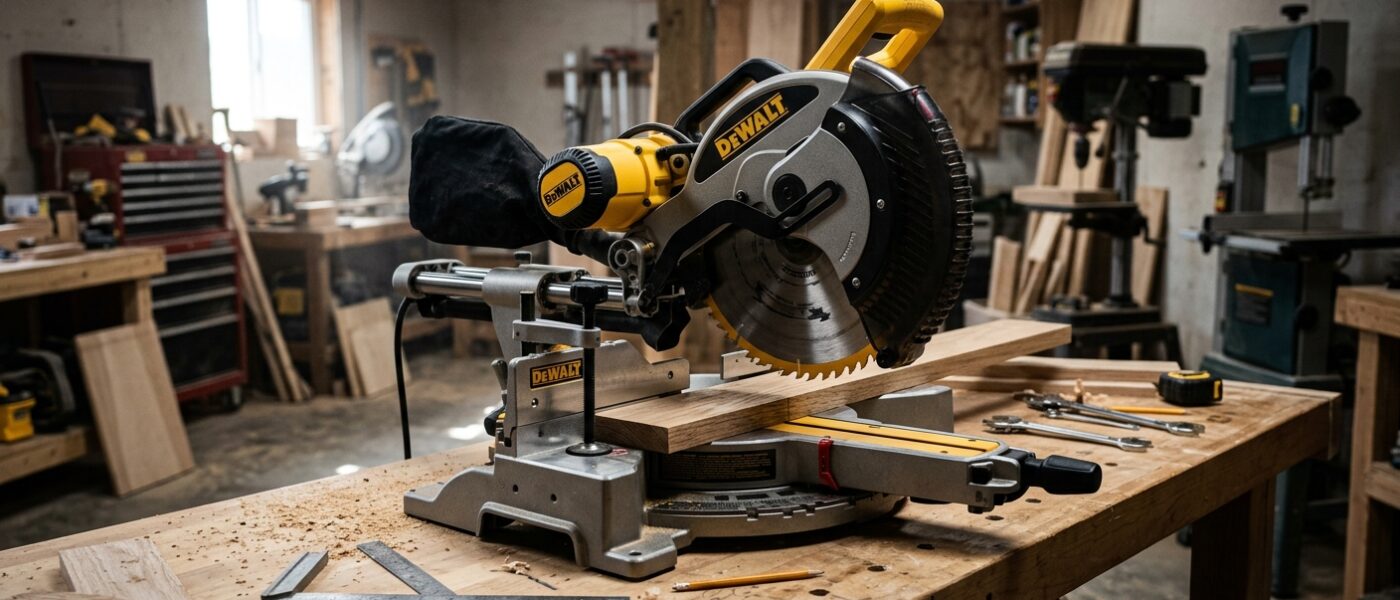
DeWalt DWS779 is the benchmark for serious work; Ridgid R4122 is the value pick for DIY home use.
A miter saw – also called a chop saw or drop saw – is the fastest, most accurate tool for making crosscuts in lumber and molding. It brings material to the saw rather than the other way around, and it makes repeat cuts at precise angles that would take three times as long and half the accuracy with a circular saw and speed square. For anyone building decks, installing trim, framing walls, cutting baseboards, or making furniture from dimensional lumber, a miter saw isn’t optional – it’s the tool that makes accurate work achievable.
The challenge is choosing among compound, sliding compound, and dual-bevel sliding models. The terminology can seem overwhelming but the decision tree is actually straightforward once you understand what each feature adds. This guide explains the differences, covers who needs what, and reviews the best options from budget to professional.
How We Evaluate Miter Saws
Miter range: Standard miter saws cut from 0°–45° left and right. Better models extend to 50° or 52° for cutting door and window casing at wide reveal angles. Positive stops at common angles (15°, 22.5°, 31.6°, 45°) let you set the angle quickly without fine adjustment every time.
Bevel capacity (compound vs single): A compound miter saw tilts the blade to one side (usually left) in addition to the miter angle – essential for cutting crown molding and angled roof trim. A dual-bevel (or double-bevel) saw tilts both left and right, eliminating the need to flip material for mirror cuts. Single-bevel is adequate for most DIY; dual-bevel saves significant time on crown molding installations.
Sliding vs non-sliding: Non-sliding miter saws have a fixed blade pivot – the crosscut width is limited to the blade diameter. A 10-inch non-slider handles stock up to about 6 inches wide. A sliding saw extends outward on rails, allowing crosscuts of 12–16 inches – critical for cutting wide boards and sheet goods. The trade-off is a larger footprint and higher price.
Blade size (10 vs 12 inch): A 10-inch blade is lighter, faster-spinning, less expensive to replace, and handles most DIY tasks. A 12-inch blade crosscuts wider and thicker stock – critical for timbers and wide boards. Unless you’re regularly cutting 8-inch or wider stock, 10-inch is the right choice.
Dust collection: Miter saws are notorious for poor dust collection compared to other workshop tools. Even the best miter saws exhaust 30–40% of dust sideways. A rear bag and vacuum port combination captures significantly more than a bag alone. An enclosed environment (garage shop with good ventilation) is strongly recommended.
Top Picks
1. DeWalt DWS779 – Best Overall 12-Inch Sliding
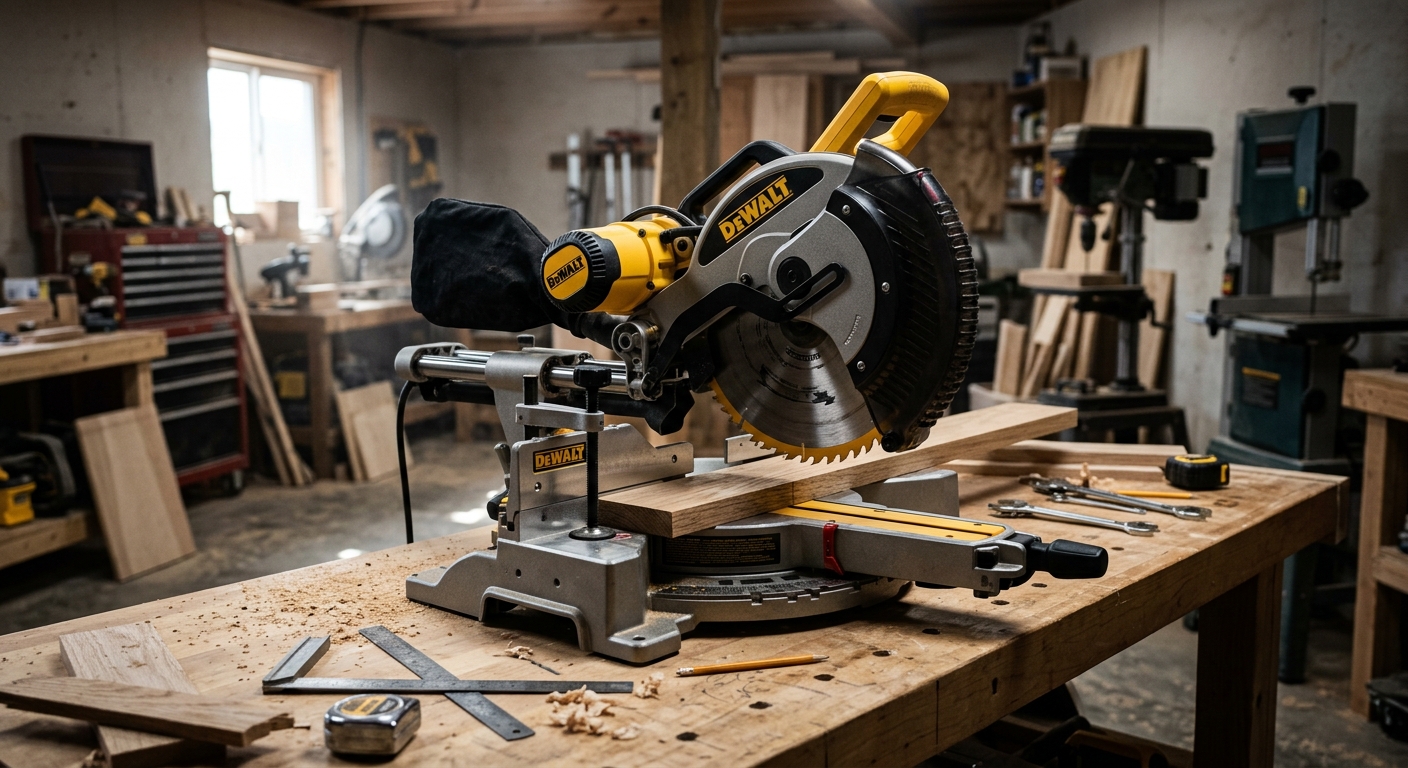
The DeWalt DWS779 has been the most popular miter saw on job sites and in workshops for years – and the sales numbers are justified. Its 15-amp motor, 12-inch blade, and 13.5-inch horizontal crosscut capacity handle virtually anything a serious DIYer or contractor needs to cut. The stainless steel miter detent plate has 14 positive stops, the bevel range extends to 49° left and 2° right (single bevel), and the tall fence supports wide crown molding in the nested position.
At $499–$549, it’s a real investment, but for anyone who builds furniture, frames walls, or installs trim professionally, it pays for itself quickly in accuracy and time. The DWS780 (same saw with XPS LED cross-cut alignment system) is worth the extra $100 if you frequently cut without chalk line marks.
- Pros: Massive crosscut capacity, 14 positive miter stops, tall fence, proven reliability
- Cons: Heavy at 56 lbs, single-bevel only in base model, dust collection is average
- Price range: $499–$549
2. Bosch GCM12SD – Best 12-Inch Compact Sliding
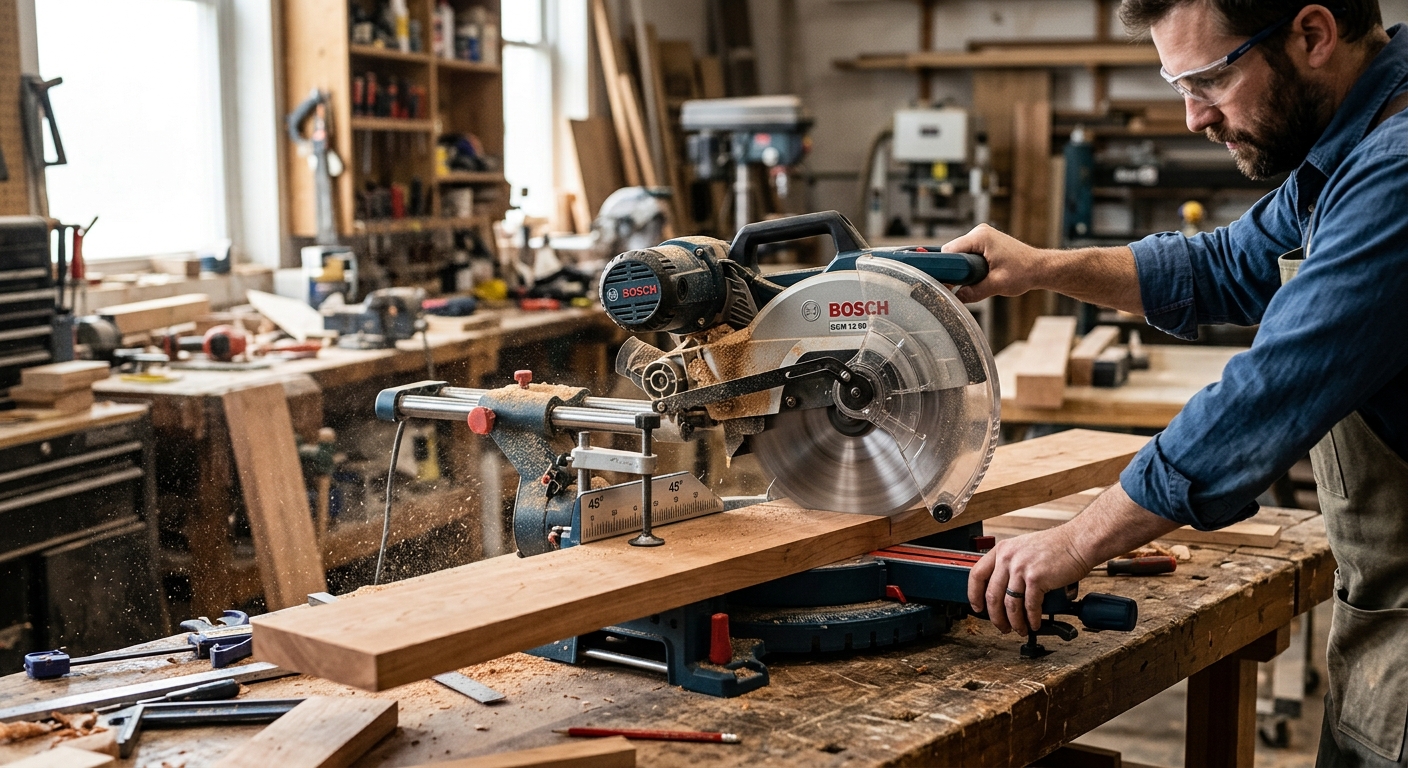
Bosch’s answer to the DeWalt DWS779 solves the biggest complaint about sliding miter saws: their footprint. The GCM12SD’s axial glide system extends the slide rails upward rather than outward behind the saw, reducing the space needed at the back of the saw by 12 inches. For shop and garage use where wall clearance matters, this alone can justify the slight price premium ($549–$599). Cut capacity matches the DeWalt; build quality is arguably superior.
- Pros: Axial glide requires no rear clearance, excellent cut accuracy, compact footprint
- Cons’=>’Higher price than DeWalt equivalent, heavier at 65 lbs, limited accessory ecosystem
- Price range: $549–$599
3. DeWalt DWS716 – Best 12-Inch Budget Compound
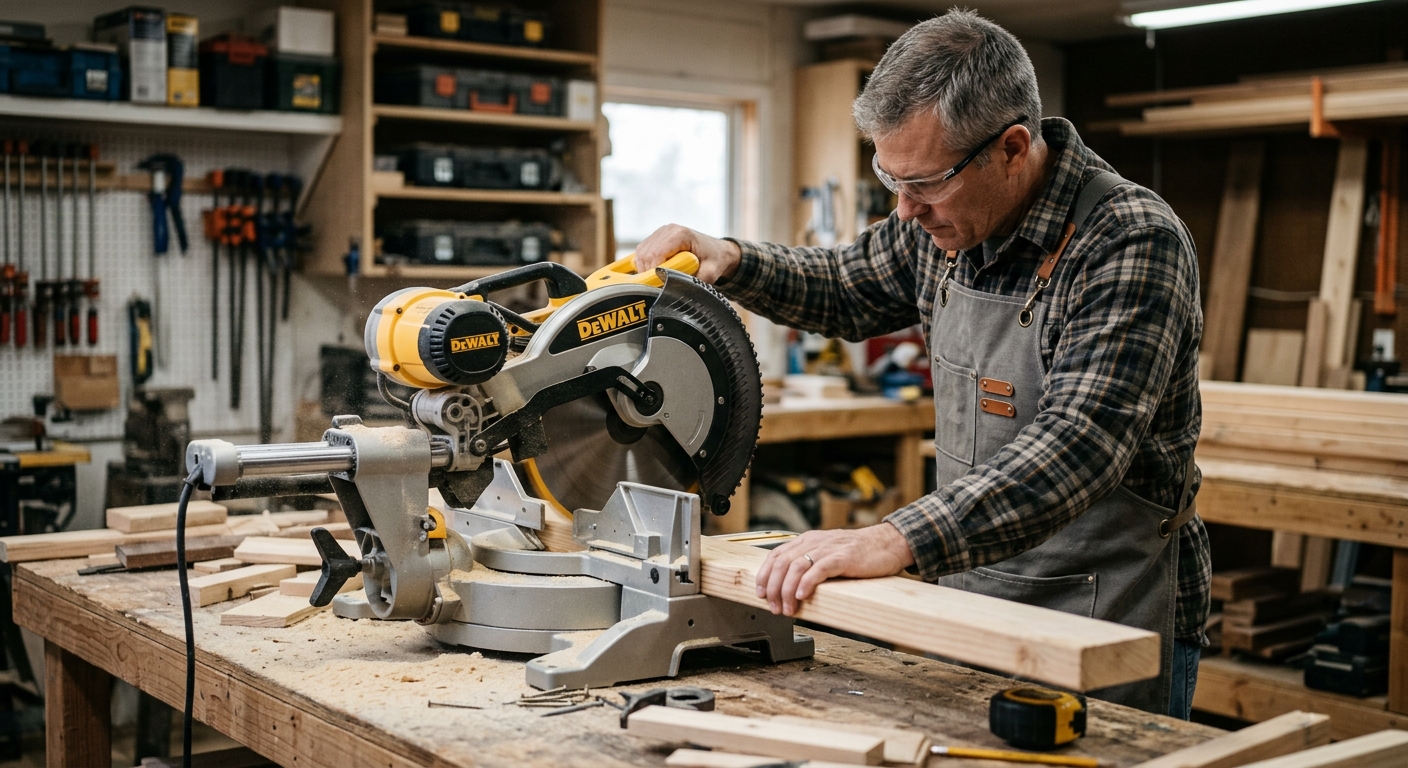
The DWS716 is DeWalt’s non-sliding 12-inch compound miter saw, and at $299–$349 it gives you the big blade without the sliding mechanism. That means crosscut capacity tops out at 8.5 inches – limiting for wide boards – but it’s more than adequate for framing, most trim, and furniture from dimensional lumber. Dual-bevel (tilts left and right) is a genuine feature at this price. Recommended for trim carpenters and framers who don’t need extended crosscut width.
- Pros: Dual-bevel at this price, 12-inch blade, lighter than sliders, reliable DeWalt build
- Cons: No sliding – 8.5-inch crosscut max limits wide board use
- Price range: $299–$349
4. Ridgid R4122 – Best 10-Inch Mid-Range
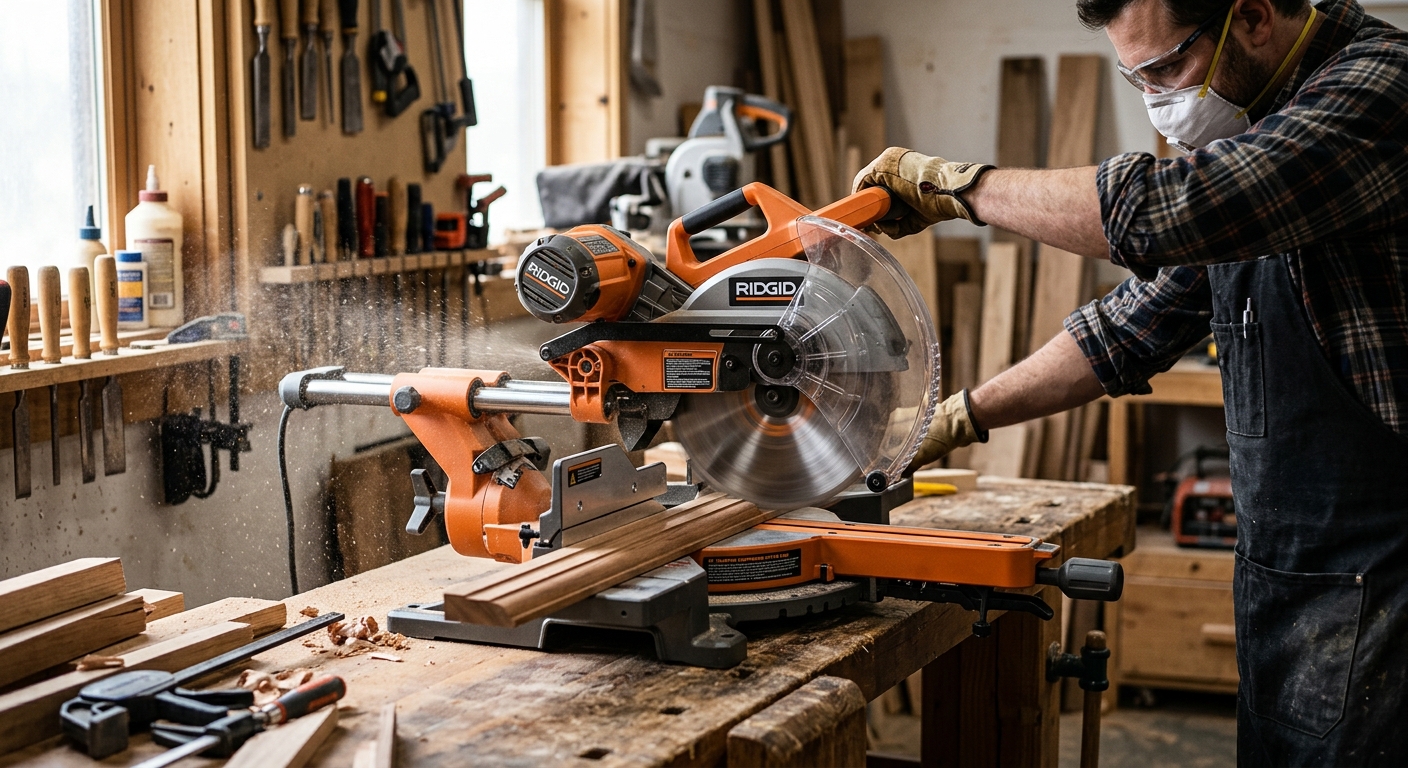
Ridgid’s 10-inch dual-bevel sliding miter saw at $349–$399 (often including a stand at Home Depot) is the value champion of the miter saw category. Its dual-bevel, sliding configuration handles crown molding and wide crosscuts, the laser guide helps with cut line alignment, and Ridgid’s Lifetime Service Agreement covers battery replacement – a benefit that carries over to the tool’s long-term value. For homeowners who build decks, trim rooms, and make furniture without needing 12-inch capacity, this is the buy.
- Pros: Dual-bevel sliding at competitive price, Ridgid LSA, often includes stand, laser guide
- Cons: 10-inch blade limits crosscut to wide stock, laser can drift and require calibration
- Price range: $349–$399
5. RYOBI TSS103 – Best Budget 10-Inch
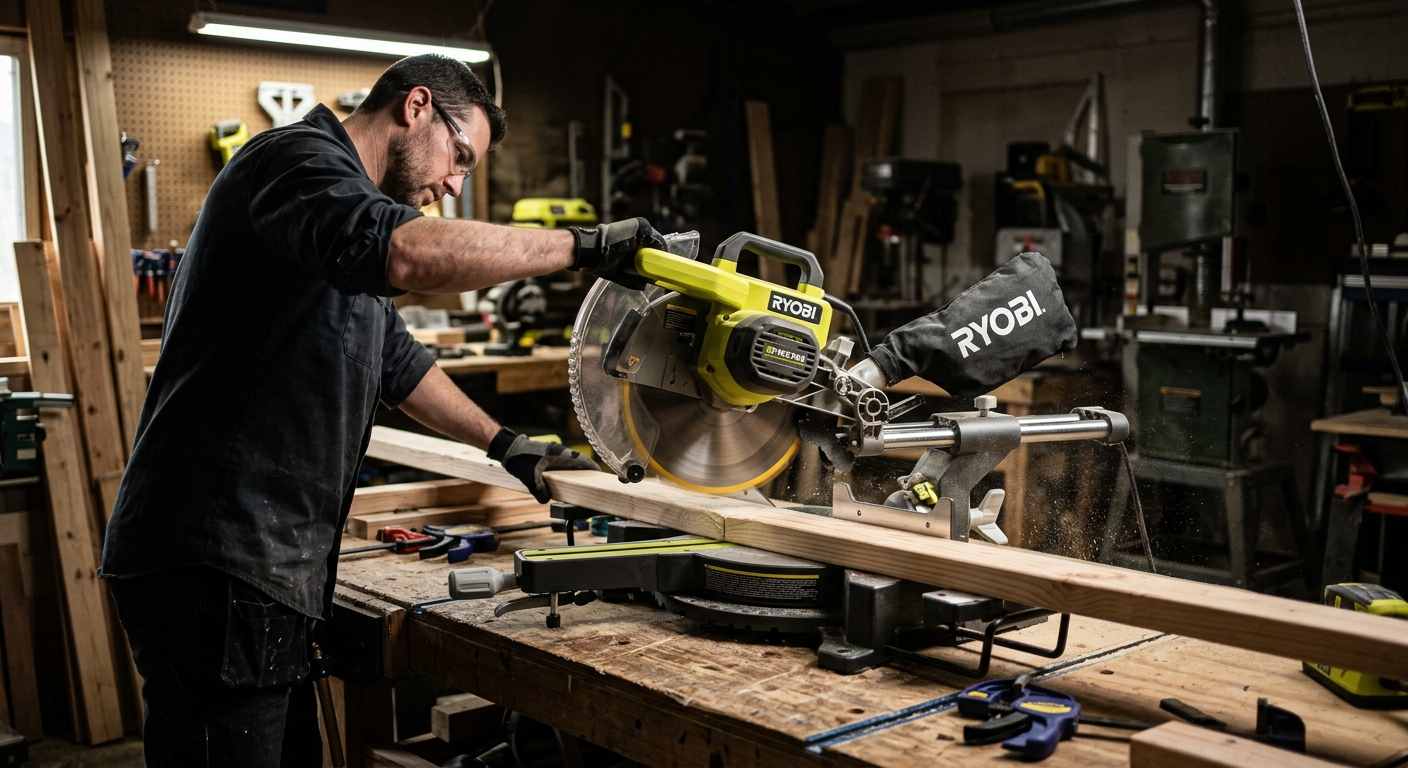
RYOBI’s 10-inch sliding miter saw at $199–$249 is the entry point for DIYers who need sliding capability without the budget for DeWalt or Bosch. It handles crosscuts up to 12 inches wide, cuts common miter angles with adequate accuracy, and includes an LED cutline indicator. Expect it to work well for occasional use – not for production trimming or sustained shop use where accuracy and motor consistency matter across hundreds of cuts per day.
- Pros: Low price, 12-inch crosscut capacity on a slider, LED cutline indicator
- Cons: Accuracy drifts over time, lighter build, motor less consistent under load
- Price range: $199–$249
FAQ
Do I need a sliding miter saw?
If you regularly crosscut boards wider than 6 inches, yes. For trim, molding, and dimensional lumber (2×4 through 2×8 cut to length), a non-sliding saw handles it all. But if you’re cutting wide shelf boards, stair treads, or tabletop pieces, the sliding mechanism is necessary. When in doubt, buy the slider – you won’t regret the extra capability.
What’s the difference between single-bevel and dual-bevel?
A single-bevel saw tilts the blade to one side only (usually left). To make a mirrored bevel cut – like the two ends of a crown molding piece – you have to flip the material over. A dual-bevel saw tilts both left and right, so you adjust the tilt instead of flipping the stock. For crown molding installation, dual-bevel saves significant frustration and setup time.
How do I calibrate a miter saw for accuracy?
Use a quality combination square and a test cut. Set the saw to 90° miter and 0° bevel, make a crosscut, and check the cut face with your square. Adjust the miter detent if needed using the saw’s adjustment screws (typically behind the fence). A properly calibrated saw should hold a 90° cut within 0.1° – roughly 1/64″ of drift over 6 inches.
Bottom Line
For serious DIYers and anyone who does regular trim or framing work, the DeWalt DWS779 is the standard – proven, capable, and widely supported with accessories and blades. Space-conscious shop owners should look at the Bosch GCM12SD for its compact axial-glide system. Value buyers who want dual-bevel sliding at a lower price should seriously consider the Ridgid R4122. Budget buyers who only cut occasionally will find the RYOBI TSS103 more than adequate for their use.
Affiliate Disclosure: DIY Arsenal participates in the Amazon Associates Program and other affiliate programs. When you purchase through links on this site, we may earn a small commission at no additional cost to you. We only recommend products we have personally tested and genuinely believe in.