Best Heat Guns – Shrink Tubing, Paint Stripping, and More
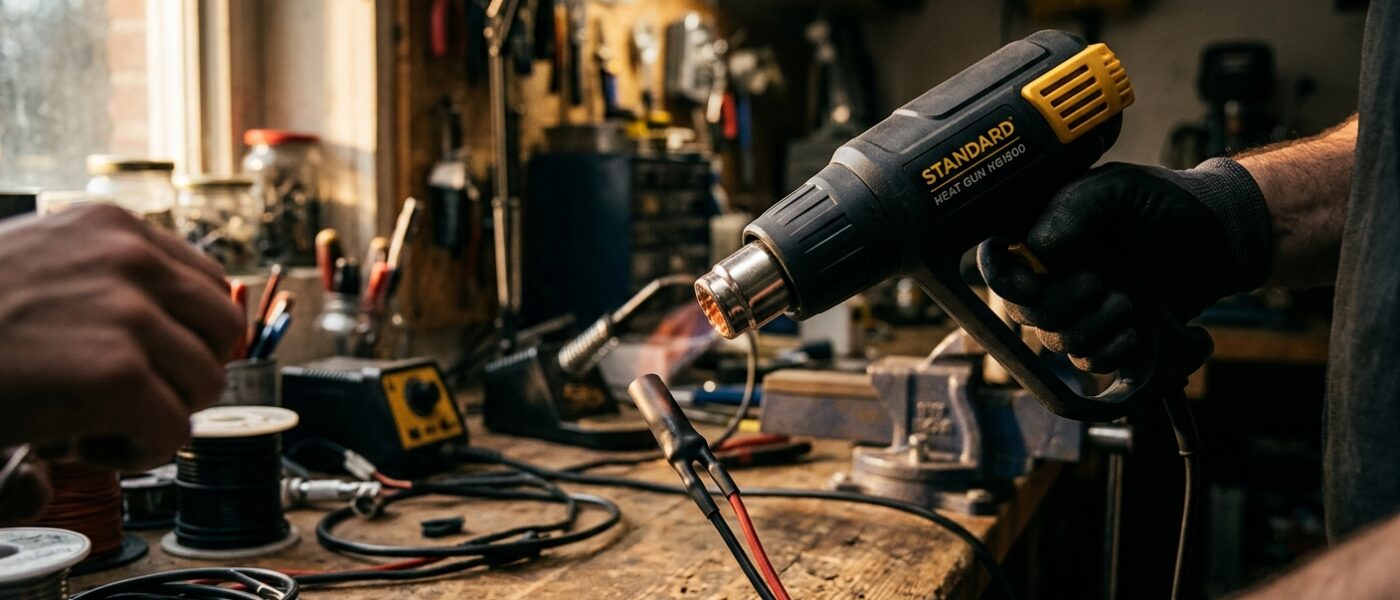
The Wagner HT1000 is the best value corded heat gun for most DIY tasks; the Milwaukee M18 FUEL cordless model is the choice for professionals who need freedom from the cord on electrical and mechanical work.
As an Amazon Associate, we earn from qualifying purchases.
A heat gun is one of those tools that seems narrowly specialized until you own one, and then you find yourself reaching for it constantly. Shrinking heat-shrink tubing, removing paint, bending PVC pipe, softening adhesives, thawing frozen pipes, removing vinyl decals, and drying wood finishes quickly are just a few of the tasks where a heat gun replaces a half-dozen other approaches. This guide covers the types, key specifications, and the models worth owning.
What a Heat Gun Does
A heat gun blows a controlled stream of very hot air (typically 100 to 1300 degrees Fahrenheit depending on settings) from a nozzle. Unlike a hair dryer (which reaches only 100 to 140 degrees Fahrenheit), a heat gun produces sufficient heat to soften adhesives, activate heat-shrink tubing, strip paint, and work with thermoplastic materials. The temperature and airflow are controlled by settings on the body, and interchangeable nozzles focus, spread, or deflect the airflow for specific applications.
Types of Heat Guns
Standard Heat Guns
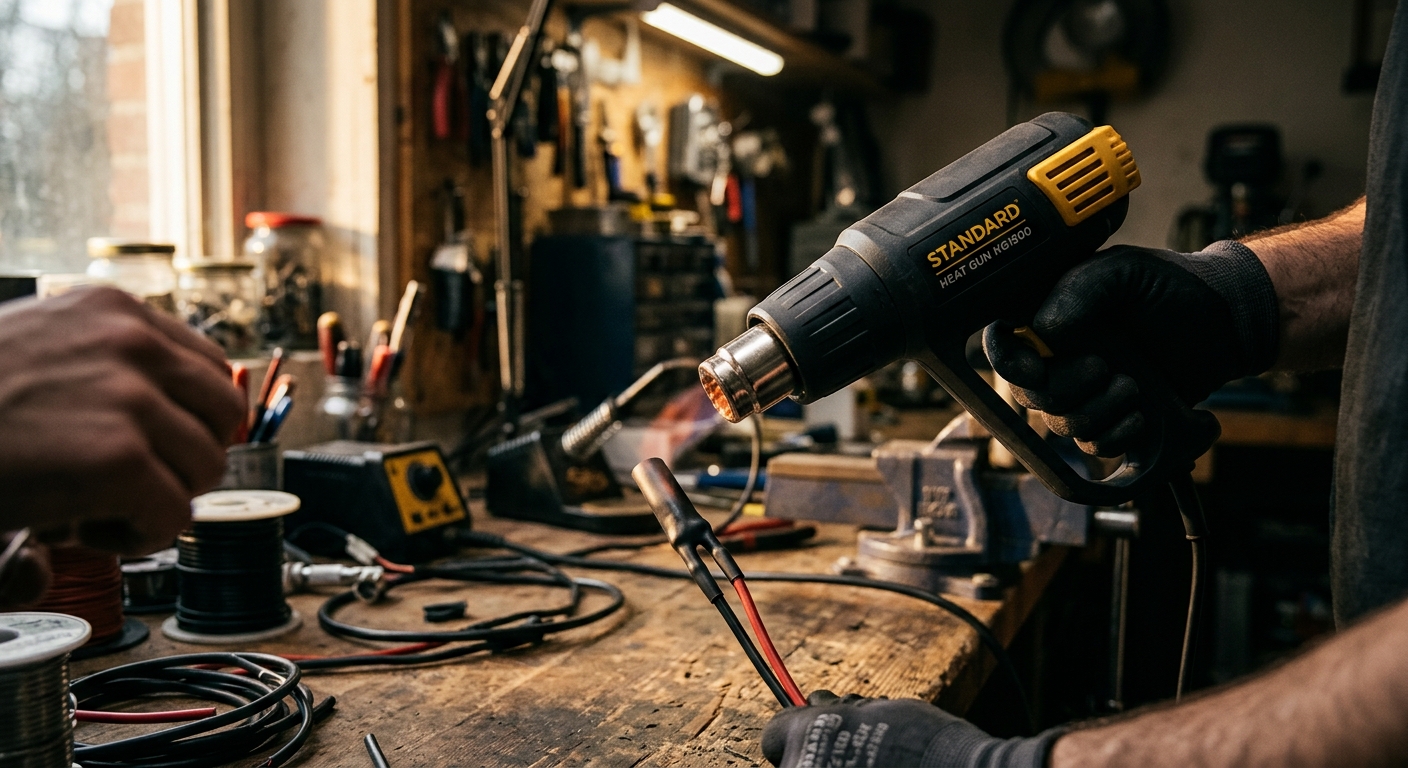
Corded AC tools with a pistol grip. The standard professional tool. Available in two to five temperature settings and single or variable airflow. Most workshop applications are served by a standard heat gun in the 1500 to 2000 watt range.
Variable-Temperature Heat Guns
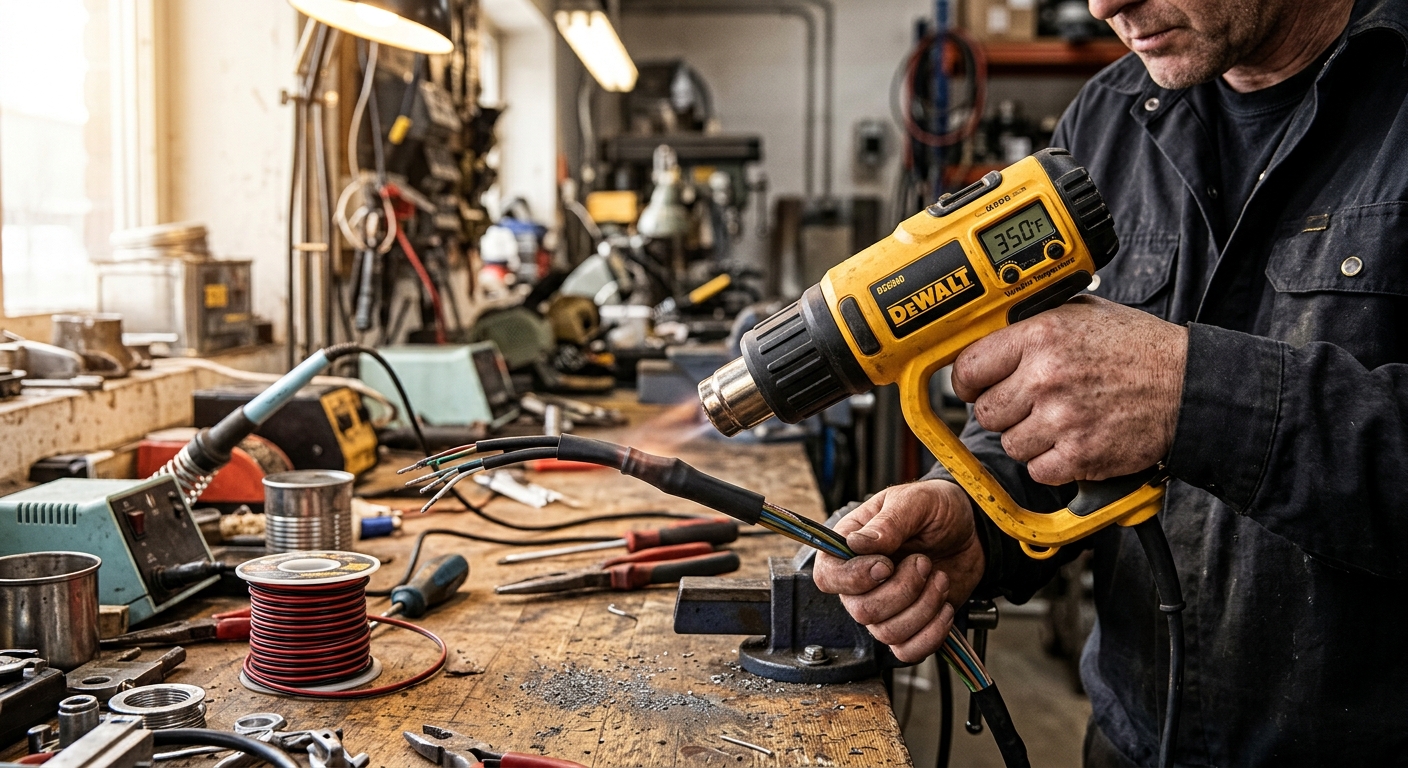
Continuously variable temperature control (typically a dial or digital control) allows precise temperature setting. The correct tool for delicate applications – shrinking heat-shrink tubing on sensitive electronics, removing labels without damaging the substrate, or thawing PVC pipe where overheating can distort the fitting. The extra precision is worth the premium.
Cordless Heat Guns
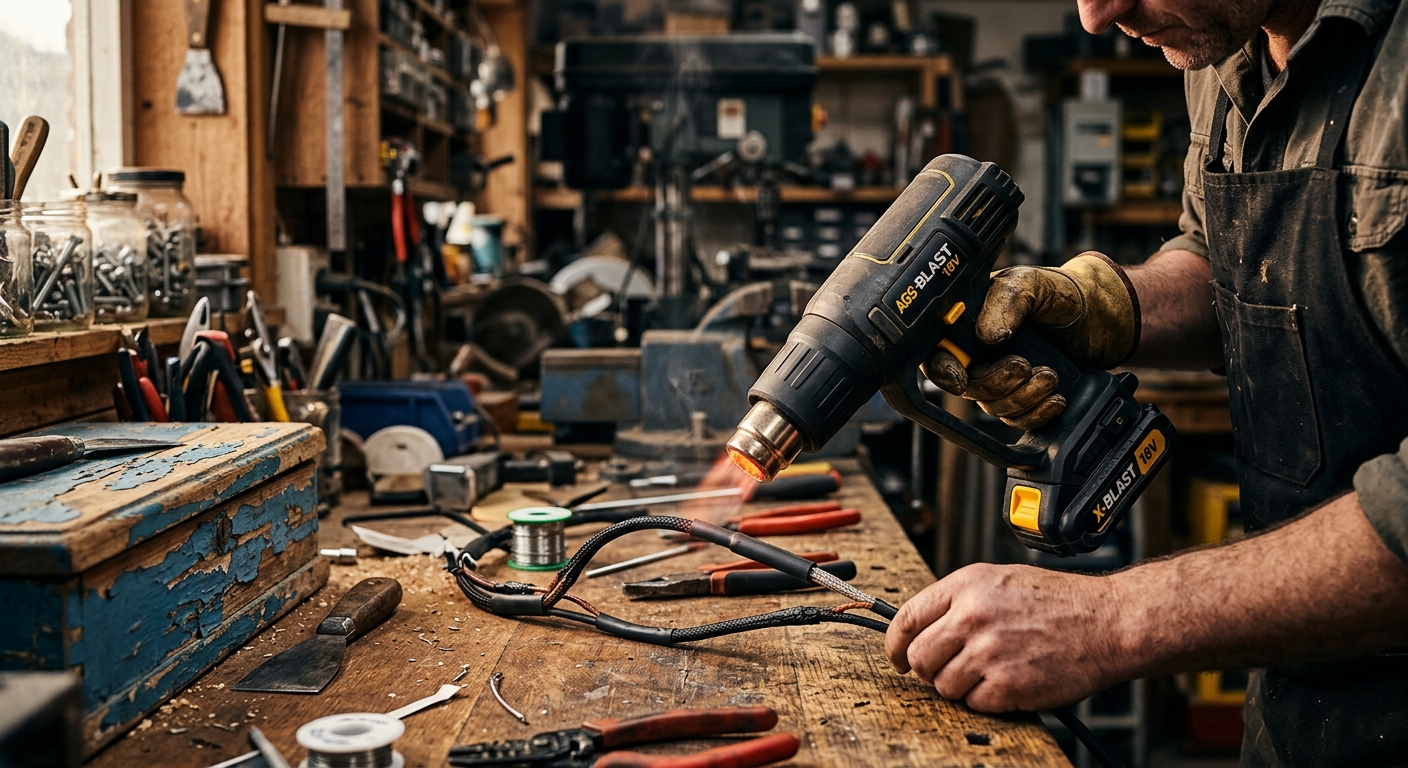
Battery-powered heat guns are relatively new and have improved dramatically. Milwaukee and DeWalt both offer 18-20V cordless heat guns that reach professional temperatures for short-duration tasks. The tradeoff is limited runtime (5 to 15 minutes of high-heat use on a 5Ah battery) – adequate for heat-shrink tubing and quick vinyl removal, but not for extended paint stripping sessions.
Key Features to Look For
Temperature Range
For heat-shrink tubing: 200 to 400 degrees Fahrenheit is sufficient. For vinyl wrap removal and adhesive softening: 400 to 600 degrees. For paint stripping: 600 to 1100 degrees. A gun that reaches 750 to 1100 degrees handles all of these. Maximum temperature ratings above 1200 degrees are rarely needed for DIY applications.
Airflow Rate (CFM)
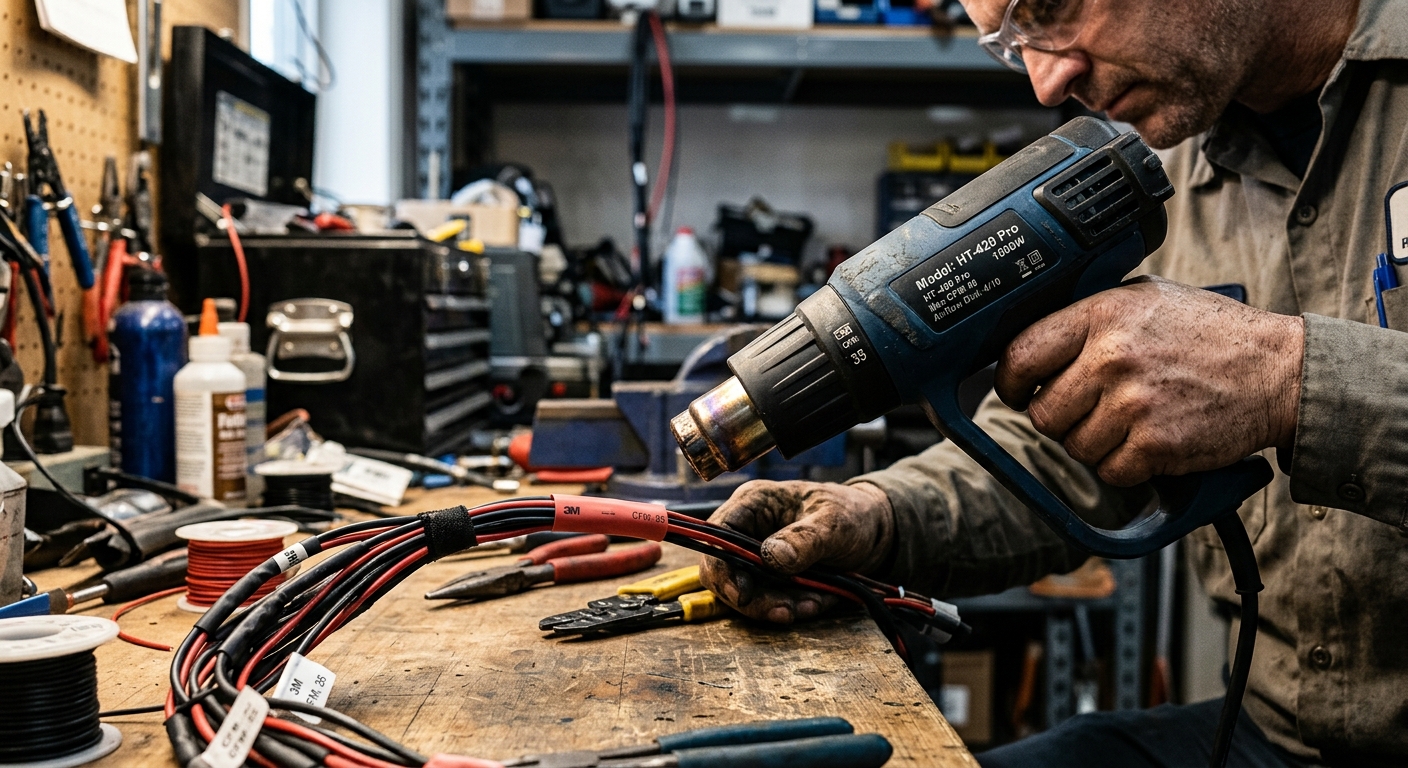
Higher airflow heats larger areas faster but can blow delicate components around. Lower airflow provides more concentrated heating. Variable airflow control is the most useful feature for a versatile shop heat gun.
Included Nozzle Attachments
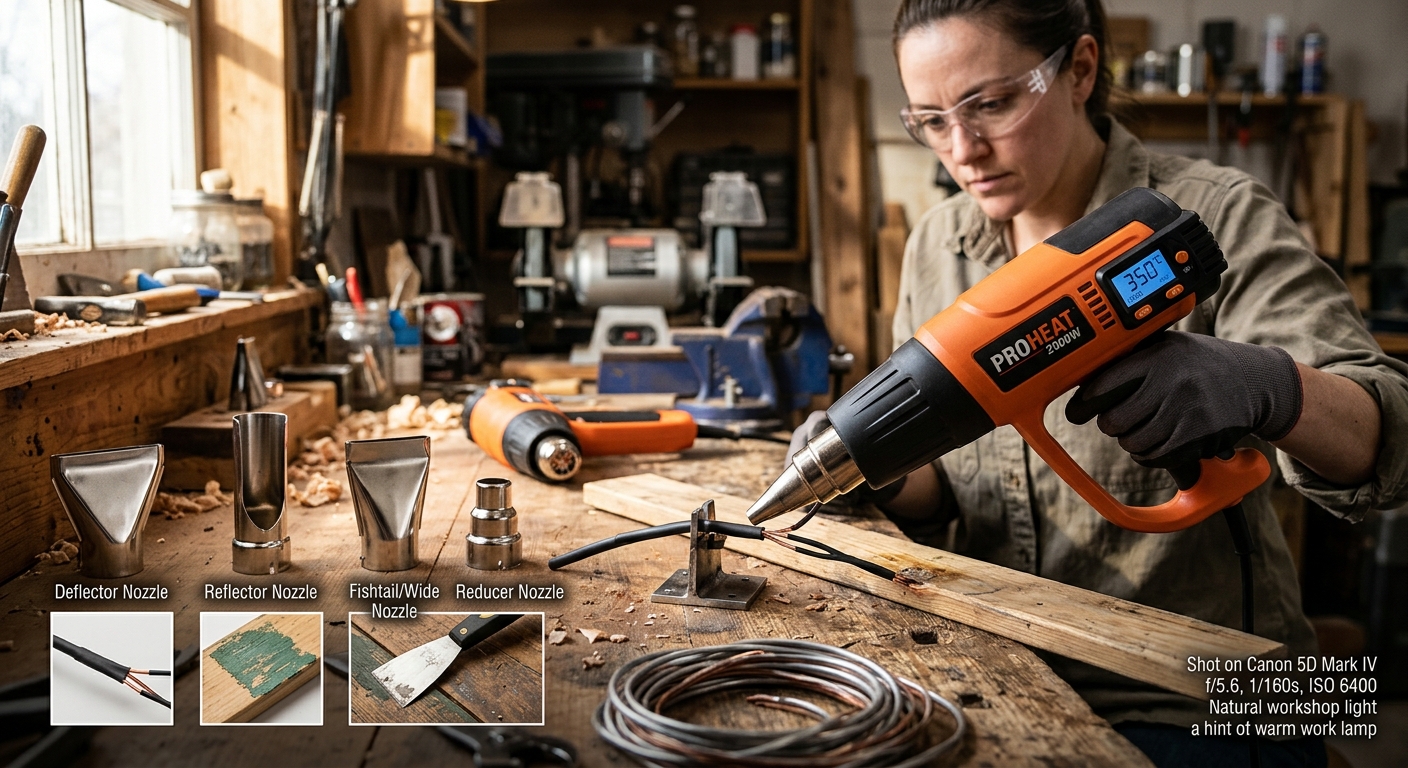
Common useful attachments:
- Concentrator nozzle: focuses heat to a narrow stream for precise work
- Spreader nozzle: distributes heat across a wider area for paint stripping and vinyl
- Deflector nozzle: redirects airflow 45 or 90 degrees for working in tight spaces
- Glass protector: shields adjacent glass while heating nearby frame or sealant
Thermal Overload Protection
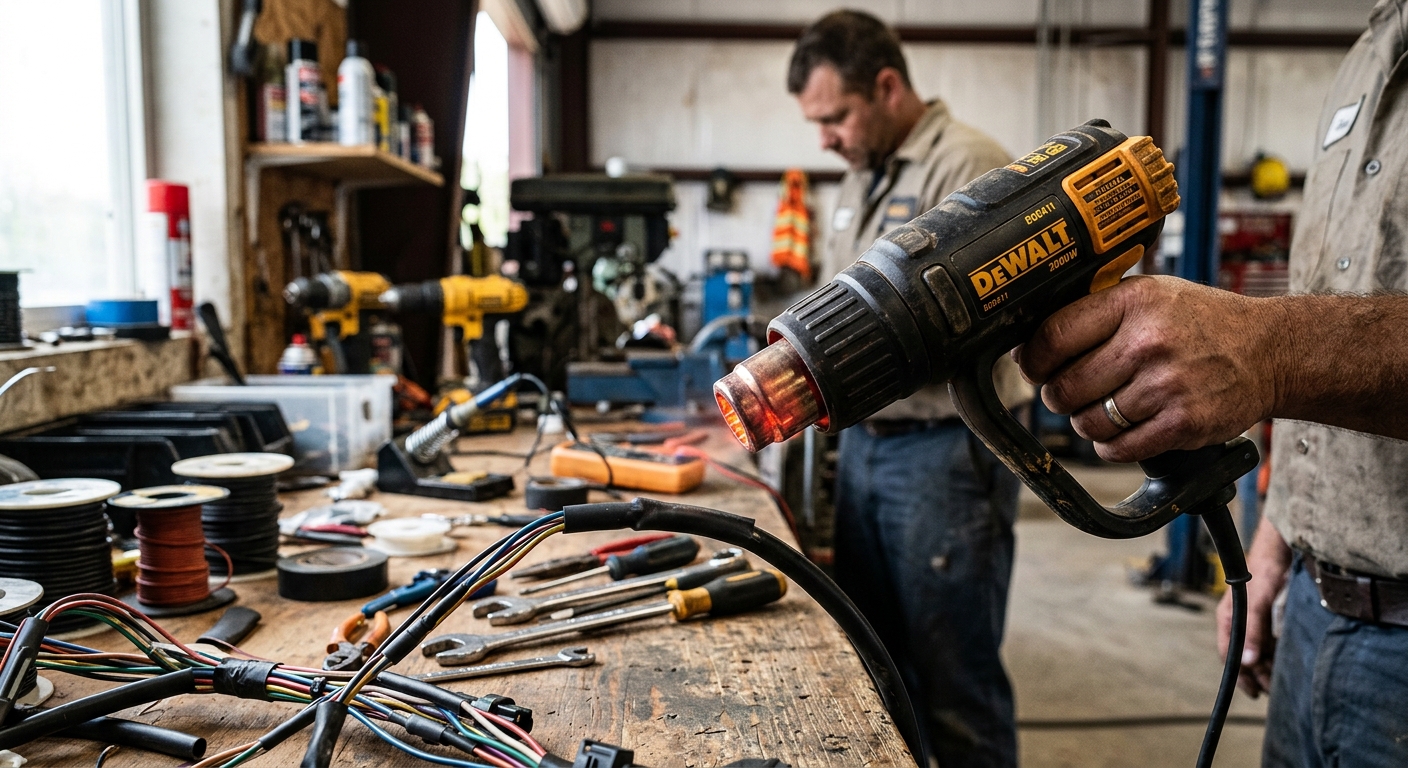
Heat guns run hot – both the air they produce and the body itself. Thermal overload protection automatically shuts the heater down if internal temperature exceeds safe limits, preventing motor and element damage during extended sessions.
Hands-Free Stand
Many heat guns include a built-in stand or hook that allows the gun to rest nozzle-up on a bench while the heater cools, or even during use for hands-free heating of heat-shrink tubing and similar tasks. A useful feature that prevents the nozzle from contacting work surfaces during breaks.
Our Top Picks
1. Milwaukee 2688-20 M18 FUEL Heat Gun (Cordless)
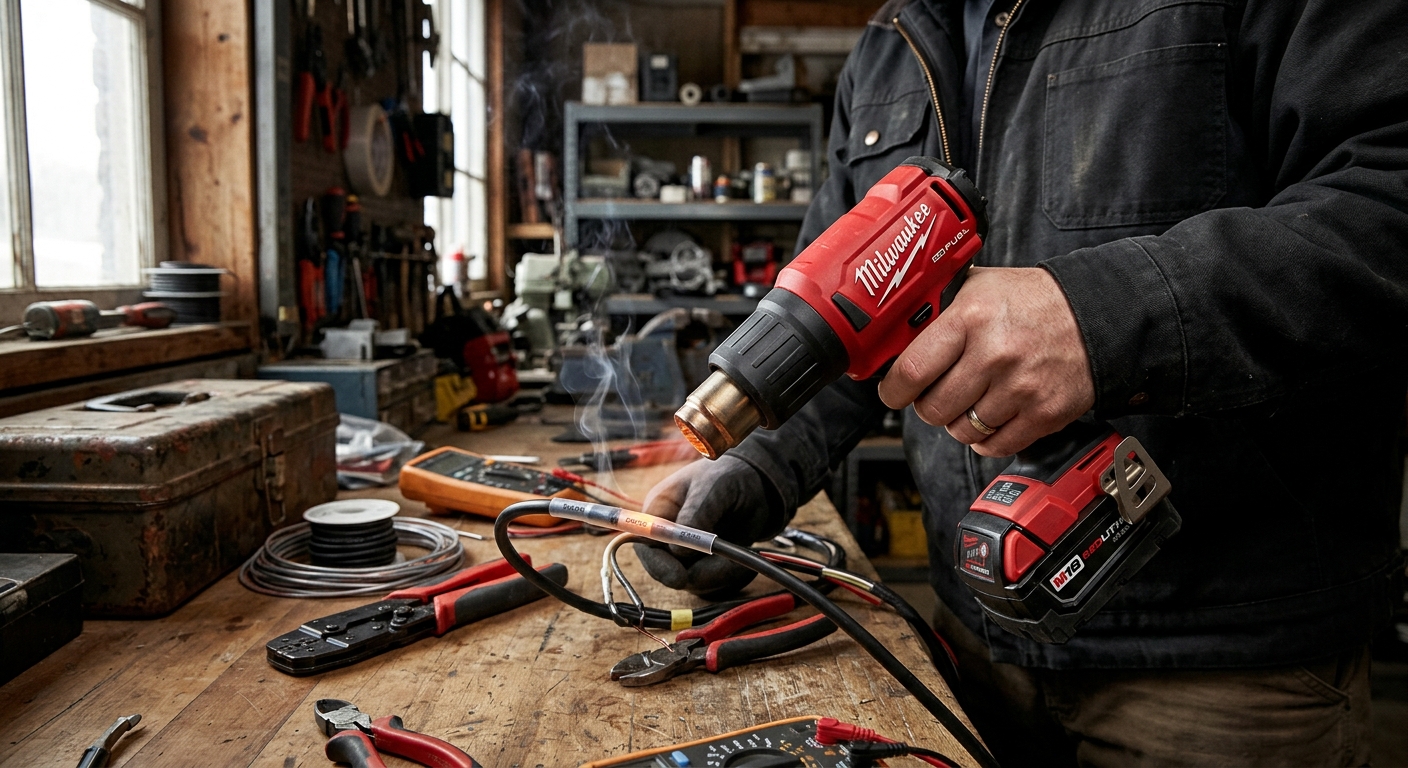
The leading cordless heat gun for professional and serious DIY use. The Milwaukee FUEL reaches up to 1000 degrees Fahrenheit and 23 CFM airflow on a standard M18 battery – more than adequate for most electrical, plumbing, and automotive applications. The cordless freedom is the genuine advantage: heat-shrink work in junction boxes, bending conduit, and label removal without hunting for an outlet. Runtime is adequate for most tasks.
2. Wagner Spraytech 0503059 HT1000 (1500W Variable)
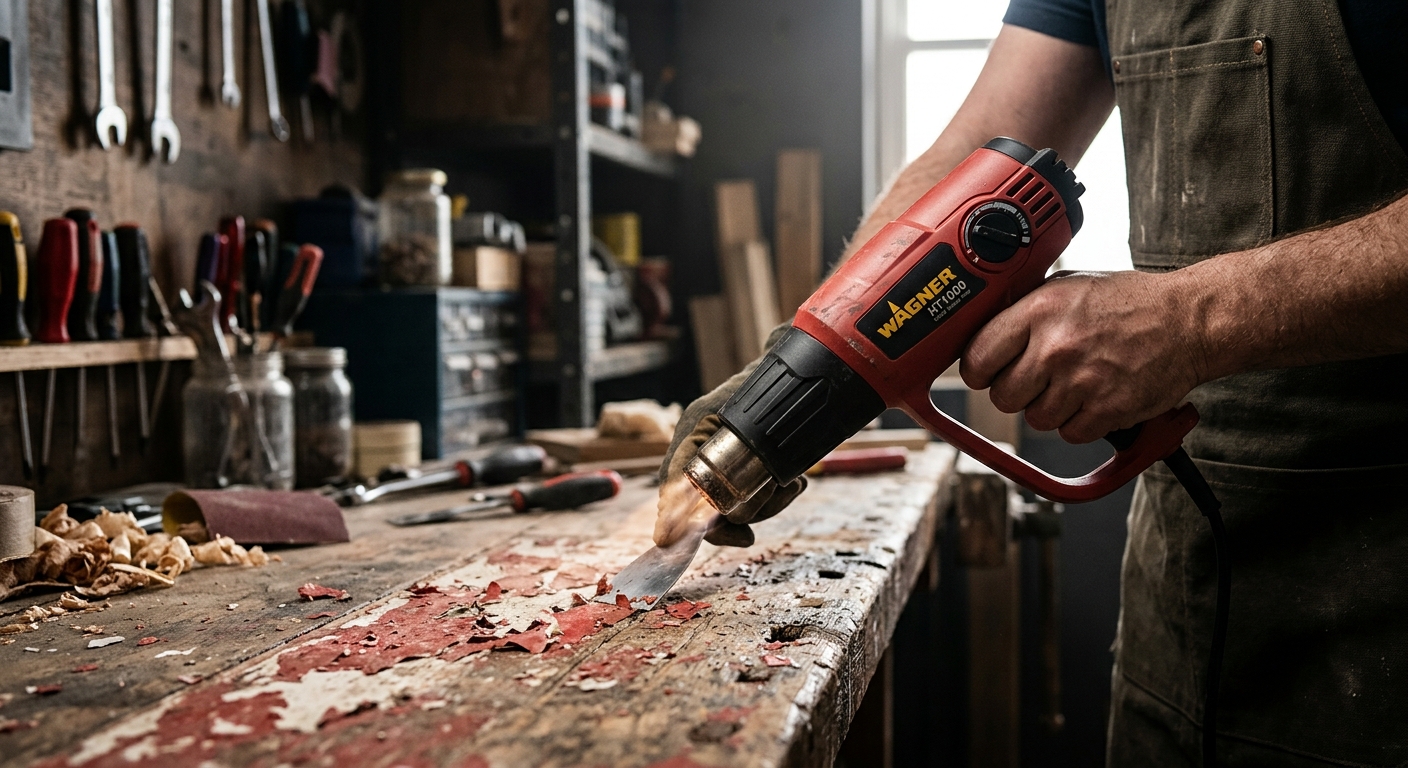
The best corded heat gun for most DIYers. The Wagner HT1000 provides two heat settings (750 and 1000 degrees Fahrenheit) and variable airflow in a comfortable pistol grip. The built-in stand is genuinely useful. Includes five nozzles covering concentrator, spreader, deflector, and glass protection. Excellent value and widely available.
3. DeWalt D26960K Professional Heat Gun
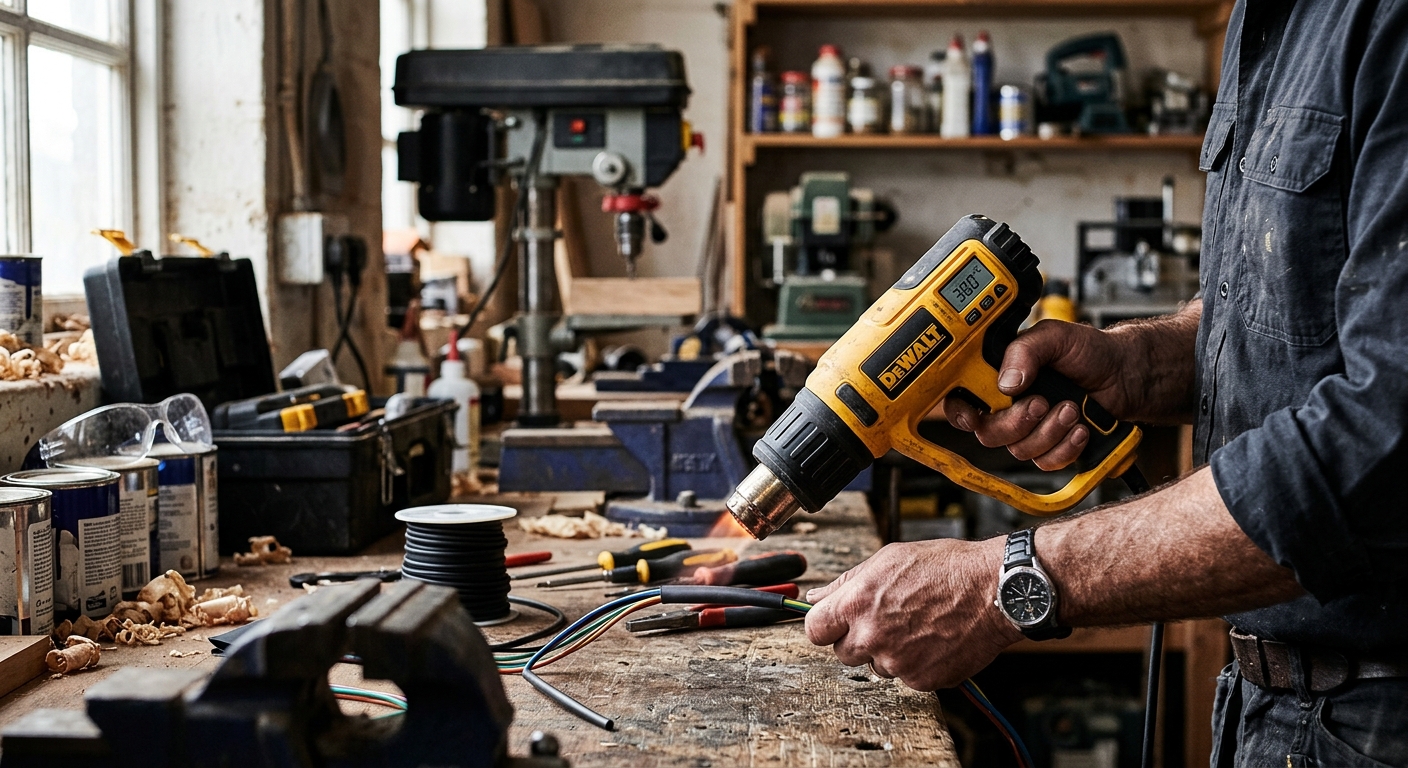
DeWalt’s corded heat gun reaches 1100 degrees Fahrenheit with LCD temperature display, digital variable temperature control, and a built-in stand. The LCD display confirms actual nozzle temperature, which is significant when you need to stay within a specific range for a material. The professional choice for repeated, precision applications.
4. Porter-Cable PC1500HG (1500W Dual Temperature)
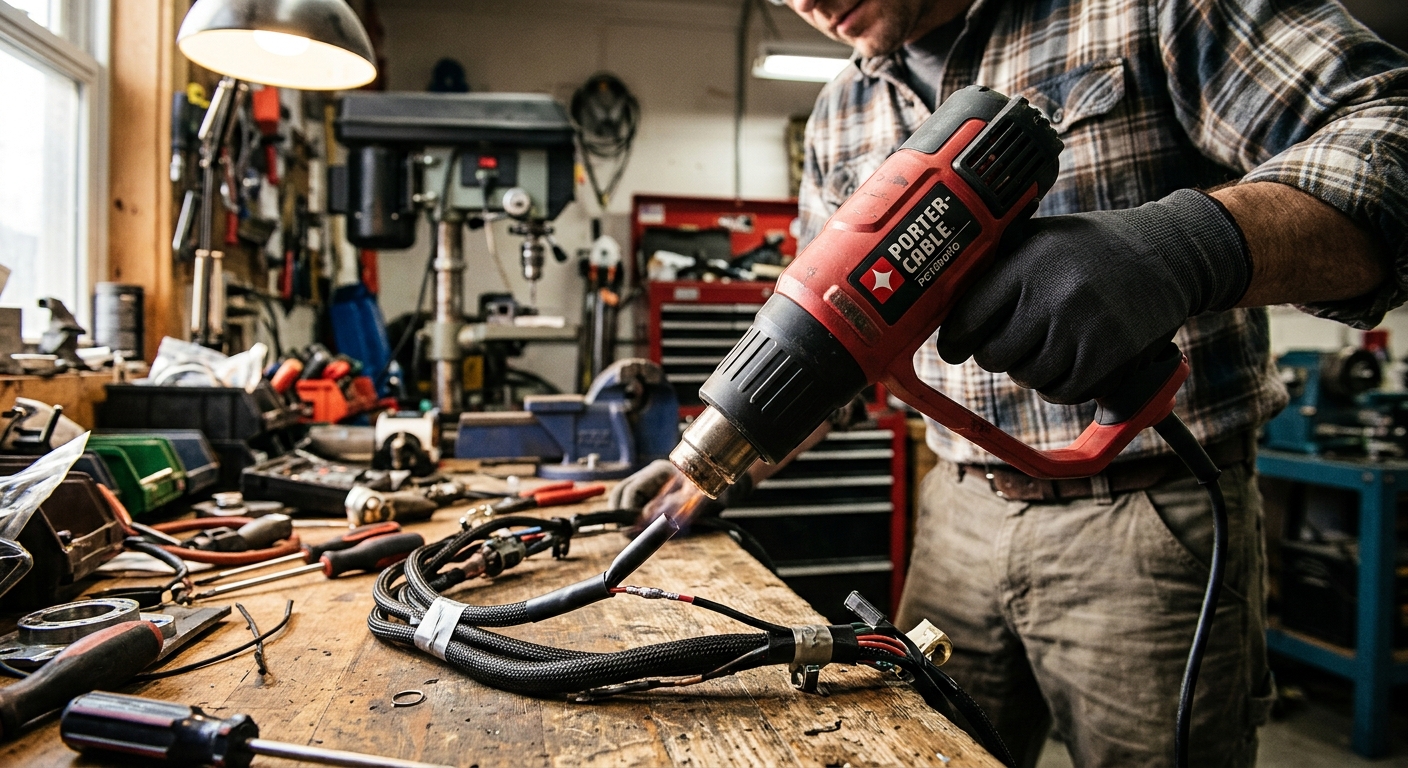
An excellent budget corded heat gun with dual temperature settings (750 and 1000 degrees Fahrenheit) and a four-nozzle kit. Thermal overload protection, comfortable grip, and reliable performance for most DIY tasks. The best value for occasional users who do not need variable temperature control.
5. Seekone SK5501 (2000W Variable)
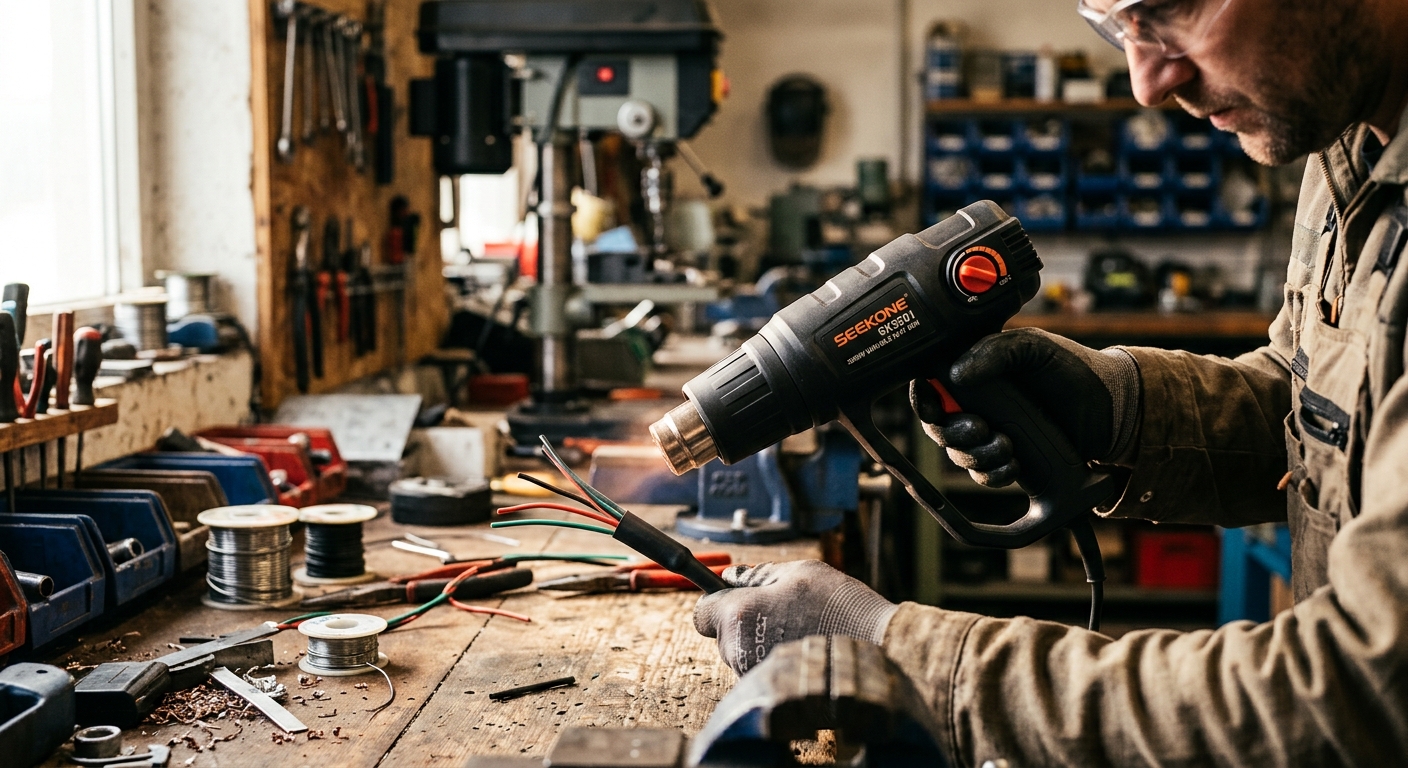
A high-power variable temperature option from a smaller brand that delivers genuine performance at a remarkably low price. The LCD display, continuously variable temperature from 120 to 1200 degrees Fahrenheit, and two speed fan settings cover professional range at a budget price. Not as refined as DeWalt or Milwaukee, but the performance gap is smaller than the price gap.
Common Applications and Temperature Guides
- Heat-shrink tubing: 200 to 400 degrees Fahrenheit
- Vinyl decal removal: 400 to 500 degrees Fahrenheit
- PVC pipe bending: 350 to 400 degrees Fahrenheit
- Adhesive softening: 400 to 600 degrees Fahrenheit
- Paint stripping (lead-free): 700 to 900 degrees Fahrenheit
- Paint stripping (keep below for lead paint): Never exceed 700 degrees Fahrenheit – lead paint volatilizes above this temperature
What to Avoid
- Using a heat gun near lead paint above 700 degrees: Volatilized lead paint is extremely hazardous. Test before using a heat gun on old painted surfaces, or use a chemical stripper instead.
- Pointing nozzle at skin or eyes: Even lower heat settings can cause burns in seconds.
- Setting down a hot heat gun without the stand engaged: The nozzle surface reaches temperatures that ignite wood shavings, plastic, and other common shop materials instantly.
FAQ
Can a heat gun replace a torch for shrinking plumbing fittings?
For heat-shrink tubing on wires, absolutely. For soldering copper pipe, no – a heat gun does not reach the temperatures needed to flow solder through a copper joint reliably. Use a propane or MAPP torch for plumbing.
Is a heat gun safe to use indoors?
For most applications, yes with adequate ventilation. Paint stripping produces fumes from the finish being removed; work with ventilation or outdoors. Vinyl and adhesive removal also produces fumes – open windows and wear a respirator if the operation is extended.
Can I strip paint from wood with a heat gun without scorching the wood?
Yes, with care. Keep the nozzle 3 to 4 inches from the surface, move continuously, and do not linger on any single spot. Scorched wood must be sanded before refinishing. The goal is to soften the paint enough to lift with a scraper, not to heat the wood itself.
Affiliate Disclosure: DIY Arsenal participates in the Amazon Associates Program and other affiliate programs. When you purchase through links on this site, we may earn a small commission at no additional cost to you. We only recommend products we have personally tested and genuinely believe in.