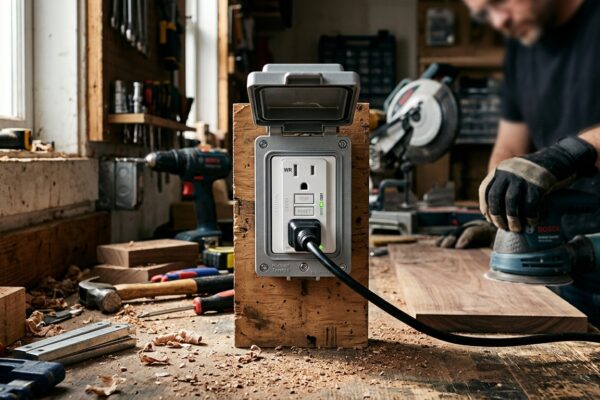
Best Electrical Tape – Vinyl, Self-Fusing, and High-Temperature
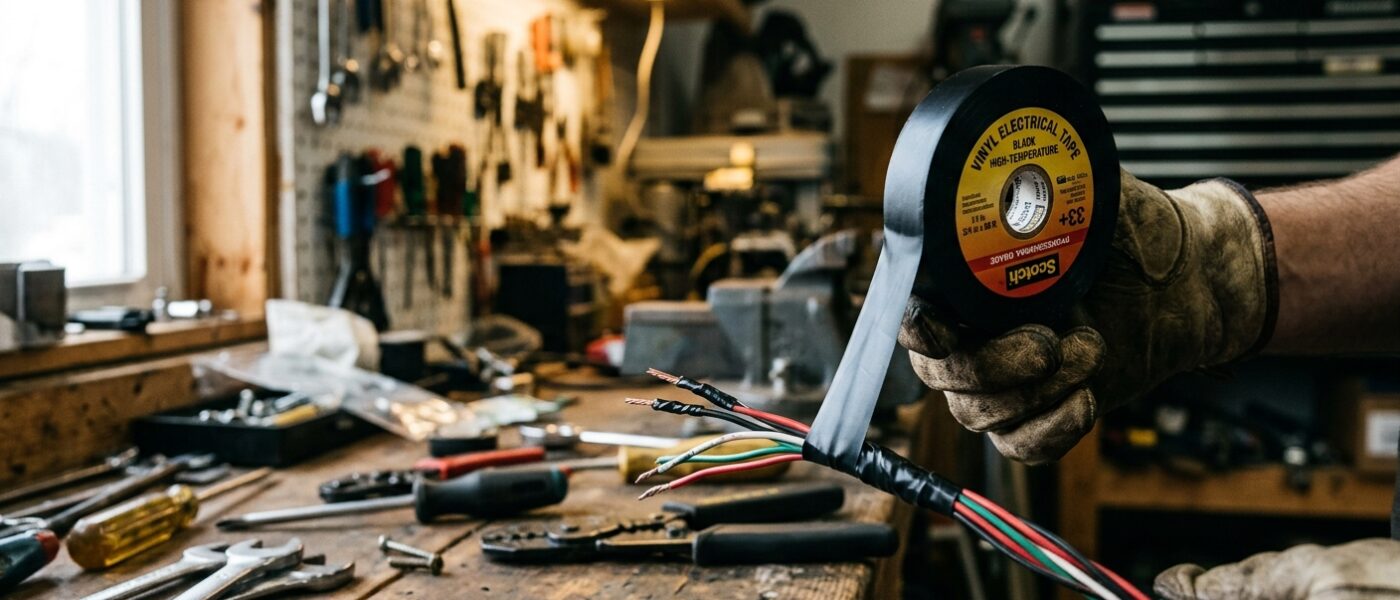
3M Super 33+ is the definitive vinyl electrical tape and belongs in every electrical tool kit; add a roll of Scotch 23 self-fusing tape for waterproofing coax connections and outdoor splices.
As an Amazon Associate, we earn from qualifying purchases.
Electrical tape is the oldest and most universally available insulation material in the trades – and one of the most commonly misused. Wrapping a wire splice in electrical tape is not a substitute for properly housed connections, but electrical tape has dozens of legitimate uses in electrical, plumbing, and mechanical work. Understanding the types and their actual ratings makes the difference between a safe application and a fire hazard.
Types of Electrical Tape
Vinyl Electrical Tape (PVC)
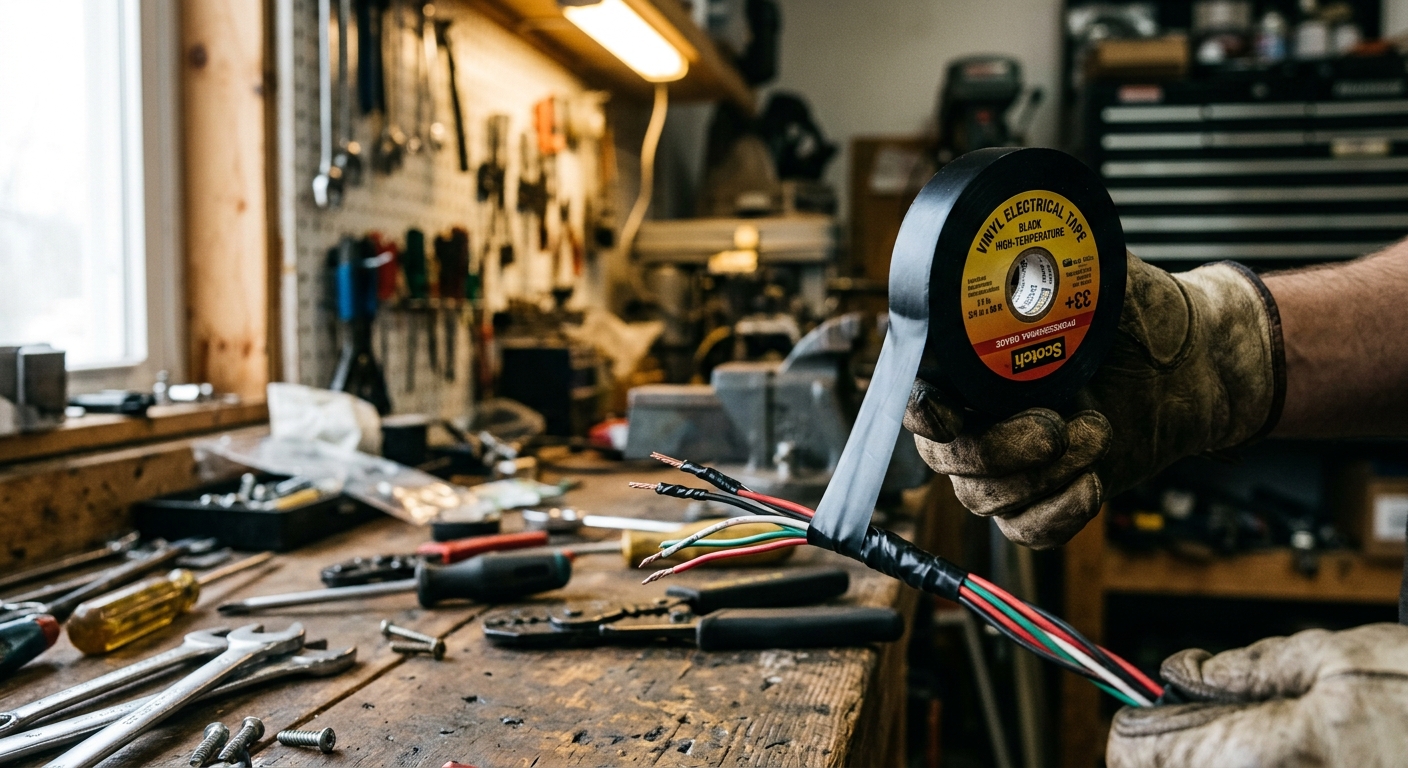
The standard vinyl tape found in every hardware store. A polyvinyl chloride (PVC) backing with a pressure-sensitive rubber adhesive. Color-coded by convention (black for general insulation, red and blue for phase identification, green for ground). Rated to 600V for standard thickness versions (7 mil) and up to 1000V for thick versions. Temperature range: minus 18 to 105 degrees Celsius. UL Listed vinyl tape from reputable brands meets these ratings; no-name tape often does not.
Self-Fusing (Silicone) Tape
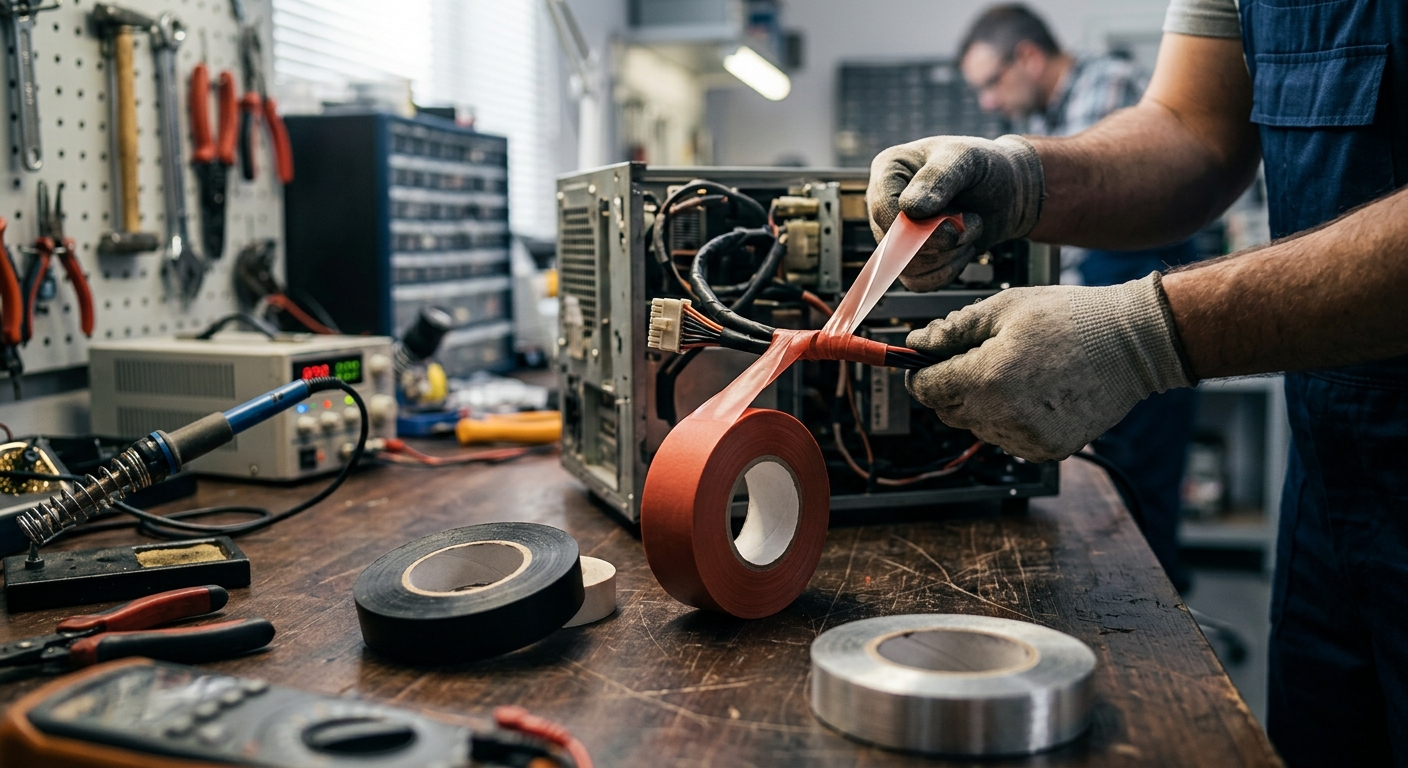
Silicone rubber tape with no adhesive – it bonds to itself under pressure, creating a watertight, airtight seal with no mess and no adhesive residue. Used for waterproofing wire splices, sealing coaxial cable connections, emergency pipe repair (temporary), and creating comfortable non-slip grip on handles. Rated to 600V and temperature range well beyond vinyl (up to 250 degrees Celsius in some formulations). Fused joints cannot be unwrapped cleanly – the tape bonds permanently to itself.
Rubber Splicing Tape
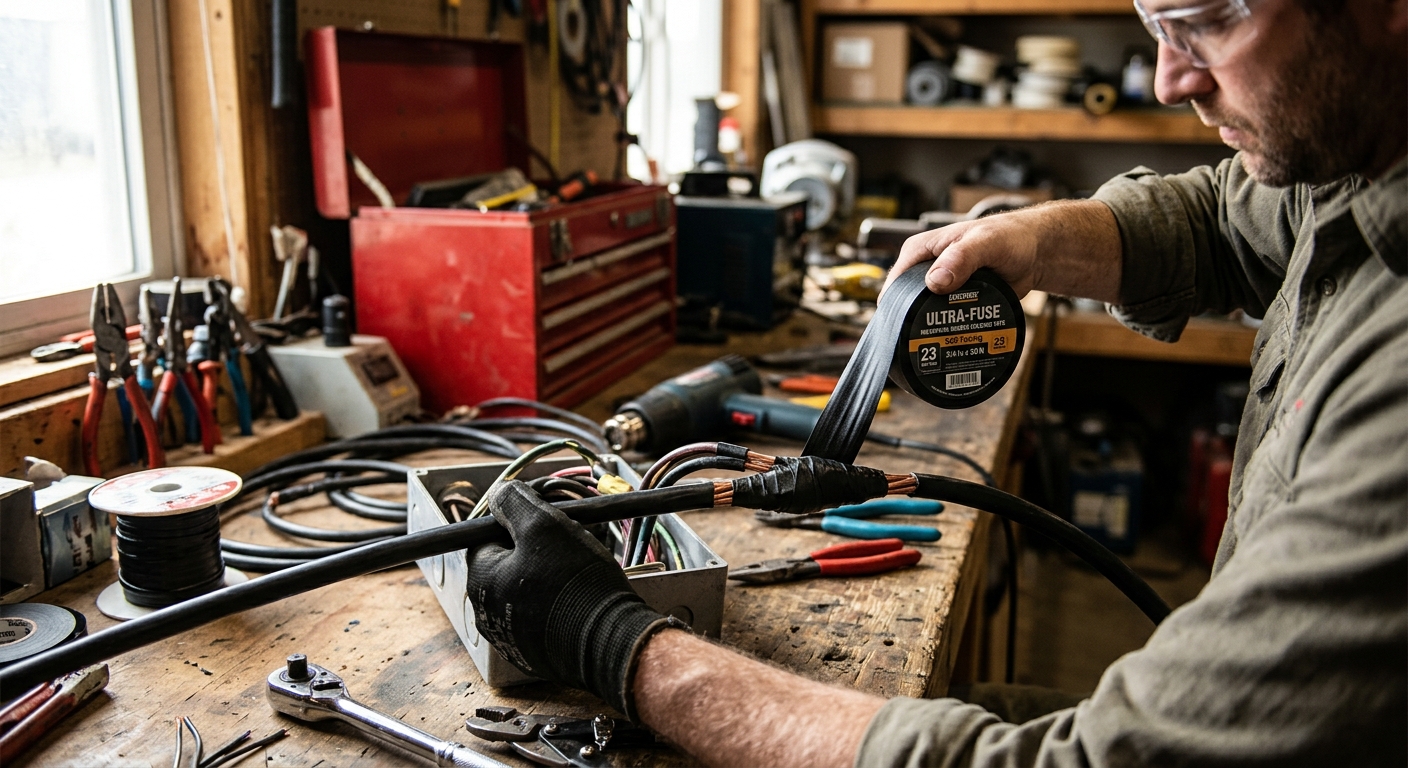
An unvulcanized rubber tape (not the same as self-fusing silicone) used as a primary insulation layer when making cable splices rated above what vinyl tape can handle. Applied under vinyl tape as the first layer of a proper splice insulation build-up. Not common in residential work but important for medium-voltage cable splicing.
High-Temperature Electrical Tape
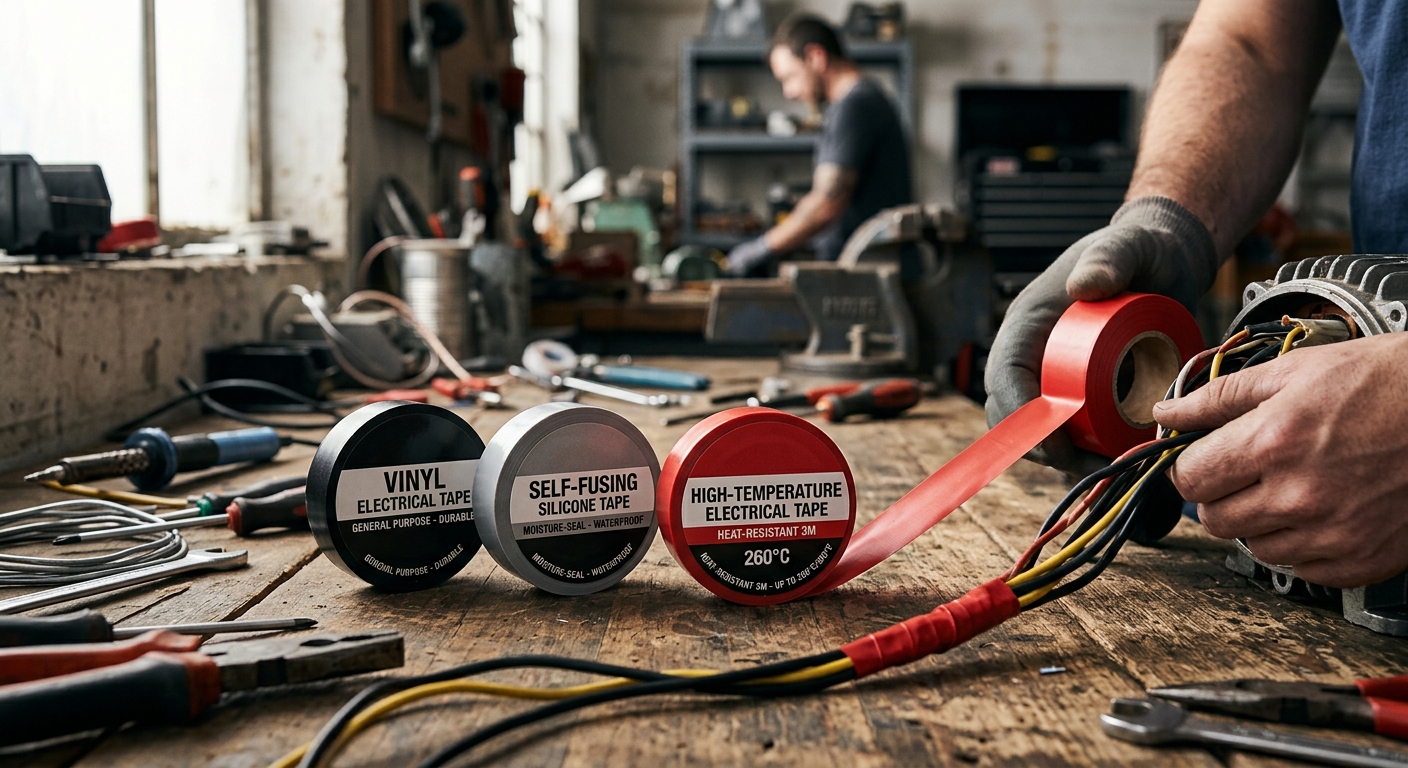
Designed for use in high-temperature environments – inside fluorescent light fixtures, near motors, on automotive wiring near exhaust systems. Typically made from polyester, fiberglass, or Kapton (polyimide). Rated for temperatures from 150 to 260 degrees Celsius where vinyl tape would soften and fail.
Key Features to Look For
Mil Thickness
Standard vinyl tape is 7 mil (0.007 inches) thick. Premium tape is 8 to 8.5 mil. Thicker tape provides better abrasion resistance and builds up a stronger insulation layer with fewer wraps. Cheap tape is frequently only 5 or 6 mil despite claiming standard thickness on the label.
UL 510 Listing
UL 510 is the standard for insulating tapes. A UL 510 Listed vinyl tape has been tested for flame retardancy, dielectric strength, and temperature range. Only buy UL Listed electrical tape for any electrical application.
Cold Weather Performance
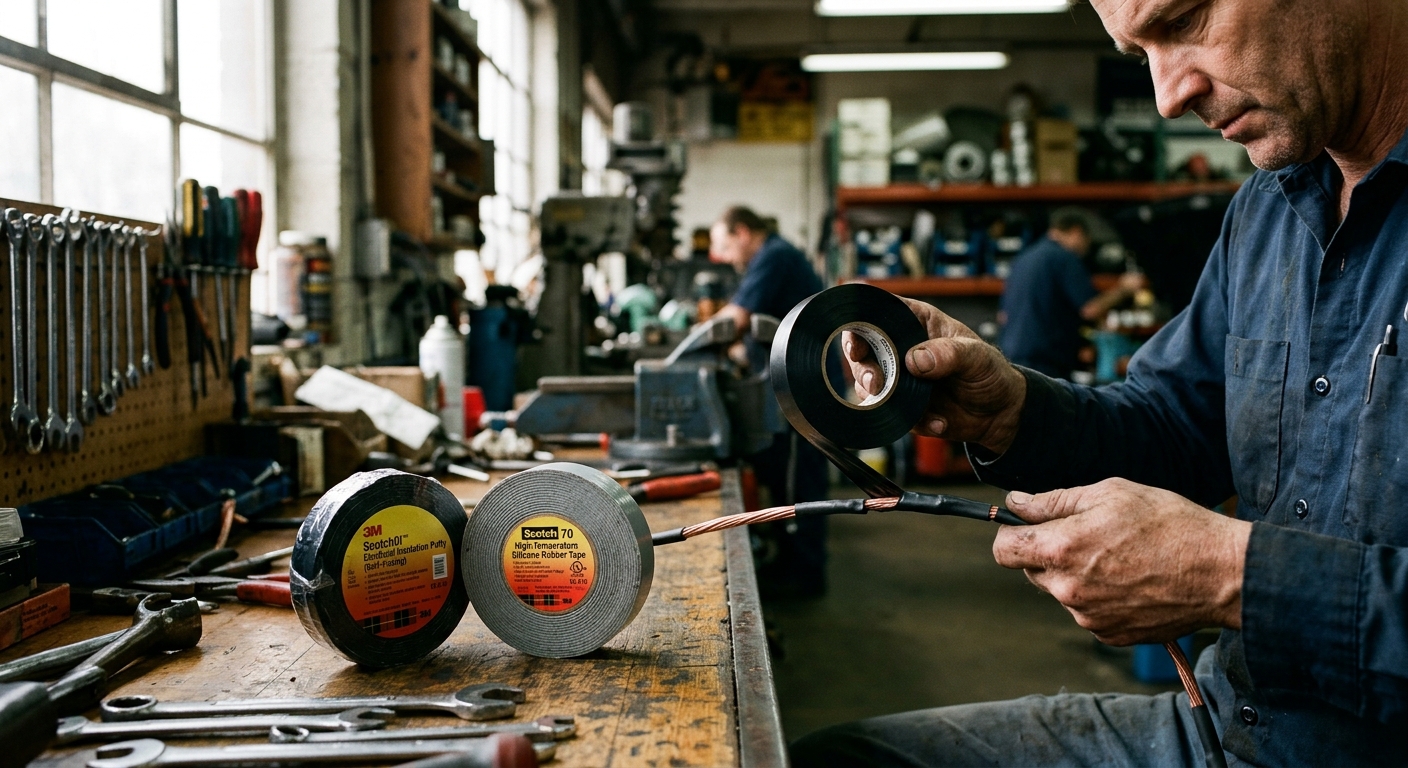
Standard vinyl tape stiffens and loses adhesion below 0 degrees Celsius. Cold-weather formulations (rated to minus 40 degrees Celsius) are needed for outdoor electrical work in cold climates. Regular vinyl tape applied in cold weather peels off as the weather changes.
Adhesive Quality
Good electrical tape adheres firmly, stretches without tearing, and removes cleanly without adhesive residue when peeled (a useful property when wrapping temporarily for testing). Poor adhesive tape leaves residue and unravels from vibrating connections.
Our Top Picks
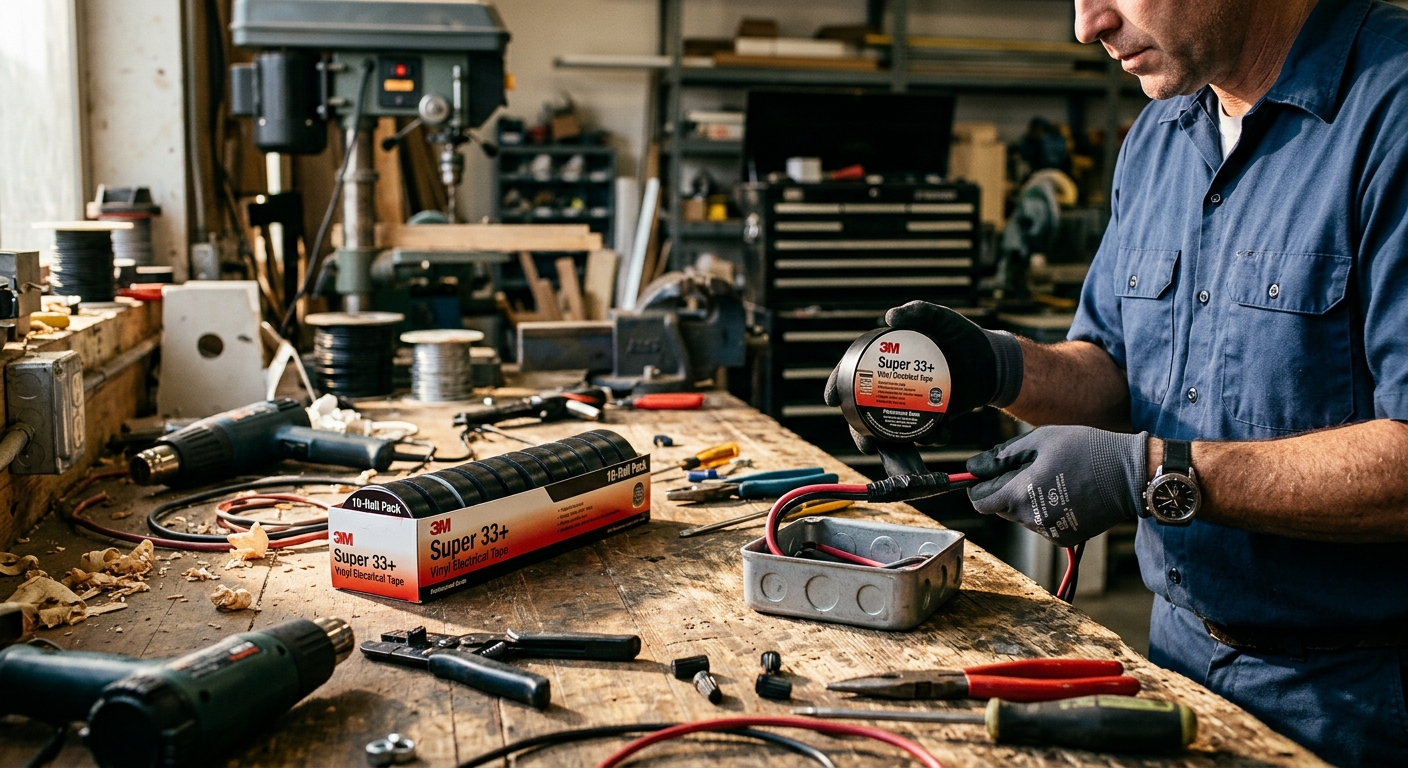
1. 3M Super 33+ Vinyl Electrical Tape (10-Roll Pack)
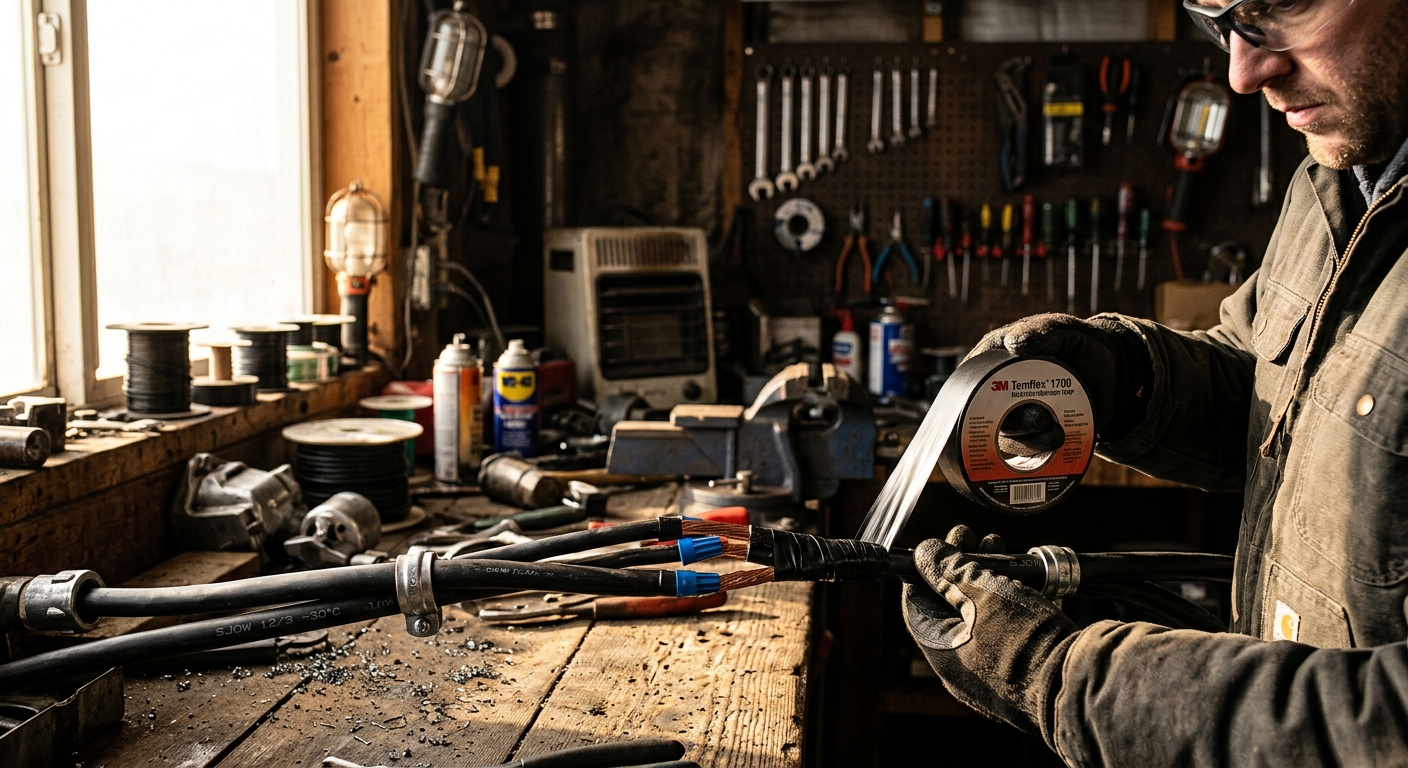
The gold standard in vinyl electrical tape for 60 years. The Super 33+ is 7 mil, UL 510 Listed, rated minus 18 to 105 degrees Celsius, and rated 600V. The Temflex rubber adhesive maintains strong adhesion across temperature ranges that standard tape cannot match. Used by electricians worldwide as the reference product in the category. Buy the 10-roll pack – you will use it.
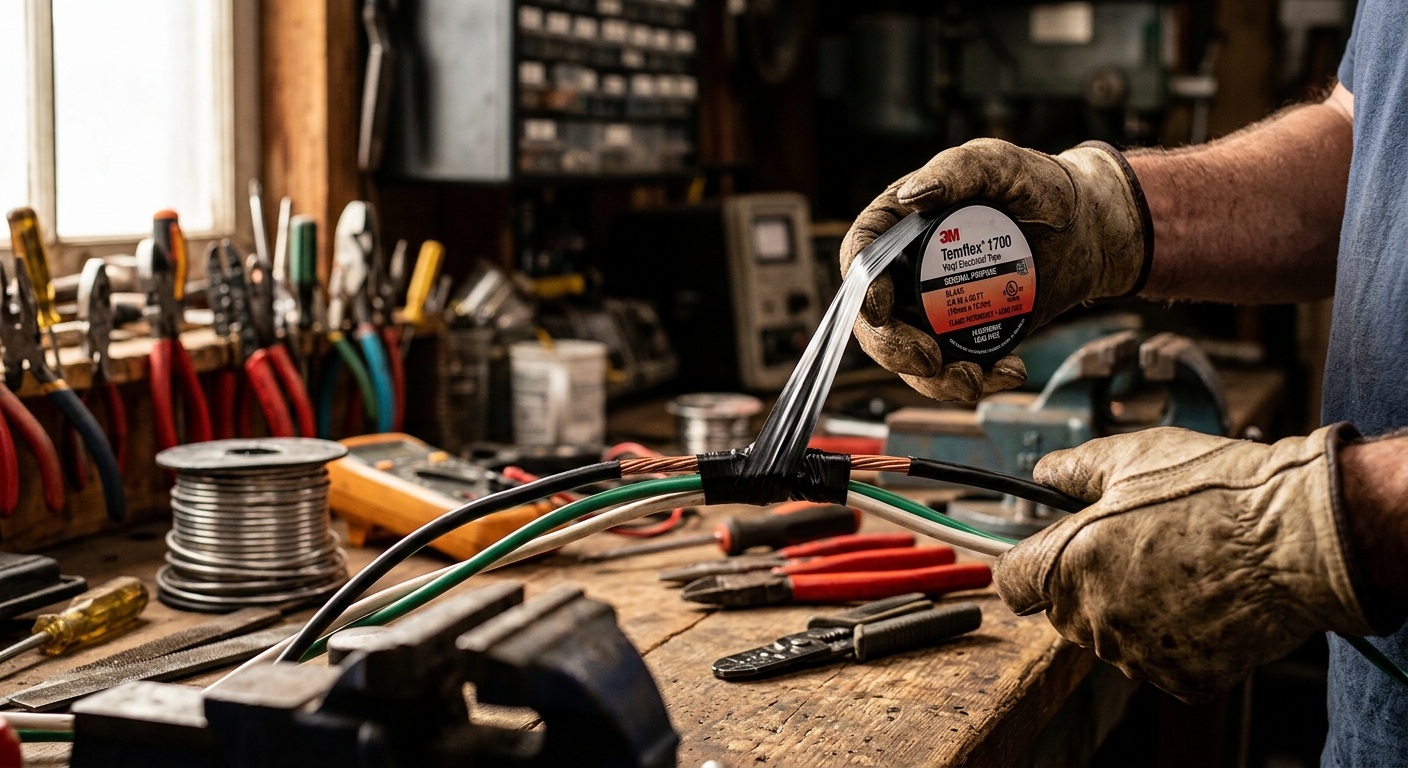
2. 3M Temflex 1700 General Purpose Vinyl Tape
The 3M budget tape – less expensive than Super 33+ and adequate for color coding, bundling, and labeling applications that do not require the Super 33+’s temperature and adhesion performance. Not for primary insulation on splices where 33+ is the correct choice.
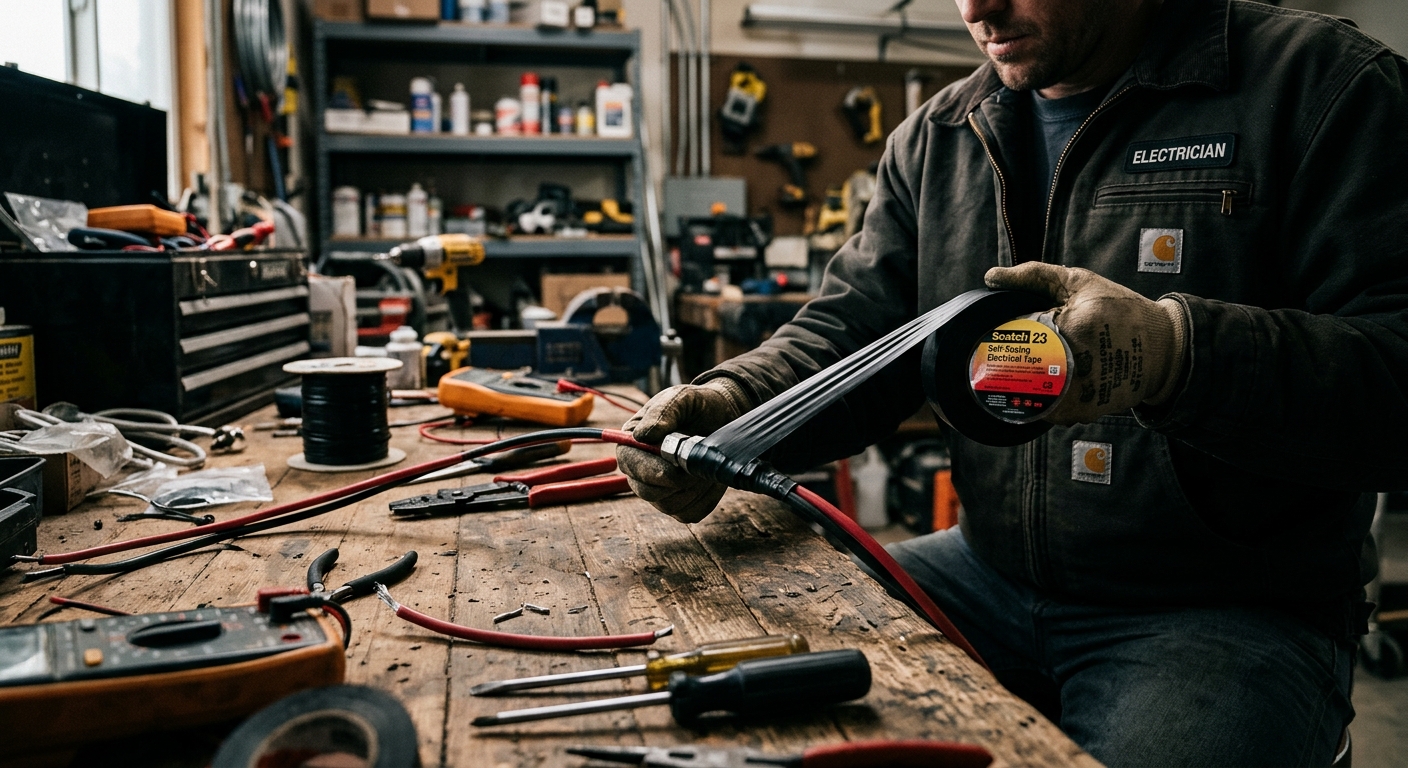
3. Scotch 23 Self-Fusing Rubber Splicing Tape
The standard for self-fusing tape in the electrical category. Used for waterproofing coax connections, sealing outdoor junction box entries, and creating non-slip grip surfaces. Fuses to itself in seconds under hand pressure, creating a completely moisture-proof bond. 8.5 mil thick, rated 600V. An essential addition to any electrical kit.
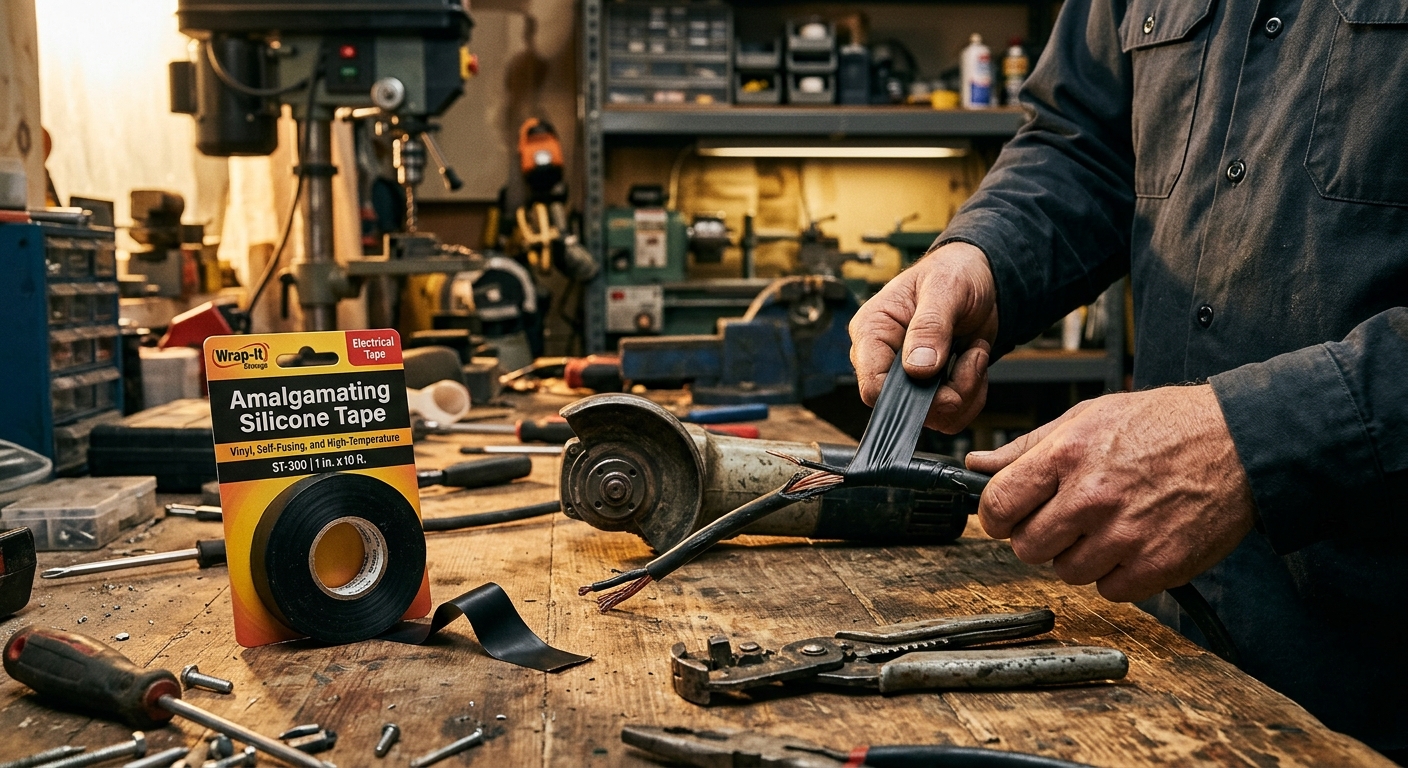
4. Amalgamating Silicone Tape by Wrap-It Storage
An excellent consumer self-fusing silicone tape that is increasingly popular as an alternative to Scotch 23. Wider width makes it easier to work with on large connectors, and the silicone formulation is rated to 500 degrees Fahrenheit – adequate for most high-temperature applications.
5. Pro Tape Pro-Gaff (Gaffer Tape)
While not electrical tape per se, gaffer tape belongs in every electrical and production toolbox. Gaffer tape is cloth-backed, leaves no adhesive residue, and is used to secure cable runs, tape down extension cords across floors, and bundle equipment without the residue of standard duct tape. Essential for anyone doing AV installation or running temporary power to an event or job site.
What to Avoid
- Non-UL Listed electrical tape for electrical applications: The UL mark on electrical tape is not a formality. Non-listed tape may not meet dielectric or flame-retardancy requirements.
- Using electrical tape as the sole connection method for splice joints: Electrical tape over bare twisted wires is not an acceptable splice method under any circumstances. Use listed wire connectors inside a listed junction box, then tape over the connector for additional insulation if needed.
- Cheap imported tape labeled “UL Listed” without the actual UL mark: Counterfeit listings exist. Look for the actual UL holographic mark on the label or roll core, not just the claim in the product description.
FAQ
Is black electrical tape the same as vinyl tape?
Black is the most common color of vinyl electrical tape. Vinyl tape is also available in red, blue, yellow, green, white, and orange for phase and circuit identification. All standard vinyl electrical tape is PVC; the color does not change the material or rating.
Can I wrap a wire splice in electrical tape instead of using a junction box?
No. NEC requires all wire splices to be enclosed in a listed junction box. Electrical tape alone – even multiple layers – is not a listed enclosure and does not meet code. Tape can insulate over a properly made splice, but the junction box is still required.
How many wraps of electrical tape do I need on a splice?
For a wire nut connection already providing insulation: two to three half-lapped wraps of vinyl tape over the connector and onto the wire insulation provide additional protection. For a bare splice that needs full insulation: consult the manufacturer and NEC for the required tape type, number of wraps, and build-up procedure.
Affiliate Disclosure: DIY Arsenal participates in the Amazon Associates Program and other affiliate programs. When you purchase through links on this site, we may earn a small commission at no additional cost to you. We only recommend products we have personally tested and genuinely believe in.