Best Conduit Benders for Homeowners and Electricians
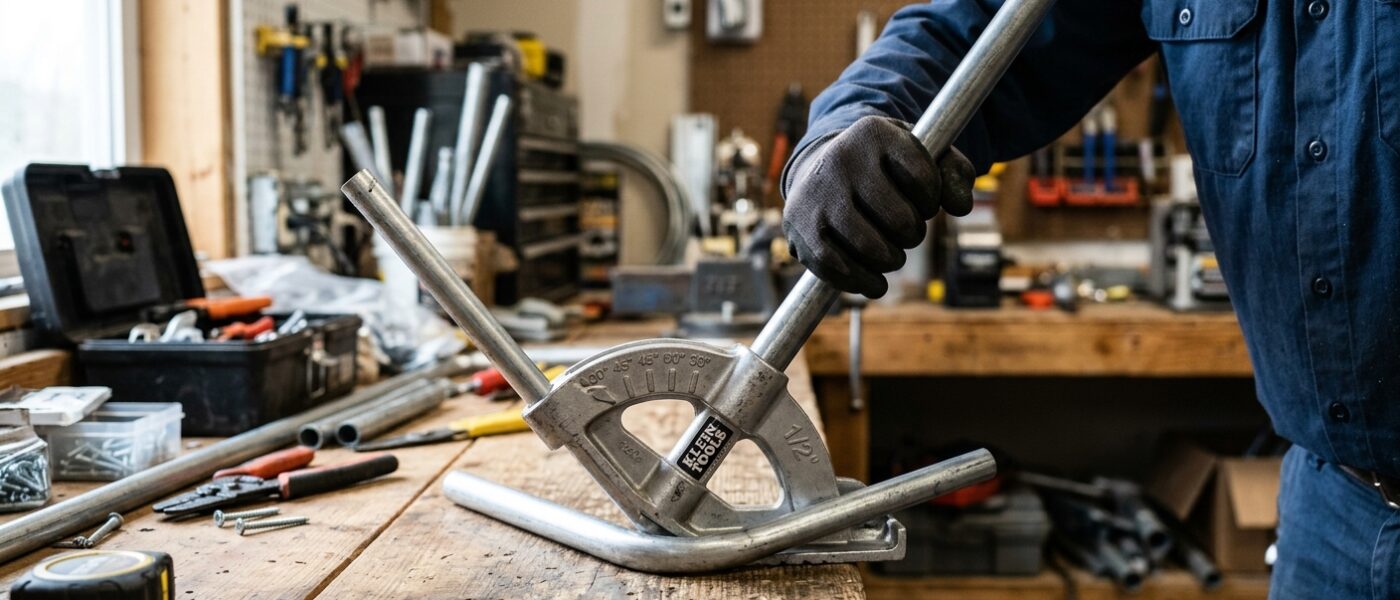
The Greenlee 849 is the professional standard for 1/2-inch EMT work that any serious DIYer should own; the Klein Tools 51605 is an excellent alternative that many electricians prefer for its balance and feel.
As an Amazon Associate, we earn from qualifying purchases.
Conduit benders and conduit work might seem like the domain of licensed electricians only, but homeowners and dedicated DIYers who want to properly protect electrical wiring in a garage, workshop, outbuilding, or basement – where code requires or strongly recommends conduit – can absolutely learn to bend EMT conduit. A quality conduit bender, some practice, and an understanding of the basic bends (stub-up, back-to-back, offsets, and saddles) puts professional conduit installation within reach of a patient DIYer.
Types of Conduit and Benders
EMT (Electrical Metallic Tubing)
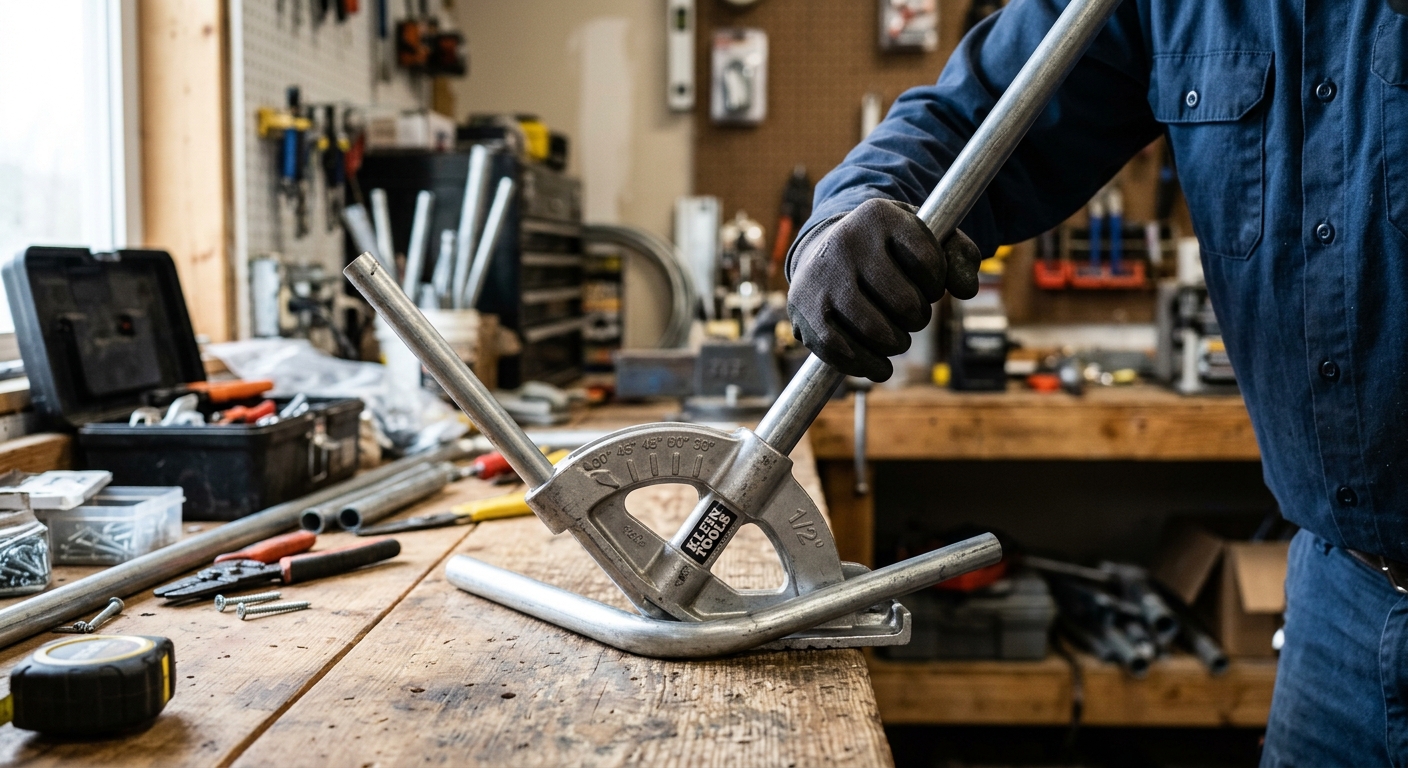
The most common conduit for residential and light commercial use. Thin-walled steel conduit that bends with a hand bender and connects with compression or set-screw fittings. Available in 1/2, 3/4, 1, 1-1/4, and larger inch diameters. Most DIYers work with 1/2-inch and 3/4-inch EMT.
RMC (Rigid Metal Conduit)

Heavy-walled threaded steel conduit. More impact-resistant than EMT but requires a mechanical or hydraulic bender for larger sizes. The standard for outdoor and underground runs where impact protection is required.
PVC Conduit
Gray or orange non-metallic conduit. Cannot be bent with a metal conduit bender – requires a heat gun or PVC bending spring for field bends. Connections are solvent-welded. Used for underground runs, damp locations, and corrosive environments.
Hand Conduit Benders

A shoe-and-hook tool that forms bends in EMT and IMC conduit from 1/2-inch to 1-inch diameter. The shoe is shaped to the minimum bend radius for each conduit size. Markings on the shoe indicate degree angles and multipliers for offset bends. The tool every electrician uses for residential and light commercial conduit work.
Electric and Mechanical Benders
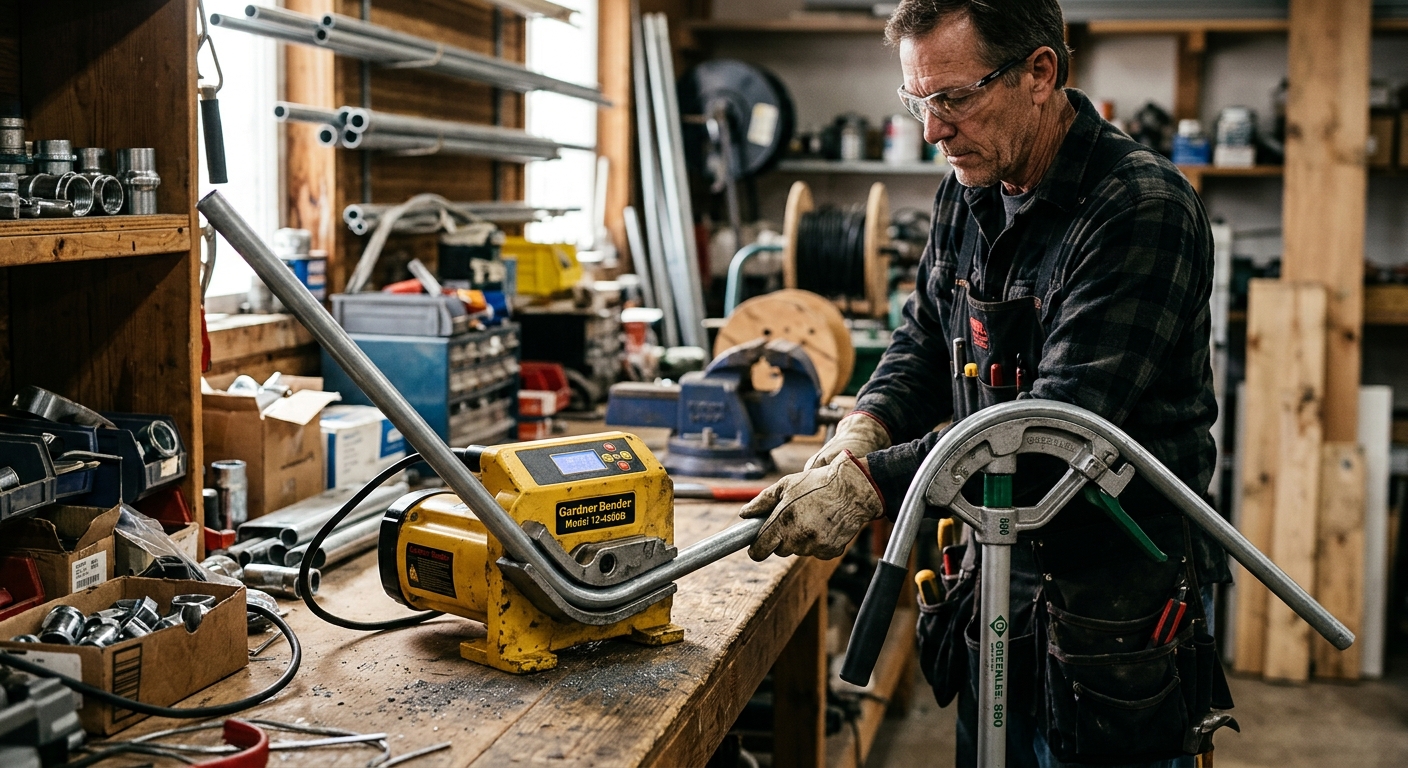
Used for 1-1/4-inch and larger conduit where hand bending requires impractical force. Electric benders (Greenlee is the dominant brand) use a motor-driven cam to form bends in heavy conduit consistently. For DIYers, hand benders cover most realistic conduit installations.
Key Features to Look For
Conduit Size Range
Most hand benders are sized for a single conduit size (1/2-inch, 3/4-inch, or 1-inch). A 1/2-inch bender handles most residential wiring in garages and workshops. Buy the size that matches your conduit – using the wrong size bender crimps the conduit rather than forming a smooth bend.
Degree Markings
Quality benders have clearly engraved (not just painted) degree markings on the shoe for 10, 22.5, 30, 45, 60, and 90 degrees. These markings, combined with multiplier tables on the bender, allow systematic calculation of offset and saddle bends.
Construction Quality
The hook and shoe must be heavy enough to withstand the force of bending without flexing. Cheap benders flex under load, producing bends of inconsistent radius. Quality benders (Greenlee, Ideal, Klein) are cast from ductile iron or aluminum alloy of sufficient section to remain rigid under bending force.
Handle Compatibility
Most quality benders require a separately purchased steel conduit handle (1/2-inch EMT or threaded rod) of appropriate length. The handle provides the leverage for bending. Some bender kits include a handle; most require a separate purchase.
Our Top Picks
1. Greenlee 849 1/2-Inch EMT Hand Bender with Handle

The professional standard. Greenlee is the dominant brand in conduit tools, used by electricians on commercial and industrial job sites. The 849 is a well-cast aluminum shoe with clear degree markings and an excellent radius for smooth, kink-free 1/2-inch EMT bends. Includes a steel handle. The first bender to buy if you plan to do any serious conduit work.
2. Klein Tools 51605 1/2-Inch EMT Hand Bender
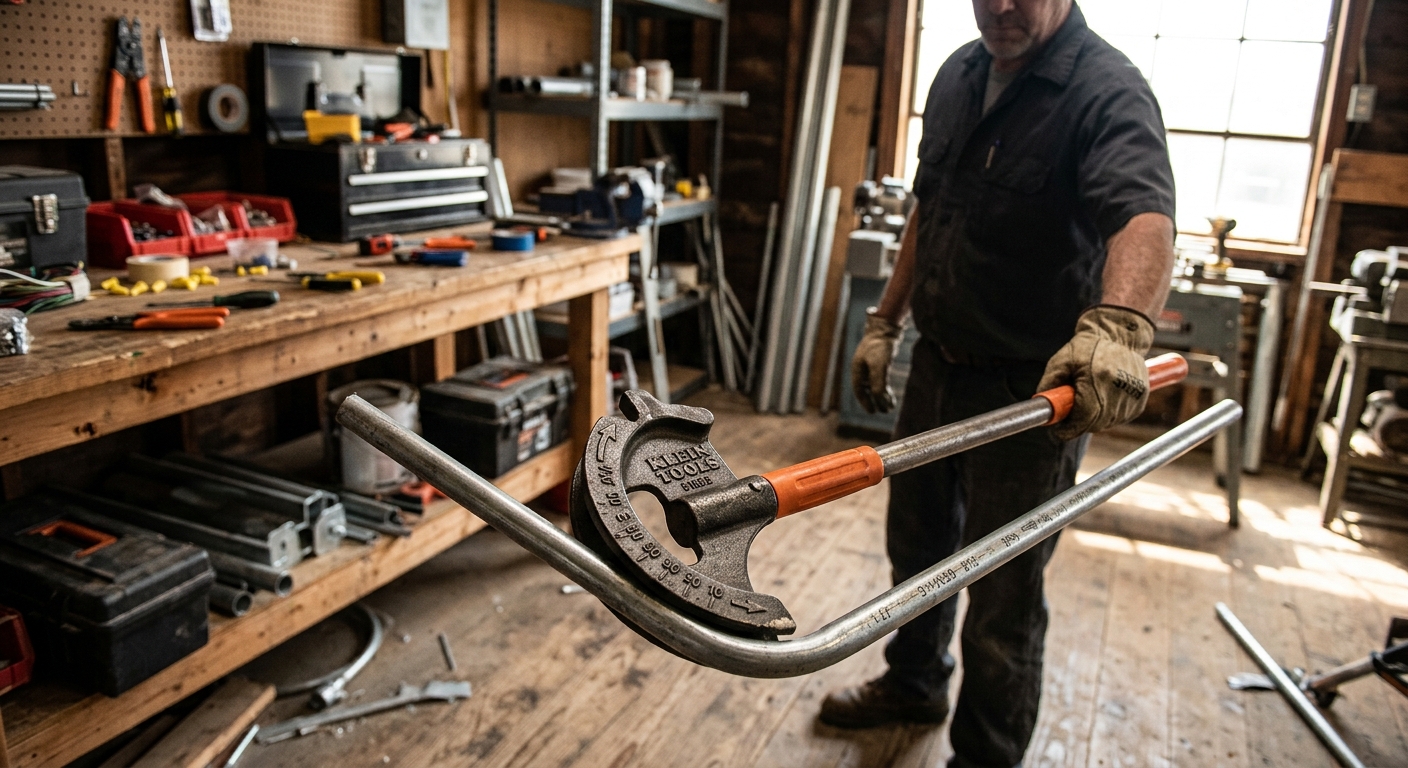
Klein’s entry into the conduit bender category brings their trademark quality. The 51605 uses a ductile iron shoe for extra rigidity, clearly engraved degree and arrow markings, and an excellent comfortable grip. A direct competitor to the Greenlee that many electricians prefer for its feel and balance.
3. Ideal Industries 74-002 1/2-Inch EMT Bender

Ideal’s hand bender is well-regarded for its accurate degree markings and smooth bending action. The aluminum shoe is well-cast and the handle socket accepts standard EMT conduit as a handle. A solid third option at a competitive price.
4. Southwire 58906801 3/4-Inch EMT Bender
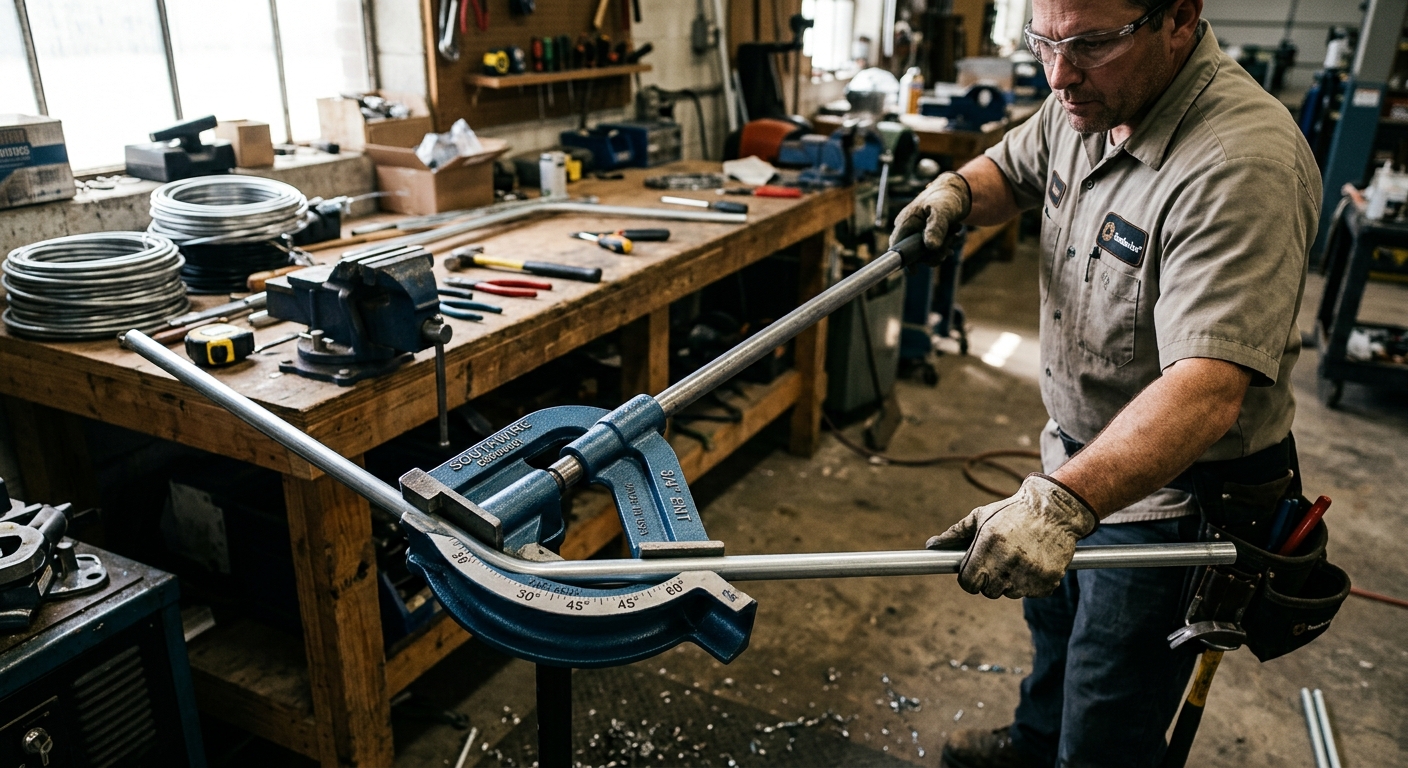
For 3/4-inch EMT: the Southwire 3/4-inch bender delivers professional results with clearly marked angles and a comfortable shoe design. 3/4-inch EMT is the right choice for runs with more conductors or larger wire gauges (10 AWG and 8 AWG runs that exceed 1/2-inch fill capacity).
5. Greenlee 1800 Series Electric Bender (1-1/4 Inch)

For larger conduit: the Greenlee 1800 electric bender handles 1-inch through 2-inch EMT with a motor-driven cam that forms consistent bends without the force required by hand bending at these sizes. For most DIYers this is more tool than needed, but for workshop owners running multiple large circuits in conduit, the time savings are significant.
Basic Bends Every DIYer Should Know
90-Degree Stub-Up
The most fundamental conduit bend. Place the conduit in the bender at the measured stub-length mark, foot on the shoe, pull the handle toward you until the degree indicator reads 90 degrees. The conduit forms an L shape at exactly the measured point.
Back-to-Back 90s
Two 90-degree bends forming a U shape – used to navigate from one surface plane to another. The distance between the inside edges of the two 90-degree bends equals the measured offset distance.
Offset Bends
Two equal-angle bends in opposite directions that shift the conduit run up or down (to go from one level to another, around obstructions). The bend-to-bend distance is calculated from the required offset height and the bend angle using the multiplier table on the bender.
FAQ
Do I need a permit to install conduit in my garage?
In most jurisdictions, yes – any permanent electrical work requires a permit and inspection. The permit process protects you by ensuring the work is inspected and confirmed to meet safety codes. Check with your local building department before starting.
Can I bend PVC conduit with a hand bender?
No. PVC conduit requires a heat gun or PVC bending spring – the plastic must be heated to forming temperature before bending, then held in position until it cools. Using a metal conduit bender on PVC crushes and kinks it.
What gauge wire can I pull through 1/2-inch EMT?
NEC fill tables allow three 12 AWG THHN conductors in 1/2-inch EMT as the standard circuit wiring configuration. Four or more conductors, or 10 AWG wire, typically require 3/4-inch conduit.
Affiliate Disclosure: DIY Arsenal participates in the Amazon Associates Program and other affiliate programs. When you purchase through links on this site, we may earn a small commission at no additional cost to you. We only recommend products we have personally tested and genuinely believe in.