Best Belt Sanders for DIY and Furniture Refinishing
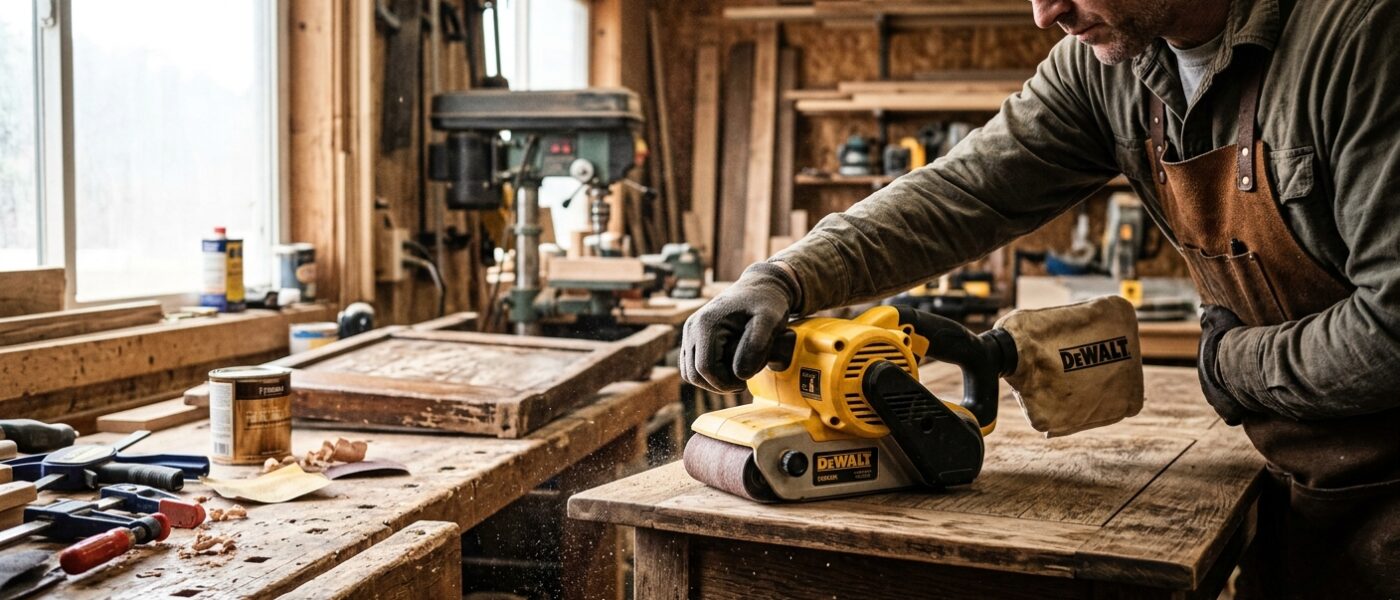
DeWalt D26453K is the best all-around choice; Makita 9903 leads for demanding furniture work.
Belt sanders occupy a unique position in the tool lineup: they’re the most aggressive surface-abrading tools available short of a grinder or angle grinder with a flap disc. A belt sander removes material rapidly – stripping paint, leveling glue-ups, flattening rough lumber, and cleaning up heavily scratched surfaces faster than any other sander. That speed is a double-edged sword. In skilled hands, it transforms hours of sanding into minutes. In less experienced hands, it creates waves and depressions that take even longer to fix.
Belt sanders matter most in furniture making (flattening large glue-up panels), deck and floor refinishing (stripping old stain from rough-sawn wood), and any project involving removing significant material from flat surfaces. They are not finish sanders – they’re material-removal tools that set up the surface for finishing with finer grits and a random orbital sander. Understanding that distinction is the foundation of using a belt sander well.
How We Evaluate Belt Sanders
Belt size: The two most common sizes are 3×21 inch (lighter, maneuverable, for furniture and trim) and 4×24 inch (more powerful, for decks, floors, and large panels). Some pro models run 4×36 inch belts for maximum material removal. Choose based on the work surface size you’ll most commonly encounter.
Motor power and belt speed: For a 3-inch belt sander, look for at least 6 amps; for a 4-inch, 8–10 amps. Belt speed ranges from 600–1,600 SFPM (surface feet per minute). Variable speed allows you to dial down for finer grits and more control.
Belt tracking and tension: Belts drift sideways under use and must be adjusted via a tracking knob. Quality belt sanders have precise, easy-to-access tracking controls that allow single-hand adjustment while the tool is running. Poor tracking mechanisms let belts wander to the edge and tear.
Dust collection: Belt sanders generate prodigious dust. A sealed bag with a vacuum port is the minimum; the best models have effective integrated cloth bags and dedicated shop-vac ports. Inadequate dust collection turns a productive sanding session into a respiratory hazard.
Balance and control: Front handle design matters enormously. A well-placed secondary handle gives you control over pressure distribution across the belt. Bad ergonomics cause the tool to tip, leaving ridges at the belt’s leading and trailing edges.
Top Picks
1. DeWalt D26453K – Best Overall Belt Sander

DeWalt’s 3×21-inch belt sander hits the right balance of power, control, and price. Its 8-amp motor with a maximum belt speed of 1,300 SFPM handles everything from rough stripping to near-finish sanding, and the variable speed trigger gives meaningful control. The two-position bag captures fine dust effectively, and the front bag configuration keeps the tool nose-heavy so it doesn’t tip at the trailing edge. At $119–$149, it’s the default recommendation for most DIYers.
The D26453K comes in a kit with carrying bag, a significant plus for storage. The auto-tracking system consistently kept the belt centered in our testing without constant intervention – a subtle but important quality-of-life feature over several hours of use.
- Pros: Auto-tracking belt, variable speed, excellent dust bag, well-balanced design
- Cons: 3×21 belt size limits it for very large surfaces, cord management requires attention
- Price range: $119–$149
2. Makita 9903 – Best 3×21 Runner-Up
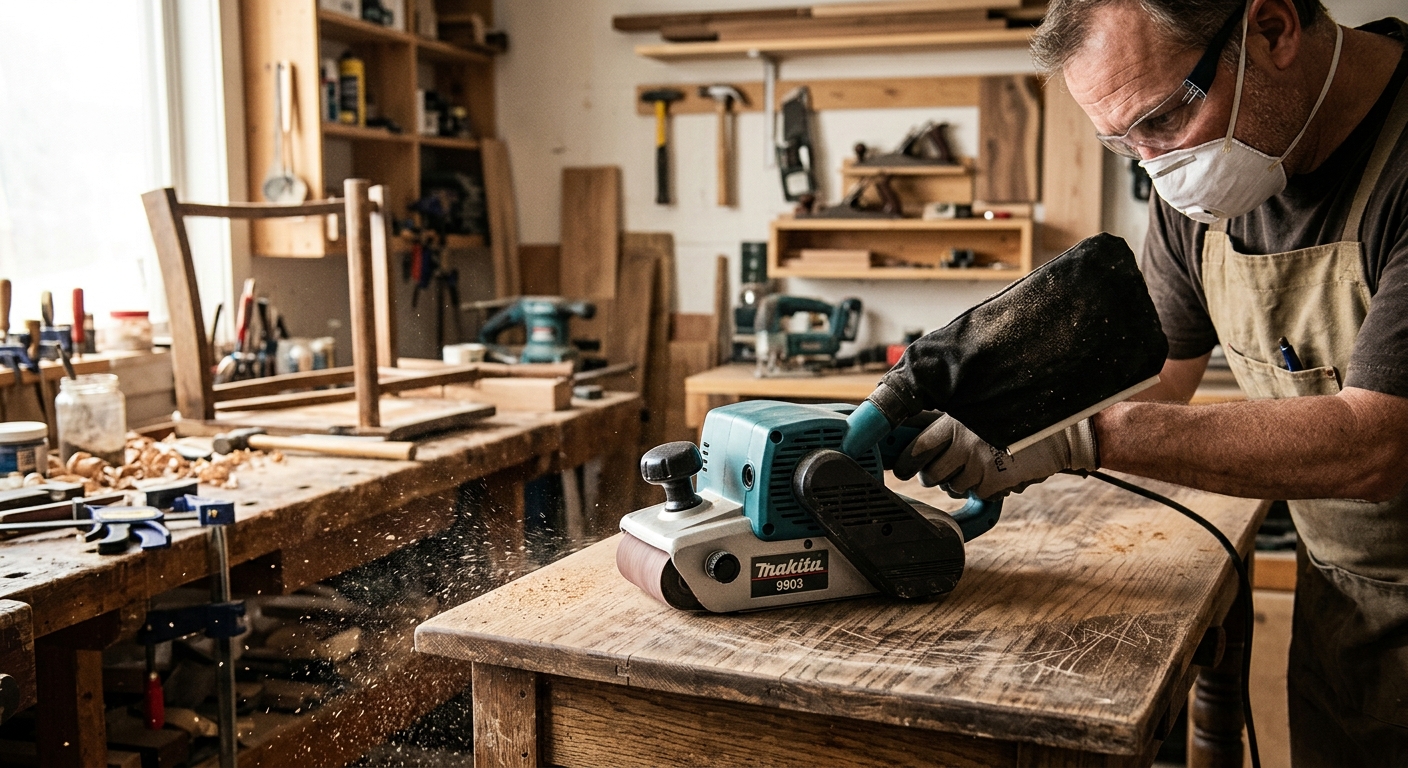
Makita’s 9903 is beloved by furniture makers for its consistent belt speed even under load – critical when you need to keep material removal uniform across a large panel. The 8.8-amp motor rarely bogs, belt tracking adjustment is accessible and precise, and the tool is notably lighter than DeWalt’s equivalent at 8.6 lbs. At $159–$179, it’s slightly more expensive than the DeWalt but delivers measurably more consistent performance under sustained load.
- Pros: Consistent speed under load, precise tracking, lightweight, excellent build quality
- Cons: Slightly higher price, dust bag could be larger
- Price range: $159–$179
3. WEN 6321 – Best Budget Belt Sander
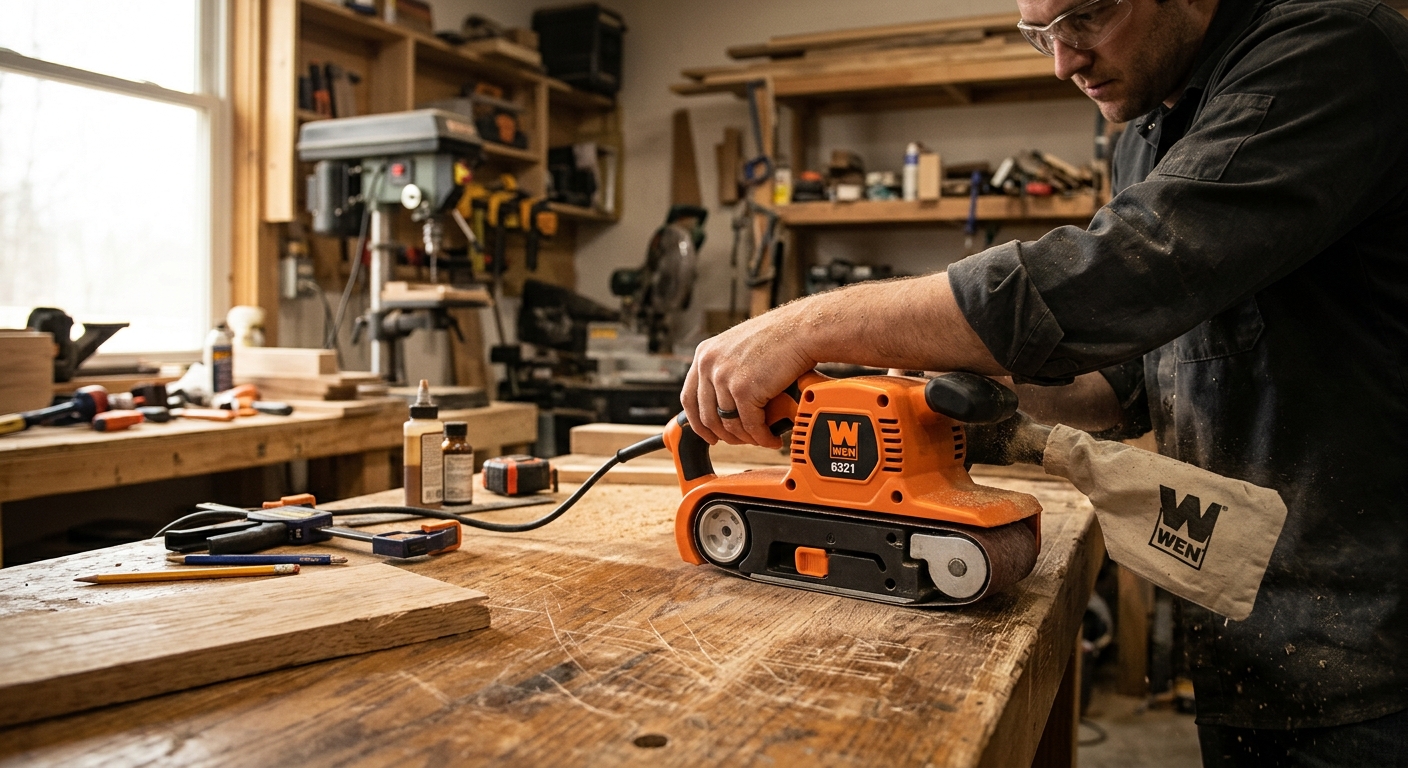
WEN’s 3×21-inch belt sander at $39–$59 is the honest budget choice. Its 7-amp motor is adequate for occasional use – stripping a piece of furniture, cleaning up a rough-cut board, preparing a deck section. The variable speed ranges from 820–1,350 SFPM. Dust collection via the included bag is mediocre, so a shop-vac connection is recommended. For infrequent tasks, it performs well above its price. For production use, step up to DeWalt or Makita.
- Pros: Very affordable, variable speed, adequate for occasional use
- Cons’=>’Dust bag is ineffective, belt tracking requires frequent attention, shorter tool life
- Price range: $39–$59
4. Porter-Cable 352VS – Best 4×24 Value
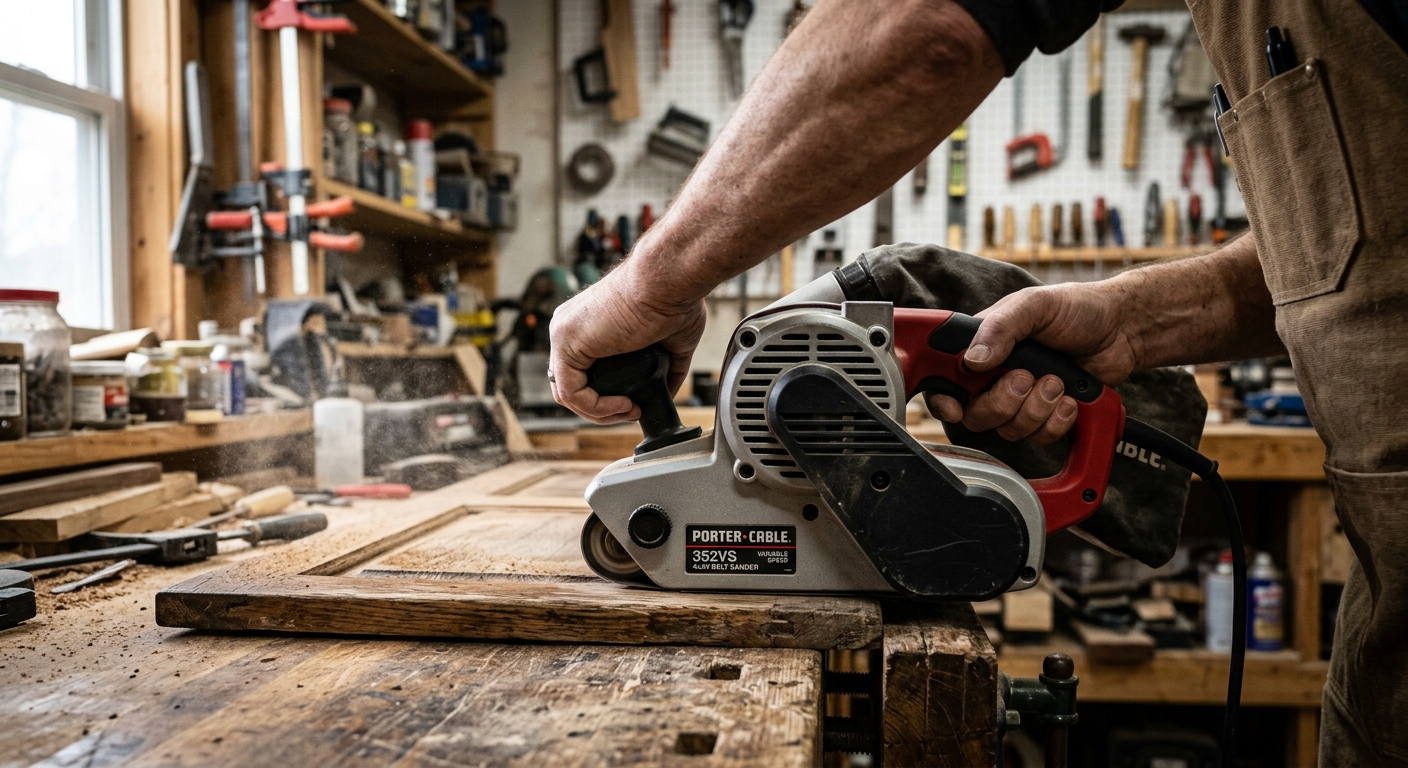
When you need the wider belt for decks, floors, or large panel work, Porter-Cable’s 352VS delivers 8 amps and a 4×24-inch belt for $99–$129. Belt speed is variable up to 1,300 SFPM, and the front auxiliary handle (included) makes two-hand control comfortable during heavy passes. It’s not the most refined tool on the market, but for the price and task, it’s the standard recommendation.
- Pros: Affordable 4×24 size, variable speed, auxiliary handle included, reliable motor
- Cons: Heavier than 3×21 models, belt tracking less precise than premium options
- Price range: $99–$129
5. Milwaukee 2426-20 M18 – Best Cordless Belt Sander
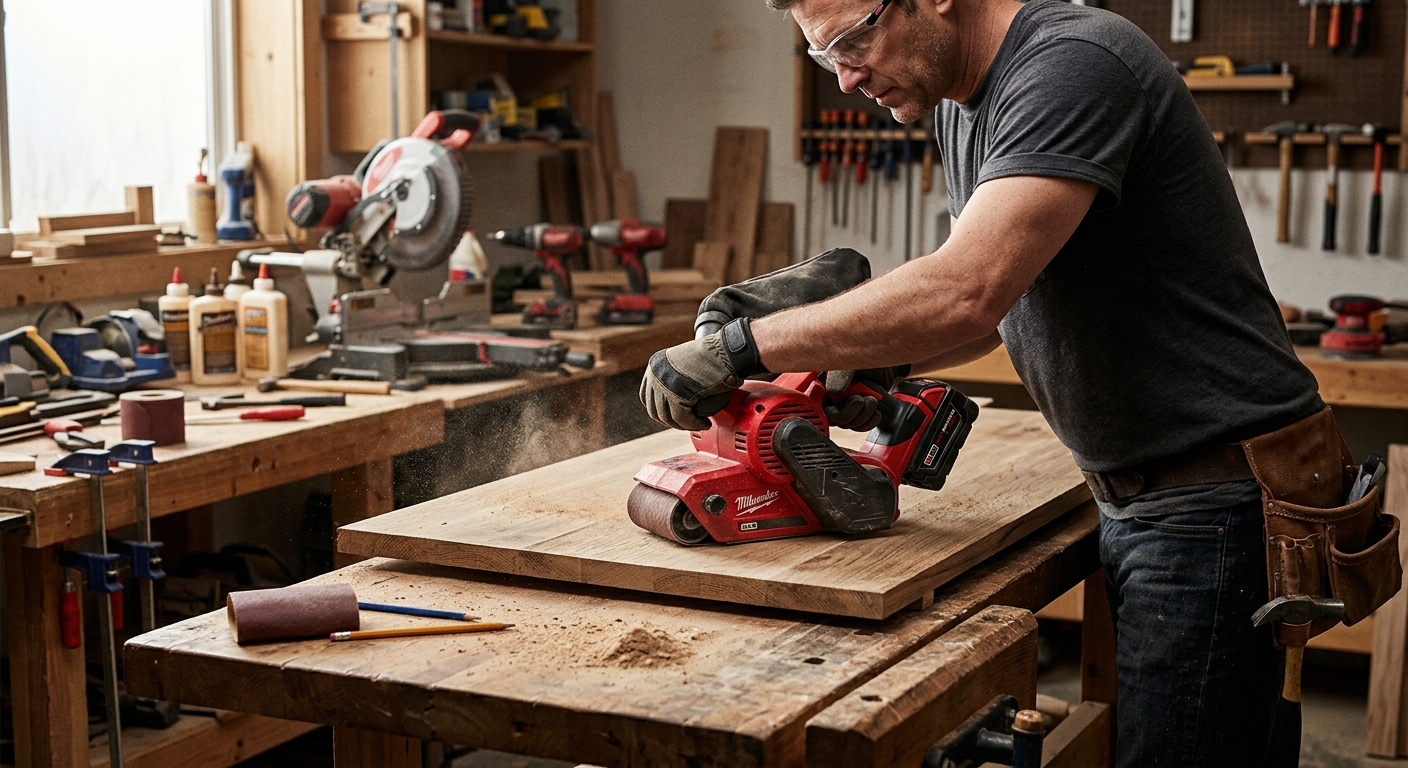
Milwaukee’s M18 cordless belt sander uses a 3×18-inch belt (slightly shorter than corded standard but still useful) and delivers cordless freedom that matters enormously for refinishing outdoor furniture, deck rails, and any work away from power. The POWERSTATE brushless motor maintains speed well, and M18 battery compatibility makes it a natural add-on for M18 tool owners. At $129–$149 (tool only), it’s competitive with corded options while adding flexibility.
- Pros: Cordless convenience, M18 compatible, brushless motor, good for outdoor work
- Cons: Shorter 3×18 belt, battery adds weight, shorter sessions between charges
- Price range: $129–$149 (tool only)
FAQ
How do I prevent a belt sander from leaving gouges?
Keep the sander moving at all times – stopping while the belt is running against the surface creates a gouge within seconds. Move with the grain in overlapping passes at a consistent pace. Don’t press down hard; let the tool’s weight do the work. Never sand across the grain except as a first pass to flatten severely uneven surfaces.
What belt grit do I start with on rough lumber?
Start at 60 or 80 grit for rough lumber and glue-up panels. Move to 100 or 120 for the second pass, then switch to a random orbital sander for 150 and beyond. Belt sanders leave directional scratches that require follow-up with finer grits to eliminate.
Can I use a belt sander on a deck?
Yes, and it’s one of the best applications. Use a 4×24-inch or larger belt sander with 60–80 grit to strip old stain and grey surface weathering. Always sand with the grain of the boards. Wear a respirator – pressure-treated wood dust contains compounds you don’t want in your lungs.
Bottom Line
For most DIYers who sand furniture, woodworking projects, and occasional outdoor surfaces, the DeWalt D26453K 3×21-inch sander is the best choice – the right size, excellent auto-tracking, and a well-proven track record. Furniture makers who demand consistent speed under load should upgrade to the Makita 9903. Projects involving decks and large floors benefit from the wider belt of the Porter-Cable 352VS. Cordless advocates in the M18 ecosystem get real value from the Milwaukee 2426-20 for outdoor work.
Affiliate Disclosure: DIY Arsenal participates in the Amazon Associates Program and other affiliate programs. When you purchase through links on this site, we may earn a small commission at no additional cost to you. We only recommend products we have personally tested and genuinely believe in.