Best Hand Saws for DIY – Panel Saws, Backsaws, and Japanese Pull Saws
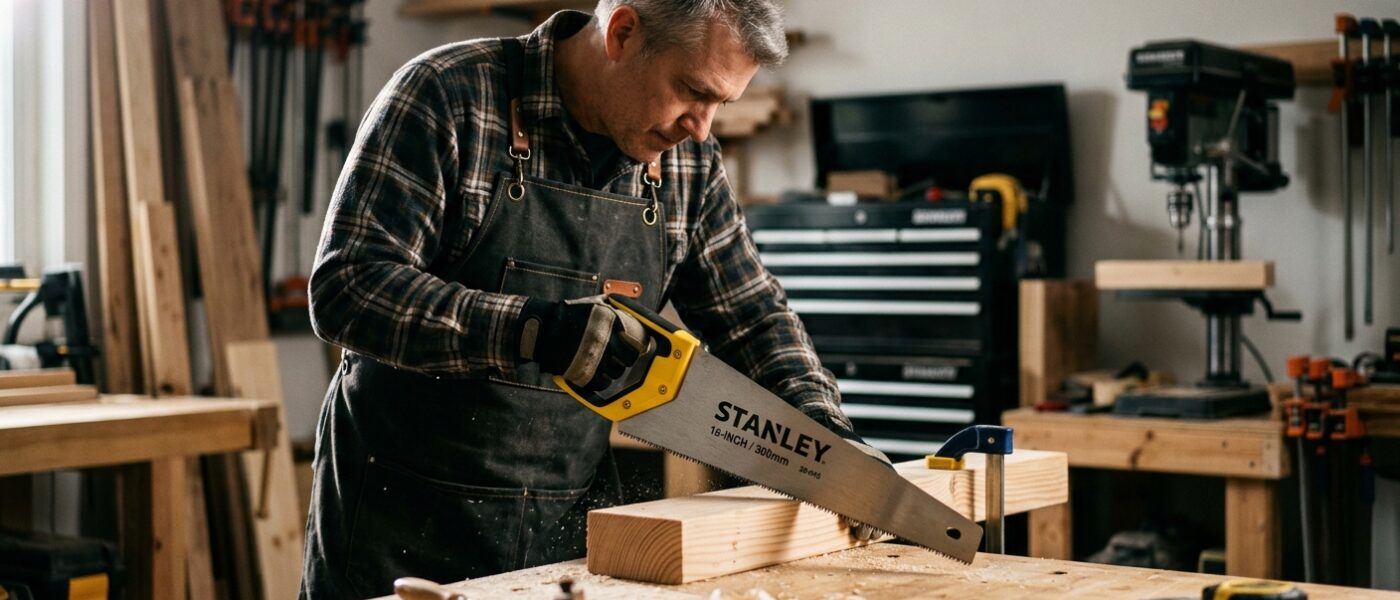
Stanley FatMax panel saw is the dependable all-rounder; Suizan excels for fine joinery
Hand saws remain essential even in shops full of power tools. For cutting a single board to length, trimming a dowel flush, or making a precise joint cut where a circular saw won’t fit, nothing beats a sharp hand saw. This guide covers the best options for DIYers across panel saws, backsaws, and specialty saws.
How We Evaluate Hand Saws
We tested saws for tooth sharpness out of the box, cut speed through hardwood and softwood, handle comfort during extended cutting, blade tension and tracking accuracy, and blade replaceability. A saw that binds, wanders, or fatigues the hand quickly slows your work – all three factors matter on longer cuts.
Top Picks
Stanley 20-045 15-Inch Hand Saw – Best Overall Panel Saw
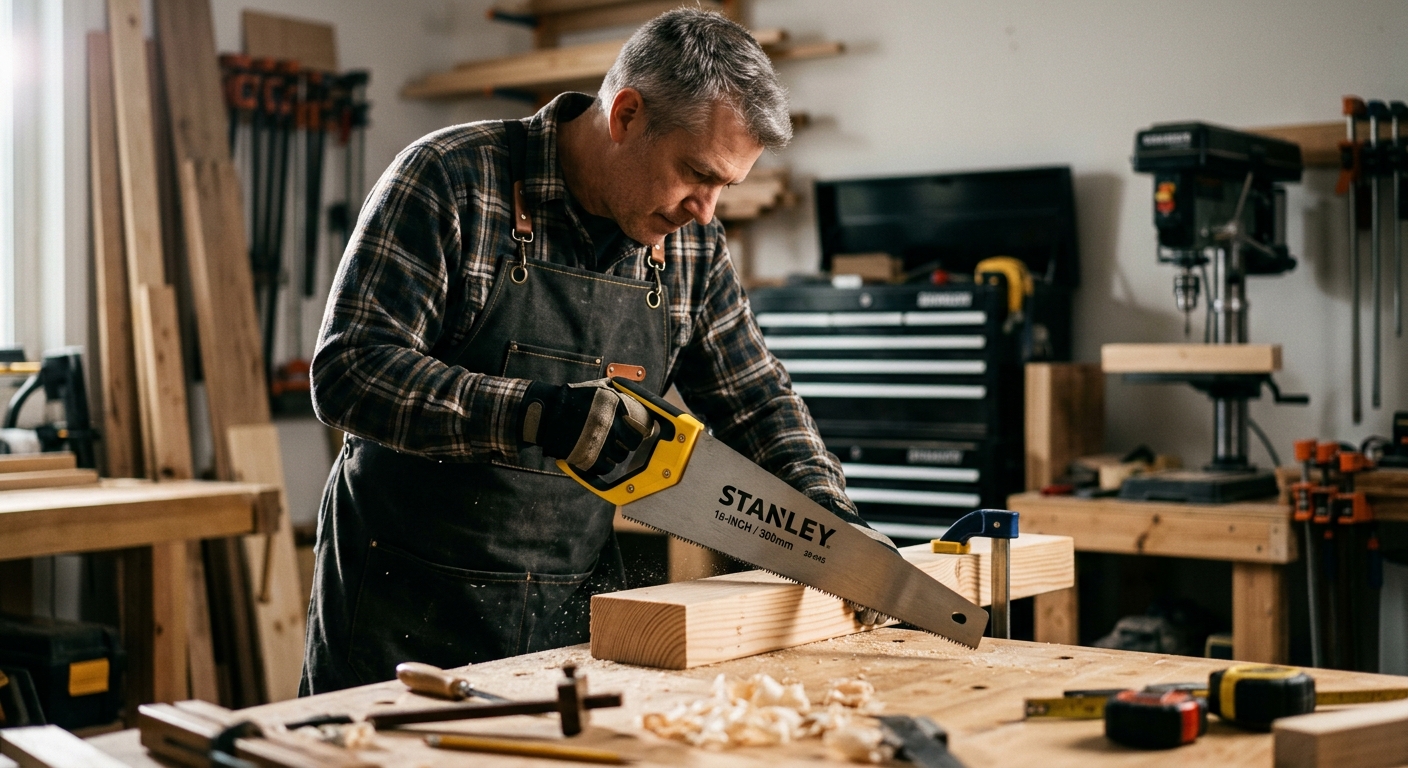
The Stanley FatMax panel saw features hardened induction-tempered teeth that stay sharp through far more cuts than traditional hand-filed saws. The 8-TPI count balances cut speed with surface smoothness, the polymer handle is comfortable for long sessions, and the blade resists rust. This saw is ready to use out of the box and handles framing cuts, sheet goods, and general carpentry without needing sharpening for years.
- Pros: Hardened teeth last long, 8-TPI is versatile, comfortable handle, good tracking
- Cons: Not sharpenable (hardened teeth), overkill fine joinery
Suizan Japanese Pull Saw – Best for Fine Cuts
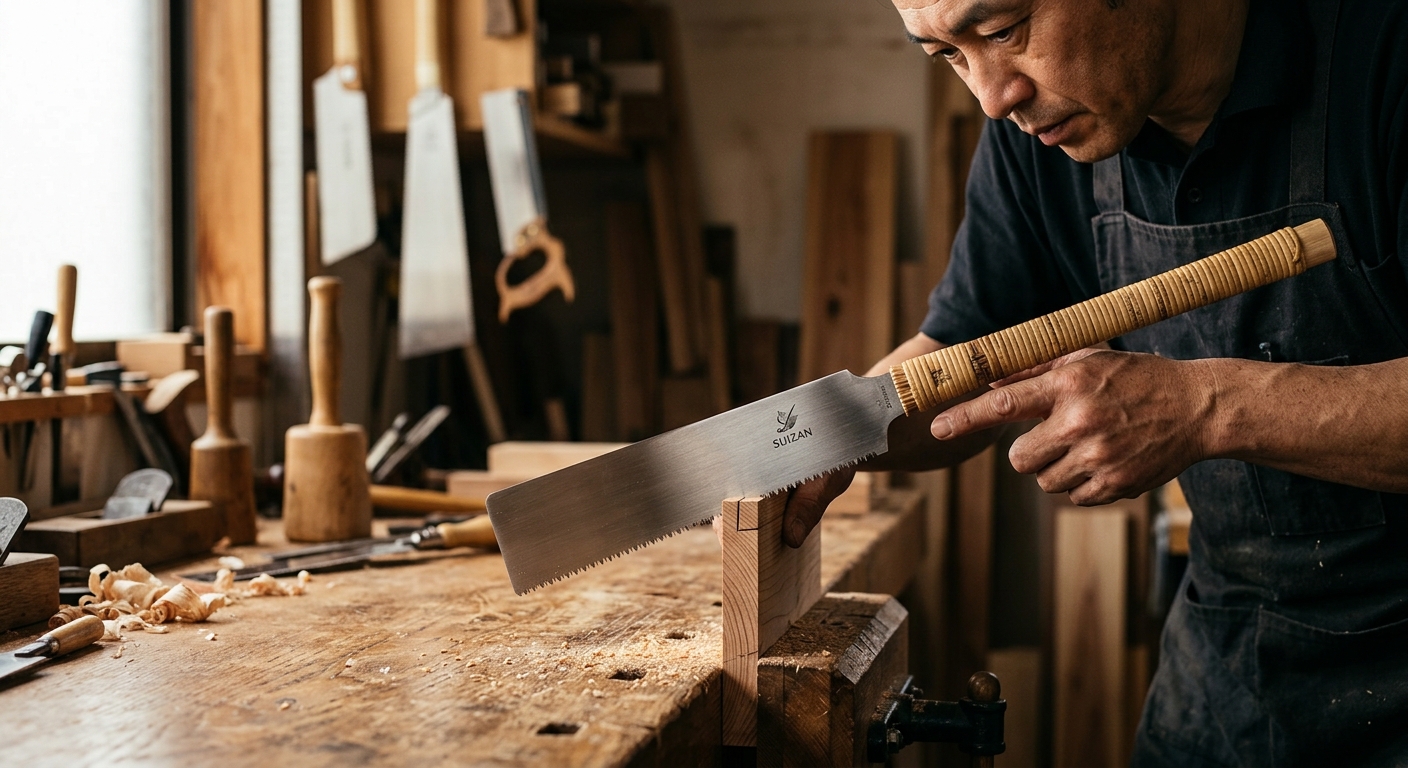
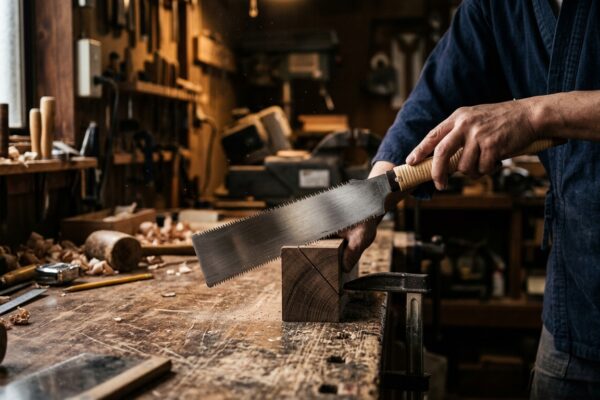
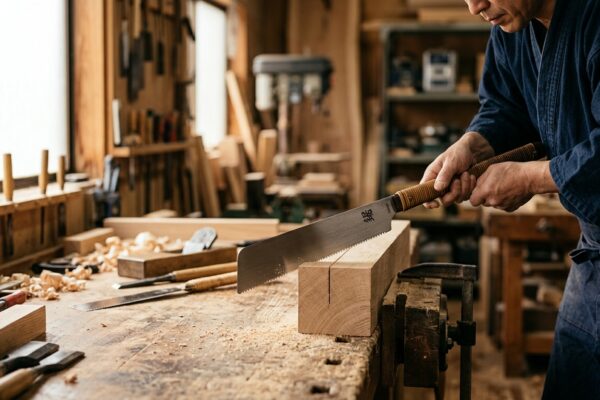
Japanese pull saws cut on the pull stroke, which keeps the blade in tension and produces straighter, cleaner cuts with minimal kerf. The Suizan double-edge model has rip teeth on one side and crosscut teeth on the other, making it versatile for joinery. The thin kerf leaves less wood waste and the fine teeth produce a nearly glass-smooth surface ready for gluing or finishing.
- Pros: Pull-stroke precision, thin kerf, dual-sided, smooth surface finish, great for joinery
- Cons: Not ideal for rough framing, blades replace rather than sharpen, handle orientation may require adjustment
Stanley FatMax Panel Saw 26-Inch – Best for Framing
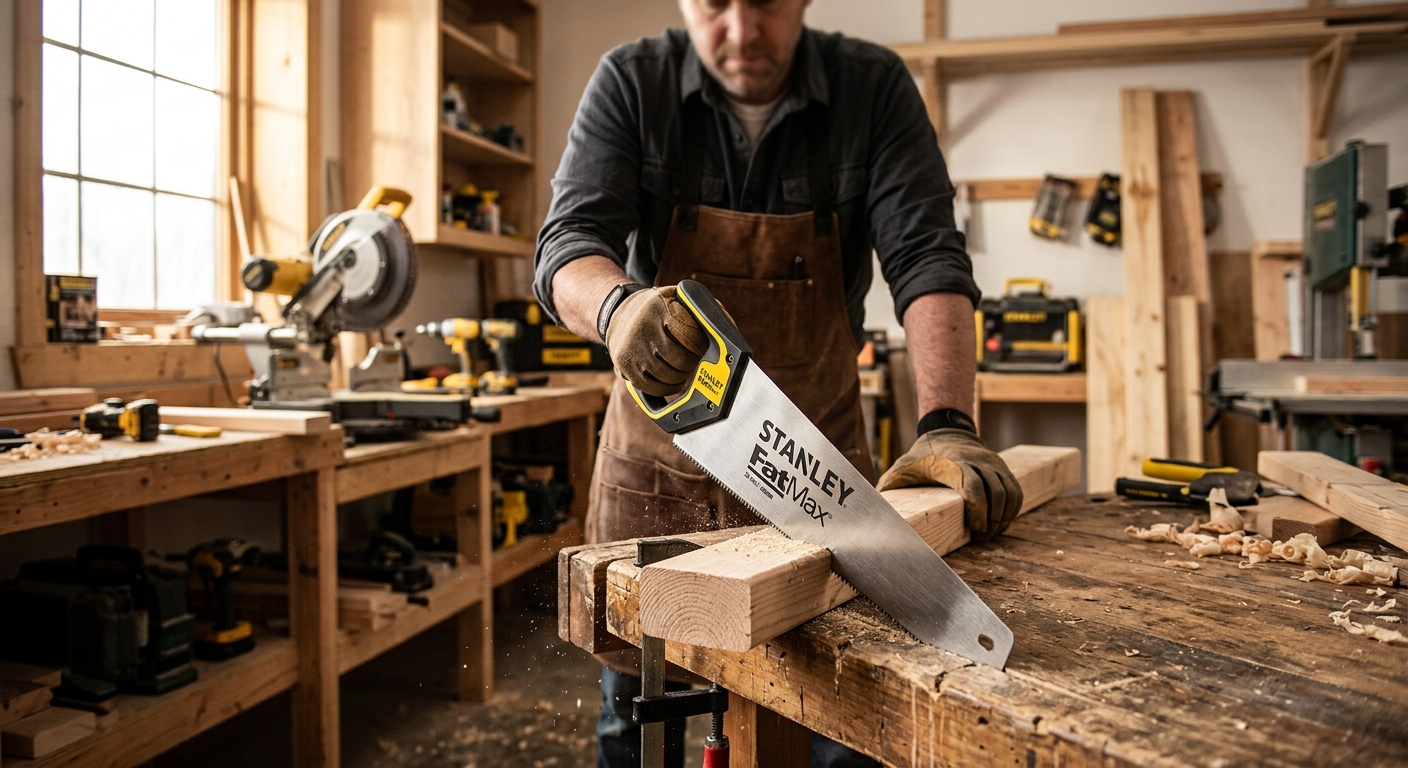
When you need to cut 2x lumber quickly on a job site, the 26-inch FatMax is the choice. The longer blade spans wider stock, the 8-TPI aggressive cut moves through framing lumber fast, and the ergonomic handle reduces fatigue. Hardened teeth handle occasional nail-nicking without immediate damage. Every framer’s toolbox includes a saw like this.
- Pros: Long blade for wide stock, aggressive cut, comfortable, hardened for durability
- Cons: Too aggressive for fine joinery, large saw for small cuts
Gyokucho Razorsaw Backsaw – Best Backsaw for Joinery
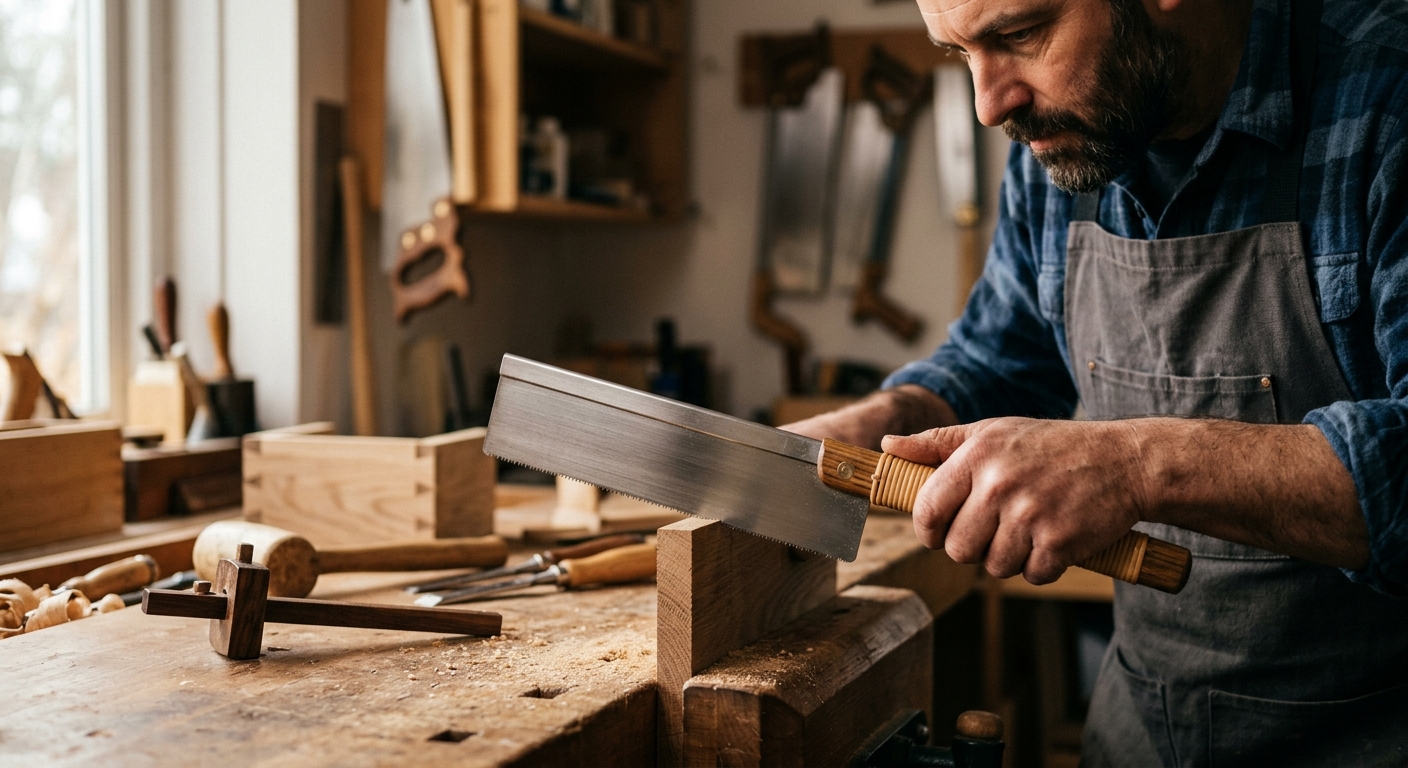
A backsaw’s rigid metal spine prevents blade flex, making it essential for precise joinery: dovetails, tenons, miter joints. The Gyokucho Razorsaw produces incredibly thin kerfs with pull-stroke Japanese teeth, giving you the precision of Western-style stiffened backsaws with Japanese cutting efficiency. Use it with a miter box or dovetail guide for repeatable accuracy.
- Pros: Rigid spine, ultra-thin kerf, excellent for joinery, pull-stroke efficiency
- Cons: Replacement blades needed (not sharpenable), spine limits depth of cut
Irwin Xpert Universal Hand Saw – Best Value
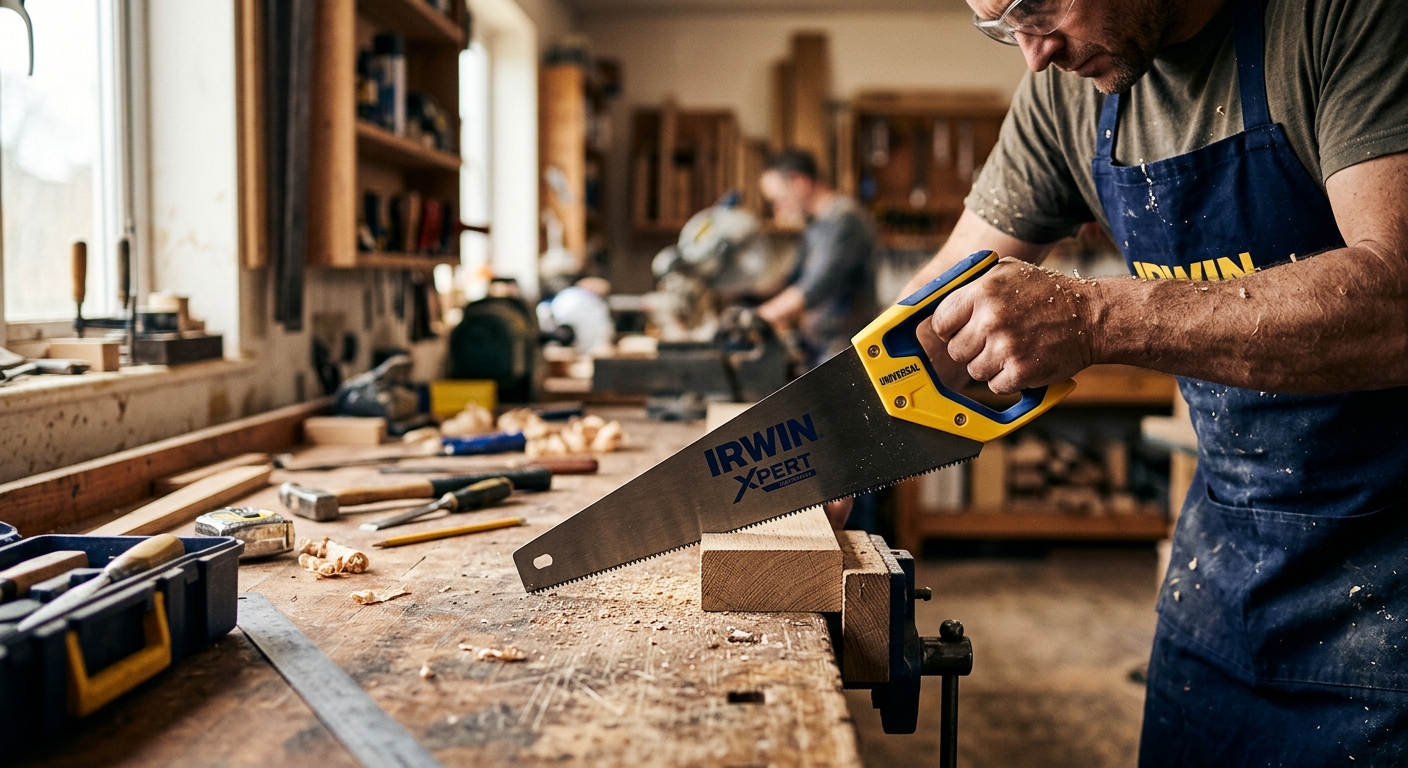
The Irwin Xpert undercuts the FatMax in price while delivering comparable performance for general woodworking. The triple-ground teeth handle both hardwood and softwood, the handle is comfortable, and the blade holds its edge well. For a homeowner who needs an occasional hand saw without a major investment, this is the pick.
- Pros: Affordable, versatile triple-ground teeth, comfortable grip, adequate longevity
- Cons: Not as sharp as premium saws out of box, shorter blade than 26-inch options
Frequently Asked Questions
TPI – what number do I need? Higher TPI means finer, slower cuts. Lower TPI means faster, rougher cuts. 6-8 TPI for framing and rough carpentry; 12+ TPI for finish work and joinery.
Can I sharpen modern hand saws? Not if they have hardened induction teeth (most modern saws). Japanese pull saws have replaceable blades. Traditional hand saws with regular steel teeth can be resharpened with a saw file.
Japanese vs Western saw – which is better? Neither is universally better. Japanese saws excel at fine joinery and produce cleaner kerfs. Western saws are more familiar to most DIYers and better for rough framing. Many woodworkers own both.
Do I need a backsaw? If you do any joinery – cutting tenons, dovetails, or precise miter joints by hand – yes. If you only do rough carpentry, a panel saw alone is fine.
Bottom Line
The Stanley 20-045 15-inch is the Best Overall for its versatility and durability. Add a Suizan Japanese pull saw for fine work and a Gyokucho backsaw for joinery. For rough framing, step up to the 26-inch FatMax. The right combination depends on what you’re building – most shops eventually end up with at least two saws covering different jobs.
Affiliate Disclosure: DIY Arsenal participates in the Amazon Associates Program and other affiliate programs. When you purchase through links on this site, we may earn a small commission at no additional cost to you. We only recommend products we have personally tested and genuinely believe in.