Best Circular Saws of 2026 – From Budget to Pro
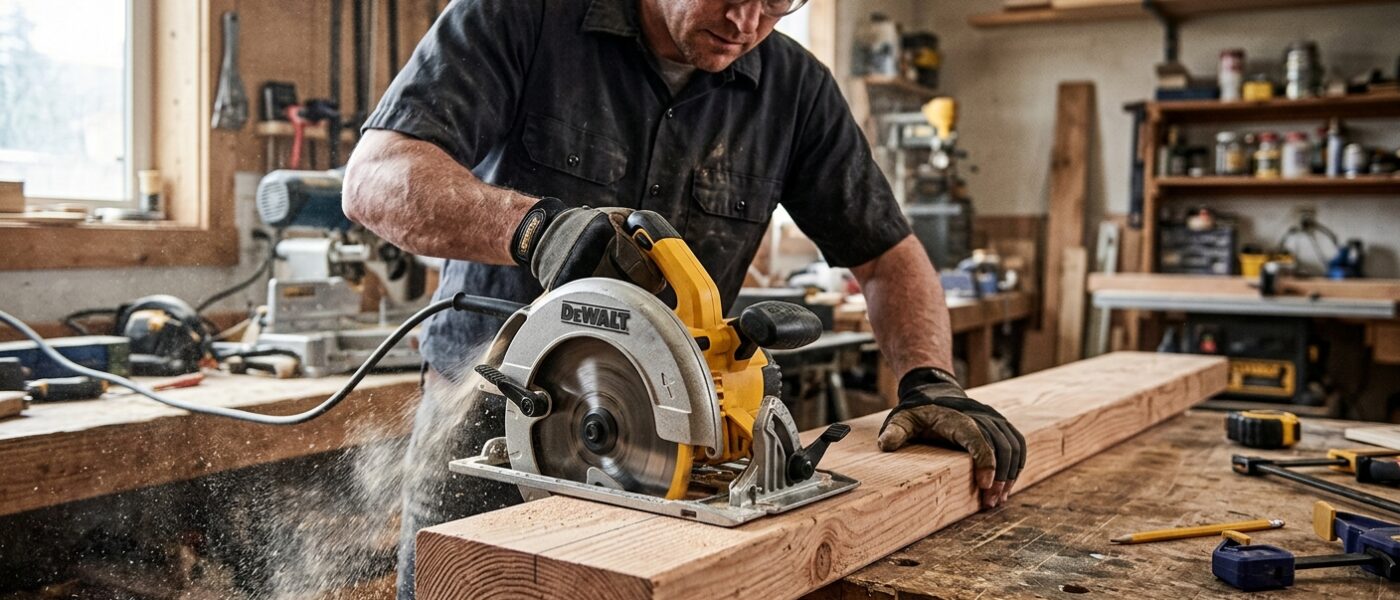
DeWalt DWE575SB leads corded; Milwaukee M18 FUEL 2732 leads cordless — both are industry standards for good reason.
A circular saw is the backbone of any serious workshop or job site. It rips sheet goods, crosscuts lumber, trims doors, and – with the right blade – cuts fiber cement, metal roofing, and even tile. The challenge in 2026 is separating the genuinely capable machines from the lookalike imposters that share the same shelf space at big-box stores. Price alone won’t guide you: a $60 bargain saw can ruin a project as quickly as a $400 pro model can save one, but only if you choose the right tool for your actual workload.
Circular saws split into two main camps: corded (AC-powered) and cordless (battery). Corded saws deliver continuous, consistent power – ideal for shop use, extended sheet-good ripping, and any task near an outlet. Cordless saws have closed the performance gap dramatically with modern brushless motors and high-amp-hour batteries, but they still carry a premium and add weight. This guide covers both, sorted by budget and use case.
How We Evaluate Circular Saws
Blade size and cut depth: The industry standard is 7-1/4 inch (184mm) – it cuts cleanly through 2x lumber at 90° and at 45° bevel. Six-and-a-half-inch saws are lighter but sacrifice cut depth. Larger saws (8-1/4 inch) suit specialty applications.
Motor amperage (corded) or voltage/Ah (cordless): For corded, 15 amps is the benchmark for full-sized saws; 12–13 amps is adequate for lighter work. For cordless, 18–20V with a 5.0Ah or larger battery approaches corded performance.
Bevel capacity: Most saws bevel to 45°. Better saws reach 56°+ for cutting compound angles. Positive stops at 22.5° and 45° are helpful.
Base plate material and quality: Stamped steel base plates flex under load and cause crooked cuts. Cast magnesium or aluminum bases stay flat, register accurately against guide rails, and survive drops. Always check the base plate material before buying.
Dust management: Circular saws make enormous amounts of sawdust. Look for a dust port that accepts a standard 1-1/4 inch shop-vac hose. Electronic blade brakes stop the blade within 1–2 seconds of releasing the trigger – a critical safety and convenience feature.
Top Picks
1. DeWalt DWE575SB – Best Corded Overall
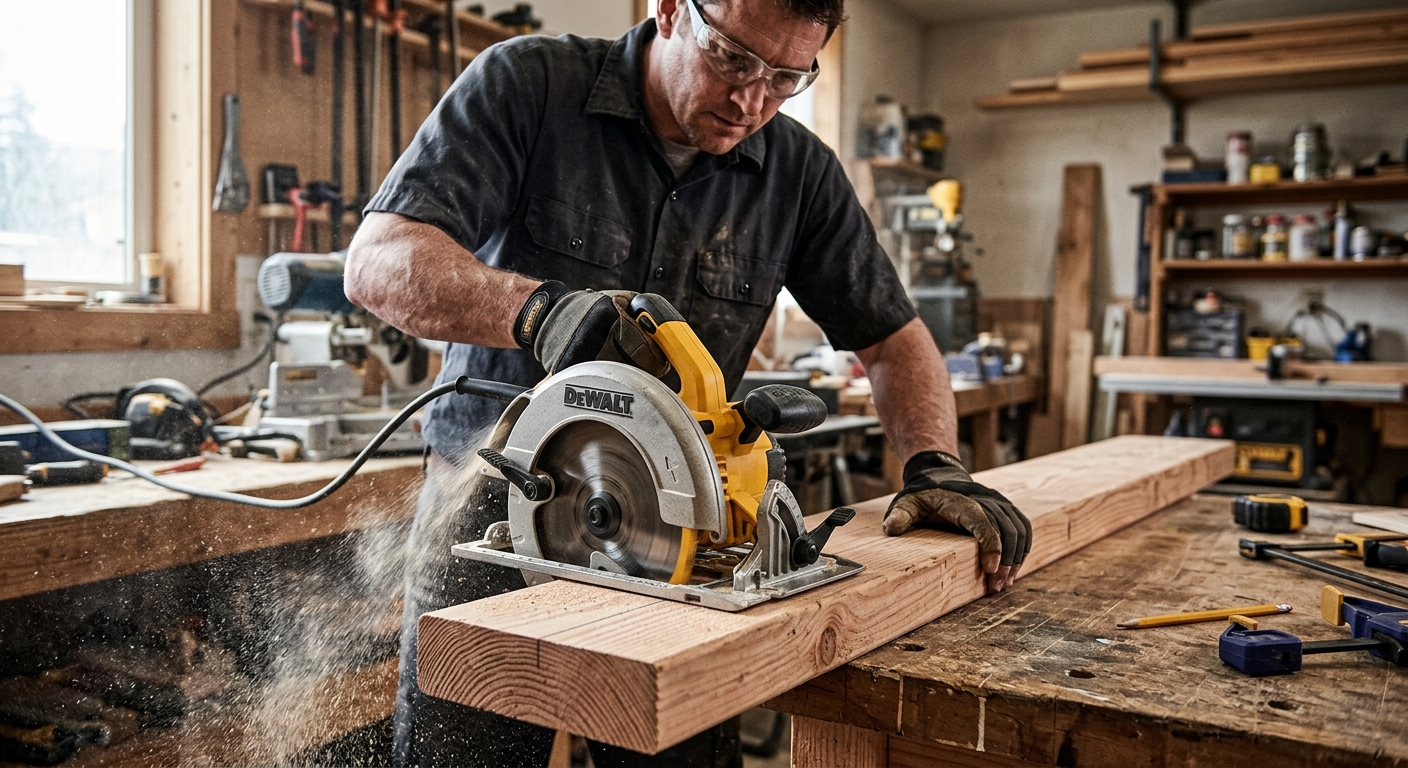
The DeWalt DWE575SB is the corded circular saw most professional carpenters reach for first. Its 15-amp motor, lightweight magnesium shoe (only 8.8 lbs), electric brake, and precise bevel adjustment at 0°–56° make it exceptional for everything from framing to fine trim cuts. The integrated dust blower keeps the cut line clear, a small detail that meaningfully improves accuracy.
At $129–$159, it’s not the cheapest corded saw, but the build quality and usability justify every dollar. DeWalt’s DWE575 (without electric brake) saves $20–$30 if the brake matters less to you, but we recommend the SB version strongly for safety reasons.
- Pros: Lightweight magnesium body, electric blade brake, precise adjustments, excellent sight line
- Cons: Cord management can be awkward without a cord hook, base plate scratches easily
- Price range: $129–$159
2. Milwaukee 2732-21HD M18 FUEL – Best Cordless Overall

Milwaukee’s M18 FUEL 7-1/4 inch circular saw with the included 12.0Ah HIGH OUTPUT battery cuts like a corded tool – not like a battery saw compromising on power. The POWERSTATE brushless motor handles ripping through LVL beams and stacking cuts through doubled 2x material without bogging down. The built-in LED light and electronic brake add professional polish.
The price is substantial ($349–$399 as a kit), but if you’re already on the M18 platform, adding this saw with your existing batteries at $249 tool-only is compelling. Cordless freedom on a job site or rooftop is worth real money.
- Pros: True corded-class power, M18 compatibility, excellent blade brake, LED work light
- Cons: Heavy with large battery (9.2 lbs), high kit price
- Price range: $249 (tool only) / $349–$399 (kit)
3. Skil 5280-01 – Best Budget Corded

Skil practically invented the circular saw category, and the 5280-01 proves the company still knows how to build a capable affordable tool. This 15-amp saw with its SpinTop depth adjustment knob makes setting cut depth fast and fingertip-intuitive. At $59–$79, it’s the standard recommendation for DIYers who need a reliable corded saw without platform lock-in or premium pricing. The laser guide helps less-experienced users follow cut lines accurately.
- Pros: Excellent value, laser guide, SpinTop depth adjustment, 15-amp motor
- Cons: Heavier than premium models, plastic shoe flexes under lateral pressure
- Price range: $59–$79
4. Makita XSH08Z – Best Cordless Runner-Up

Makita’s 18V X2 (36V) LXT circular saw uses two 18V batteries in series to match corded performance remarkably well. The 7-1/4 inch blade and brushless motor cut cleanly through anything a job-site carpenter throws at it, and the saw’s relatively slim profile makes blade changes and bevel adjustments fast. If you’re deep in the Makita LXT ecosystem, the XSH08Z is the cordless saw to buy.
- Pros: True 36V performance with LXT batteries, compact profile, smooth cuts
- Cons’=>’Requires two batteries (sold separately), heavy at 9.9 lbs with batteries
- Price range: $229–$279 (tool only)
5. RYOBI PBLCS300B – Best Budget Cordless
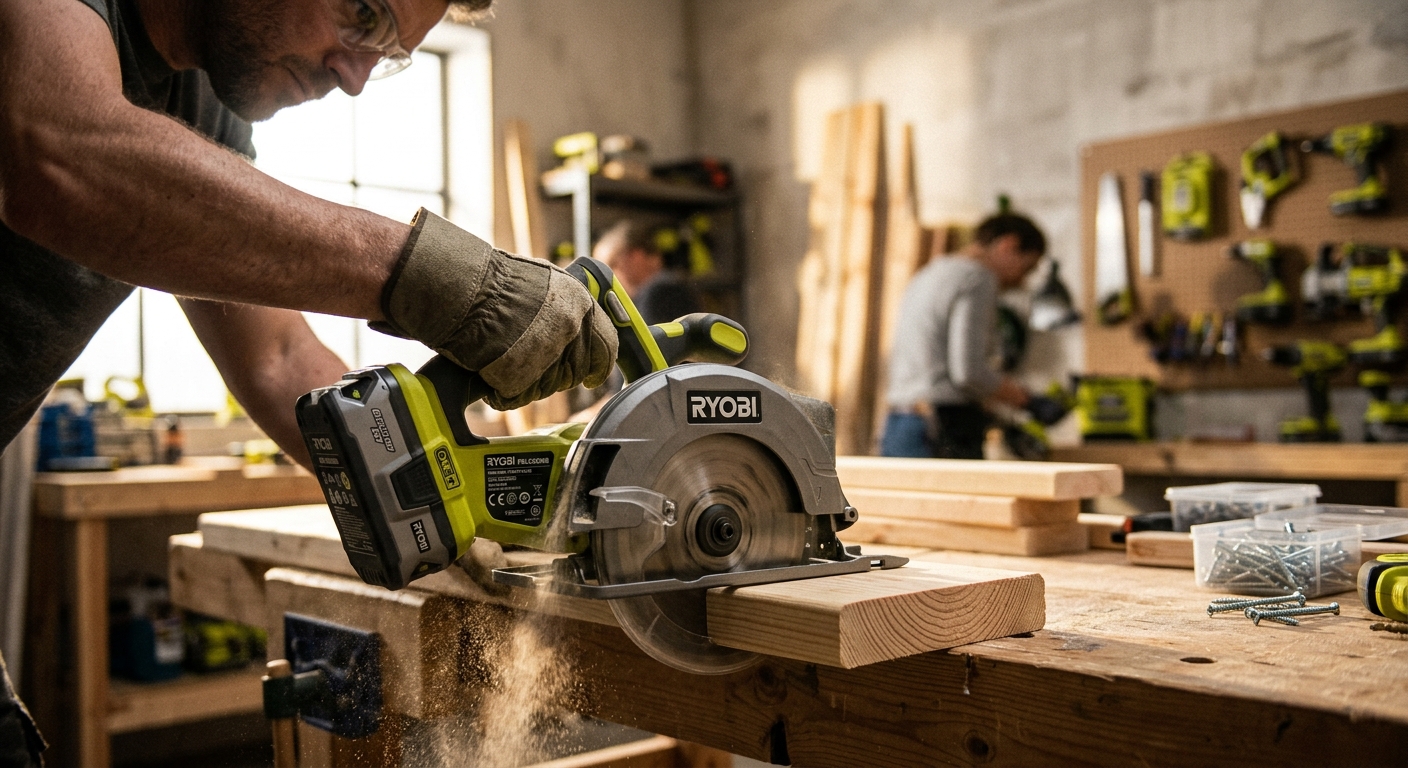
RYOBI’s ONE+ HP 18V brushless circular saw at $99–$119 (tool only) proves you don’t have to spend $250 to get a cordless saw with real capability. The brushless motor extends runtime notably over previous brushed RYOBI saws, and the 7-1/4 inch blade handles full-depth cuts through 2x lumber cleanly. This is the right pick for homeowners who already own RYOBI ONE+ batteries and need a saw for occasional projects.
- Pros: Affordable ONE+ HP brushless upgrade, 7-1/4 inch blade, acceptable performance for DIY
- Cons: Falls behind pro models under sustained load, base plate is stamped steel
- Price range: $99–$119 (tool only)
6. Bosch CS10 – Best Left-Blade (Worm Drive Style)
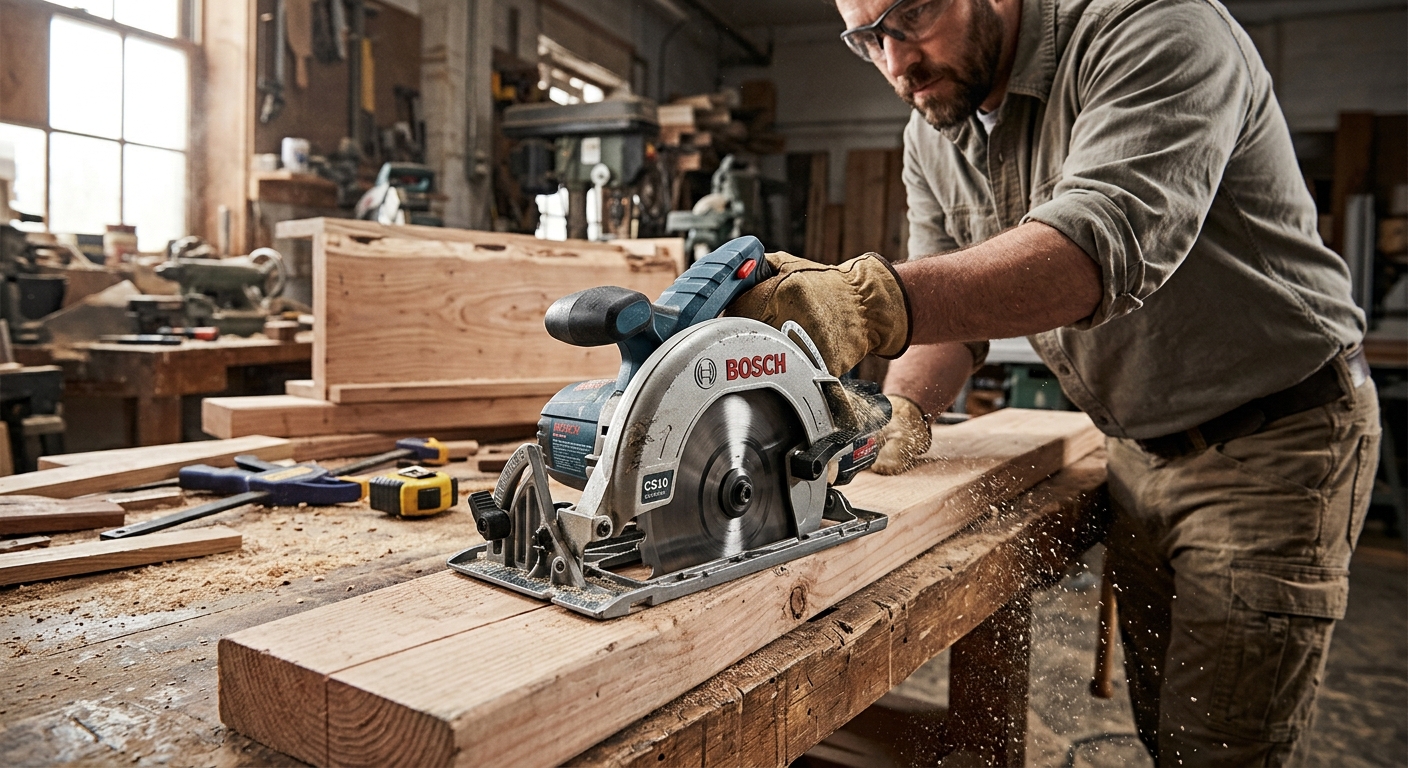
Left-blade saws put the motor on the right and the blade on the left of the shoe – a layout that gives right-handed users a clear sightline to the cut line without leaning over the saw body. The Bosch CS10 is the best inline (not true worm-drive) left-blade saw at $149–$179. Framers who’ve used worm-drive saws and want corded power with lighter weight often prefer this geometry.
- Pros: Ideal sightline for right-handed users, powerful 15-amp motor, precise bevel
- Cons: Left-blade layout takes adjustment if you’ve only used right-blade saws
- Price range: $149–$179
FAQ
Worm drive vs sidewinder – what’s the difference?
Worm-drive saws have the motor behind the blade (inline with the cut), connected by a worm gear. They’re heavier, more powerful under sustained load, and preferred by West Coast framers. Sidewinder (inline) saws are lighter, faster-spinning, and dominant on the East Coast and for general DIY. Both cut equally well for most tasks.
What blade should I use for cutting plywood?
A 40-tooth carbide-tipped blade is the standard for plywood. For very fine cuts with minimal tearout on the show face, use a 60- or 80-tooth blade and cut with the good face down (since circular saws cut on the upstroke and tearout occurs on the top face).
Do I need a track saw instead?
Only if you’re regularly breaking down full sheets of plywood or MDF and need perfectly straight rip cuts without clamping a straightedge every time. For occasional sheet goods, a circular saw with a clamped straightedge guide gives equivalent accuracy at a fraction of the cost.
Bottom Line
Corded users should start with the DeWalt DWE575SB – it’s the most trusted saw in its price class for a reason. Budget buyers who need AC power get real value from the Skil 5280-01. Cordless buyers already on Milwaukee’s M18 platform should spend on the 2732-21HD; RYOBI ONE+ users get a solid brushless upgrade with the PBLCS300B. Don’t buy a circular saw without an electric brake – it’s a safety feature worth the few extra dollars every time.
Affiliate Disclosure: DIY Arsenal participates in the Amazon Associates Program and other affiliate programs. When you purchase through links on this site, we may earn a small commission at no additional cost to you. We only recommend products we have personally tested and genuinely believe in.