RYOBI ONE+ vs Ridgid 18V – Which Cordless System Wins for DIY?
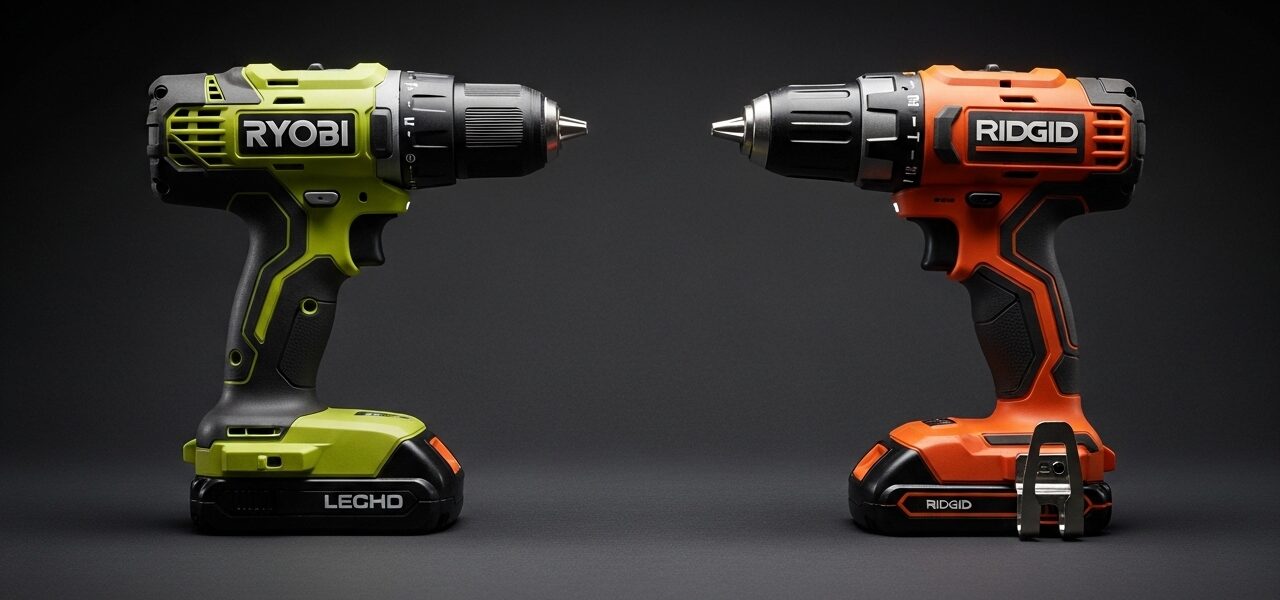
RYOBI ONE+ wins on breadth and price; Ridgid 18V wins on performance and LSA long-term value.
As an Amazon Associate, we earn from qualifying purchases.
RYOBI ONE+ and Ridgid 18V are both Home Depot-exclusive battery platforms made by the same parent company (Techtronic Industries), yet they serve meaningfully different buyer profiles. RYOBI dominates the DIY homeowner market with the largest cordless tool catalog on the planet – over 300 compatible tools – at entry-level prices. Ridgid 18V targets the serious DIYer who wants better performance, longer tool life, and Ridgid’s remarkable Lifetime Service Agreement (LSA) – free battery replacement for the life of registered tools.
The choice between them is less obvious than it might seem. This guide sorts it out clearly.
Platform Overview
RYOBI ONE+
RYOBI’s ONE+ platform is the biggest story in cordless tools for homeowners. The same 18V battery powers drills, circular saws, miter saws, string trimmers, leaf blowers, inflators, worksite radios, coffee makers, and over 275 other tools. Entry-level kits are priced $49–$99, making battery entry lower than any competitor. The platform’s breadth means every outdoor and indoor power tool need can be met with the same battery inventory.
Ridgid 18V
Ridgid’s 18V platform covers approximately 75 tools – far fewer than RYOBI – but at higher performance levels. Ridgid tools use better motor technology, heavier-duty construction, and improved grip ergonomics compared to their RYOBI equivalents. The Lifetime Service Agreement (requires tool and battery registration within 90 days of purchase) provides free battery replacement and tool repair for the registered owner’s lifetime – a benefit that adds significant long-term value to every Ridgid purchase.
Battery and Charger Comparison
Compatibility: RYOBI ONE+ and Ridgid 18V batteries are physically compatible – Ridgid batteries fit RYOBI tools and vice versa, though neither brand endorses cross-brand use. The LSA requires using Ridgid batteries in Ridgid tools for warranty coverage.
RYOBI battery lineup: 1.5Ah, 2.0Ah, 4.0Ah, 6.0Ah, and HIGH PERFORMANCE 4.0Ah options. Higher-capacity cells are the key to better performance from RYOBI brushless tools – always buy at least 4.0Ah for power tools. Budget 1.5Ah batteries are adequate for light-demand tools only.
Ridgid battery lineup: 2.0Ah, 4.0Ah, 5.0Ah, and 9.0Ah options. Ridgid cells deliver more consistent performance under sustained load than equivalent RYOBI batteries. The 5.0Ah battery is the standard recommendation for Ridgid power tools.
Charge time: Both platforms charge at comparable rates – 60–90 minutes for a 4.0Ah battery on standard chargers. Ridgid’s 9.0Ah battery takes 2+ hours and is intended for high-demand tools rather than drills and drivers.
Tool Category Comparison
Drills and impact drivers: Ridgid’s 18V brushless drill (R9601) outperforms RYOBI’s brushless equivalent in sustained torque and motor temperature under load. For casual use, the difference is minimal. For regular drilling into masonry, hardwood, and dense materials, the Ridgid’s advantage is real.
Circular saws: RYOBI’s brushless ONE+ HP circular saw handles most DIY cuts adequately. Ridgid’s circular saw is more powerful under load and more accurate with its fence and guide. For framing work, Ridgid is the better choice. For occasional panel cutting, RYOBI serves fine.
Specialty tools: RYOBI wins on breadth – they offer cordless inflators, worksite speakers, outdoor power equipment, lighting, and specialty tools that Ridgid doesn’t match. If covering every power need with one battery is the priority, RYOBI has no competition.
Outdoor equipment: RYOBI’s outdoor lineup (mowers, blowers, trimmers, pressure washers) is comprehensive and one of the most used in the homeowner DIY market. Ridgid’s outdoor selection is extremely limited. For a homeowner who wants to consolidate all outdoor tools onto one battery, RYOBI wins decisively.
The Ridgid LSA – A Closer Look
Ridgid’s Lifetime Service Agreement is genuinely unusual in the tool industry. Register your Ridgid 18V tools and batteries within 90 days of purchase, and Ridgid will replace failed batteries – for free – for as long as you own the registered tools. Lithium-ion batteries lose capacity over time and eventually fail; a typical 18V battery costs $30–$80 to replace. Over 5–10 years of tool ownership, the LSA can easily be worth $200–$500 in free battery replacements. This benefit requires in-store service at participating Home Depot locations.
Price Comparison
RYOBI ONE+ kits (drill + impact driver + 2 batteries + charger + bag) run $149–$199 for brushless models. Ridgid comparable kits run $179–$249. The Ridgid premium is modest – typically $30–$50 more for a comparable kit – and the LSA makes it a better long-term value for tools you plan to keep.
Who Should Choose RYOBI ONE+
- Homeowners who want the widest possible tool coverage from one battery
- Users who need outdoor power equipment (mowers, blowers, trimmers) on the same battery as indoor tools
- Budget-conscious buyers who want the lowest entry cost
- Renters or light users who don’t need professional performance
- Anyone who values tool breadth over depth of performance
Who Should Choose Ridgid 18V
- Serious DIYers who use their tools frequently and want better sustained performance
- Buyers who want the financial protection of lifetime battery replacement
- Users whose primary tool needs are covered by Ridgid’s 75-tool lineup
- Anyone who plans to keep tools for 5+ years and wants LSA protection against battery aging
FAQ
Are RYOBI and Ridgid batteries interchangeable?
Physically yes – the cell format and contact configuration are compatible. However, using RYOBI batteries in Ridgid tools (or vice versa) voids the LSA warranty on Ridgid tools. If LSA coverage is your reason for buying Ridgid, use only Ridgid batteries in Ridgid tools.
Is RYOBI reliable enough for serious work?
RYOBI ONE+ HP brushless tools are genuinely capable for most DIY tasks. The motor quality and battery quality have improved significantly over earlier RYOBI generations. The limitation is sustained heavy use – long drilling sessions in concrete, extended framing nail driving – where the motor temperature and battery sag become noticeable. For typical homeowner use (occasional projects), RYOBI is entirely reliable.
Does the Ridgid LSA cover batteries purchased separately?
Yes, if the batteries are registered within 90 days of purchase and linked to a registered Ridgid tool. Batteries purchased as standalone items (not as part of a tool kit) are eligible for LSA registration. Read the current LSA terms at ridgid.com as terms can change.
Bottom Line
Choose RYOBI ONE+ if breadth of tool coverage and low entry cost are priorities – no other platform gives you mowers, blowers, drills, saws, and specialty tools from one battery at this price. Choose Ridgid 18V if you want better sustained performance from your core power tools, plan to use them regularly, and want the financial protection of the Lifetime Service Agreement against future battery replacement costs. Both platforms are exclusive to Home Depot – a real consideration for buyers without convenient Home Depot access.
Affiliate Disclosure: DIY Arsenal participates in the Amazon Associates Program and other affiliate programs. When you purchase through links on this site, we may earn a small commission at no additional cost to you. We only recommend products we have personally tested and genuinely believe in.