Best Junction Box Kits for DIY Electrical
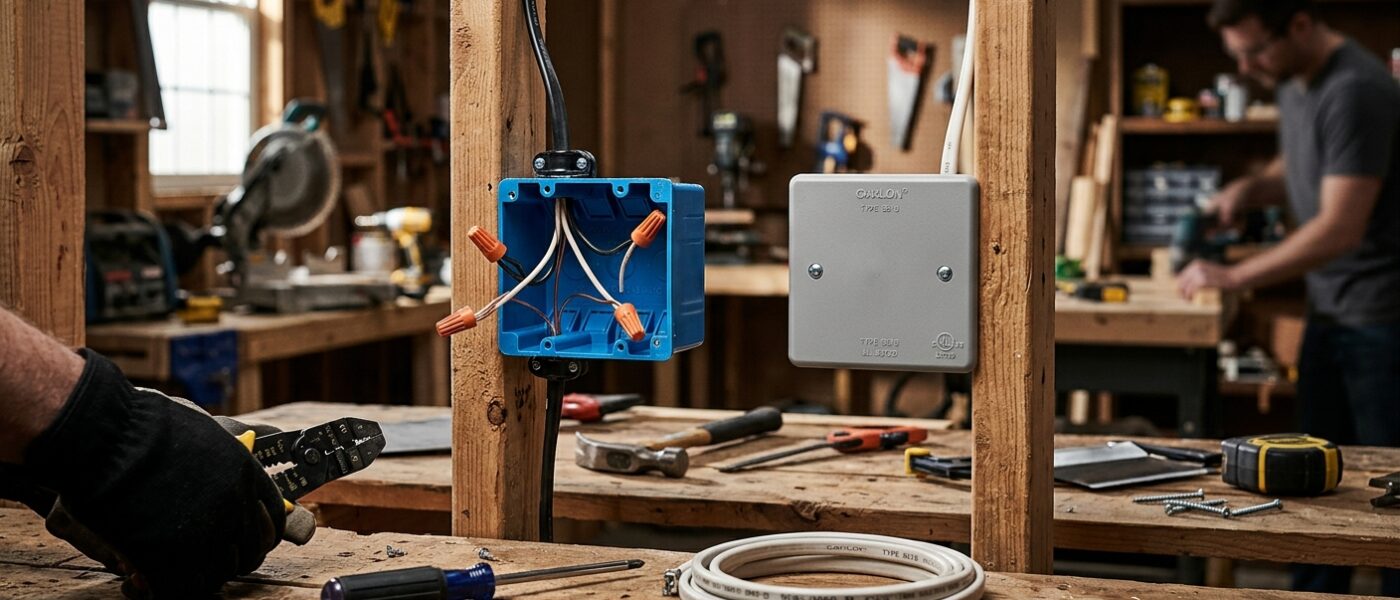
Box every connection — no exceptions. Carlon 18-cubic-inch boxes for standard junctions, fan-rated brace kits for ceiling fans, and weatherproof boxes for every outdoor installation.
As an Amazon Associate, we earn from qualifying purchases.
Every Wire Connection Belongs in a Box
The junction box is one of the most fundamental requirements in electrical code – every wire connection, splice, or tap must be in an accessible, covered box. Exposed wire nuts in a basement ceiling or connections taped and left floating in a wall cavity are code violations that create fire hazards and make future troubleshooting difficult. A comprehensive junction box kit ensures you have the right box, cover plate, and mounting hardware for every connection scenario you’ll encounter on a DIY electrical project.
Key Features to Look For
- Box fill capacity: NEC box fill calculations determine whether a box has sufficient volume for the number of wires and devices it contains. Each wire, device, and cable clamp counts as one or two cubic inches against the box volume. Larger boxes (18 cubic inches vs. 14 cubic inches) provide more flexibility – don’t minimize box size on junction boxes where multiple circuit connections occur.
- Material and location rating: Plastic (PVC) boxes are standard for most residential applications in dry locations. Metal boxes are required in metallic conduit systems (for ground continuity through the conduit) and are preferred in high-heat locations. Weatherproof boxes with gasketed covers are required for outdoor and wet locations.
- Mounting method: New construction boxes nail or screw to framing. Old-work (cut-in) boxes have expandable ears or wings that secure to drywall without framing access. Ceiling fan-rated boxes must be rated for dynamic load – a standard box is not approved for ceiling fan support.
- Pre-installed clamps: Metal boxes with internal cable clamps accept NM cable without separate connectors – simplifying installation. Plastic boxes without clamps require separate cable connectors at every entry. A minor convenience point, but relevant for boxes with many cable entries.
- Cover plate options: Junction box covers must be blank (no device openings) and must be accessible – not covered by drywall or insulation. The cover plate must match the box opening dimensions. Square, round, and octagonal covers have different standard sizes.
Top Picks
Carlon B618R Junction Box with Cover (2-Pack)
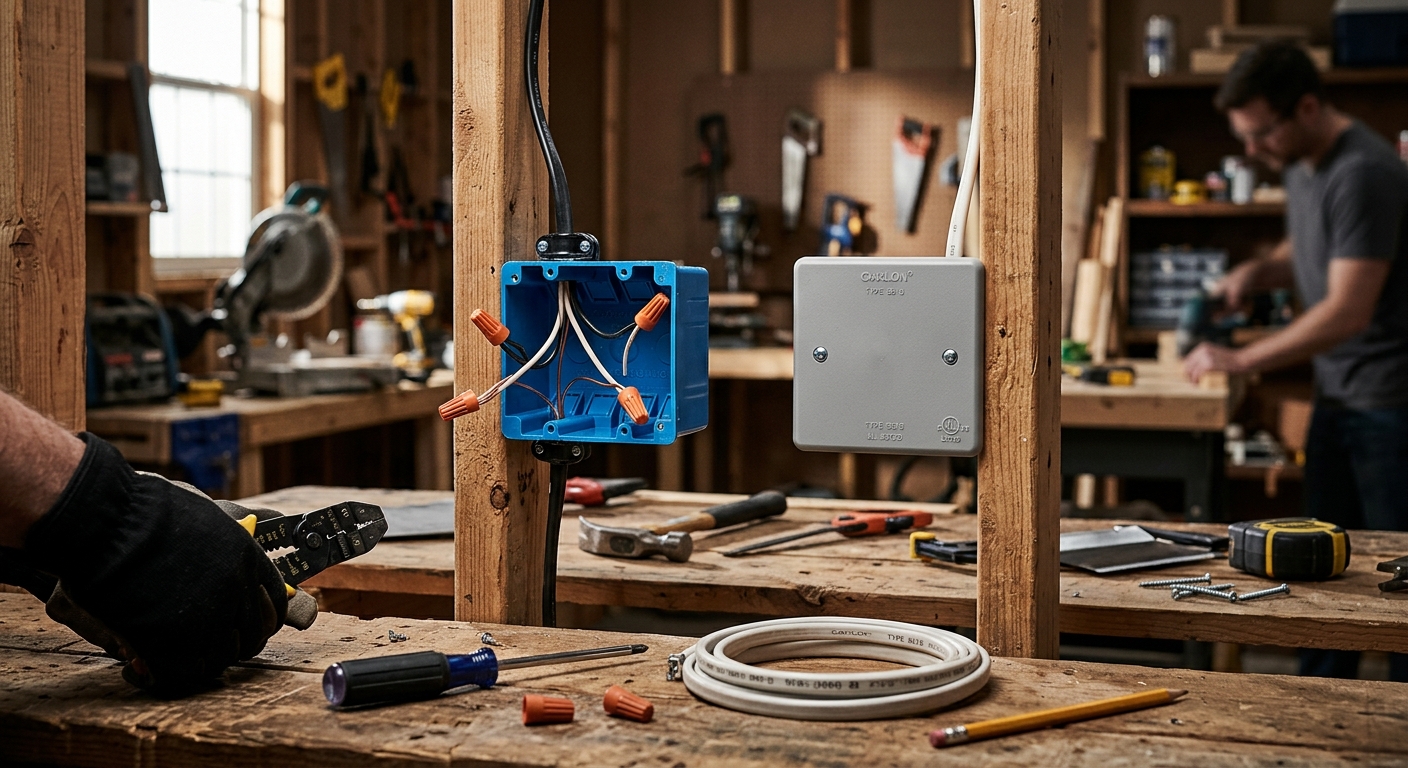
Carlon’s 18 cubic inch plastic junction box is the standard residential junction box for NM cable installations. The box includes cable entry knockouts on all sides, the cover attaches with included screws, and the 18 cubic inch volume accommodates most typical junction box wiring scenarios (four to six 14 AWG conductors). The two-pack is cost-effective for projects where multiple connections require boxing. Mount using the built-in nail flange to framing or the offset bracket to stud faces.
Raco 8XA New Work Steel Octagon Box
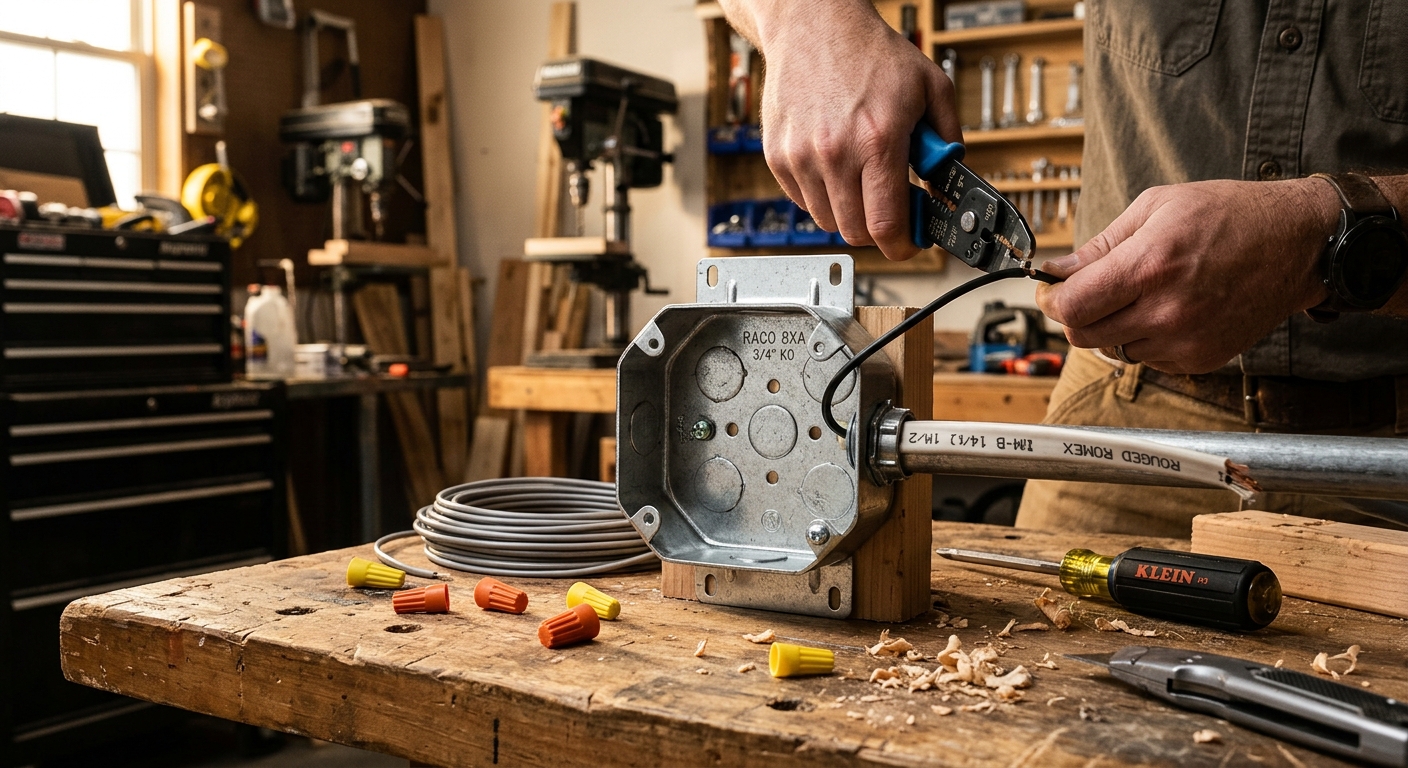
A 4″ octagon steel box for ceiling fixture and junction connections – the standard ceiling box for non-fan fixtures. The steel construction grounds through the conduit system in metallic conduit installations and the 15.5 cubic inch volume handles standard ceiling fixture wiring. Mount using included adjustable bar hanger for between-joist installation without joist access. Comes with appropriate cover plates for the ceiling application.
Westinghouse 0121600 Fan Brace Kit with Box
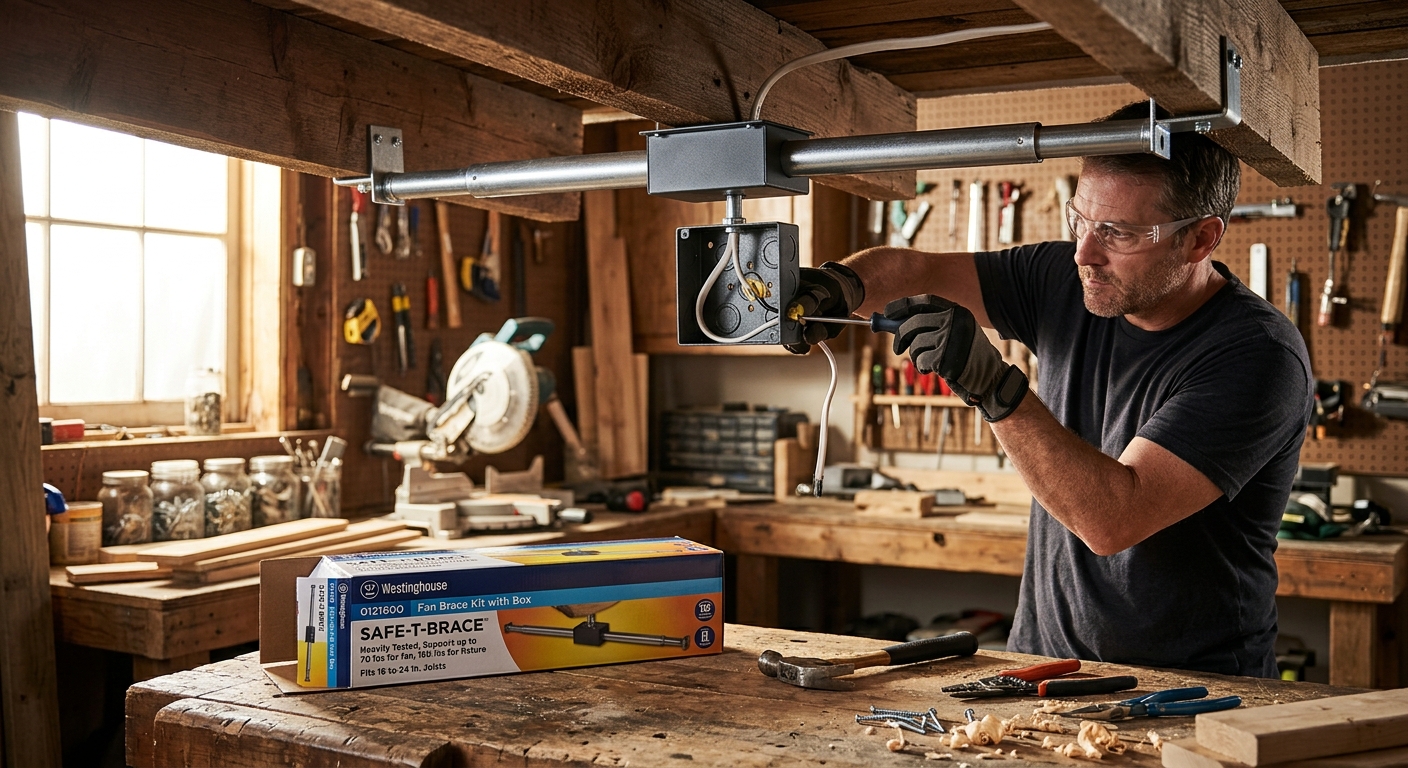
A ceiling fan-rated adjustable metal brace that expands between joists for ceiling fan installation where the existing box location isn’t at a joist. The fan-rated box is rated for 35 lbs static and 35 lbs dynamic load – unlike standard octagon boxes which are rated for fixture weight only. Essential for any ceiling fan installation into drywall without direct joist access. The brace expands and anchors with a standard screwdriver without attic access.
Hubbell Wiring Systems WP1097W Outdoor Box Kit
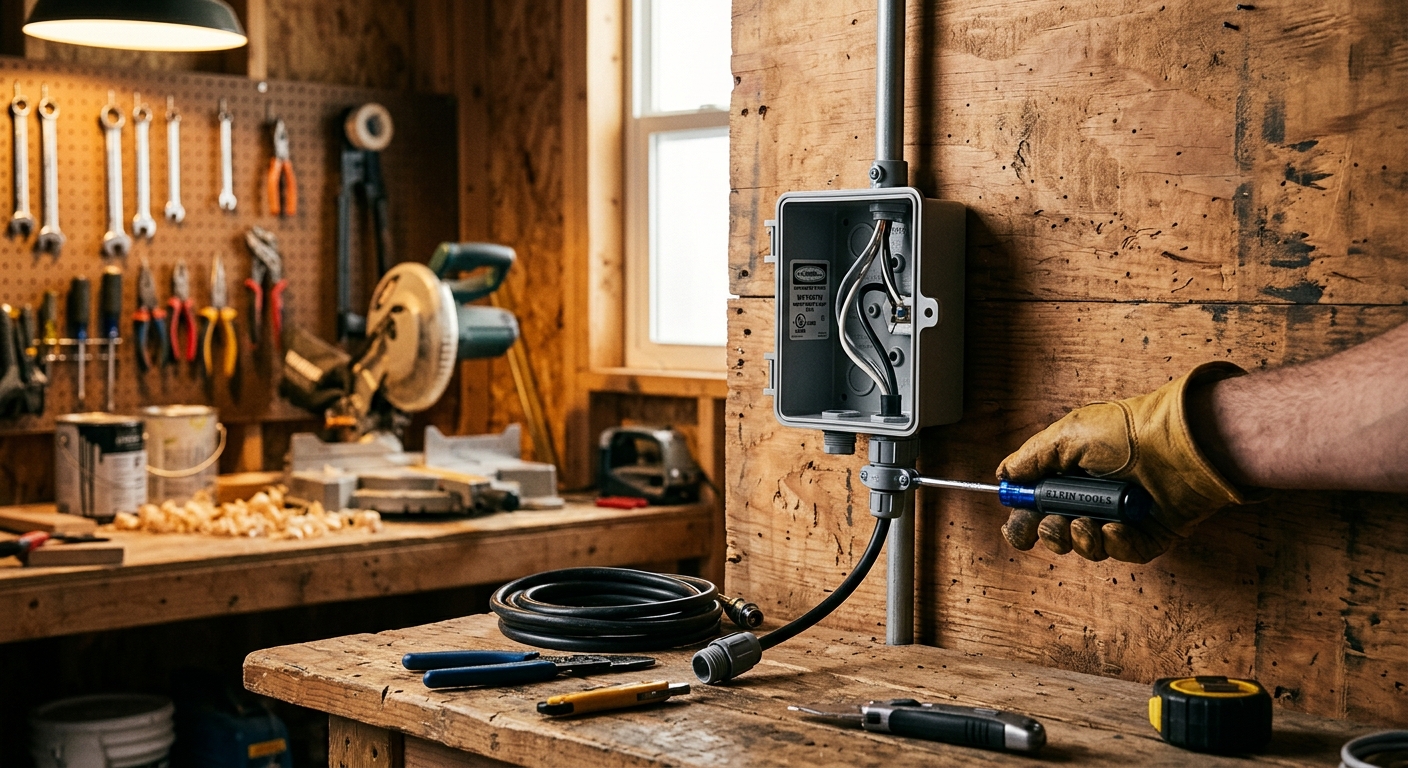
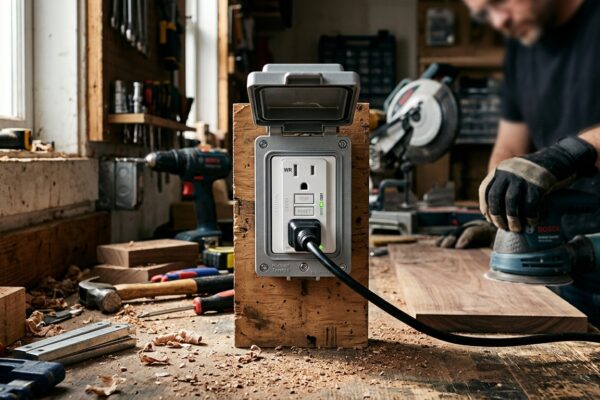
A weatherproof 1-gang outlet box kit with gasketed in-use cover for outdoor receptacle installation. The deep flanged design mounts to exterior sheathing and the in-use cover seals against weather even with a cord plugged in – a requirement for all outdoor GFCI outlet installations under NEC 406.9. Complete kit with mounting hardware reduces the number of separate component purchases for outdoor outlet projects.
Frequently Asked Questions
How do I know how many wires fit in a junction box?
Use NEC Article 314 box fill calculations: each 14 AWG wire = 2 cubic inches; each 12 AWG wire = 2.25 cubic inches; each device (switch or outlet) = 2 wire equivalents; each internal cable clamp = 1 wire equivalent. Add up all cubic inches and the total must not exceed the box volume stamped inside the box. When in doubt, go one size larger – a bigger box has no downside.
Can I install a junction box inside a wall as long as I mark its location?
No – junction boxes must be accessible without disturbing the building structure. “Accessible” in NEC means reachable for inspection and maintenance without removing permanent framing or wall surfaces. Marking the location outside and burying the box behind drywall doesn’t meet this requirement. If you need to make a junction in a completed wall, either cut a drywall access panel with a proper cover frame or relocate the junction to an accessible location.
What’s the minimum box depth for deep installations?
Standard device boxes are 2-1/8″ deep. For installations with many wires behind the device (multiple circuits, large gauge conductors), 2-1/2″ or 3-1/2″ deep boxes prevent the device from being pushed back by wire congestion. In any installation where wire fill seems tight, a deeper box resolves the problem at minimal additional cost.
Affiliate Disclosure: DIY Arsenal participates in the Amazon Associates Program and other affiliate programs. When you purchase through links on this site, we may earn a small commission at no additional cost to you. We only recommend products we have personally tested and genuinely believe in.