Best Cable Pulling Lubricants
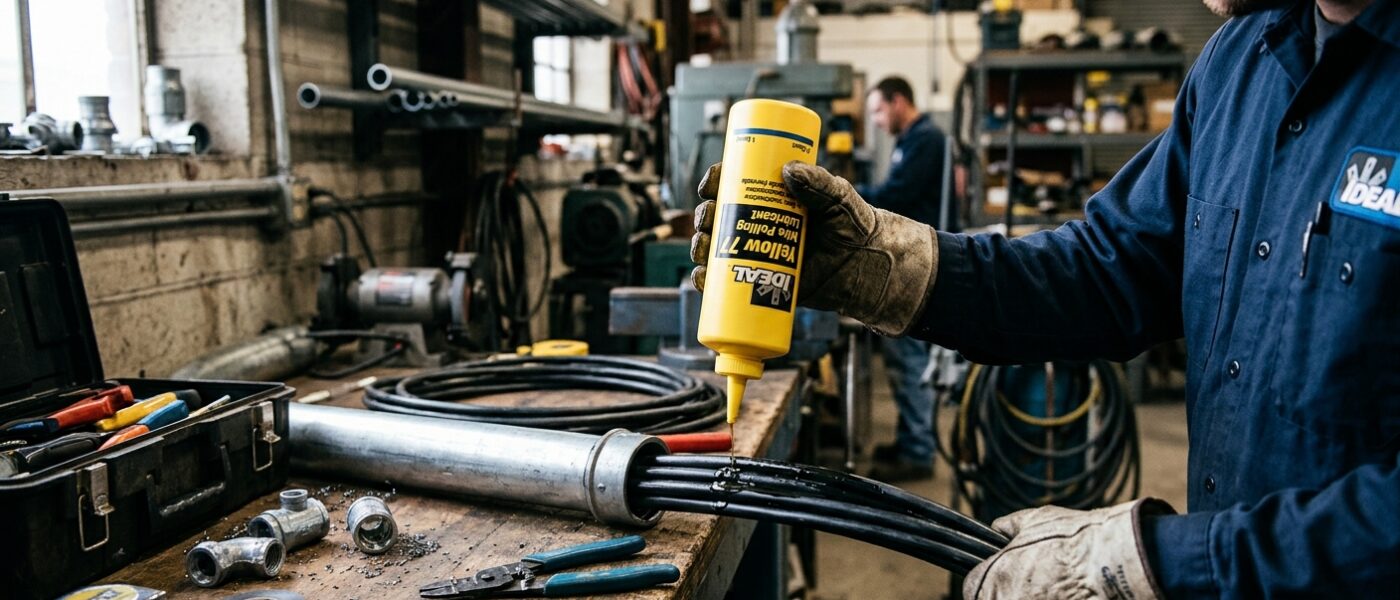
Ideal Yellow 77 in a quart size handles every homeowner conduit pull. Apply generously and coat the full wire bundle before feeding into the conduit — proper lubrication converts a two-person struggle into a one-person job.
As an Amazon Associate, we earn from qualifying purchases.
Pull Wire Through Conduit Without Burning It Out
Anyone who has tried to pull a bundle of wires through a long conduit run without lubricant understands quickly why the product exists. Friction builds up fast in conduit runs with multiple bends – what starts as a manageable pull becomes impossible, and forcing it damages wire insulation or causes the pull string to break. Cable pulling lubricant reduces friction dramatically and is the difference between a clean one-person pull and a two-person struggle that ends with damaged conductors.
Key Features to Look For
- Wire insulation compatibility: Cable lubricant must be compatible with the insulation type you’re pulling – THHN/THWN, NM-B (Romex), coaxial, and fiber optic cables all have different insulation chemistries. Most general-purpose cable lubricants are compatible with THHN; check specifically for NM-B compatibility if you’re pulling Romex through conduit.
- Conduit material compatibility: PVC conduit is generally compatible with any water-based cable lube. EMT and rigid steel conduit can use the same lubricants. Confirm product specs when working with specialty conduit types.
- Formulation type: Water-based gels are the most common – easy to apply, compatible with most insulation, and clean up with water. Wax-based lubricants are dry and don’t drip, but are harder to apply uniformly in long pulls. Petroleum-based products exist but can degrade PVC insulation over time and should be avoided.
- Application method: Pour-over, brush-on, and squeeze-bottle application are all available. For large conduit, pouring into the conduit end and coating the wire as it feeds in is effective. For smaller conduit, coating the wire from a bucket as it enters is the standard method.
- Pulling capacity per unit: For long runs (100+ feet with multiple bends), the amount of lubricant used is significant. Gallon containers are cost-effective for larger projects; quart sizes are appropriate for occasional homeowner pulls.
Top Picks
Ideal Industries Yellow 77 Wire Pulling Lubricant
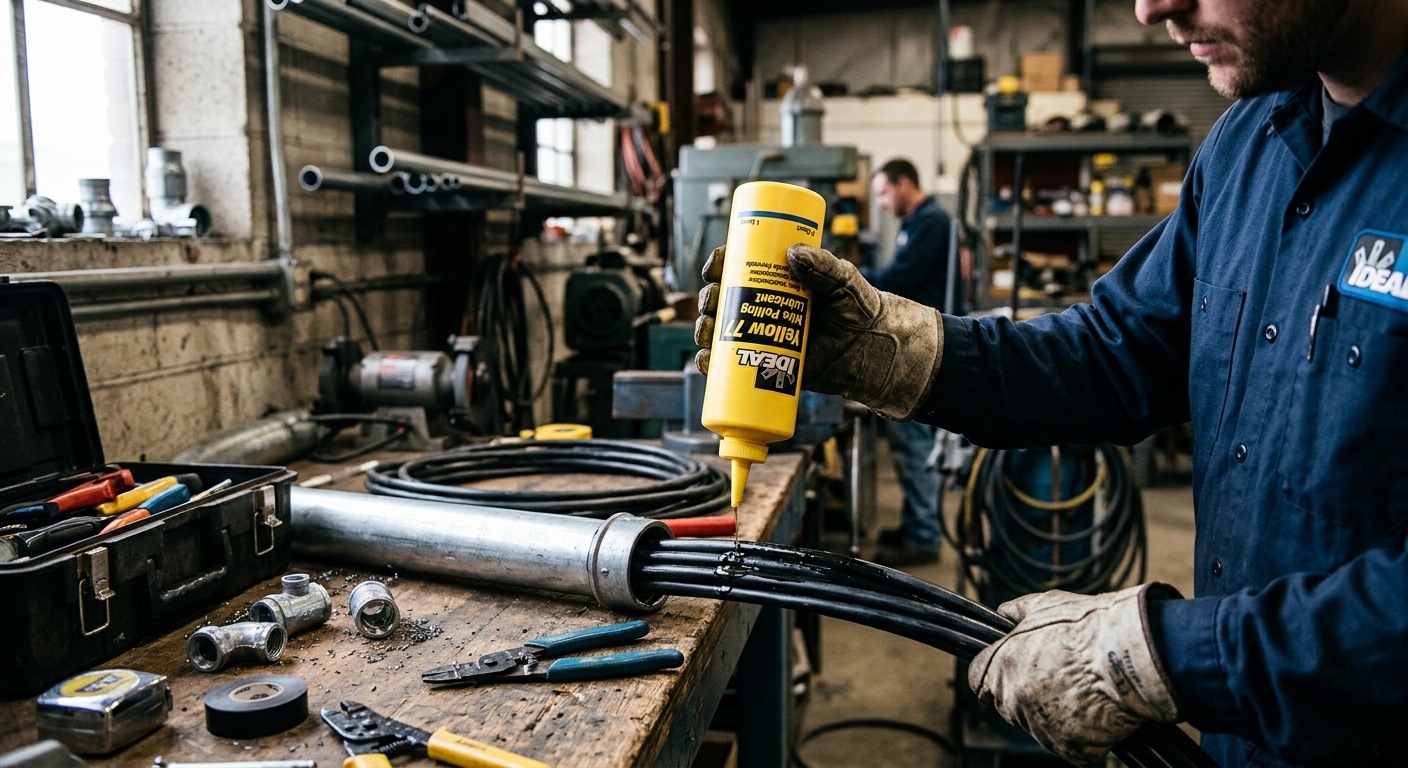
Yellow 77 is the benchmark cable pulling lubricant – the product against which competitors are measured. The water-based wax formula is compatible with THHN, THWN, and most insulation types, doesn’t drip or run excessively, and dramatically reduces pull tension in both plastic and metal conduit. Available in quart and gallon sizes. The yellow color allows visual confirmation of coverage along the wire bundle. This is what electricians stock in their service vehicles and what homeowners should buy for any serious conduit pull.
Gardner Bender Slick Stik Wax Lubricant
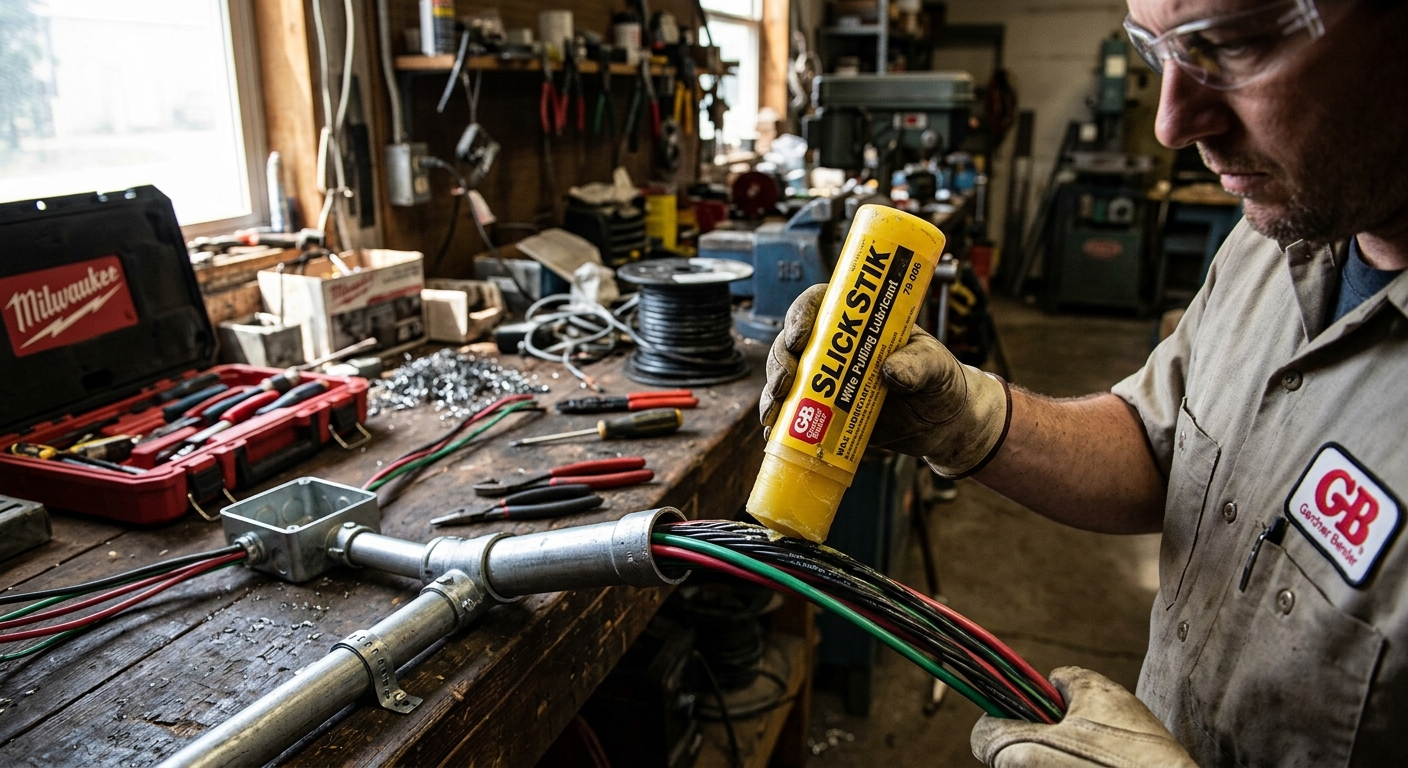
A solid wax stick lubricant applied by rubbing directly on the wire before feeding into the conduit. The wax format eliminates the mess associated with gel lubricants – no dripping on hands and no waste from overapplication. Effective for shorter pulls (up to about 50 feet) in straight or single-bend conduit. For longer runs, the gel lubricants provide better coverage and reduced tension at volume.
Southwire Slick Coat Wire Pulling Lubricant
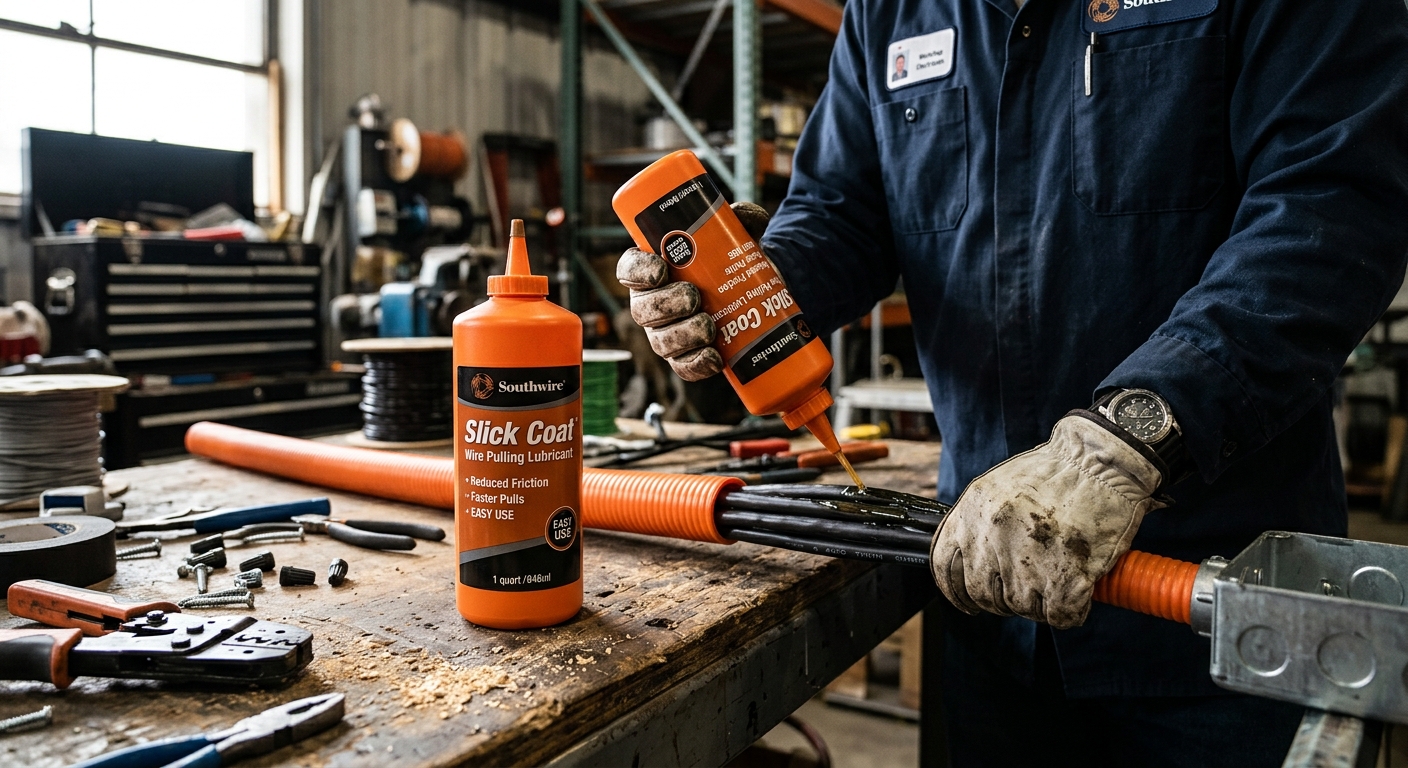
Southwire’s pre-applied lubricant – available on Southwire’s SIMpull wire products as a factory-applied coating on the wire insulation itself. Not a separate product to purchase, but worth knowing about: specifying SIMpull THHN wire on larger conduit pulls significantly reduces pull tension without requiring separate lubricant application. An excellent choice for new construction and major renovation projects where wire is being purchased anyway.
American Polywater J Pulling Lubricant
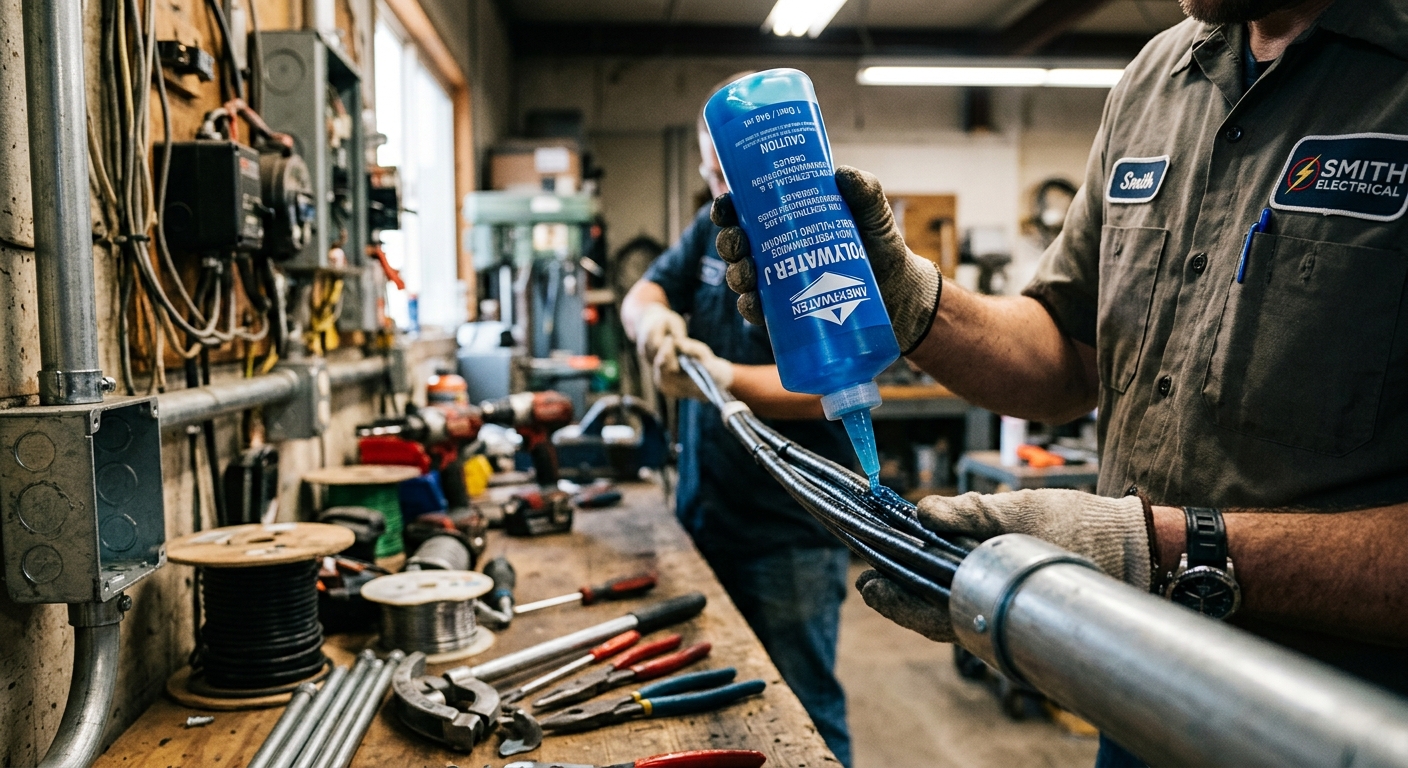
A polymer-based pulling lubricant rated for particularly difficult pulls – high fill conduit, long runs, and multiple tight bends. The gel formula maintains viscosity better than standard wax-based lubricants in high-temperature conduit environments and provides lower coefficient of friction on extended pulls. Higher cost than Yellow 77 but the right specification for difficult pulls where standard lubricants don’t provide adequate pull tension reduction.
Frequently Asked Questions
How much lubricant do I need for a 100-foot conduit run?
A rough guideline is 1 ounce of lubricant per foot of conduit for a typical bundle of 3 THHN wires in 3/4″ conduit – approximately 100 ounces (about 3/4 gallon) for a 100-foot run. Add 25% for runs with more than two 90-degree bends. Better to have extra than run short mid-pull – stopping and restarting a pull midway dramatically increases tension at the stuck point.
Can I use dish soap as cable pulling lubricant?
Soap is sometimes used as an emergency substitute for short, straight conduit pulls. It works marginally better than nothing but dries quickly, doesn’t stay on the wire surface well, and can leave residue that actually increases friction over time. For any run longer than 25 feet or with a bend, proper cable lubricant is not an optional expense – it’s a practical requirement.
Do I need lubricant for pulling wire through flex conduit?
Flexible metal conduit (FMC) and liquid-tight flexible conduit (LFMC) have higher inherent friction than rigid conduit because of the corrugated inner surface. Lubricant is even more important in flex than in rigid conduit. Limit flex conduit runs to 6 feet (per code) whenever possible – not just for pull difficulty but for the code requirements limiting flex use to final connections rather than runs.
Affiliate Disclosure: DIY Arsenal participates in the Amazon Associates Program and other affiliate programs. When you purchase through links on this site, we may earn a small commission at no additional cost to you. We only recommend products we have personally tested and genuinely believe in.