Best Track Saws for DIY – Are They Worth the Price?
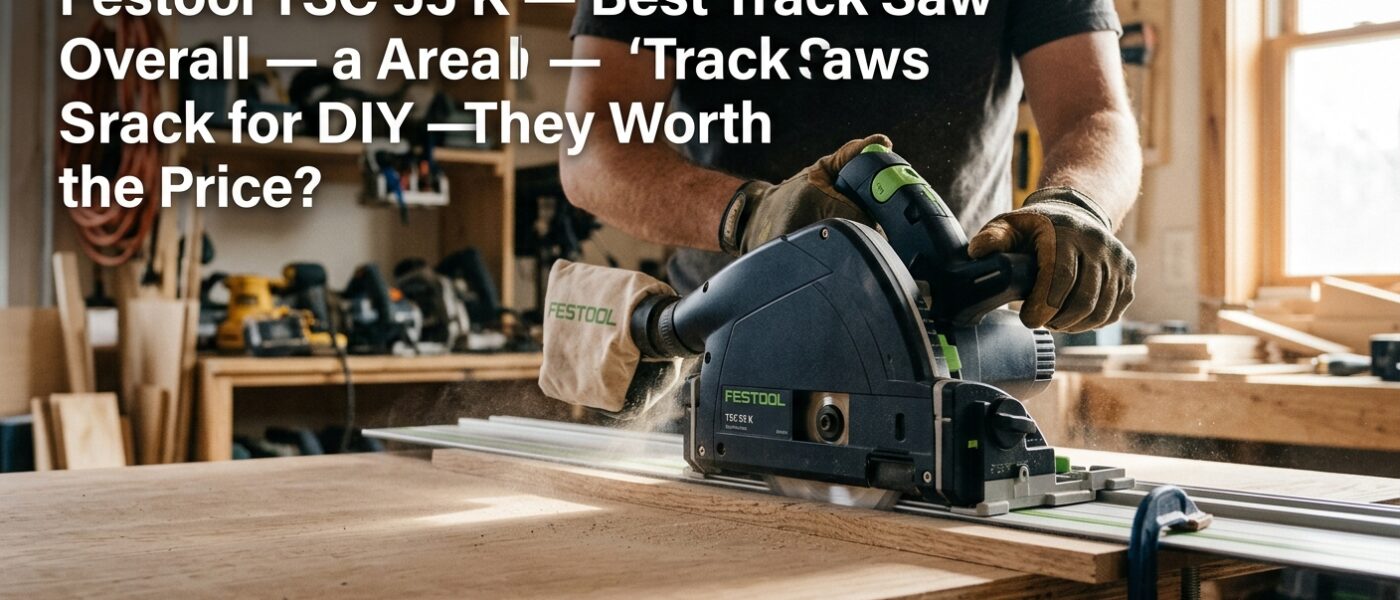
Festool leads for professional quality; Makita SP6000J1 is the best value entry into dedicated track saw cutting.
Track saws occupy a specific niche in the woodworking world: they make perfectly straight, splinter-free cuts through sheet goods (plywood, MDF, melamine) and long boards without the limitations of a table saw’s rip fence or the drift risk of a circular saw along a straightedge. A track (also called a guide rail) clamps to the workpiece, and the saw rides in a groove along it – producing cuts with zero deviation from the marked line, in material that would be dangerous to pass through a table saw at full sheet size.
Are they worth the price? For DIYers who regularly cut full sheets of plywood for cabinets, bookshelves, or furniture, yes – absolutely. The time saved in setup and the quality improvement in cut edges are genuinely transformative. For those who cut sheet goods once or twice a year, a circular saw with a clamped straightedge gives 90% of the result at 10% of the cost. This guide helps you decide which situation you’re in and what to buy if you need a track saw.
How We Evaluate Track Saws
Splinter control: The primary advantage of a track saw is the anti-splinter strip on the track’s edge – a sacrificial rubber strip the blade cuts through, leaving a splinter-free edge on both sides of the cut. This is only effective if the saw and track are matched (or compatible) and the splinter strip is in good condition.
Track compatibility and length: Most manufacturers make proprietary tracks. Festool tracks work only with Festool saws natively; Makita tracks fit Makita saws. However, adapters exist for cross-brand use, and several rail systems are compatible with multiple saw brands. Track length typically starts at 55 inches (cuts a 4×8 sheet diagonally) and extends to 118 inches with connectors.
Plunge depth and bevel: Full-depth cuts through 3/4-inch material require 2.25″ cut depth minimum. Most track saws exceed this. Bevel capacity (0–47° is typical) matters for cutting panel edges at angles for miter joints in cabinetry and furniture.
Dust extraction port: Track saws connect to shop vacuums for dust-at-source extraction. With a quality dust extractor, a track saw produces nearly no airborne dust – a dramatic quality-of-life improvement for shop and indoor work.
Standalone use: Many track saw bases can be used as a regular circular saw without the track. The quality of the base plate and bearing in standalone mode determines how useful the saw is without its guide system.
Top Picks
1. Festool TSC 55 K – Best Track Saw Overall
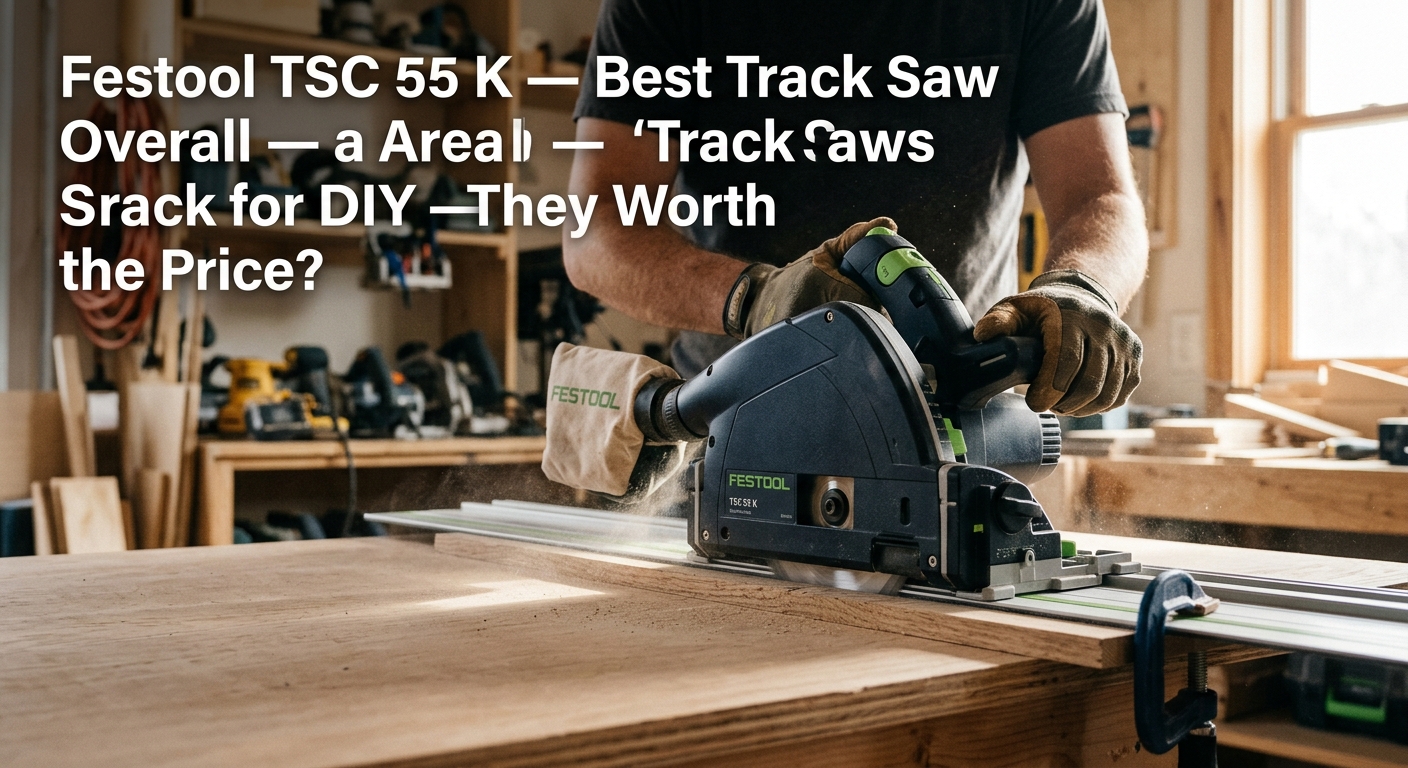
Festool’s track saw system has been the professional standard for cabinet shops and fine furniture makers for decades. The TSC 55 K (cordless, using Festool’s 18V system) delivers full corded-equivalent cutting depth with the convenience of battery power. The scoring blade feature (a small secondary blade that scores the surface before the main cut) virtually eliminates tearout even on melamine-coated sheet goods – the most difficult material to cut without splintering. At $799–$899 with track, it’s a serious professional investment.
- Pros: Scoring blade eliminates tearout, best dust extraction in class, Festool rail system, precise depth and bevel
- Cons: Very high price, proprietary Festool ecosystem, heavy for a cordless saw
- Price range: $799–$899 (with track)
2. Makita SP6000J1 – Best Value Professional Track Saw
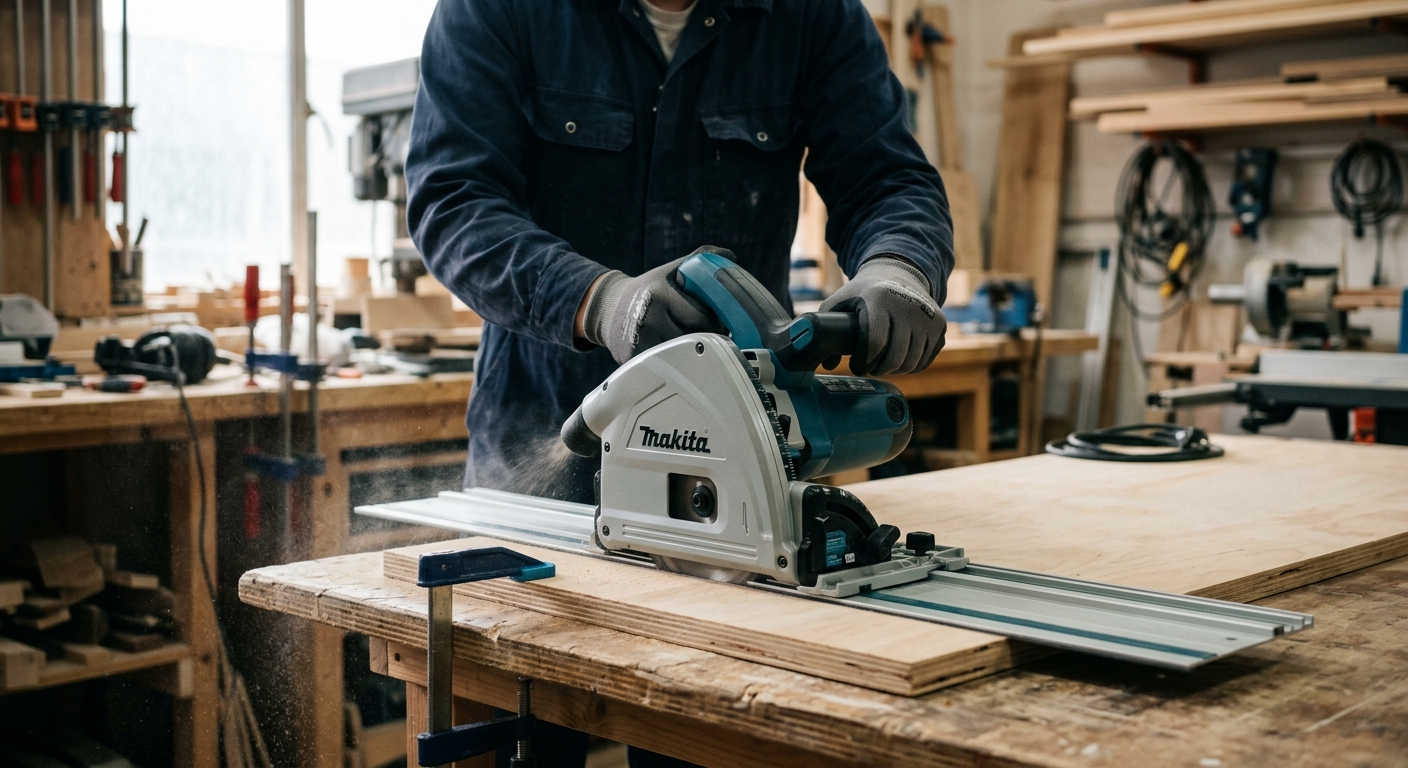
Makita’s corded track saw at $399–$449 (with 55-inch track) is the point where professional capability becomes accessible to serious DIYers. The 6-1/2-inch blade, 2-1/16-inch maximum cut depth, and splinter guard system deliver professional results on cabinet-grade plywood and MDF. The XT track system can be extended to full-sheet diagonal cuts with additional track. Compatible with Festool rails using a third-party adapter.
- Pros: Best price for professional-grade performance, effective splinter guard, excellent track integration, 6.5-amp motor
- Cons: Corded only (no cordless option in this line), track connector system is less refined than Festool
- Price range: $399–$449 (with track)
3. DeWalt DCS520T1 FLEXVOLT – Best Cordless Value Track Saw
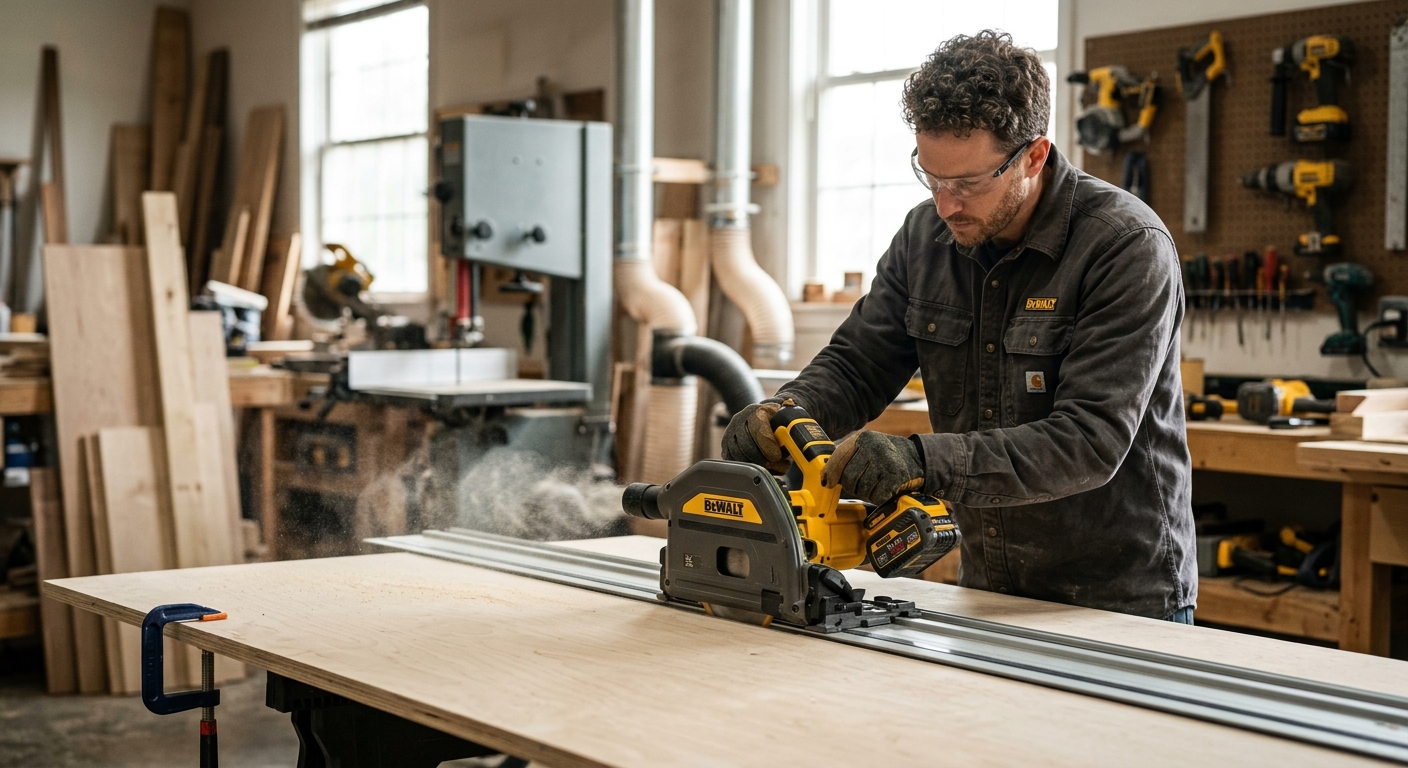
DeWalt’s FLEXVOLT cordless track saw at $349–$399 (tool only, track separate at $99–$149) runs on 60V FLEXVOLT batteries and delivers sustained cuts that match its corded competitors. The 6-1/2-inch blade reaches 2-1/8″ depth at 90° – enough for any standard sheet good. The dedicated DeWalt guide rail system is well-made, and the saw’s anti-splinter strip is effective. For cordless convenience in a track saw, DeWalt’s option is the most accessible premium choice.
- Pros: Cordless convenience, FLEXVOLT power, good anti-splinter strip, well-designed track system
- Cons’:’High total cost (saw + track), requires FLEXVOLT battery (expensive), track sold separately
- Price range: $349–$399 (tool only) + $99–$149 (track)
4. Kreg ACS200 Accu-Cut – Best Budget Track Saw Alternative
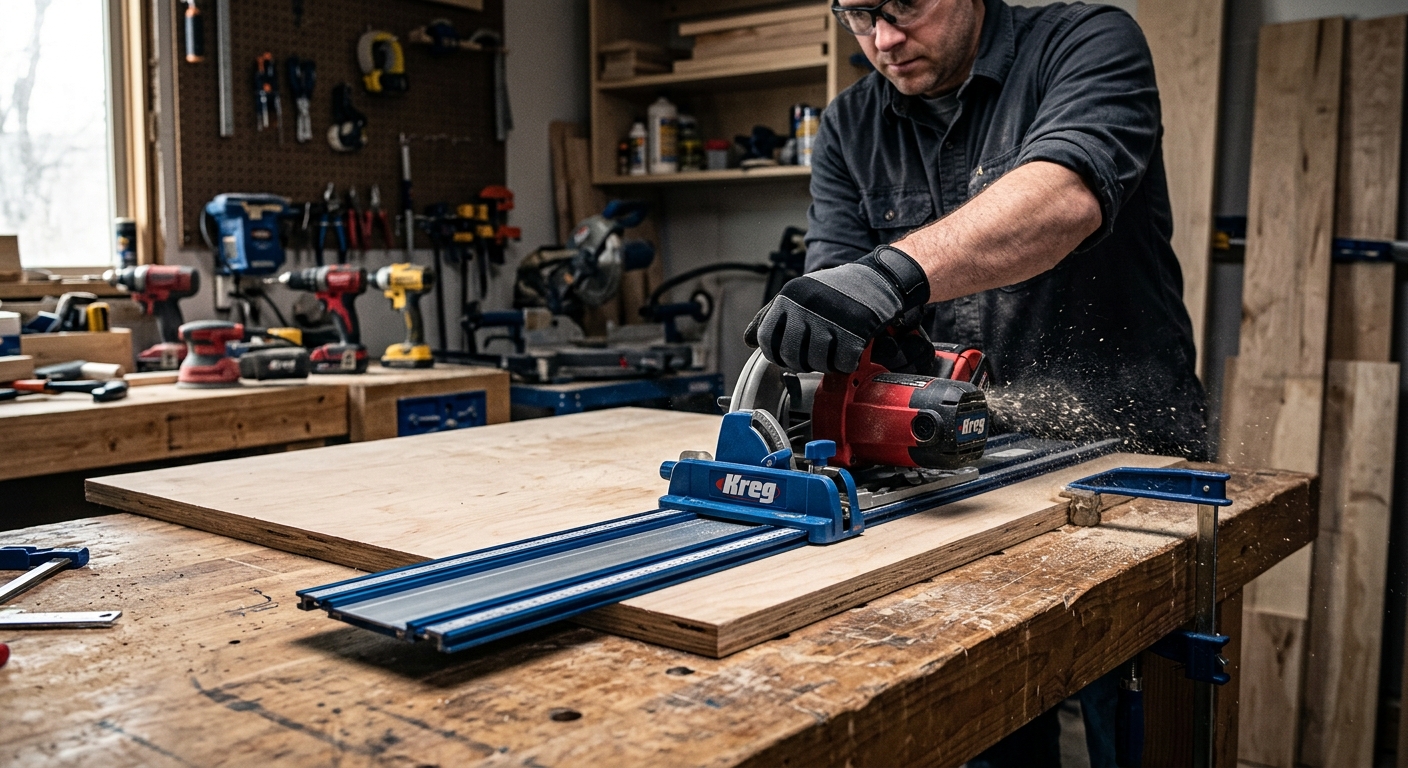
The Kreg ACS200 is not a track saw – it’s a circular saw guide system that turns your existing circular saw into a near-track-saw system. The aluminum guide rail clamps to the workpiece, the saw’s base plate rides in the guide, and the result is a straight cut that approaches track saw accuracy at dramatically lower cost ($99–$129 plus your existing saw). For DIYers who make occasional sheet goods cuts and can’t justify a dedicated track saw, this system is the smart intermediate step.
- Pros: Use your existing circular saw, accurate straight cuts, much lower cost than dedicated track saws
- Cons: Requires clamping setup (slower than dedicated track saw), no integrated anti-splinter strip, less accurate than dedicated systems
- Price range: $99–$129
5. Festool TS 55 REQ-Plus – Best Corded Mid-Range Festool
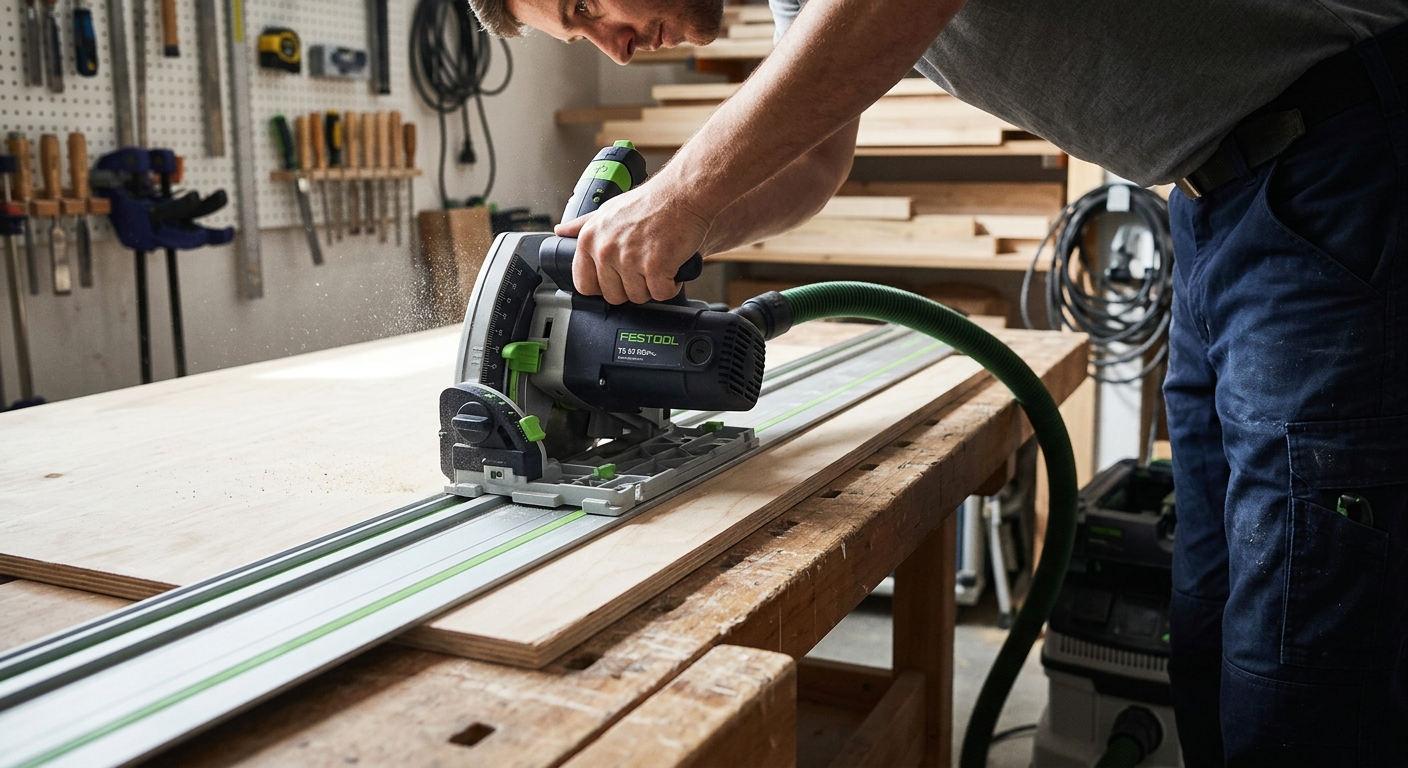
For those who want the Festool system without cordless premium, the corded TS 55 REQ-Plus at $499–$549 (tool only) is the entry point into the Festool track saw ecosystem. The same precision, same rail system, same dust extraction excellence – without the cordless convenience. Track and connector sets are sold separately ($149–$249 depending on length). For cabinetmakers and furniture builders who work primarily in a shop with outlets, this is the most cost-effective way into the Festool system.
- Pros: Festool system at lower price, same precision as cordless, excellent dust extraction, full rail compatibility
- Cons: Corded limits portability, significant accessory cost for full track setup
- Price range: $499–$549 (tool only)
FAQ
Can I use a track saw without the track?
Yes – track saws function as regular circular saws without the track. The saw body itself includes a standard base plate and handles. Track saws are slightly heavier than equivalent circular saws due to the precision base plate, but they work identically without the track for standard cuts.
Do I need a track saw or can I use a circular saw with a straightedge?
For cuts where a slight deviation in the line is acceptable, a circular saw with a clamped straightedge (or the Kreg Accu-Cut system) works well. For melamine, cabinet-grade birch plywood, and finished surfaces where splinter-free edges are required, a dedicated track saw with its anti-splinter strip is noticeably superior. Most DIYers start with the straightedge method and upgrade if their project quality demands it.
How do I extend a track for full 8-foot cuts?
Track systems use connector pieces that join two sections with alignment pins or channels. Festool’s track connectors create zero-gap joints that maintain straightness across the full 8-foot diagonal. Most brands sell 55-inch tracks with compatible connectors to achieve full-sheet diagonal cuts. Always confirm the connector system before buying – some budget tracks don’t align precisely at joints.
Bottom Line
For cabinet makers and furniture builders who cut sheet goods weekly, the Festool TSC 55 K (cordless) or TS 55 REQ-Plus (corded) represent the professional standard – the scoring blade and dust extraction alone justify the premium. The Makita SP6000J1 with its included track is the best value for serious DIYers entering the track saw category. Occasional sheet goods cutters should try the Kreg ACS200 guide system with their existing circular saw before committing to a dedicated track saw – the result may satisfy their needs at a fraction of the cost.
Affiliate Disclosure: DIY Arsenal participates in the Amazon Associates Program and other affiliate programs. When you purchase through links on this site, we may earn a small commission at no additional cost to you. We only recommend products we have personally tested and genuinely believe in.