Best Shop Vacs – Wet/Dry Vacuums for Every Shop Size
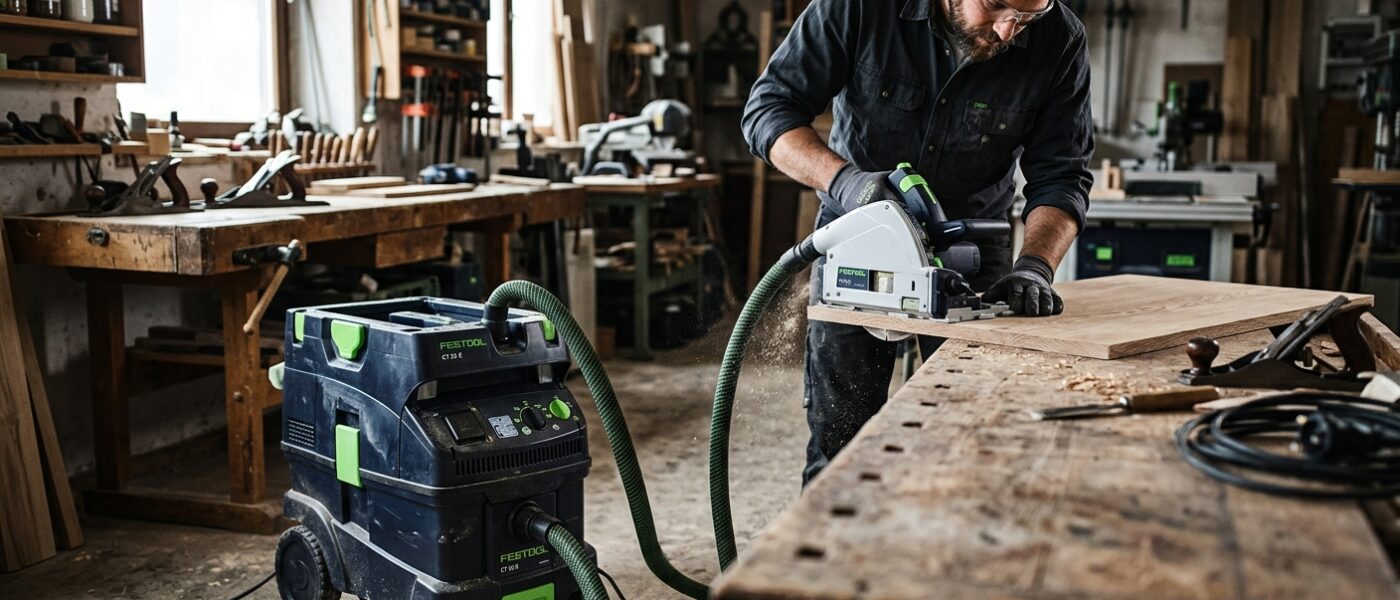
Ridgid 14-gallon NXT is the best all-purpose workshop choice; upgrade filter immediately for fine dust.
A wet/dry shop vacuum – commonly called a “shop vac” – is one of the most hardworking tools in any workshop or garage. Unlike household vacuums, shop vacs handle wet spills, dry debris, large wood shavings, drywall dust, insulation, and chunks of demolition debris that would destroy a household machine. They also serve as the dust collection source for power tools, dramatically improving air quality during sanding, routing, and cutting operations. Choosing the right capacity, filtration, and accessory set matters more than most buyers realize.
The market spans $30 budget units to $500 professional machines, and while the premium options offer real performance differences, most homeowners can get excellent service from mid-range units if they choose the right capacity and filter. This guide breaks it all down.
How We Evaluate Shop Vacs
Tank capacity (gallons): 2.5–5 gallons for garage and light shop use. 6–12 gallons for typical workshop and moderate demo cleanup. 14–20 gallon units for heavy construction, big chips from table saws, and large liquid spills. Bigger tanks mean heavier units and longer before emptying – choose based on your typical debris volume and physical ability to move the unit when full.
Motor horsepower and air watts: Peak horsepower is a misleading marketing number. Air watts (a combination of CFM airflow and static water lift) is the meaningful performance metric. Look for air watts in the 90–150 range for solid all-purpose performance. CFM (cubic feet per minute) determines how fast the vac picks up debris; water lift (in inches) determines suction power against resistance – important for sanding dust through a hose.
Filtration for fine dust: Standard foam filters and paper bags capture large debris but pass fine dust (like drywall compound, planer shavings, and sanding dust) through the exhaust. For fine dust capture, you need a HEPA filter or a high-efficiency cartridge filter (MERV 16 or higher). This is a critical health consideration – fine dust particles that pass through standard filters are the ones that cause lung damage.
Hose diameter and length: Most shop vacs use a 1-1/4-inch hose (fits most tool dust ports) or a 2.5-inch hose (for moving large debris quickly). A 7-to-10-foot hose gives reasonable working range without dragging the unit constantly. Longer hoses reduce suction; keep hose length under 20 feet for efficient operation.
Noise level: Shop vacs are notoriously loud – 75–85 dB is common. A few manufacturers (Festool, Mirka) prioritize quiet operation with electronically controlled motors and sealed housings. For enclosed shop spaces, quiet operation matters for long sanding sessions. Wear ear protection regardless.
Top Picks
1. Festool CT 26 E – Best Professional Shop Vac
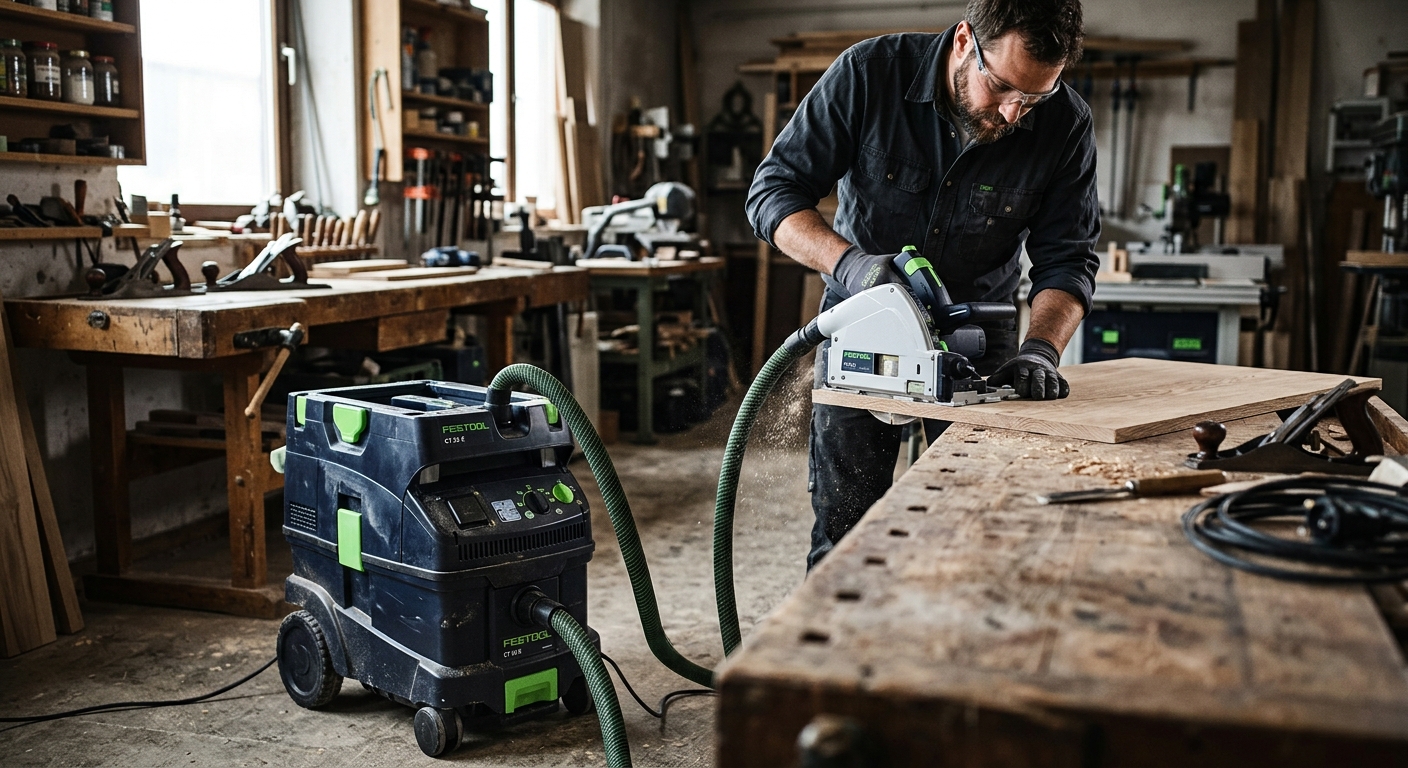
Festool’s CT 26 E is not a shop vac in the traditional sense – it’s a precision dust extractor designed to work with power tools and capture fine particles at the source, rather than collecting them after they’ve spread through the air. Its HEPA filtration captures 99.97% of particles down to 0.3 microns, the Auto-Clean filter system taps dust into the bag automatically (extending filter life and maintaining suction), and the Auto function adjusts suction speed to the connected tool. At $499–$599, it’s a health investment as much as a cleaning tool.
- Pros: HEPA filtration, Auto-Clean filter, excellent suction, quiet operation for its power class, Festool system integration
- Cons: Very high price, proprietary bags are expensive, overkill for basic cleanup
- Price range: $499–$599
2. RIDGID 14-Gallon NXT – Best Mid-Range Shop Vac
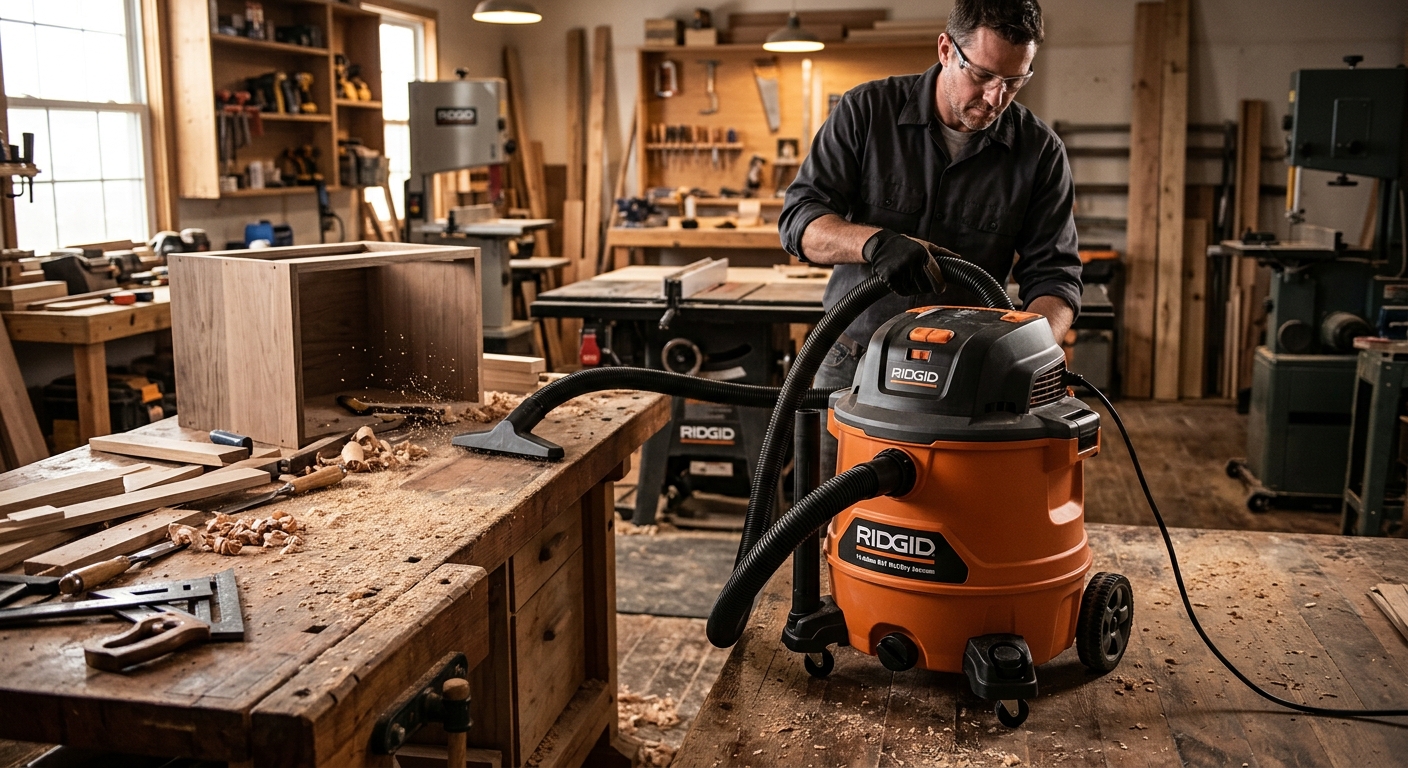
Ridgid’s 14-gallon NXT wet/dry vacuum at $99–$119 is the benchmark for mid-range shop vacs. Its 6-peak HP motor delivers strong suction for both large debris and connected tool dust collection. The integrated tool storage on the cord wrap is a practical convenience, and the included accessory kit (crevice tool, utility nozzle, car nozzle, two extension wands) handles most household cleanup. The NXT’s locking clamps on the drum are more secure than snap-fit competitors.
For workshop dust collection, pair the Ridgid with a separate cartridge filter rated for fine dust (Ridgid’s VF3500 filter, sold separately) – the standard foam sleeve isn’t rated for fine particles.
- Pros: Large capacity, 6-peak HP motor, durable locking clamps, excellent value, wide accessory ecosystem
- Cons: Standard filter inadequate for fine dust – upgrade filter separately, heavy when full
- Price range: $99–$119
3. Craftsman CMXEVBE17596 – Best Value 16-Gallon
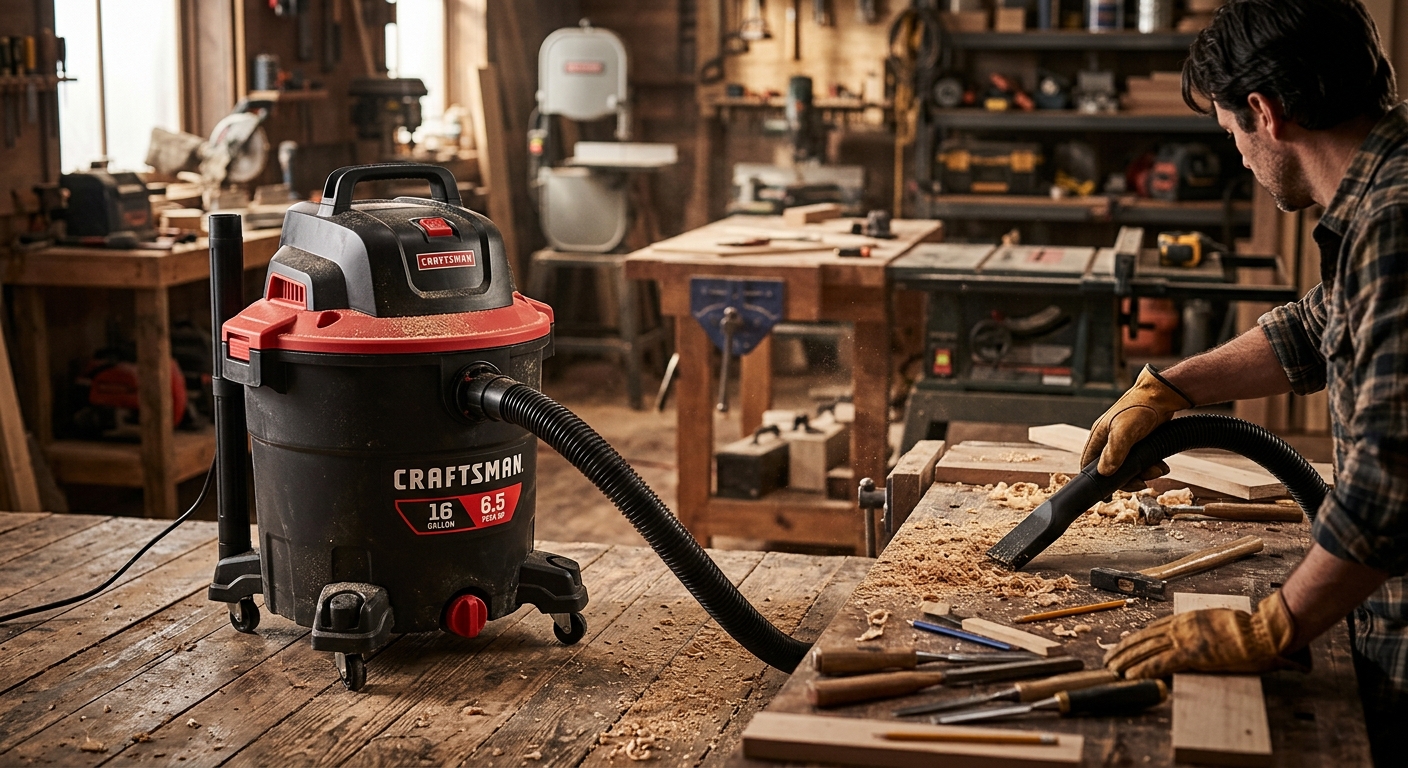
Craftsman’s 16-gallon shop vac at $79–$99 competes directly with Ridgid and wins on price while delivering comparable performance. The 6.5-peak HP motor is slightly stronger on paper; real-world suction is virtually identical to the Ridgid NXT. Accessory compatibility is broad – it accepts standard 1-7/8″ and 2.5″ accessories from multiple brands. For homeowners who want a capable, inexpensive shop vac for garage cleanup and light workshop use, the Craftsman is the pick.
- Pros: Excellent price, 16-gallon capacity, 6.5-peak HP motor, broad accessory compatibility
- Cons’>’:Filter is basic – upgrade for fine dust, fewer locking mechanisms than Ridgid
- Price range: $79–$99
4. DeWalt DXV06P – Best Compact Workshop Vac
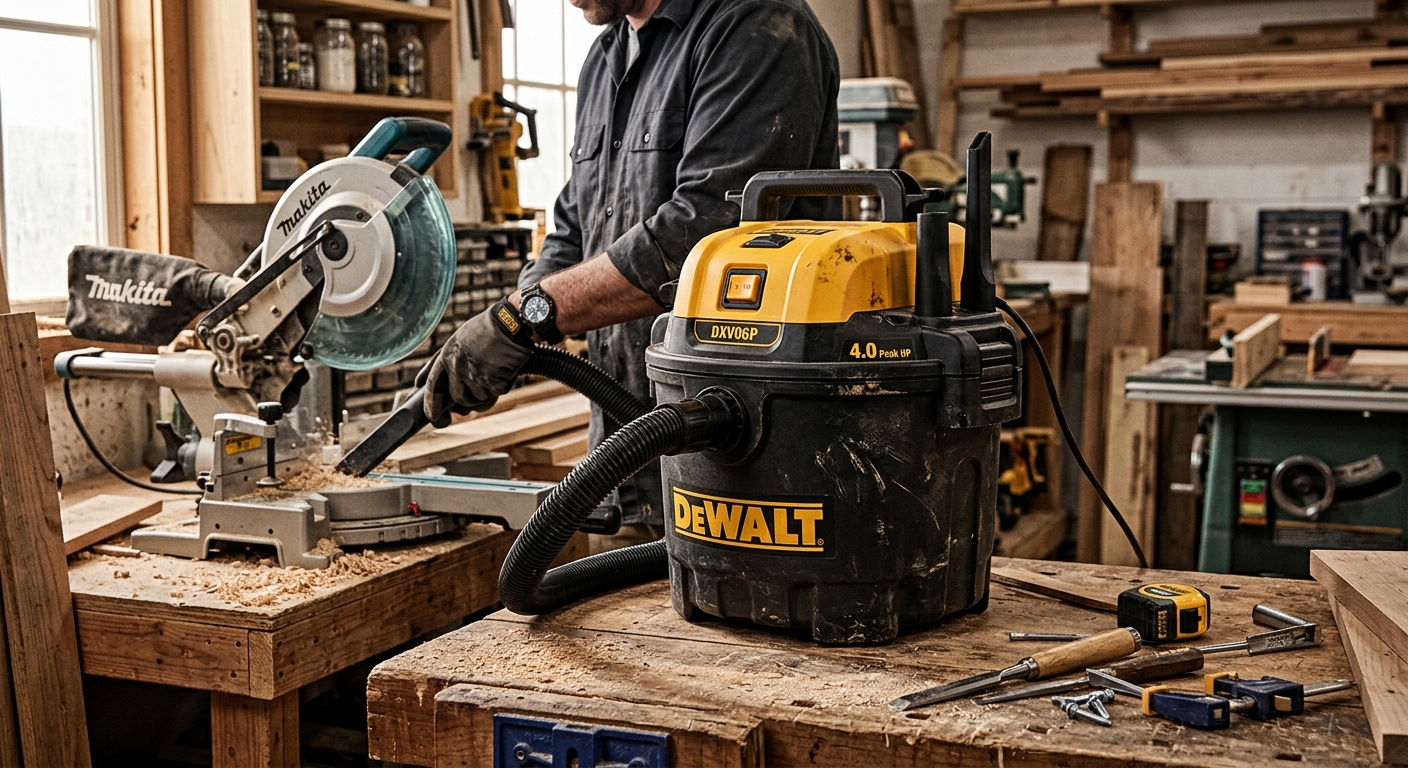
DeWalt’s 6-gallon portable shop vac at $59–$79 hits the sweet spot for bench-top and portable use. It connects to 1-1/4-inch tool ports for sanding and routing dust collection, weighs only 10 lbs empty, and stores easily under a workbench. For smaller workshops where floor space matters and cleanup isn’t about large debris volumes, the 6-gallon delivers excellent concentrated suction in a compact package.
- Pros: Compact and light, fits under workbench, great for tool dust collection ports, adequate for small shops
- Cons: Small tank requires frequent emptying in production shops, no auto-clean filter
- Price range: $59–$79
5. WORKSHOP WS0301VA – Best Budget Option
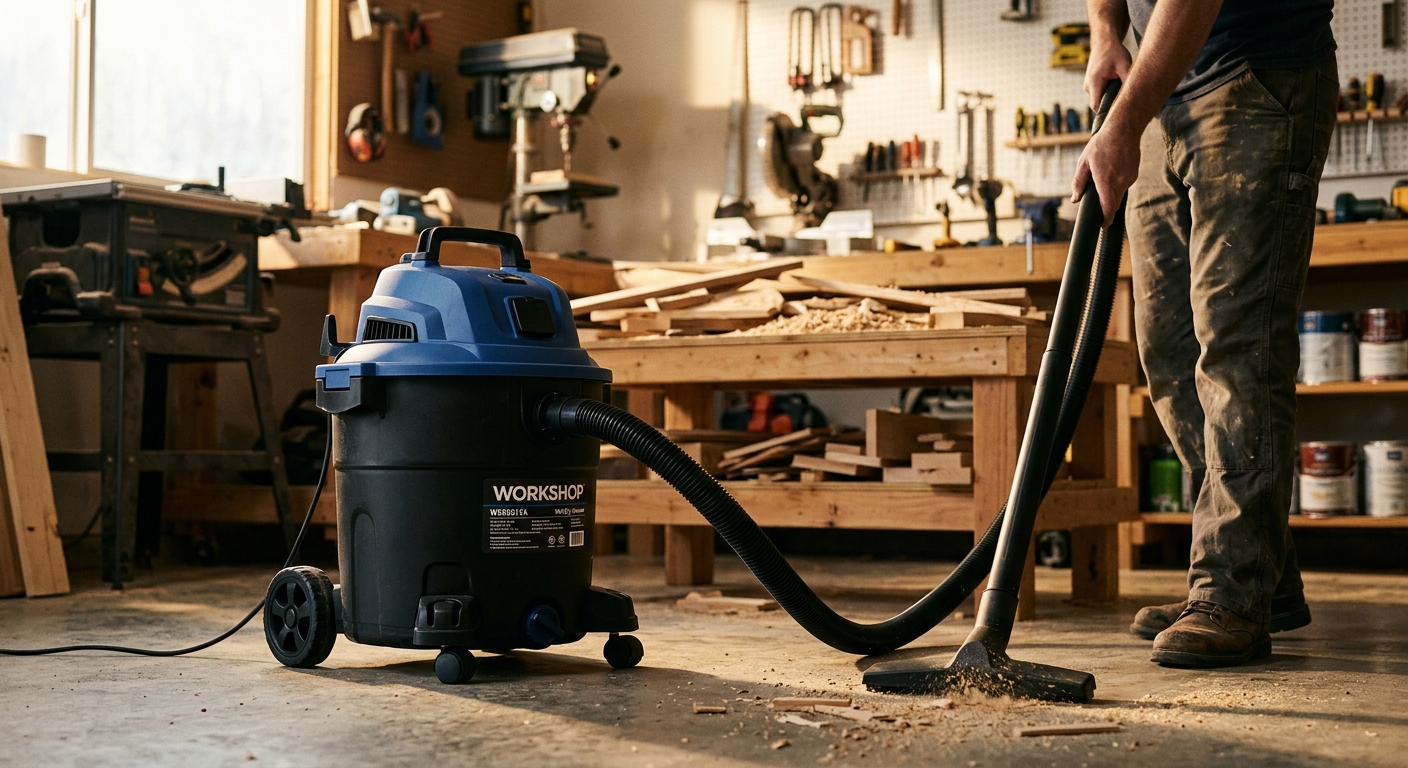
At $39–$49 for a 3-gallon model, WORKSHOP vacuums are the entry point for those who want a step up from no shop vac at all. Motor performance is adequate for light chip and debris pickup. Not recommended for tool dust collection or fine dust – use it for chips, spills, and construction debris cleanup after tool use. Treat it as a starter tool you’ll likely upgrade within a year of serious woodworking.
- Pros: Very low price, adequate for light debris, compact
- Cons: Not for fine dust, limited suction under long hose, basic filtration
- Price range: $39–$49
FAQ
Can I use my shop vac for dust collection from a table saw?
Sort of. A shop vac connected to a table saw’s dust port captures some fine dust and most larger chips. For a full dust collection system, a dedicated dust collector (single or two-stage) with proper CFM moves far more air and captures more fine particles. For occasional use and small shops, a shop vac with a fine-dust filter is a reasonable starting point.
What filter do I need for drywall dust?
Standard shop vac foam filters pass drywall compound dust – the fine particles that cause silicosis with long-term exposure. You need a cartridge filter rated MERV 16 or higher (or HEPA) for drywall and similar fine dust. Always wear an N95 respirator regardless of vacuum filtration – no consumer shop vac captures 100% of drywall dust.
How do I use a shop vac for wet pickup?
Remove the paper bag and cartridge filter before wet pickup – water will destroy them. Leave the foam sleeve in place (it’s waterproof) or remove entirely depending on manufacturer’s instructions. Empty and thoroughly dry the drum before reinstalling dry filters. Running a wet vac with dry filters installed risks damaging the motor and ruining the filters.
Bottom Line
The Ridgid 14-Gallon NXT is the standard recommendation for most DIY workshops – excellent capacity, durable construction, and a wide accessory ecosystem at a fair price. Add the VF3500 fine-dust cartridge filter immediately for safe sanding and routing dust capture. Serious woodworkers who care about indoor air quality and want a true dust extraction system should budget for the Festool CT 26 E – it’s a health investment that changes how cleanly you can work. Compact workshop users should consider the DeWalt DXV06P. Simple budget garage cleanup needs are met by the Craftsman at $79–$99.
Affiliate Disclosure: DIY Arsenal participates in the Amazon Associates Program and other affiliate programs. When you purchase through links on this site, we may earn a small commission at no additional cost to you. We only recommend products we have personally tested and genuinely believe in.