Best Framing Nailers – Stick vs Coil, Pneumatic vs Cordless
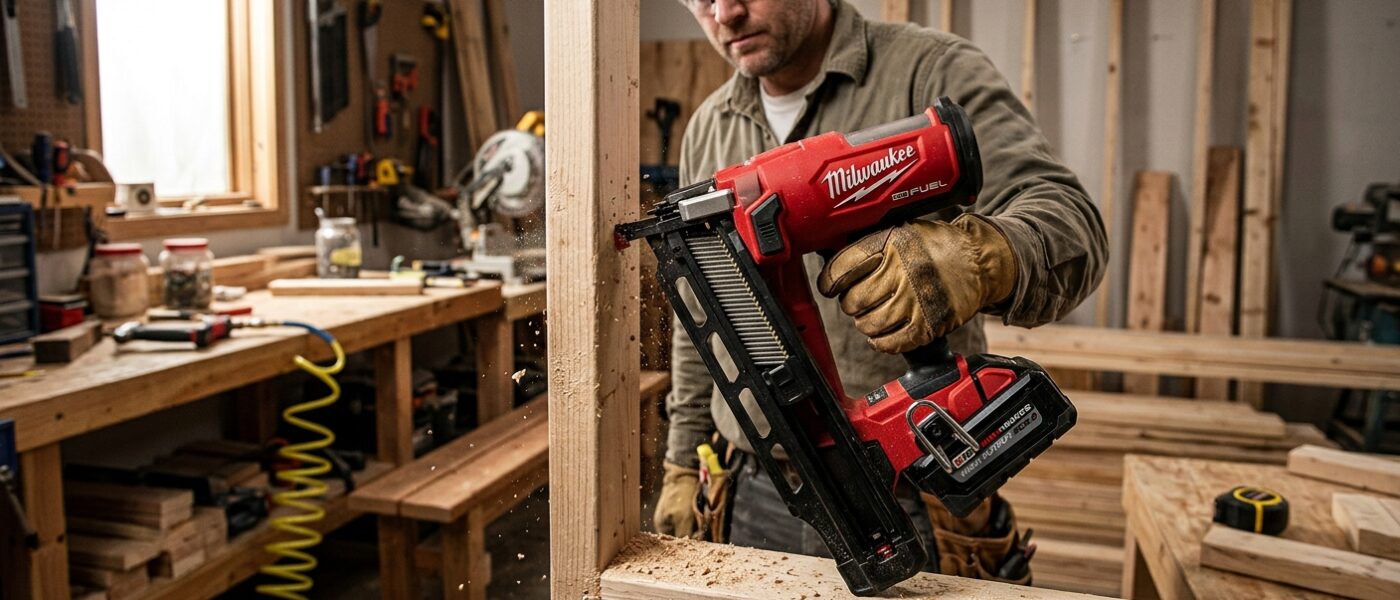
Milwaukee M18 FUEL leads cordless; Hitachi NR90AES1 is the value choice for compressor users.
Framing nailers are the tools that literally build houses, decks, additions, and structures at the speed that makes construction economically viable. Driving 3-1/2-inch framing nails by hand with a hammer – the way it was done before pneumatic tools – is exhausting work. A framing nailer drives the same nail in a fraction of a second, consistently, for thousands of cycles. For any project involving framing walls, building decks, attaching rim joists, or assembling trusses, a framing nailer is the tool that transforms the work from ordeal to achievable.
The major distinctions in framing nailers are nail format (stick vs coil), power source (pneumatic vs cordless), and nail angle (clipped head, offset round head, full round head). Each distinction matters for specific applications, and choosing the wrong format can leave you unable to use the nails available at your local lumber yard.
How We Evaluate Framing Nailers
Stick vs coil: Stick nailers use nails held in a straight or angled magazine – typically 20–30 nails per strip. They’re preferred for framing walls (a common hand position). Coil nailers hold 200–300 nails in a coil magazine, making them better for high-volume work (sheathing, decking) where reloading frequently is disruptive. Stick is more popular in residential framing; coil is preferred in production sheathing and decking work.
Nail angle (15°, 21°, 28°, 30–34°): Angled magazine nailers (21°, 28°, 30–34°) have more compact nosepieces that fit in tighter spaces – into joist bays, between studs, at awkward angles. Straight-magazine (0–5°) nailers are larger at the nose. The angle determines which nail strips work in the gun – a 21° nailer won’t accept 30–34° nails. Confirm nail availability in your area before buying.
Sequential vs contact (bump) firing: Sequential firing requires releasing the trigger completely between nails. Contact (bump) firing lets you hold the trigger and bump the nose to fire repeatedly – dramatically faster for sheathing and decking. Most framing nailers include both modes; some budget models are sequential only.
Cordless vs pneumatic: Cordless framing nailers (Milwaukee M18 FUEL, DeWalt FLEXVOLT, Makita XNF) have improved enough to satisfy most DIYers and many contractors. They eliminate the compressor and hose requirement – meaningful on rooftops and remote job sites. For high-volume production framing (full house, multiple framers, all day), pneumatic is still faster and more reliable across a full workday.
Depth of drive adjustment: Tool-free depth adjustment for different nail head protrusion is a critical quality-of-life feature when switching between different lumber types and nail lengths.
Top Picks
1. Milwaukee M18 FUEL 2745-21 – Best Cordless Framing Nailer
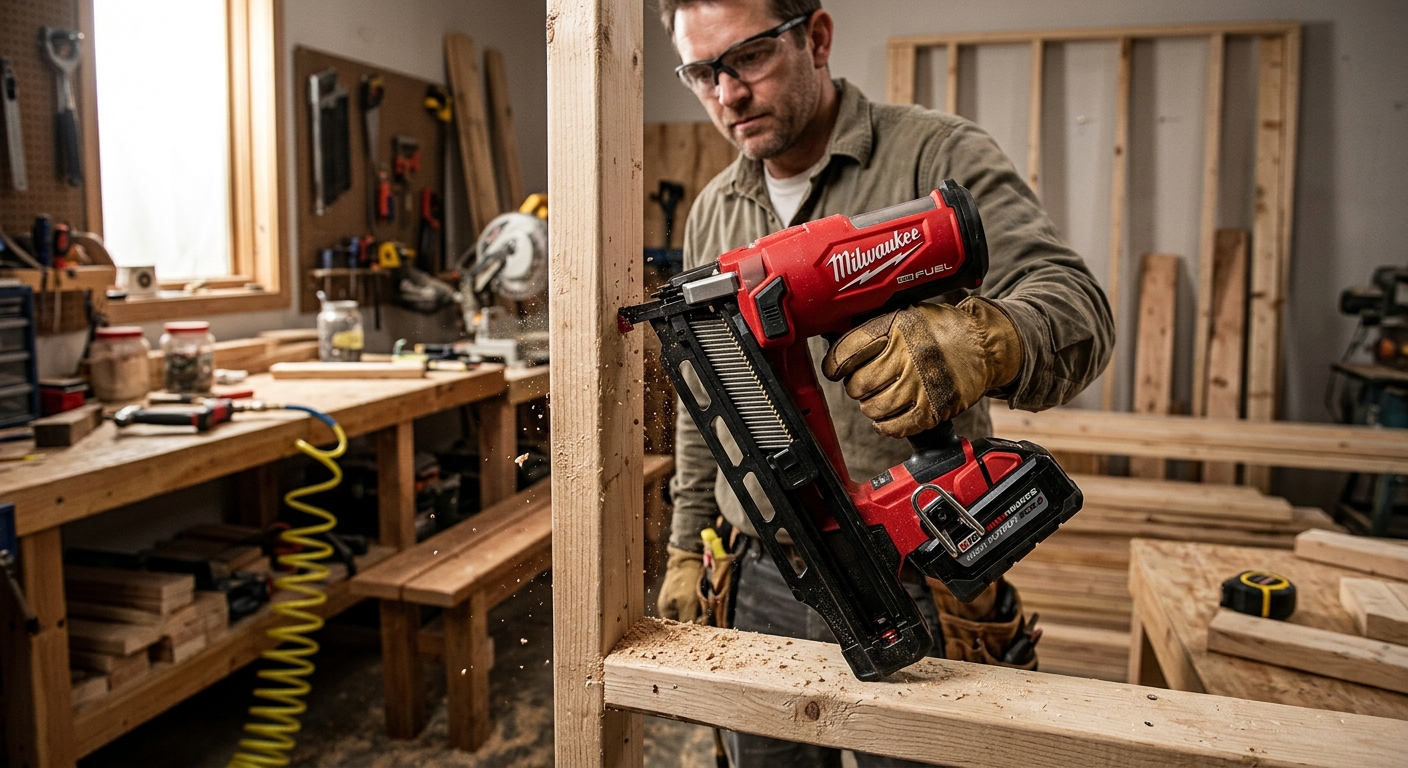
Milwaukee’s M18 FUEL 30° framing nailer is the tool that convinced professional framers to go cordless. It drives up to 700 nails per charge (5.0Ah battery), handles 2″ to 3-1/2″ framing nails, switches between contact and sequential mode, and drives consistently from the first nail to the last without power fade. The tool-free depth adjustment and 30° magazine accept the most common framing nail strips at most North American lumber yards. At $499–$549 as a kit, it’s a significant investment, but for anyone who frames regularly, the no-compressor workflow pays off quickly.
- Pros: 700 nails/charge, contact and sequential modes, no compressor required, M18 compatible
- Cons: High price, heavy at 9.5 lbs with battery, some nail strips require adapter for 21° angles
- Price range: $499–$549 (kit)
2. DeWalt DCN692B FLEXVOLT – Best Cordless Runner-Up
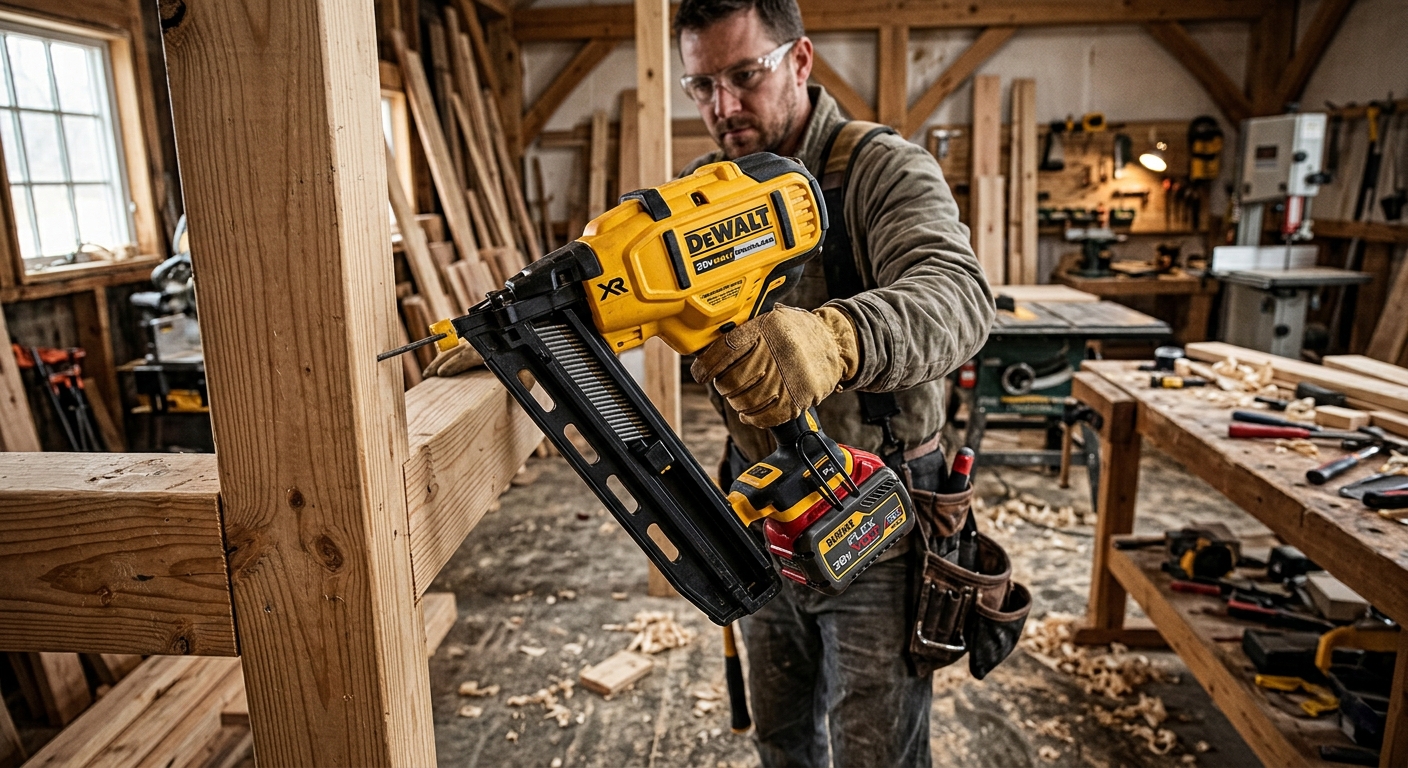
DeWalt’s FLEXVOLT 20V/60V MAX dual-speed framing nailer at $299–$349 (tool only) is a formidable competitor. Its two-speed motor (4,600 vs 5,100 RPM) lets you match driving force to nail length and material density. The 30° paper-collated strip holds up to 90 nails, and its 1,100 nails-per-FLEXVOLT-battery rating exceeds Milwaukee’s capacity. Slightly lighter at 8.8 lbs. The best choice for committed DeWalt platform users.
- Pros: 1,100 nails/charge (FLEXVOLT), two-speed motor, lighter than Milwaukee, DeWalt platform
- Cons’:’Requires FLEXVOLT battery (more expensive than standard 20V), higher tool-only price
- Price range: $299–$349 (tool only)
3. Paslode F-350S – Best Cordless Fuel-Cell Nailer
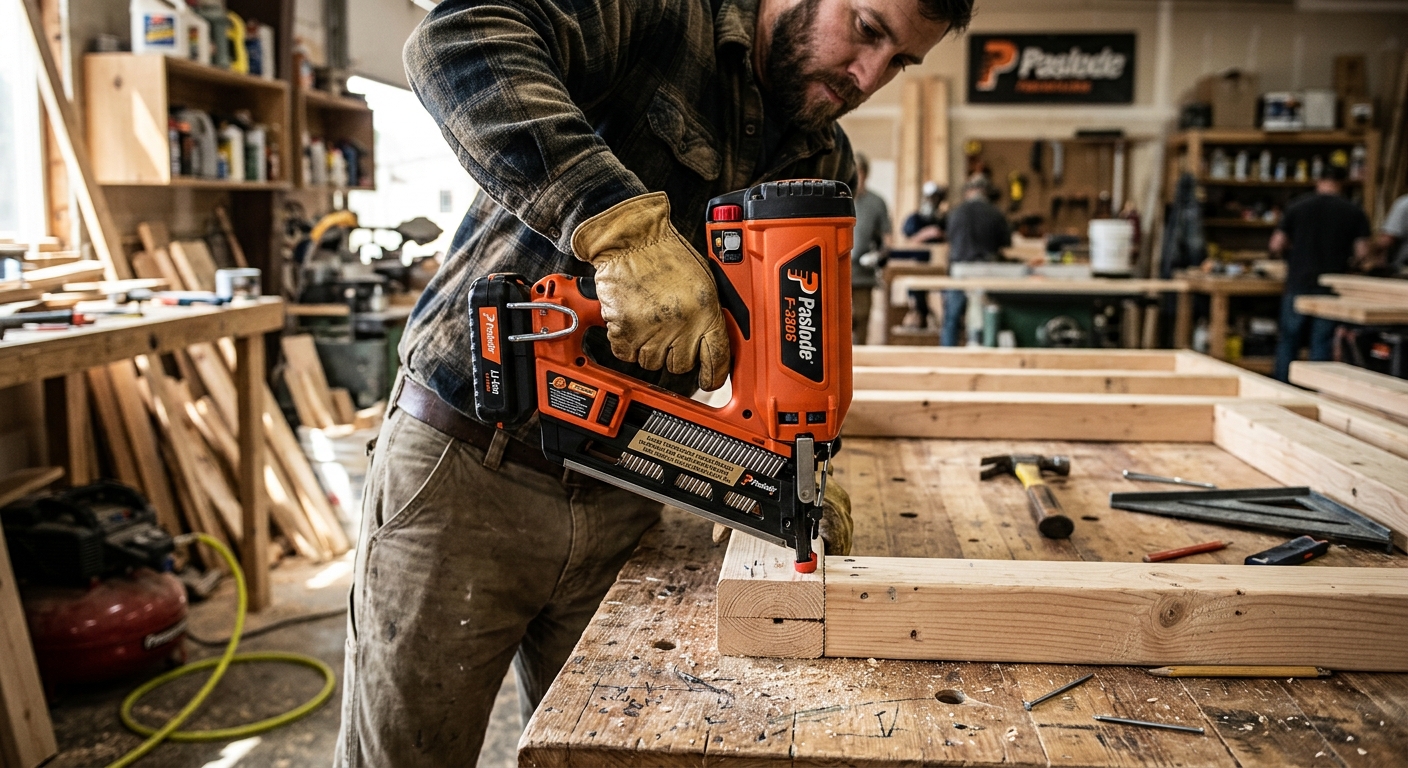
Paslode’s fuel-cell framing nailers preceded lithium-ion battery nailers and still have a following for their light weight and proven reliability. The F-350S at $299–$349 (kit with fuel cells and batteries) weighs only 7.2 lbs – lighter than any battery nailer – and the fuel cells provide enough energy for about 1,000 nails each. For framers who need the lightest possible tool for sustained overhead work, Paslode’s weight advantage is compelling. The ongoing fuel cell cost is a genuine consideration for high-volume users.
- Pros: Lightest cordless framing nailer, proven reliability, 1,000 nails per fuel cell
- Cons: Fuel cell ongoing cost, fuel cells not always available at all locations
- Price range: $299–$349 (kit)
4. Hitachi NR90AES1 – Best Pneumatic Framing Nailer
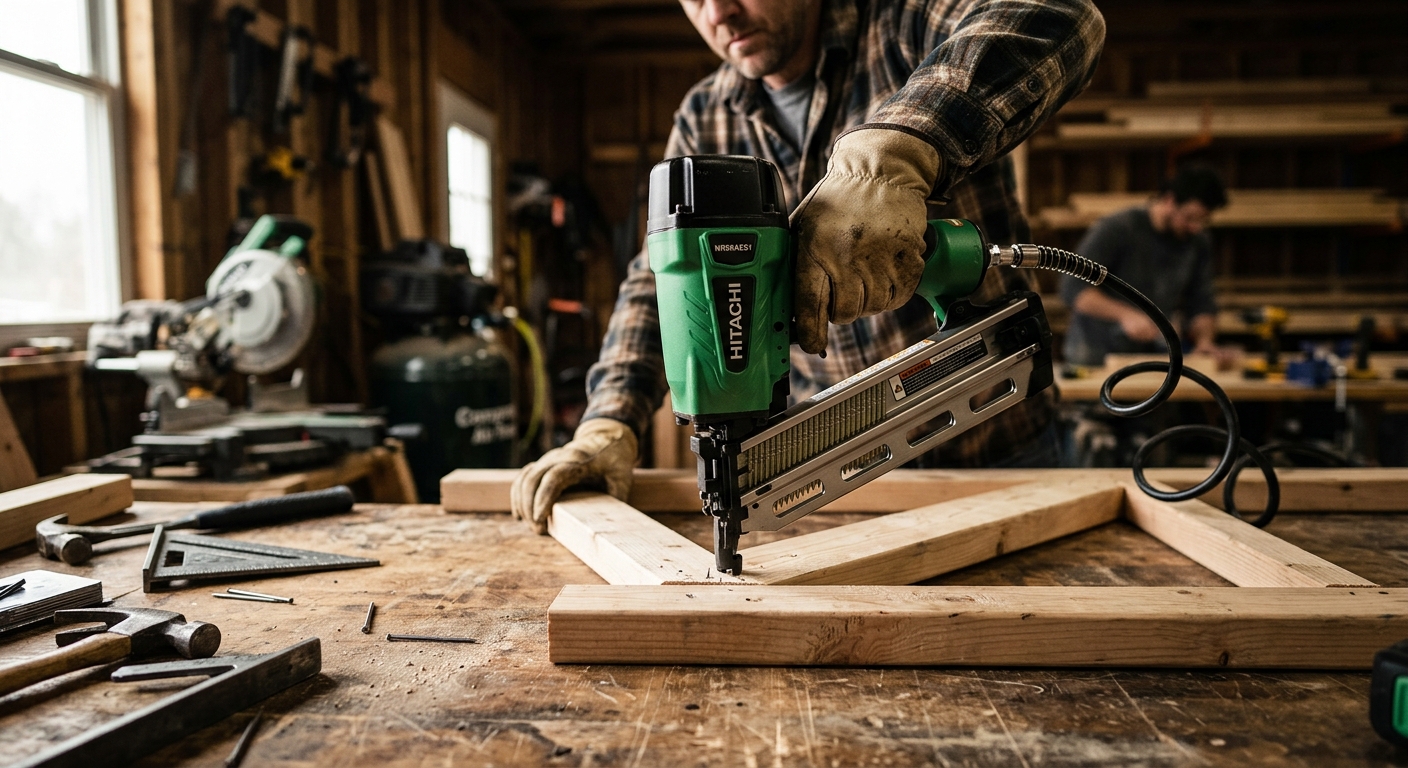
Hitachi (now Metabo HPT) has made arguably the best pneumatic framing nailers for decades. The NR90AES1 at $129–$159 is a 21° full round-head framing nailer that accepts wire-weld or paper-tape collated nails, handles 2″ to 3-1/2″ fasteners, and fires at pressures from 70–120 PSI. At 7.1 lbs and with no battery weight, it’s the lightest option in this list and the fastest between nails (true pneumatic cycle time). For any project where you have compressor access, this is the value choice.
- Pros: Best price, lightest, fastest firing rate, 21° magazine, proven reliability
- Cons: Requires air compressor and hose, limited to compressor range
- Price range: $129–$159
5. BOSTITCH BCN692B – Best Budget Cordless Option
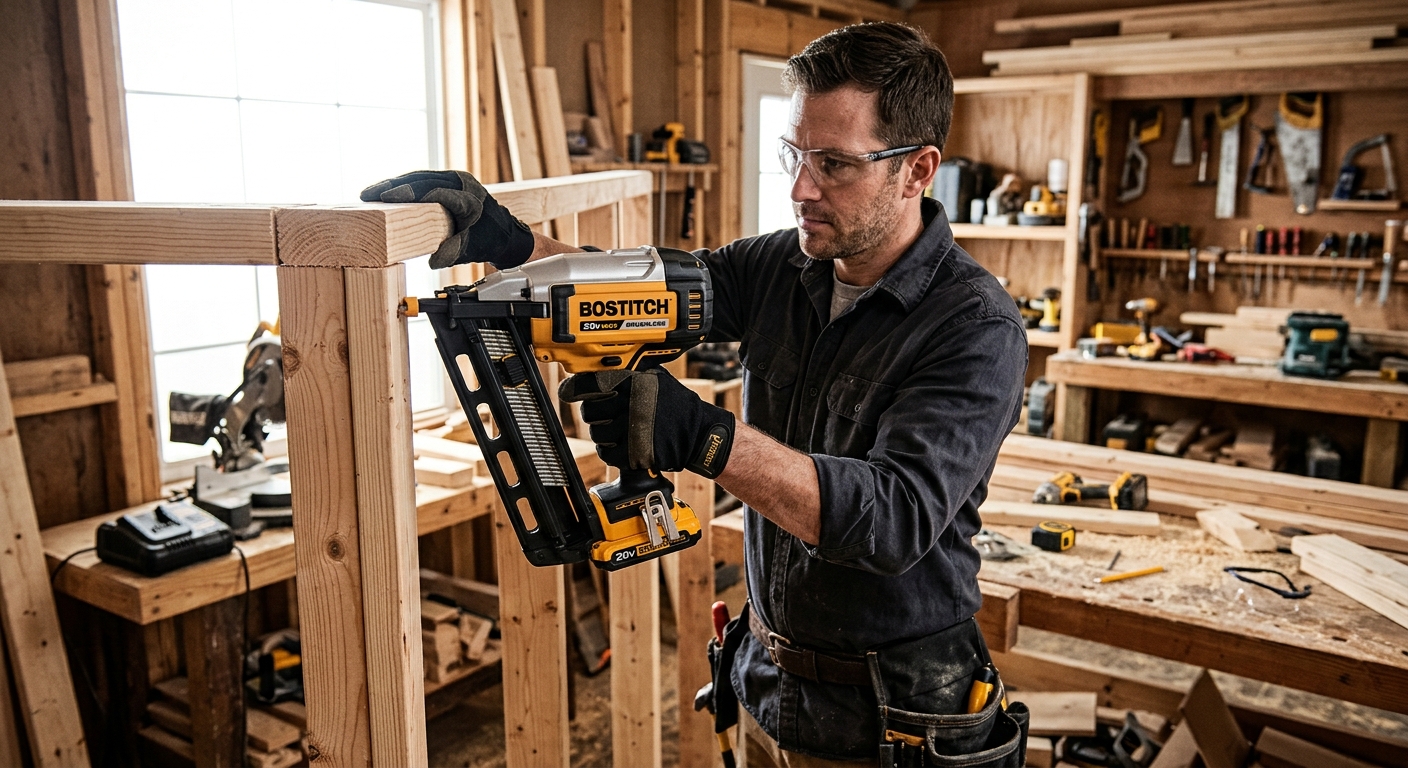
Bostitch’s 20V MAX cordless framing nailer at $229–$279 (tool only) is the budget entry point in cordless framing. Its dual-mode (sequential and contact), 30° paper-collated magazine, and 2″–3-1/2″ nail capacity cover the basics. It drives 450 nails per charge – significantly fewer than Milwaukee and DeWalt – but for occasional framing projects (building a shed, framing a non-structural partition wall), it performs adequately at a lower entry price.
- Pros: Lower price, cordless, dual-mode firing, standard 30° magazine
- Cons: Fewer nails per charge than Milwaukee/DeWalt, drive consistency less reliable in cold weather
- Price range: $229–$279 (tool only)
FAQ
What’s the difference between clipped head and full round head nails?
Full round head nails have complete circular heads – required by building codes in high-wind and seismic zones for structural sheathing connections. Clipped head nails have one side of the head cut off, allowing more nails to fit in an angled magazine. Always check local building code requirements before choosing a clipped-head nailer for structural applications.
What compressor do I need for a pneumatic framing nailer?
A minimum 6-gallon, 2.6 SCFM compressor at 90 PSI handles a framing nailer for light to moderate use. For sustained heavy framing, a 15–20 gallon tank with 4+ SCFM keeps up without waiting for tank recovery. A pancake compressor is portable but recovers more slowly under sustained use.
Can I use a framing nailer for decking?
Yes, but specifically for face-nailing deck boards to joists (hidden fastener systems require a different tool). A coil framing nailer is preferred for high-volume decking – the 200-nail coil dramatically reduces reload time versus stick magazines. Use stainless steel or hot-dipped galvanized nails in exterior applications.
Bottom Line
For DIYers who frame occasional projects (decks, sheds, additions) and want to avoid compressor setup, the Milwaukee M18 FUEL 2745-21 is the premium cordless choice – reliable, powerful, and well-supported. DeWalt FLEXVOLT users get superior nail capacity with the DCN692B. Anyone with compressor access should strongly consider the Hitachi NR90AES1 for its combination of light weight, fast performance, and remarkably low price. Never use a framing nailer without safety glasses and ear protection.
Affiliate Disclosure: DIY Arsenal participates in the Amazon Associates Program and other affiliate programs. When you purchase through links on this site, we may earn a small commission at no additional cost to you. We only recommend products we have personally tested and genuinely believe in.