Best Brad Nailers – Light Finish Work Without a Compressor
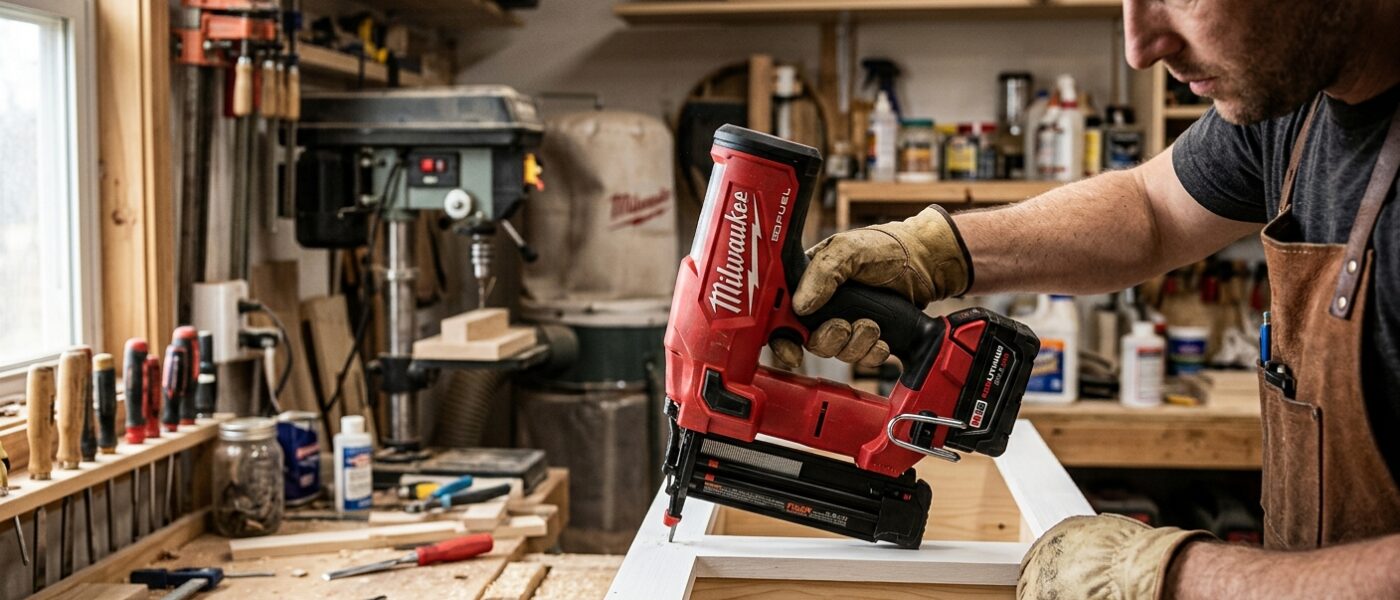
Milwaukee M18 FUEL leads cordless; Bostitch BTFP12233 is the value pick for compressor owners.
Brad nailers drive 18-gauge brad nails – small, thin fasteners with a tiny head that practically disappears into wood – making them the preferred finishing tool for attaching trim, molding, cabinet face frames, small paneling, and decorative woodwork. Unlike framing nailers or finish nailers, a brad nailer’s fasteners are slender enough to avoid splitting thin trim stock, and the small head is easy to set with a nail punch and fill with wood putty. A brad nailer replaces hammering and avoids the hand fatigue and split risk of driving finish nails manually in delicate trim work.
The choice for DIYers in 2026 is primarily between pneumatic (air compressor required) and cordless (battery powered) brad nailers. Cordless models have improved dramatically and now dominate the DIY category. This guide covers the best options, with clear guidance on when each type makes sense.
How We Evaluate Brad Nailers
Gauge and nail length capacity: All brad nailers use 18-gauge wire nails. The critical variable is length range – typically 5/8″ to 2″ in most models. A 2-inch maximum handles 3/4″ trim into drywall over 2-inch studs. Some models max out at 1-3/8″, which limits them to lighter trim work.
Cordless vs pneumatic: Cordless nailers (Milwaukee, DeWalt, Makita, RYOBI) don’t need an air compressor, making them faster to set up and more portable. They’re slightly heavier than pneumatic tools and cost more. Pneumatic nailers are lighter, faster (true sequential or bump-fire), and less expensive as tools – but require a compressor ($150–$500) and hose as part of the system cost.
Depth adjustment: A tool-free depth adjustment wheel or knob sets the drive depth without a separate tool. This matters when switching between soft pine trim and harder oak, where the same nail needs different driving force to set flush without over-driving.
Jam clearing mechanism: Nail jams happen. A fast, easy jam-clearing mechanism (typically a side-open magazine or jam-access plate) gets you back to work quickly. Slow jam clearing on production work is genuinely frustrating.
Dry-fire lockout: Firing a nailer into a surface without a nail damages the workpiece and the nailer nose. Dry-fire lockout stops the nailer when the magazine is empty, preventing this. It’s a standard feature but worth confirming.
Top Picks
1. Milwaukee 2746-21CT M18 FUEL – Best Cordless Brad Nailer
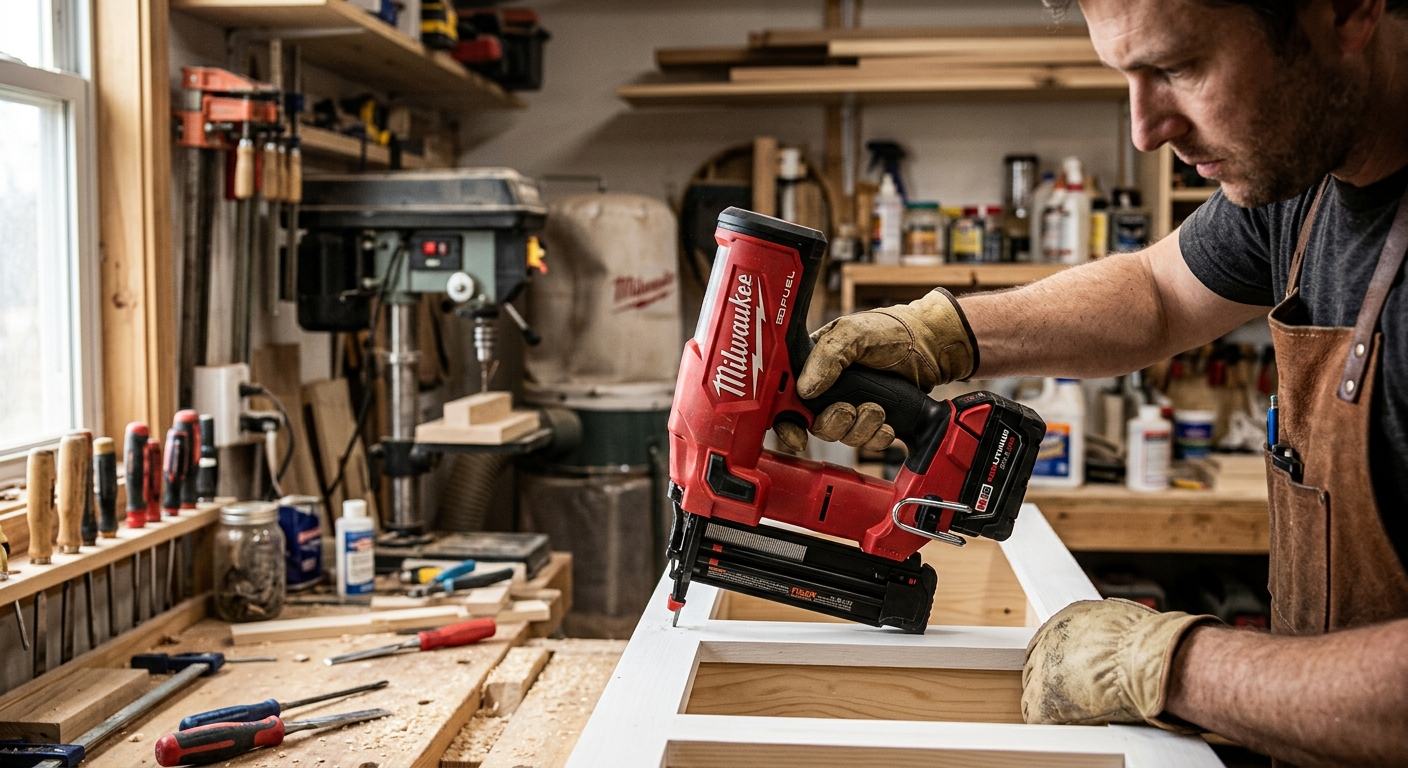
Milwaukee’s M18 FUEL 18-gauge brad nailer is the cordless brad nailer that professionals actually use. Its sequential firing mode (must push nose, then pull trigger) prevents accidental double-fires, and the 2″ maximum nail length covers most trim applications. The M18 battery delivers up to 800 nails per charge with a 2.0Ah battery – easily a day of trim work. The tool-free depth adjust and jam-clear mechanism are both fast and intuitive.
At $279–$299 for the kit, it’s a genuine investment. But the combination of M18 ecosystem, professional build quality, and no-compressor convenience makes it the right choice for serious DIYers and contractors doing trim work.
- Pros: Up to 800 nails/charge, professional build quality, M18 compatible, 2-inch nail capacity, no-mar tip
- Cons: High kit price, heavier than pneumatic equivalents
- Price range: $279–$299 (kit)
2. DeWalt DCN680D1 – Best Runner-Up Cordless
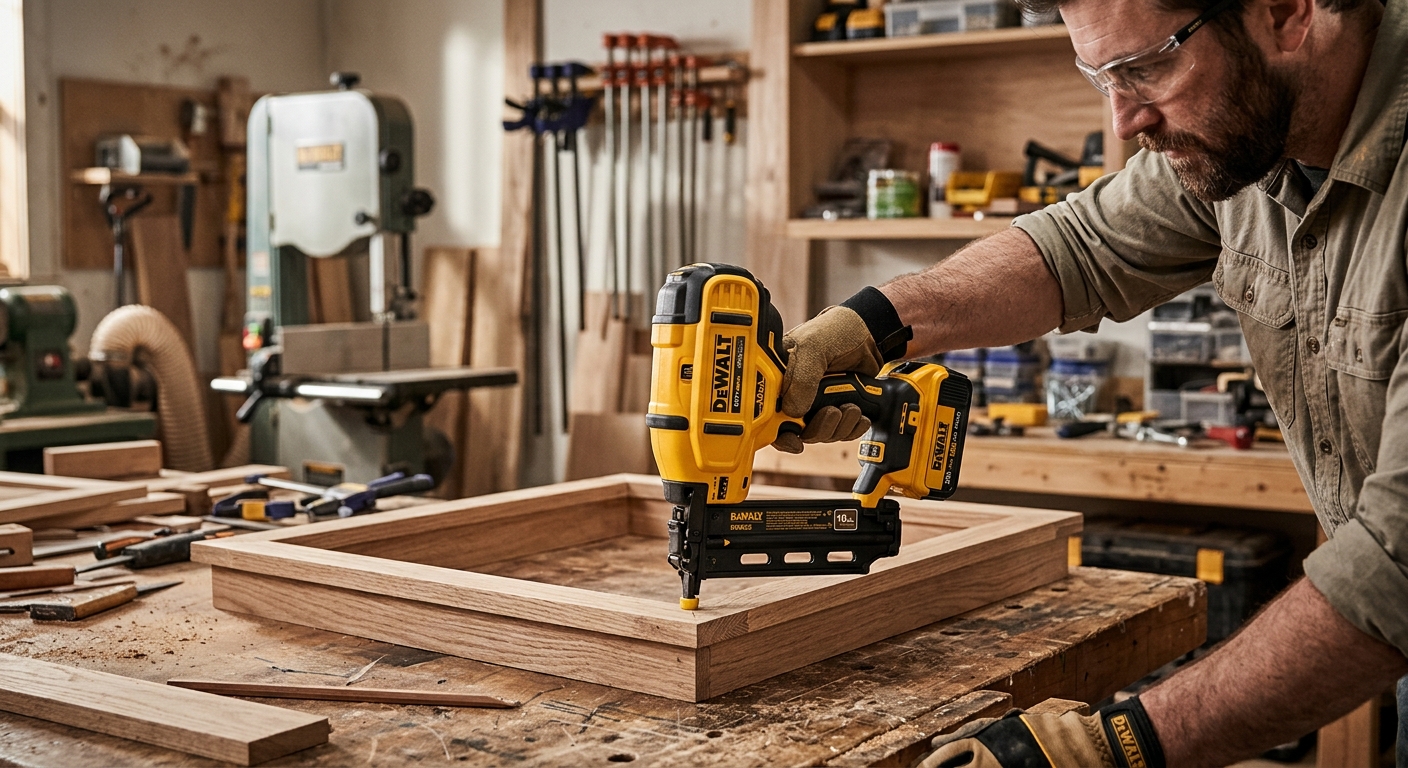
DeWalt’s 20V MAX 18-gauge brad nailer with its STALL RELEASE lever for jam clearing is the best alternative for DeWalt platform users. The sequential and contact fire modes are switchable, 2-inch nail capacity is present, and the 1,000 nails-per-charge rating (with 2.0Ah battery) is impressive. Tool-free depth adjust rounds out a well-thought-out feature set at $199–$229 (kit).
- Pros: 1,000 nails/charge, STALL RELEASE jam clearing, both fire modes, 20V DeWalt compatible
- Cons=>’:Slightly bulkier nose than Milwaukee, magazine capacity (100 nails) same as competitors
- Price range: $199–$229 (kit)
3. RYOBI PCL100B – Best Budget Cordless Brad Nailer
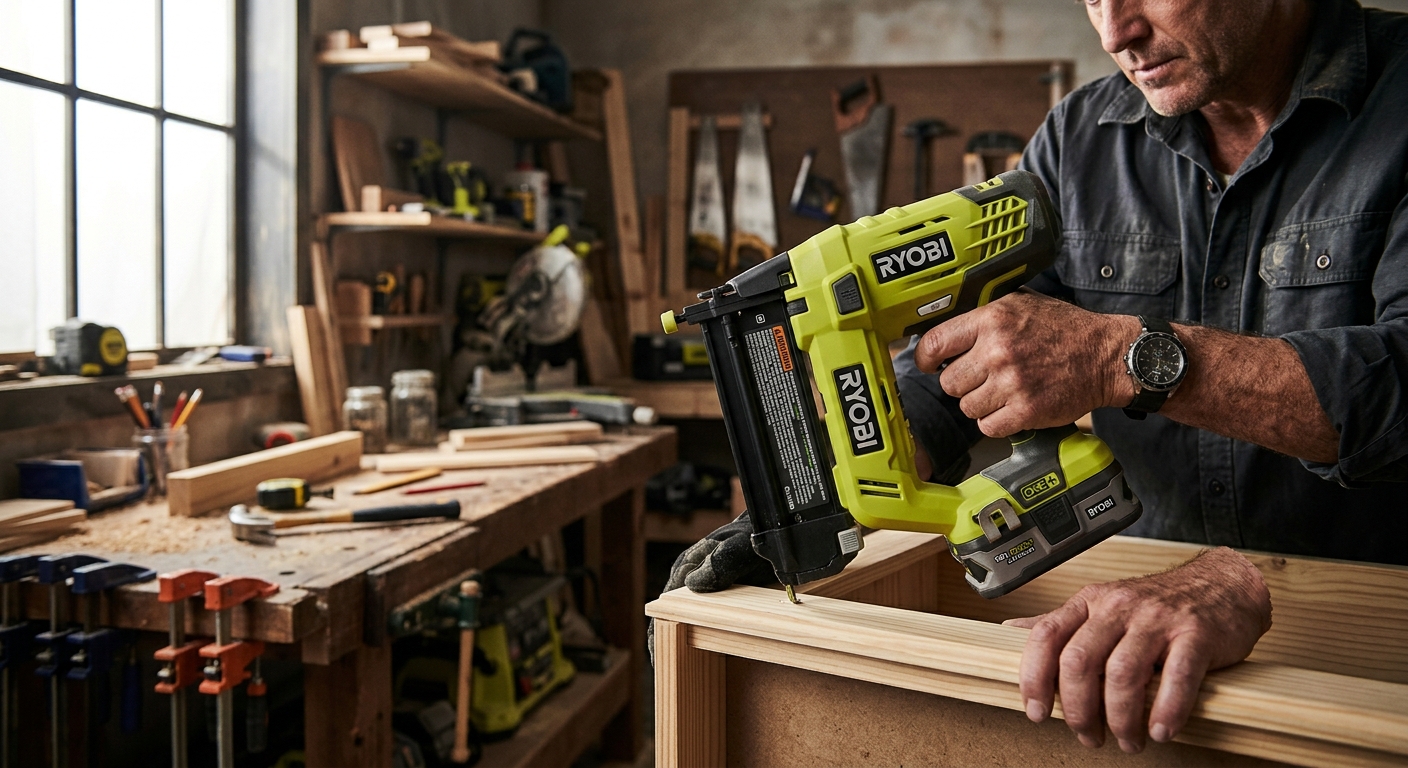
RYOBI’s ONE+ 18-gauge cordless brad nailer at $99–$119 (tool only) makes cordless nail driving accessible without breaking the budget. It handles nails from 5/8″ to 2″, has tool-free depth adjustment and jam release, and fires up to 700 nails per charge (with 2.0Ah battery). Performance in soft pine trim is indistinguishable from more expensive tools. Where it falls short is speed in hardwood trim and sustained production firing – but for DIY baseboards and door casing, it’s excellent value.
- Pros: Most affordable cordless option, 2-inch nail capacity, ONE+ compatible, 700 nails/charge
- Cons: Slower recycle time between nails, lighter build, less durable in heavy use
- Price range: $99–$119 (tool only)
4. BOSTITCH BTFP12233 – Best Pneumatic Brad Nailer
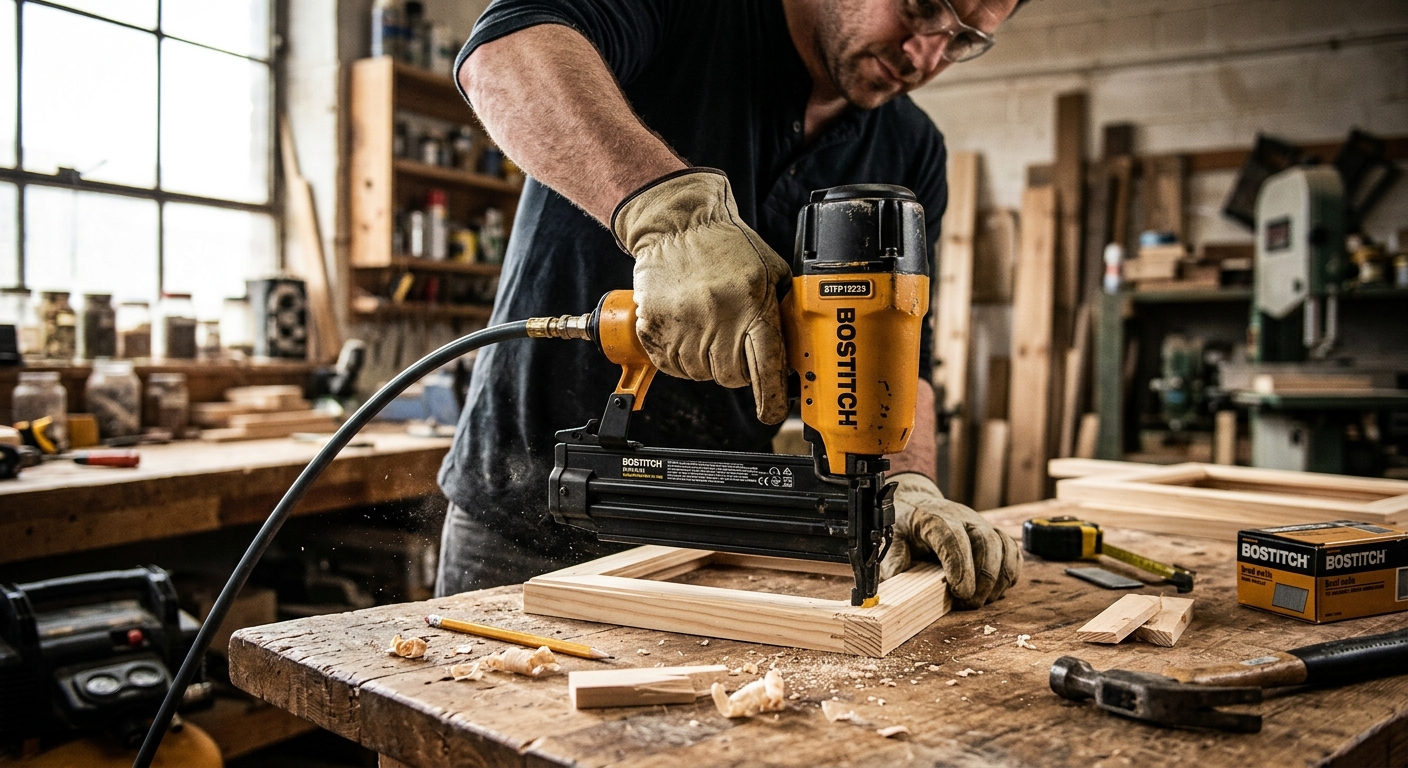
If you already own or plan to buy an air compressor, a pneumatic brad nailer gives you more nails per minute at lower tool cost. Bostitch’s BTFP12233 at $49–$69 drives 18-gauge nails from 5/8″ to 2-1/8″ (slightly longer than most cordless competition), weighs only 2.1 lbs (dramatically lighter than any cordless), and drives up to 2,100 nails per hour with a 6-gallon compressor. For high-volume trim installation, the pneumatic advantage in speed and weight is significant.
- Pros: Very light, fast firing rate, 2-1/8″ max nail, inexpensive tool cost
- Cons: Requires air compressor and hose (significant additional cost and setup), less portable
- Price range: $49–$69 (tool only, compressor required)
5. Makita XNB01Z – Best Mid-Range Cordless
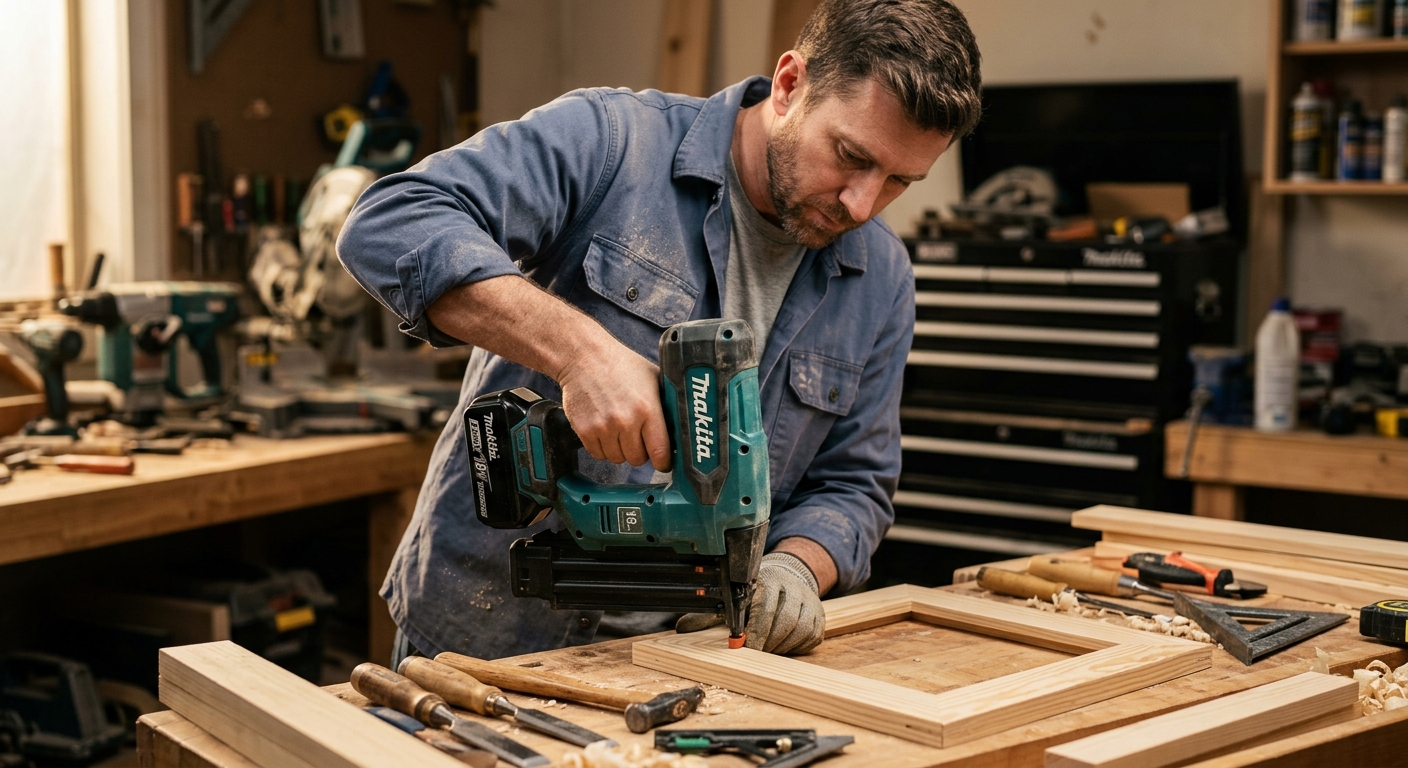
Makita’s 18V LXT 18-gauge brad nailer is a well-balanced option for LXT platform users. Its spring-loaded nosepiece reduces damage on delicate trim, sequential mode prevents double-fires, and the brushless motor extends battery life meaningfully. At $149–$179 (tool only), it fits between budget and premium cordless options. Recommended for Makita users who do occasional trim work and want cordless convenience without premium price.
- Pros: Spring-loaded nose reduces trim damage, brushless motor, LXT compatible, good ergonomics
- Cons: Limited maximum to 2-inch nails, slightly less magazine capacity than competitors
- Price range: $149–$179 (tool only)
FAQ
What’s the difference between a brad nailer and a finish nailer?
Brad nailers use 18-gauge wire. Finish nailers use 15- or 16-gauge wire – significantly thicker. Finish nails hold heavier trim (thick stair treads, thick crown molding, thick baseboard) more securely. Brad nails are used for lighter trim (3/8″–3/4″ thick), cabinet face frames, small moldings, and any application where the nail’s tiny head is aesthetically preferable to filling a larger hole. For most interior trim work, a brad nailer is the right tool. For heavy moldings and casings, a finish nailer is better.
How do I prevent splitting thin trim with a brad nailer?
Blunt nail tips split wood less than sharp tips – some nailers allow you to angle the nail into a hammer to blunt it before loading (an old carpenter’s trick). Always nail within 1 inch of the end of a trim piece (where splitting risk is highest) at an angle toward the center of the material. Pre-drilling with a small bit eliminates splitting risk entirely for very brittle trim like old or very dry wood.
Do cordless nailers need maintenance?
Minimal maintenance. Apply a few drops of pneumatic tool oil to cordless nailers’ driver mechanism annually (not the battery contacts). Keep the nose clean of wood fiber and glue residue. Store with a partially charged battery rather than fully drained. Fuel-cell nailers (older technology) need cell replacement; current battery nailers don’t require fuel cells.
Bottom Line
For DIYers who install trim, molding, or cabinet work and want to avoid compressor setup, the Milwaukee M18 FUEL 2746-21CT is the professional standard – worth every dollar if you use it regularly. DeWalt 20V users get comparable performance with the DCN680D1 at a slightly lower kit price. Budget buyers in the RYOBI ONE+ ecosystem who install the occasional room of baseboard should start with the PCL100B. Those who already own a compressor and want the lightest, fastest tool should buy the Bostitch BTFP12233 without hesitation.
Affiliate Disclosure: DIY Arsenal participates in the Amazon Associates Program and other affiliate programs. When you purchase through links on this site, we may earn a small commission at no additional cost to you. We only recommend products we have personally tested and genuinely believe in.