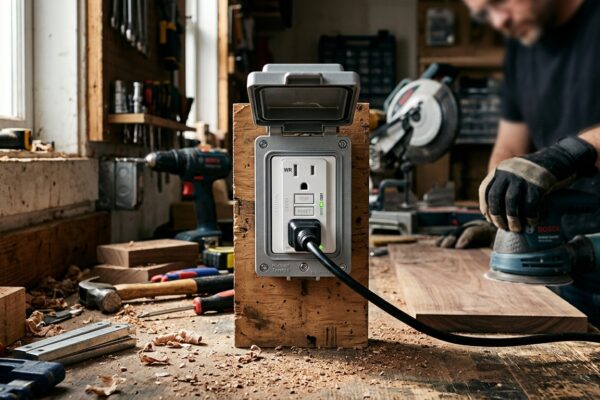
Best Wire Connectors – Twist Caps, Lever Nuts, and Push-In Types
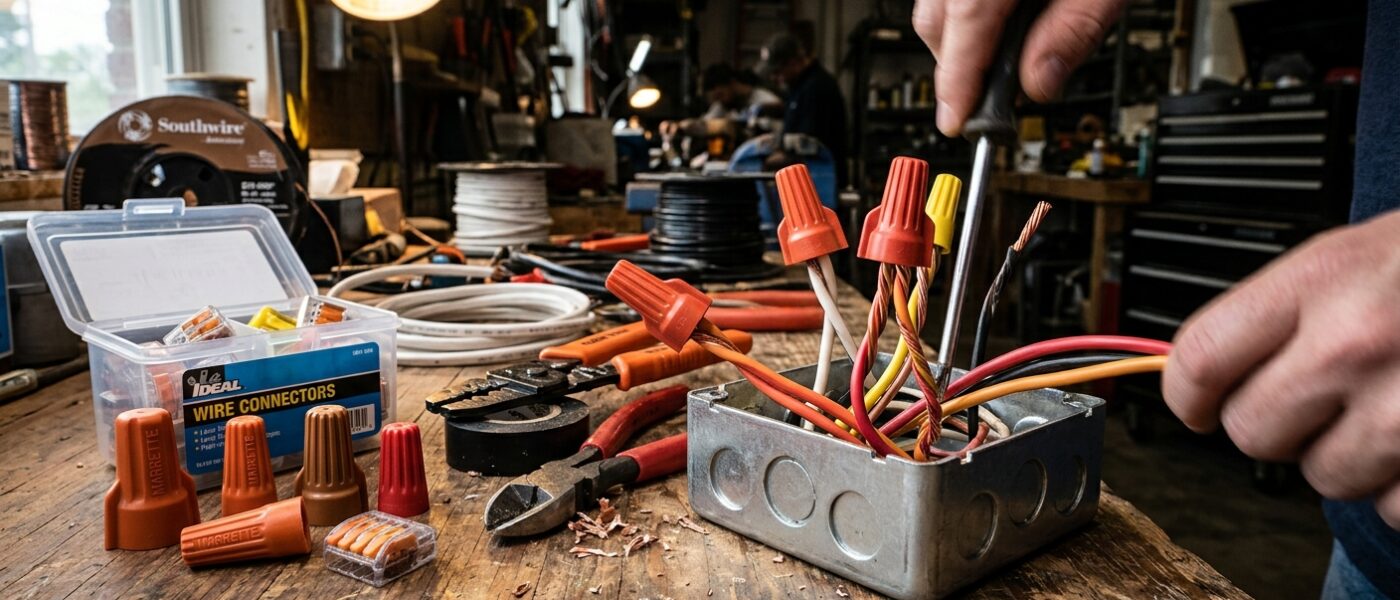
WAGO 221 lever nuts are the best wire connector for any situation where the connection might need revisiting; stock a 3M wire nut assortment for permanent connections and you have all junction box wiring covered.
As an Amazon Associate, we earn from qualifying purchases.
Electrical wire connectors are the most fundamental and most frequently misunderstood component in residential wiring. The wire nut was the standard connector for most of the 20th century, and it remains the dominant choice on job sites today. But lever-nut connectors and push-in types have changed the landscape significantly – offering faster installation, easier inspection, and reusability that traditional wire nuts cannot match. This guide compares all three and recommends the right connector for each application.
Types of Wire Connectors
Twist-On Wire Nuts (Marrette Connectors)
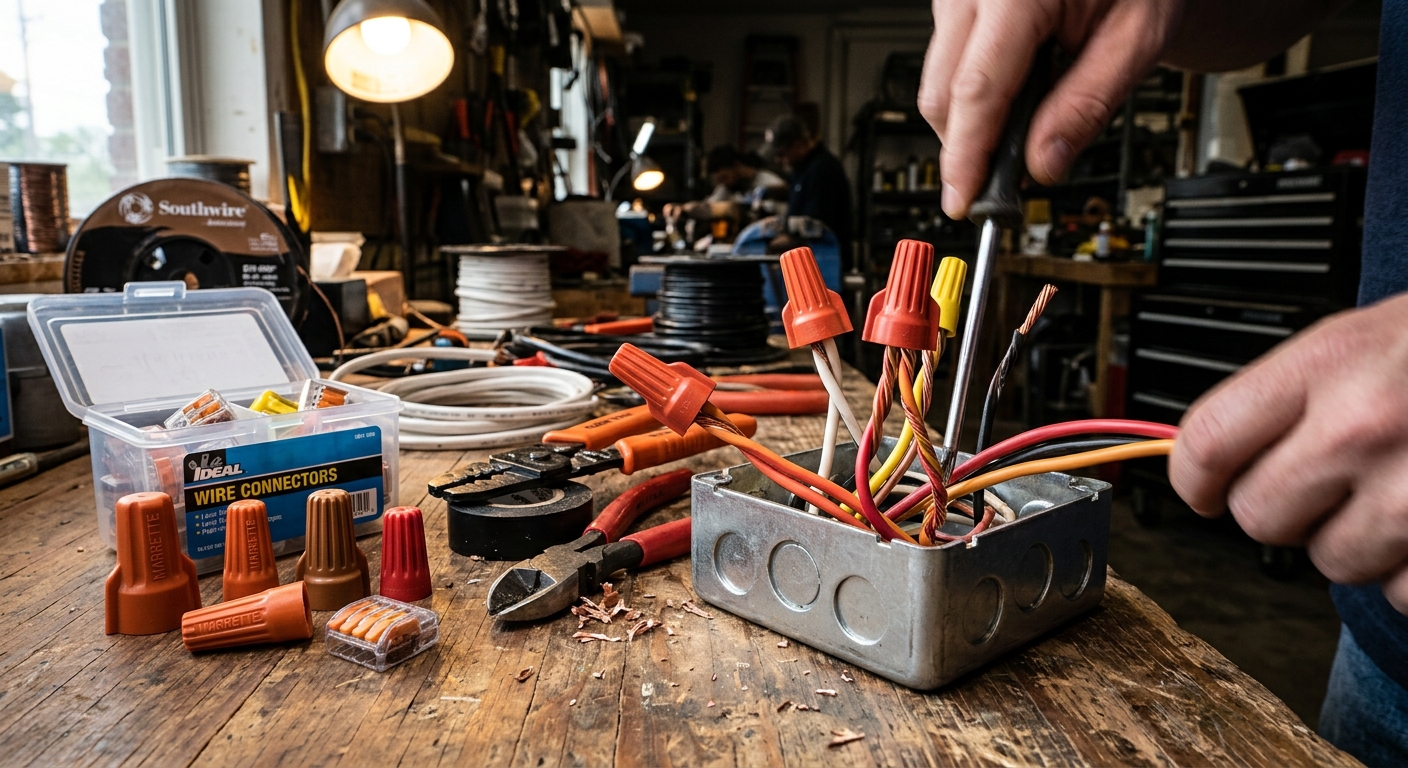
The classic spring-and-shell connector. A tapered coil spring inside a plastic shell grabs the wire conductors as you twist the connector clockwise. The spring provides both mechanical holding force and electrical connection. Available in multiple sizes color-coded to wire gauge range. The standard in North American residential electrical since the 1940s and still the most widely used connector type.
Lever-Nut Connectors (Wago 221 Series and Similar)
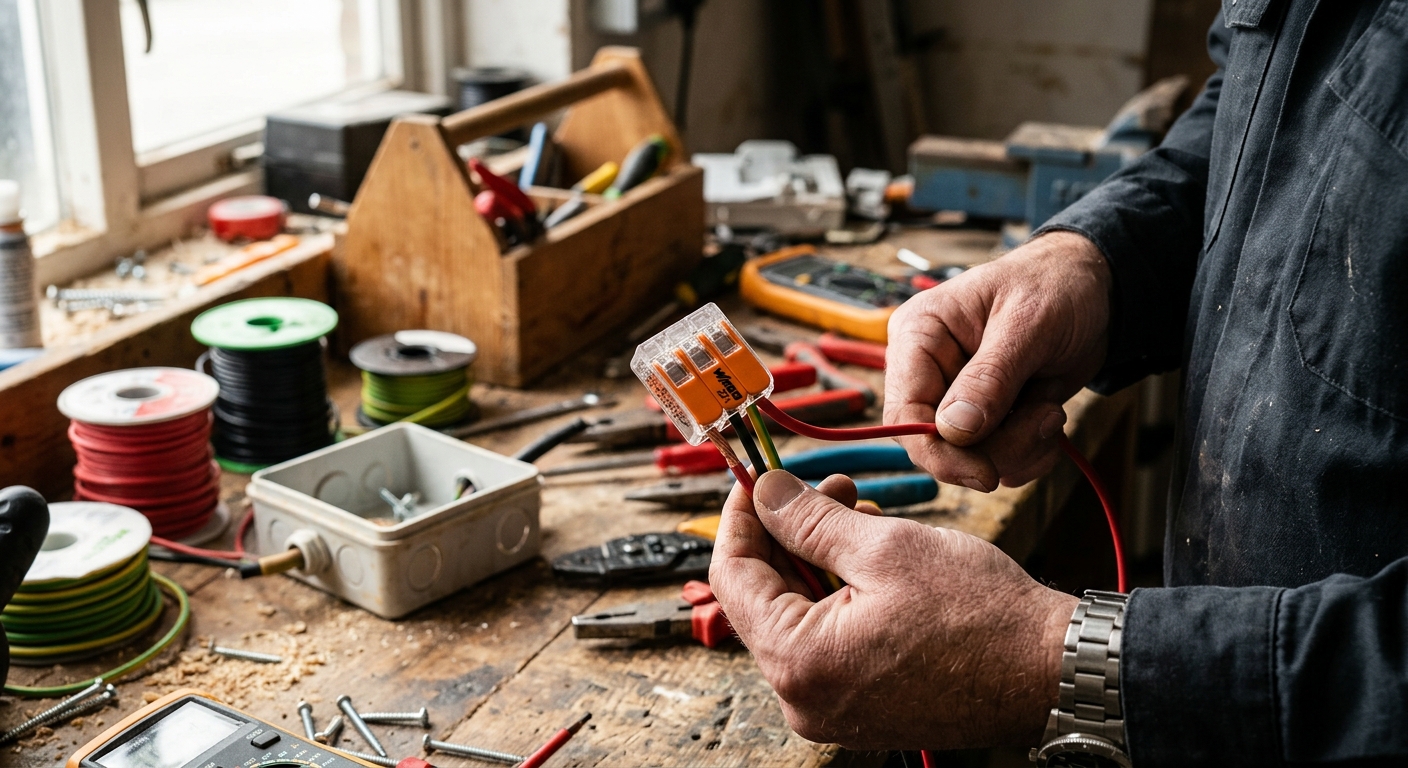
Push the stripped wire into the port, flip the lever down to lock – instant connection in one second without twisting. Lever nuts accept different wire gauges in different ports (allowing a 12 AWG to connect to a 14 AWG, for example) and are reusable – flip the lever up to release the wire. The dominant connector in European electrical work, increasingly used in North America. The WAGO 221 series is the definitive product.
Push-In Wire Connectors (Backstab/Spring-Clamp)
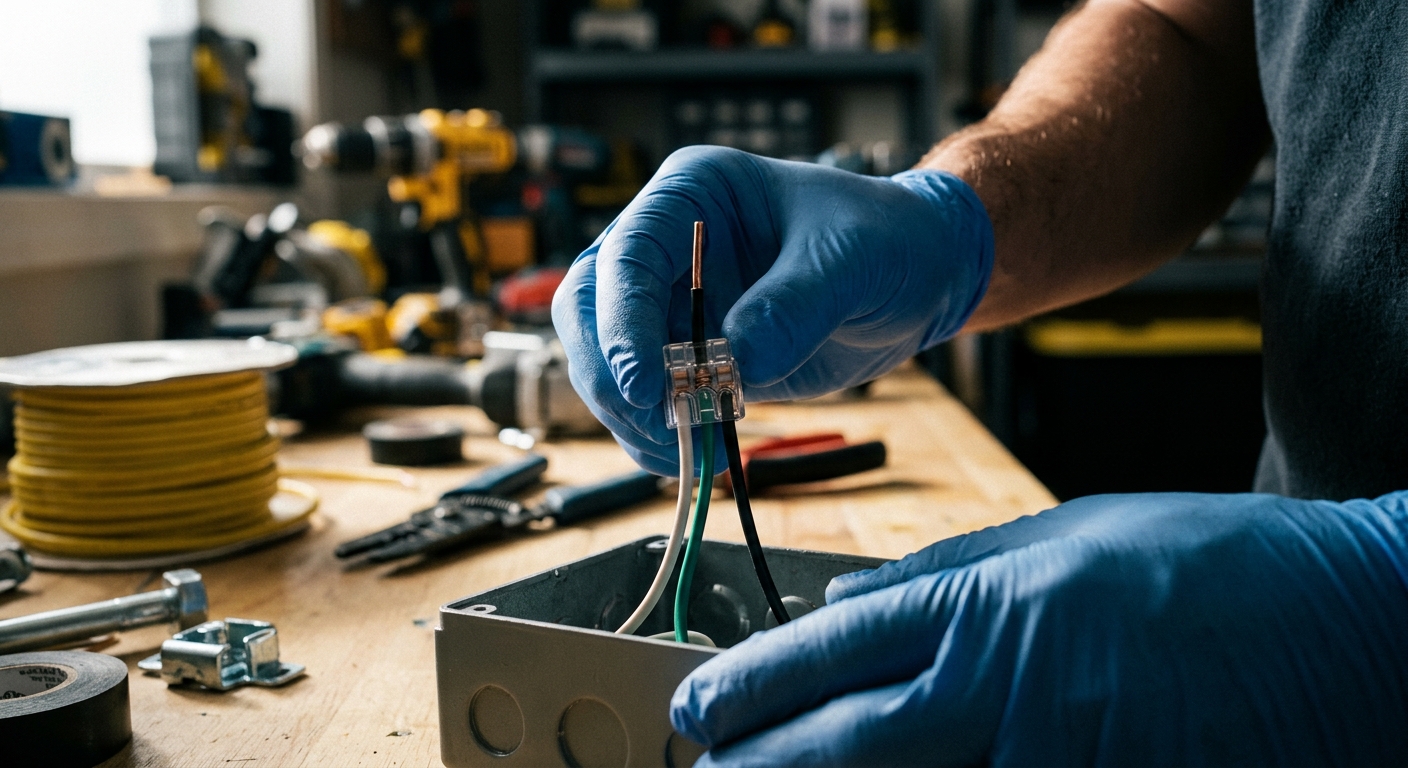
A spring-clamp mechanism inside a plastic body. Strip the wire, push it in until it seats, and the internal spring grabs the conductor. No twisting required. Faster than wire nuts for simple same-gauge connections. The tradeoff: inferior contact reliability compared to lever nuts, and most push-in connectors require destroying the connector or damaging the conductor to remove a wire.
Crimp Connectors
Metal sleeves crimped over conductors with a crimping tool. Create a cold-welded joint that is permanently secure and highly reliable. The standard in automotive and marine wiring where vibration resistance is critical. Covered separately in this series.
When to Use Each Type
- Wire nuts: Permanent connections in junction boxes, switch boxes, and fixture boxes. When you are confident the connection will not need to be revisited.
- Lever nuts: Any connection that might need inspection or service. Chandelier installations with multiple leads, outlet wiring where the connections are rechecked, temporary connections during troubleshooting.
- Push-in connectors: Quick connections where permanence is acceptable and the ease of installation is worth the tradeoff. Not recommended where long-term reliability in a vibrating environment is required.
Key Features to Look For
Wire Gauge Range
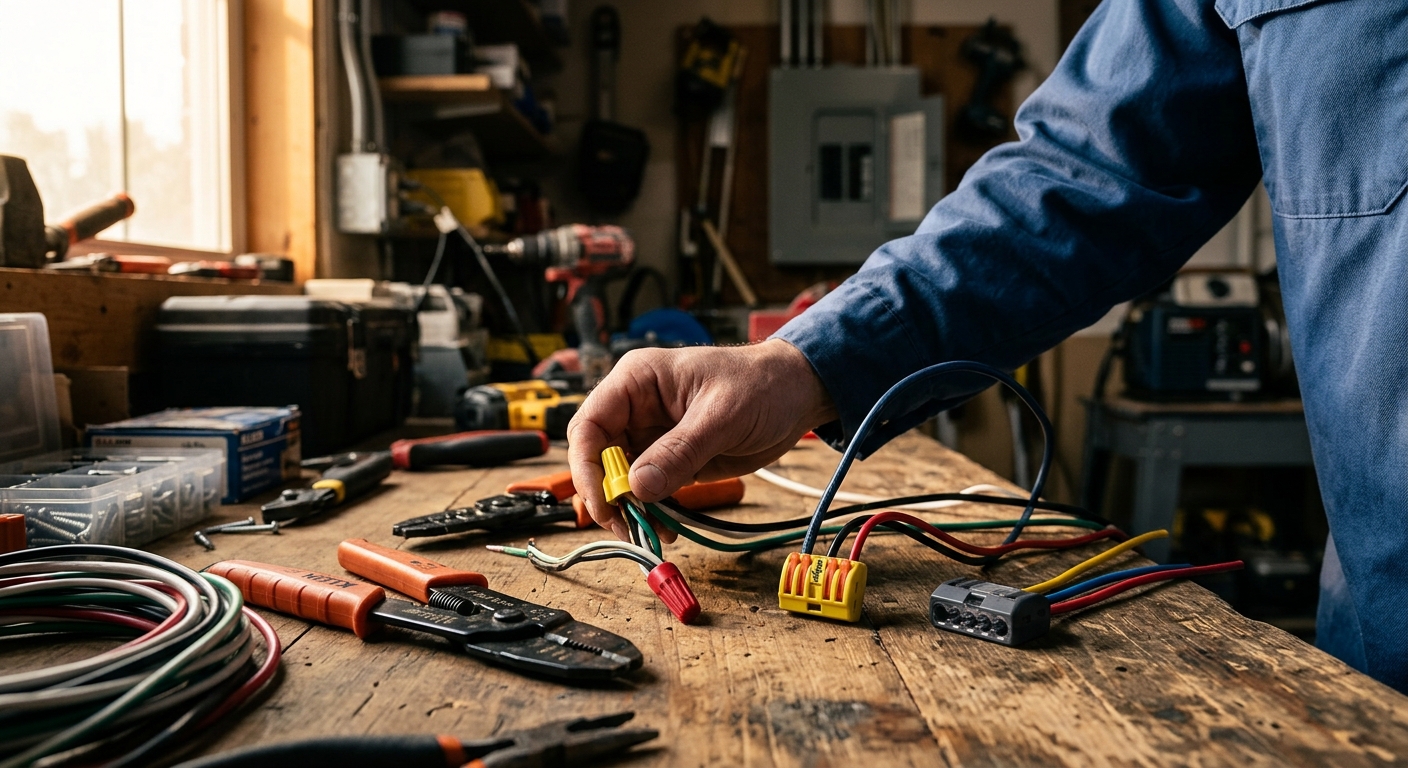
Each connector is rated for a specific range of wire gauges. Using a wire nut sized for 12 AWG on 14 AWG wire produces an inadequate connection – the spring does not grip correctly. Match the connector size to the wire gauge combination.
UL Listing
All wire connectors used in residential electrical work must be UL Listed (Underwriters Laboratories). Non-listed connectors have not been tested for safety and should never be used in electrical connections.
Temperature and Amperage Rating
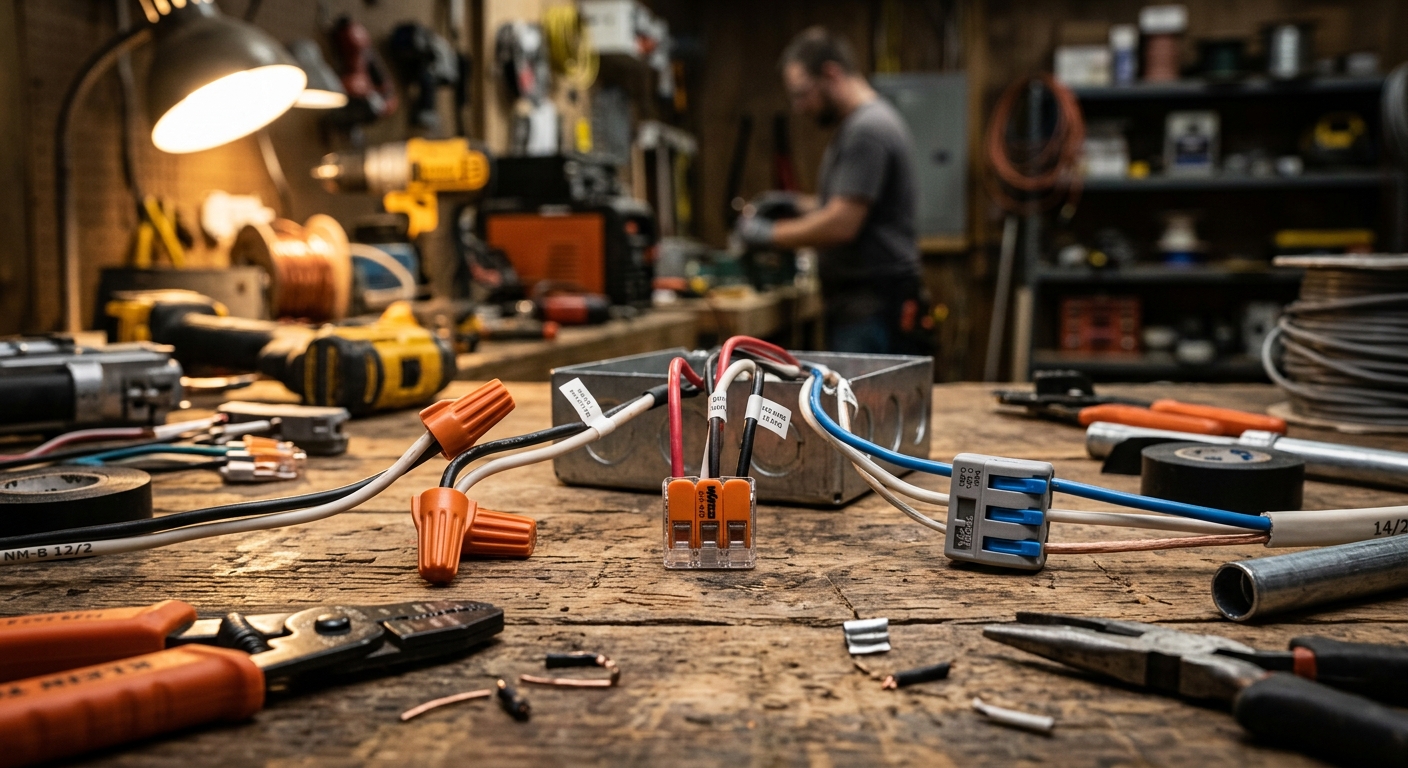
Standard wire connectors are rated 600V and 105 degrees Celsius. Verify the connector is appropriate for the application – luminaire (light fixture) wiring near heat sources sometimes requires higher temperature-rated connectors.
Our Top Picks
1. WAGO 221-415 Lever-Nut 5-Conductor Splicing Connector
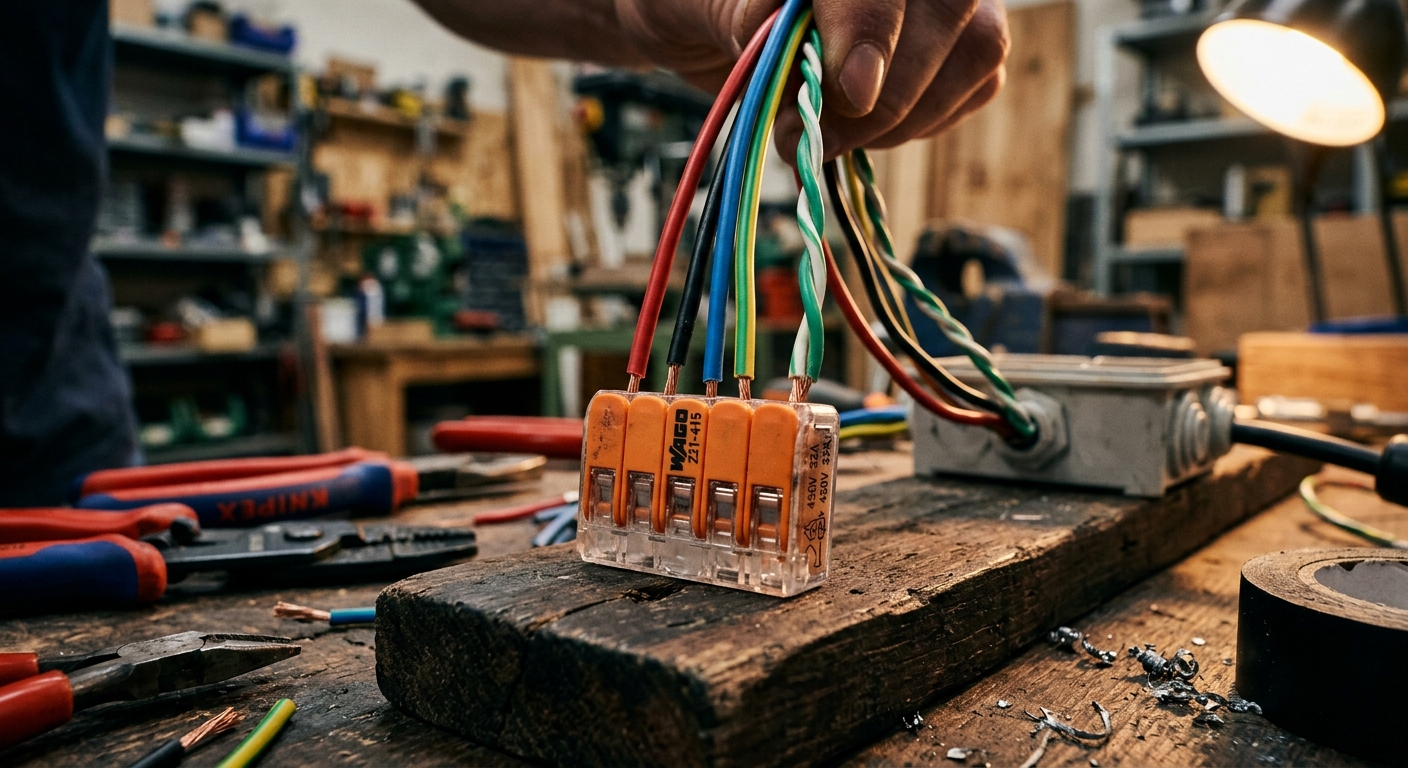
The definitive lever nut. WAGO invented the lever-nut technology and the 221 series is the best implementation available. The transparent housing allows visual confirmation of wire insertion depth, the lever locks with a satisfying click, and the connector accepts 12 to 28 AWG solid and stranded conductors. 5-conductor version handles chandelier and ceiling fan connections perfectly. UL Listed, rated 600V, reusable indefinitely. Every electrician’s go-bag should contain a selection of WAGO 221 connectors.
2. WAGO 221-412 Lever-Nut 2-Conductor
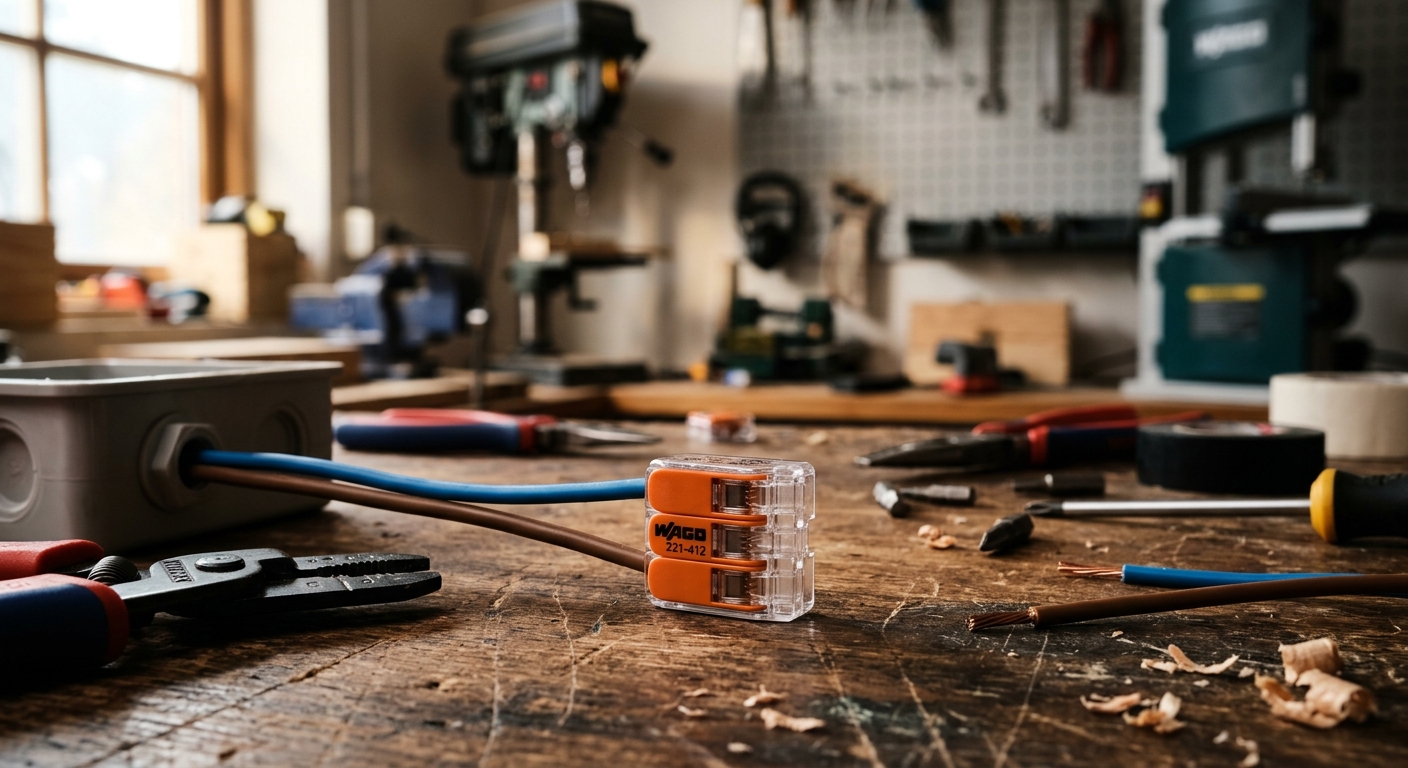
The 2-conductor version of the same WAGO 221 platform. The connector for most simple splices – joining two conductors quickly and reliably with the option to revisit the connection later. Order in bulk – once you start using these, wire nuts feel archaic.
3. Ideal Industries 30-342 In-Sure Push-In Wire Connector (25-Pack)
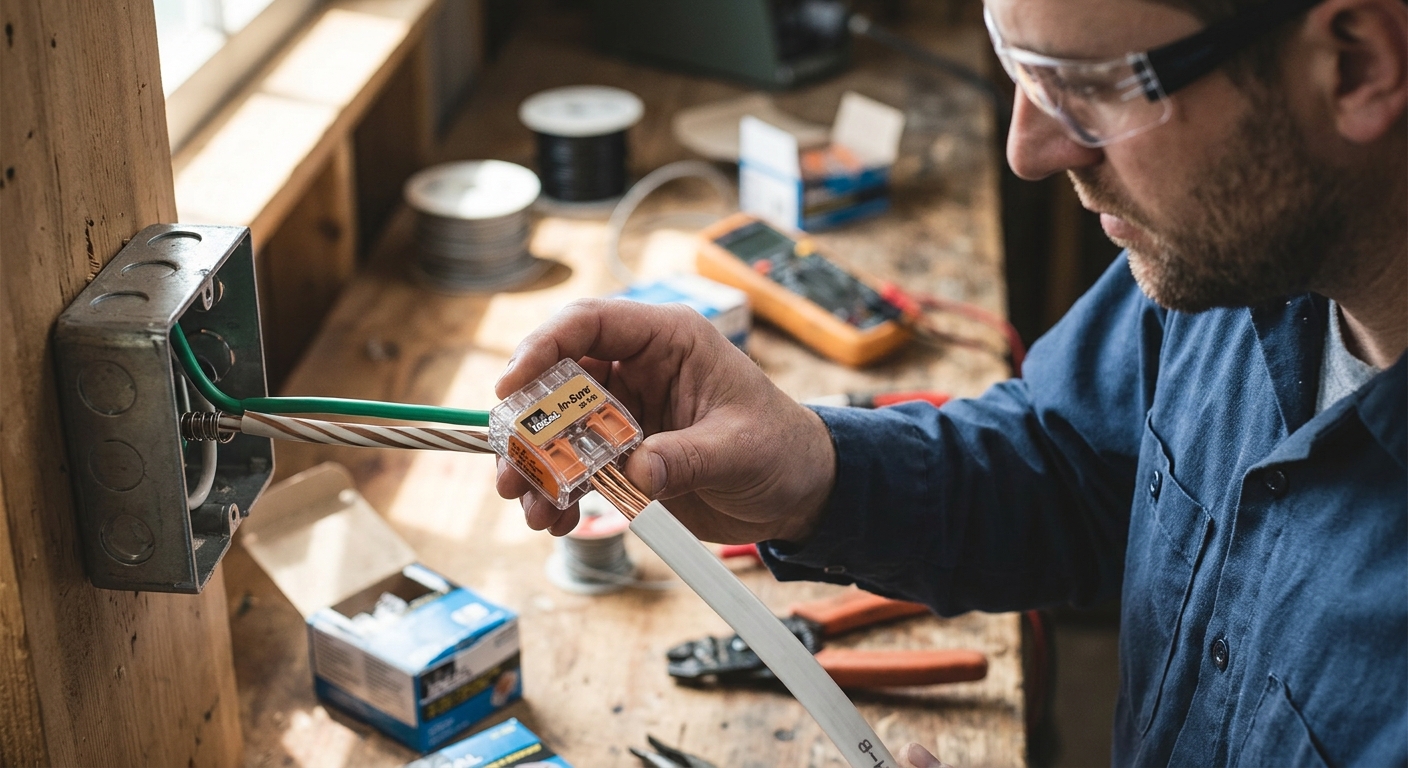
The most reliable push-in wire connector. Ideal’s In-Sure connector uses a phosphor-bronze spring that grips conductors more firmly than competing designs, and the transparent housing confirms proper seating. UL Listed for use with 12 and 14 AWG solid and stranded conductors. A reliable choice for permanent connections where reusability is not needed.
4. 3M Wire Connector Assortment (200-Pack)
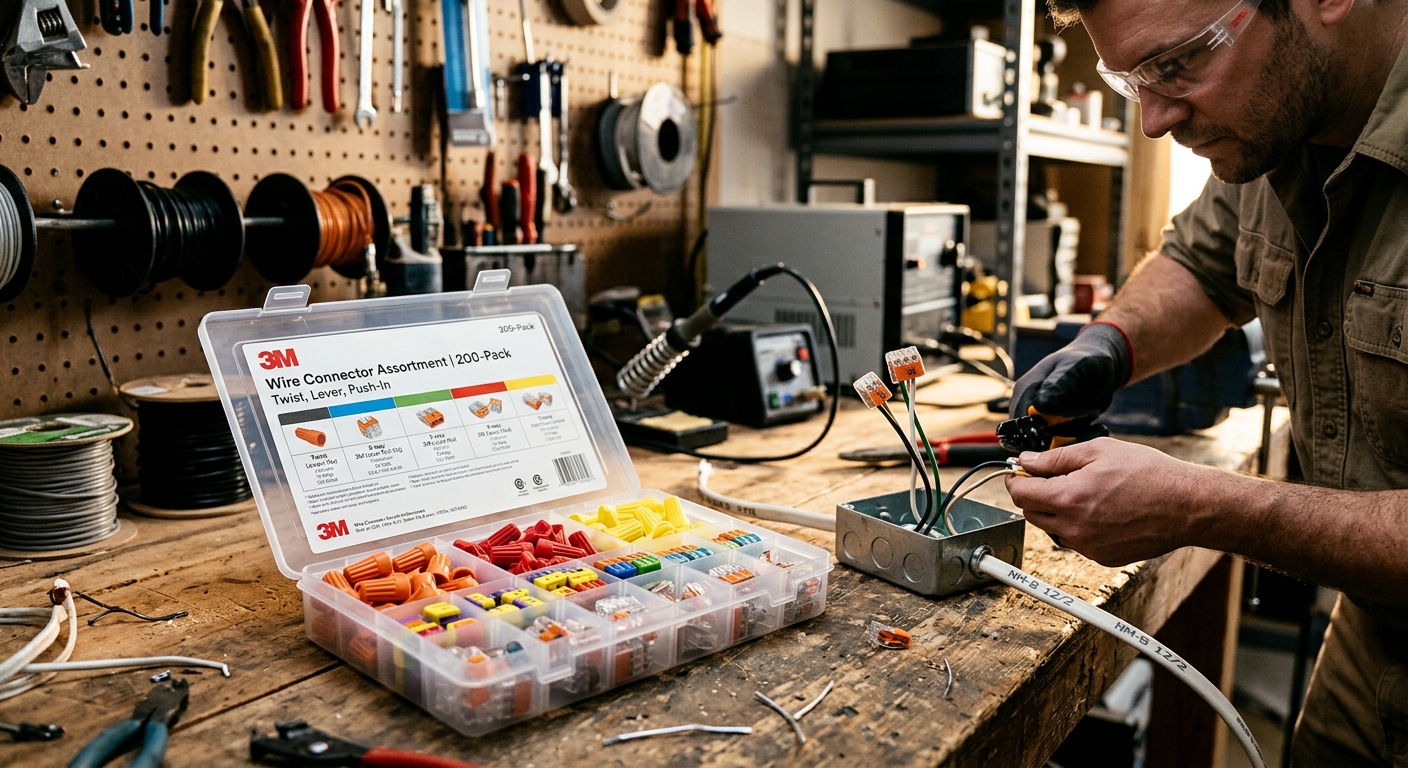
The traditional wire nut, well executed. 3M makes excellent wire connectors in a kit that covers the common residential sizes (orange, yellow, and red/tan). The coil spring is correctly calibrated for consistent grip across the wire gauge range, and the plastic shell is tough. An essential part of any electrical tool kit.
5. Gardner Bender WSP-52 Assorted Wire Connectors (80-Pack)
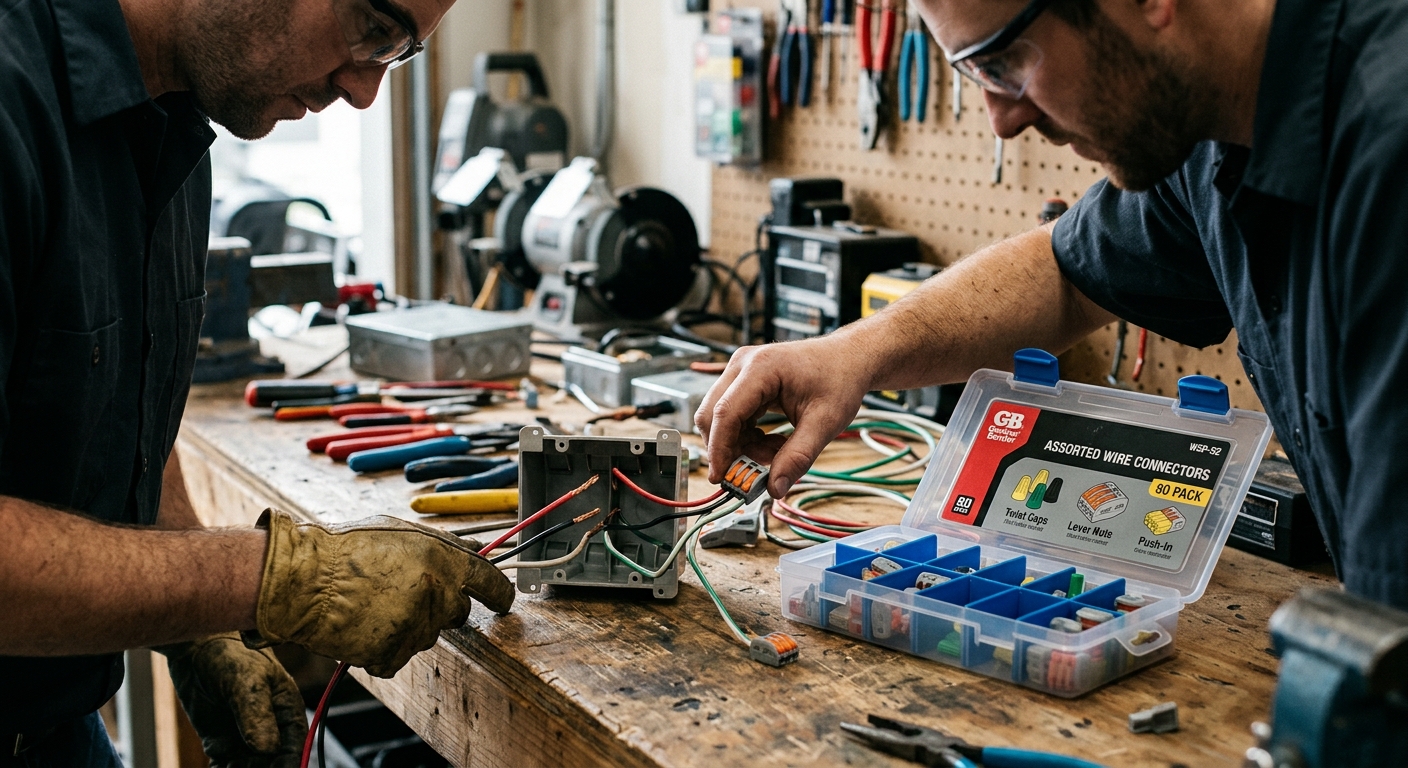
A budget-friendly assortment of standard wire nuts for DIYers who need a supply for occasional use. Covers the most common gauge combinations at a very low per-connector cost. Acceptable quality for non-demanding applications.
What to Avoid
- Wire connectors without UL listing: Never use unlisted connectors for electrical connections. The UL mark is not a formality – it indicates the product has been tested for the specific failure modes that cause fires and shocks.
- Push-in connectors for aluminum wiring: Standard wire connectors are designed for copper conductors. Aluminum wiring requires specialized connectors rated for aluminum-to-copper connections (AL-CU rated).
- Over-twisting wire nuts: Twisting the wire nut while holding the wires stationary is the correct technique. Twisting the wires together before installing the wire nut is counterproductive – the wire nut spring is designed to do this work.
FAQ
How many wires can I connect in one wire nut?
Check the wire nut packaging for the maximum conductor count. Most standard yellow wire nuts handle 2 to 4 conductors of 14 AWG. Exceeding the rated conductor count produces a poor connection. For connections with 5 or more conductors, use a larger wire nut or a lever-nut connector.
Are lever nuts as safe as wire nuts?
WAGO 221 lever nuts are UL Listed and tested to the same standards as wire nuts. The contact area in a lever nut is actually more consistent than in a wire nut, where the quality of the twist matters. Both are safe and reliable when used correctly within their rated specifications.
Can I use push-in connectors in a junction box?
Yes, if the connector is UL Listed for that application. Most push-in connectors are rated for use in standard junction boxes. Confirm the listing on the connector packaging.
Affiliate Disclosure: DIY Arsenal participates in the Amazon Associates Program and other affiliate programs. When you purchase through links on this site, we may earn a small commission at no additional cost to you. We only recommend products we have personally tested and genuinely believe in.