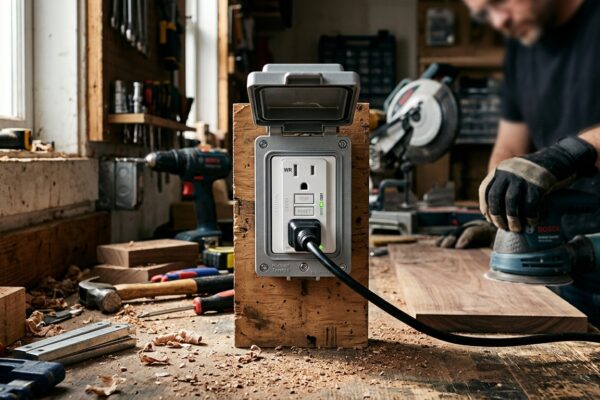
Best GFCI Outlet Testers

The Sperry STK001 belongs in every home — it is the simplest and most important electrical safety check a homeowner can perform; the Klein RT250 adds professional-level diagnostics for those who want more detail from their outlet testing.
As an Amazon Associate, we earn from qualifying purchases.
A GFCI outlet tester is the simplest and most overlooked safety tool for anyone who works on electrical systems or simply wants to verify that the outlets in their home are correctly wired. In three seconds, a GFCI tester confirms whether an outlet is properly wired (hot and neutral not reversed, ground present), whether the GFCI protection is functioning correctly, and whether the ground is actually connected to earth ground. These are the tests that reveal the wiring faults that cause fires, shocks, and equipment damage in homes with older or amateur-installed wiring.
What a GFCI Outlet Tester Checks
Wiring Polarity
The hot and neutral conductors in a 120V outlet must be connected to the correct terminals – hot to the small (narrow) slot, neutral to the large (wide) slot. Reversed polarity does not always prevent devices from operating, but it puts the chassis of lamps and appliances at hot potential rather than neutral, creating a shock hazard. A basic outlet tester shows this with two indicator lights.
Ground Presence
The ground conductor connects the outlet to earth ground through the panel. Missing or disconnected grounds cause shock hazards and allow transient surges to damage connected equipment. The tester verifies that the ground path is present and connected.
GFCI Function
The TEST button on a GFCI tester sends a controlled current imbalance to the outlet, simulating a ground fault. A properly functioning GFCI device (either the outlet itself or an upstream GFCI protecting it) trips immediately, cutting power to the outlet. If the outlet does not trip, the GFCI protection is not functioning and the outlet must be replaced or repaired.
Types of Outlet Testers
Basic 3-Light Outlet Testers

The most common and least expensive type. Three indicator lights show standard wiring condition combinations (correct, hot/neutral reversed, open ground, open hot, open neutral, hot/ground reversed) with a reference chart on the body. Simple, reliable, and adequate for most homeowner use.
GFCI Testers
Include the basic 3-light function plus a TEST button that trips GFCI devices to verify they are functioning. Most outlet testers sold for homeowner use combine both functions. Essential for testing bathroom, kitchen, garage, and outdoor outlets, all of which require GFCI protection per NEC.
LCD Outlet Testers
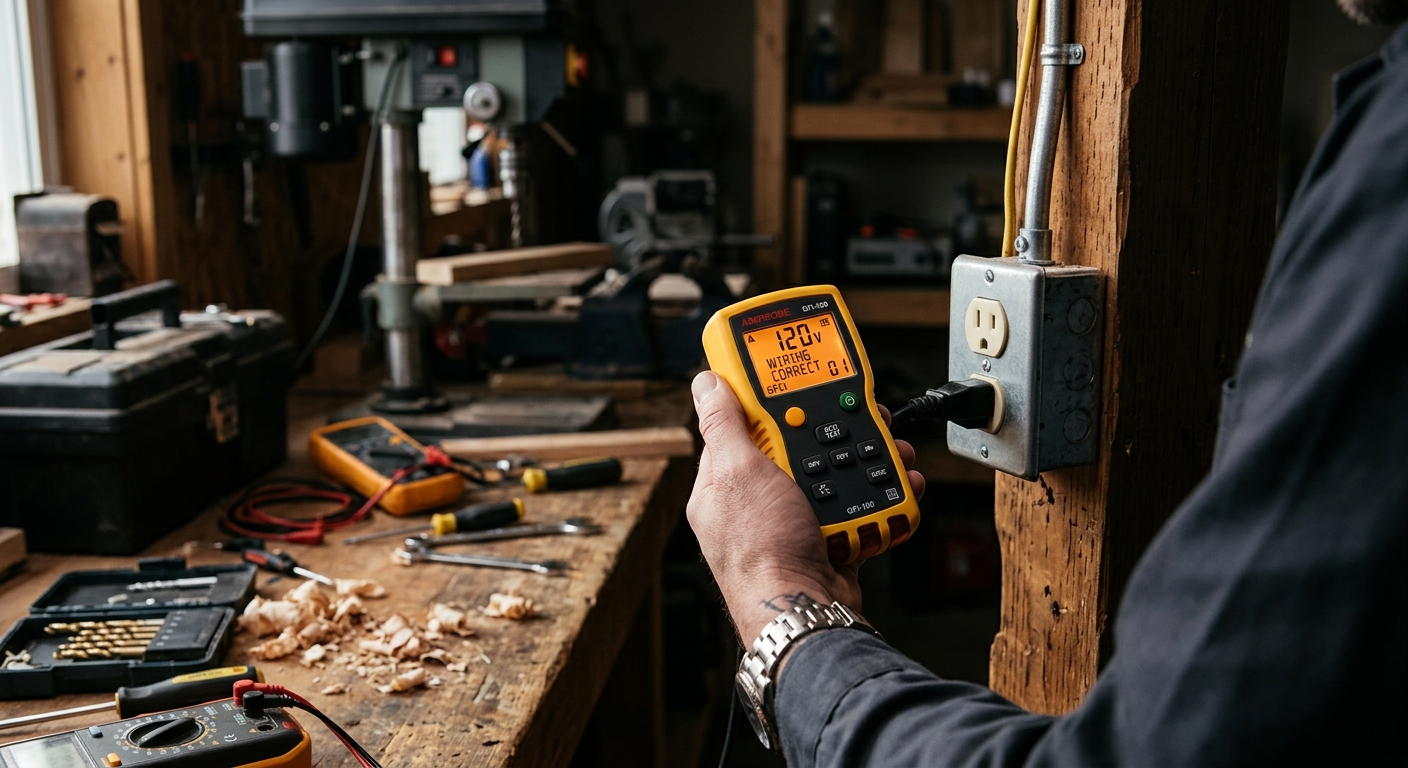
Digital display shows voltage, wiring condition, and in some models the line and neutral voltage separately. More information than 3-light models and useful for diagnosing marginal voltage conditions that affect sensitive equipment.
AFCI Testers
The most advanced type, testing for Arc Fault Circuit Interrupter (AFCI) breaker function. AFCI protection is required in modern bedrooms and living areas and detects arcing (not just ground faults). AFCI testers are specialized tools used by electricians to verify AFCI breaker function during inspection.
Our Top Picks
1. Klein Tools RT250 GFCI Outlet Tester
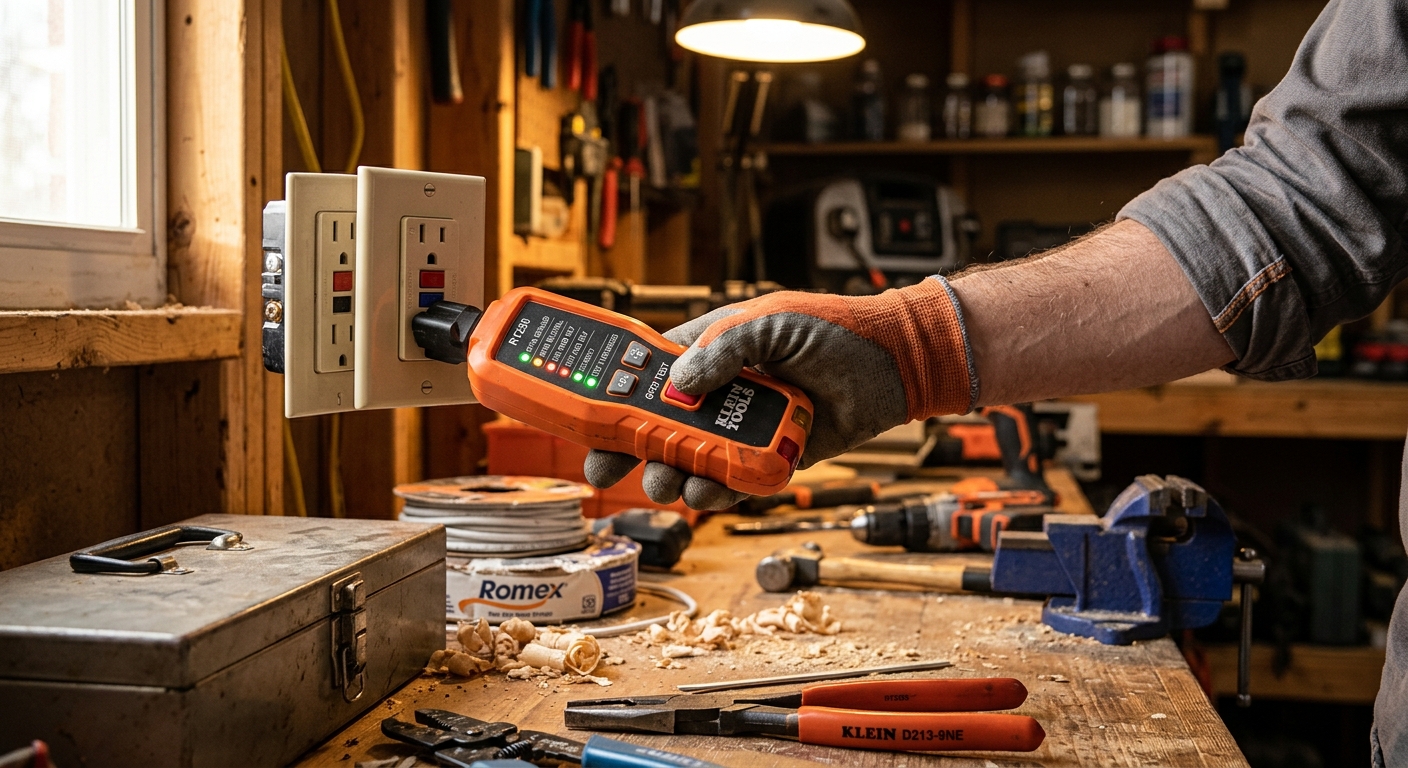
The most comprehensive outlet tester for homeowners and electricians. The RT250 combines the 3-light wiring condition test with GFCI trip testing, LED indicator brightness that is easy to read in any light, and a large chart on the body that interprets all indicator combinations. The circuit analyzer also identifies protected versus unprotected GFCI circuits. Klein quality throughout.
2. Sperry Instruments STK001 GFCI Outlet Tester
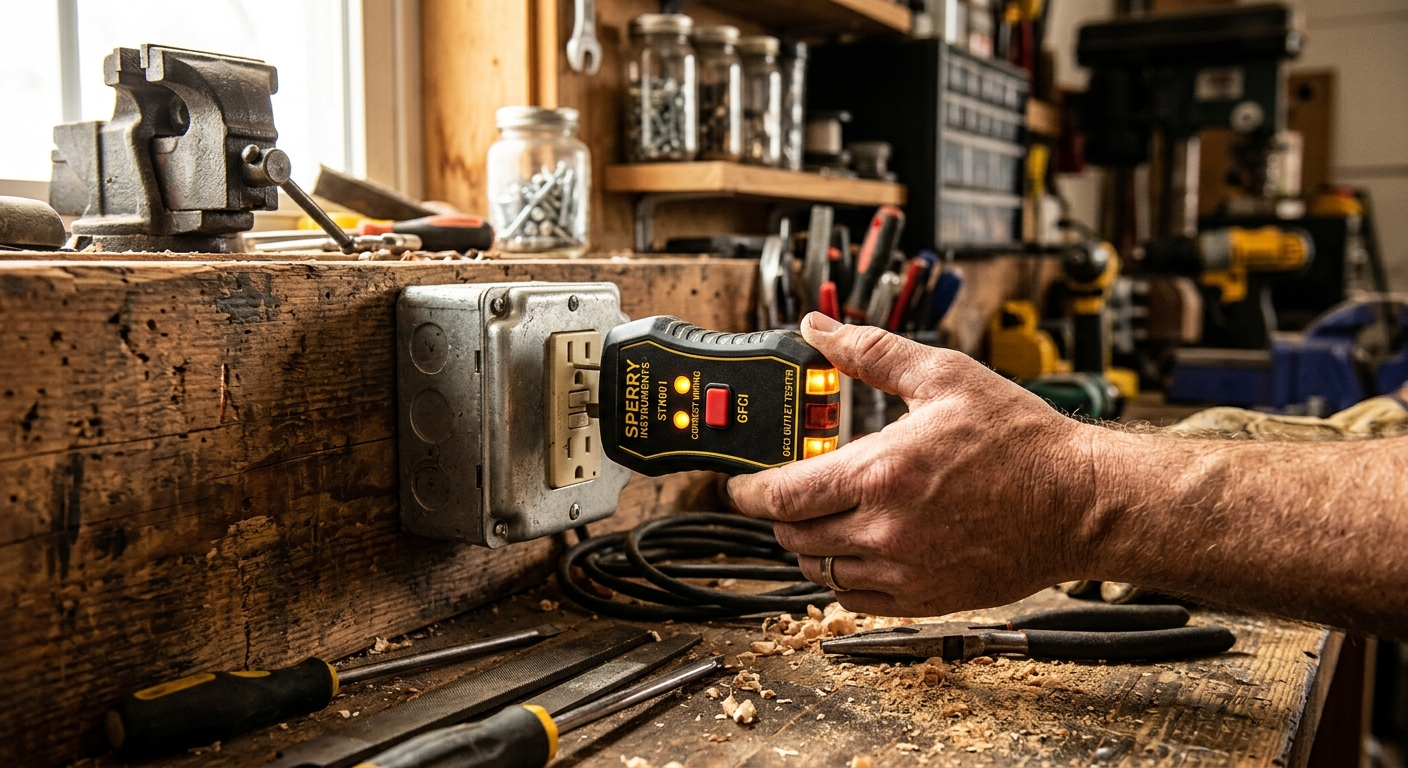
The most widely available and best-value GFCI tester. The Sperry STK001 is found in every hardware store, correctly identifies all standard wiring faults, and tests GFCI trip function reliably. The indicator light chart is well-designed and easy to interpret. Every homeowner should own this tester or one equivalent to it.
3. Southwire OT-202K Outlet Tester with Voltmeter
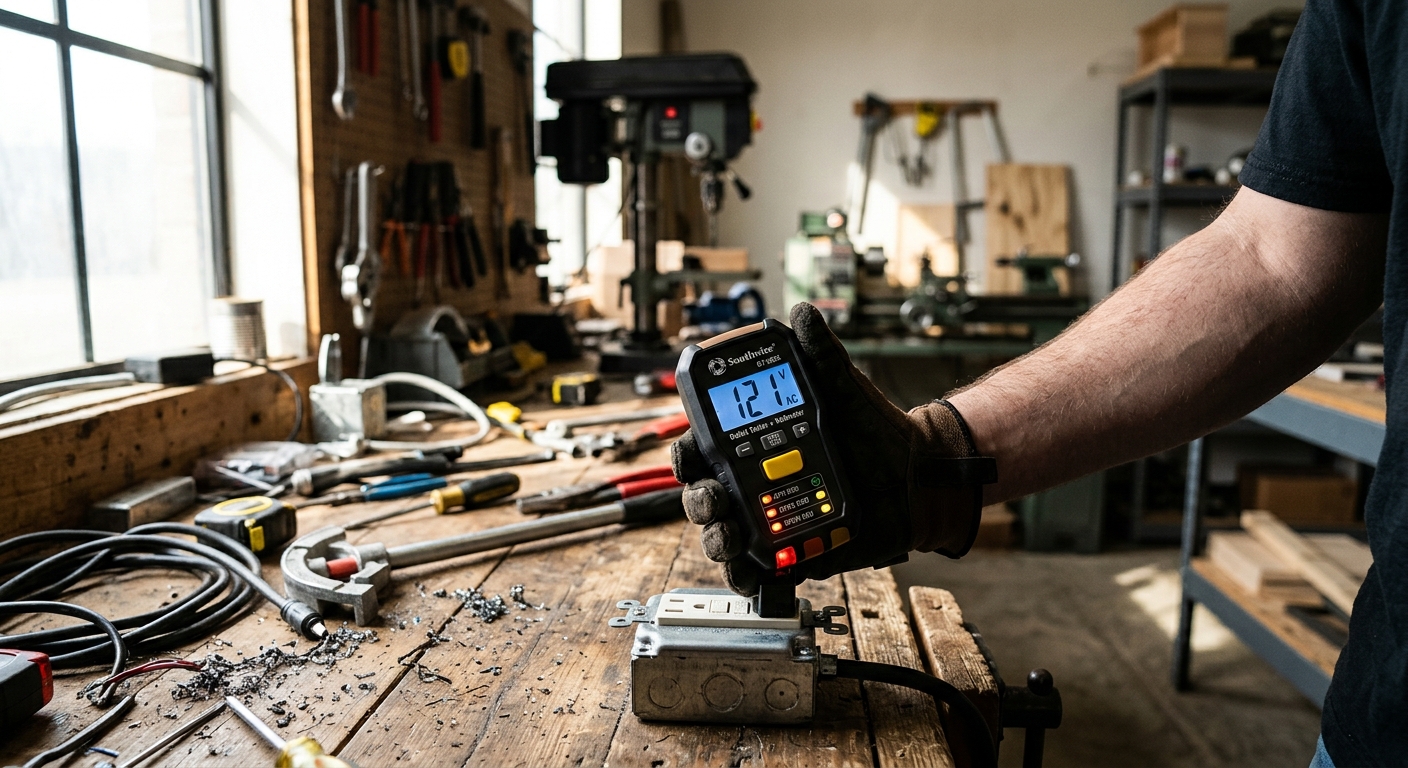
Adds a digital voltage readout to the standard indicator lights – you see not just whether the wiring is correct, but what the actual voltage is. Useful for diagnosing low-voltage conditions that cause equipment problems, particularly in older homes with long wiring runs. Also includes GFCI test function.
4. Gardner Bender GRT-3500 GFCI Outlet Tester

A durable, well-made tester from a long-established electrical accessories brand. Standard 3-light plus GFCI test, clear indicator chart, and a compact design. A reliable alternative to Sperry and Klein at a similar price point.
5. Hubbell Wiring GFT1 GFCI Tester
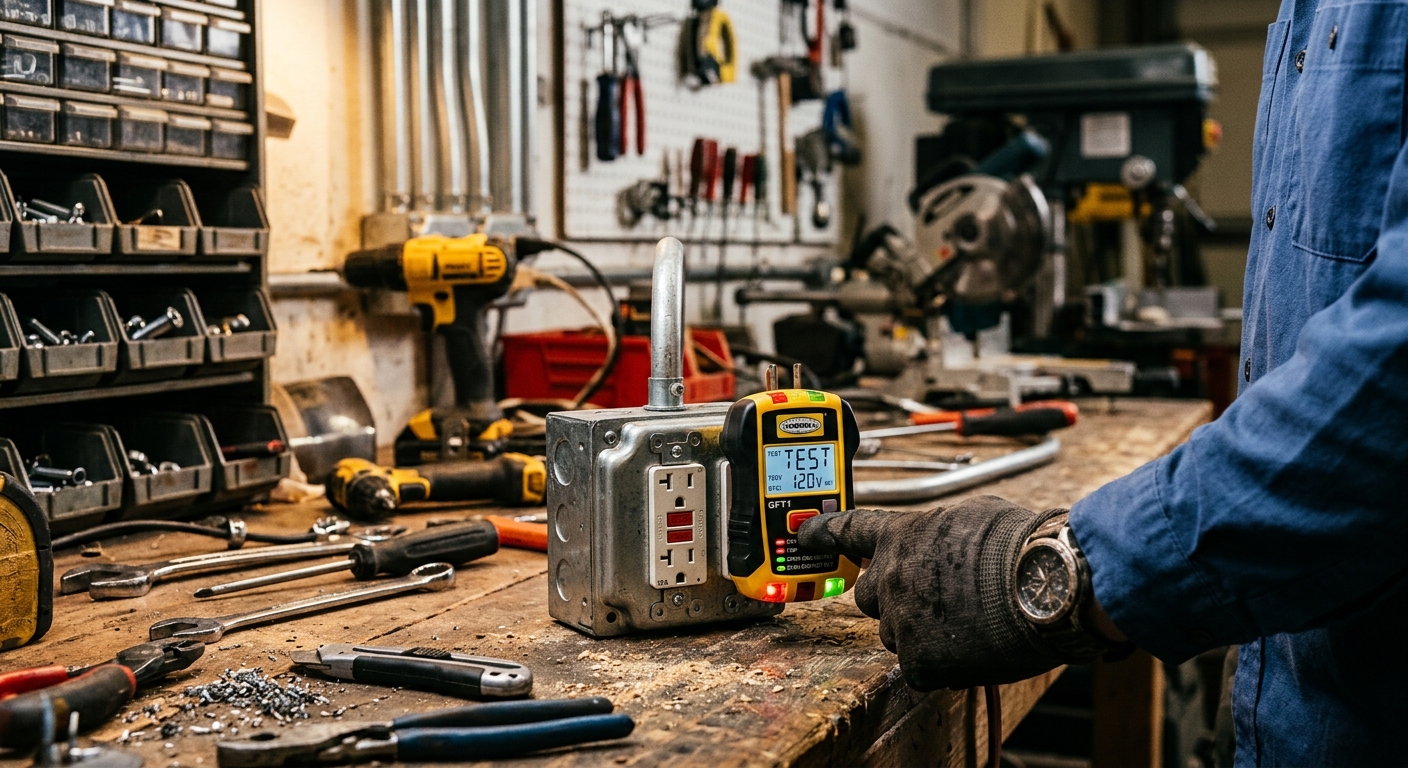
Hubbell is a commercial electrical wiring device manufacturer – their outlet tester reflects the quality of their product line. The GFT1 is particularly accurate at trip-testing GFCI outlets and is used by electrical inspectors and contractors who need confidence in the test result. More expensive than the Sperry but appropriate for professional use.
How to Test Every Outlet in Your Home
- Plug the tester into each outlet.
- Note the indicator light pattern and compare to the chart on the tester body.
- For outlets showing “correct” wiring: press the TEST button to verify GFCI function if the outlet is in a wet area (kitchen, bathroom, garage, outdoor).
- For outlets showing any fault: note the location and have the wiring inspected and corrected by a licensed electrician.
- After any GFCI trip during testing, press RESET on the GFCI outlet or upstream GFCI to restore power.
What to Avoid
- Testing with a tester and assuming everything is fine: An outlet tester detects the most common wiring faults, but some serious conditions (high-resistance grounds, nuisance GFCI trips, broken neutral) require more sophisticated diagnosis.
- Substituting a lamp or appliance for an outlet tester: A lamp tells you whether power is present. It tells you nothing about wiring polarity, ground quality, or GFCI function.
- Forgetting to reset GFCI outlets after testing: Test-tripping an outlet and walking away without resetting leaves devices on that circuit without power.
FAQ
My outlet tester shows “open ground” but the outlet has three prongs. What does this mean?
The outlet was wired with a 3-prong receptacle but the ground conductor is not connected at the outlet or at some point upstream. This is common in homes rewired partially without properly running a ground conductor. The outlet should be replaced with a GFCI receptacle (which provides shock protection even without a ground) and marked with “No Equipment Ground” per NEC.
Do I need a GFCI outlet on every circuit?
NEC requires GFCI protection on all kitchen countertop outlets, bathroom outlets, garage outlets, outdoor outlets, crawl space outlets, unfinished basement outlets, and wet bar outlets. Bedroom, living room, and other dry-area outlets do not require GFCI but do require AFCI protection in modern construction.
My GFCI tester does not trip the outlet. Is the outlet wired incorrectly?
Possibly. An outlet may also fail to trip if the GFCI protection is provided upstream (by a GFCI breaker or an upstream GFCI outlet) rather than at the outlet itself. Check the breaker panel for a GFCI breaker on that circuit, or trace back to find the upstream GFCI outlet that protects this one. If no GFCI protection is found, the outlet is missing required protection.
Affiliate Disclosure: DIY Arsenal participates in the Amazon Associates Program and other affiliate programs. When you purchase through links on this site, we may earn a small commission at no additional cost to you. We only recommend products we have personally tested and genuinely believe in.