Best Saw Blade Storage Cases
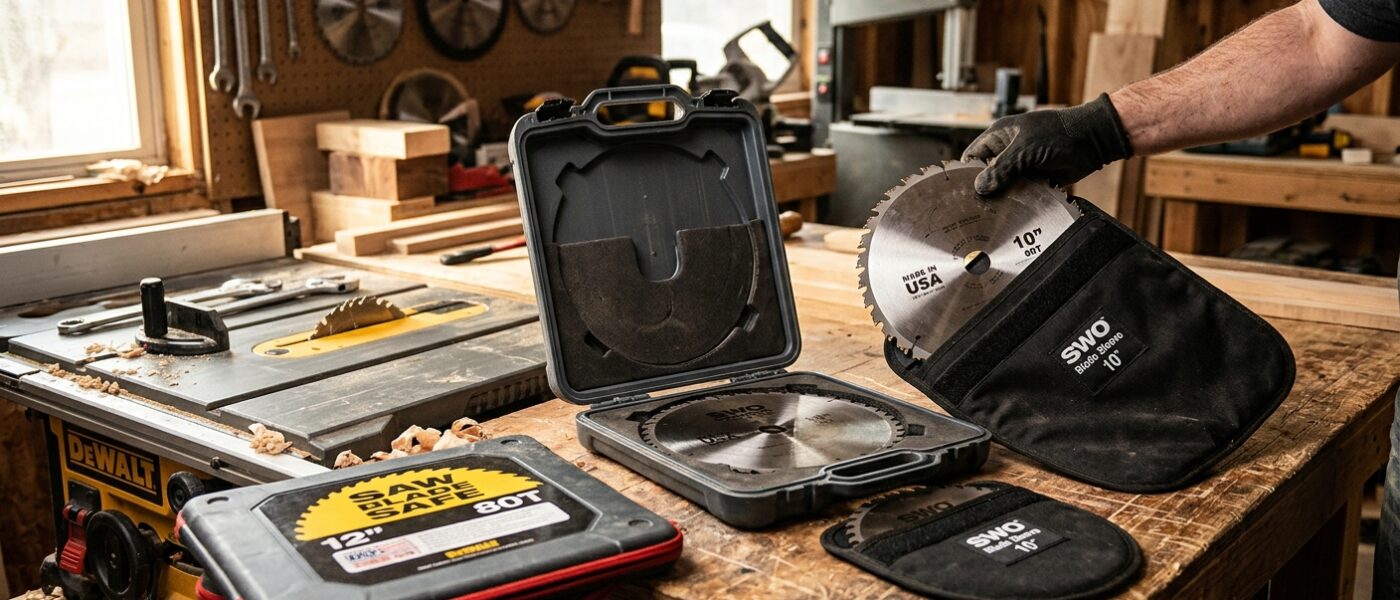
Save and label the original manufacturer cases for every quality blade you own — it is the best and cheapest protection available; the Stalwart 10-blade case is the best universal solution when original cases are not available.
As an Amazon Associate, we earn from qualifying purchases.
Saw blades are precision tools that cost real money and reward careful handling. A quality 10-inch miter saw blade runs $40 to $150 and keeps its cutting edge only if its carbide teeth are not damaged by contact with other blades, metal surfaces, or each other. Poor blade storage is one of the most common ways that woodworkers unknowingly destroy expensive tooling – a blade tossed into a drawer with other blades will arrive at the saw dulled and chipped before you need to replace it from actual cutting use.
Why Blade Storage Matters
Carbide teeth are extremely hard but also brittle. A light impact against another tooth or hard surface chips or cracks the carbide, creating a tooth that tears rather than cuts and throws off the blade balance. Blades stacked flat will eventually damage each other at the tooth tips. Blades with tips exposed to humidity develop surface rust that must be removed before use and can, over time, affect the blade body and hub.
Types of Saw Blade Storage
Individual Blade Cases and Sleeves
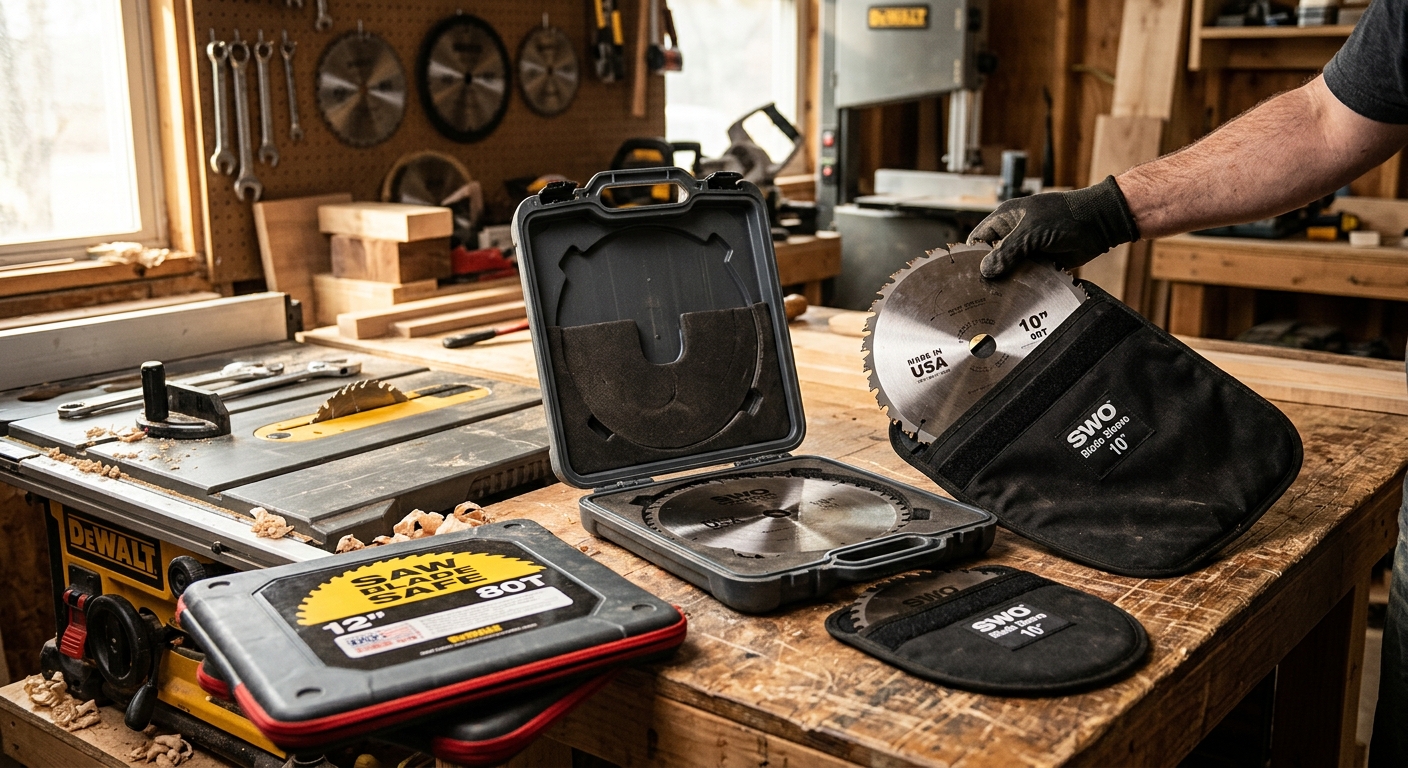
Rigid plastic cases or soft protective sleeves that contain a single blade. The most protective option. Blades stored in their original packaging are completely protected – save and reuse manufacturer cases whenever possible.
Multi-Blade Storage Racks
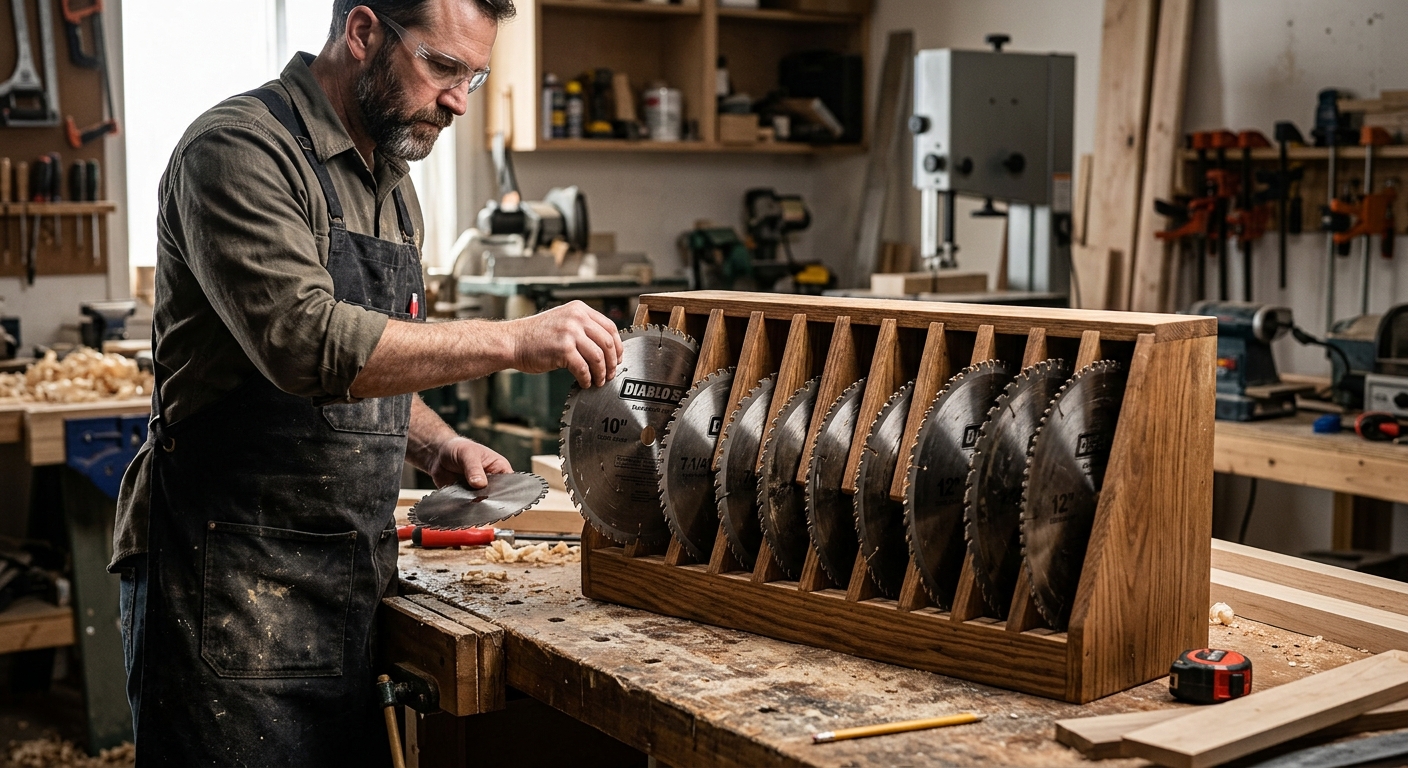
Wall-mounted or freestanding racks with individual slots that hold blades vertically, separated from each other. Efficient use of space and allows quick visual identification of available blades.
Blade Boxes and Cases
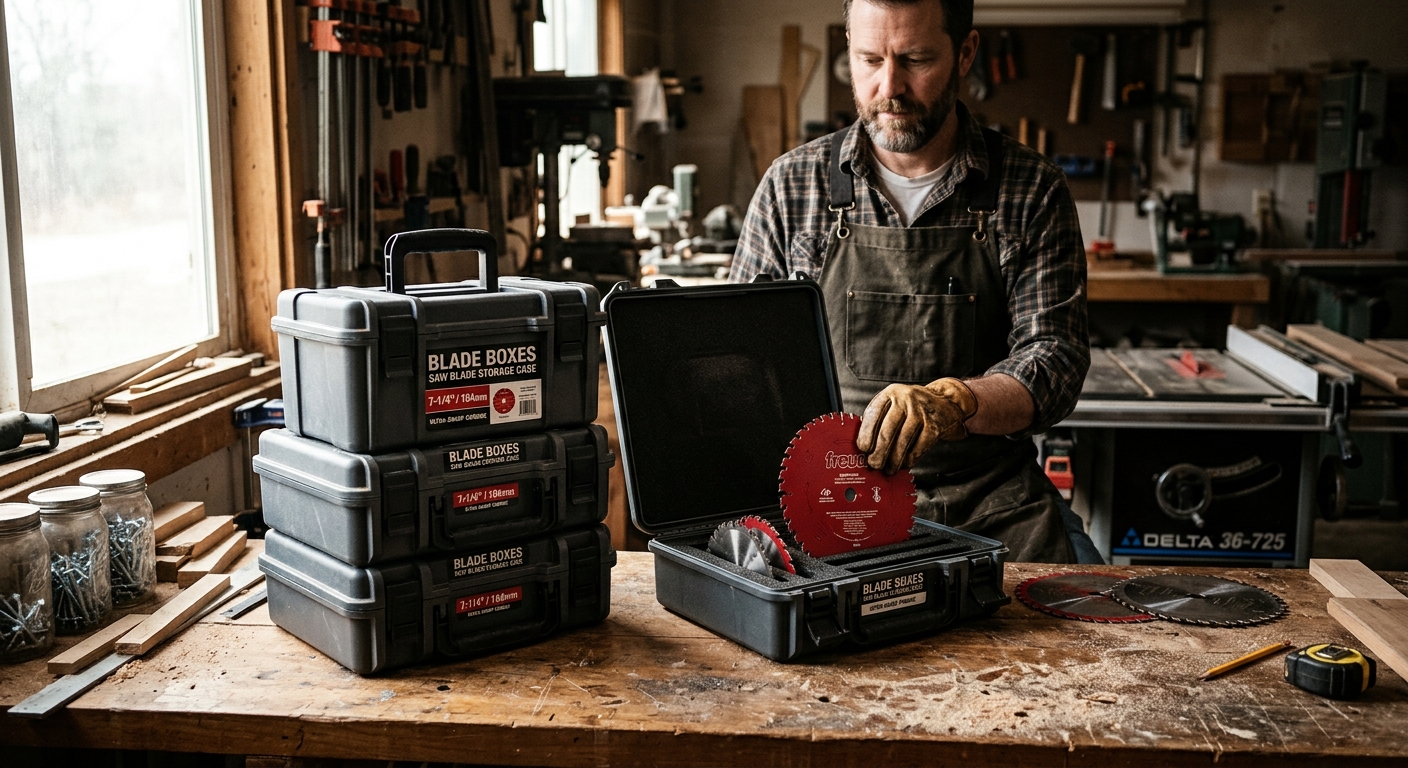
Rigid cases that hold multiple blades in protected slots. Portable, lockable, and better than a drawer for blades that travel to job sites.
Drawer Storage with Blade Dividers
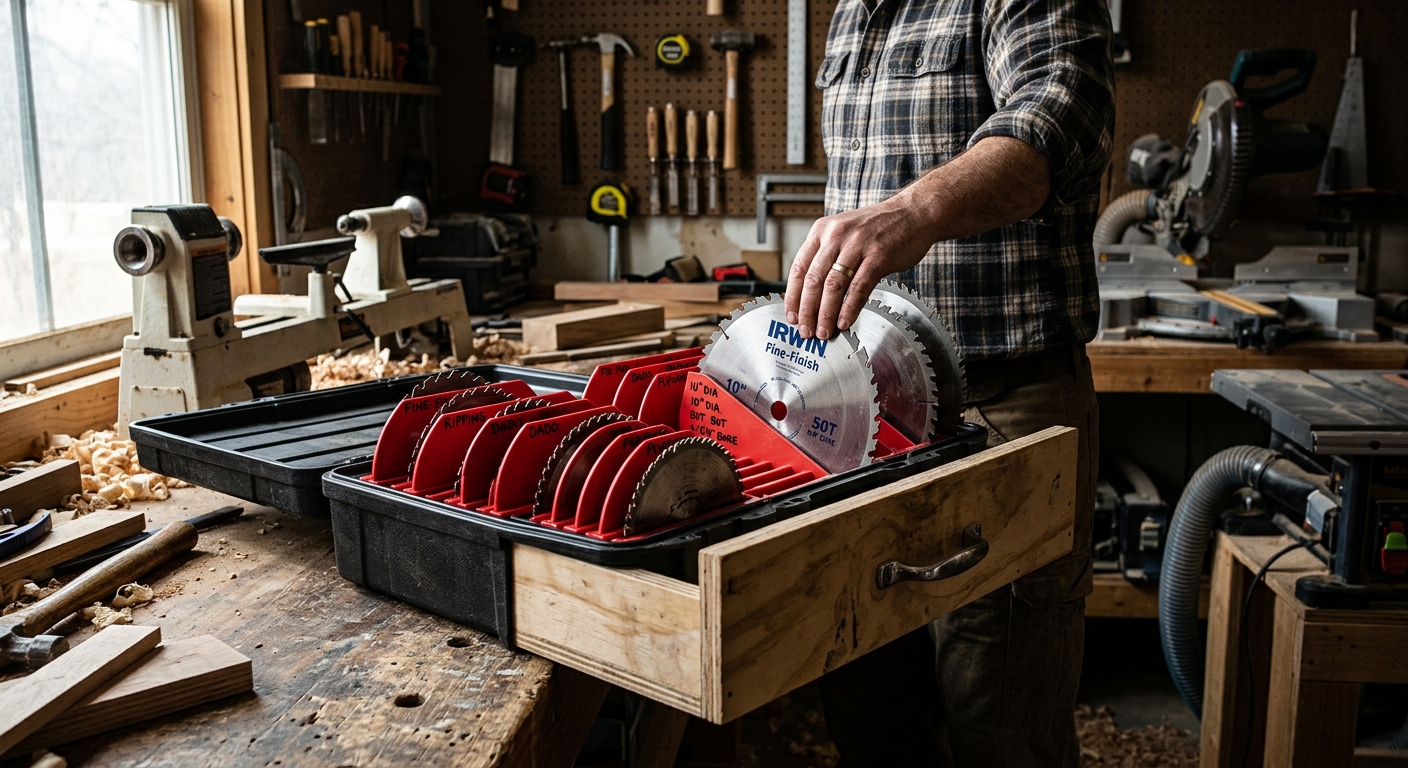
A drawer lined with foam or with built-in dividers that keep blades separated and horizontal. Space-efficient and accessible, though blades must be handled carefully when removing and returning them.
Key Features to Look For
Non-Metallic Blade Contact Surfaces
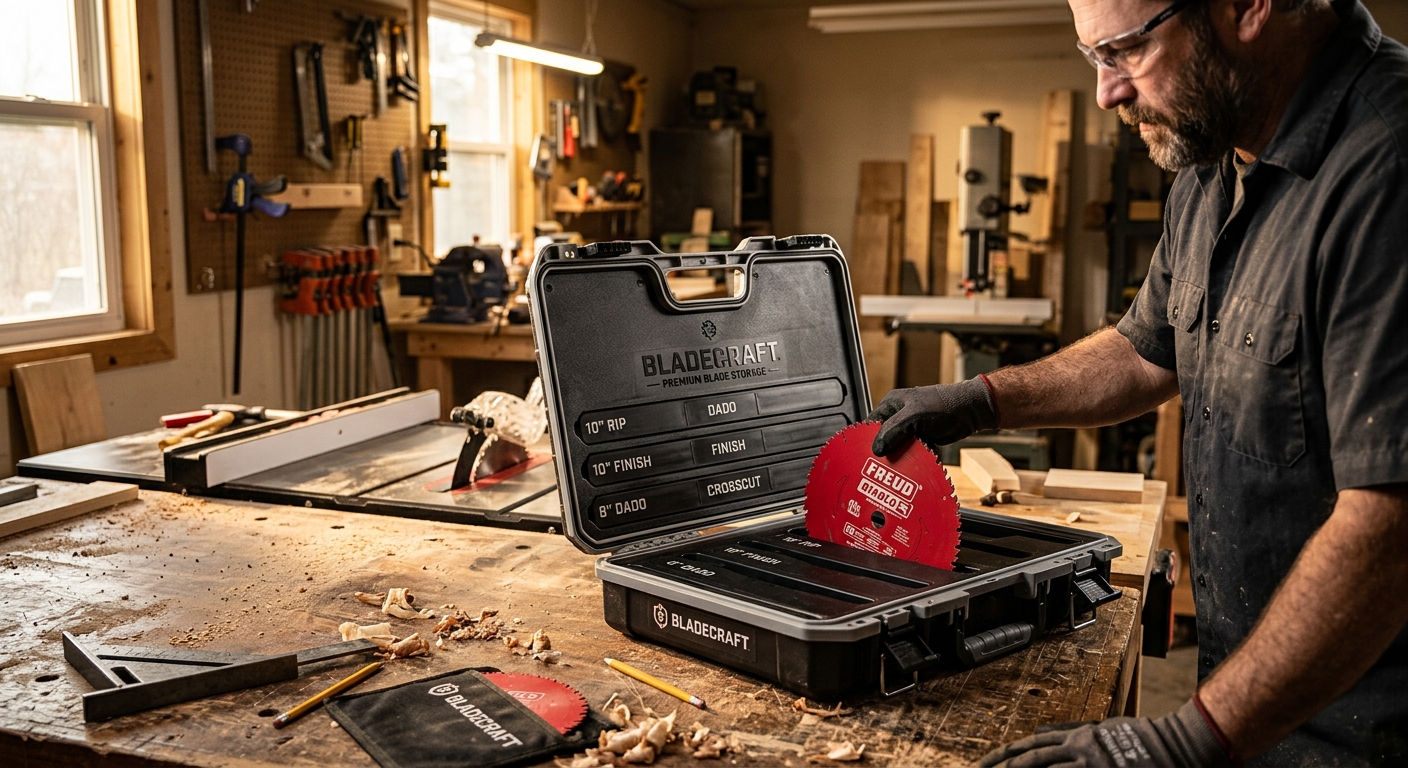
Foam, rubber, or plastic surfaces protect carbide teeth on contact. Metal-on-carbide contact chips teeth. Any storage solution should ensure blade teeth contact only non-metallic surfaces.
Individual Blade Separation
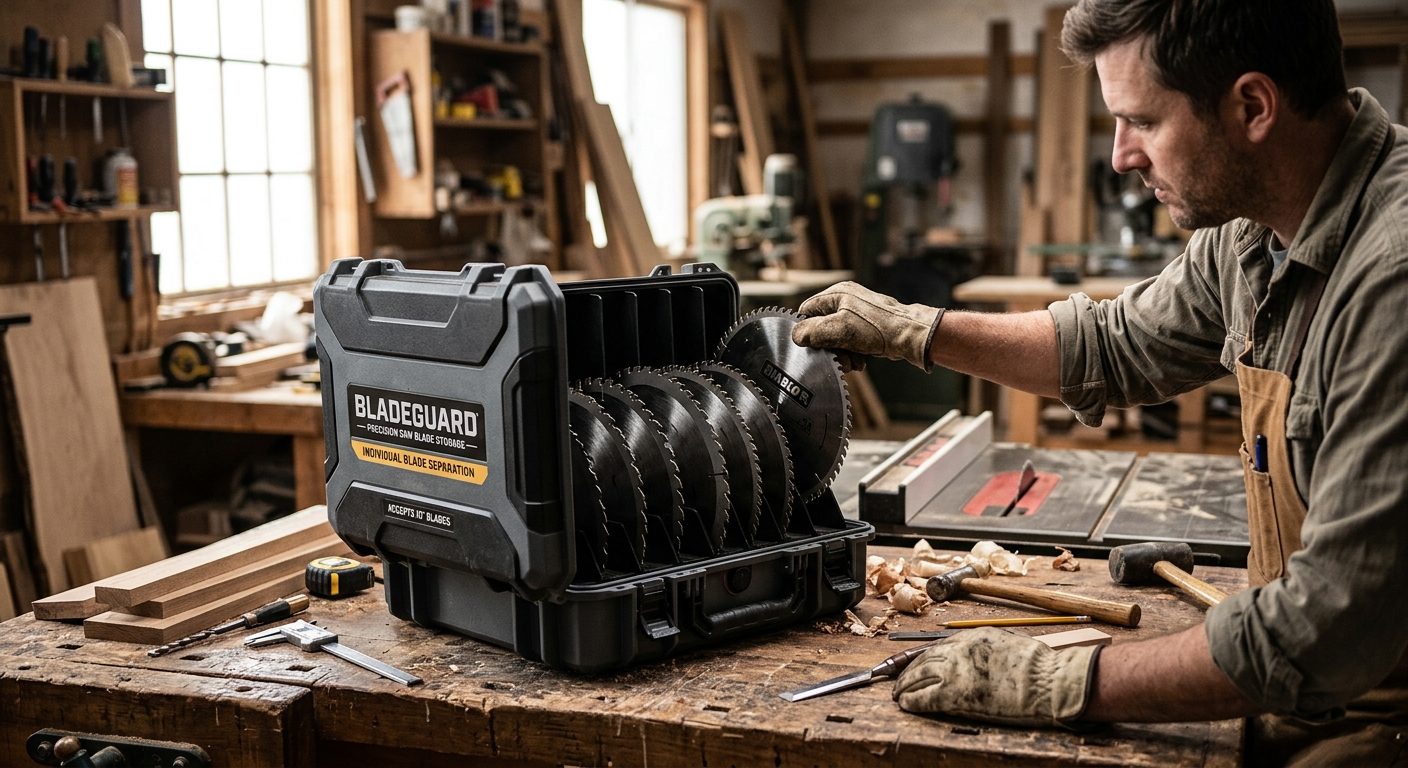
The most important feature: blades must not contact each other. Separation can be provided by individual slots, foam padding between blades, or individual sleeves.
Identification Labels
Most blades look similar at a glance – the same diameter, similar tooth count. Label each storage location with the blade specification (tooth count, kerf, intended material) so you can select the right blade without close inspection.
Corrosion Protection
Blades stored in humid garages need protection from surface rust. Store with a very light coat of rust-preventive oil, or use a case with desiccant. Prevent surface rust from becoming a recurring maintenance task.
Our Top Picks
1. Stalwart Saw Blade Storage Case (10-Blade Capacity)
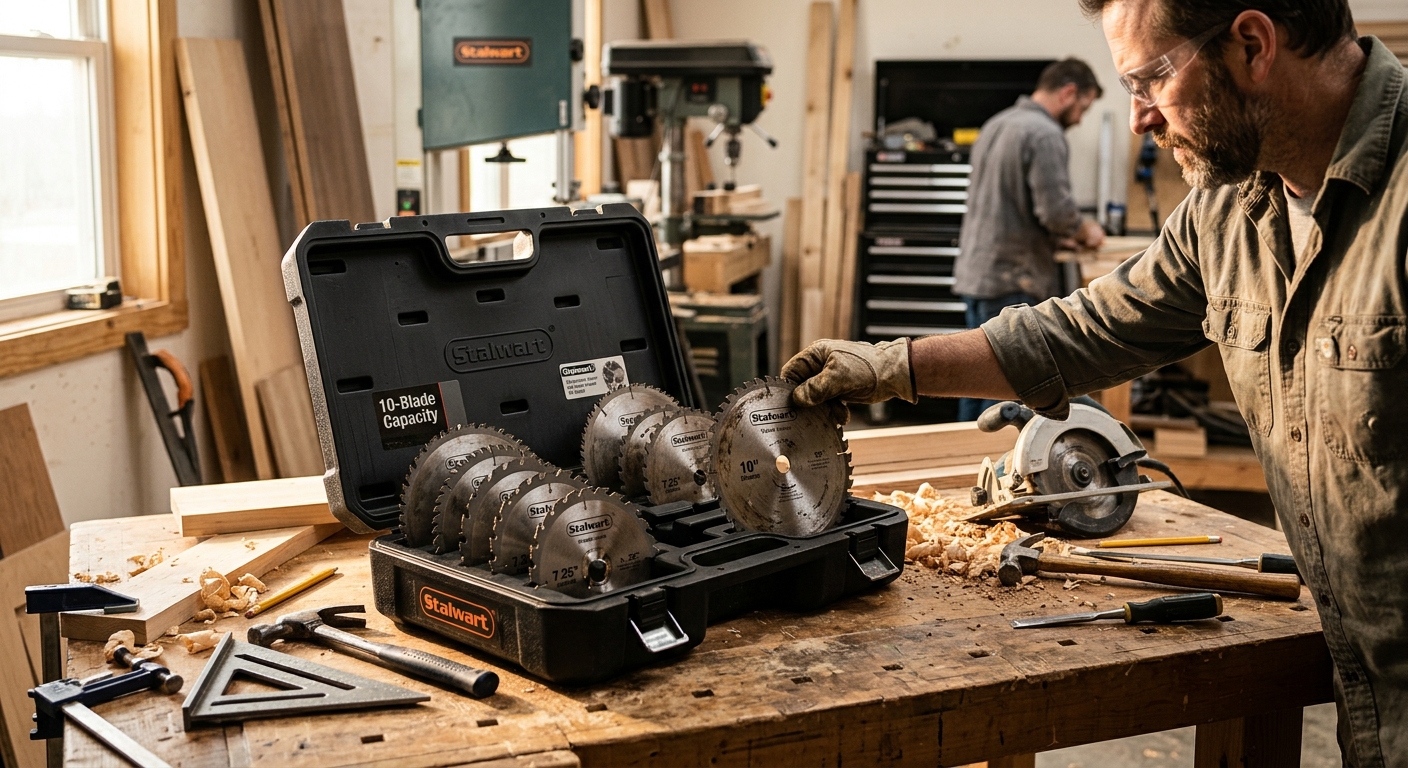
A purpose-built rigid case for saw blades up to 10 inches in diameter. Individual foam-lined slots keep blades separated and protected, a latching lid provides security during transport, and the compact design stores on a shelf or in a cabinet without taking much space. An excellent solution for most home shop blade inventories.
2. Bosch CCBLADEBOX Blade Storage Case
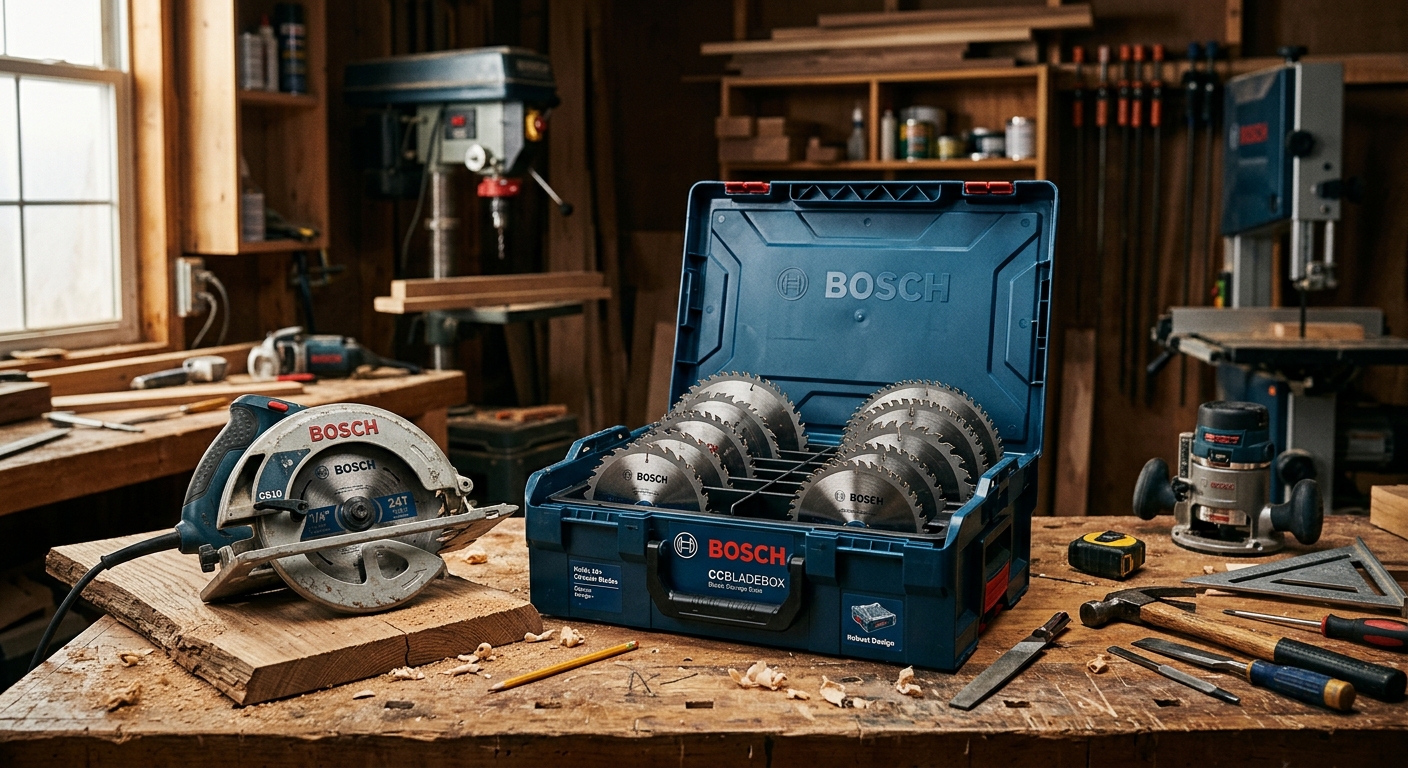
Bosch’s dedicated blade case carries multiple blades in foam-separated slots with labeled dividers. Designed to fit standard circular saw and miter saw blades, with a locking clasp for transport. The foam separation is particularly well-designed – blades do not contact each other under any orientation.
3. Shop-Built Wall Rack (DIY)
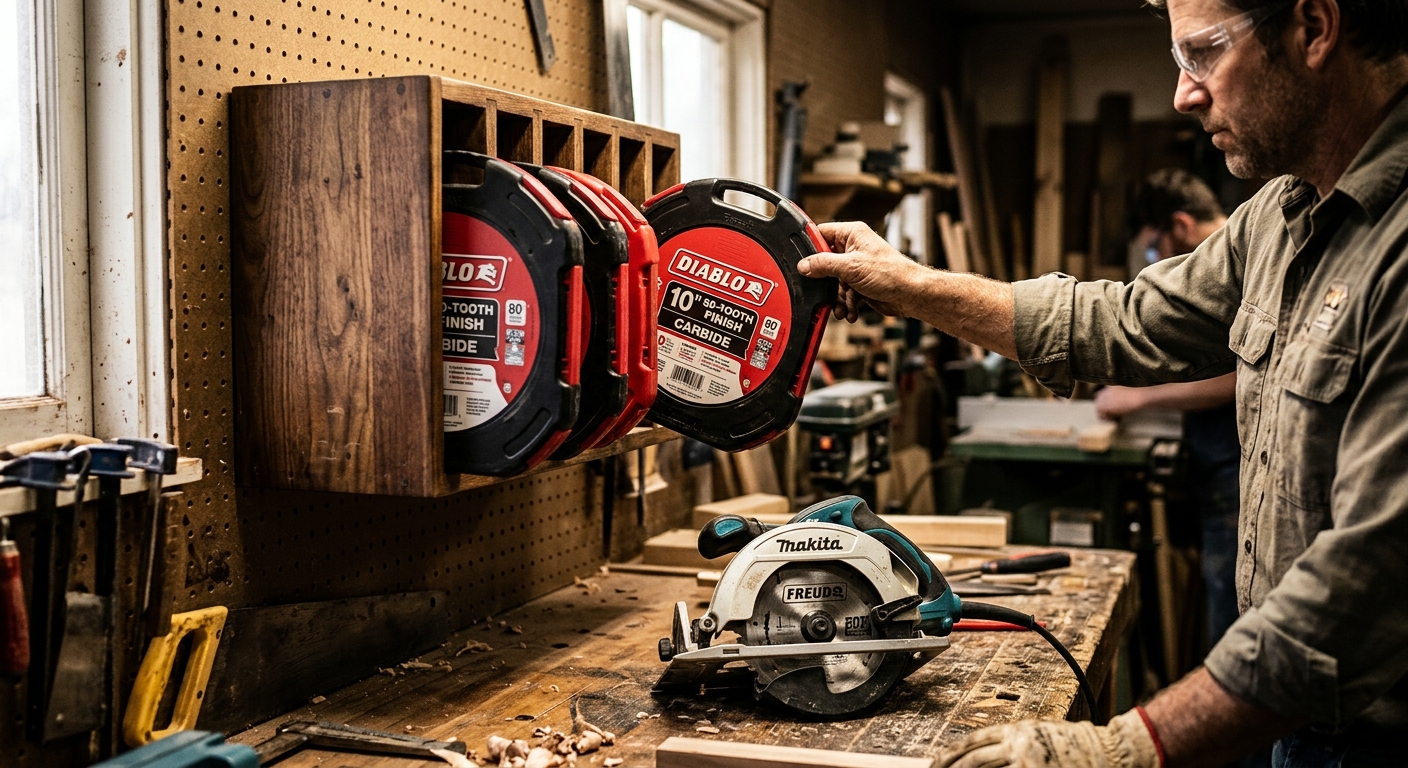
For wall-mounted blade storage: cut a series of 3-inch wide slots into 3/4-inch plywood, space them at 3-inch intervals, and mount the assembly on the wall above the saw station. Blades slip into the vertical slots, separated by the plywood walls. Line each slot with thin foam sheet for tooth protection. This common shop-built solution costs almost nothing and works perfectly for blades that live in the shop permanently.
4. Original Manufacturer Cases
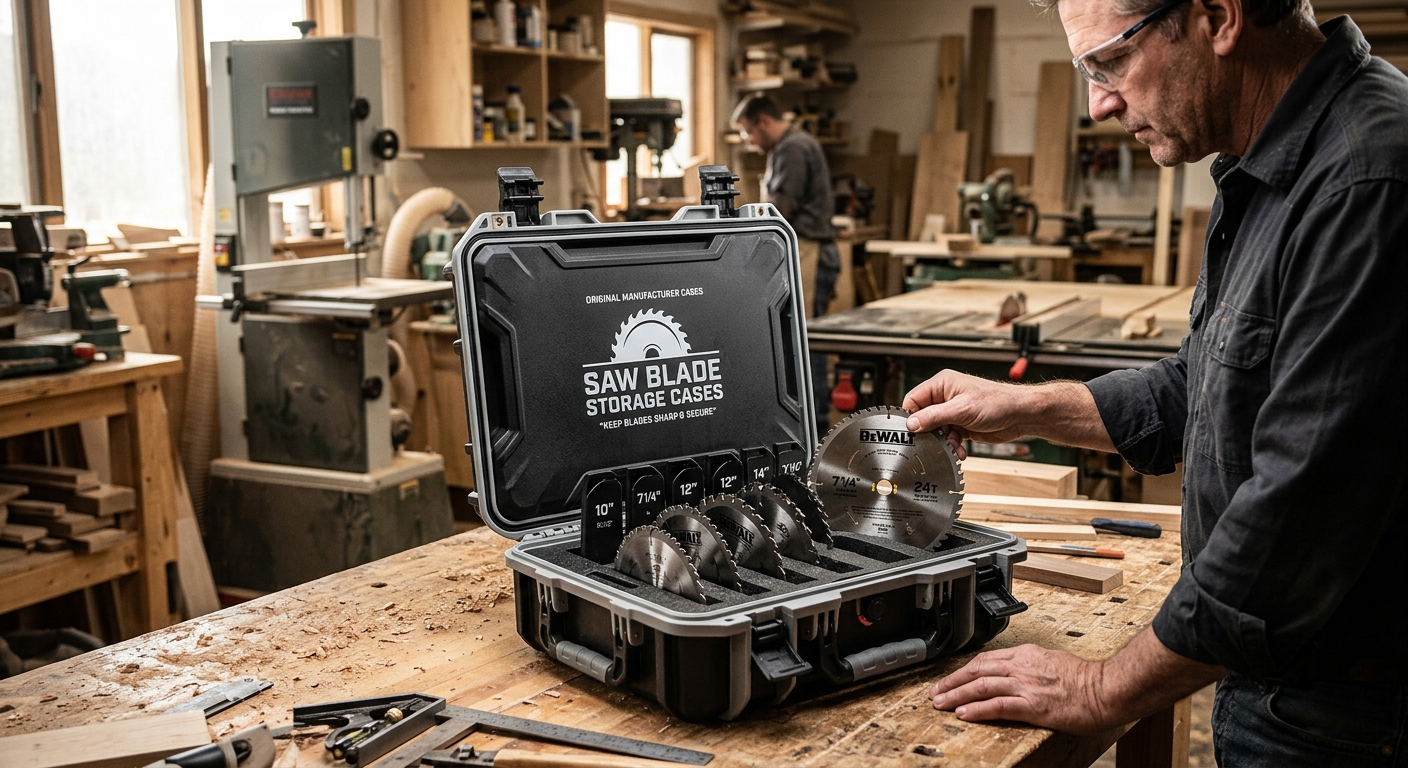
The best packaging for any blade is the one it shipped in. Quality blades (Freud, Diablo, CMT, Forrest) come in rigid plastic cases with the blade seated in a formed plastic tray that perfectly fits its dimensions. Save every case. Label it with the blade specifications on the outside. Stack the cases on a shelf. This costs nothing extra and provides excellent protection.
5. Plano 1374 Stowaway (Repurposed for Blades)
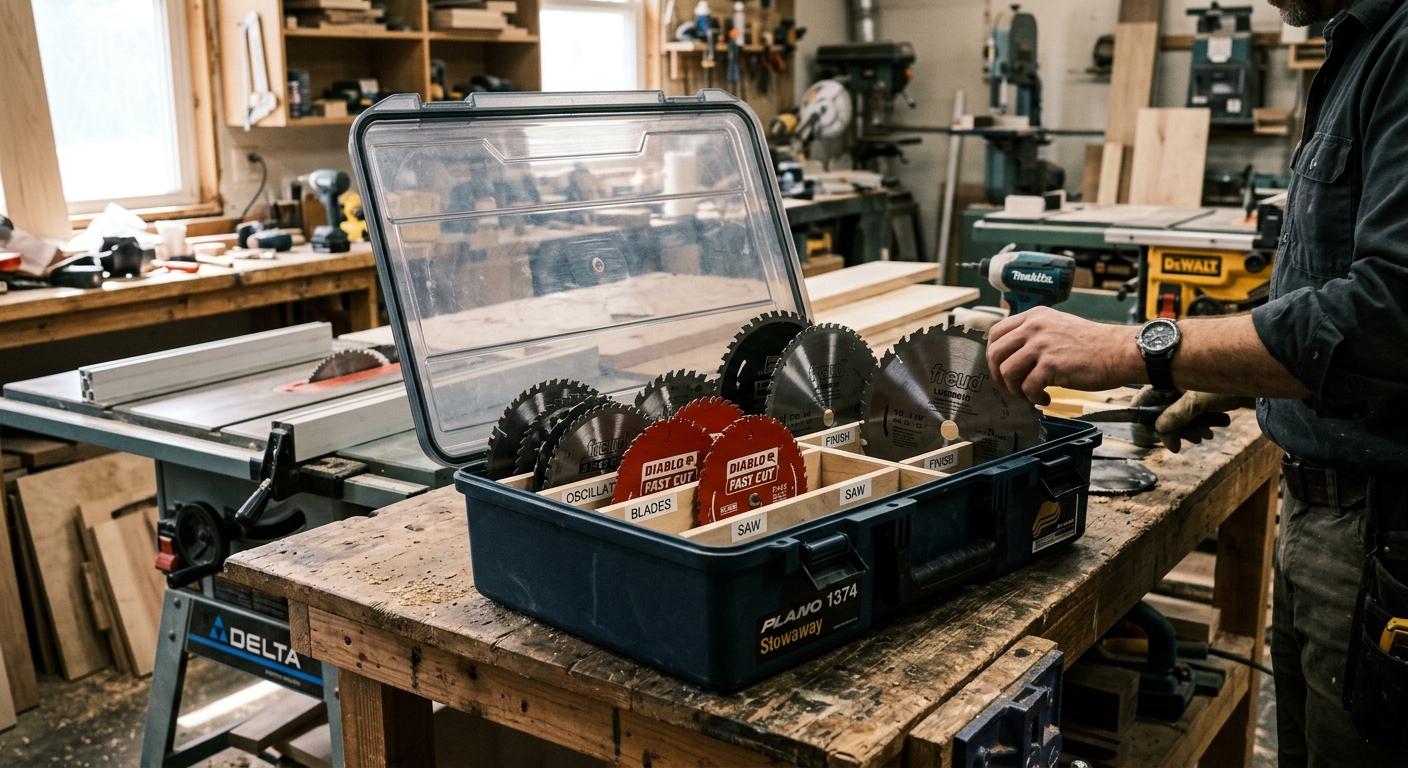
A deep-tray utility organizer commonly used for blade storage by resourceful woodworkers. The adjustable dividers can be set to create individual blade slots, and the latching clear lid provides weather and physical protection. Not purpose-built for blades, but effective and inexpensive.
What to Avoid
- Loose blades in drawers: Even with a foam liner, blades slide during drawer opening and contact each other at the teeth.
- Hanging blades from their arbor hole: The blade hangs at an angle, and the weight stresses the plate. Over time this can introduce very slight wobble detectable on a dial indicator.
- Wet or humid storage: Surface rust on the plate does not affect cutting, but rust in the gullets (behind the teeth) can affect chip clearance and eventually tooth retention.
FAQ
Should I clean blades before storing them?
Yes. Pitch and resin buildup on the blade body reduce heat dissipation during cutting and can cause the blade to run slightly out of true over time. Clean with a dedicated saw blade cleaner (Simple Green, CMT Formula 2050, or oven cleaner) before storage.
Can I stack blades flat in a case?
Only if there is foam or rubber between every blade. Flat stacking with metal-to-metal tooth contact is the most common cause of chipped carbide teeth. If you stack flat, use one protective sleeve or foam insert per blade.
How do I know when a blade needs replacing rather than sharpening?
Replace when more than three adjacent teeth are missing or severely chipped. Sharpen when the cut quality degrades (burn marks, splintering) but the teeth are intact. A quality professional blade is almost always worth sharpening rather than replacing.
Affiliate Disclosure: DIY Arsenal participates in the Amazon Associates Program and other affiliate programs. When you purchase through links on this site, we may earn a small commission at no additional cost to you. We only recommend products we have personally tested and genuinely believe in.