Best Angle Grinders – Cutting, Grinding, and Sanding
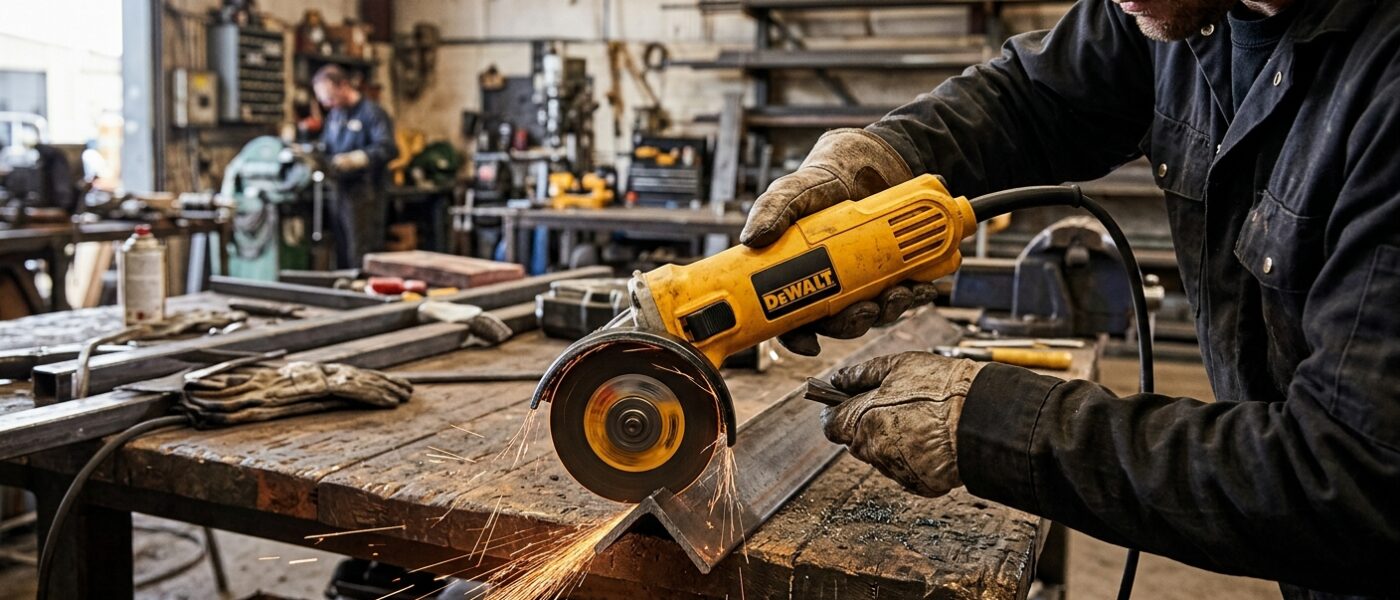
DeWalt DWE402 leads for corded; Milwaukee M18 FUEL for cordless — safety and disc selection matter as much as the tool.
The angle grinder is one of the most capable and most dangerous tools in the workshop. With the right disc, it cuts metal, grinds welds, removes rust and paint, cuts tile, shapes stone, and sands wood – all from one tool body. Professional fabricators, plumbers, tile setters, and metalworkers consider it indispensable. Home DIYers who discover the angle grinder often wonder how they managed without it, then quickly learn why it demands respect: the rotating disc operates at 10,000+ RPM, and a kickback or shattered disc can cause serious injury.
Understanding which disc does what, how to use the tool safely, and which size and power level you actually need is the foundation for buying the right angle grinder. This guide covers all of it, with clear recommendations across price ranges and use cases.
How We Evaluate Angle Grinders
Disc size: Four-inch and 4.5-inch grinders are the most common for DIY and general trade work. Five-inch and 6-inch handle heavier material removal. Seven-inch is professional fabrication territory. For a first grinder, 4.5-inch (115mm) is the right size – a vast selection of discs is available, and the tool is manageable in most positions.
Motor power (amps for corded, volts/Ah for cordless): A minimum of 7 amps for corded 4.5-inch grinders handles most DIY use. Professional grinding and sustained use needs 9–13 amps. Cordless 18–20V models with 5.0Ah batteries approach 9-amp corded performance for most cuts but slow noticeably during sustained metal grinding.
RPM and no-load speed: Standard 4.5-inch grinders run at 10,000–12,000 RPM. Larger discs require lower RPM – always check the disc’s maximum RPM rating against the tool’s speed. Using a disc rated for 10,000 RPM on a tool spinning at 12,000 RPM can cause catastrophic disc failure.
Guard and wheel nut: Always use the guard. It’s not optional. Spindle lock for wheel changes, wrench storage, and paddle switch vs trigger switch (paddle is safer – harder to activate accidentally) are all worth checking before purchase.
Variable speed: Most grinders run at a fixed speed. Variable-speed models (like Bosch and DeWalt’s premium lines) let you reduce RPM for polishing, surface finishing, and working with materials that require lower speeds. For cutting and grinding, fixed speed is fine.
Top Picks
1. DeWalt DWE402 – Best Corded Overall
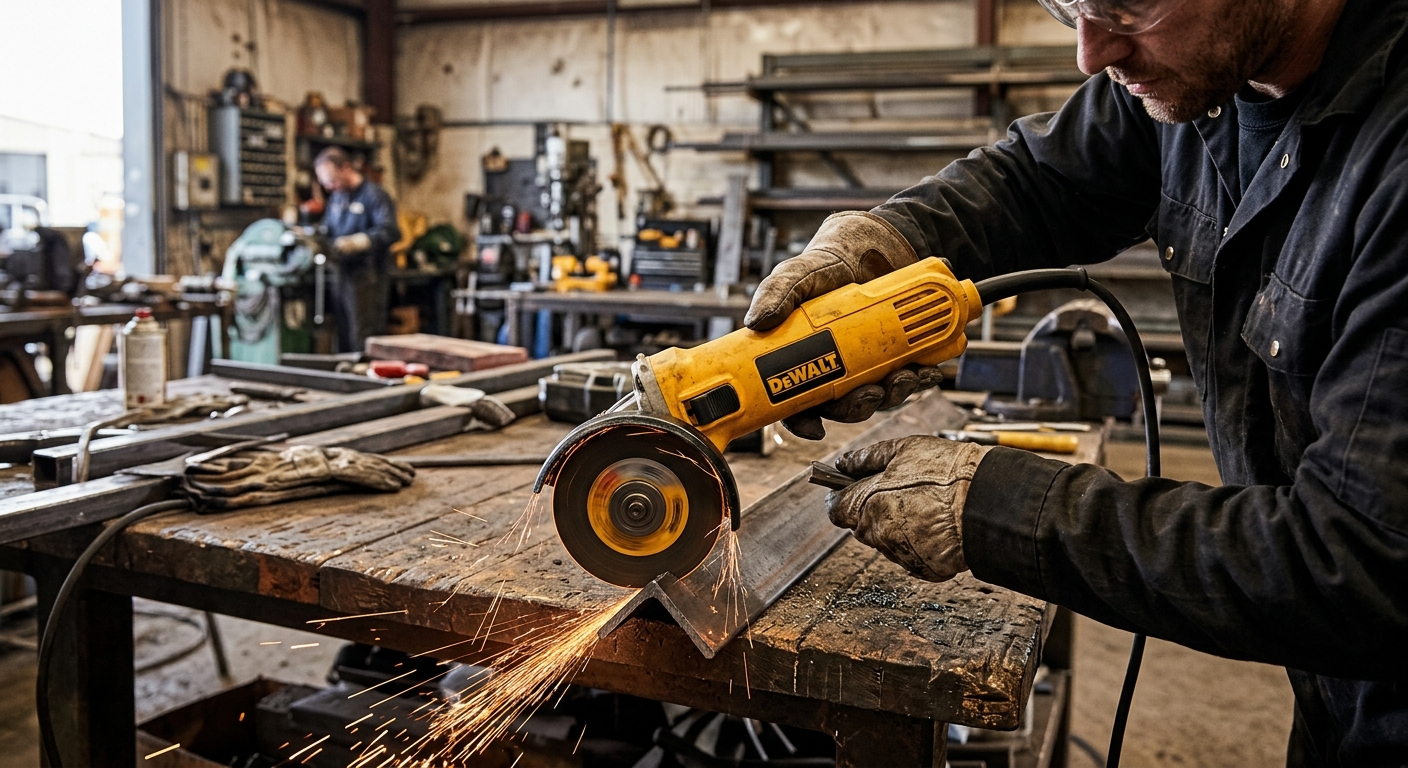
DeWalt’s 4.5-inch angle grinder with its 11-amp motor and one-touch guard adjustment is the benchmark for corded DIY and light professional use. The no-tool guard adjusts with a single lever – no wrench needed to position it for different applications. Kickback Brake technology detects binding and stops the disc faster than a standard motor shutdown, a meaningful safety improvement. At $69–$89, it’s priced for wide adoption.
The paddle switch design requires deliberate trigger engagement, making it harder to accidentally activate during pick-up or position adjustment – a safety design choice that experienced grinder users strongly prefer.
- Pros: One-touch guard adjustment, Kickback Brake, 11-amp motor, paddle switch, durable
- Cons: No variable speed, guard can loosen over time with heavy use
- Price range: $69–$89
2. Milwaukee M18 FUEL 2880-20 – Best Cordless Grinder
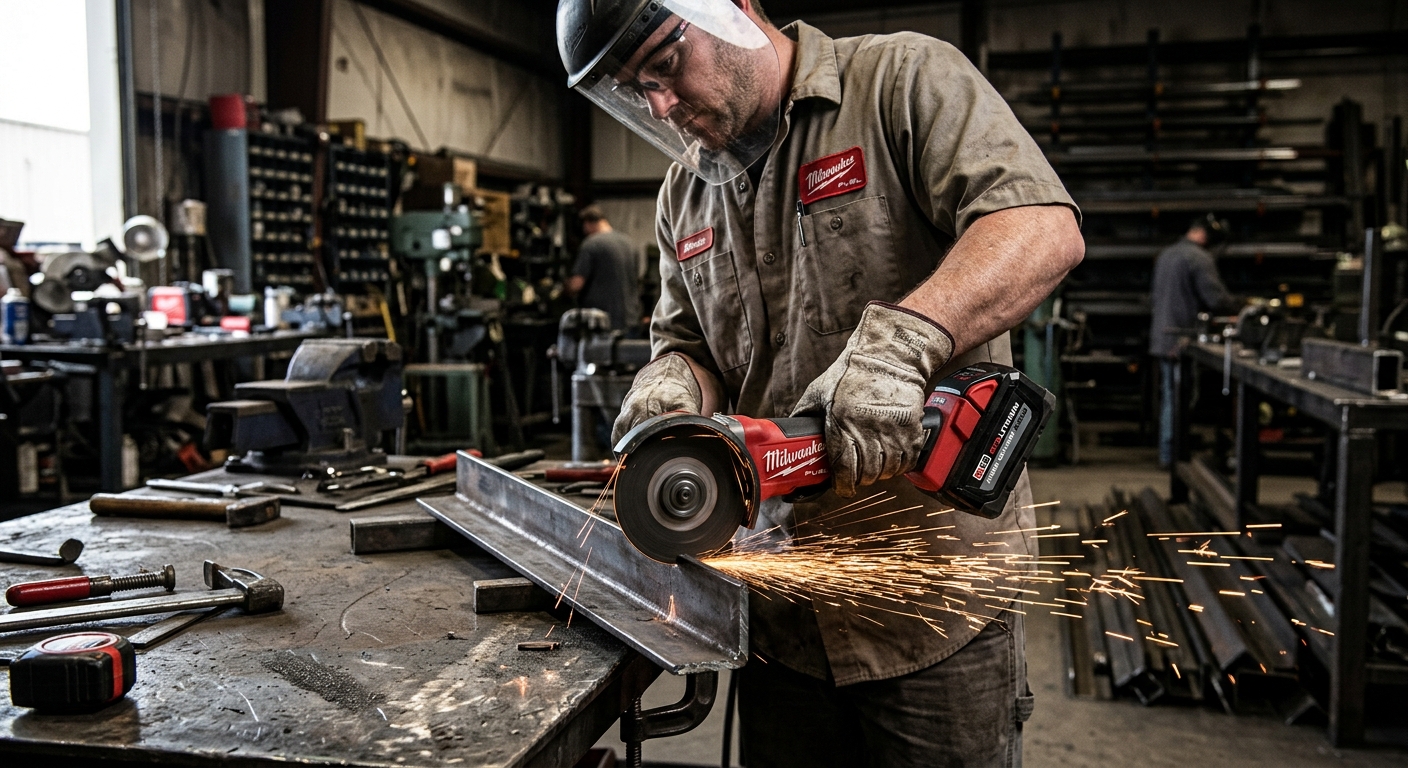
Milwaukee’s M18 FUEL 4.5/5-inch angle grinder brings genuine cordless capability to angle grinding. The POWERSTATE brushless motor maintains consistent speed under load better than any other cordless grinder, and the REDLINK PLUS electronics prevent overloading. Tool-free guard adjustment and M18 battery compatibility make it the natural choice for M18 platform users doing metalwork and tile on the job site. Expect 30–45 minutes of actual grinding per 5.0Ah charge.
- Pros: Best cordless performance, M18 compatible, POWERSTATE under load, tool-free guard
- Cons’:’High price ($179 tool-only), cordless adds weight, not for all-day continuous grinding
- Price range: $149–$179 (tool only)
3. Bosch GWS13-50VSP – Best Variable Speed
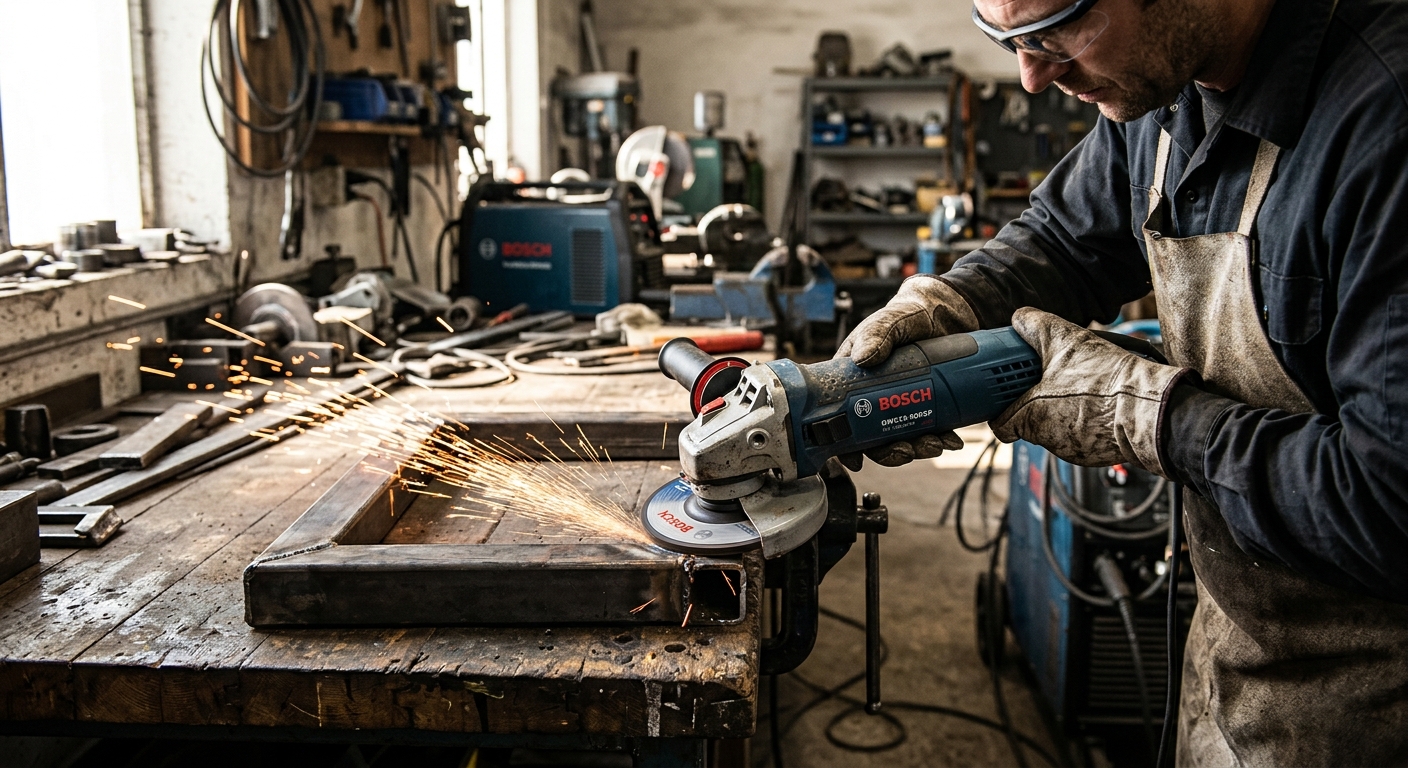
Bosch’s 13-amp variable speed angle grinder covers RPM from 2,800 to 11,500 – a range that handles everything from aggressive grinding at high speed to careful surface finishing, paint stripping, and polishing at lower speeds. The soft start reduces the startup jerk that can catch less-experienced users off guard. The Vibration Control handle reduces transmitted vibration significantly during extended use. At $129–$159, it’s the premium corded choice for versatility.
- Pros: True variable speed, soft start, Vibration Control handle, powerful 13-amp motor
- Cons: Higher price for features many users don’t need, heavier than non-variable models
- Price range: $129–$159
4. Makita GA4534 – Best Value Corded

Makita’s 4.5-inch 7.5-amp grinder at $49–$69 is the value pick for occasional use. It’s lighter than competitors at 4.0 lbs, has a labyrinth construction that seals the motor from abrasive dust, and accepts standard 4.5-inch discs. For homeowners who need an angle grinder a few times per year, this tool delivers honest capability without overspending.
- Pros: Budget price, lightweight, labyrinth dust sealing, reliable Makita motor
- Cons: 7.5-amp motor limits heavy sustained use, no variable speed, basic guard
- Price range: $49–$69
5. RIDGID R1006 – Best Budget Pick
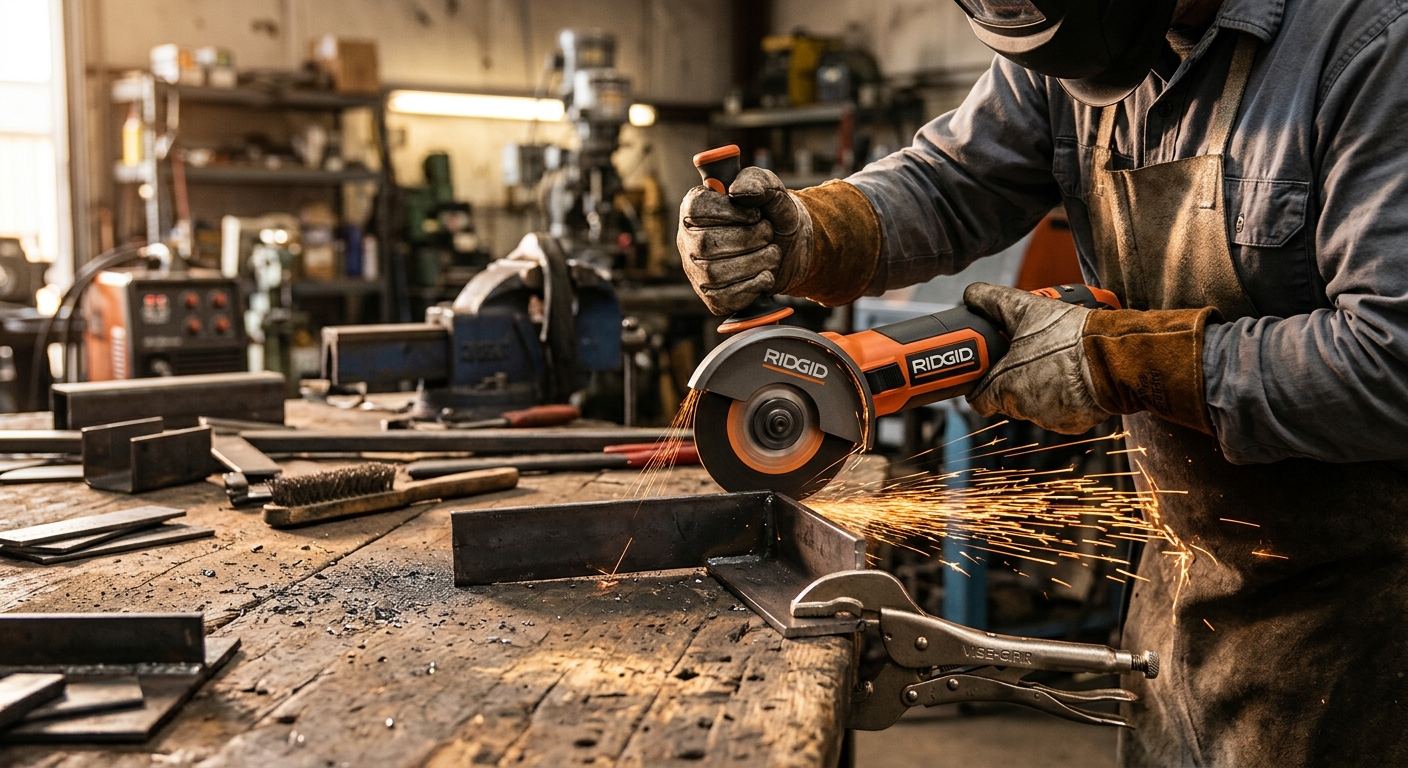
Ridgid’s 4.5-inch corded grinder at $39–$59 is the entry point for angle grinding. Its 6-amp motor handles light cutting and grinding tasks adequately, and Ridgid’s Limited Lifetime Warranty covers manufacturing defects. For occasional DIY cutting of rebar, grinding welds, and removing surface rust, it performs above its price. Not a production tool, but a capable occasional-use grinder.
- Pros: Lowest price, Ridgid warranty, handles light grinding and cutting tasks
- Cons: 6-amp motor bogs under sustained load, limited spindle lock mechanism
- Price range: $39–$59
FAQ
What’s the difference between a grinding disc, a cutting disc, and a flap disc?
A grinding disc is thick (1/4″) and beveled – for removing material from metal surfaces, smoothing welds. A cutting disc is thin (1/16″–1/8″) for cutting through metal, tile, and concrete – never use it for side grinding as it can shatter. A flap disc has overlapping sandpaper flaps on a backing plate – for blending welds, finishing metal surfaces, and aggressive sanding. Each has a specific application; using the wrong type causes accidents.
Do I always need to wear a face shield with an angle grinder?
Yes. Safety glasses alone are not sufficient – grinding and cutting sends metal fragments flying at high velocity in all directions. A full face shield protects your face, and safety glasses underneath protect against debris that enters from the sides of the shield. This is not optional PPE – it’s required every time the grinder is running.
Can I use an angle grinder to cut tile?
Yes, using a diamond blade rated for tile. For straight cuts, a diamond tile blade in an angle grinder makes fast, effective cuts. For curved cuts around pipes and outlets, an angle grinder can score and break or cut curves slowly. For large tile projects, a dedicated wet tile saw produces better results with less dust and better straight-line accuracy.
Bottom Line
The DeWalt DWE402 is the standard recommendation for DIYers who need a capable, safe corded angle grinder – its one-touch guard and Kickback Brake represent real improvements at an accessible price. Milwaukee M18 FUEL platform users should add the 2880-20 for cordless job-site flexibility. Users who plan to use the grinder for polishing, paint removal, and surface finishing will find Bosch’s variable speed model genuinely more useful than fixed-speed alternatives. Always prioritize the right disc and proper PPE over tool selection – the disc does the actual work, and the shield keeps you safe.
Affiliate Disclosure: DIY Arsenal participates in the Amazon Associates Program and other affiliate programs. When you purchase through links on this site, we may earn a small commission at no additional cost to you. We only recommend products we have personally tested and genuinely believe in.