Best Angle Finders and Bevel Gauges
The Wixey WR300 is a must-have for table saw and miter saw angle accuracy; pair it with a Starrett T-bevel for angle transfer work and you have all the angle measurement you need.
As an Amazon Associate, we earn from qualifying purchases.
When you need to transfer an angle from one place to another – matching the slope of a staircase handrail, cutting crown molding to fit an out-of-square corner, or reproducing an existing compound angle – an angle finder or bevel gauge is the tool that makes it possible without math. These simple instruments capture any angle and transfer it directly to your material or tool, eliminating the guesswork that leads to wasted cuts.
Types of Angle Finders and Bevel Gauges
Sliding T-Bevel (Bevel Gauge)
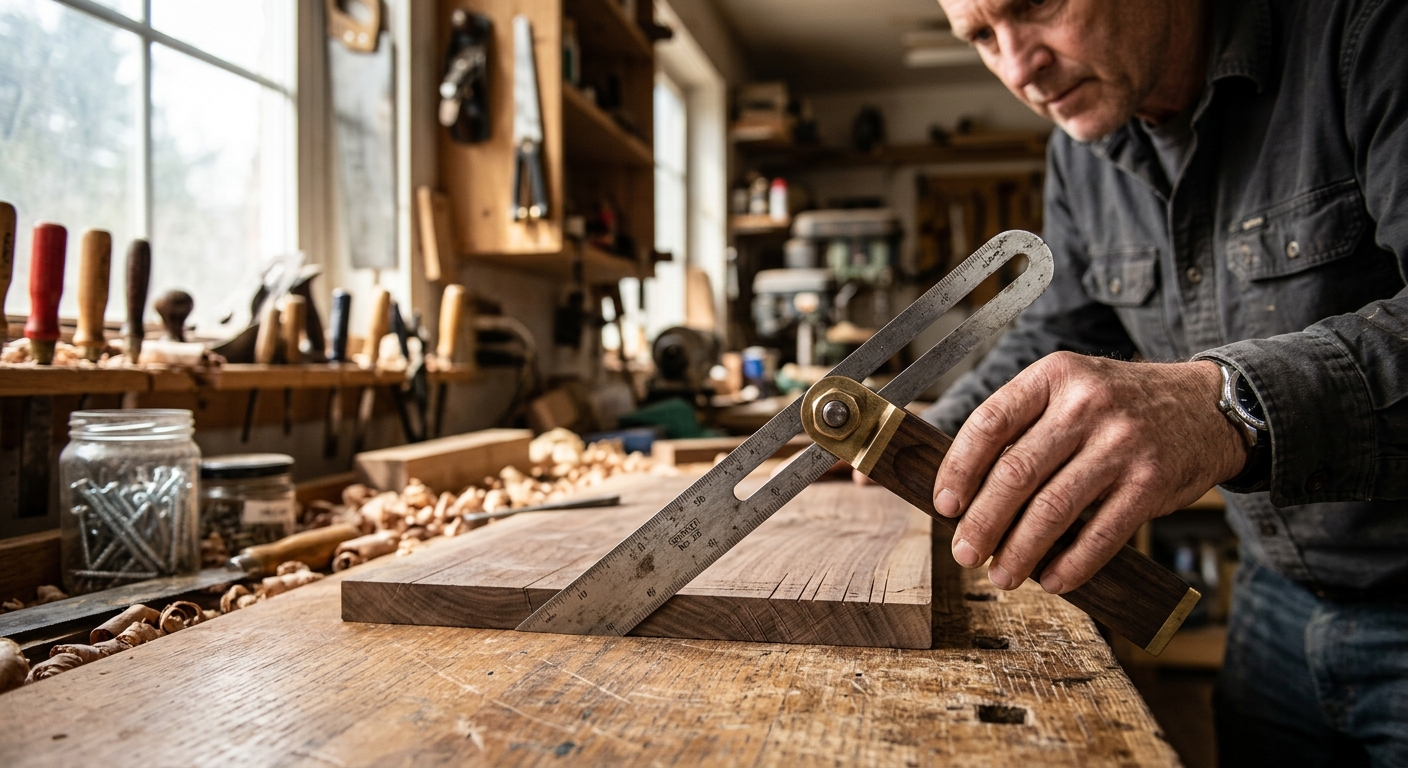
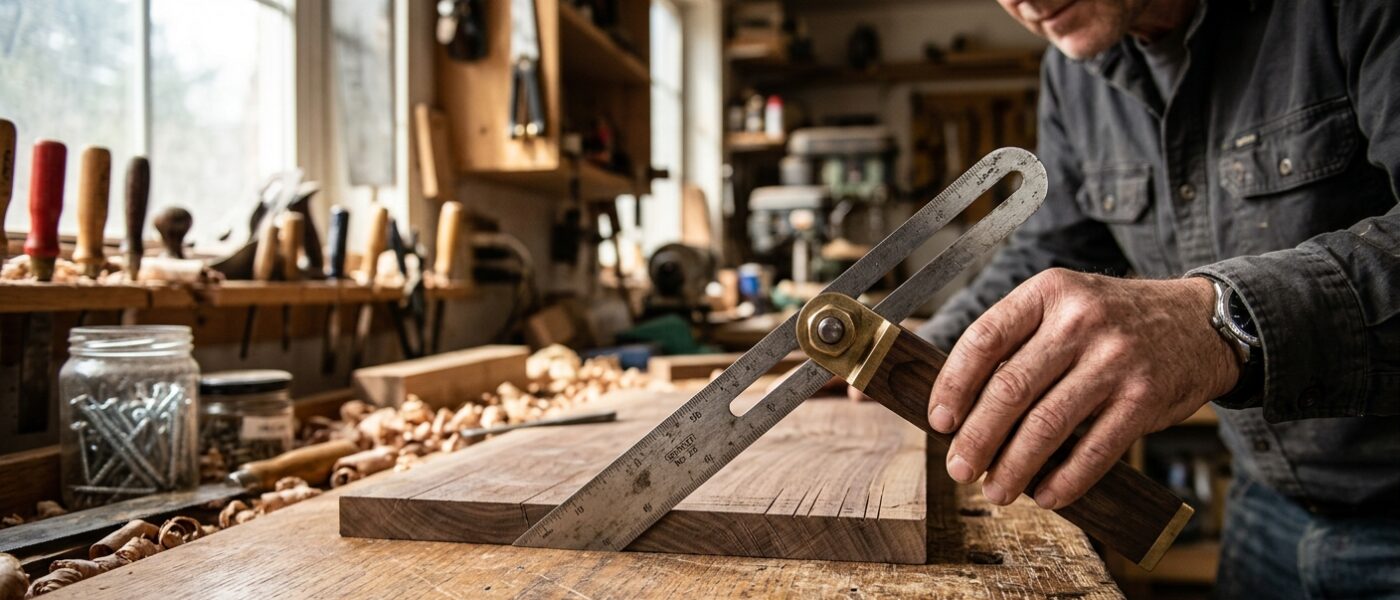
The classic layout tool. A handle and a sliding blade that locks at any angle. You set the blade against the angle you want to copy, lock the wing nut, and carry the setting to your saw or workpiece. Simple, accurate, and has been used by craftsmen for centuries.
Digital Angle Finders
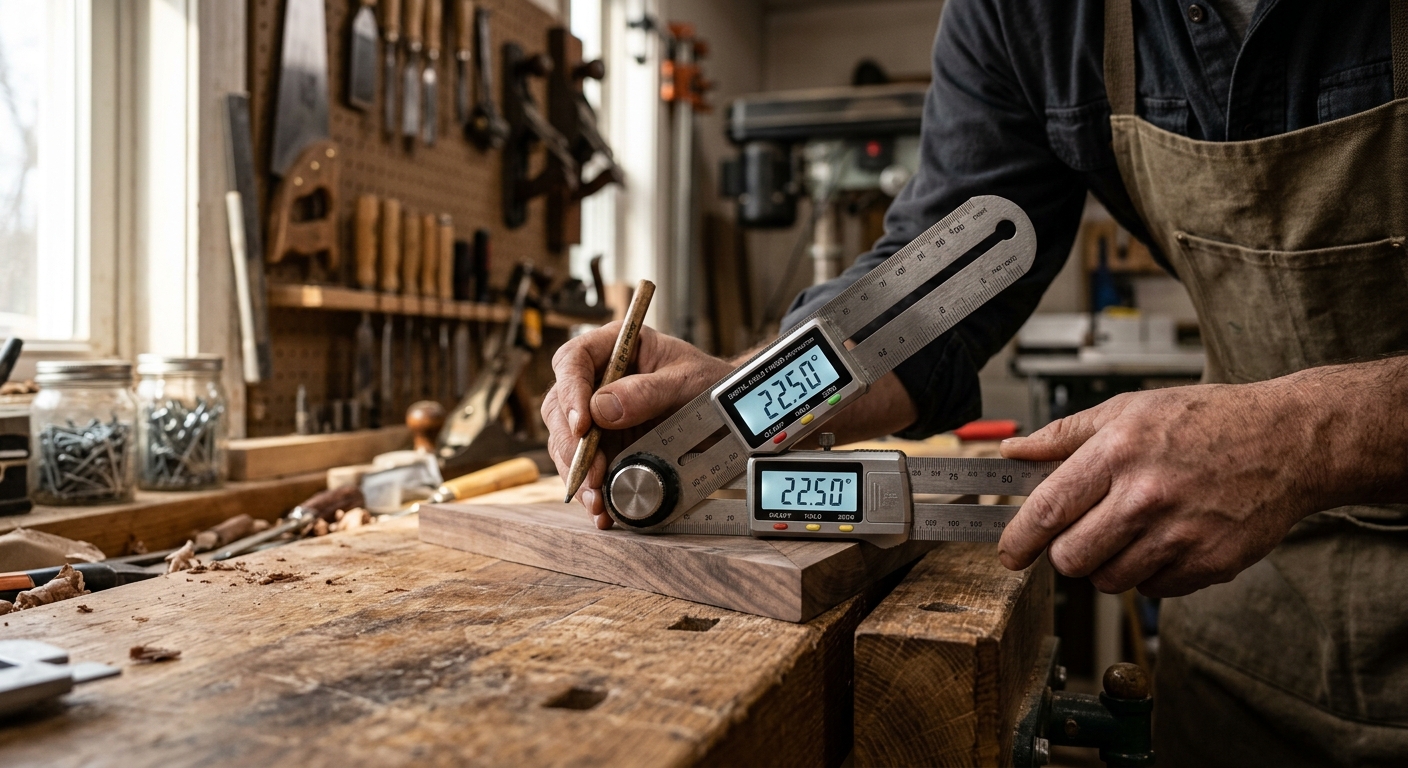
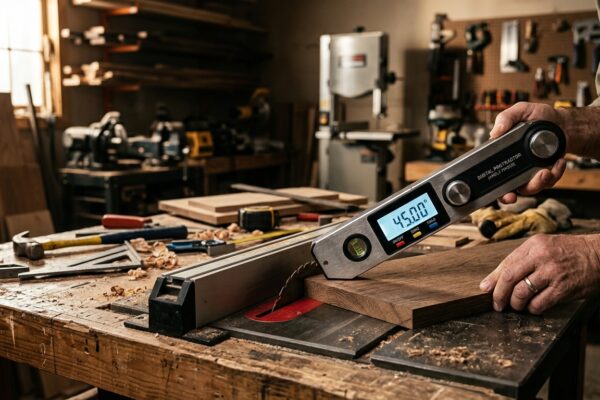
Use an electronic inclinometer to display the current angle on an LCD screen. Place the tool against a surface and read the angle directly – no need to interpret a protractor scale. Some models hold the reading; others display it continuously. Faster than a T-bevel when you need to know the actual degree value.
Combination Protractor Heads
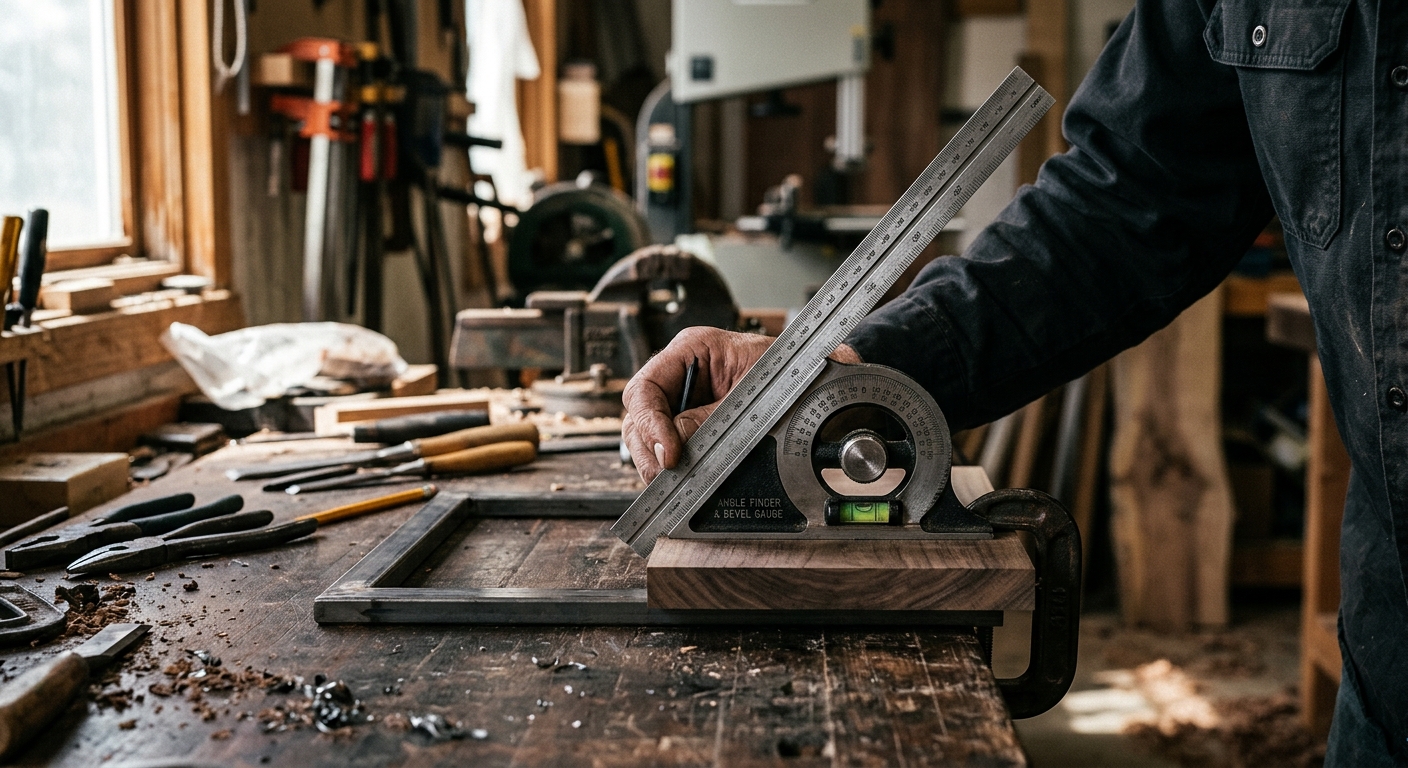
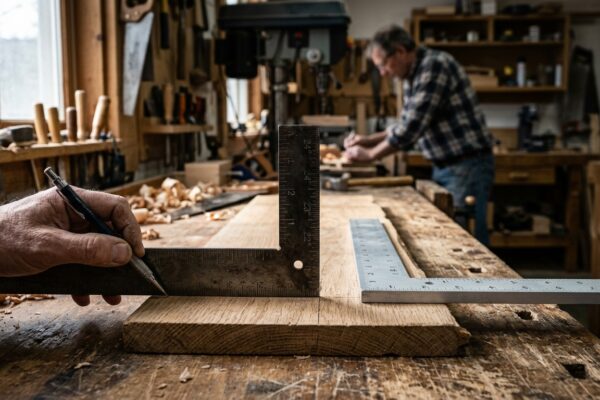
The protractor head on a combination square set serves as an angle finder, reading any angle from 0 to 180 degrees with the scale on the head. Useful for layout but less convenient than a dedicated digital tool for quick angle capture.
Key Features to Look For
Blade Length (T-Bevel)
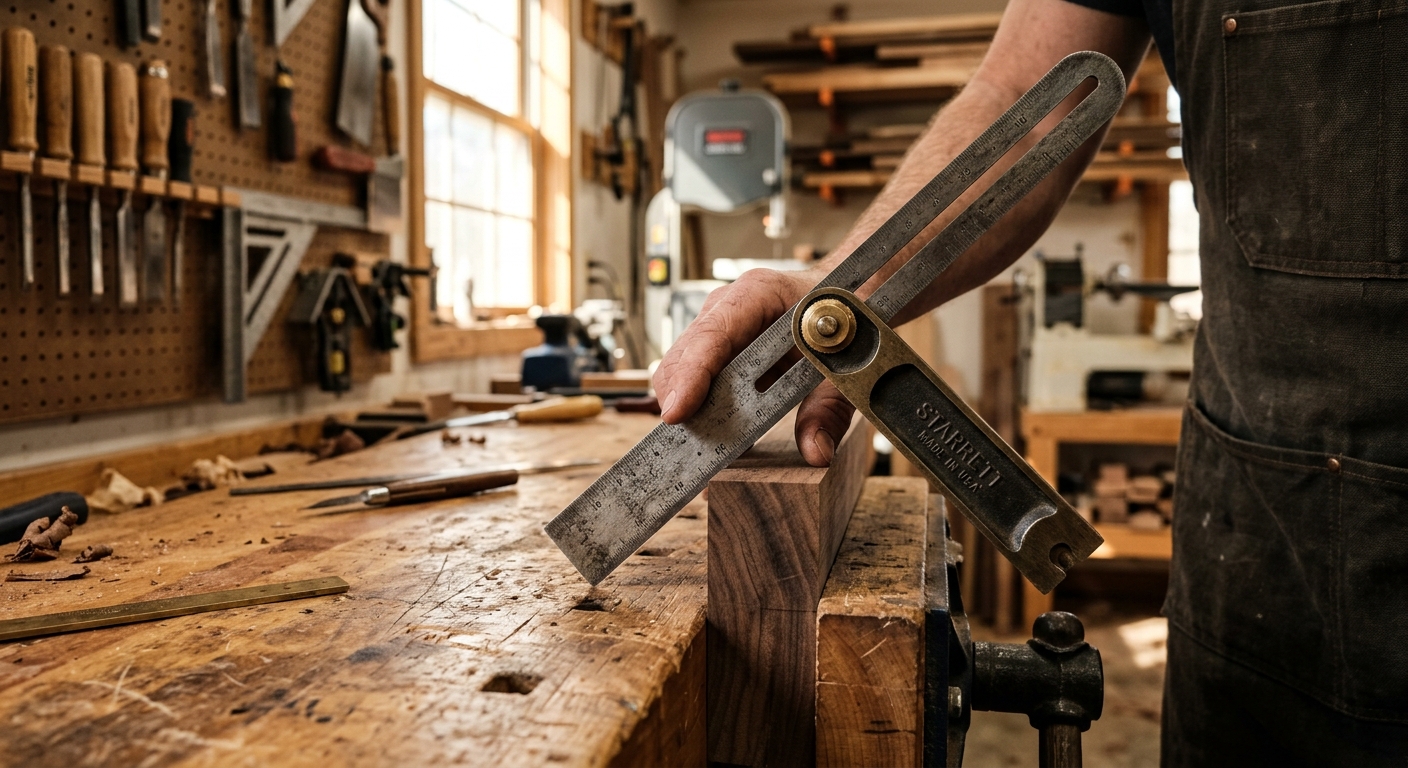
A 6-inch blade is standard and handles most woodworking tasks. Longer 8 to 10-inch blades are useful for framing and larger work where you need more reference surface to set against the material.
Locking Mechanism
A wing nut is traditional and secure. Lever-lock systems lock faster but can loosen slightly under vibration. Check that the blade locks without any play – angle finders that drift after locking are worse than useless.
Digital Display Range
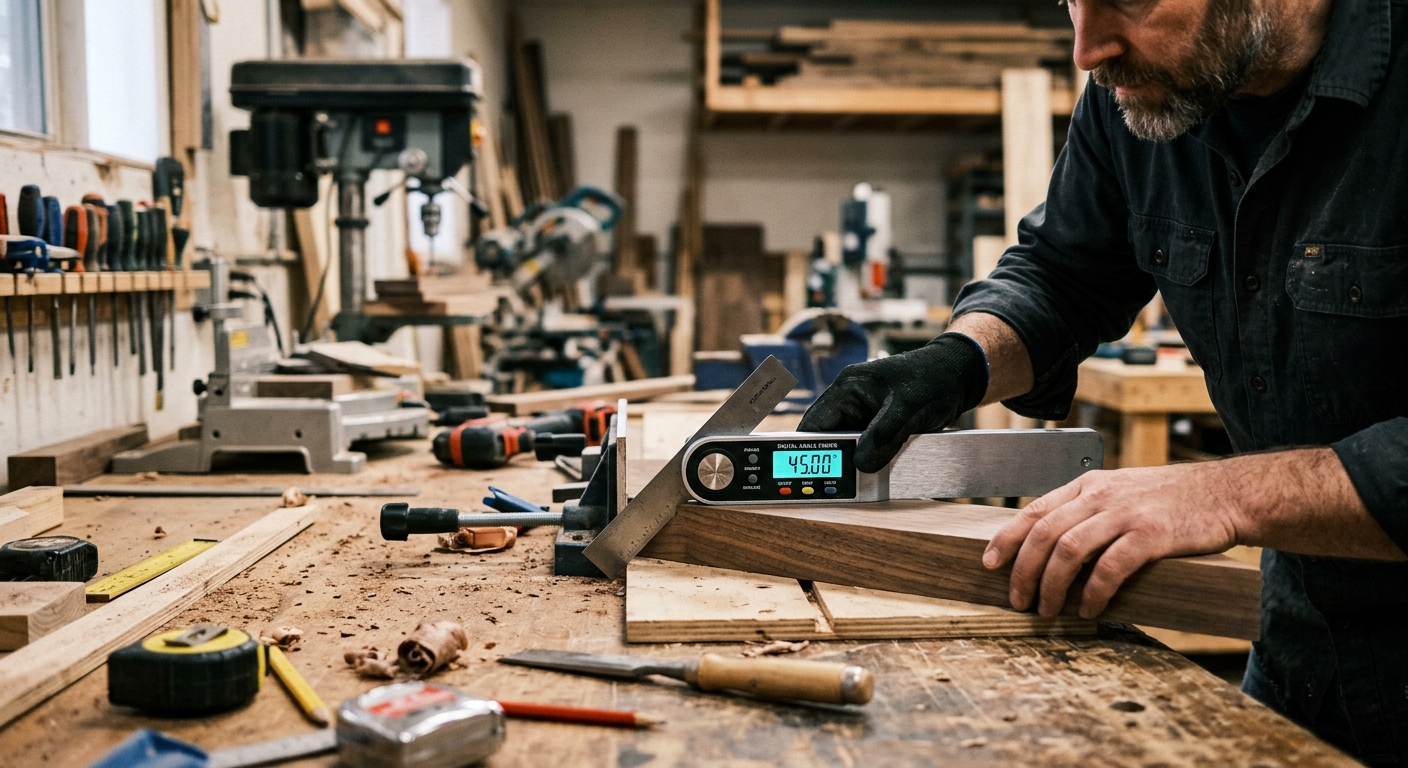
Look for 0 to 360 degree (or at minimum 0 to 180 degree) range with 0.1 degree resolution. Some tools also display slope in degrees, percent grade, and inches per foot – useful for roofing and drainage work.
Build Quality
Stainless steel blades on T-bevels resist corrosion and hold their edge. Digital tools should have a rugged housing that survives drops and a display that is readable in daylight.
Our Top Picks
1. Starrett 359 Sliding T-Bevel (8-Inch)
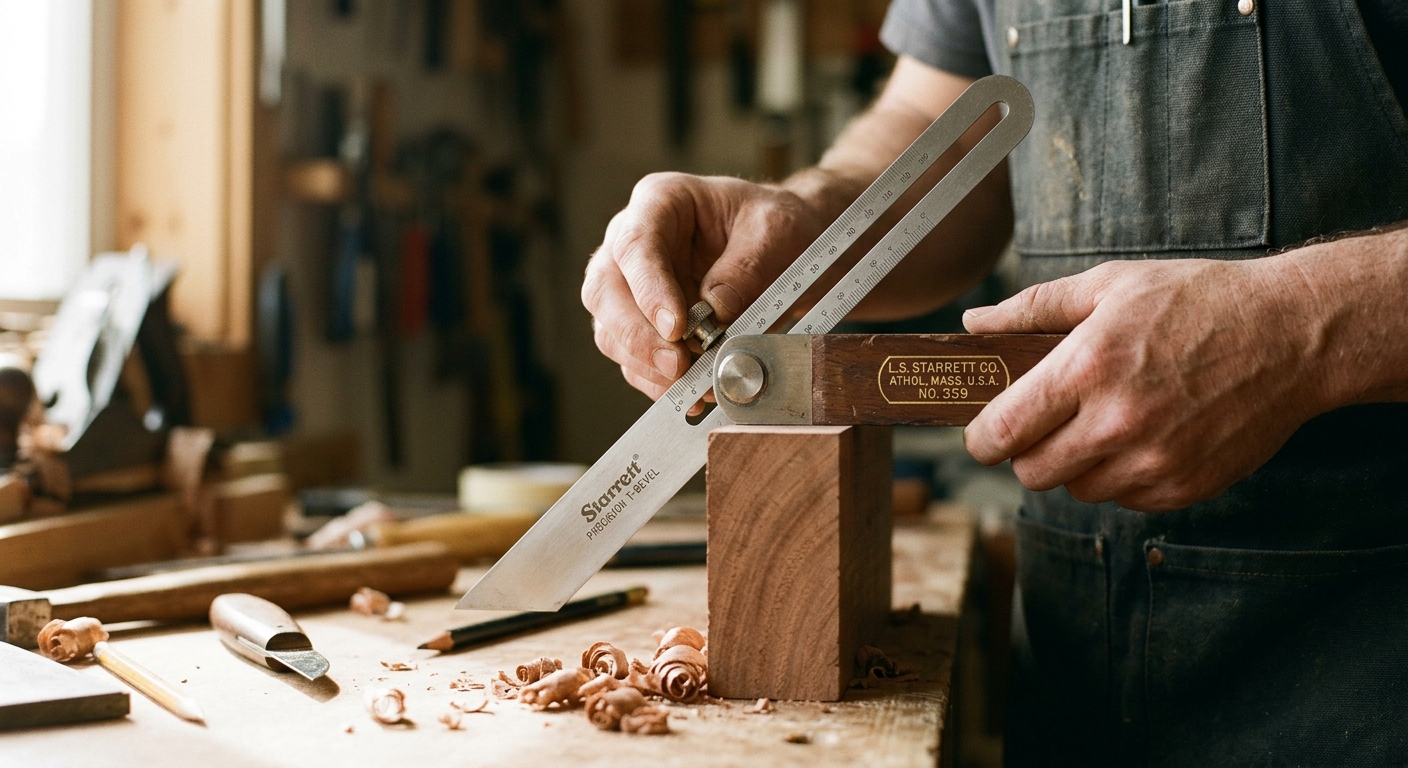
The finest T-bevel made. Starrett precision-grinds the blade and handle faces so they register accurately, and the locking screw holds the setting firmly without disturbing the angle. A lifetime tool that will outlast everything else on the bench.
2. WEN MA210 Digital Angle Finder
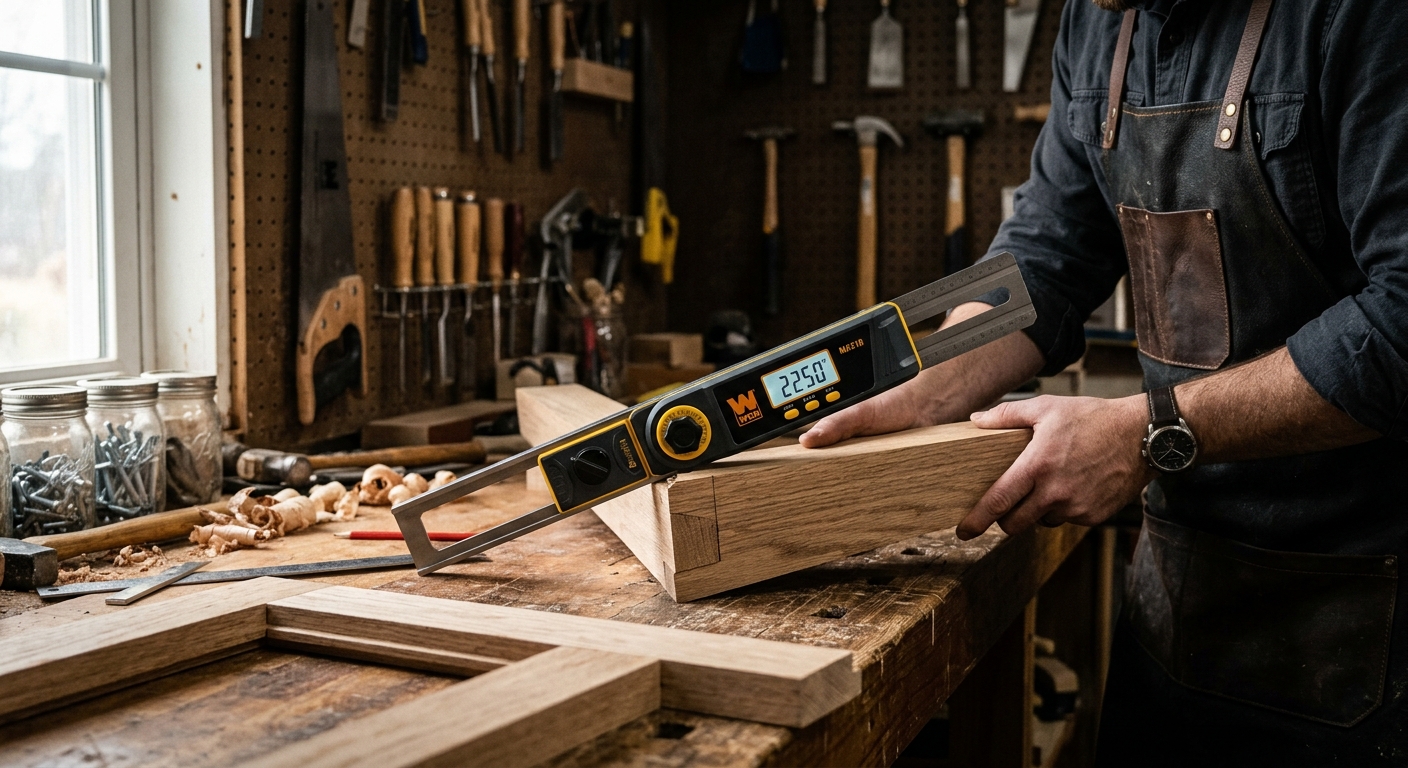
An excellent digital option at a very accessible price. The WEN MA210 reads to 0.1 degree, has a magnetic base for hands-free use on metal surfaces, and displays both the direct angle and its supplement – useful for calculating miter saw settings. Clear display, simple operation.
3. Wixey WR300 Digital Protractor
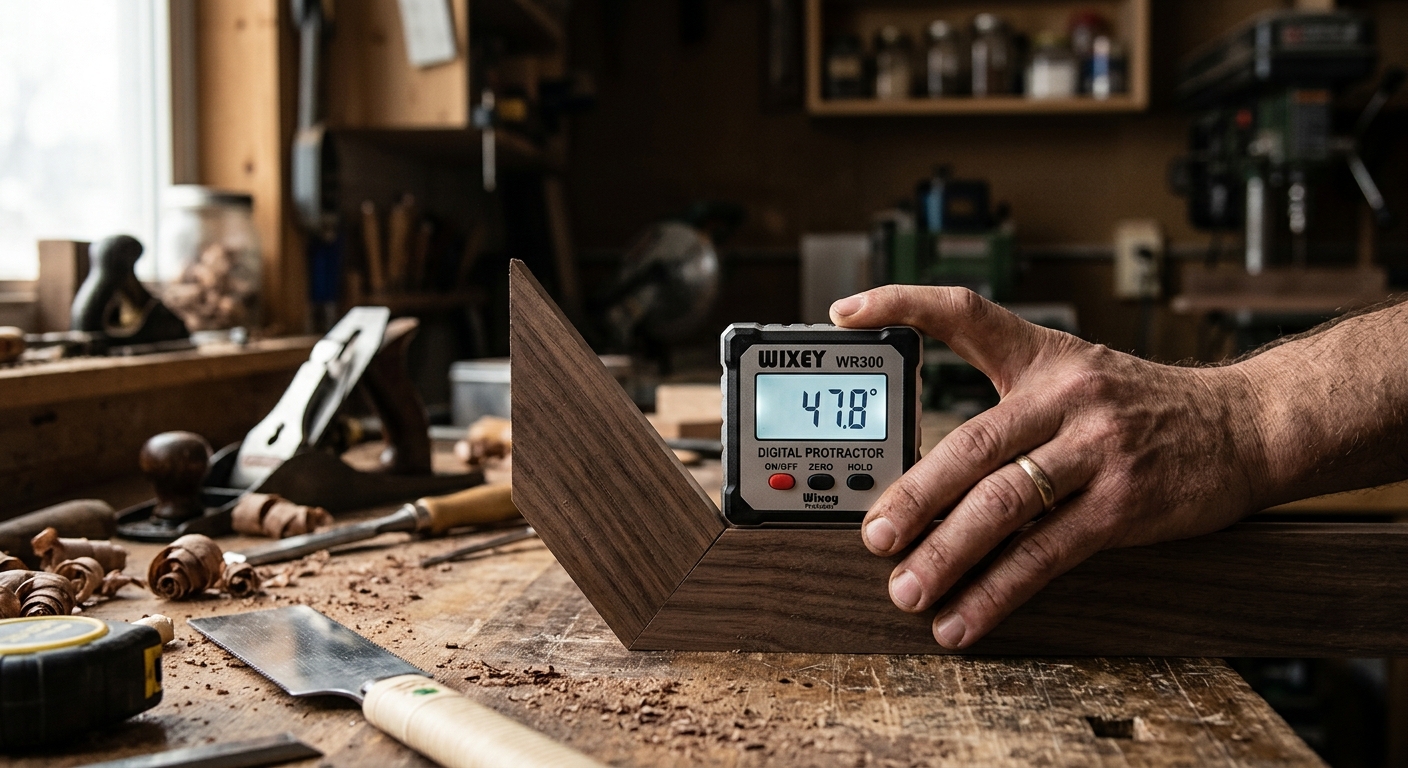
The most popular digital angle tool among woodworkers. The Wixey WR300 attaches magnetically to a table saw blade, miter saw, or jointer fence and gives a direct digital readout of the angle. Calibrating to zero is fast and the reading holds precisely. An indispensable tool for repeatable angle settings on power tools.
4. General Tools 17 Combination Square Protractor
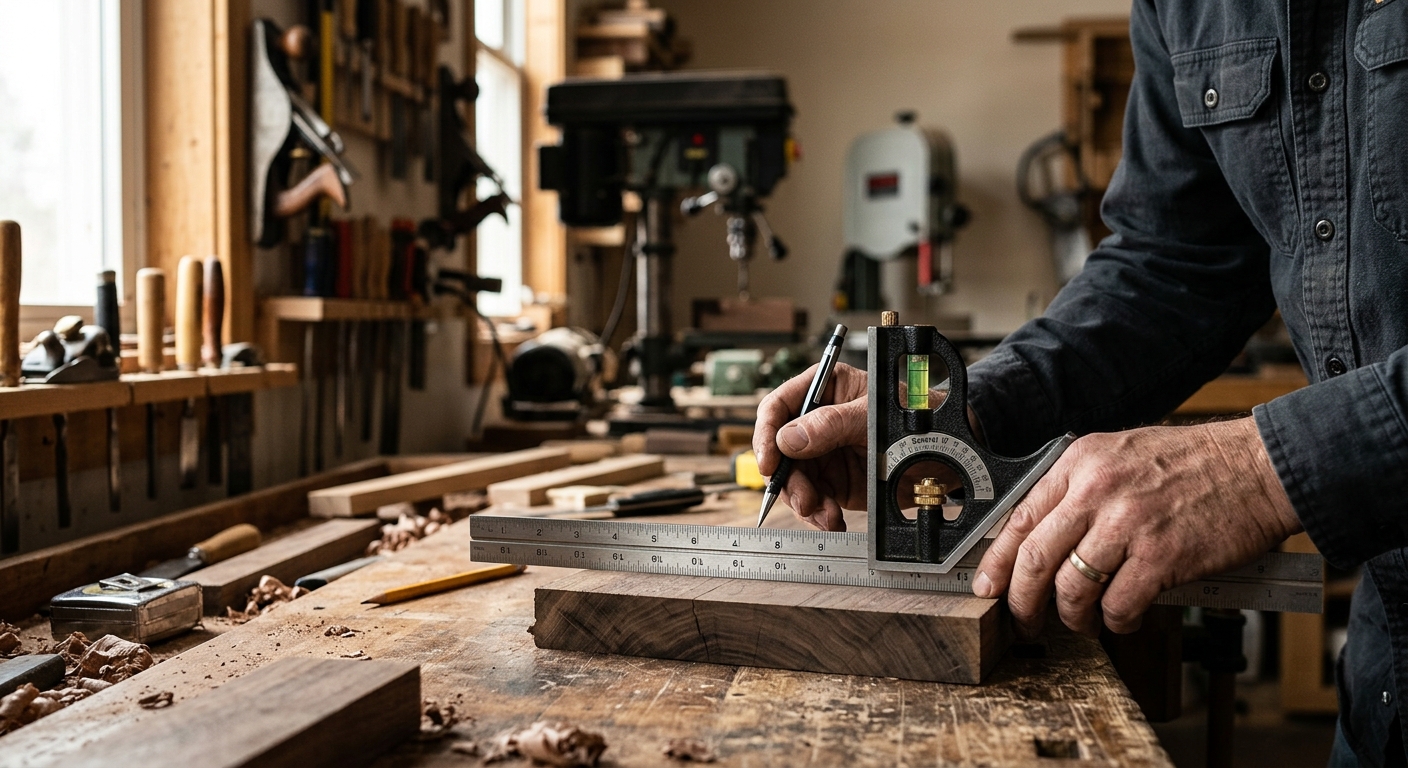
A versatile 180-degree protractor head with a 6-inch rule. Not as precise as digital tools, but excellent for layout work that does not require sub-degree accuracy. At its price, an easy addition to any kit.
5. Empire Level 2794 Sliding T-Bevel
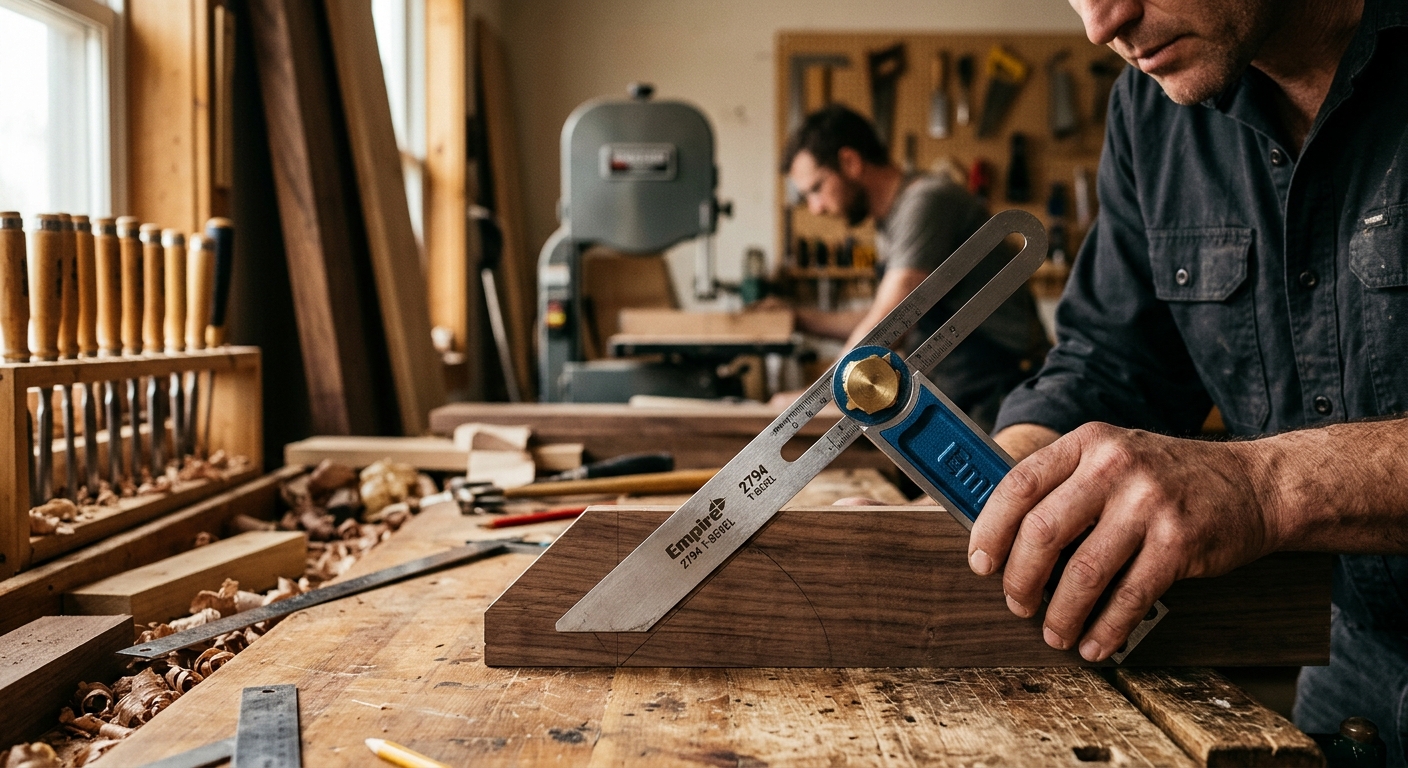
A solid mid-range T-bevel with a stainless steel blade, comfortable handle, and secure wing nut lock. Less expensive than the Starrett but more reliable than budget imports. A good first T-bevel for most woodworkers.
What to Avoid
- Plastic-bladed T-bevels: They flex, which defeats the purpose of capturing an angle precisely.
- Digital tools with no hold function: If you cannot freeze the reading, you have to hold the tool in position while reading the display – awkward and imprecise.
- Digital tools with proprietary batteries: Standard AAA or AA batteries are easy to replace; oddball coin cells or custom packs are not.
FAQ
How do I use a T-bevel to set a miter saw angle?
Set the T-bevel to your desired angle. Lay the handle against the fence of the miter saw and rotate the saw blade until the blade is parallel to the T-bevel blade, then lock the saw at that angle.
What is the difference between an angle finder and a bevel gauge?
Functionally they overlap significantly. A bevel gauge (T-bevel) is a manual transfer tool for copying angles. An angle finder usually refers to a digital instrument that displays an angle value numerically. Both serve the same ultimate goal – capturing and reproducing angles accurately.
Can a digital angle finder replace a T-bevel?
For reading angles, yes. For transferring angles from one surface to another physically, a T-bevel is still more direct – you physically carry the angle to your workpiece rather than relying on a number.
Affiliate Disclosure: DIY Arsenal participates in the Amazon Associates Program and other affiliate programs. When you purchase through links on this site, we may earn a small commission at no additional cost to you. We only recommend products we have personally tested and genuinely believe in.