Best Chalk Lines and Chalk Reel Sets

The Stanley FatMax 47-682 is the definitive chalk line for pros and serious DIYers; the Keson PC Series is the choice for flooring contractors who need the fastest rewind available.
As an Amazon Associate, we earn from qualifying purchases.
When you need to snap a perfectly straight line across a large surface – a concrete floor, a sheet of plywood, or a long wall – no pencil and straightedge will keep up with a chalk line. A chalk reel is one of the fastest layout tools ever invented: hook the end, pull out the line, snap, and you have a reference that covers 50 or 100 feet in seconds. For flooring layout, tile work, framing walls, and installing siding, a chalk line is indispensable.
How Chalk Lines Work
A chalk reel consists of a teardrop-shaped case containing a string wound on a spool, immersed in powdered chalk. You pull out the string (which is coated in chalk as it exits), stretch it taut between two points, and snap it against the surface. The chalk transfers to the surface in a straight line. A crank handle rewinds the string while it passes through a chalk reservoir, recoating it for the next snap.
Key Features to Look For
Case Material
Aluminum cases are the professional standard – they survive drops and do not crack when chalk dust dries and swells against plastic. ABS plastic cases are fine for occasional home use. Die-cast zinc cases are very durable but heavy.
Line Length
100-foot lines cover most construction and flooring layout tasks. 50-foot lines are more compact and rewind faster. Some cases hold 150 or 200 feet for large-scale work.
Chalk Capacity
Larger chalk reservoirs mean fewer refills. A chalk door that opens wide makes refilling easy and clean. Narrow fill ports are frustrating and messy.
Hook
The hook at the end of the line must stay put when you tension the string. A large, solid metal hook anchors reliably; small wire hooks pull free at the worst moment.
Rewind Speed
A 4:1 or higher gear ratio rewinds the line far faster than a 1:1 direct-drive reel. On a 100-foot line, this difference is significant. Look for a geared reel.
Chalk Colors and Their Uses
- Blue chalk: The standard – highly visible on most surfaces, washes off easily. Use for temporary layout lines.
- Red chalk: More permanent, brighter on concrete. Hard to wash off – use only where the line will be hidden by the finished work.
- White chalk: Best on dark surfaces (slate, dark tile, asphalt). Least visible on light concrete.
- Fluorescent orange/yellow: Maximum visibility on any surface. Use for layout on surfaces that will be photographed or inspected.
Our Top Picks
1. Stanley FatMax 47-682 (100-Foot)

The most popular professional chalk line in North America. The die-cast aluminum case is virtually indestructible, the chalk door opens wide for easy refilling, the hook is large and solid, and the geared rewind is fast. Ships with blue chalk. The standard against which all others are measured.
2. Milwaukee 48-22-3985 (100-Foot)
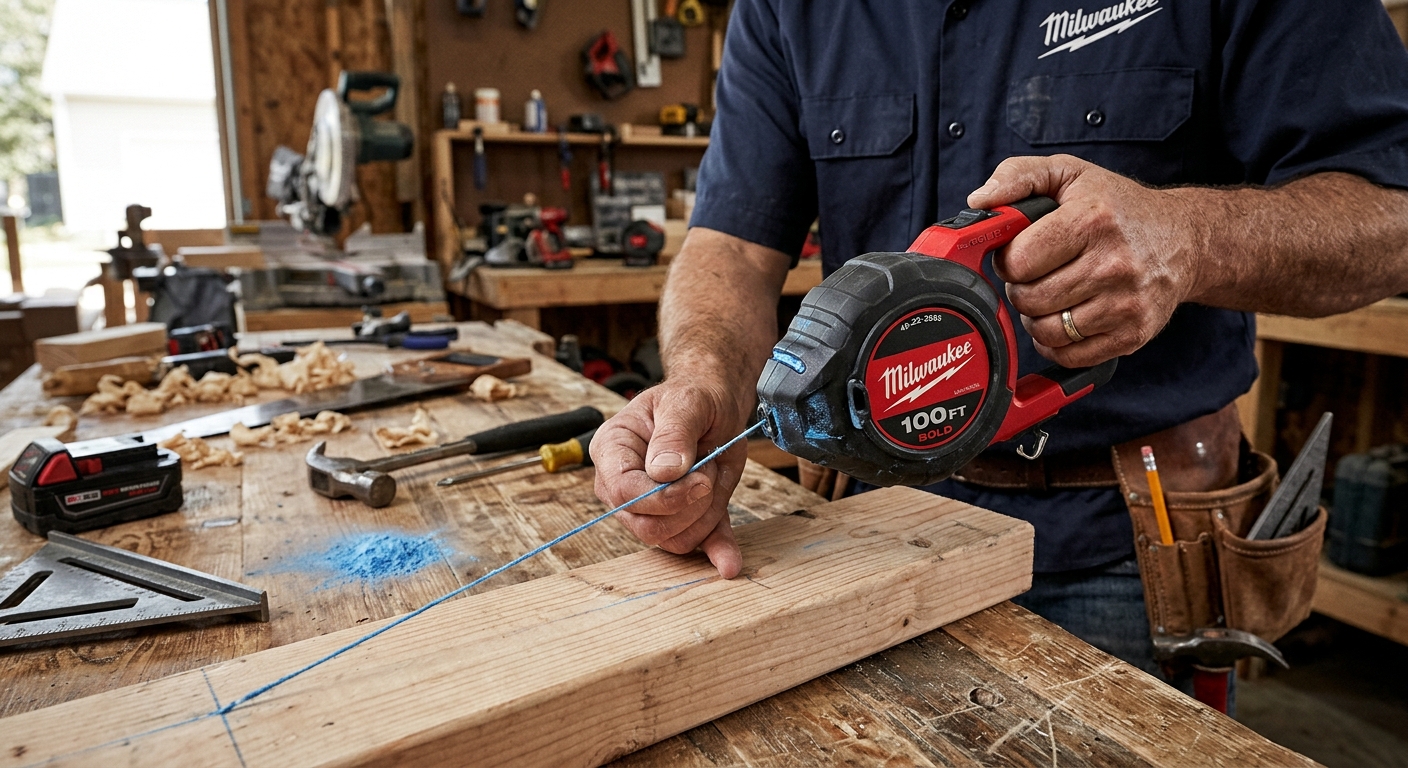
Milwaukee brings their job-site-tough philosophy to chalk lines. The 100-foot reel features a high-impact case, a wide-mouth chalk fill port, and a large hook. The rewind is slightly faster than the Stanley. A top choice for contractors already in the Milwaukee ecosystem.
3. Empire Level 100-Foot Chalk Reel
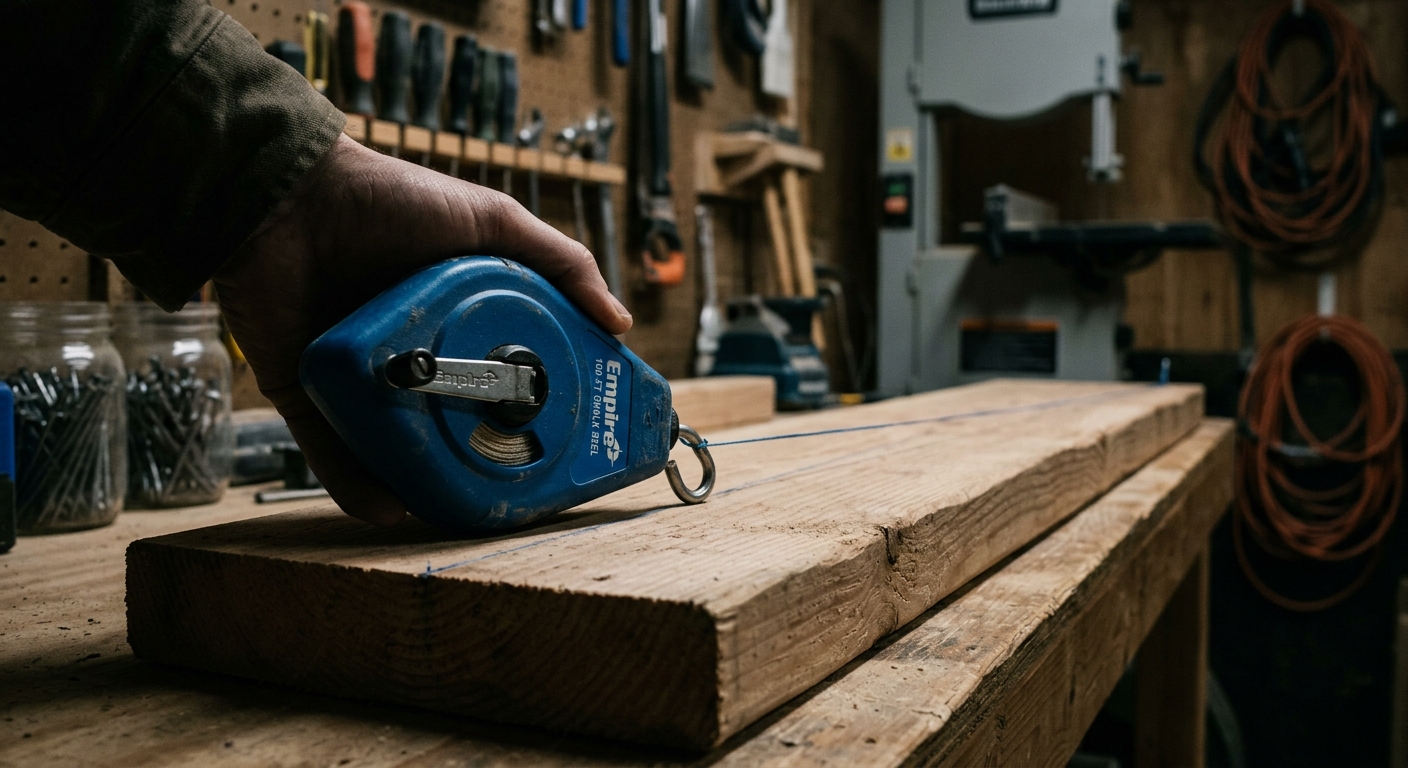
Empire makes excellent layout tools, and their chalk line is no exception. Solid case, reliable rewind, wide chalk door, and a strong hook. Often available at a lower price than the Stanley or Milwaukee while delivering equivalent performance.
4. Keson PC Series (50-Foot)

Keson is the leading brand in professional grade chalk reels. The PC Series uses a die-cast aluminum case and a powerful 6:1 gear ratio rewind – the fastest available. More expensive, but the rewind alone justifies the price on large flooring jobs.
5. Irwin Tools 100-Foot Chalk Line Reel

A reliable mid-range option. Aluminum case, standard hook, geared rewind, and widely available at hardware stores. Comes with blue chalk and handles typical DIY tasks without complaint.
What to Avoid
- All-plastic cases: Crack when dropped in cold weather and do not hold up to daily job-site use.
- Wire hooks: Pull free from the anchor point under tension, ruining the line.
- No gear ratio on the rewind: Rewinding 100 feet of string 1:1 is exhausting and time-consuming.
Tips for Better Chalk Lines
- Always snap from the middle of a long line, not from one end – this prevents sag from throwing the line off center.
- Fill the chalk reservoir only 2/3 full – overfilling leads to clumping and uneven coverage.
- Use blue chalk for everything you want to be able to clean up; use red chalk only for permanent layout on hidden surfaces.
FAQ
How do I remove chalk lines after the project?
Blue chalk brushes off most surfaces with a dry brush. For stubborn lines, a damp cloth removes it from painted walls and flooring. Red chalk on concrete may require scrubbing with a cleaner.
How much chalk should I put in the reel?
Fill the case until chalk reaches about two-thirds of the way up the port. More than that tends to cake around the string exit hole.
Can I use a chalk line outdoors?
Yes, but wind and rain affect both the snap and the line. Snap in one smooth, quick motion outdoors, and use fluorescent chalk for maximum visibility.
Affiliate Disclosure: DIY Arsenal participates in the Amazon Associates Program and other affiliate programs. When you purchase through links on this site, we may earn a small commission at no additional cost to you. We only recommend products we have personally tested and genuinely believe in.