Best Combination Squares for Layout Work
The Starrett C11H is the lifetime investment for serious woodworkers; the iGaging 12-inch delivers near-Starrett accuracy at a fraction of the cost for everyone else.
As an Amazon Associate, we earn from qualifying purchases.
The combination square is arguably the most useful layout tool in the workshop. In one compact instrument it functions as a try square (checking 90-degree angles), a miter square (checking 45-degree angles), a depth gauge, a height gauge, a marking gauge, and – with a built-in vial – a level. Carpenters, woodworkers, machinists, and metalworkers all rely on the same basic tool. Choosing the right one separates a lifetime of accurate work from a lifetime of frustration.
Anatomy of a Combination Square
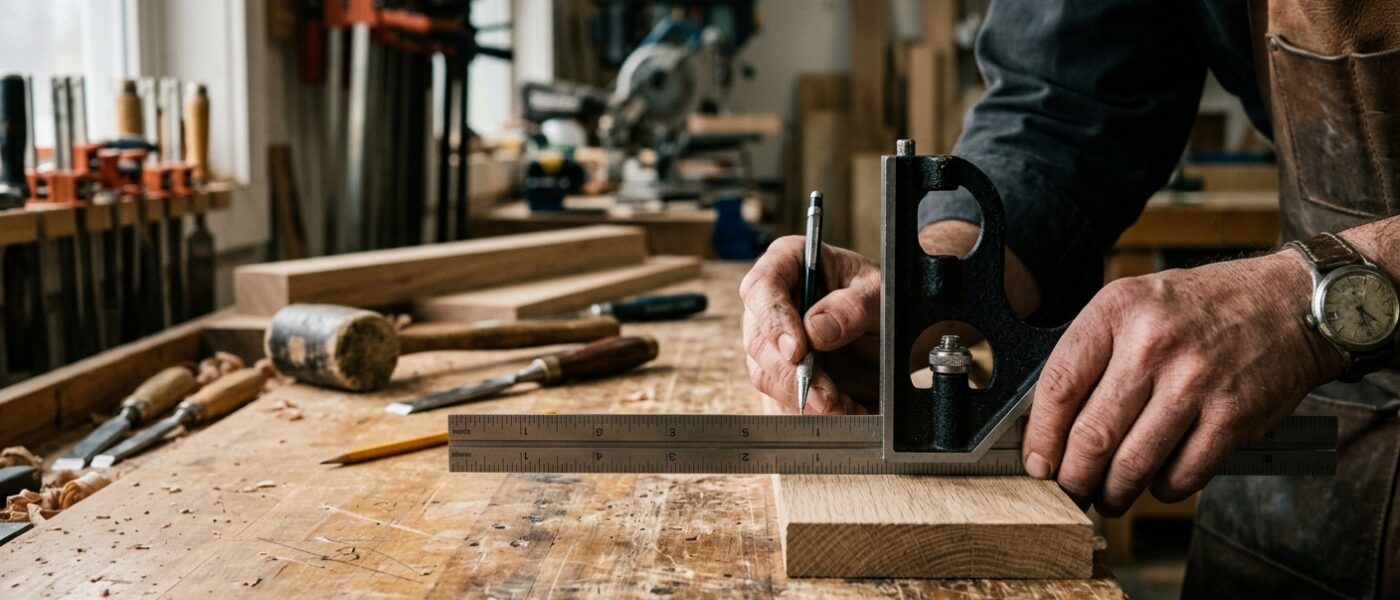
A combination square consists of a grooved steel rule (the blade) that slides through a cast head. The head locks onto the blade at any position using a thumb nut or knurled knob. The standard head has a 90-degree face and a 45-degree face, a spirit level vial, and often a scribe pin for marking. Premium sets include a center head (for finding the center of round stock) and a protractor head (for setting any angle).
Key Features to Look For
Blade Accuracy
The most important factor. A square that is not square defeats its entire purpose. Inexpensive combination squares are often poorly calibrated from the factory. The blade should be flat, straight, and engraved (not printed) with graduation marks that will not wear off.
Head Casting Quality
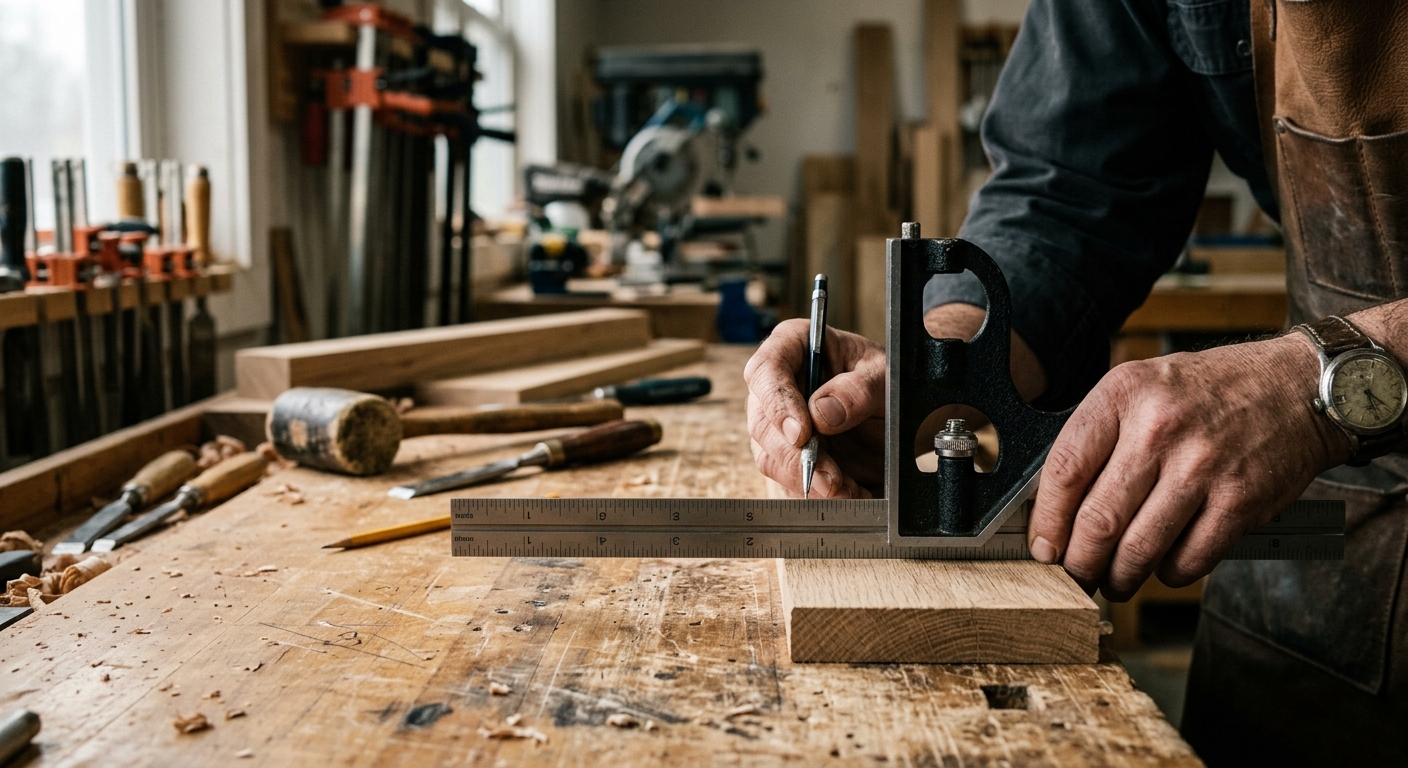
The head should be made from cast iron or cast aluminum – not plastic or pot metal. It must lock solidly on the blade without any play or rock. Flex in the head means inaccurate readings every time you use it.
Rule Length
6-inch squares are standard for joinery and fine woodworking. 12-inch squares cover furniture and cabinet work. Longer 16 to 24-inch rules are available for layout on large panels.
Markings and Graduations
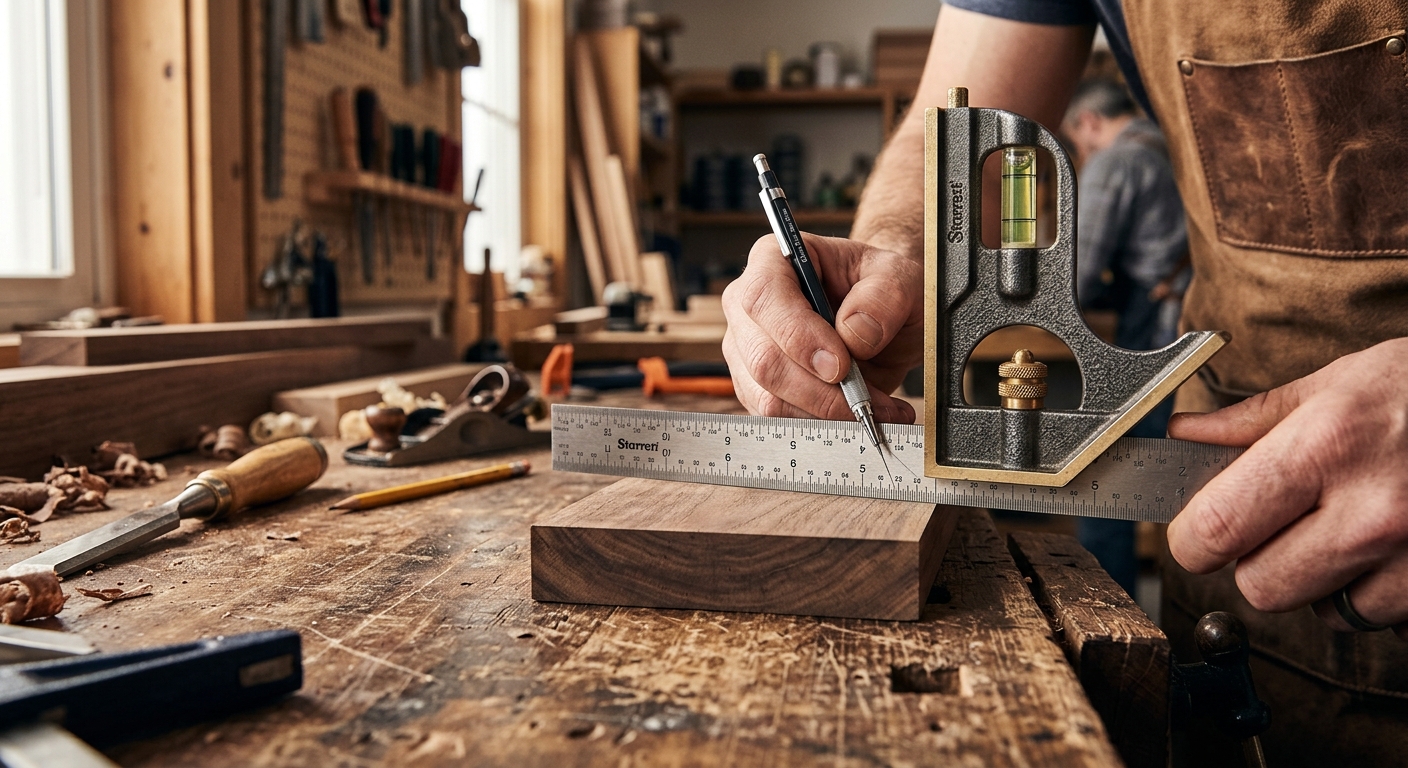
Look for rules graduated in 1/16 and 1/32 inch on one side and in millimeters on the other. Engraved and filled (ink or paint) graduations last; printed or stamped markings fade.
The Scribe Pin
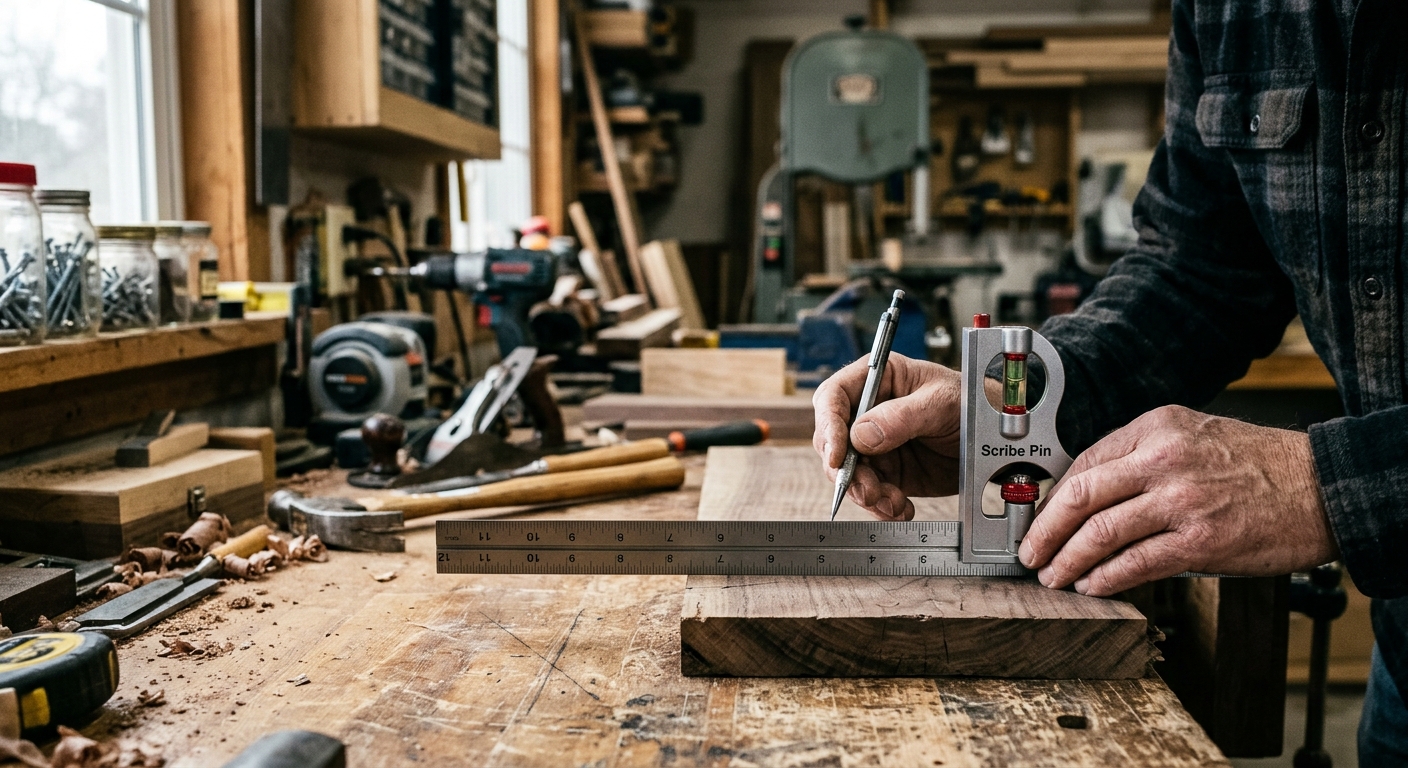
Many combination square heads include a hardened steel scribe pin stored in the head. This is genuinely useful for marking depth lines directly from the square without reaching for a pencil.
Our Top Picks
1. Starrett C11H-12 (12-Inch)
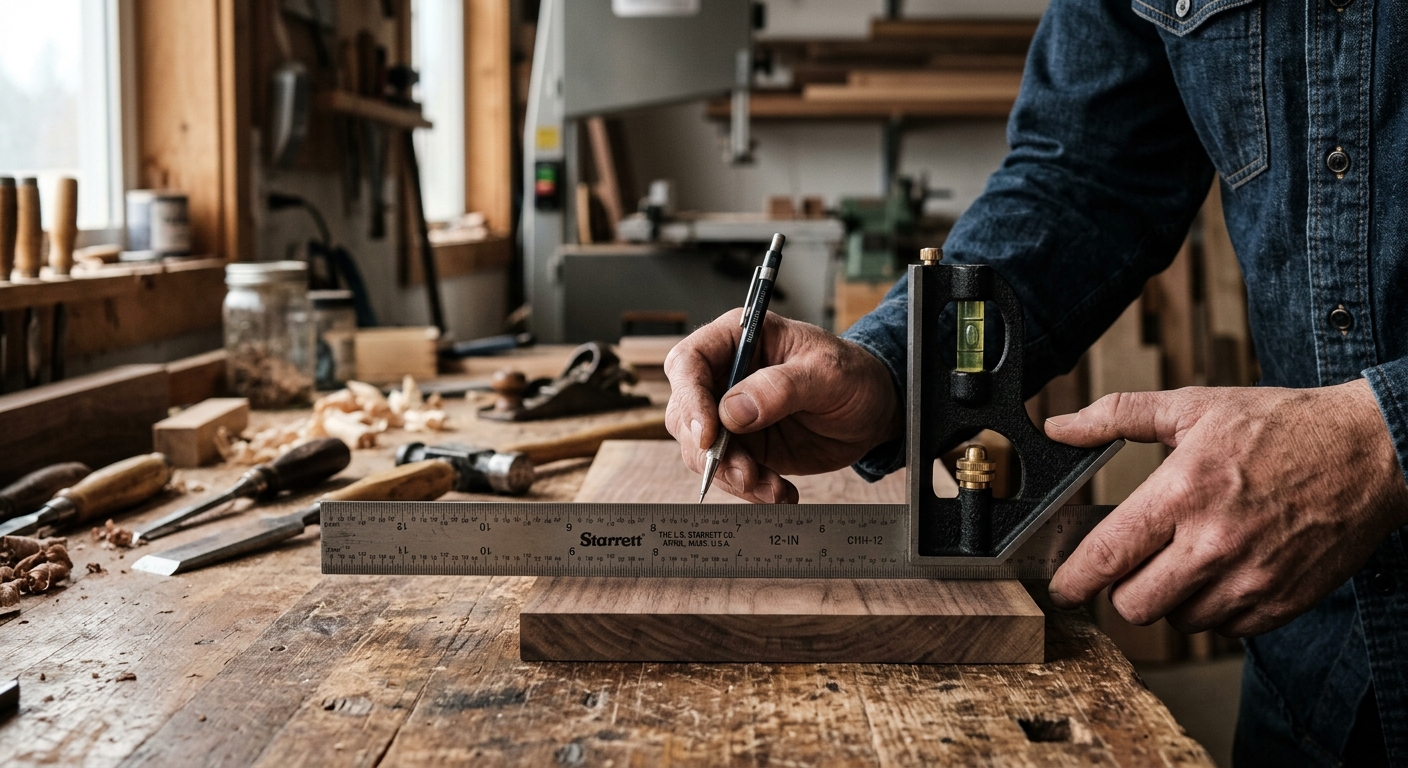
The gold standard. Starrett has been making precision layout tools in the USA since 1880, and the C11H is what machinists, toolmakers, and serious woodworkers reach for first. The hardened steel rule is accurate to plus or minus 0.001 inch, the head locks with zero play, and the casting is built to last a century. Expensive, but a once-in-a-lifetime purchase.
2. iGaging 12-Inch Premium Combination Square
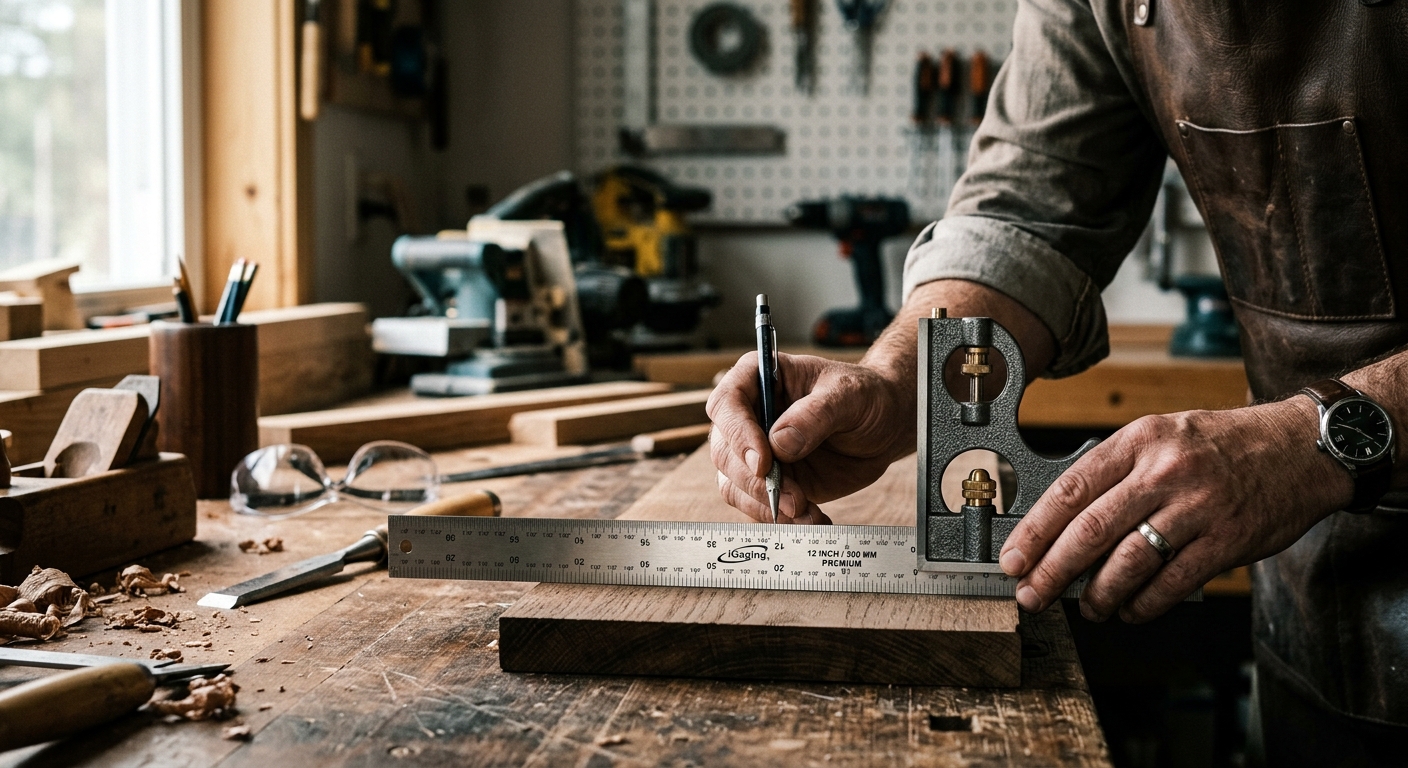
The best value in the category. iGaging sources quality castings and precision-ground rules at a price well below Starrett. The graduation marks are engraved and sharp, the head locks securely, and it comes very close to true square out of the box. Check it with a known reference on arrival and adjust if needed.
3. Empire Level 2791 12-Inch
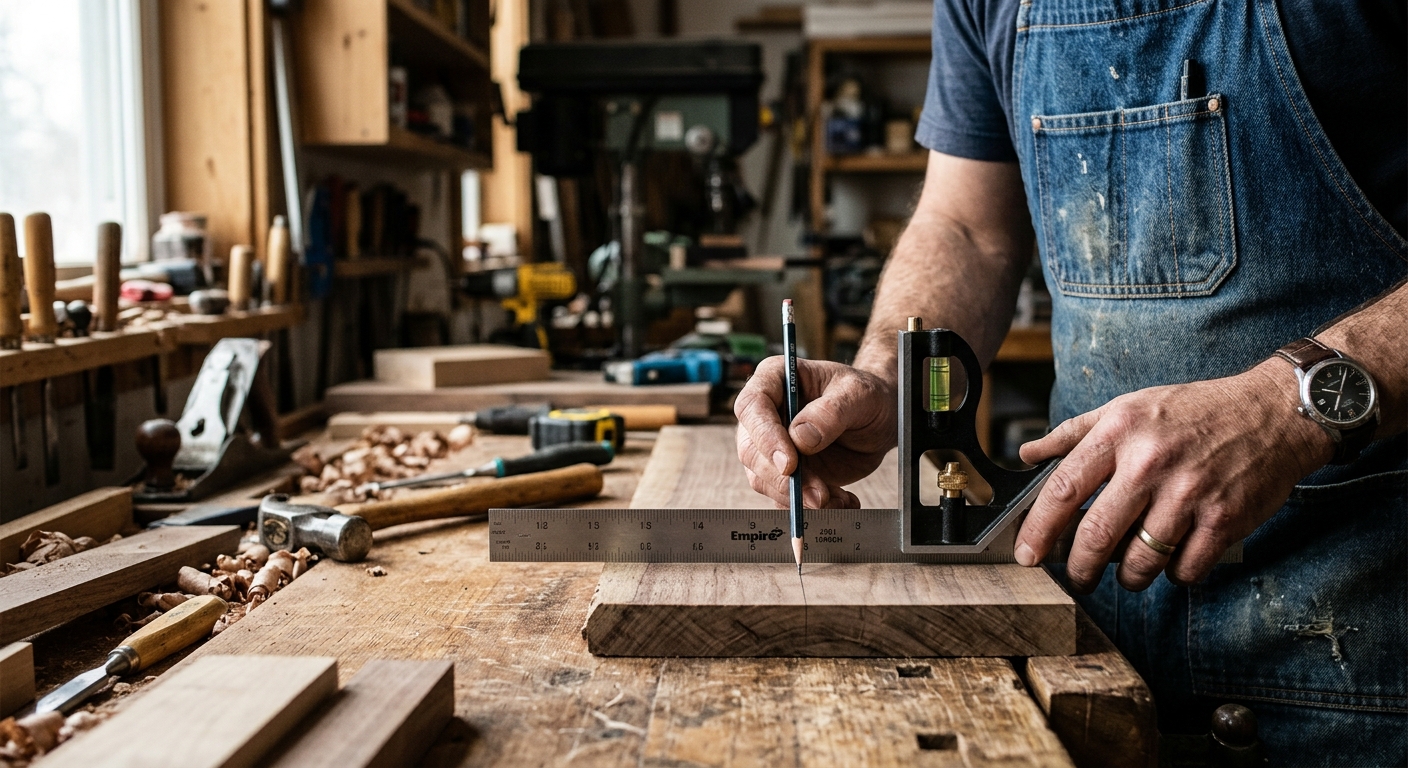
Empire is a trusted name in trade-grade layout tools. This combination square features a cast iron head, hardened rule, and a large thumb nut that tightens quickly with gloves on. A solid choice for contractors and framing carpenters.
4. Swanson Tool S0101 Speed Square
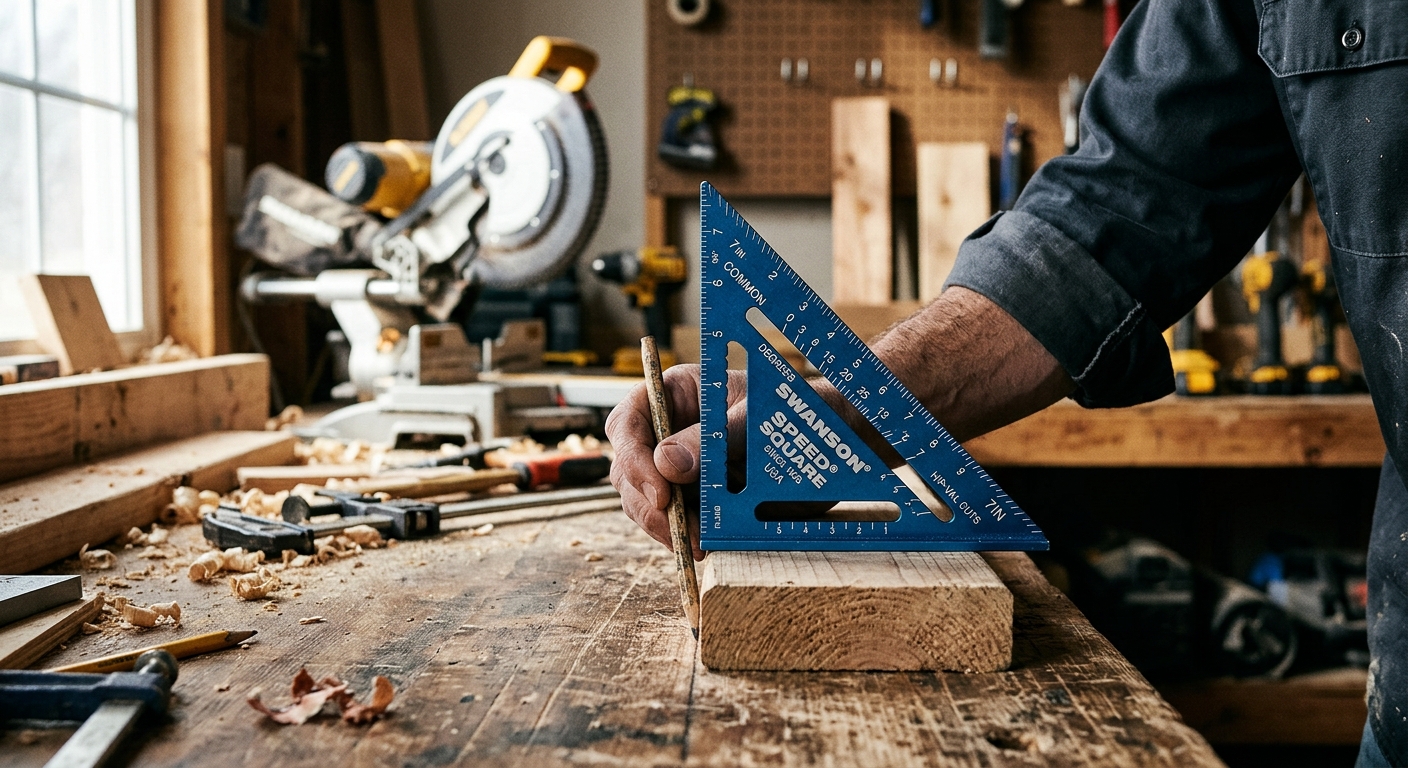
Not a combination square technically, but an essential complement. The Swanson Speed Square is the most popular layout square in carpentry, used for marking crosscut lines and checking plumb on studs. Tough aluminum, clearly marked, and inexpensive.
5. Woodpeckers Combination Square
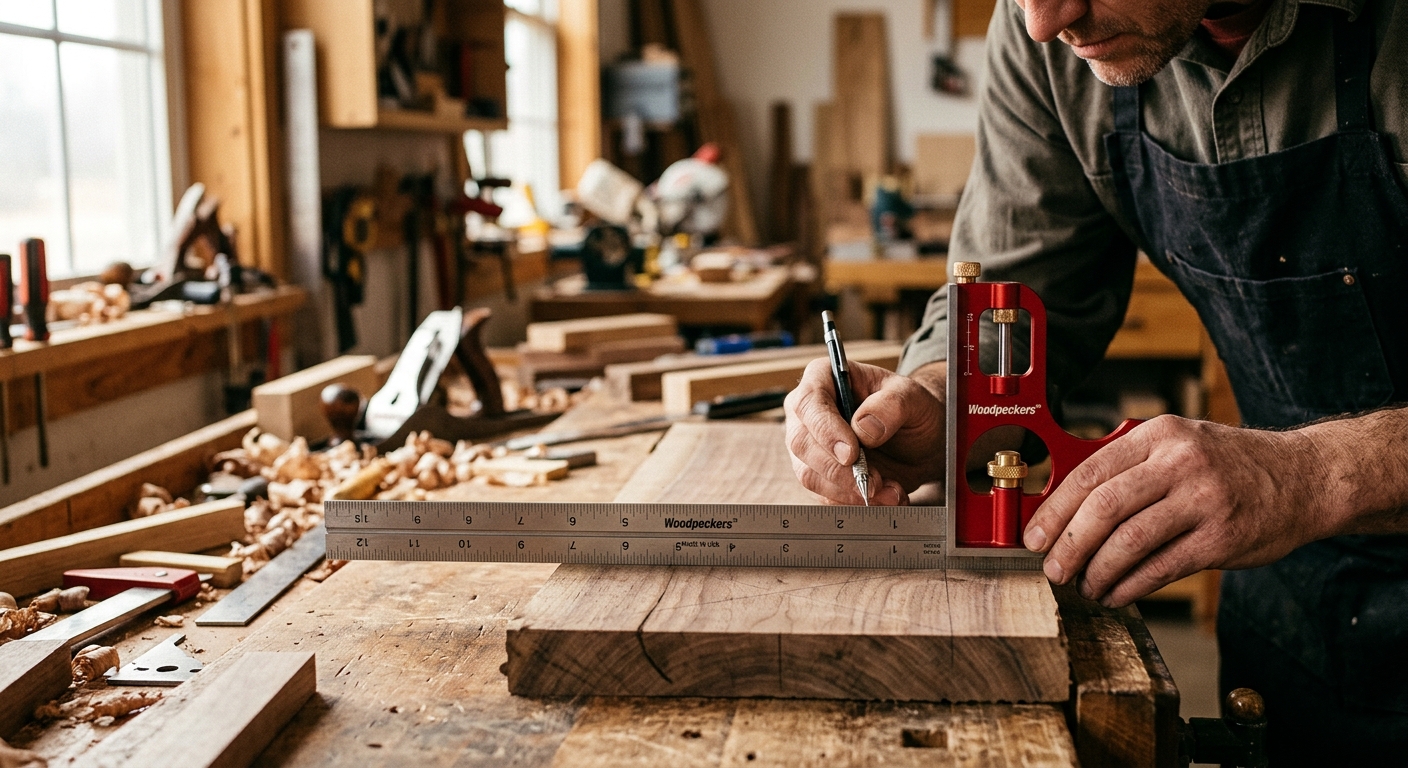
Woodpeckers makes premium precision tools in limited production runs. Their combination square is machined to extremely tight tolerances, verified accurate out of the box, and designed for woodworkers who demand the highest precision. Available periodically – check their site for current availability.
What to Avoid
- Plastic heads: They flex, drift out of square, and break. Avoid entirely.
- Squares with printed (not engraved) graduations: Marks wear off quickly with shop use.
- Cheap import sets that bundle five heads: The heads are often poorly machined and the rules are rarely true.
How to Check If Your Square Is Accurate
- Set the blade to about 6 inches and lock it.
- Place the head against the factory edge of a known-flat board.
- Mark a line along the blade end.
- Flip the square so the head is on the opposite side of the same edge.
- If the blade aligns perfectly with your line, the square is accurate. If there is a gap or overlap, it is out of calibration.
FAQ
Can I adjust a combination square?
On quality squares, yes – the head attachment point can sometimes be adjusted by the manufacturer. Budget squares usually cannot be corrected and should be returned.
What size should I buy first?
A 12-inch combination square is the most versatile starting point. Add a 6-inch for fine joinery later.
Do I need the center head and protractor head?
The center head is invaluable for metalwork and turning. The protractor head is useful for setting compound angles. If you work with both wood and metal, buy the set; otherwise the standard 90/45 head covers most woodworking needs.
Affiliate Disclosure: DIY Arsenal participates in the Amazon Associates Program and other affiliate programs. When you purchase through links on this site, we may earn a small commission at no additional cost to you. We only recommend products we have personally tested and genuinely believe in.