Best Woodworking Mallets – Wood, Brass, Dead-Blow Compared
WoodRiver mallet is the best beginner value; Lie-Nielsen is the premium upgrade; Thor dead-blow leads for assembly.
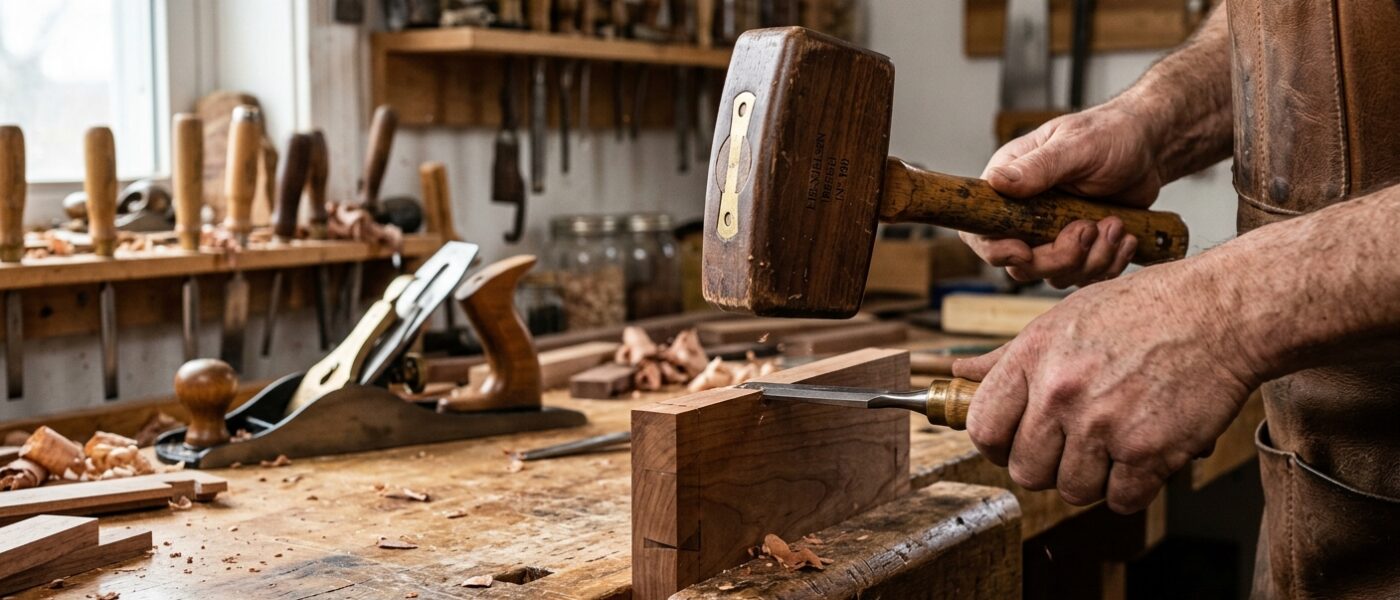
The woodworking mallet is the essential striking tool for hand-tool woodworking – driving chisels into mortise waste, seating tenons, tapping joints together, and adjusting hand plane irons. Unlike a metal hammer, a mallet’s wooden face won’t damage chisel handles or mark workpiece surfaces. Unlike a rubber mallet, a quality woodworking mallet has enough mass to transmit force efficiently through chisel handles rather than absorbing energy in the rubber. Choosing the right mallet type and weight matters more than most beginners realize.
This guide covers the three main types – round wooden mallets, square wooden mallets, and carver’s mallets – with specialty options for dead-blow and brass mallets, and clear recommendations for beginning woodworkers.
How We Evaluate Woodworking Mallets
Head mass: More mass means more driving force per swing at the same swing speed. Mallets range from 12 oz (light detail work) to 32 oz (heavy mortising and assembly). For general chisel work and light mortising, 16–20 oz provides adequate force without excessive arm fatigue. For sustained deep mortising in hardwood, 24–28 oz makes the work noticeably easier.
Head material: Traditional wooden mallets use close-grained hardwoods – beech, maple, hornbeam, lignum vitae. The wood faces eventually wear and can be refinished or replaced. Carver’s mallets (round-head) use very dense wood for maximum weight. Dead-blow mallets use shot-filled rubber heads that eliminate rebound and deliver maximum energy to the workpiece. Brass mallets are specialty tools for marking gauge work and joinery fitting where a wood face is too coarse.
Handle length and balance: A mallet handle that balances near the head feels top-heavy; one balanced at the center or toward the handle swings more naturally and with less wrist fatigue. Try mallets in person when possible – balance is highly personal and the difference between an enjoyable tool and a tiring one.
Face angle: Square mallets have flat faces that transmit force directly to square chisel handles. Round carver’s mallets allow the mallet to strike the chisel at any angle – useful in carving where hand position changes continuously. For straight bench work, a square or rectangular head is preferable; for carving, a round head is essential.
Top Picks
1. Lie-Nielsen Beech Mallet – Best Premium Mallet
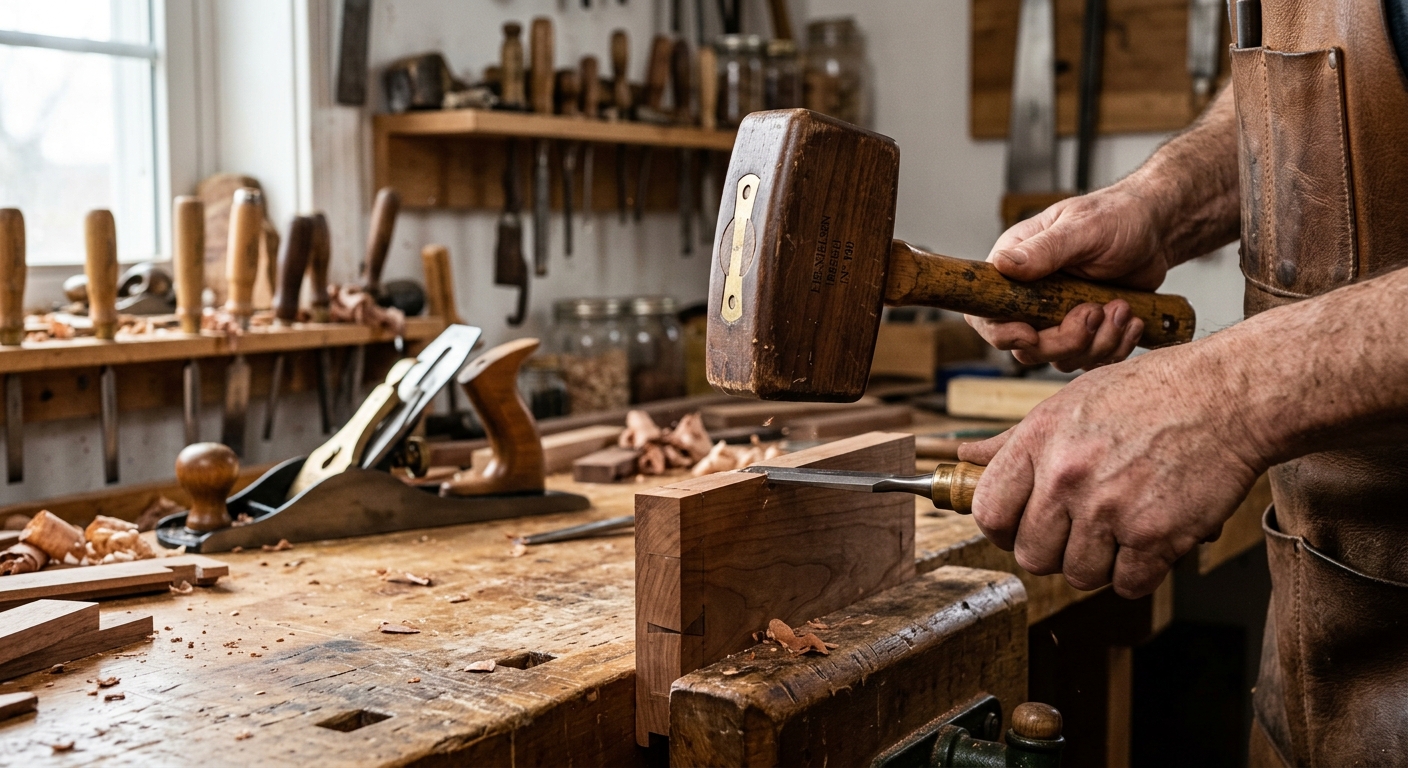
Lie-Nielsen’s beech mallet at $79–$99 is the best production wooden mallet available. Its head is turned from a single piece of dense European beech, the handle is comfortable hickory, and the balance is excellent for sustained chisel work. The 16 oz (small) and 18 oz (large) versions cover different use cases – choose based on the chisel work you do most. This is a tool that woodworkers reach for with pleasure, not frustration.
- Pros: Dense beech head, excellent balance, hickory handle, lifetime quality from a lifetime Lie-Nielsen tool
- Cons’:’Premium price for a mallet, beech head will show wear and require refinishing over decades of use
- Price range: $79–$99
2. WoodRiver Mallet – Best Mid-Range Value
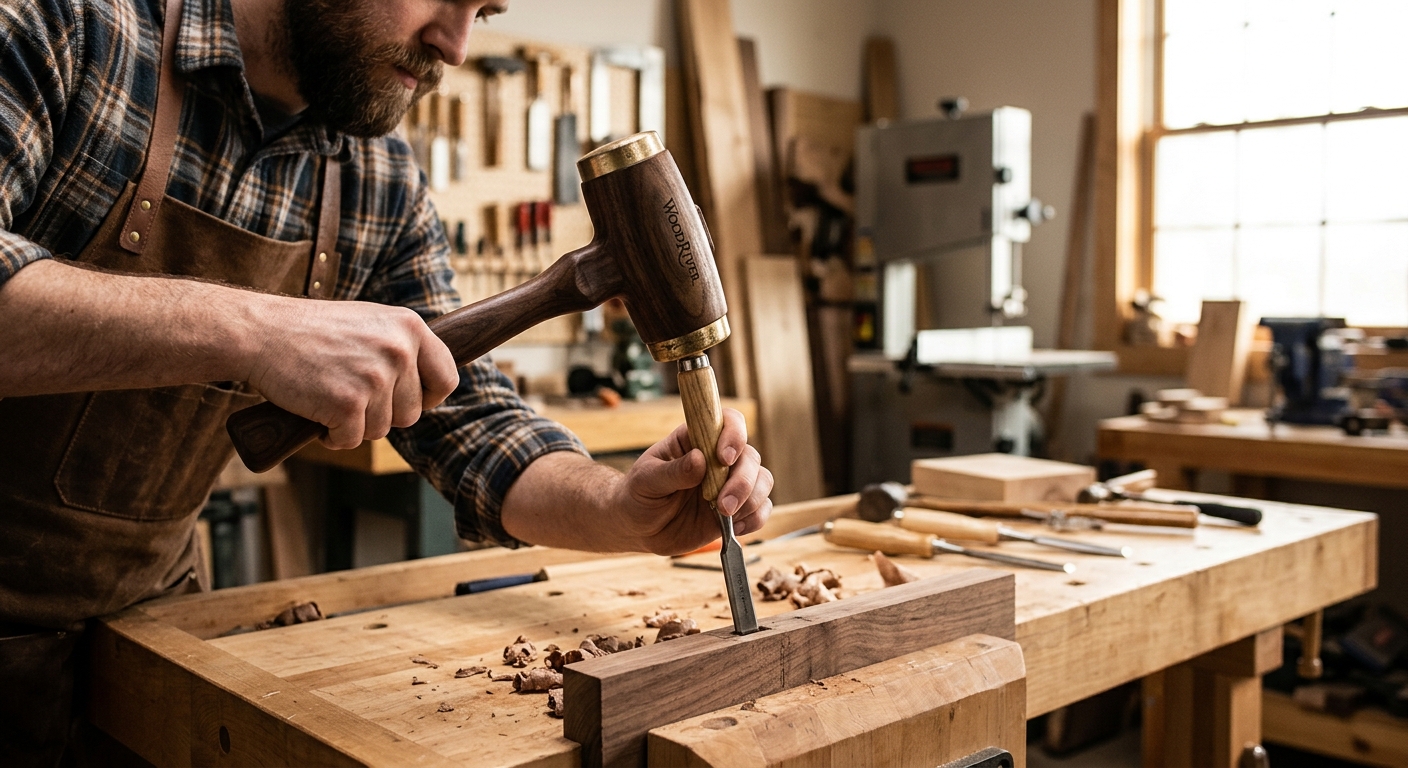
Woodcraft’s WoodRiver turned mallet at $29–$39 uses a round-head design that’s approachable for both bench work and light carving. The maple head is dense and provides adequate mass for most beginner mortising and joinery work. Handle balance is good for its price point. Recommended as a first mallet before committing to premium options – it gives a clear sense of what mallet characteristics matter to you as your woodworking develops.
- Pros: Round head for bench and carving use, adequate maple density, good first mallet, reasonable price
- Cons’:’Maple head wears faster than beech or hornbeam, round head less precise for chisel driving than flat face
- Price range: $29–$39
3. Thor 714 Dead-Blow Mallet – Best Dead-Blow Option
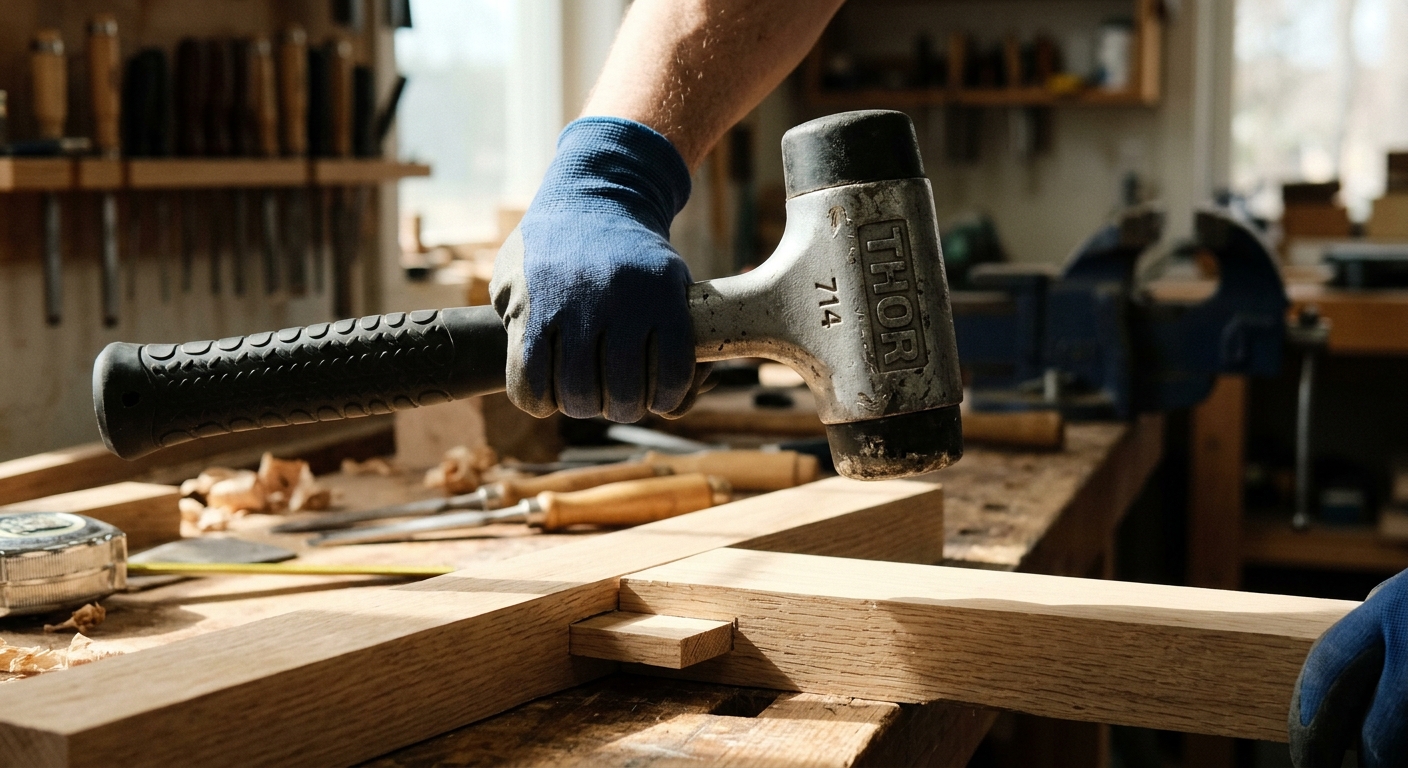
Dead-blow mallets fill their rubber heads with steel shot that shifts forward on impact, delivering maximum energy to the workpiece with zero rebound. This makes them excellent for assembly work – seating mortise-and-tenon joints, fitting drawers, and any situation where rebound would shift the workpiece off its alignment. Thor’s 20 oz dead-blow at $19–$29 is the most commonly recommended option. Not ideal for chisel driving (rubber face doesn’t transmit as efficiently as wood) but the best choice for assembly fitting.
- Pros: Zero rebound for assembly work, shot-filled for maximum energy transfer, good balance, protective rubber face
- Cons’:’Not ideal for sustained chisel driving, rubber absorbs some energy vs wood, heavy
- Price range: $19–$29
4. Garland 18 oz Rubber Mallet – Best General Workshop Mallet
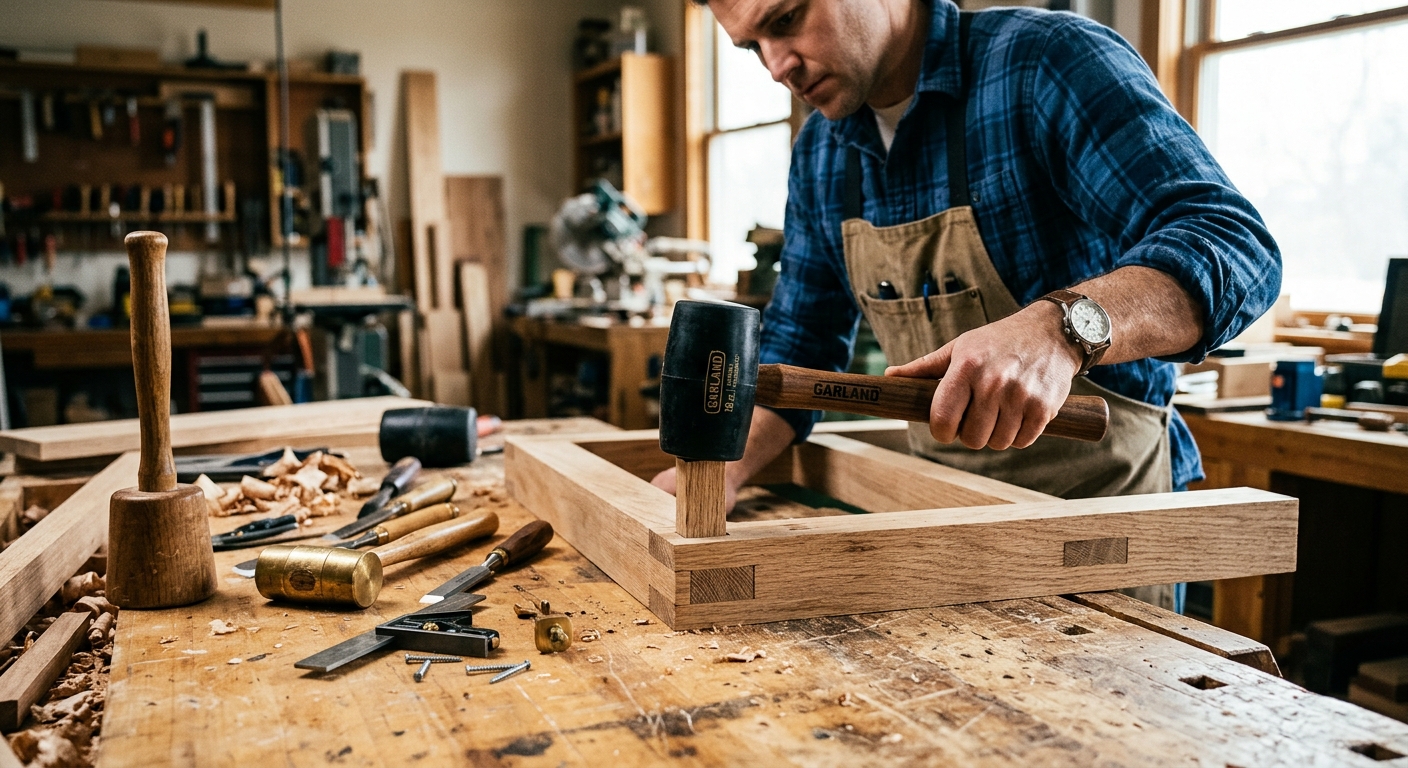
For the DIYer who needs a mallet primarily for assembly work, tile setting, and general use where chisel driving isn’t the primary task, a rubber mallet at $12–$19 is entirely adequate. The Garland 18 oz rubber mallet offers a comfortable handle and adequate mass for most non-chisel applications. Not a woodworking tool in the hand-plane and chisel sense, but practical for most homeowner mallet needs.
- Pros: Budget price, adequate for assembly and tile work, non-marring face, widely available
- Cons’:’Not appropriate for sustained chisel driving in hardwood, rubber face absorbs energy
- Price range: $12–$19
5. BeaverCraft SM1 Carving Mallet – Best Carver’s Mallet

For woodcarvers who need a round-head mallet that can strike in any direction without adjusting grip, BeaverCraft’s hornbeam carver’s mallet at $29–$39 is the best value. Hornbeam is one of the densest and hardest European hardwoods, providing maximum mass in minimum size. The balanced round head, comfortable handle, and dense wood make sustained relief carving noticeably less fatiguing than an equivalent mass square mallet.
- Pros: Dense hornbeam construction, round head for carving, good balance, appropriate weight for carving work
- Cons’:’Round head less precise for bench chisel driving, specialty use limits versatility
- Price range: $29–$39
FAQ
Should I buy a wooden or dead-blow mallet?
For chisel driving: wooden mallet. The hard wooden face transmits force more efficiently to the chisel handle than rubber does. For assembly work (seating joints, fitting drawers): dead-blow. The zero rebound prevents the mallet from bouncing off and shifting the workpiece. Serious woodworkers own both – a wooden bench mallet for tool driving and a dead-blow for assembly and fitting.
What weight mallet is right for mortising?
For through mortises in hardwood (oak, maple, cherry), 24–28 oz is more efficient than lighter mallets – you need fewer swings per mortise, which reduces fatigue over a full day of mortising. For layout work, light paring cuts, and beginning woodworkers who chisel intermittently, 16–20 oz is more maneuverable. When in doubt, start lighter and add weight as projects demand more aggressive material removal.
Can I use a rubber mallet on chisels?
Yes, but less efficiently than a wooden or dead-blow mallet. Rubber absorbs energy that should go into the chisel, requiring harder swings for the same cut depth. In softwood or for light paring work, the difference is minimal. In hardwood mortising over long sessions, the extra effort required from a rubber mallet becomes noticeable as fatigue. A woodworking-specific mallet (wooden head) is worth owning if you do any regular chisel work.
Bottom Line
For beginning woodworkers who plan to do chisel work and joinery, the WoodRiver mallet at $29–$39 provides adequate performance for learning without premium investment. As hand-tool practice develops and the mallet becomes a daily tool, upgrading to the Lie-Nielsen at $79–$99 is a meaningful improvement in feel and efficiency. Add a dead-blow mallet for assembly work – the Thor 714 at $19–$29 is the best value in that category. No woodworking shop is complete without both a quality wooden bench mallet and a dead-blow assembly mallet.
Affiliate Disclosure: DIY Arsenal participates in the Amazon Associates Program and other affiliate programs. When you purchase through links on this site, we may earn a small commission at no additional cost to you. We only recommend products we have personally tested and genuinely believe in.