Best Torque Wrenches for DIY Automotive and Home Use
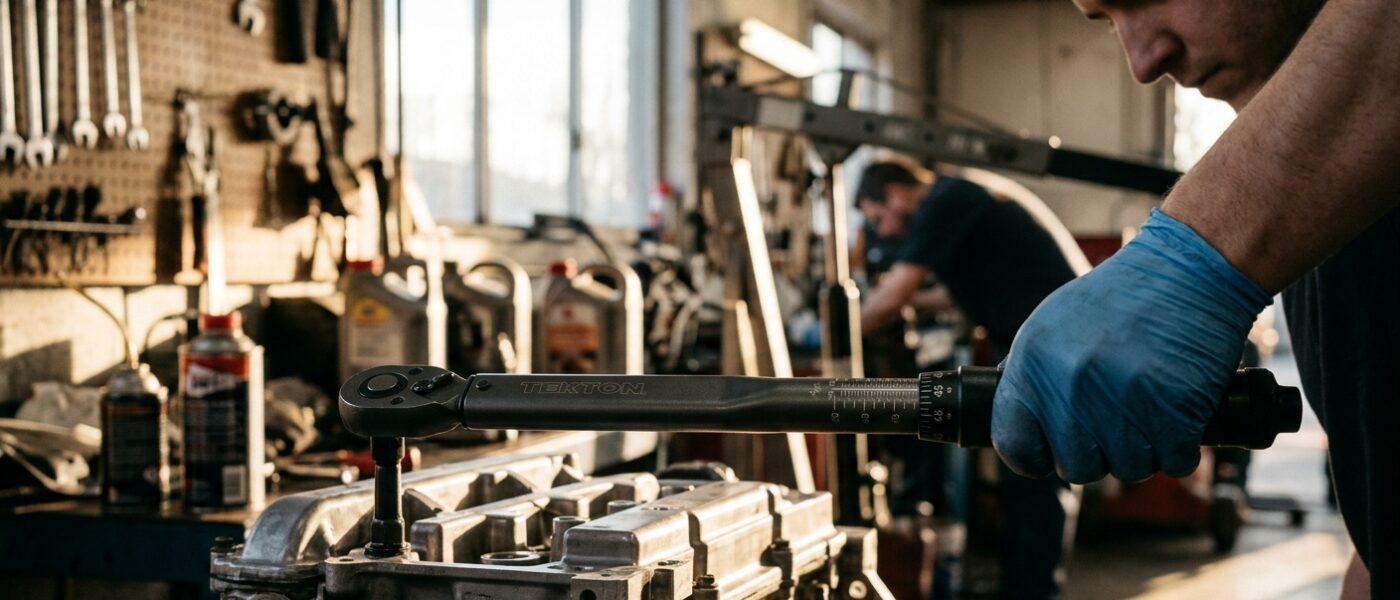
Tekton 24335 is the best value DIY torque wrench; CDI 1/2-inch leads for lug nut work.
A torque wrench isn’t a luxury for precise mechanics – it’s a safety tool. Fasteners torqued to specification maintain their clamping force over time and vibration cycles; under-torqued fasteners loosen; over-torqued fasteners can strip threads, crack components, or fail under load. For automotive work (wheel lug nuts, spark plugs, cylinder head bolts), bicycle maintenance (carbon fiber components, bottom brackets), and any DIY application with a torque specification, a torque wrench that actually reaches the specified value is the right tool.
This guide covers the three main torque wrench types – click, beam, and digital – with recommendations for DIY automotive and home use at each price point.
How We Evaluate Torque Wrenches
Accuracy: Most torque wrenches are rated for plus or minus 4% accuracy at mid-range torque values. At the extremes of the torque range (very low or very high), accuracy degrades. Quality torque wrenches are tested and certified; cheap ones often don’t meet their stated accuracy specs. Look for wrenches that come with calibration documentation or from manufacturers with traceable calibration processes.
Torque range: Match the wrench range to your specific application. For lug nuts (80–120 ft-lbs), a 3/8-inch or 1/2-inch drive wrench covering 20–150 ft-lbs is appropriate. For spark plugs (15–25 ft-lbs) and engine work, a lower-range wrench (5–75 ft-lbs in 3/8-inch drive) is more accurate at those torque values. Using a 150 ft-lb wrench to torque a 15 ft-lb fastener puts the target value at the extreme low end of the range, where accuracy is poorest.
Click vs beam vs digital: Click wrenches are the most common – they emit an audible click when the set torque is reached. Simple to use, reasonably accurate, and can be set before starting. Beam wrenches use a deflecting pointer against a fixed scale – no mechanism, just physics; excellent long-term accuracy and no storage position required. Digital wrenches provide an exact readout and often beep and/or vibrate at the set torque; most useful when visual and audible feedback both matter.
Storage position: Click torque wrenches must be stored at their lowest setting (or fully backed off) to avoid deforming the internal spring and affecting calibration. Many users forget this; most click wrenches are gradually de-calibrated by improper storage. Beam wrenches require no storage consideration.
Top Picks
1. Tekton 24335 3/8-Inch Drive Click – Best Overall DIY Torque Wrench
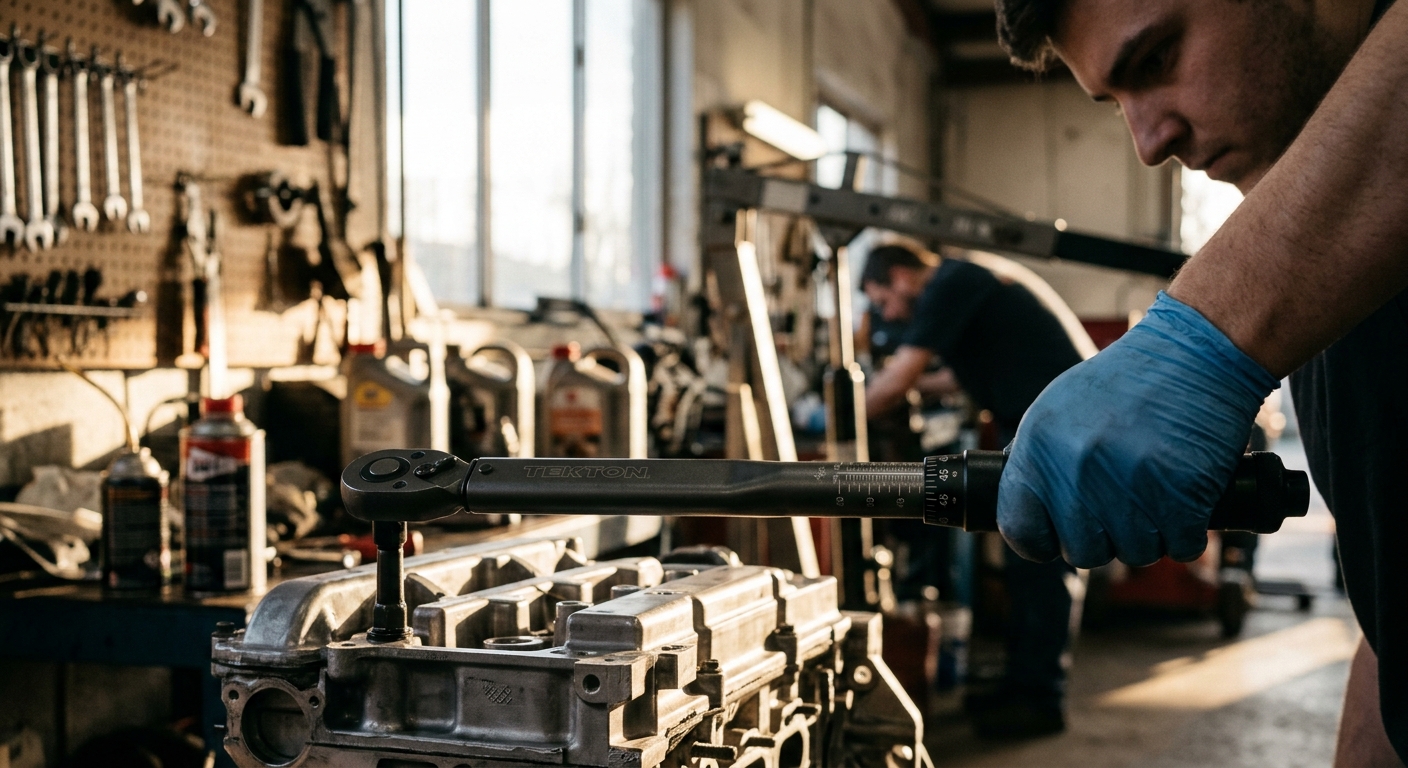
Tekton’s 3/8-inch drive click torque wrench (10–80 ft-lb range) at $39–$49 is the best value in accurate, reliable torque wrenches for DIY automotive and mechanical work. Its accuracy is factory-calibrated to plus or minus 4% (tested and documented), the dual-direction ratchet handles both tightening and loosening, and the click mechanism has a positive, audible action that’s easy to feel through gloves. The lower 10 ft-lb minimum is better than most in this price range, making it suitable for spark plugs and lighter engine fasteners as well as lug nuts.
- Pros: Plus/minus 4% accuracy documented, 10–80 ft-lb range, dual-direction, positive click feel, excellent value
- Cons:’>Must store at lowest setting (5 ft-lbs) to preserve calibration, plastic handle less premium feel
- Price range: $39–$49
2. CDI 2503MFRPH 1/2-Inch Drive – Best for Lug Nuts
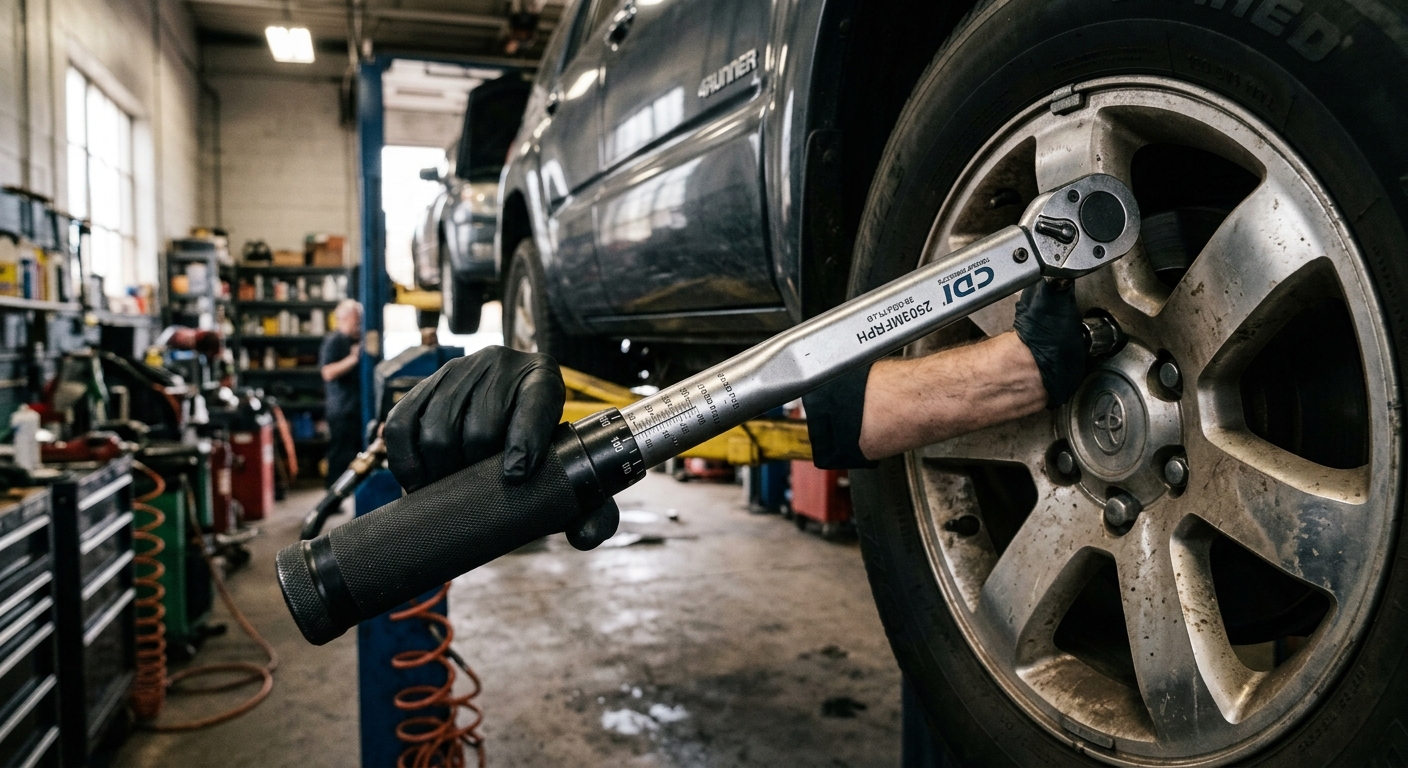
CDI’s Torque Products 1/2-inch drive click wrench (30–250 ft-lb range) at $99–$129 is the go-to recommendation for wheel lug nut torquing. The 1/2-inch drive handles the higher torque values lug nuts require (80–120 ft-lbs for most passenger vehicles); the range extends to 250 ft-lbs for trucks and heavy vehicles. CDI is a professional torque wrench manufacturer whose accuracy certification meets ASME standards. This is the wrench professional shops use for tire work.
- Pros: ASME accuracy certification, 1/2-inch drive for lug nuts, 30–250 ft-lb range covers most vehicles, professional build quality
- Cons:’>High price for occasional DIY use, requires proper storage at lowest setting
- Price range: $99–$129
3. Dial Industries LB25 Beam Wrench – Best Beam Torque Wrench
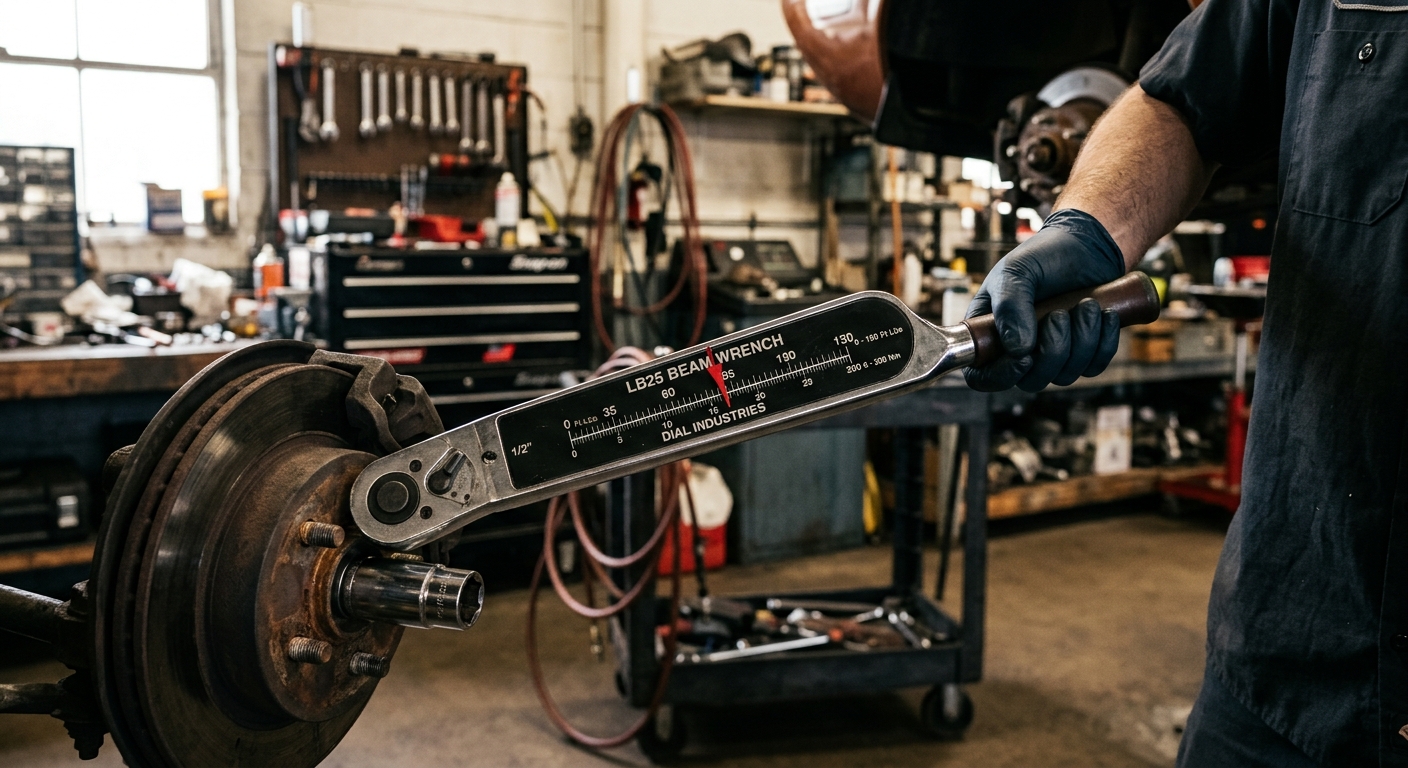
A beam torque wrench at $29–$39 needs no calibration maintenance – the beam deflects against a fixed scale, and as long as the beam isn’t bent, it reads accurately forever. The visual scale requires clear sightlines to the wrench face during tightening, which limits use in confined spaces but makes it the most reliable long-term option for users who won’t consistently remember to back off their click wrench. For bench work, engine assembly, and any application where clear sightlines are available, beam wrenches are the most reliable accuracy tool over time.
- Pros: No calibration degradation over time, no storage requirement, lower price, reliable accuracy
- Cons’:’Requires clear sightline to scale during tightening, harder to use in confined engine bays
- Price range: $29–$39
4. Park Tool TW-6.2 – Best Torque Wrench for Bicycles
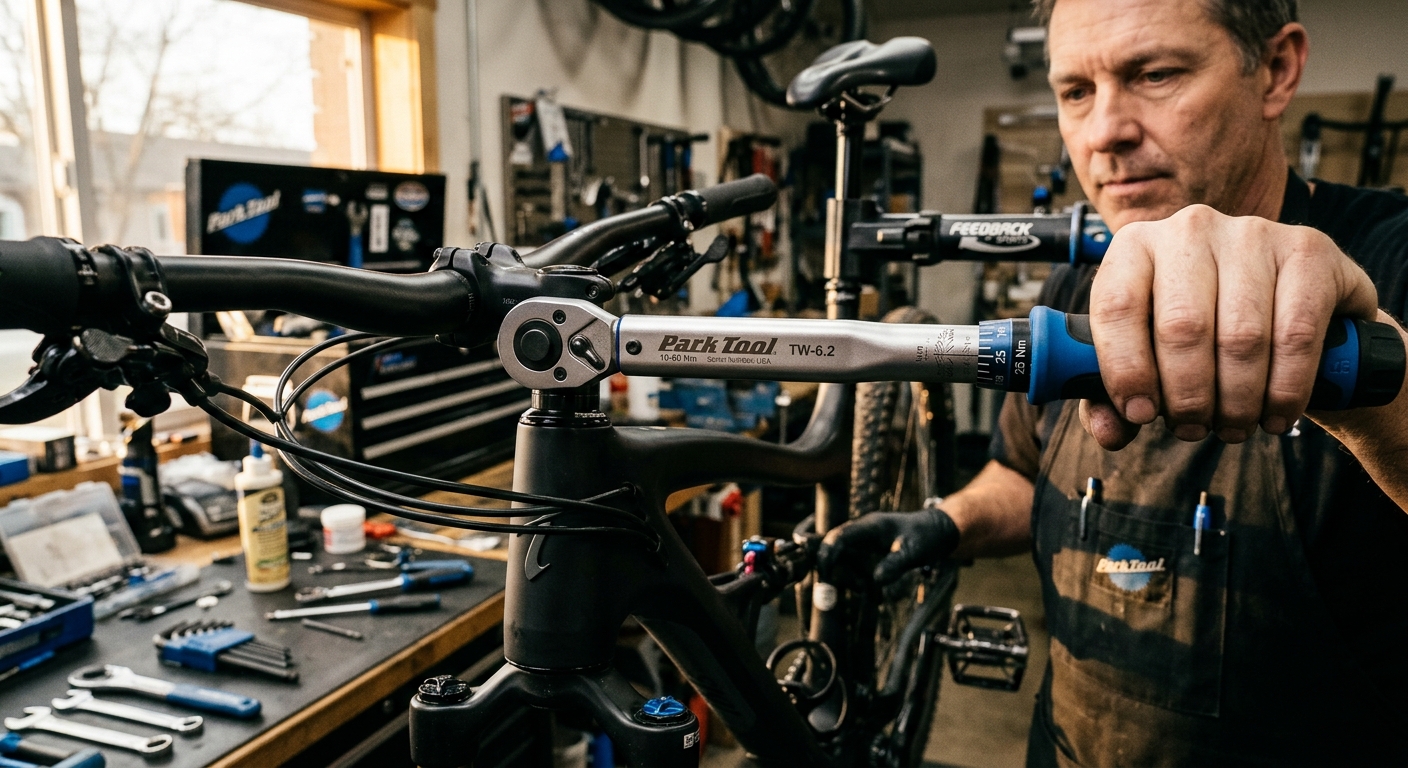
Park Tool’s 3/8-inch drive ratcheting torque wrench at $89–$109 is calibrated specifically for the 1–20 Nm range common in bicycle maintenance – cockpit components, brake lever clamps, stem bolts, and bottom brackets. Standard automotive torque wrenches are poorly calibrated at the low-torque values carbon fiber components require. Park Tool’s bike-specific design reads accurately from 2–20 Nm where a standard click wrench set to 5 ft-lbs is near its accuracy limits. Essential for carbon fiber bicycle maintenance.
- Pros: Accurate in low bicycle-specific torque range, designed for 1/4 and 3/8 drive bike fasteners, professional shop standard
- Cons’:’Expensive for a specialty tool, not useful for automotive applications
- Price range: $89–$109
5. ACDelco ARM601-4 Digital – Best Digital Torque Wrench
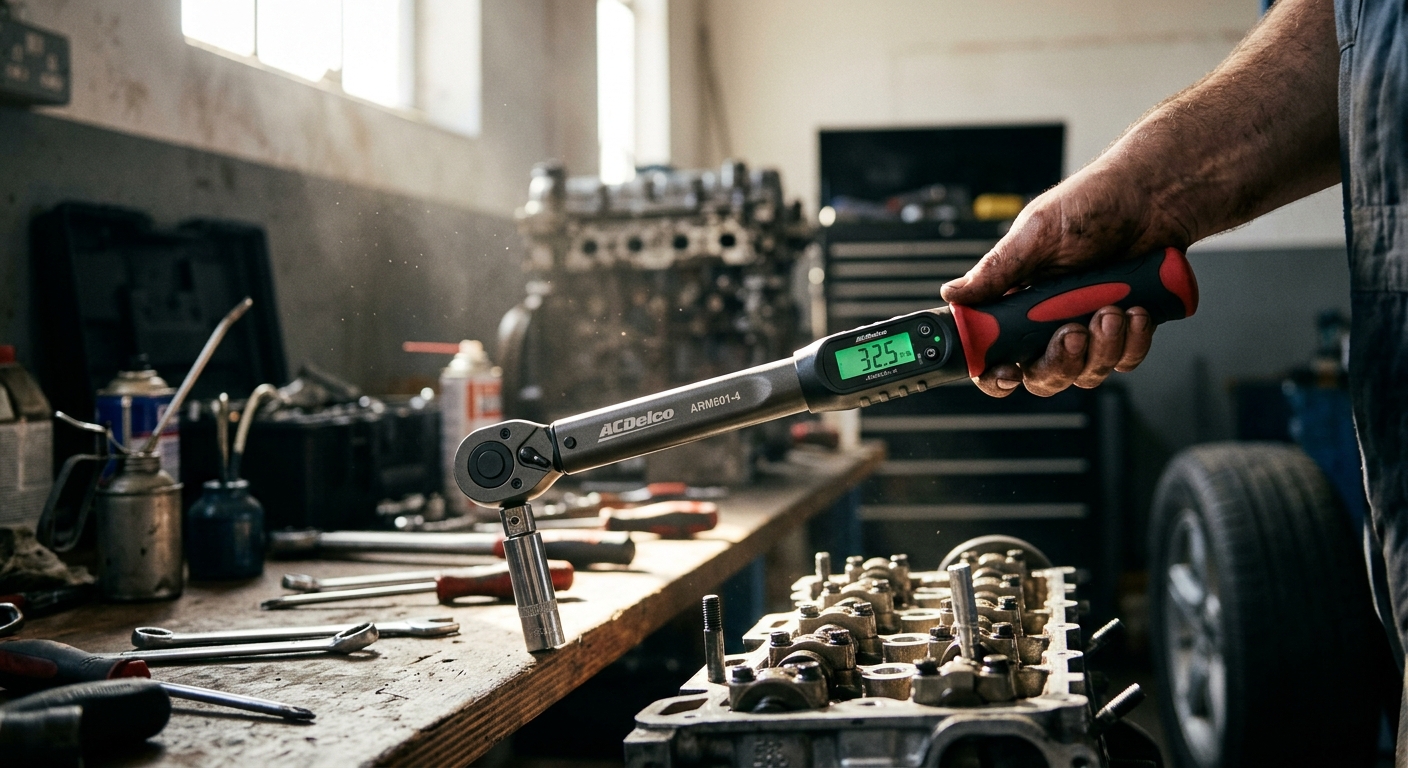
ACDelco’s digital 3/8-inch drive torque wrench at $69–$89 provides an LCD readout showing current torque, beeps as you approach the set value, and LED indicators help you reach the target precisely. The digital format eliminates the guesswork of click wrenches (did I just feel it click?) and provides real-time feedback throughout the tightening arc. Better accuracy than most click wrenches in DIY price ranges; batteries are the only ongoing maintenance requirement.
- Pros: Real-time torque readout, beep and LED alert at target, better feedback than click wrenches, accurate
- Cons’:’Requires battery, more expensive than basic click wrenches, can’t use in total darkness or tight battery access
- Price range: $69–$89
FAQ
How often should a torque wrench be calibrated?
Professional torque wrenches in production environments are calibrated annually or every 5,000 cycles, whichever comes first. For DIY use (dozens of cycles per year rather than thousands), calibration every 3–5 years with proper storage (backed off after each use) is adequate. If you drop a torque wrench, recalibrate before using – impacts can affect calibration significantly. Most manufacturers offer recalibration services for $25–$50.
What’s the torque spec for lug nuts?
Torque specifications vary by vehicle – always check your owner’s manual or a reliable torque spec database (Alldata, Chilton). Most passenger vehicles spec 80–100 ft-lbs for steel wheels; 100–120 ft-lbs for alloy wheels on trucks. Never estimate lug nut torque – under-torquing can cause wheel separation; over-torquing can crack brake rotors and stretch wheel studs. A torque wrench for lug nuts is not optional safety equipment.
Can I use a torque wrench to loosen bolts?
Not a standard click torque wrench – the mechanism only clicks in the tightening direction. Using a click wrench to break loose frozen fasteners can damage the click mechanism and affect calibration. Use a standard breaker bar or ratchet to loosen fasteners; use the torque wrench only for tightening to specification. Some dual-direction torque wrenches (like the Tekton 24335) support both directions, but using them to break frozen fasteners is still not recommended.
Bottom Line
The Tekton 24335 3/8-inch drive click wrench at $39–$49 is the best starting point for most DIYers – accurate, affordable, and covers spark plugs through light lug nut applications. For wheel lug nuts on trucks or heavy vehicles, the CDI 1/2-inch drive wrench at $99–$129 is the correct professional tool. Bicycle owners maintaining carbon components should invest in the Park Tool TW-6.2 for its low-range accuracy where standard automotive wrenches become unreliable. Whatever type you buy, always store click wrenches at their minimum setting after use.
Affiliate Disclosure: DIY Arsenal participates in the Amazon Associates Program and other affiliate programs. When you purchase through links on this site, we may earn a small commission at no additional cost to you. We only recommend products we have personally tested and genuinely believe in.