Best Stud Finders and Wall Scanners for Accurate DIY Layout
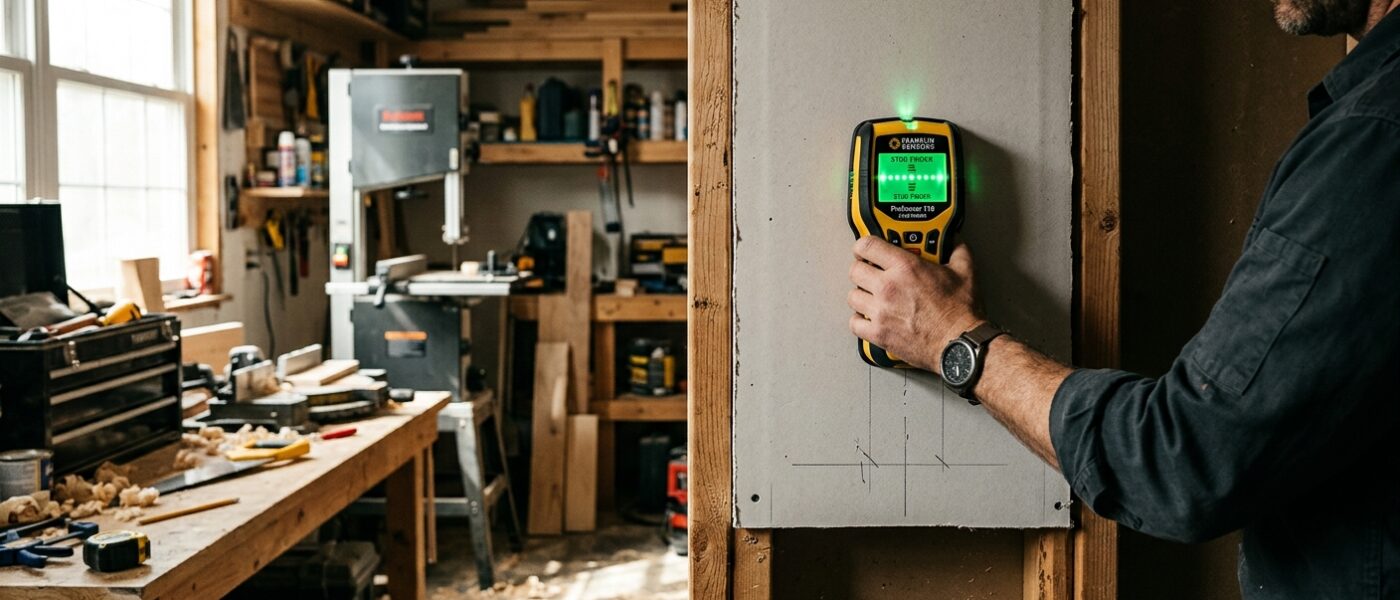
Franklin ProSensor 710 shows the full stud width instantly, eliminating the guessing game of standard stud finders
Stud finders save hours of frustration and prevent the damage that comes from driving screws or nails into drywall between studs. Whether you’re mounting a TV, installing floating shelves, or anchoring a structural support, knowing exactly where the stud is matters. This guide covers the best stud finders and electronic scanners for DIYers.
How We Evaluate Stud Finders
We tested stud finders for detection accuracy (did it find the actual stud center?), consistency (same result on five passes?), false positive rate, wire and AC detection reliability, and ease of use. A stud finder that misses studs or returns constant false positives is worse than running a magnet along the wall looking for screw heads.
Top Picks
Franklin Sensors ProSensor 710 – Best Overall
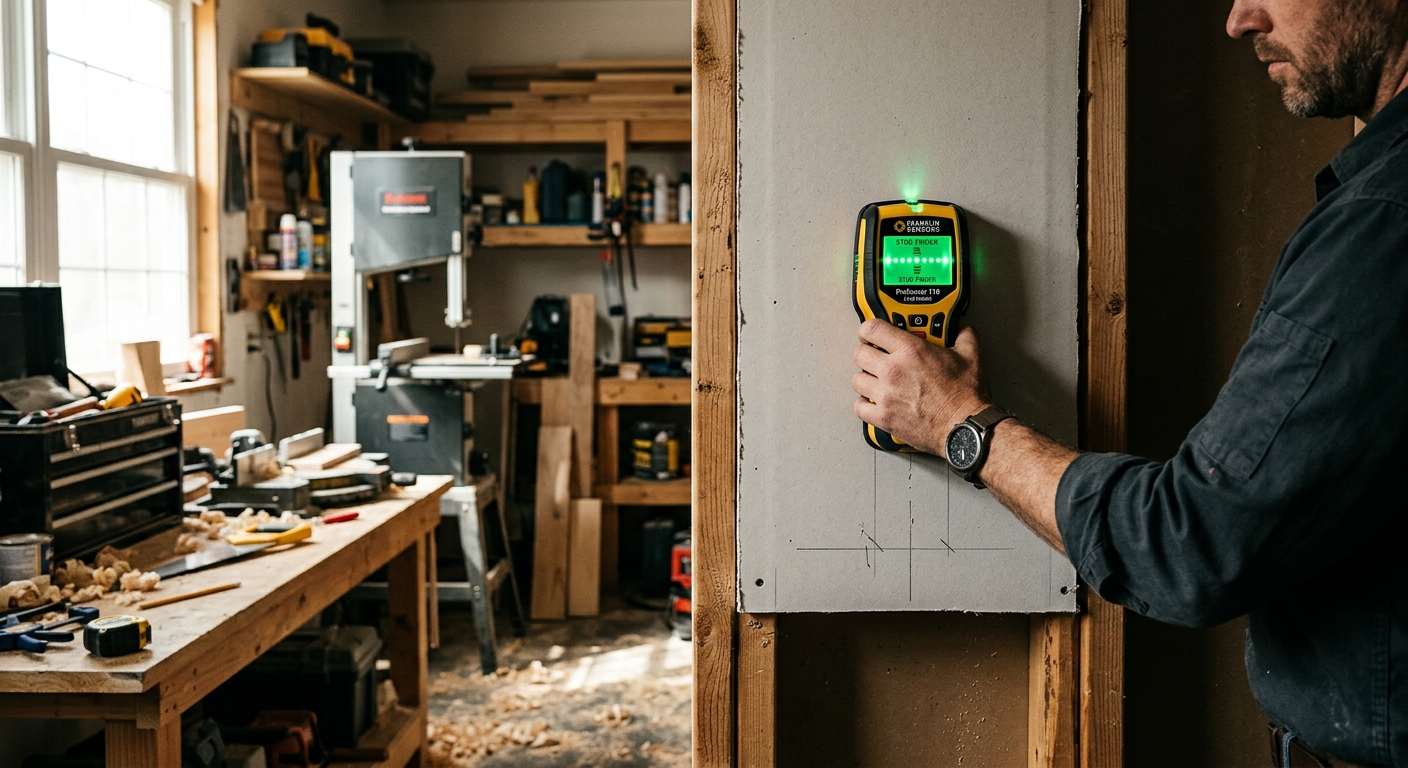
The ProSensor 710 uses a patented 13-sensor wide scanning array instead of the single edge-detection approach that frustrates most stud-finder users. All 13 sensors light up simultaneously showing the stud’s entire width – not just one edge. You see the stud instantly without multiple passes and guessing where the center is. Works on standard drywall and even paneling. Dramatically more accurate than any single-sensor stud finder in the same price range.
- Pros: 13-sensor array shows full stud width, no multiple-pass calibration needed, accurate and consistent, works on paneling
- Cons: No wire detection, slightly wider body than slim stud finders, no deep scan mode
Zircon StudSensor e50 – Best Budget
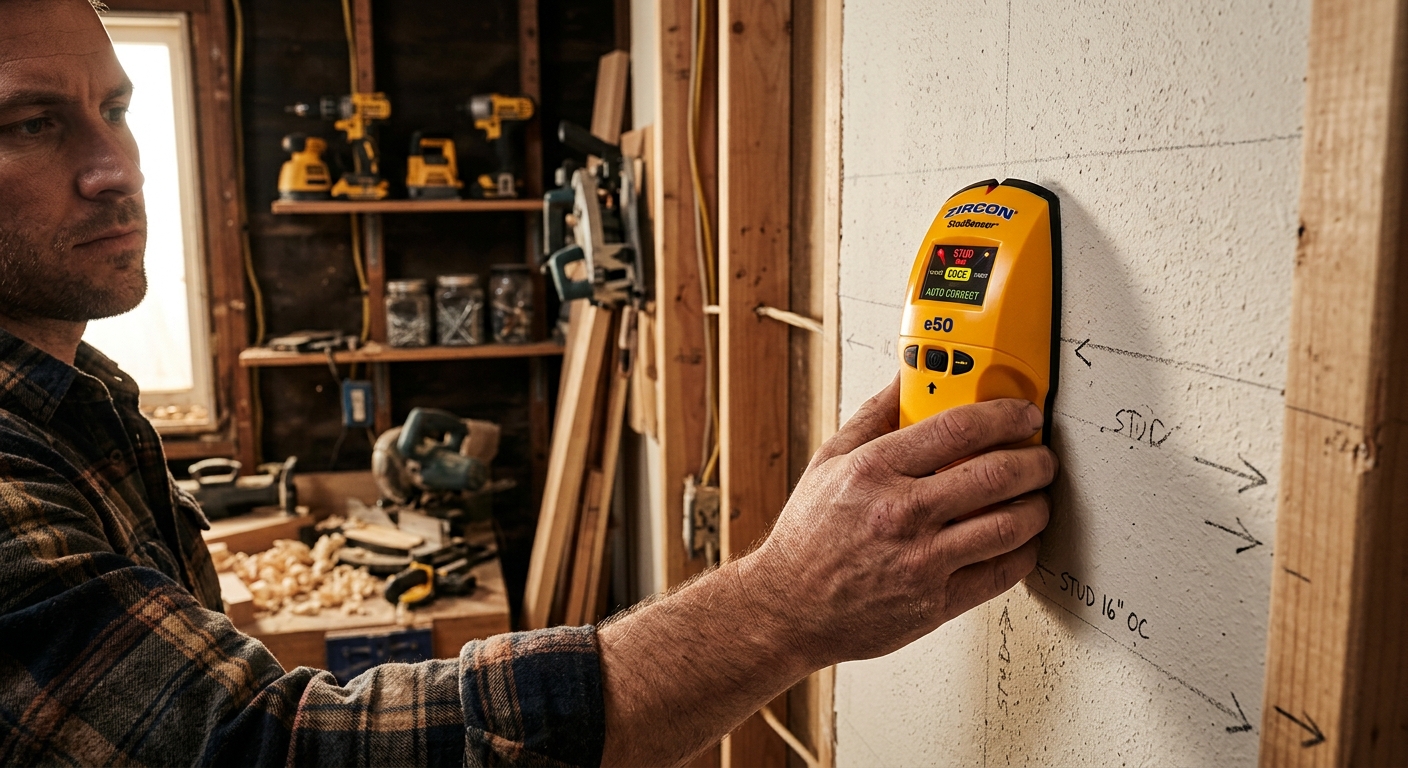
Zircon is the standard brand for entry-level stud finders. The e50 finds studs up to 3/4 inch deep, indicates center and edge, and has SpotLite pointing for hands-free marking. At under $25, it’s the starting point for homeowners who mount shelves occasionally. Accuracy is adequate in standard construction; it struggles with textured walls, plaster, or unusually damp drywall.
- Pros: Affordable, SpotLite pointing, center and edge indication, adequate for standard drywall
- Cons: Single sensor requires multiple passes, false positives on textured surfaces, no AC detection
CH Hanson 03040 Magnetic Stud Finder – Best Magnetic
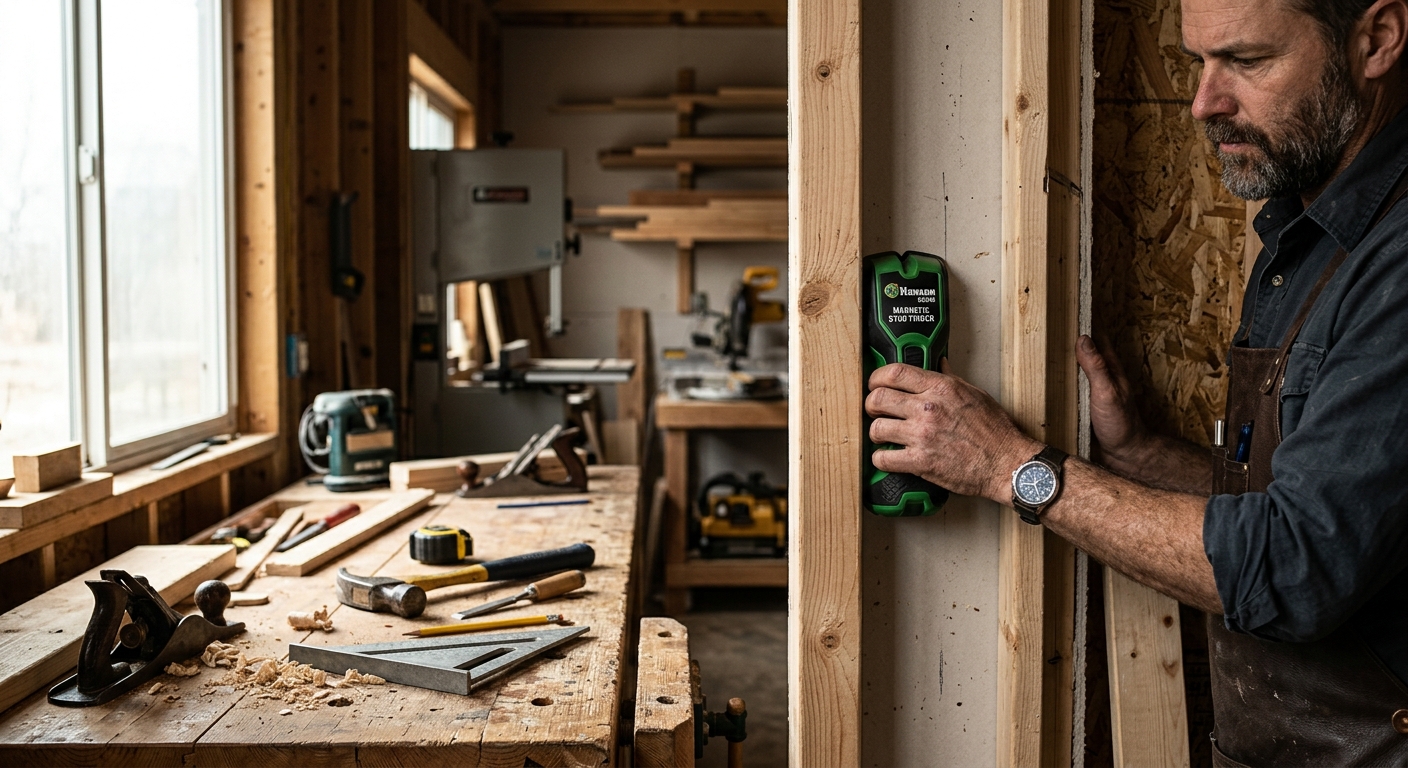
Magnetic stud finders work differently from electronic ones: they find the nail or screw holding the drywall to the stud, which marks the stud location. The CH Hanson 03040 uses rare-earth magnets strong enough to detect drywall screws through 1-inch of material. No batteries, no calibration, no false positives from pipes or pipes. It doesn’t find stud width, but once you find a screw, you know exactly where the stud is. Simple and reliable.
- Pros: No batteries, no false positives, works on plaster and tile, rare-earth magnets find deep screws, tiny and portable
- Cons: Only finds studs at screw locations (gaps between screws are undetected), no wire detection
Bosch GMS120 – Best for Deep Walls
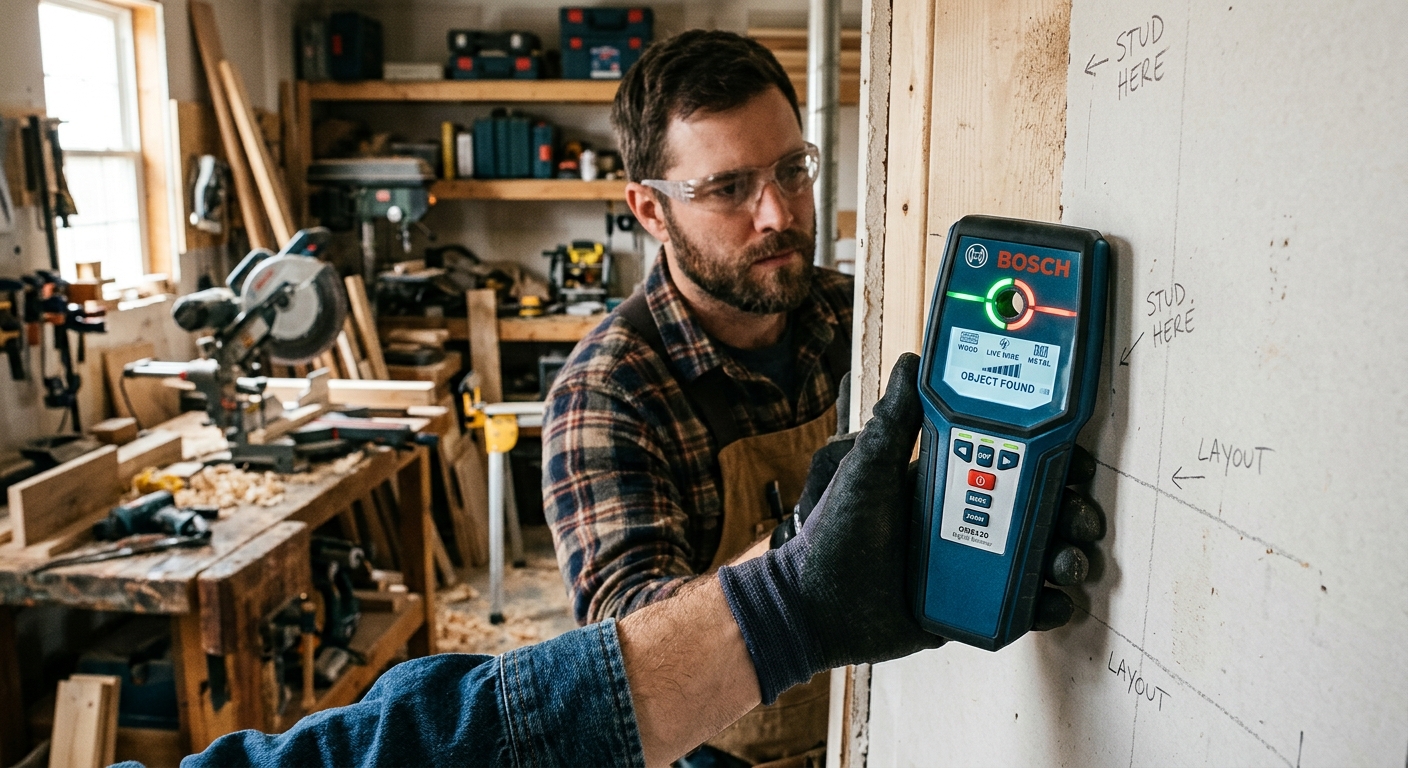
The Bosch GMS120 scans up to 4.75 inches deep – reaching through thick walls, plaster, tile backerboard, and multiple drywall layers. It detects wood and metal studs, metal pipes, electrical wires (live and non-live), and rebar. The center-marking LED is precise. For older homes with plaster walls, renovations with added drywall layers, or commercial-grade walls, the deep scan capability is worth the premium.
- Pros: 4.75-inch scan depth, detects studs, metal, pipes, and live wires, works through thick wall assemblies
- Cons’:’Expensive, more complex interface, occasional false positives near metal lath in plaster
Walabot DIY – Best for Seeing Through Walls
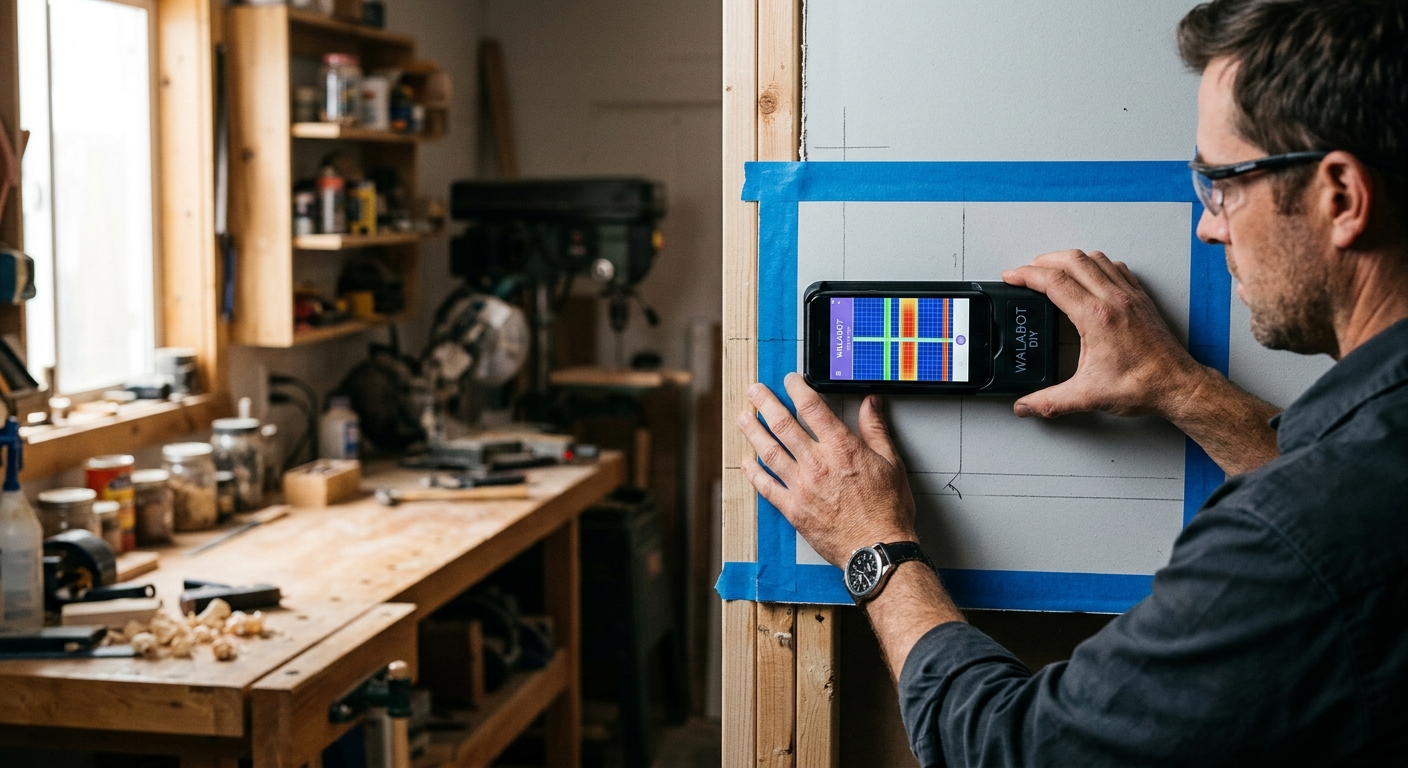
The Walabot DIY plugs into an Android or iOS phone and uses radio frequency imaging to show a real-time map of what’s inside the wall – studs, pipes, electrical conduits, and movement (yes, it can detect rodents). The smartphone app displays the scan as a graphic overlay. More of a diagnostic tool than a quick stud finder, but invaluable in renovation situations where you genuinely don’t know what’s in the wall.
- Pros: Real-time wall mapping, detects studs, pipes, and wires simultaneously, app-based display, invaluable for renovation
- Cons’:’Expensive, requires compatible smartphone, not needed for simple shelf mounting, learning curve for interpreting scans
Frequently Asked Questions
Why doesn’t my stud finder work? Electronic stud finders struggle on textured paint, multiple drywall layers, plaster walls, or when wall moisture is high. Try a magnetic stud finder (CH Hanson) or the deep-scan Bosch if your standard finder gives inconsistent results.
How far apart are studs? Standard residential construction spaces studs 16 inches apart center-to-center. Some older construction and certain commercial builds use 24 inches. Once you find one stud, the next is 16 or 24 inches away – use a tape to predict the next location and verify with the finder.
Can I find a stud without a stud finder? Yes: knock along the wall and listen for the dull thud where a stud is versus the hollow sound between studs. Or use a strong magnet to find drywall screws. Or measure from a corner (studs start 15-3/4 inches from the corner in 16-inch OC construction).
Do I need a wire detector? If you’re drilling or screwing anywhere near electrical runs, yes. Live wire detection is a safety feature that pays for itself the moment it prevents drilling into a circuit.
Bottom Line
The Franklin Sensors ProSensor 710 earns Best Overall for its multi-sensor approach that eliminates the frustrating multiple-pass guessing game of single-sensor stud finders. The CH Hanson magnetic stud finder is a perfect complement – use the magnet for finding existing screw locations, the ProSensor for wider stud mapping. Add the Bosch GMS120 if you’re working in older construction with challenging walls.
Affiliate Disclosure: DIY Arsenal participates in the Amazon Associates Program and other affiliate programs. When you purchase through links on this site, we may earn a small commission at no additional cost to you. We only recommend products we have personally tested and genuinely believe in.