Best Shop Vacuums and Dust Collectors for Woodworking and the Home Shop
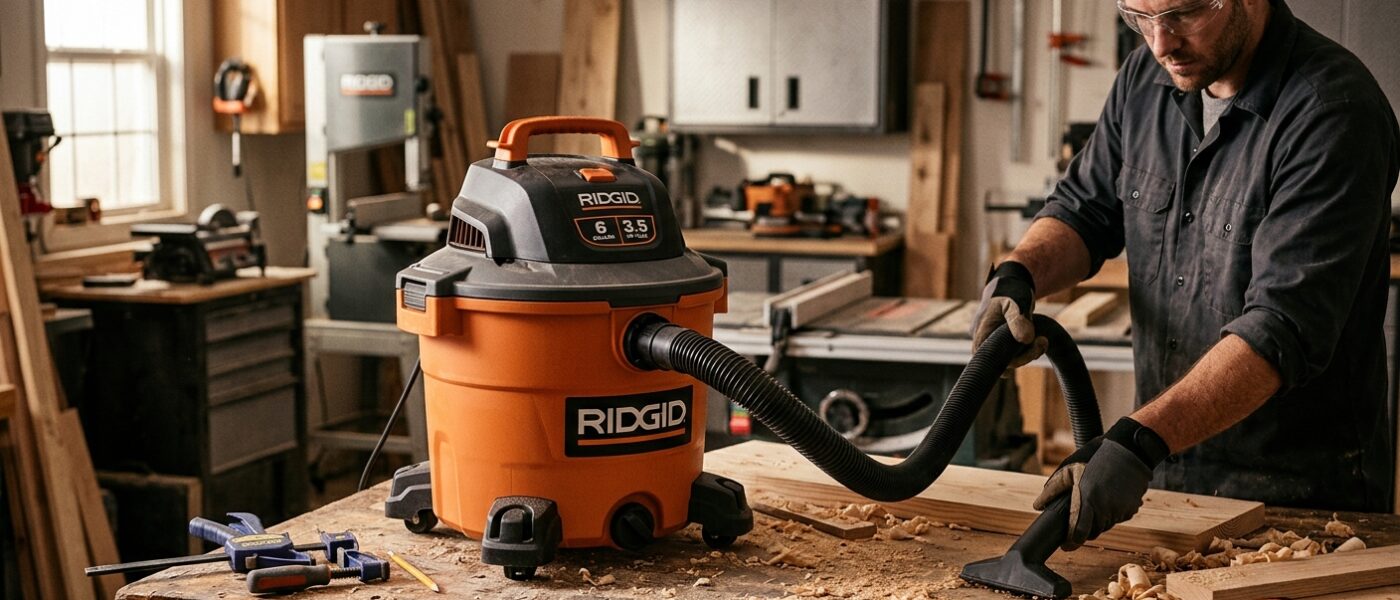
RIDGID 6-gallon with a Dust Deputy cyclone provides professional dust collection for under $200
Shop vacuums and dust collection are among the most important investments in a woodshop – not just for cleanliness, but for safety and visibility. Fine wood dust is a respiratory hazard, reduces visibility during cuts, and clogs finishes when applied in a dusty environment. This guide covers the best shop vacuums, dust collectors, and air filtration systems for home workshops.
How We Evaluate Dust Collection Equipment
We tested shop vacuums and dust collectors for suction strength, filter efficiency, capacity before emptying, noise level, portability, hose quality, and ease of filter cleaning. For dust collectors, we also evaluated static pressure and compatibility with common machine tools.
Top Picks
RIDGID 6-Gallon 3.5 HP Shop Vac – Best Overall Shop Vac
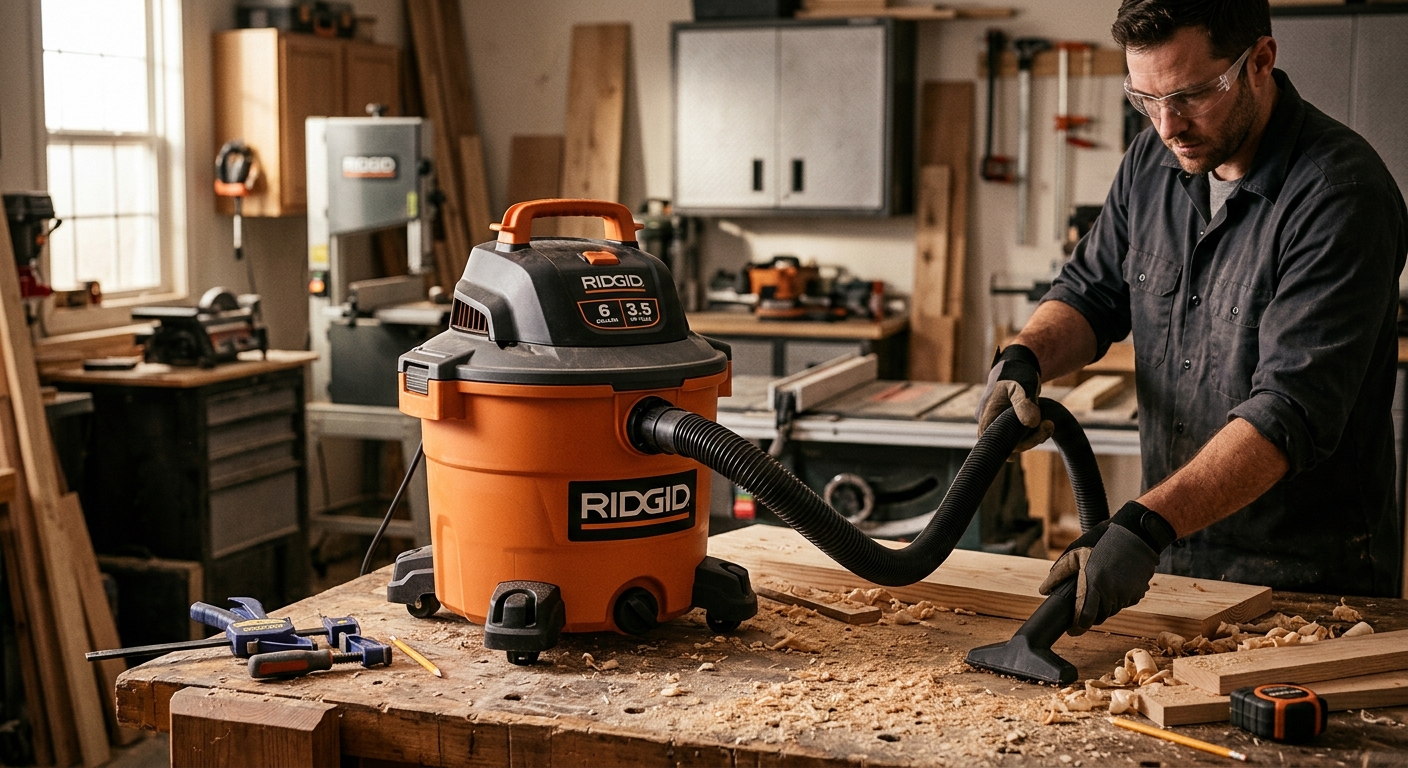
RIDGID’s shop vacuums are consistently rated among the best for home shop use. The 6-gallon model balances capacity with portability – large enough to run a full project session without emptying, small enough to move easily. The 3.5 HP motor provides strong suction for both wet pickup and fine dust collection. The cartridge filter handles standard dust; upgrade to the RIDGID HEPA cartridge for fine particle control from sanding and routing work.
- Pros: Strong 3.5 HP suction, 6-gallon capacity, upgradeable to HEPA filter, cart wheels, RIDGID quality
- Cons: Loud at full power, filter clogs faster with fine dust, 6 gallons fills quickly with shavings
Oneida Dust Deputy Cyclone – Best Dust Separator
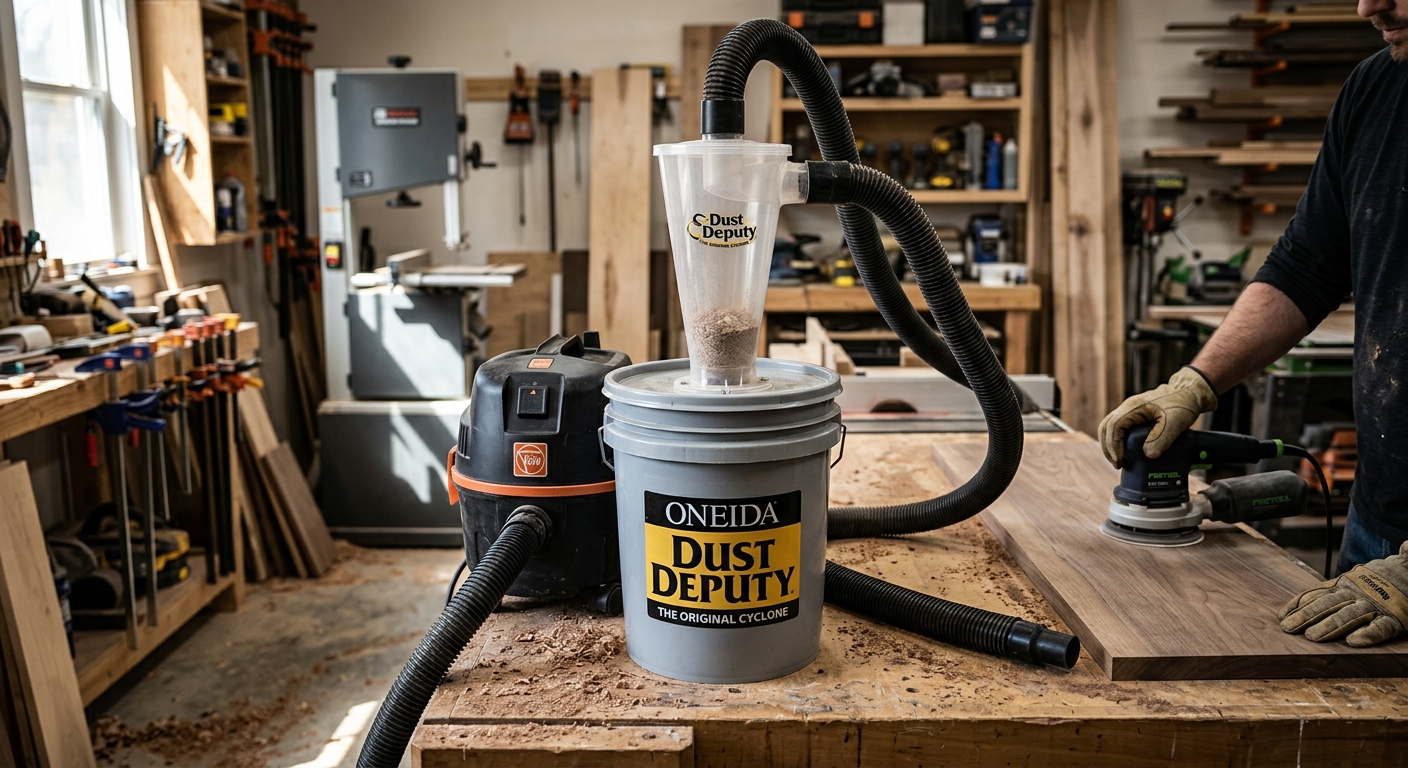
The Oneida Dust Deputy is a cyclone separator that fits between your dust source and shop vacuum. The cyclone action separates 99% of dust and chips into a separate collection bucket before anything reaches the shop vac’s filter. The result: your shop vac filter never clogs, suction stays consistent, and emptying frequency drops dramatically. A $50 Dust Deputy on a $100 shop vac outperforms a $200 shop vac running without separation.
- Pros: 99% separation keeps vac filter clean, consistent suction throughout session, extends filter life dramatically, affordable upgrade
- Cons: Adds a container to manage, takes up floor space, must be correctly connected to work properly
Jet DC-1100VX Dust Collector – Best 1.5 HP Dust Collector
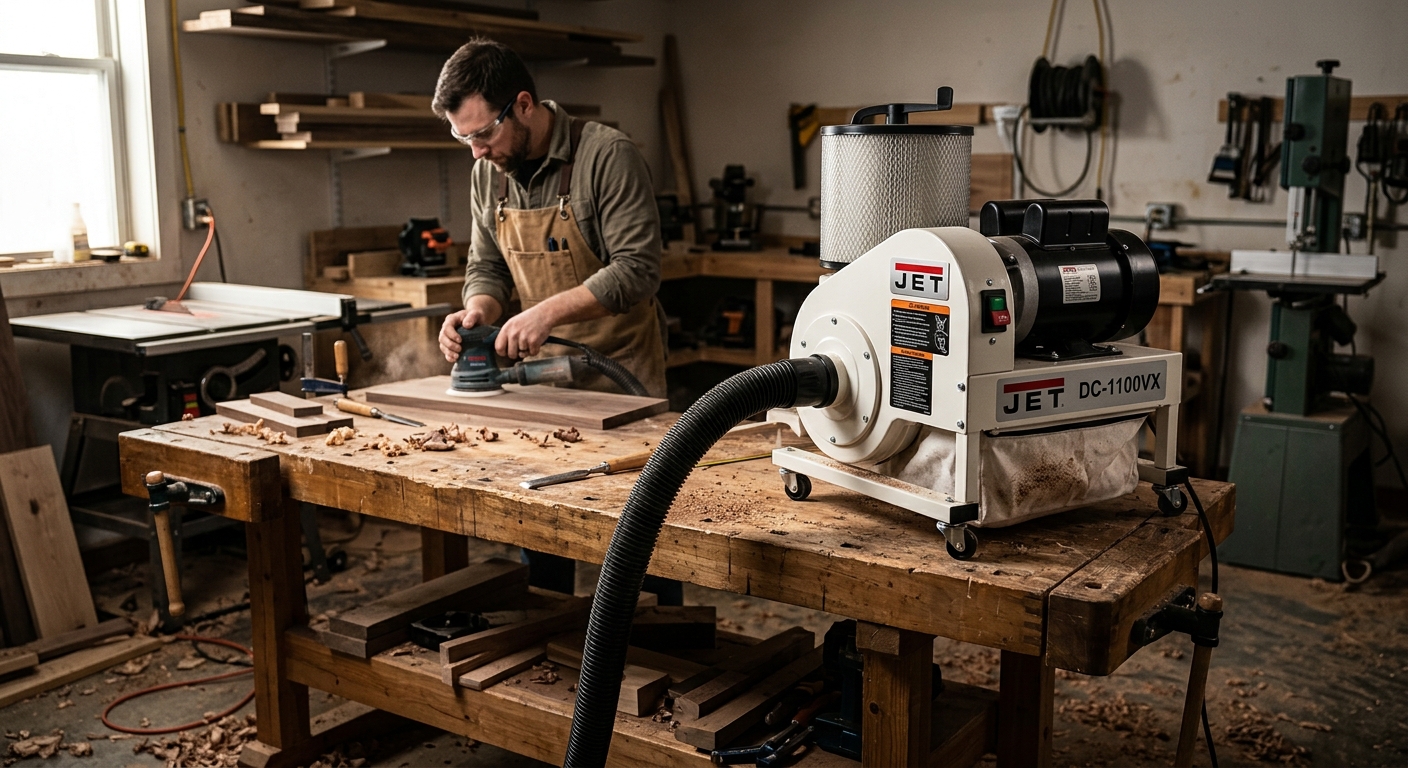
For shops with table saws, planers, jointers, and band saws, a dedicated 1.5 HP dust collector moves far more air than a shop vacuum. Jet’s DC-1100VX uses a 1.5 HP motor with 1,100 CFM flow rate – enough for 4-inch dust ports on most machine tools. The 2-micron filter bag captures fine dust, and the wide-mouth chip bag below collects large shavings separately. A dust collector transforms a dusty woodshop into a manageable work environment.
- Pros: 1100 CFM for machine tool use, 2-micron filter bag, separate chip and fine dust collection, powerful motor
- Cons: Large footprint, ductwork needed for whole-shop collection, louder than shop vacuums
Winix 5500-2 Air Purifier – Best Shop Air Filtration
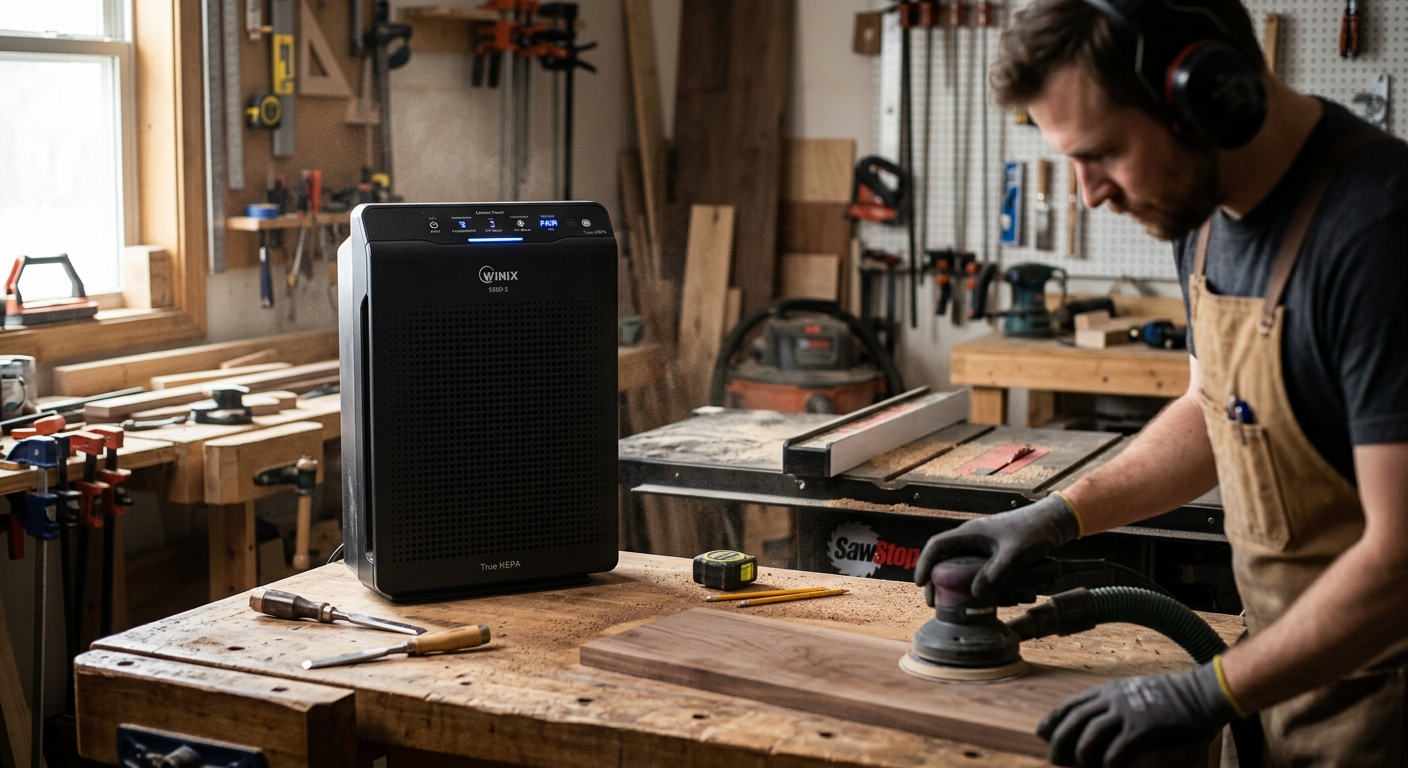
An ambient air filtration unit captures the fine dust that escapes collection systems and hangs in shop air for hours after work stops. The Winix 5500-2 uses a true HEPA filter that captures 99.97% of particles down to 0.3 microns – the size range where wood dust and finishing vapors are most hazardous. Running an air purifier continuously in the shop significantly reduces the ambient dust load that settles on finished surfaces and accumulates in lungs over time.
- Pros: True HEPA 0.3 micron capture, continuous filtration, quieter than dust collectors, addresses airborne fine dust
- Cons: Not a substitute for point-of-source dust collection, filter replacement cost, sized for rooms not large shops
DeWalt D27900 DustBuster – Best Portable Dust Control
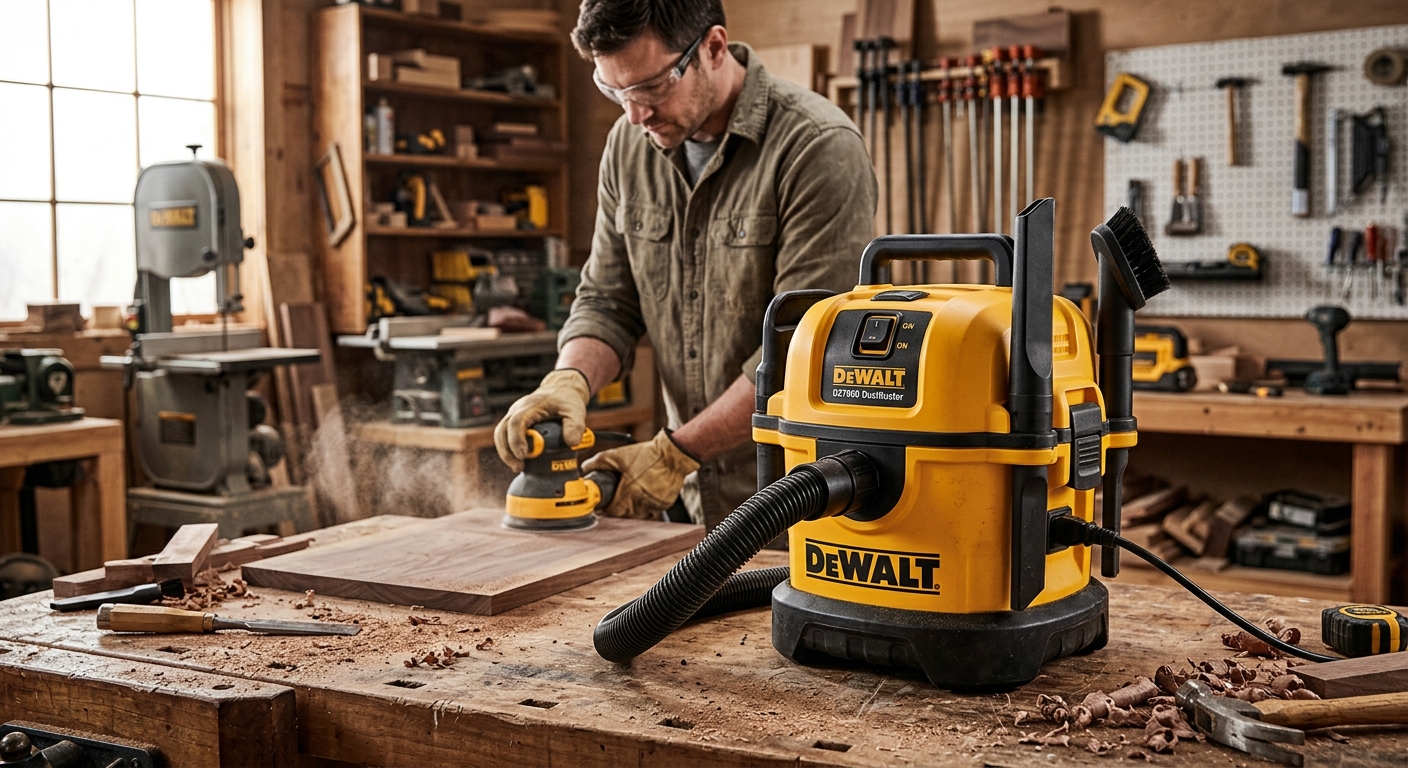
DeWalt’s DustBuster connects directly to random orbital sanders, trim routers, and other tools via adapter hoses, capturing dust at the source. Unlike a full shop vacuum, it’s sized to stay connected to a portable sanding tool throughout a session without requiring a separate wheeled unit following you around. Captures the fine sanding dust that most shop vacs miss from sander ports due to the higher pressure needed to pull dust at the tool.
- Pros: Portable tool-attached operation, captures fine sanding dust, lighter than full shop vac for portable use
- Cons: Limited capacity, not for large chip collection, requires frequent emptying during heavy sanding
Frequently Asked Questions
Do I need a dust collector or a shop vacuum? Both, ideally. Shop vacuums provide point-of-source collection at sanders and routers. Dust collectors handle high-volume chip collection from table saws, planers, and jointers. A shop vac alone can’t handle the volume from a planer; a dust collector’s wand connection doesn’t work as well for fine sanding dust.
What micron filter do I need for a shop vacuum? Standard cartridge filters are typically 5-20 microns – fine for chips but not wood dust. HEPA filters (0.3 micron) are necessary to capture fine sanding and routing dust. Non-HEPA shop vacs simply recirculate fine dust back into the shop air.
Is a 2-stage dust collector worth it? Yes – cyclone separators (like the Dust Deputy) extend filter life dramatically and maintain consistent suction throughout the session. Single-stage collectors clog their filters quickly with chips, reducing suction. A 2-stage or cyclone-equipped system is always worth the added complexity.
How do I connect my table saw to a dust collector? Table saws typically have a 4-inch dust port on the cabinet and/or blade guard. Connect 4-inch flex hose to the dust port and route to your dust collector’s inlet. Gate valves in the ductwork let you switch between machines when one collector serves multiple tools.
Bottom Line
RIDGID 6-gallon shop vac earns Best Overall for balancing capacity, power, and HEPA upgrade capability at an accessible price. Add a Oneida Dust Deputy cyclone separator and you have professional-quality dust collection for under $200 total. For machine tool shops, the Jet DC-1100VX dust collector is the step up that transforms the working environment.
Affiliate Disclosure: DIY Arsenal participates in the Amazon Associates Program and other affiliate programs. When you purchase through links on this site, we may earn a small commission at no additional cost to you. We only recommend products we have personally tested and genuinely believe in.