Best PVC Cement and Primer Kits
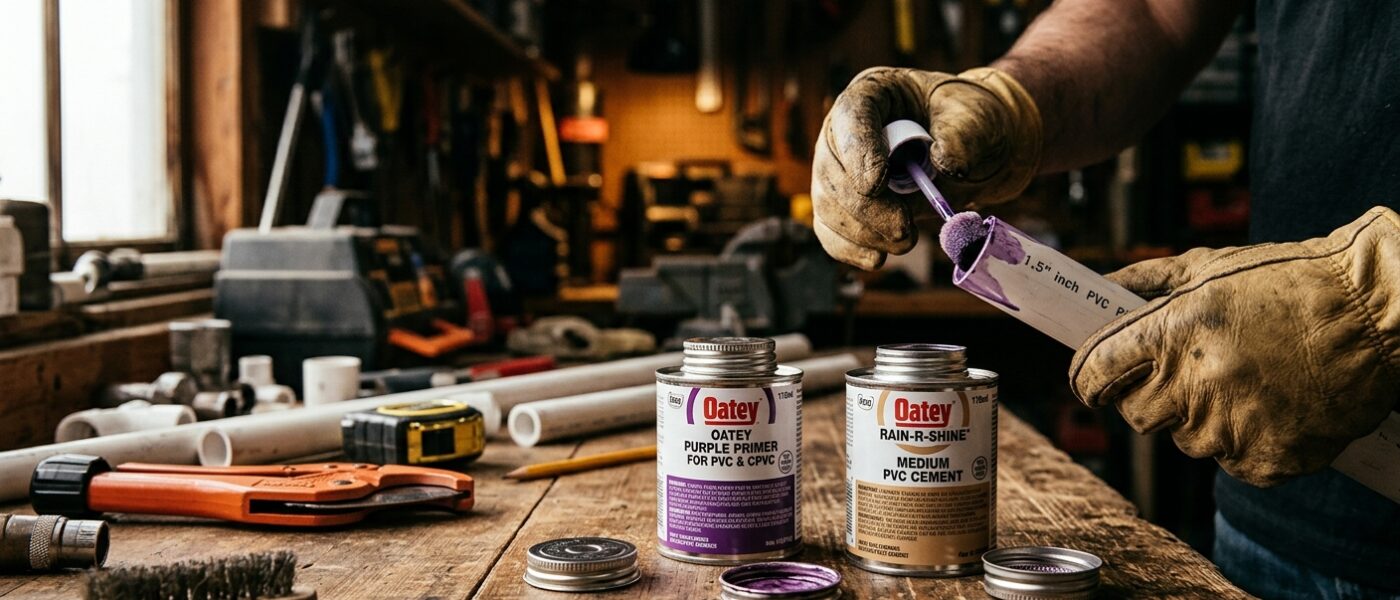
Oatey combo kits cover most residential PVC work — match cement viscosity to pipe size and never skip the primer on pressure systems.
As an Amazon Associate, we earn from qualifying purchases.
Getting PVC Joints Right the First Time
PVC cement isn’t glue in the traditional sense – it’s a chemical weld that softens both pipe surfaces and fuses them at the molecular level. The joint is often stronger than the pipe itself when done correctly. Done incorrectly – wrong primer, wrong cement viscosity, insufficient cure time, or poor fit – and you have a joint that looks fine until it fails under pressure. Understanding what you’re buying and how to use it correctly is essential for any PVC plumbing work.
Key Features to Look For
- Primer requirement: Most codes require purple primer before cementing PVC – it cleans the surface and chemically prepares it for the cement. Clear primer exists but the purple color gives inspectors visual confirmation it was used. Check your local code before substituting.
- Cement viscosity: Light-bodied cement (blue) works for 1/2″ to 2″ pipe. Heavy-body (green or red) is designed for 3″ and larger drainage pipe where more material fills the gap. Using light body on large diameter pipe risks voids in the joint.
- Temperature rating: Standard PVC cement works in temperatures above 40°F. For cold-weather applications, low-VOC or cold-weather cement formulas remain workable at lower temperatures. Important for outdoor installs in fall and spring.
- Applicator brush: The applicator should be roughly half the pipe diameter – too small and coverage is uneven, too large and you can’t control application inside the fitting socket. Kits with good-sized daubers or brushes save frustration.
- Combo kits: Primer and cement sold together are typically cost-effective and ensure chemical compatibility. Buy matching brands when possible.
Top Picks
Oatey 30259 PVC Cement and Purple Primer Combo
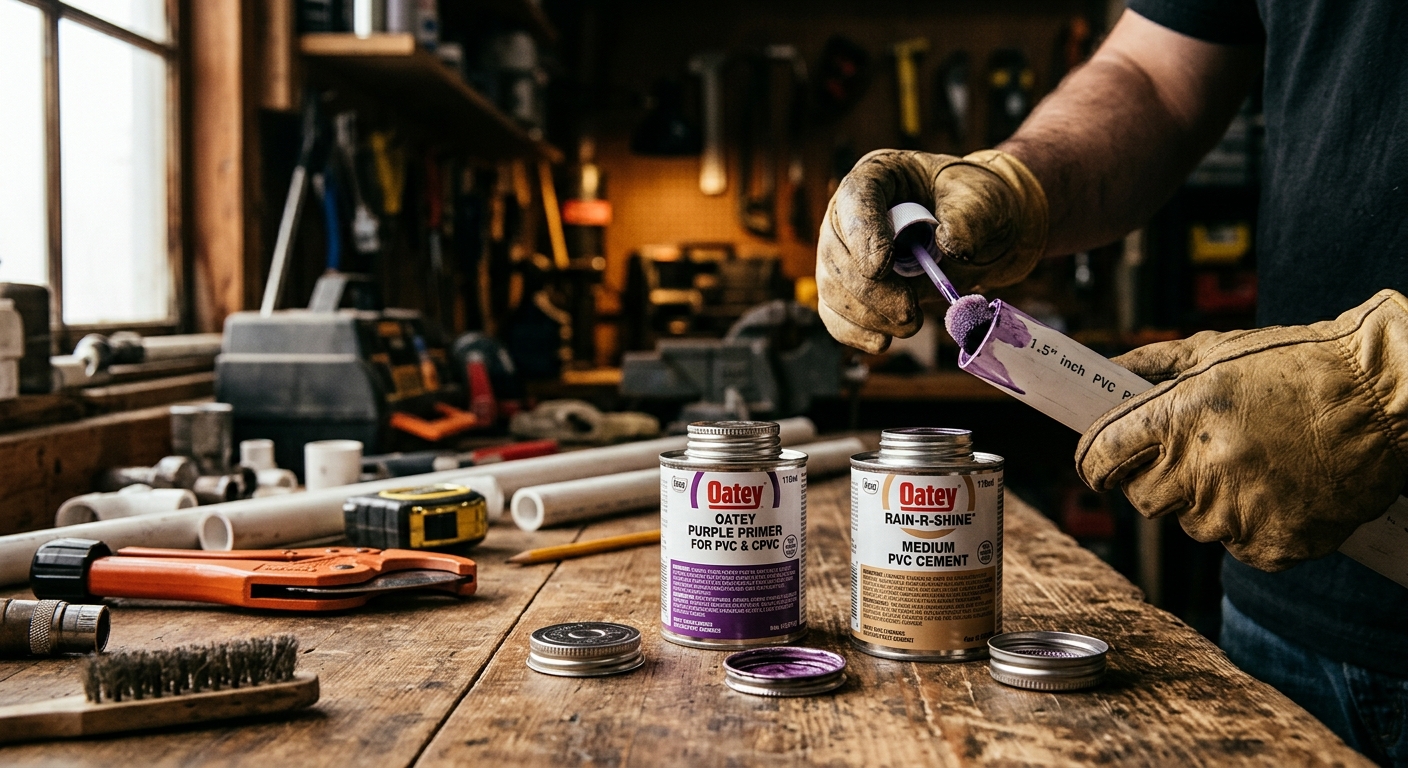
Oatey is the most widely trusted name in pipe cements, and their combo kit pairs regular-body clear cement with purple primer in an 8-oz set. The dauber applicators are well-sized for up to 2″ pipe, and the formulation meets ASTM D2564 standards. This is the kit most plumbers and serious DIYers stock in their trucks – straightforward, reliable, and widely available for touch-up purchases.
Christy’s Red Hot Blue Glue PVC Cement
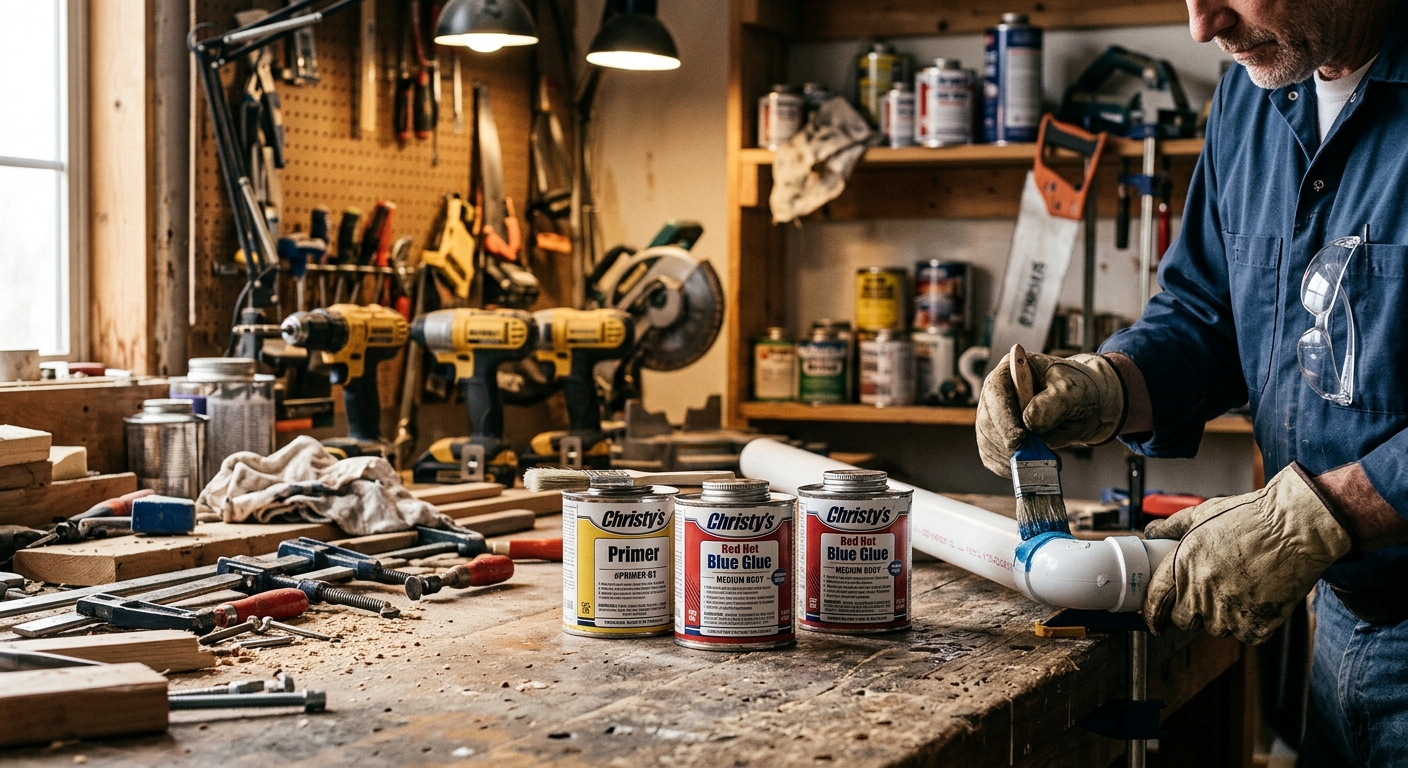
A faster-set, higher-strength cement popular in the irrigation and landscape world. The blue color distinguishes it from primer visually, and the fast-set formula reaches working pressure faster than standard cements – useful when you need to restore service quickly. Compatible with Christy’s primer; not recommended for pressure systems without following manufacturer cure times carefully.
Oatey Heavy Duty Clear PVC Cement
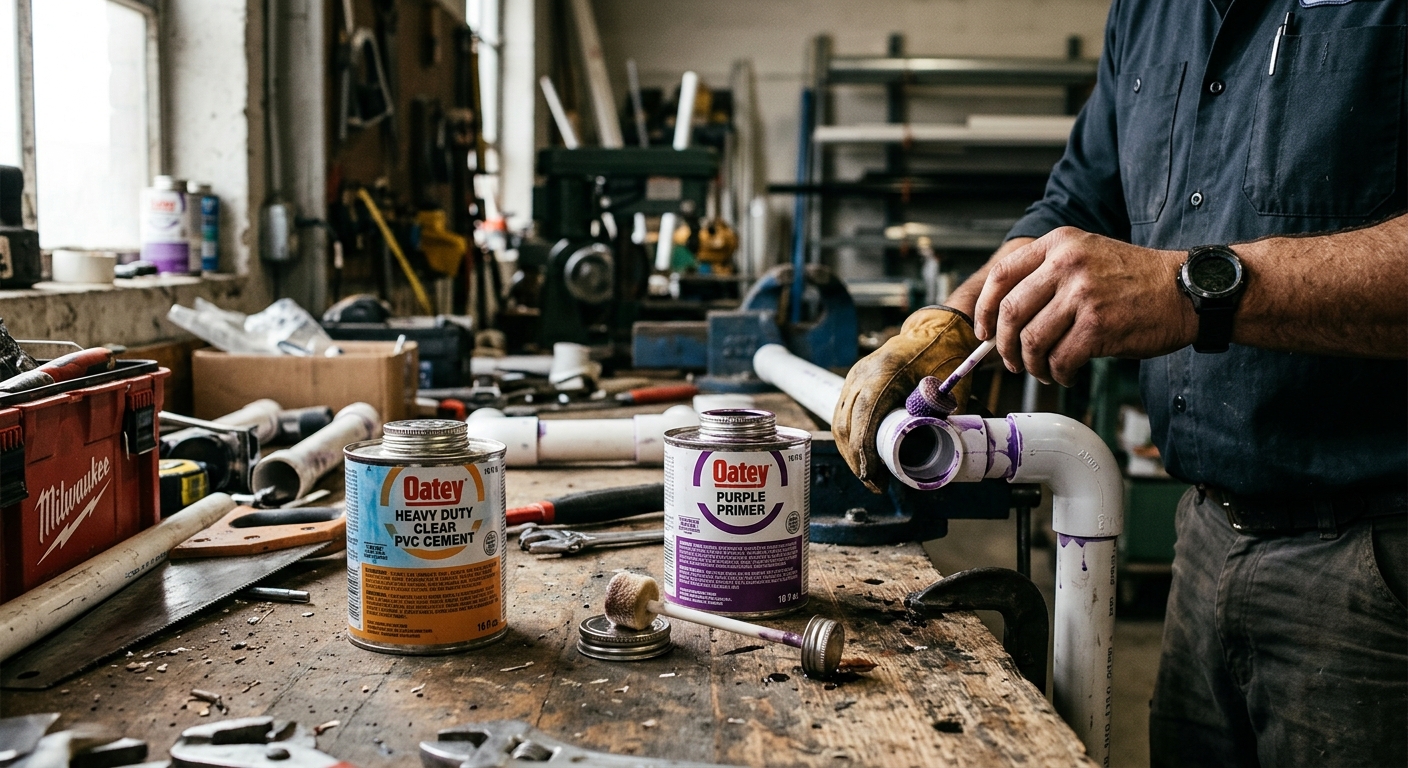
When you’re working with 3″ or 4″ drainage, waste, and vent (DWV) applications, heavy-body cement fills the looser fit tolerances of larger fittings more effectively than light-body formulas. The clear version avoids aesthetic issues on exposed decorative PVC, though purple primer is still recommended under it for code compliance.
Harvey’s 019050 Wet-R-Dry PVC Cement
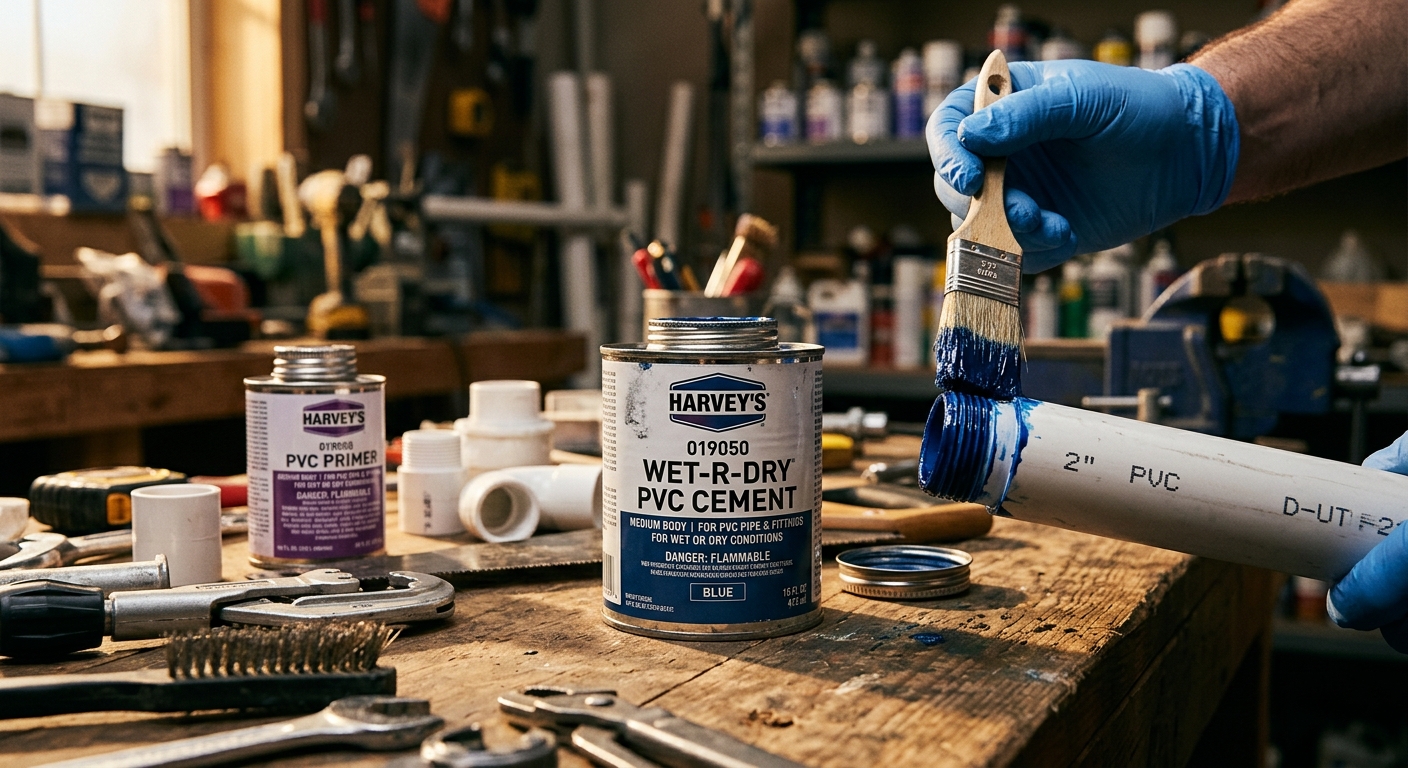
A specialty cement that bonds to wet or damp surfaces – particularly useful when you can’t fully dry a fitting area or need to make repairs on a system that can’t be completely drained. Works with standard purple primer and meets NSF 61 certification for potable water systems. More expensive than standard cements but invaluable in the right situation.
Frequently Asked Questions
How long should PVC cement cure before pressure testing?
For 1/2″ to 1-1/4″ pipe, Oatey recommends 15 minutes before handling at low pressure and 2 hours before full pressure testing at temperatures above 60°F. Larger pipe and lower temperatures require longer cure times – consult the cement can for the full cure table. Rushing this is one of the most common causes of failed PVC joints.
Can I use PVC cement on CPVC pipe?
No. CPVC requires CPVC-specific cement – using PVC cement on CPVC creates a weak bond that will fail. The two materials have different chemical compositions. CPVC cement is typically yellow; PVC cement is clear or colored. The pipe and fittings must also match (CPVC to CPVC, PVC to PVC).
What do I do if I get the joint slightly out of alignment before the cement sets?
You have a brief working time – typically 20-30 seconds – to rotate a joint after seating it. After that, the cement begins to cure and manipulation risks creating voids. If you miss alignment badly, you must cut the joint out and start over with new fittings. Pre-dry fitting and marking alignment before cementing prevents this problem.
Affiliate Disclosure: DIY Arsenal participates in the Amazon Associates Program and other affiliate programs. When you purchase through links on this site, we may earn a small commission at no additional cost to you. We only recommend products we have personally tested and genuinely believe in.