Best Pry Bars and Nail Pullers for Demo Work
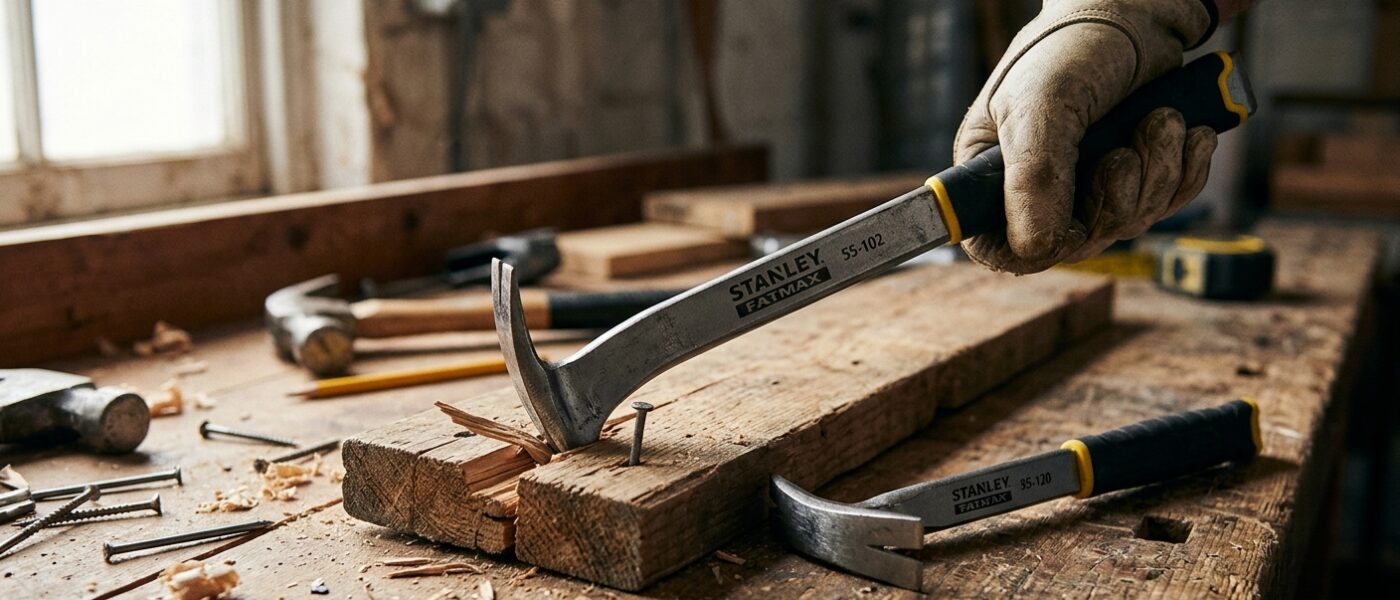
Stanley FatMax 3-piece covers all prying needs; add a cat's paw for flush-driven nails.
Pry bars and nail pullers are the tools of deconstruction – for removing trim without damage, pulling stubborn nails, separating boards, and demolishing structures that need to come down before new work begins. Having the right pry bar makes the difference between clean, salvageable material and a pile of split boards. Using the wrong bar – one too small for the leverage needed, or too aggressive for the material – destroys what renovation work requires to preserve.
This guide covers the range of pry bar types from cat’s paws (nail pullers) to full demolition bars, with recommendations for each application and guidance on when to use which tool.
How We Evaluate Pry Bars and Nail Pullers
Bar length and leverage: Pry bar length determines available leverage. Short bars (6–12 inches) work in tight spaces; full demolition bars (36–55 inches) provide maximum leverage for prying framing apart. Match bar length to the force required – using a 6-inch bar to pull a 3-inch sinker from framing is frustrating; using a 36-inch bar to remove finish trim is destructive.
Nail slot geometry: The nail-pulling slot at the tip must be narrow enough to engage nail heads securely and wide enough to accept the nails you’re removing. Finish nail heads (thin) require a fine slot; framing nail heads (flat, wide) require a wider jaw. Some bars include both a fine slot and a coarse slot on the same head.
Blade profile for trim removal: Thin, tapered blades insert behind finish trim without marring the wall or splitting the molding. Thicker, angled blades are for structural work where finish isn’t preserved. A good pry bar collection includes both types.
Handle material and padding: All-steel bars are most durable for heavy demo work. Bars with rubber or cushioned handles reduce hand fatigue for sustained use. For trim removal requiring fine control, a well-balanced steel bar with a flat profile works best.
Steel quality: Pry bars are subject to significant stress during bending operations. Quality bars use drop-forged or heat-treated steel that flexes under load without breaking. Cheap bars can shatter under sudden shock loads – a dangerous failure mode during demo work.
Top Picks
1. Stanley FatMax 55-099 – Best Demo Bar Set
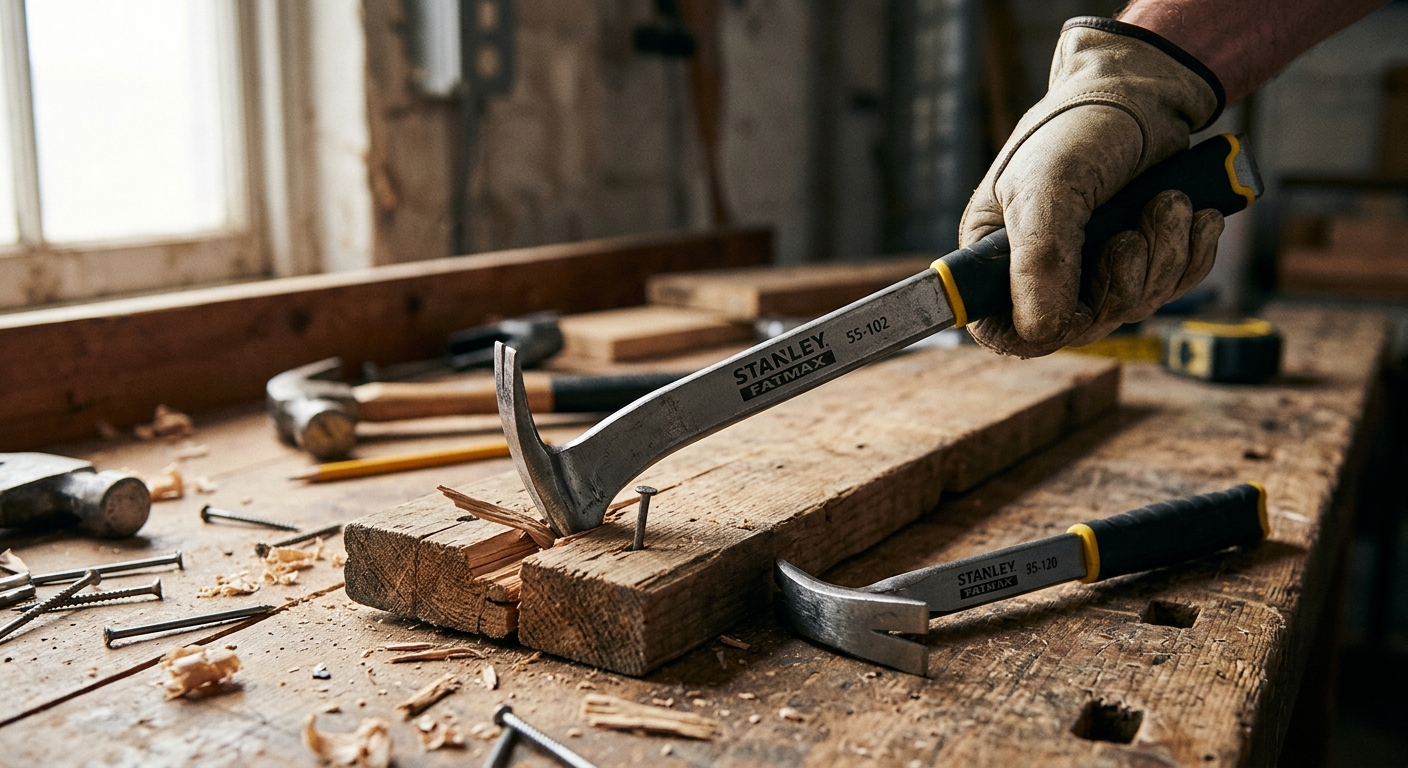
Stanley’s FatMax 3-piece pry bar set (8″, 15″, 21″) at $29–$39 is the best all-around pry bar value. The set covers all three primary use cases: the 8-inch for trim removal and prying in tight spaces, the 15-inch for general prying and moderate nail pulling, and the 21-inch for separating boards and heavier demo work. All three use bi-material handles and forged heat-treated steel. The graduated set eliminates the “I need a bar that’s between these two sizes” problem that single-bar ownership creates.
- Pros: Three sizes cover all use cases, forged steel, bi-material handles, good nail slot geometry
- Cons: Handles add width that limits tight-space access in some applications
- Price range: $29–$39 (3-piece set)
2. Estwing EWB-21W – Best Wrecking Bar
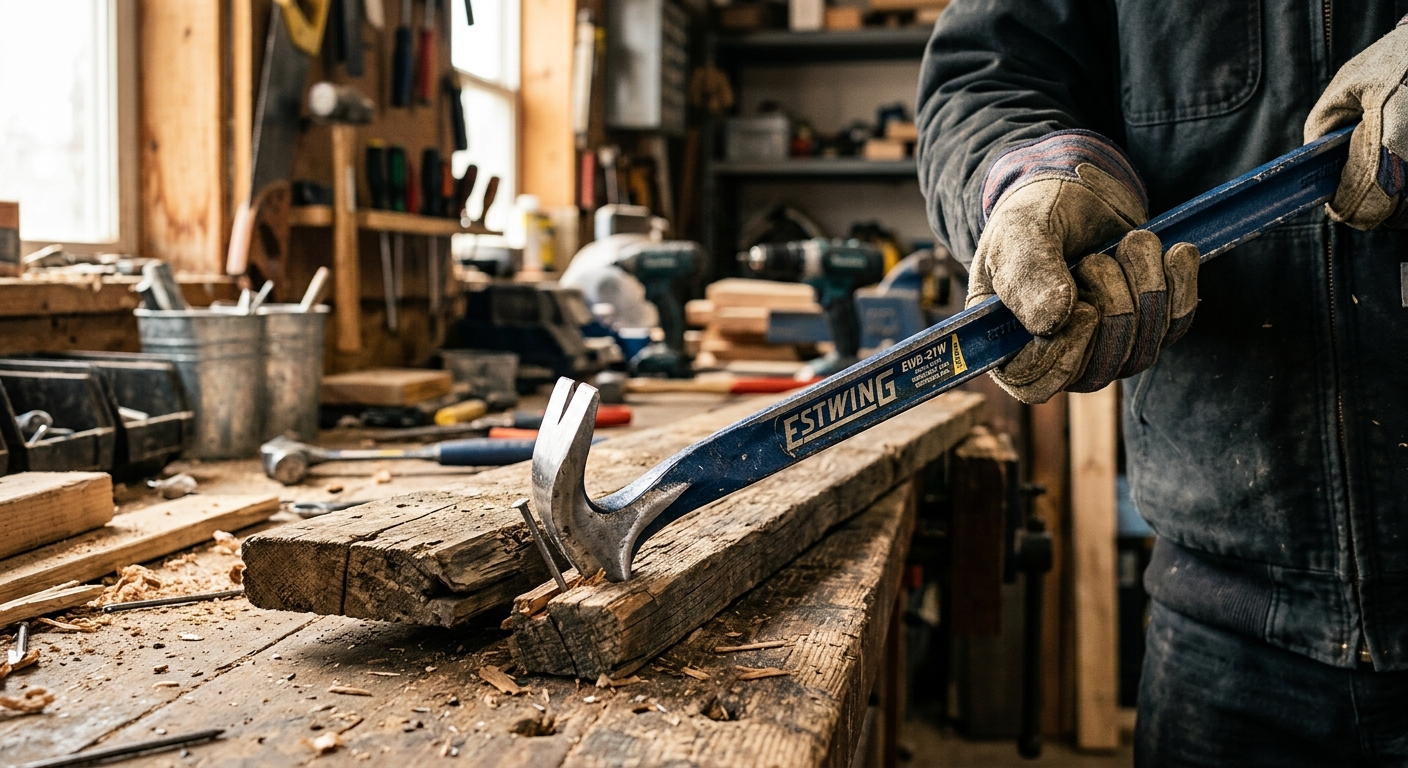
Estwing’s 21-inch wrecking bar at $29–$39 is the standard recommendation for demo work requiring significant leverage. Its one-piece forged steel construction (the same philosophy as their hammers) eliminates handle failure under heavy prying. The flat nail slot pulls finish and framing nails alike; the angled crow foot at the opposite end handles heavier structural prying. Recommended for anyone who does regular deconstruction, deck removal, or wall framing demo.
- Pros: One-piece forged steel, excellent leverage, pulls both finish and framing nails, American-made
- Cons: No handle padding – steel-on-hand in cold weather is uncomfortable, single length limits versatility
- Price range: $29–$39
3. DEWALT DWHT55524 Pry Bar – Best For Finish Trim
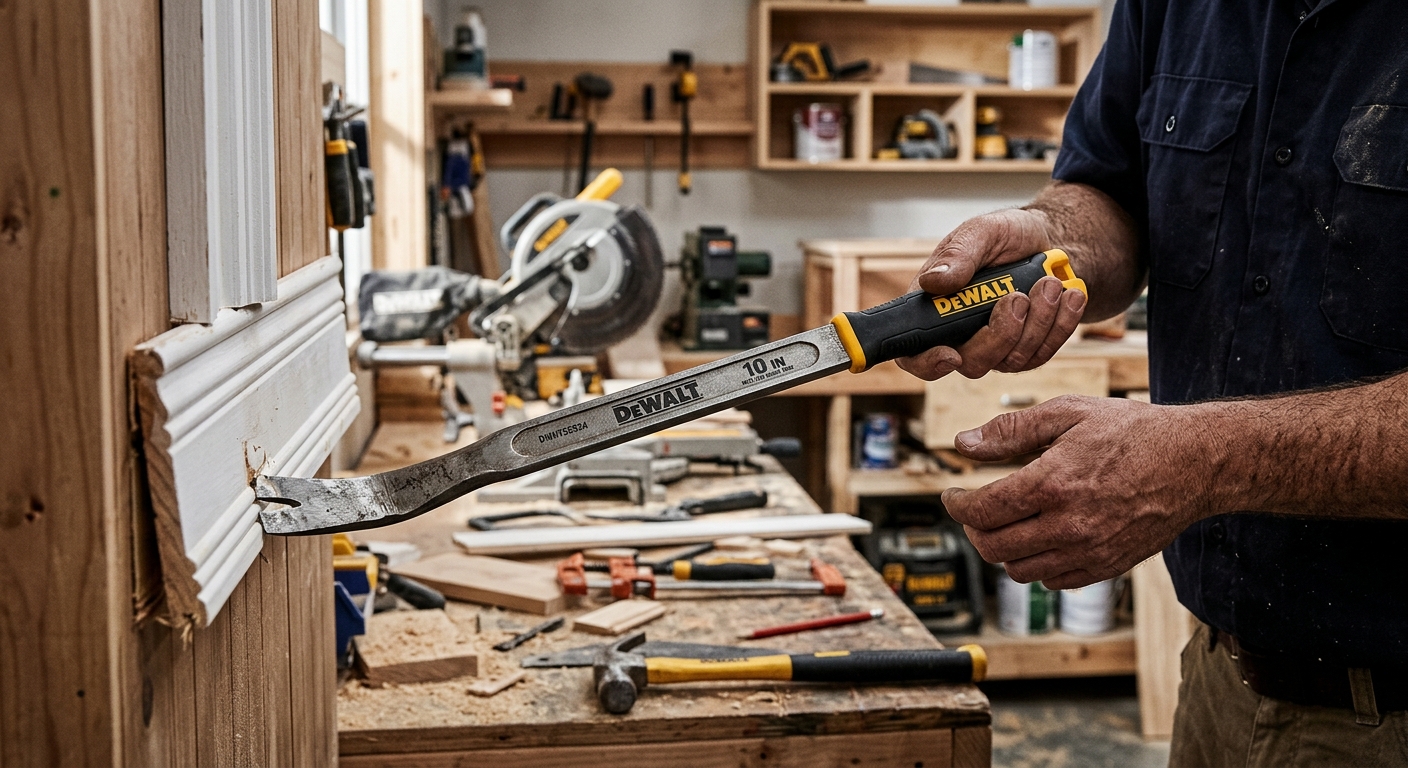
DeWalt’s 8-inch Wonder Bar-style pry bar at $9–$14 is the best tool specifically for removing finish trim, baseboard, and door casing without damage. Its thin, beveled blade slips behind trim without splitting it; the curved head rocks against the wall to pry gently. The slot pulls finish nails cleanly. This is not a demolition tool – it’s a precision trim removal tool, and at under $15, it belongs in every DIYer’s toolbox.
- Pros: Thin blade ideal for trim removal, curved head for controlled prying, low price, essential tool
- Cons: Too small for heavy demo work, limit to finish and light prying applications
- Price range: $9–$14
4. Vaughan Cat’s Paw Nail Puller – Best Nail Puller
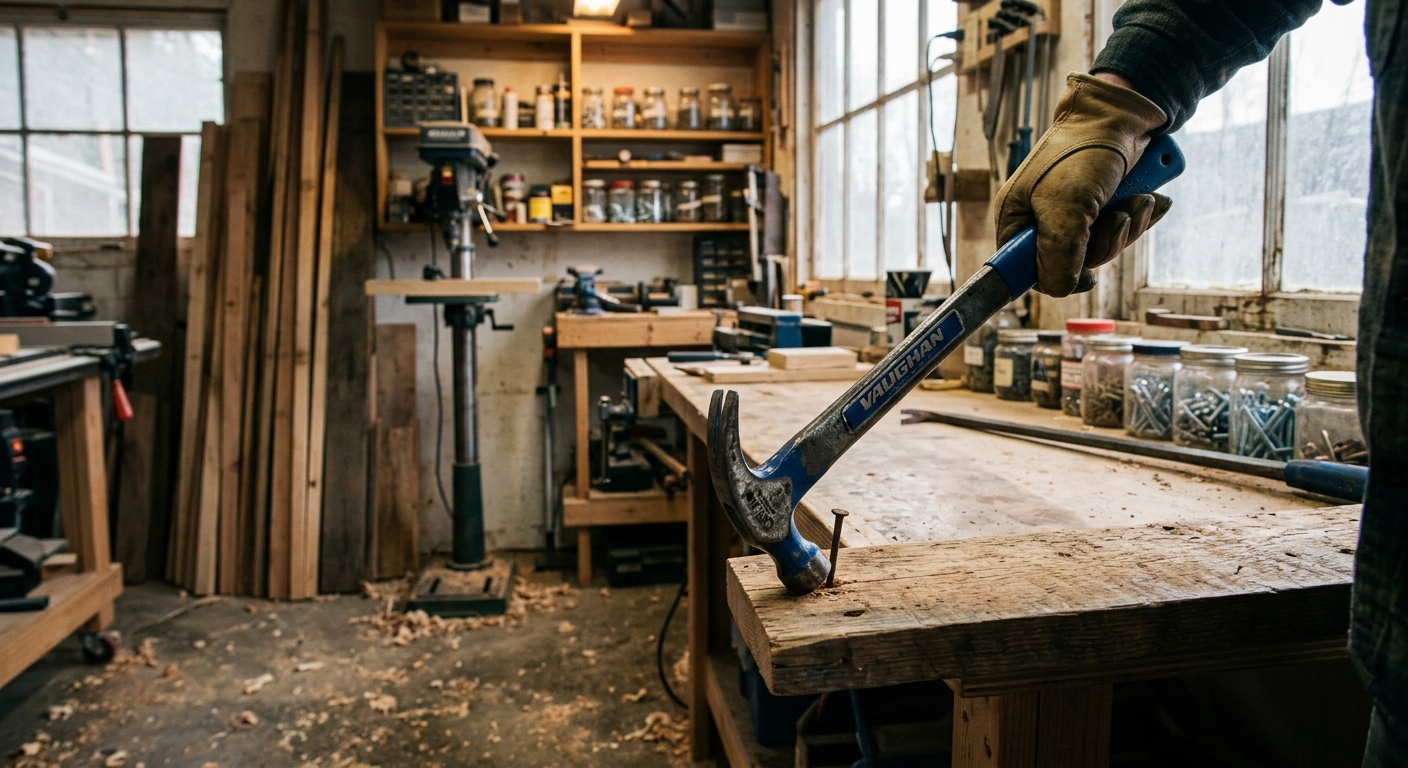
A cat’s paw nail puller has a curved, pointed tip specifically designed to dig under a nail head that’s been driven flush or below the wood surface – the situation where standard pry bars have nothing to grip. Vaughan’s cat’s paw at $9–$15 drives the hooked tip under a nail head with a hammer strike, then levers the nail out. Essential for removing nails that are driven home and can’t be reached from above. The best tool for this specific task has no alternative.
- Pros: Only tool that reaches flush-driven nails, hammer-driven tip, inexpensive, essential specialty
- Cons: Scars the wood surface around the nail (not for finish work where surface must be preserved)
- Price range: $9–$15
5. Dalluge T-DEM2 – Best Demolition Bar
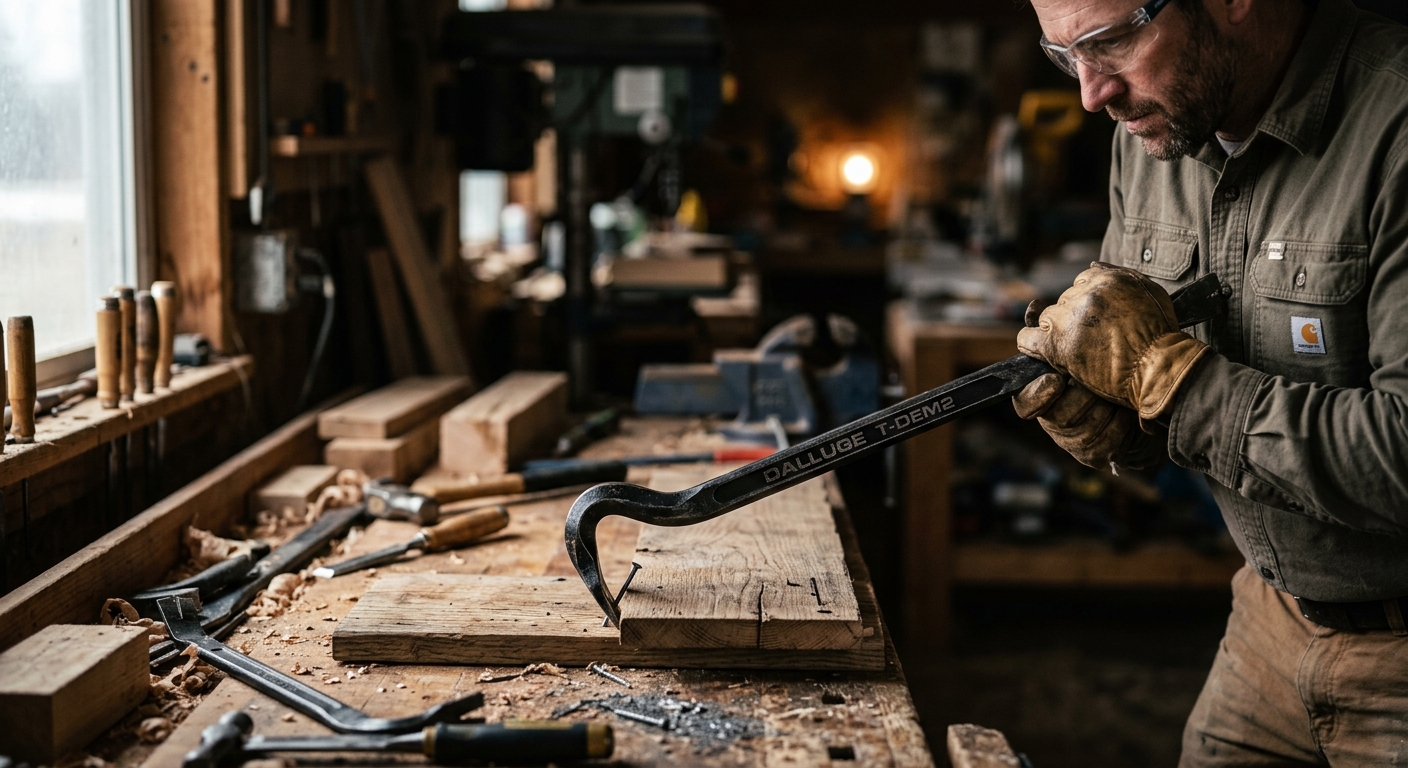
For serious demolition work – removing subfloor, tearing out wall framing, separating heavy structural members – a full-length demolition bar provides leverage that no shorter bar can match. Dalluge’s 36-inch forged demolition bar at $39–$59 handles the heaviest prying tasks without bending. The angled shoe end provides a stable pivot point against structural material. For occasional use, a standard wrecking bar suffices; for extended demo projects, the longer bar saves significant effort.
- Pros: Maximum leverage for heavy demo, 36-inch length, durable forged steel, angled shoe for stable prying
- Cons’:’Heavy at 5+ lbs, overkill for light prying and trim removal, specialty use only
- Price range: $39–$59
FAQ
How do I remove baseboard without damaging it?
Insert a thin putty knife or utility knife blade between the baseboard and wall to break the paint seal first. Then insert a thin pry bar (DeWalt 8-inch Wonder Bar) behind the baseboard using the putty knife to protect the drywall face. Pry gently, working along the length of the board – pop it slightly free in the middle, then lever the ends out. Pull nails through the back of the trim rather than hammering them back through the face – this minimizes surface damage.
What’s the difference between a pry bar and a crowbar?
Crowbars (or wrecking bars) are typically heavier, straight or slightly curved bars without a handle – designed for maximum force in demolition. Pry bars are flatter, often have handles, and are designed for more controlled prying applications including trim removal. In practice, the terms are often used interchangeably, but for finish work, a flat pry bar is the correct tool; for demo, a heavier wrecking bar or crowbar provides more efficient leverage.
Can I use a pry bar to remove hardwood flooring?
Yes, with the right technique. Use a floor scraper or flooring bar (a wide, flat bar designed specifically for this purpose) rather than a standard pry bar. Insert the bar under a board at a nail location, lever the board up. Work from the baseboard outward, removing boards one at a time. Alternatively, for floating floors, the first board row is removed manually and subsequent rows release more easily. A knee kicker and flooring bar combination is the professional approach for tongue-and-groove hardwood removal.
Bottom Line
Every DIYer needs two pry bars: a thin, short bar (8-inch Wonder Bar style) for trim removal and a mid-length bar (15–21 inch) for general prying. The Stanley FatMax 3-piece set covers all three sizes at an excellent price. Add a cat’s paw nail puller for flush-driven nails – nothing else reaches them. Serious demo workers should add a 36-inch demolition bar for heavy structural prying where the shorter bars run out of leverage.
Affiliate Disclosure: DIY Arsenal participates in the Amazon Associates Program and other affiliate programs. When you purchase through links on this site, we may earn a small commission at no additional cost to you. We only recommend products we have personally tested and genuinely believe in.