Best Plungers – Cup, Flange, and Accordion for Clogs
The Korky 99-4A is the best toilet plunger available and the first tool to buy for any home; pair it with an OXO Good Grips sink plunger and you have proper plunging tools for every fixture.
As an Amazon Associate, we earn from qualifying purchases.
A plunger is the first tool to reach for when a toilet, sink, or drain clogs – and using the wrong type of plunger for the wrong fixture is one of the most common plumbing mistakes homeowners make. There are three distinct types, each designed for a specific fixture geometry, and using a flat cup plunger on a toilet is significantly less effective than using the correct flange plunger. This guide ensures you own the right plunger before you need it.
Types of Plungers
Cup Plunger (Standard/Flat-Bottom)
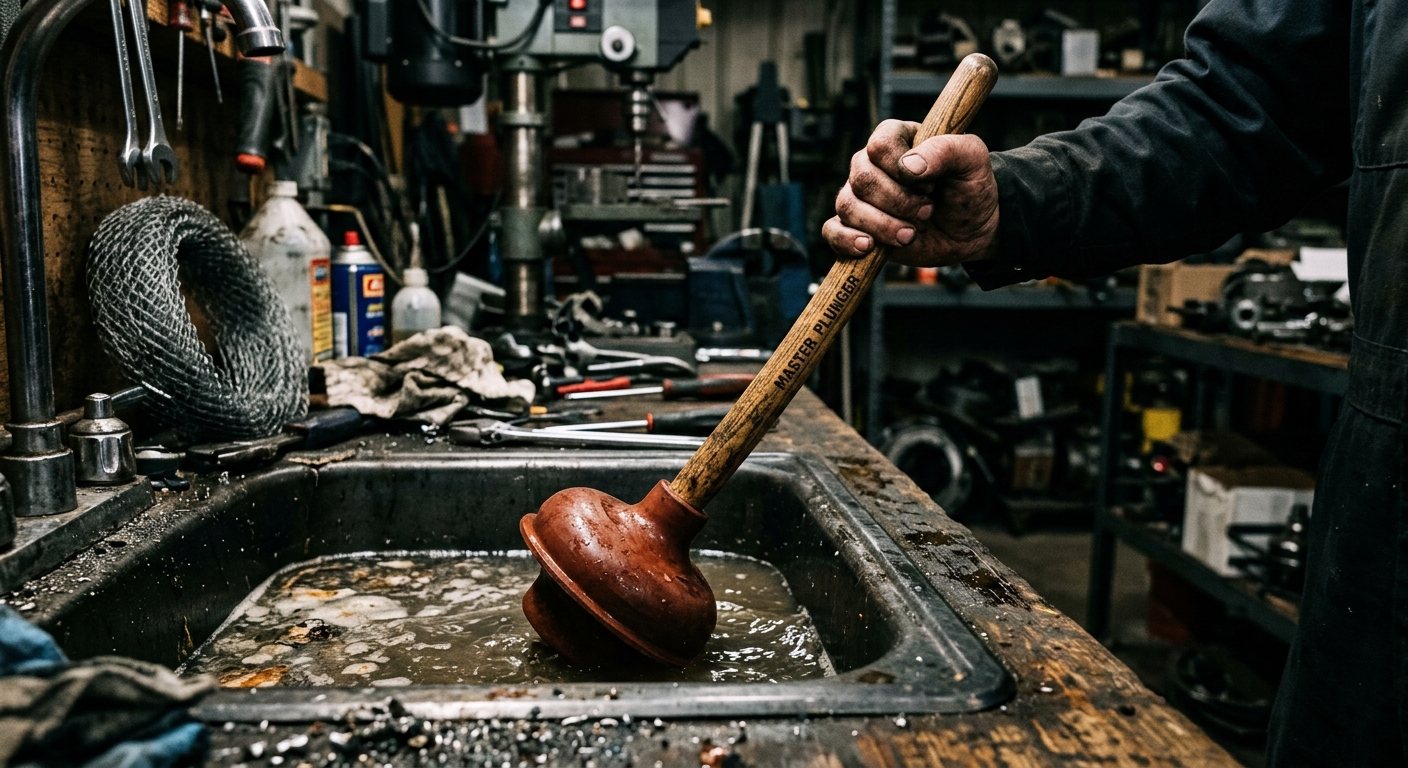
The classic red rubber cup on a stick. The flat bottom creates suction against flat or slightly curved drain surfaces – the correct tool for kitchen sinks, bathroom sinks, and tub drains where the drain opening is in a flat or gently curved surface. Using a cup plunger on a toilet is ineffective because the cup cannot seal against the toilet trap opening.
Flange Plunger (Toilet Plunger)
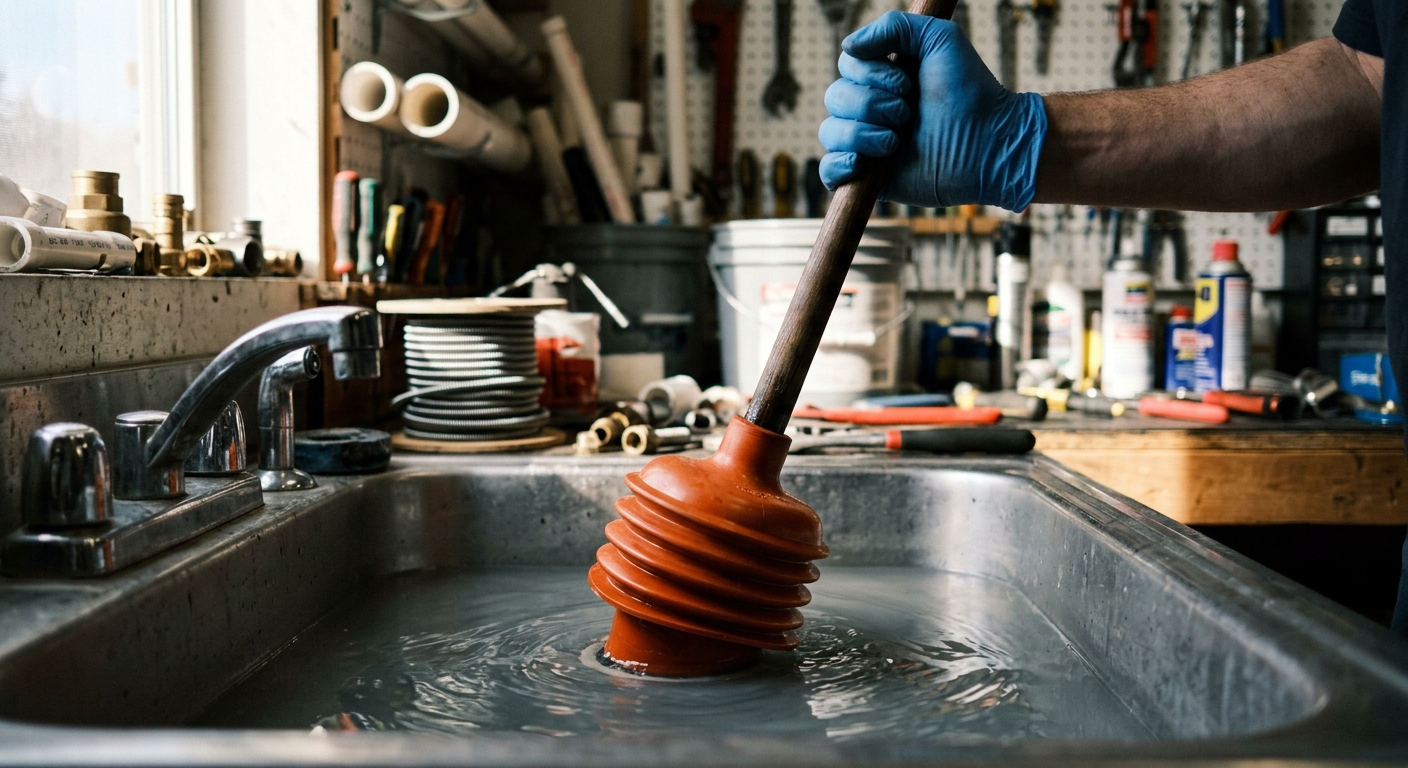
A cup plunger with an extended rubber “flange” (a smaller cup protruding from the center of the main cup) that fits into the toilet drain opening. The flange seals against the irregular geometry of the toilet drain, allowing the plunger to create effective suction against a clog in the toilet trap. Always use a flange plunger on toilets.
Accordion (Bellows) Plunger
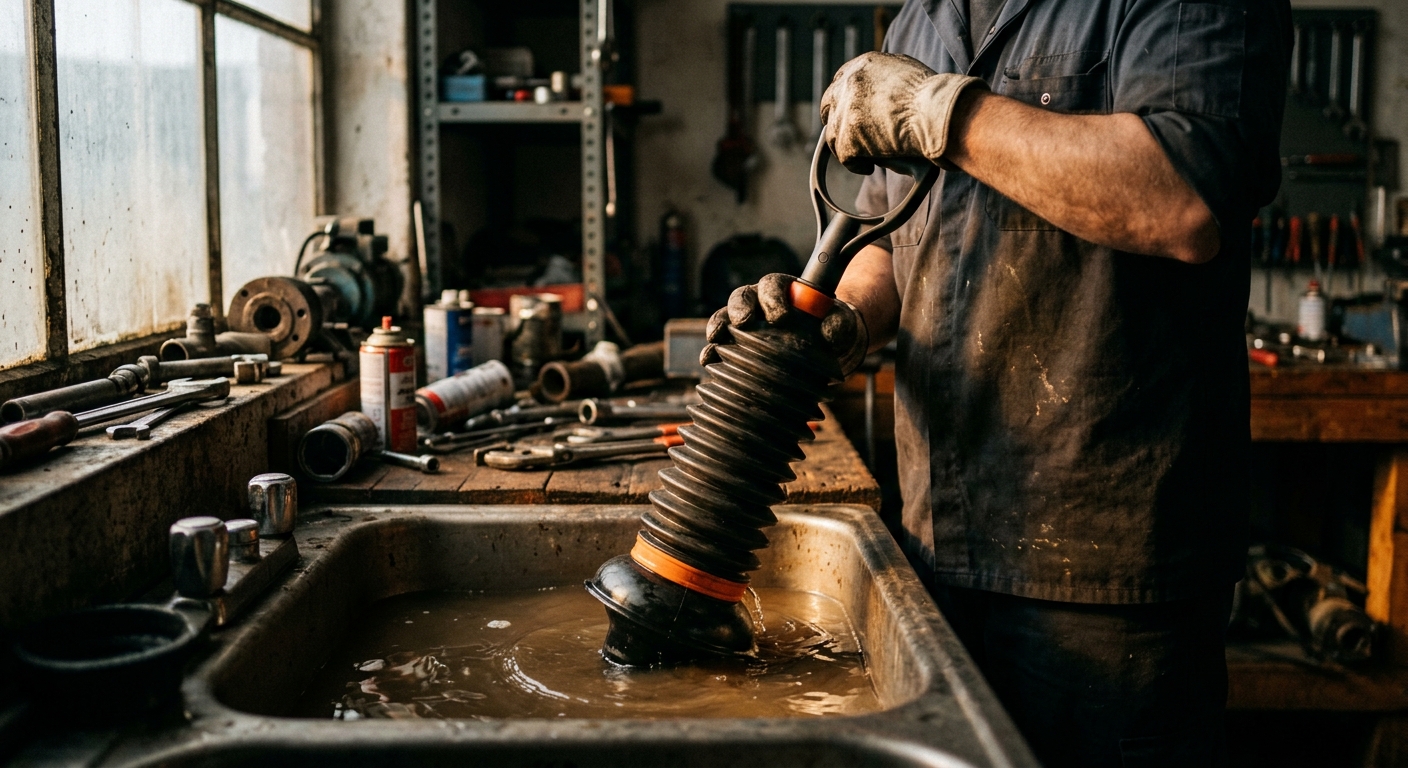
A hard plastic accordion-shaped bellows that generates more pressure per stroke than a rubber cup design. Very effective on stubborn toilet clogs that a flange plunger cannot clear, but harder to use (requires two hands and more precise positioning) and less versatile across different fixture types.
Key Features to Look For
Handle Length
Longer handles provide more leverage and keep your hands further from the drain. For toilet work, a 20-inch handle is the minimum comfortable length. For under-sink drains where the work is at waist height, shorter handles are acceptable.
Rubber Quality
Premium vulcanized rubber maintains flexibility and sealing ability longer than low-quality rubber that hardens and cracks. A cracked or stiff plunger cup cannot seal against the drain and produces no suction – it is functionally useless.
Flange Design
On flange plungers, the flange must be the right diameter to fit into a standard toilet drain (approximately 2 inches diameter). Too wide and it will not enter the drain; too narrow and it will not seal. Most quality flange plungers are sized correctly for standard toilets.
Our Top Picks
1. Korky 99-4A Max Performance Toilet Plunger
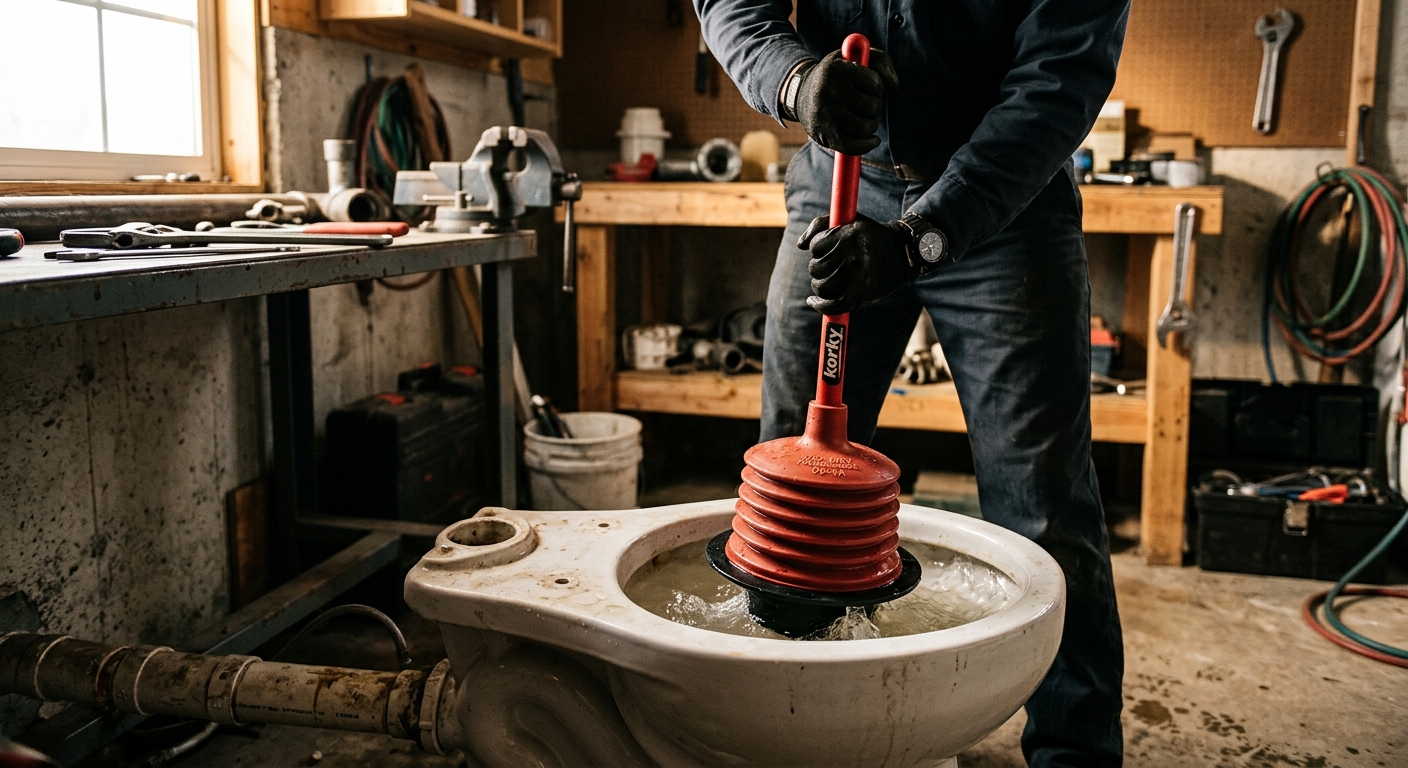
The most recommended toilet plunger in consumer reviews and among plumbers. The Korky uses their proprietary rubber formulation (which resists chemical exposure and maintains flexibility), a flange design that fits standard toilet drains precisely, and a comfortable T-bar handle that provides excellent leverage. Significantly more effective than standard rubber cup plungers on toilets.
2. Ridgid 56593 Toilet Plunger
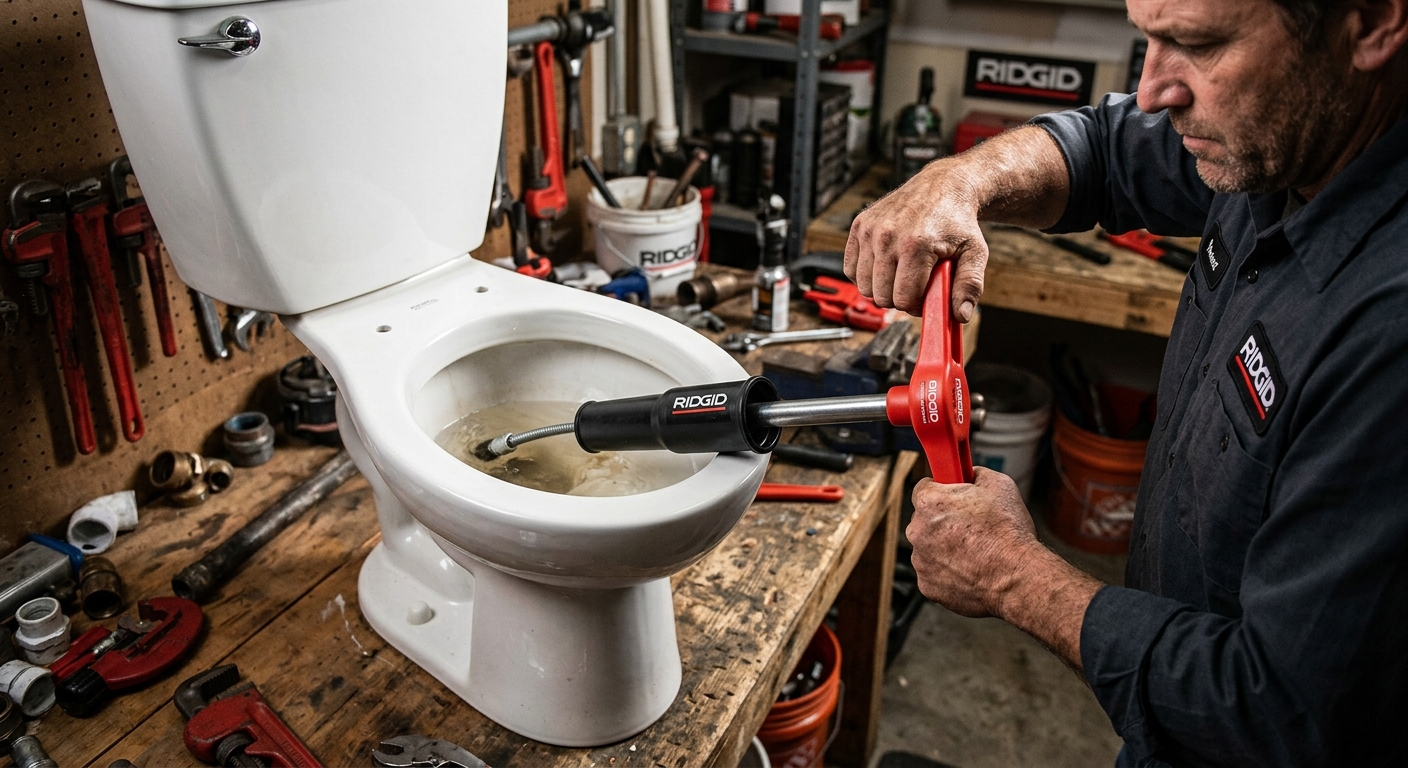
Ridgid extends their plumbing tool quality to plungers. The rubber formulation is excellent, the flange fits standard toilet drains, and the handle is comfortable. A professional-grade option that holds up to repeated use without the rubber deteriorating.
3. OXO Good Grips Sink Plunger
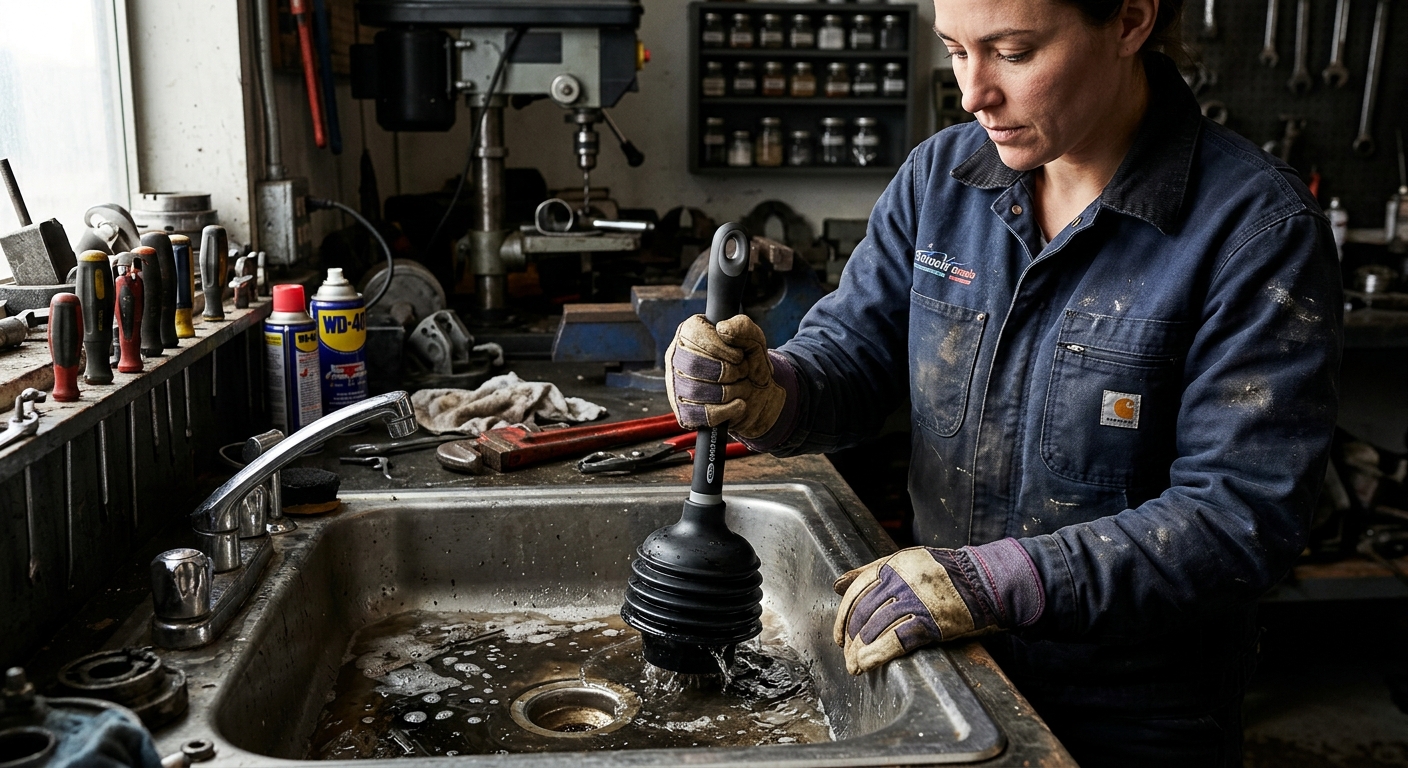
The best cup plunger for sink and tub drains. The OXO features a high-quality rubber cup that maintains its shape and sealing ability, a drip-free stopper that keeps the cup empty when set down, and a comfortable non-slip handle. The compact size fits under sinks for storage. OXO quality extends to their plumbing tools.
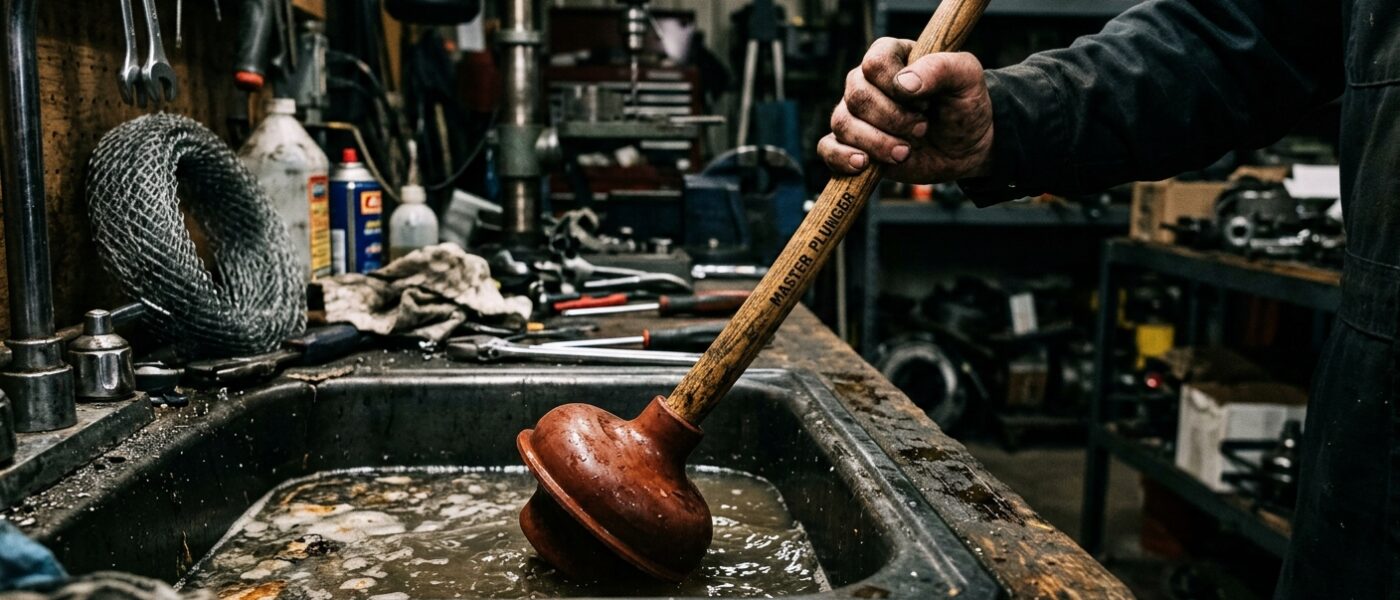
4. Master Plumber 843-168 Bellows Plunger
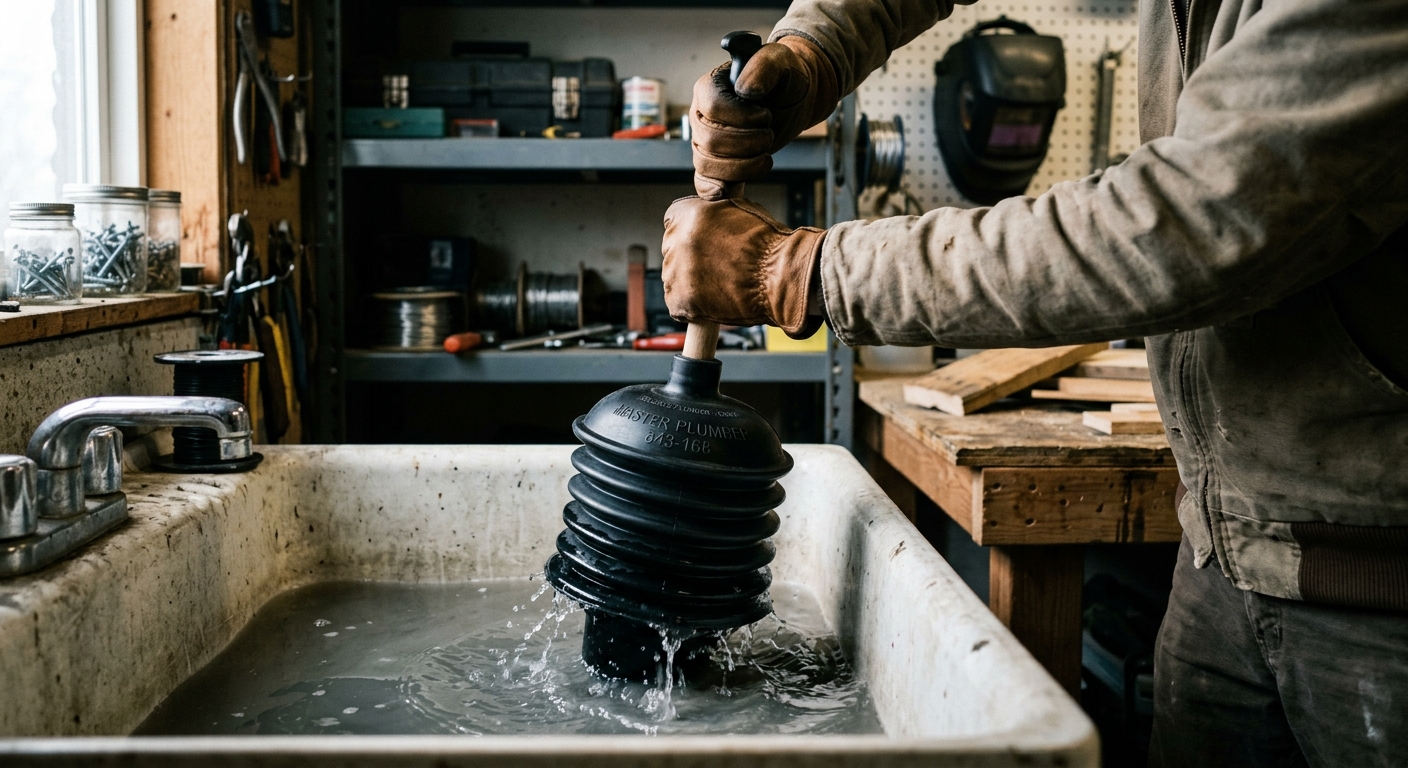
The accordion bellows plunger for stubborn toilet clogs that a standard flange plunger cannot shift. The hard plastic bellows generates significantly higher pressure per stroke than rubber designs. Harder to use but noticeably more effective on difficult clogs. A good second plunger to own alongside the Korky flange plunger.
5. Neiko 60166A Heavy Duty Plunger Set (Sink and Toilet)
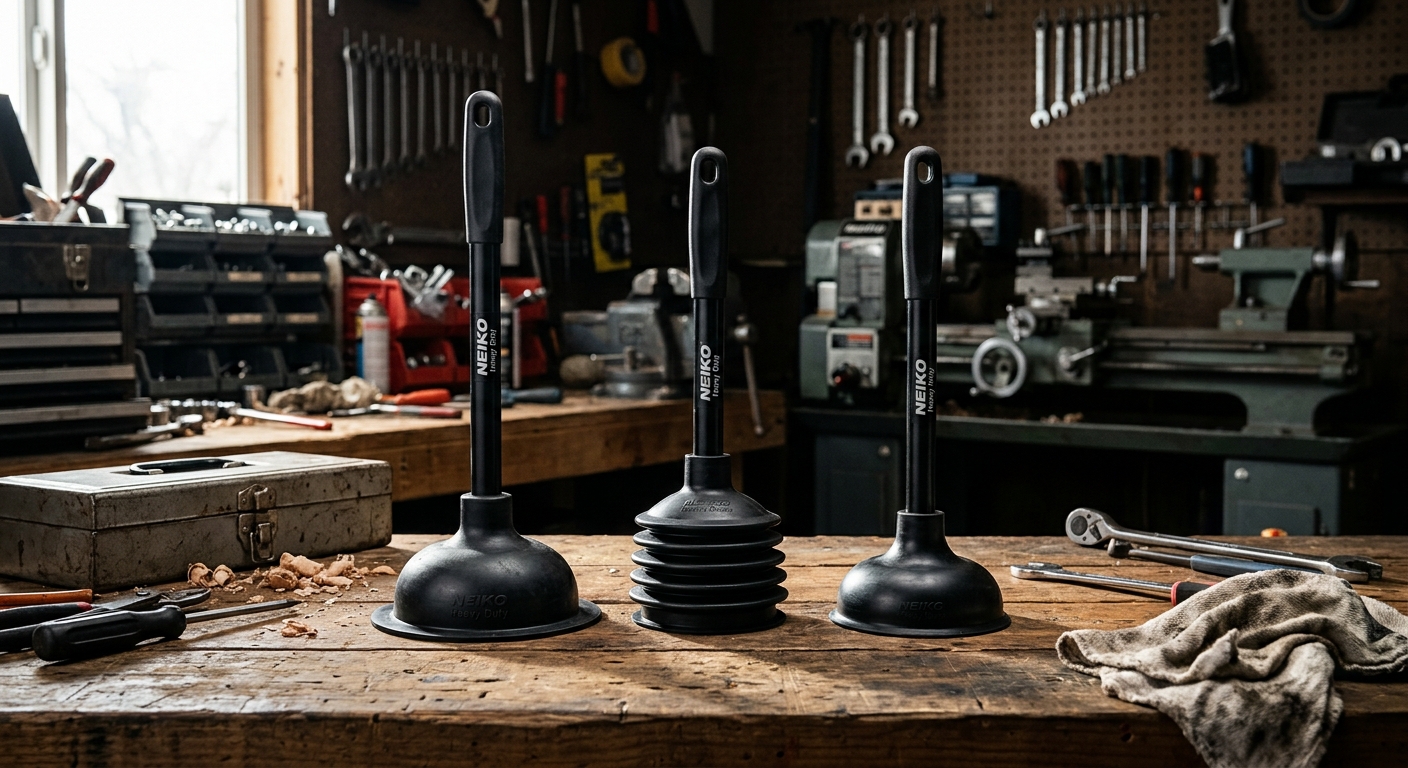
For those who want both a cup plunger and a flange plunger in one purchase: the Neiko set includes both types in a hygienic caddy that keeps them off the floor and together for storage. Both tools are quality items. An efficient way to ensure you have the right plunger for any fixture.
Plunging Technique
- Ensure there is enough water in the bowl or sink to cover the plunger cup – plunging requires water to transmit pressure, not air.
- For toilet: insert the flange into the drain opening, then press the cup down to seat it around the flange.
- Press firmly to seat the cup, then pull up sharply (the suction stroke) rather than pushing down hard. The upward pull creates the suction that dislodges the clog.
- Maintain the seal and alternate moderate downward pushes with firm upward pulls – 10 to 15 cycles on each attempt.
- If the clog does not clear after three attempts, proceed to a drain snake.
FAQ
Why is my plunger not working on the toilet?
Most likely: you are using a flat cup plunger on a toilet (wrong tool), the flange is not sealed in the drain (incorrect positioning), or there is not enough water in the bowl to transmit pressure. Fix the tool, positioning, and water level and retry.
How do I clean a plunger after use?
Rinse with hot water in the toilet bowl or tub. Spray with a disinfectant cleaner (bathroom cleaner, diluted bleach). Let air dry before storing in the caddy. Do not share plungers between fixtures – keep separate toilet and sink plungers.
What is the flange on a toilet plunger for?
The flange (the inner rubber extension) fits into the toilet drain trap opening. This creates a seal against the drain geometry that the outer cup alone cannot achieve on a toilet. Without the flange sealing in the drain, the plunger produces no effective pressure at the clog location.
Affiliate Disclosure: DIY Arsenal participates in the Amazon Associates Program and other affiliate programs. When you purchase through links on this site, we may earn a small commission at no additional cost to you. We only recommend products we have personally tested and genuinely believe in.