Best Plunger Sets – Cup, Flange, and Accordion Styles
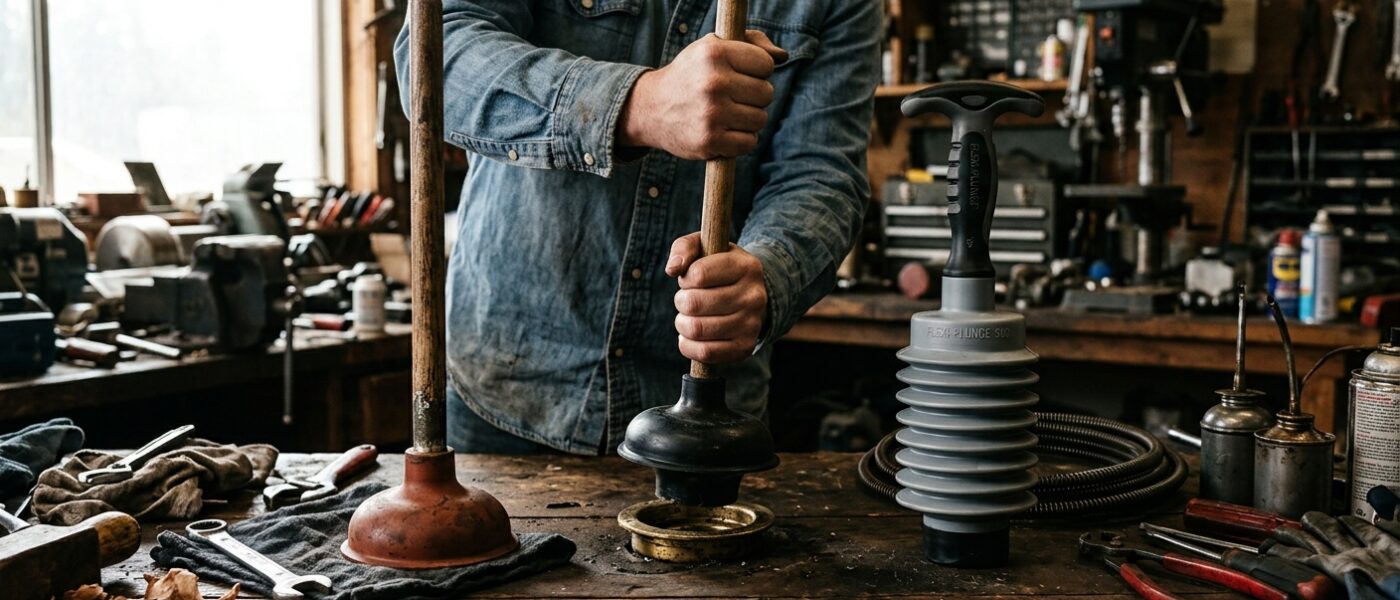
A cup plunger for sinks and tubs, a flange plunger for toilets — having both on hand handles virtually every household drain clog situation without chemical drain cleaners.
As an Amazon Associate, we earn from qualifying purchases.
A quality plunger is the first-response tool for clogged drains throughout the home. The right plunger design matters: a cup plunger (flat rubber cup) works on sinks and tubs; a flange plunger (with a rubber flap extending from the cup) creates the seal needed on toilet drains. Using the wrong type significantly reduces effectiveness.
Types of Plungers
Cup Plungers (Sink Plungers)
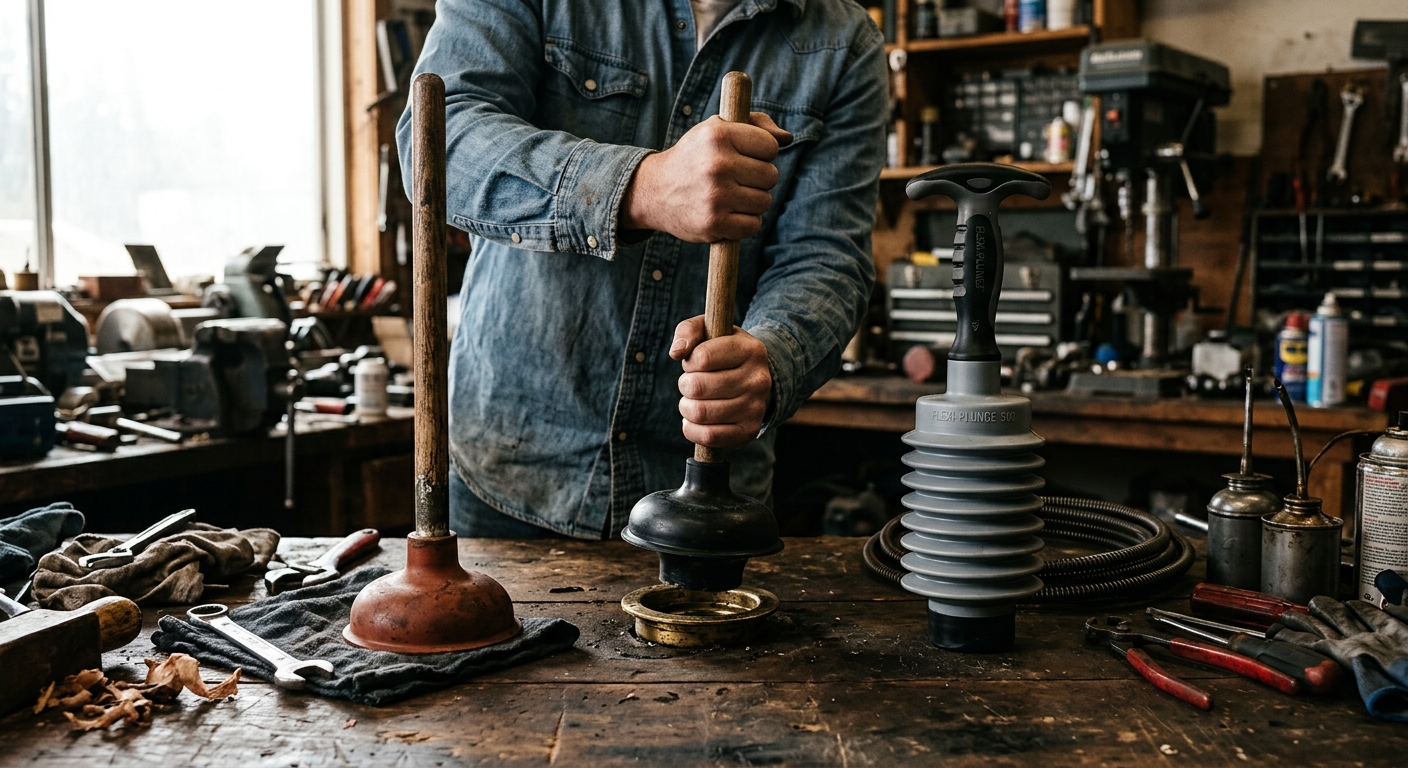
The most familiar plunger design – a flat rubber cup on a wooden or plastic handle. Creates an airtight seal on flat surfaces like sink and tub drains. NOT effective on toilets, where the drain opening is recessed and the flat cup cannot seal against the bowl contours.
Flange Plungers (Toilet Plungers)
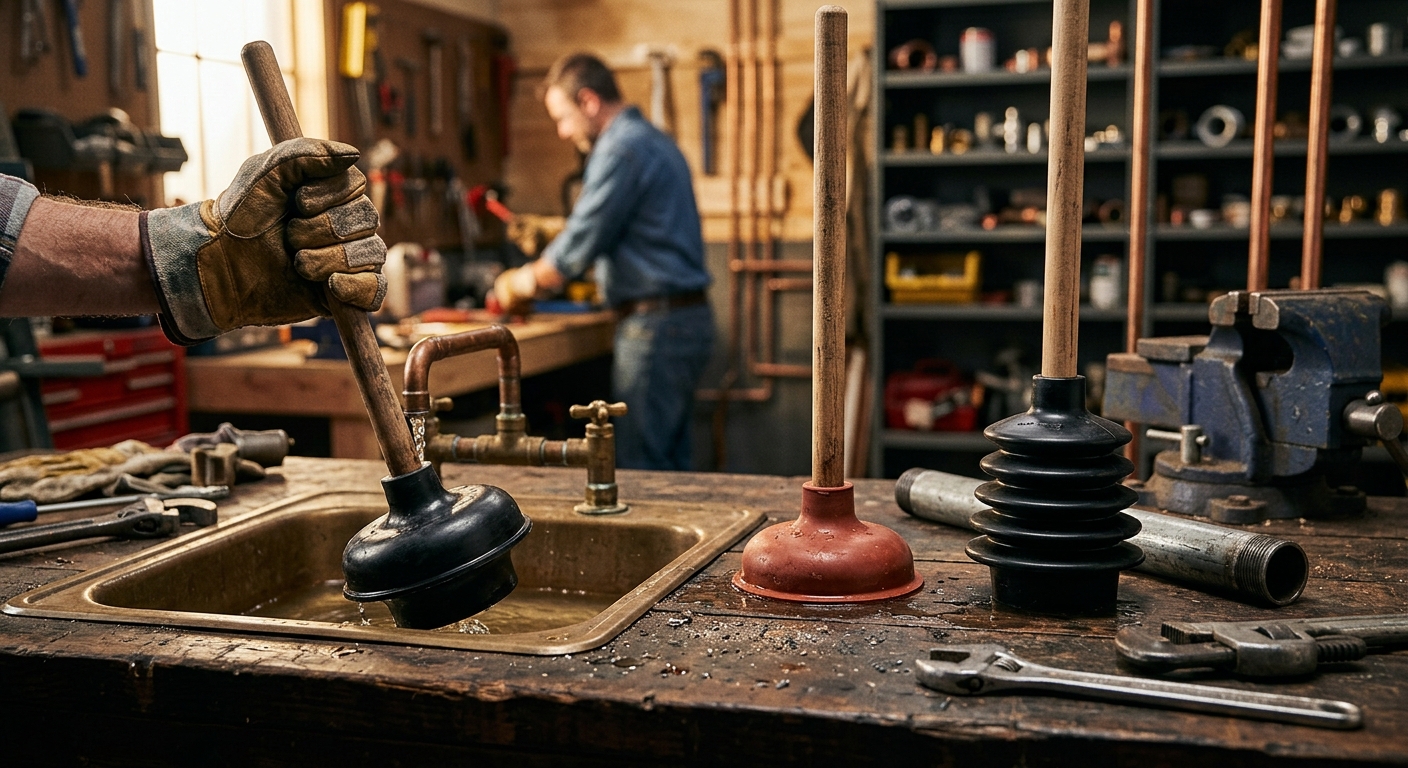
Identical to a cup plunger but with an additional rubber flap (the flange) that folds out from inside the cup. The flange seats into the toilet drain opening, allowing the cup to create a seal in the recessed bowl. For toilet drain clearing, the flange plunger is dramatically more effective than a cup plunger.
Accordion Plungers
Made of hard plastic with an accordion-style body that compresses when pushed and expands when pulled. Creates very high pressure in both directions. Effective but difficult to seal against most drain configurations. Harder to use than rubber plungers for most people. A niche option for stubborn clogs where standard plungers have failed.
Our Top Picks
1. Korky 99-4A Beehive Max Toilet Plunger
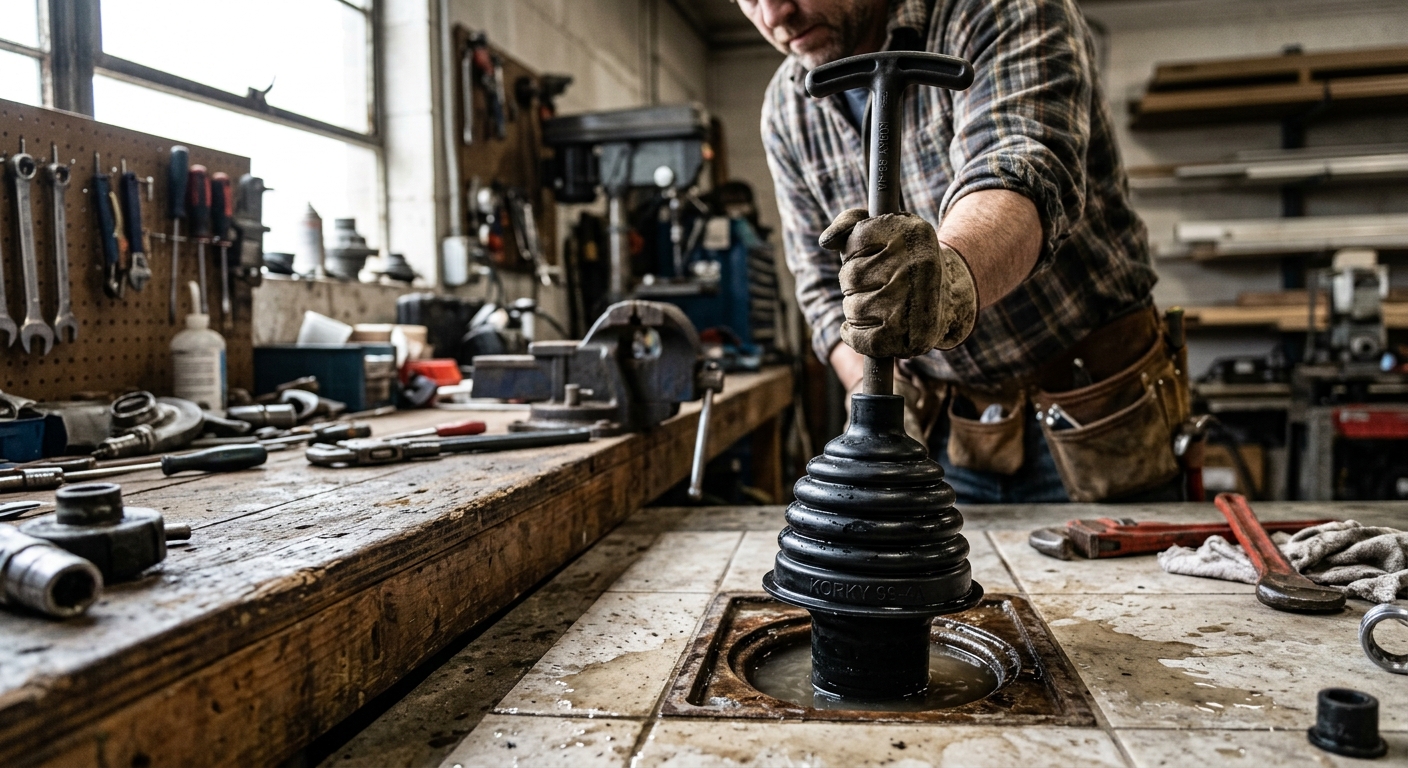
The best toilet plunger available. The beehive flange shape fits both standard and water-efficient toilet drain openings – a common frustration with older flange plungers that do not seal well against newer HET (high-efficiency toilet) drain geometries. The extended handle reduces bending during use. The most recommended toilet plunger for consistently effective clog clearing.
2. Simplehuman Toilet Plunger with Caddy
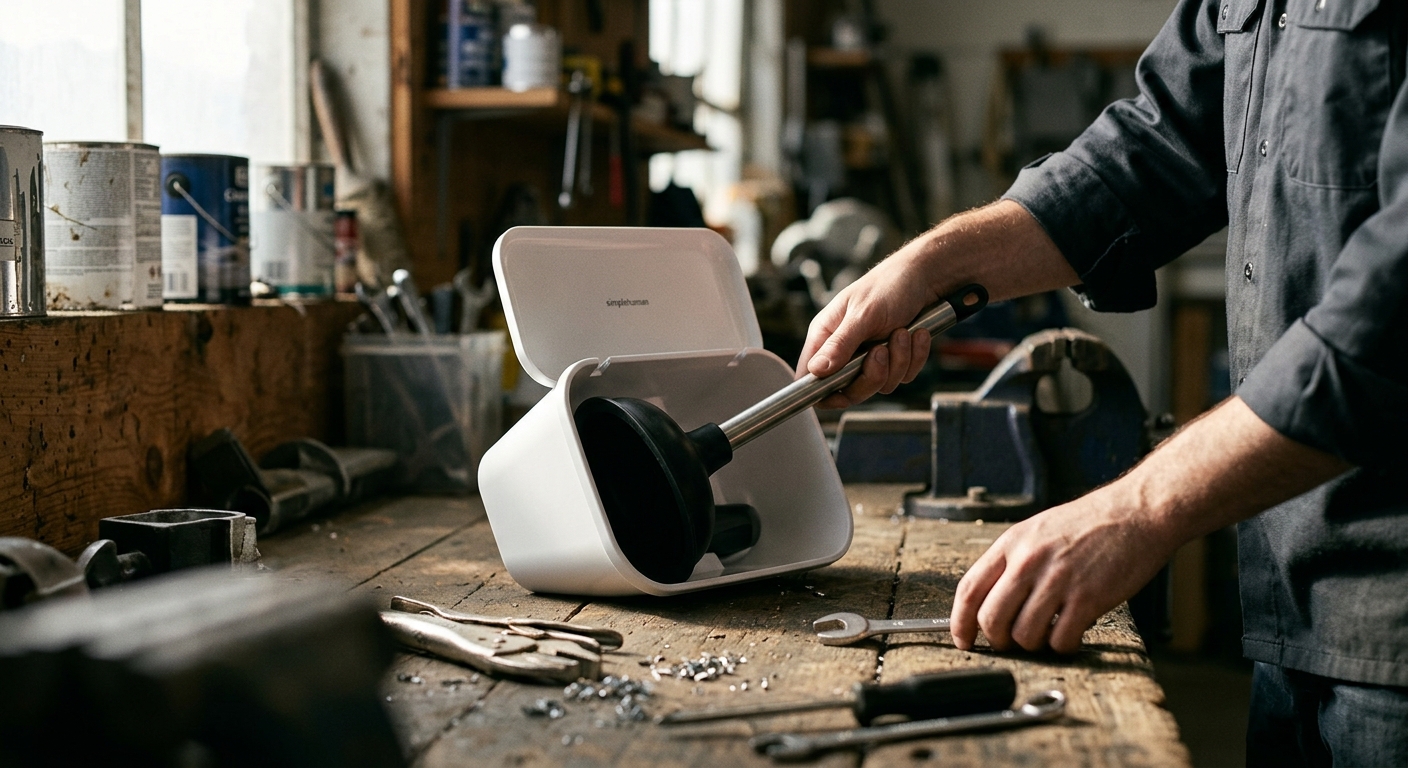
A flange plunger with a closed-top caddy that keeps the plunger concealed and drip-free when stored. The closed caddy prevents the drip that makes plunger storage near a toilet unpleasant. The plunger performance is adequate and the storage solution is the real selling point – a practical choice for bathrooms where appearance matters.
3. Mr. Clean 440436 Turbo Plunger and Bowl Brush
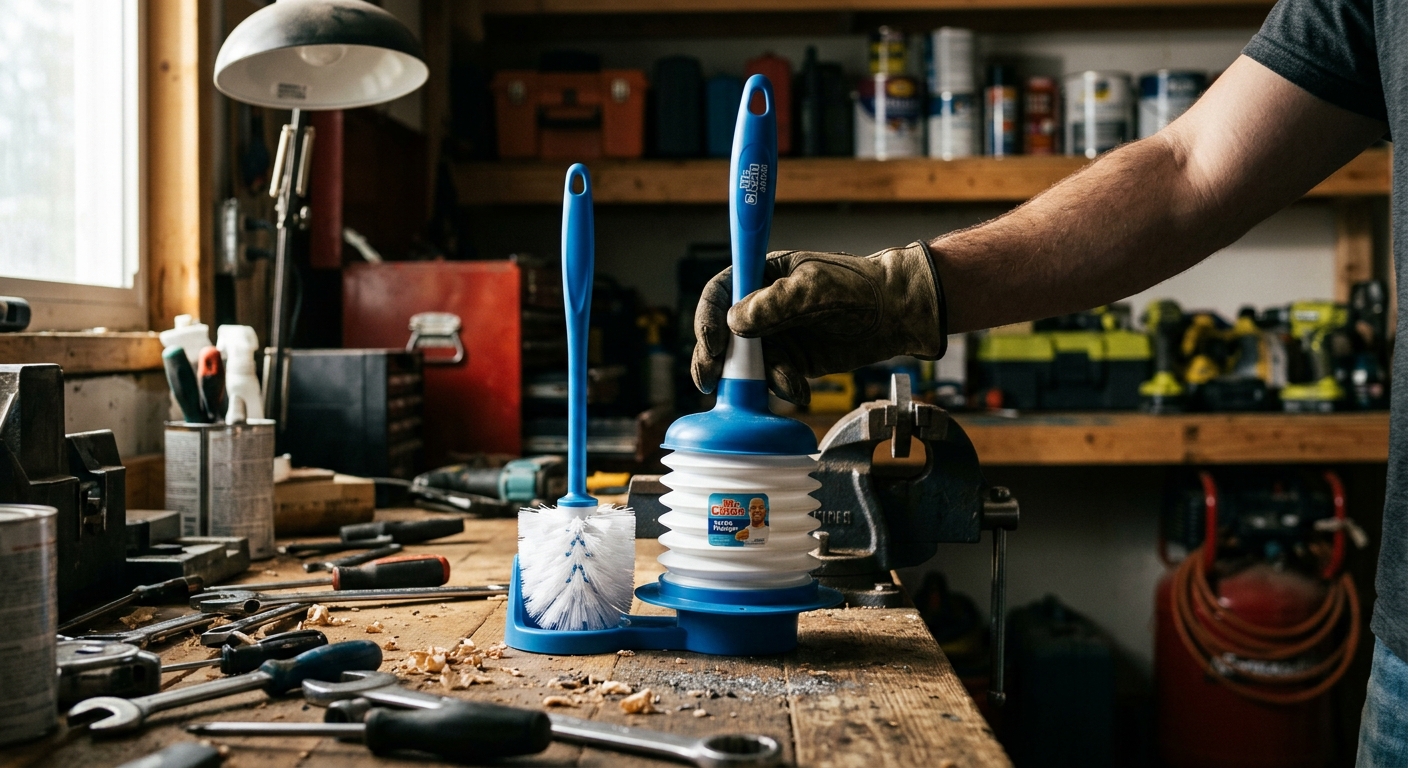
A cup-and-flange plunger set – one cup plunger for sink and tub use, and one flange plunger for toilet use. The set approach ensures you have the right plunger for any drain without needing to buy separately. The most practical starter purchase for a homeowner setting up a complete plunger kit.
4. General Wire Spring BK-DH Black Drain Opener
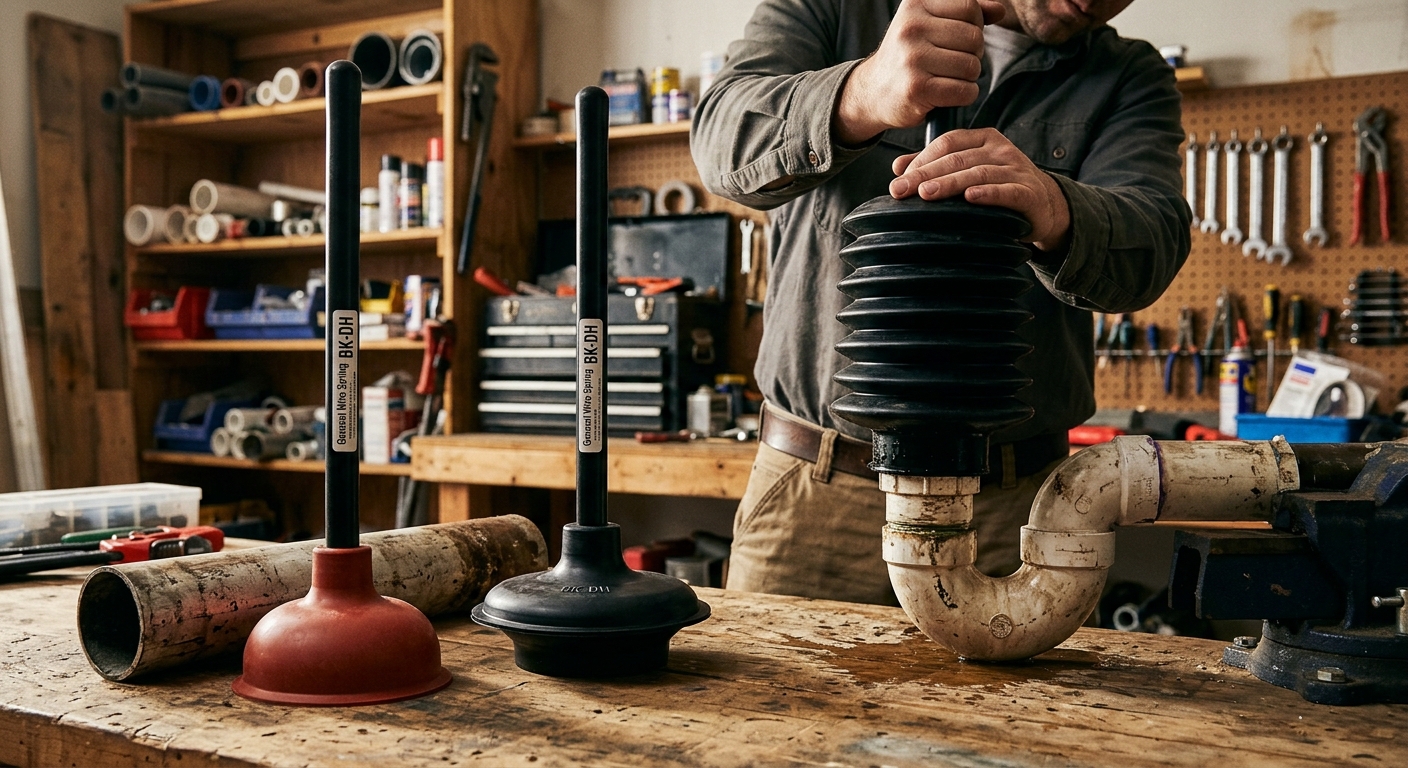
Not a plunger per se, but a 3-foot flexible drain cleaning tool that navigates P-traps and removes hair clogs that plungers cannot dislodge. Works best for bathroom sink and tub drains where hair is the primary clog source. Use the drain snake before the plunger for hair clogs – pulling the hair out is more effective than pushing it further down the drain.
5. Ridgid 59787 Power Spin Drain Cleaner
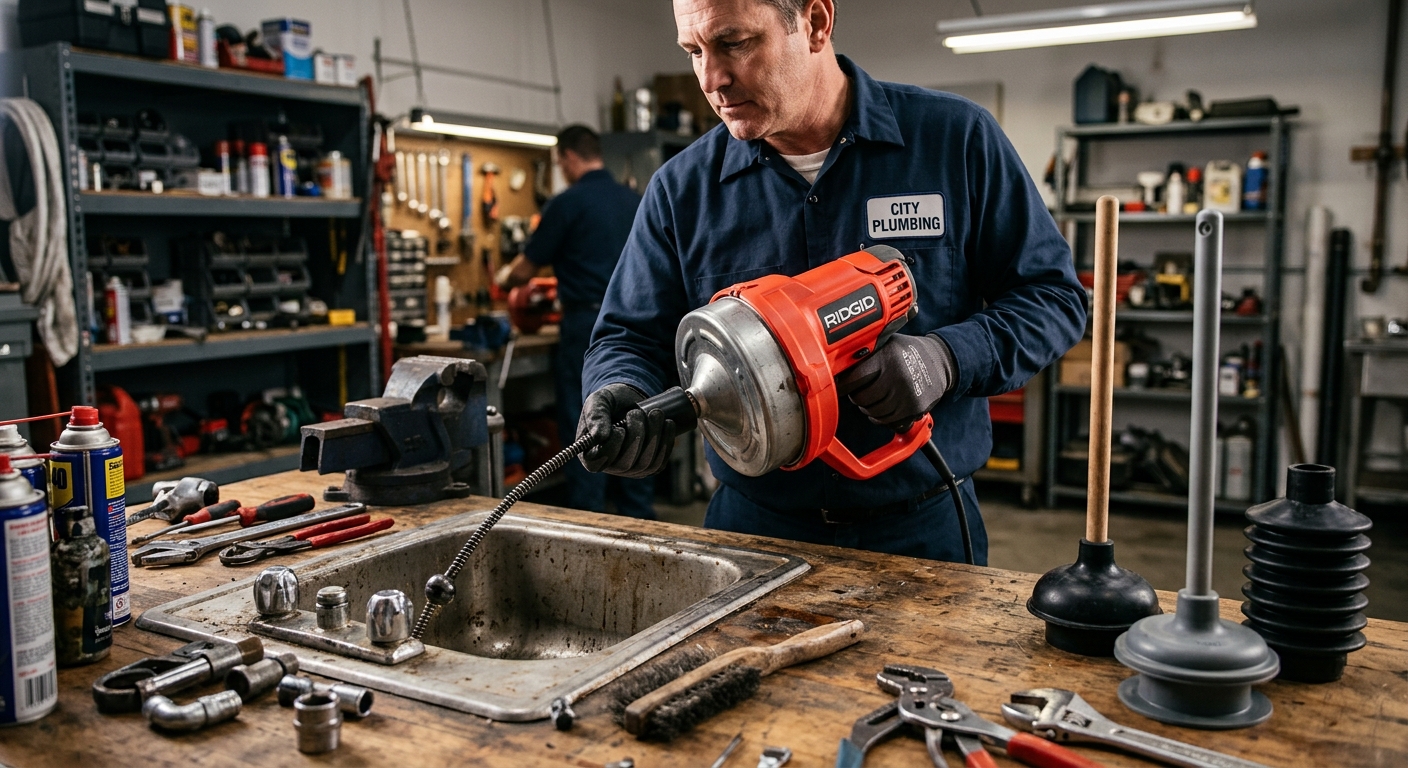
A step up from plungers for stubborn drain clogs. A 25-foot spiral cable that attaches to a power drill and rotates to break up and retrieve clogs that plungers cannot clear. For drain clogs that resist plunging, the power spin is the next step before calling a plumber. Works on tub, sink, and floor drain clogs.
How to Plunge a Toilet Effectively
- Add water to the toilet bowl if the water level is low – you need enough water to cover the plunger cup.
- Place the flange plunger over the drain opening and ensure the flange is fully inserted into the drain.
- Push down slowly (to expel air from the cup), then pull up sharply and repeatedly.
- After 10-15 cycles, lift the plunger and check if the water drains.
- Repeat if needed – stubborn clogs may require 2-3 plunging sessions.
- Flush once to confirm the drain is clear before walking away.
FAQ
When should I use a drain snake instead of a plunger?
Use a drain snake (drain auger) when: plunging has not cleared the clog after multiple attempts, the drain is slow rather than completely blocked (suggesting a partial clog further down the line), or the clog is known to be solid material (rather than soft debris that can be dislodged). A snake reaches further into the drain system and can retrieve material a plunger cannot.
Affiliate Disclosure: DIY Arsenal participates in the Amazon Associates Program and other affiliate programs. When you purchase through links on this site, we may earn a small commission at no additional cost to you. We only recommend products we have personally tested and genuinely believe in.