Best Plumbing Inspection Mirrors and Lights
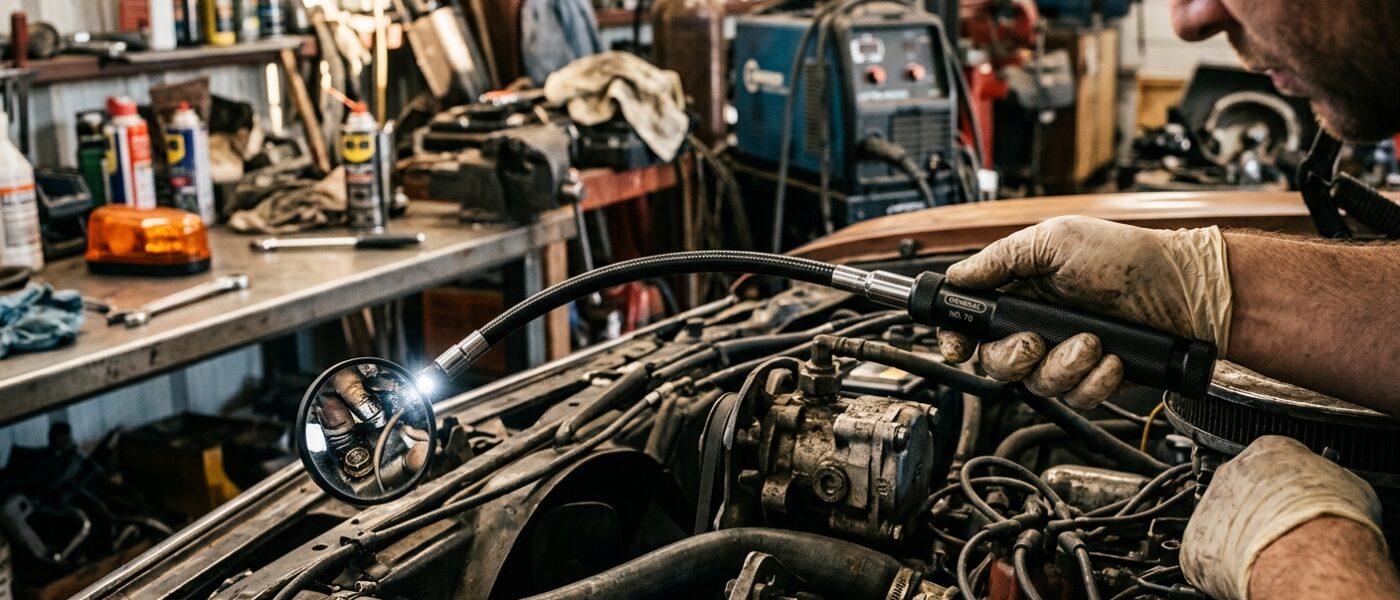
A General Tools flexible-shaft inspection mirror and an LED inspection light are a $25 combination that saves hours of disassembly and guesswork on every plumbing diagnostic job.
As an Amazon Associate, we earn from qualifying purchases.
See What You Cannot Reach
Plumbing work happens in cramped, dark spaces – behind toilets, inside cabinets with poor sight lines, inside pipe chases, under water heaters. An inspection mirror lets you see around corners and into spaces your head won’t fit. Paired with a focused inspection light, these simple tools prevent misdiagnosis, unnecessary disassembly, and the particular frustration of not knowing what’s leaking or where a pipe run goes. They’re inexpensive and often overlooked in plumbing tool discussions, but experienced DIYers keep them in the toolbox permanently.
Key Features to Look For
- Mirror size: Small mirrors (1-2″) fit into tight pipe chases; larger mirrors (3-4″) provide a bigger reflected view in more accessible spaces. Telescoping handles that extend to 18-24″ let you see into areas you can’t physically access. Some telescoping mirrors fold to a compact storage form.
- Handle length and extension: A fixed 6″ handle is too short for most under-sink and behind-toilet applications. Look for telescoping handles in the 10-24″ extended range with a secure lock at the chosen length. Magnetic handles that also pick up dropped fittings are a useful bonus.
- Mirror material: Glass mirrors provide better image quality than chrome-plated steel mirrors. Acrylic mirrors are unbreakable but can scratch and fog with use. Glass is the best choice unless breakage risk is a primary concern.
- Light integration: LED inspection mirrors with built-in illumination eliminate the need for a separate light source in dark cabinets. The LEDs are positioned to illuminate the reflection, not just the space around you. A significant convenience upgrade over separate mirror and flashlight.
- Pivoting mirror head: A mirror that locks at multiple angles (typically 0°, 45°, 90°, and 135°) lets you direct the reflection precisely. Non-pivoting mirrors require more handle repositioning to view different angles.
Top Picks
General Tools 70 Locking Flex-O-Shaft Inspection Mirror

A 2″ diameter circular mirror on a 30″ telescoping handle with a flexible shaft that holds any angle. The mirror pivots independently for precise angle control. This is the workhorse under-sink inspection mirror that fits in tight pipe chases and behind valve bodies where a rigid handle won’t reach. The flexible shaft is the key differentiator over fixed-shaft models. Keep this in your plumbing kit permanently.
Felo 58008380 Telescoping Inspection Mirror with LED Light
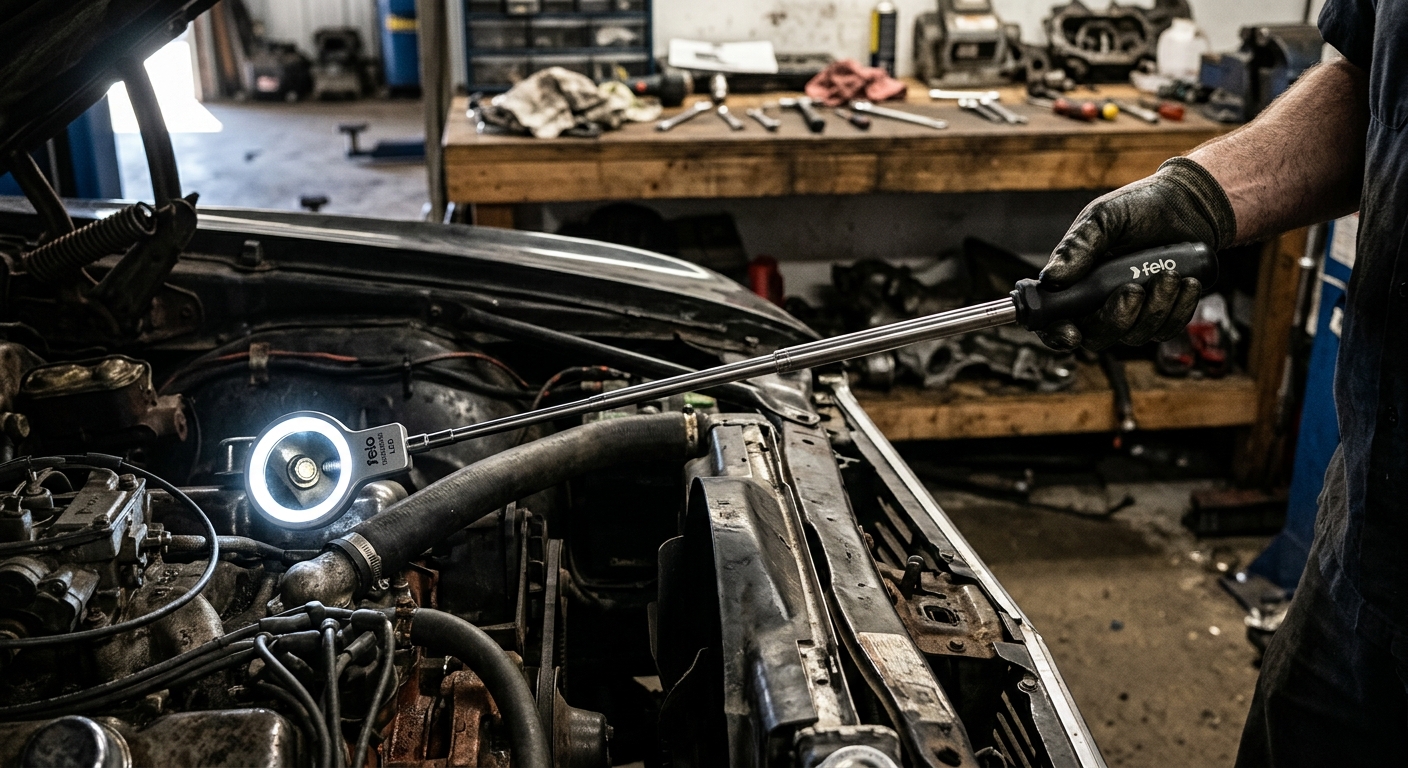
Felo’s LED inspection mirror adds ring lighting around the mirror face – illuminating the reflected surface directly. The 2.5″ glass mirror on a 24″ telescoping handle with LED illumination is the most useful single tool for dark cabinet and under-sink inspections. The LEDs run on AAA batteries included with the tool. The only meaningful downside is that battery replacement eventually becomes necessary – use quality alkaline batteries for maximum runtime.
Klein Tools 70141 Inspection Mirror Set
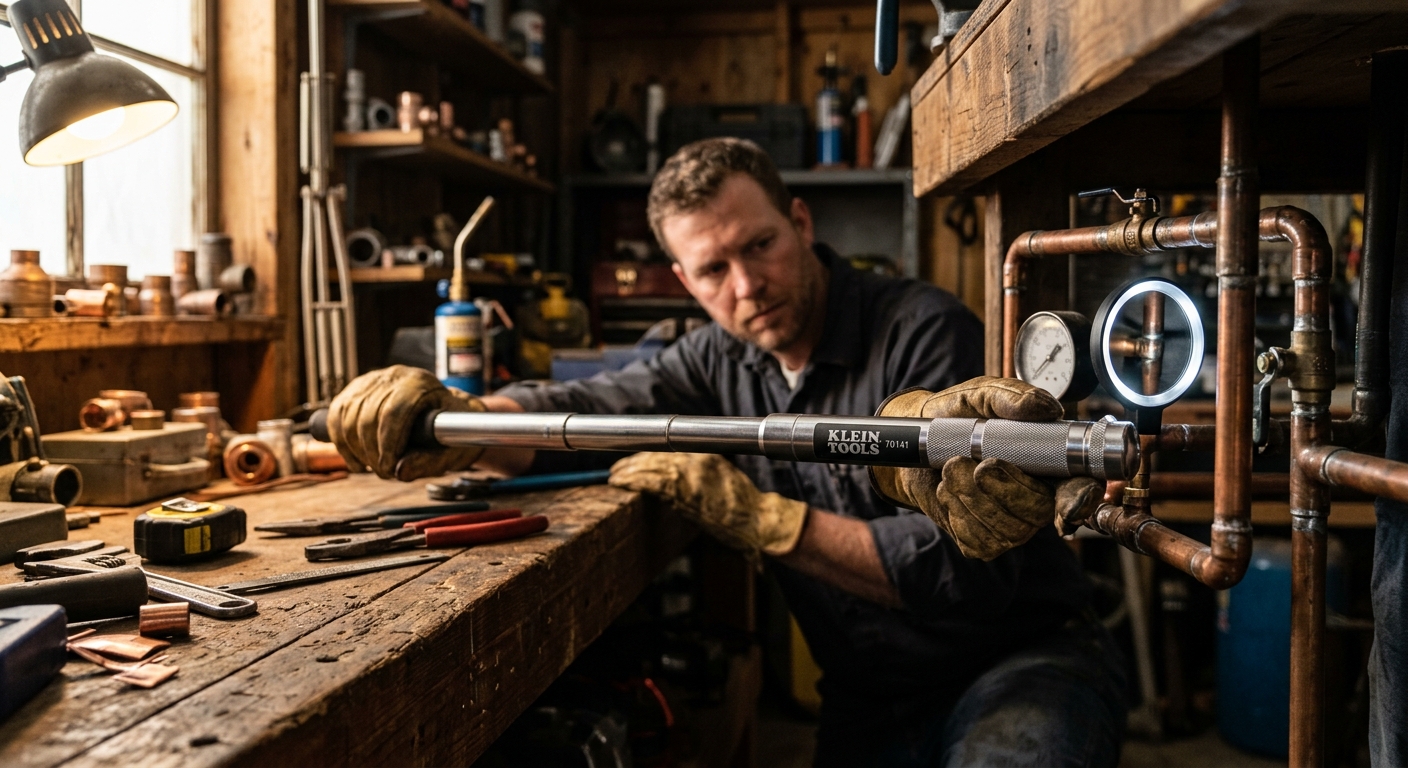
Klein’s three-piece set covers small (1.5″), medium (2″), and large (3.5″) mirror sizes on a shared telescoping handle. Having three sizes means you can match the mirror diameter to the specific space – the small mirror reaches pipe chase corners the large mirror can’t access. Klein’s build quality is professional-grade and the handles are durable in regular use. A good value set if you want size flexibility.
Milwaukee 2208-20 Digital Inspection Camera (step-up)
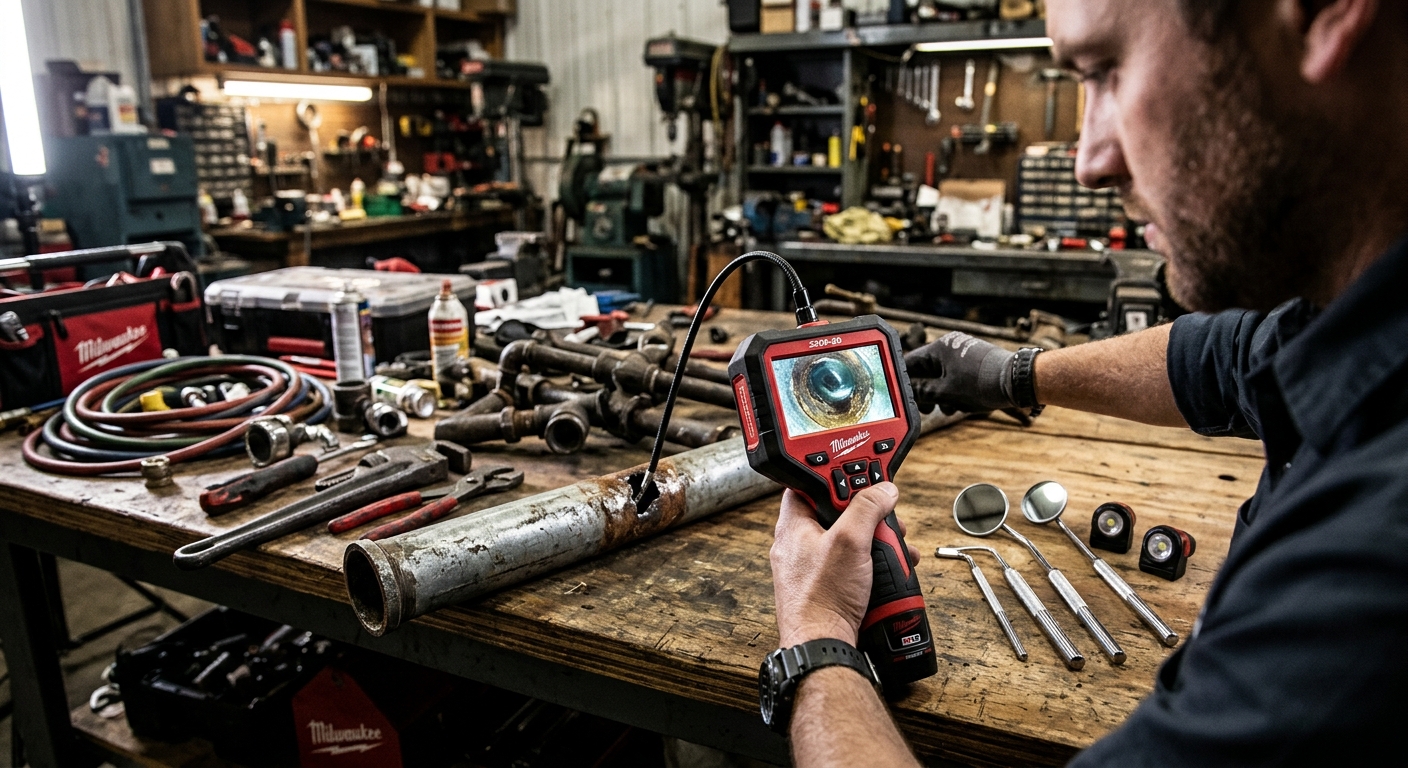
For inspection needs beyond what a mirror can address, Milwaukee’s articulating inspection camera with 1.5″ LCD screen provides live video of spaces a mirror can’t effectively cover. The articulating camera head angles to view around bends, and the integrated LED ring illuminates the target precisely. This crosses from mirror into camera territory – the step-up tool when a mirror confirms something is there but can’t show you the full picture.
Frequently Asked Questions
How do I use an inspection mirror effectively in dark spaces?
Position your primary light source (headlamp or flashlight) to illuminate the space you’re viewing, not the mirror itself. Angle the mirror to catch the reflection of the area you want to see and look at the mirror from your position – you’re reading a reflected image, so left and right are reversed. LED-integrated mirrors eliminate the positioning challenge by lighting the target directly from the mirror’s vantage point.
What size inspection mirror is best for under-sink work?
For standard kitchen and bathroom under-sink cabinet work, a 2″ circular mirror on an 18″ handle handles most situations. Larger 3″ mirrors provide more viewing area when space allows, but the smaller size navigates around drain pipes and supply hoses more easily. A 1.5″ mirror is only needed for genuinely tight pipe chase access.
Are there inspection mirrors that also help retrieve dropped parts?
Yes – combination telescoping magnet and mirror tools exist that extend to pick up dropped screws and fittings in tight spaces. The magnet pick-up function and mirror function are separate ends of the same tool in most designs. Useful for anyone prone to dropping small hardware in tight spaces (everyone, eventually). Klein and General Tools both offer combination versions.
Affiliate Disclosure: DIY Arsenal participates in the Amazon Associates Program and other affiliate programs. When you purchase through links on this site, we may earn a small commission at no additional cost to you. We only recommend products we have personally tested and genuinely believe in.