Best Pipe Wrenches – Aluminum vs Steel for DIY Plumbing
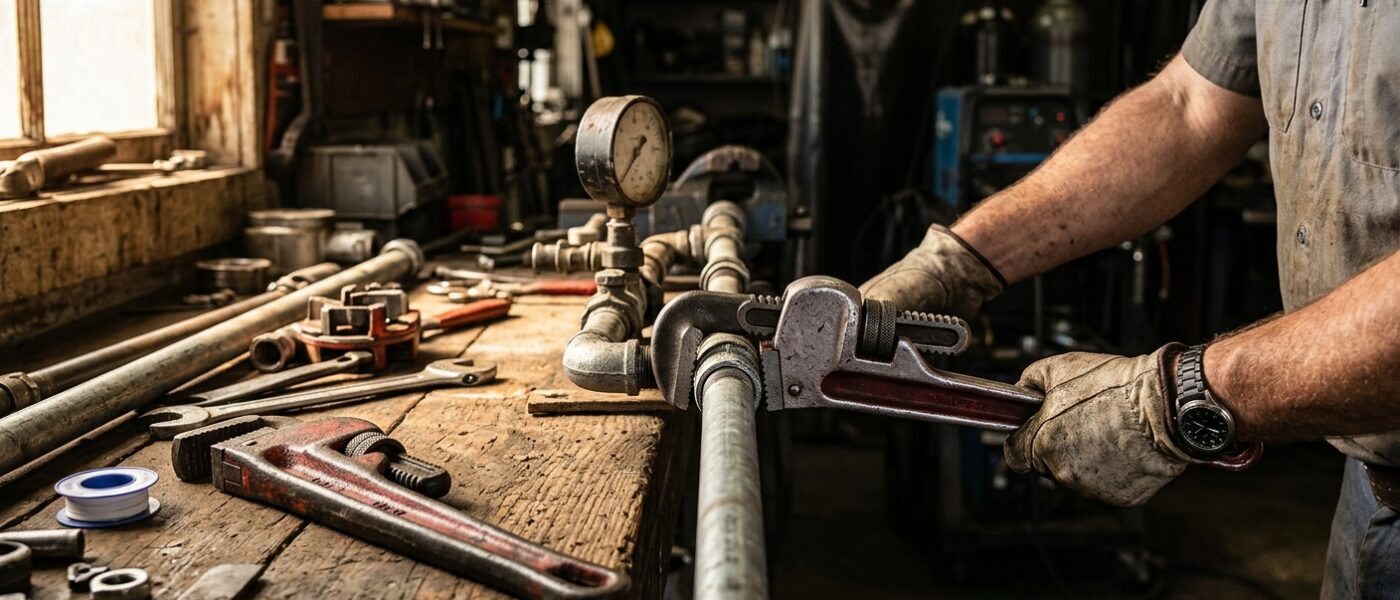
Ridgid aluminum pipe wrenches are the professional standard — buy a 14-inch and 18-inch as a matched pair and you will have the pipe wrench coverage for virtually any residential plumbing task.
As an Amazon Associate, we earn from qualifying purchases.
A pipe wrench is the quintessential plumbing tool – the tool that grabs, turns, and holds steel and iron pipe with the kind of grip that no other wrench can match. The serrated jaw teeth bite into the pipe surface as torque is applied, creating a self-energizing grip that tightens automatically as you push harder. This same mechanism makes pipe wrenches inappropriate for soft metals, finished fittings, and compression joints – but for the heavy-duty work of threaded iron and steel pipe, nothing replaces a pipe wrench.
Types of Pipe Wrenches
Standard (Hook Jaw) Pipe Wrench
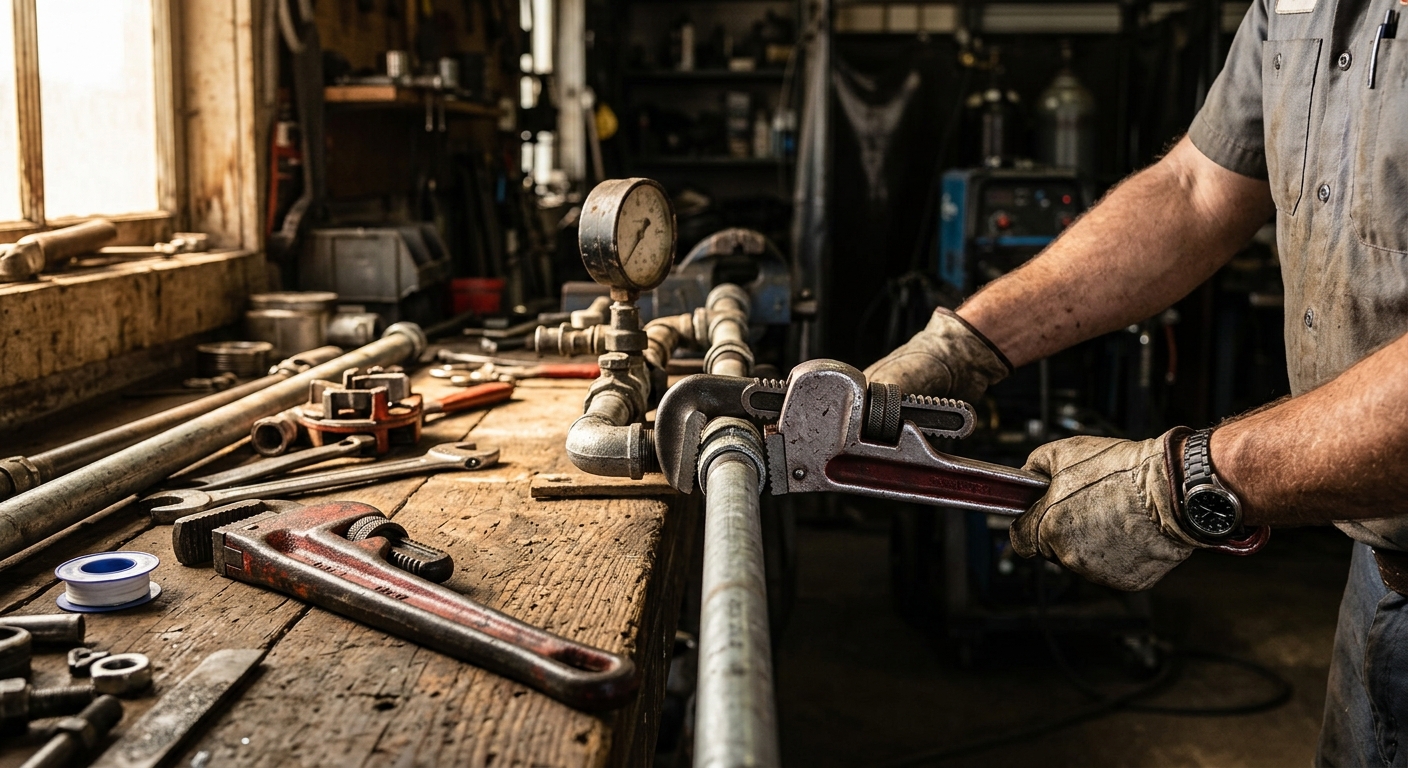
The classic design. A fixed heel jaw and an adjustable hook jaw that opens and closes via a threaded nut. Used one wrench at a time or in pairs (one to hold, one to turn) for threaded pipe connections. Available from 6-inch to 48-inch in length, with pipe capacity matching the wrench size.
Offset Pipe Wrench
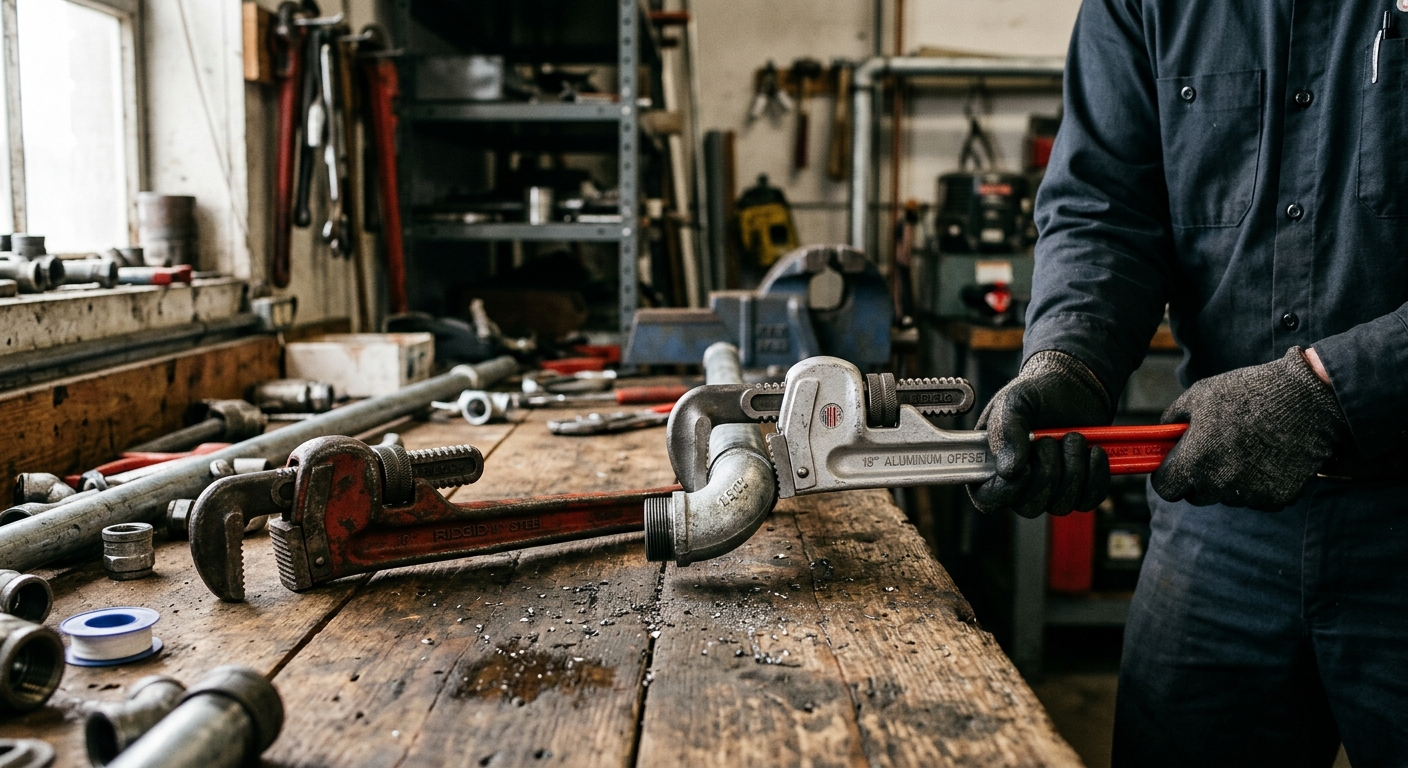
The jaw is offset from the handle axis, allowing the wrench to reach into tight spaces where a standard wrench cannot swing properly. Particularly useful under sinks and in crowded mechanical spaces.
End Pipe Wrench
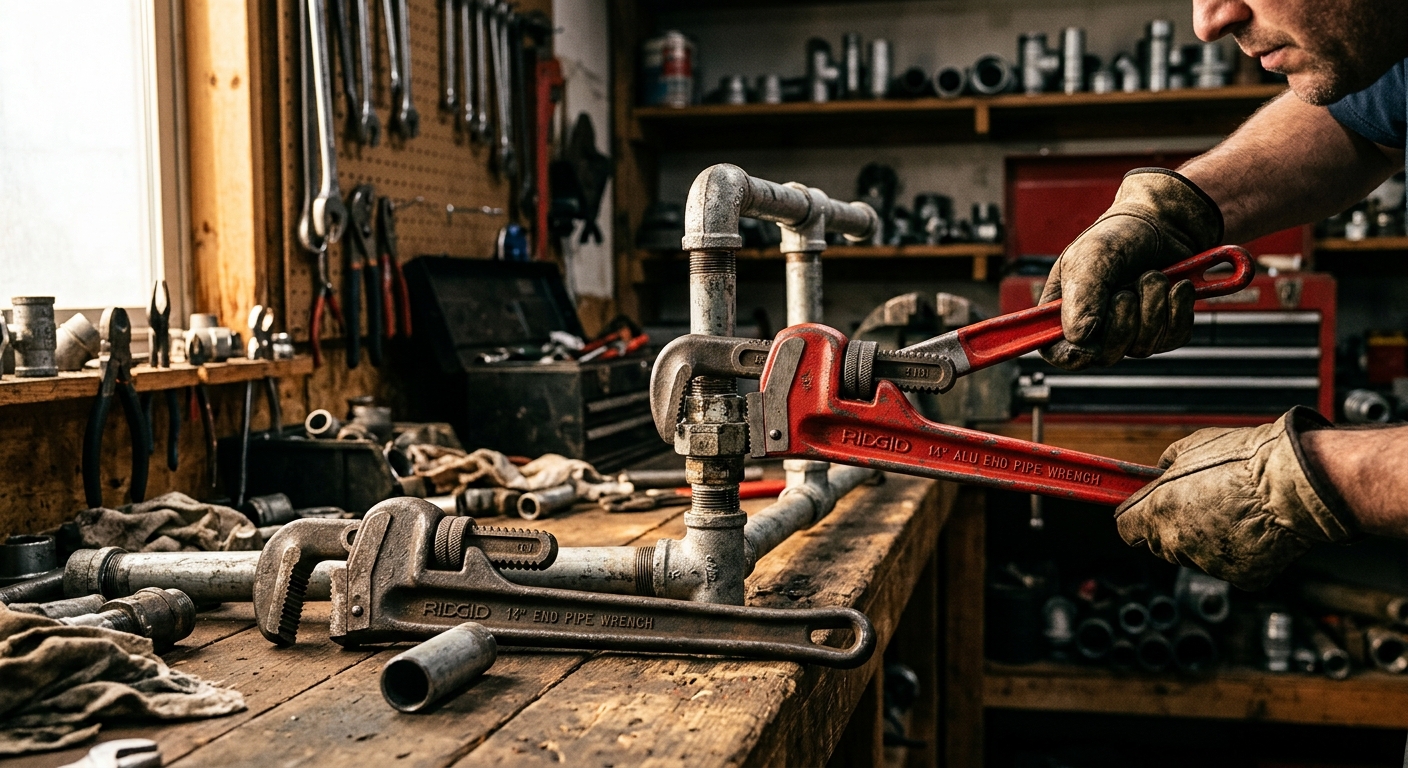
Designed to grab the end of a pipe rather than the middle. The jaw opens at the end of the wrench rather than being set back from the end, allowing work at the very end of a pipe run or inside a large fitting.
Strap Wrench
Uses a rubber or chain strap rather than toothed jaws. Does not mar finished surfaces – the right tool for working with chrome supply lines, polished fixtures, and plastic pipe where toothed jaw marks would be unacceptable. Lower gripping force than a standard pipe wrench; appropriate for lower-torque work.
Aluminum vs. Steel Pipe Wrenches
Steel pipe wrenches (Ridgid orange handle, classic design) are heavier and stronger. They withstand the abuse of professional plumbing use for decades. Aluminum pipe wrenches are significantly lighter (about 40% less weight) with similar gripping strength at residential working torques. For a plumber carrying multiple wrenches up and down ladders all day, the weight savings is significant. For a homeowner who uses the wrench occasionally, either works fine.
Key Features to Look For
Jaw Spring Quality
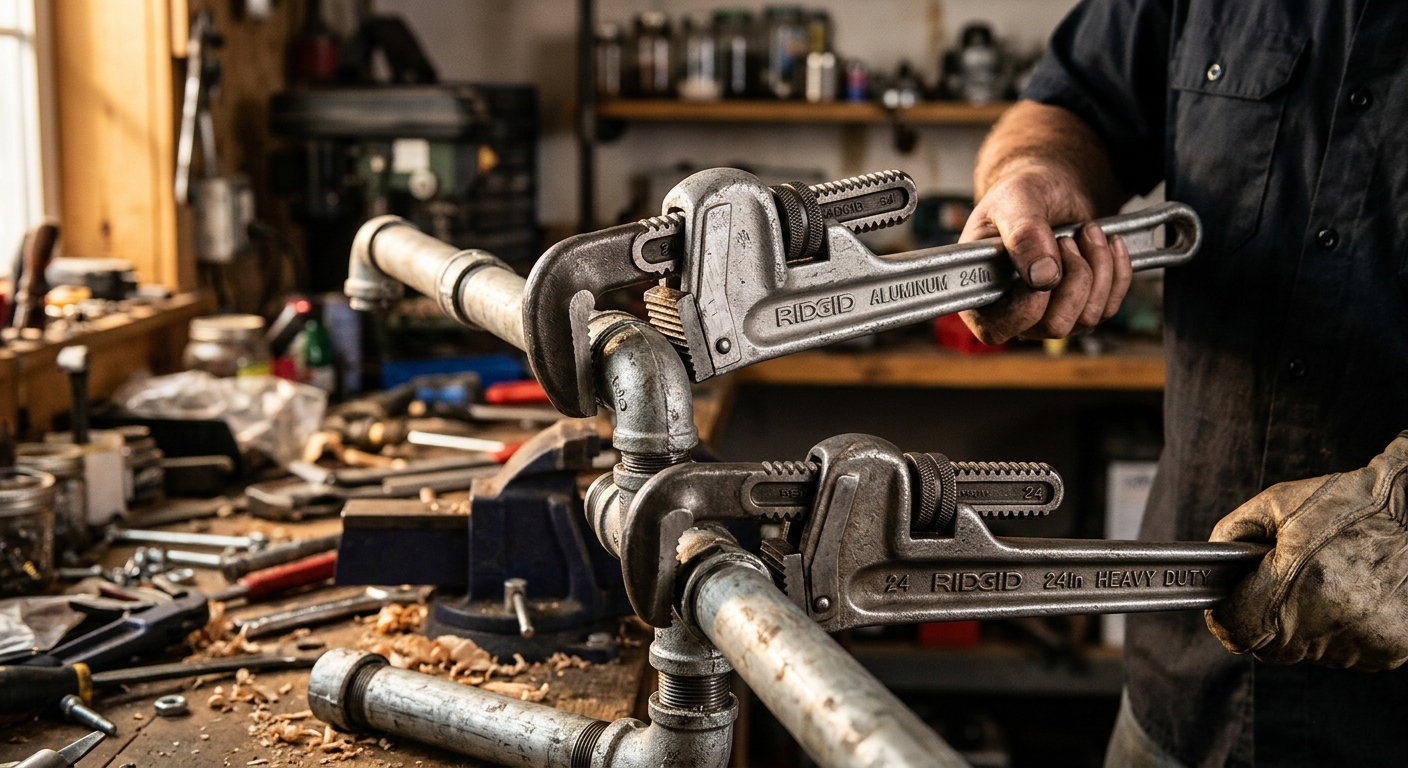
The spring that holds the hook jaw in the open position is the part most likely to fail on cheap wrenches. It should be replaceable. Quality wrenches (Ridgid, Jet, Reed) use strong springs that last many years; budget wrenches lose spring tension and the jaw flops without positive indexing.
I-Beam Handle
I-beam cross-section handles are stiffer and lighter than rectangular or round solid handles. Most quality pipe wrenches use I-beam construction for the optimal stiffness-to-weight ratio.
Jaw Capacity
Match the wrench size to the pipe diameter. A 10-inch wrench handles 1/2-inch to 1-1/4-inch pipe. A 14-inch wrench handles 3/4-inch to 2-inch pipe. An 18-inch wrench handles 1-inch to 2-1/2-inch pipe. Having two wrenches of appropriate size for the pipe you are working on is always the correct setup.
Replaceable Jaws
Quality pipe wrenches use replaceable jaw components. When the serrated teeth wear smooth (after years of professional use), you replace the jaw rather than the entire wrench. This is a sign of a quality tool designed for long service life.
Our Top Picks
1. Ridgid 31110 14-Inch Heavy Duty Aluminum Pipe Wrench
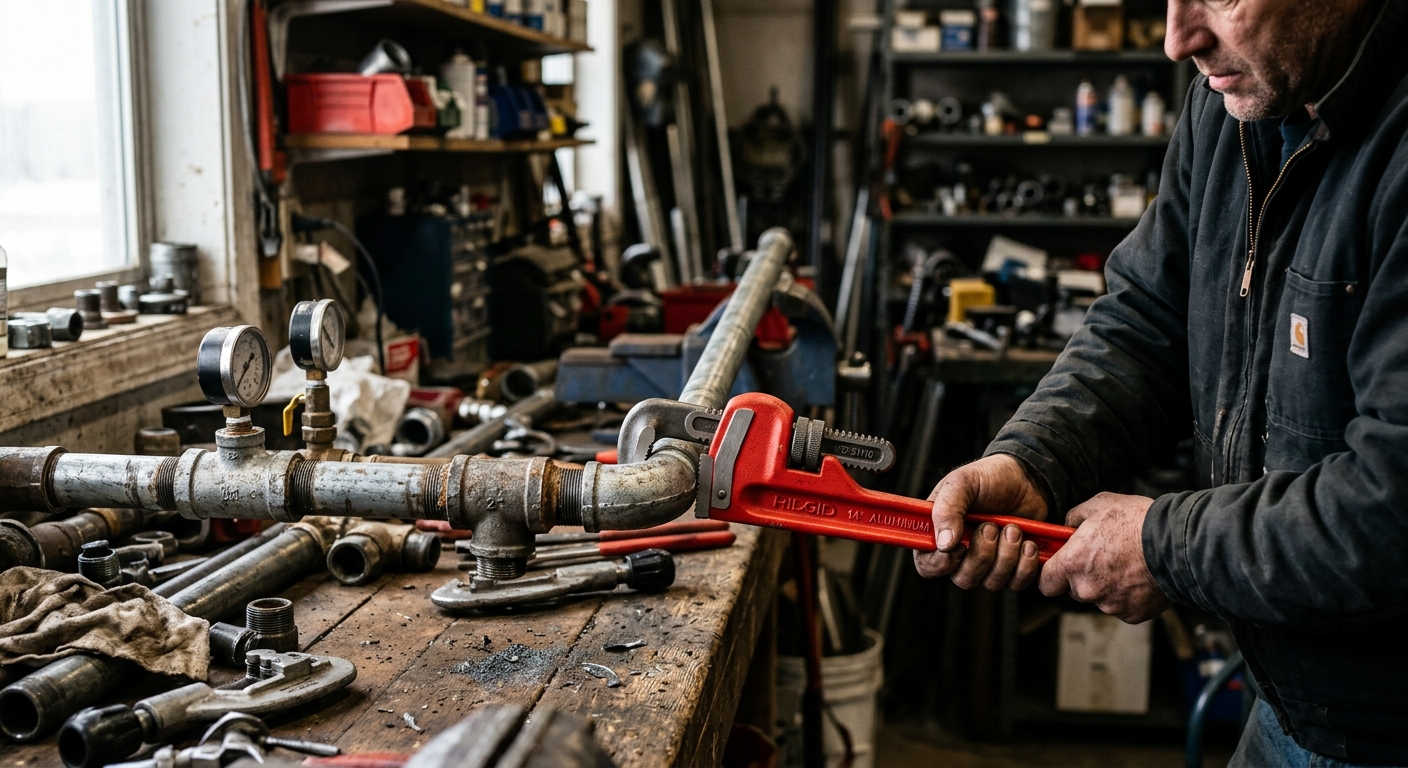
Ridgid is the definitive pipe wrench brand – used by professional plumbers worldwide since 1923. The aluminum version of their flagship 14-inch model offers the same jaw quality and spring performance as the steel version at significantly reduced weight. The jaw spring, teeth, and heel jaw are all replaceable. The I-beam aluminum handle handles residential working torques without flexing. The tool that every plumber, heating technician, and serious DIYer should own.
2. Ridgid 31120 18-Inch Aluminum Pipe Wrench
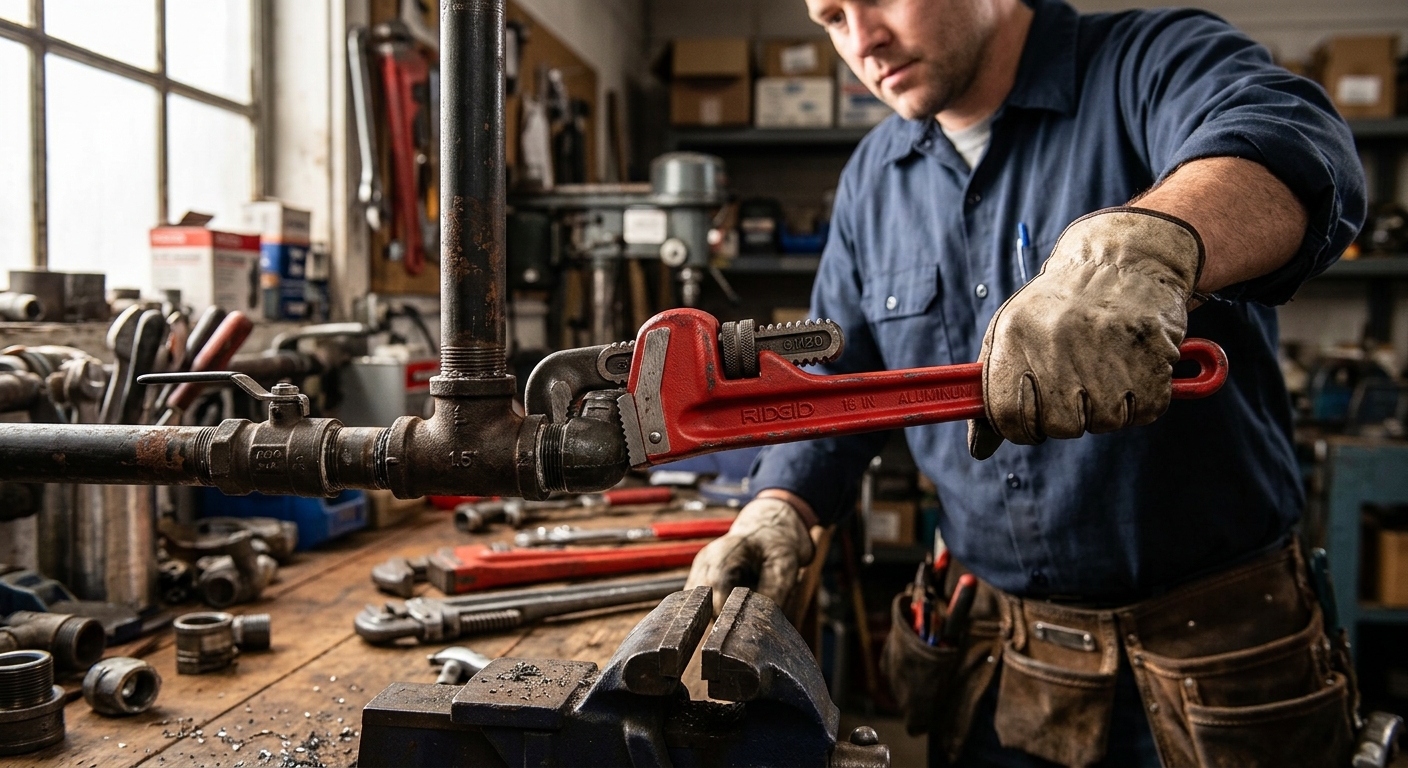
The 18-inch wrench for larger pipe (1-inch to 2-1/2-inch). Buy this alongside the 14-inch for a two-wrench set that handles virtually any residential pipe work. The longer handle provides significantly more torque for larger or more stubborn fittings.
3. Milwaukee 48-22-7114 Aluminum Pipe Wrench (14-Inch)
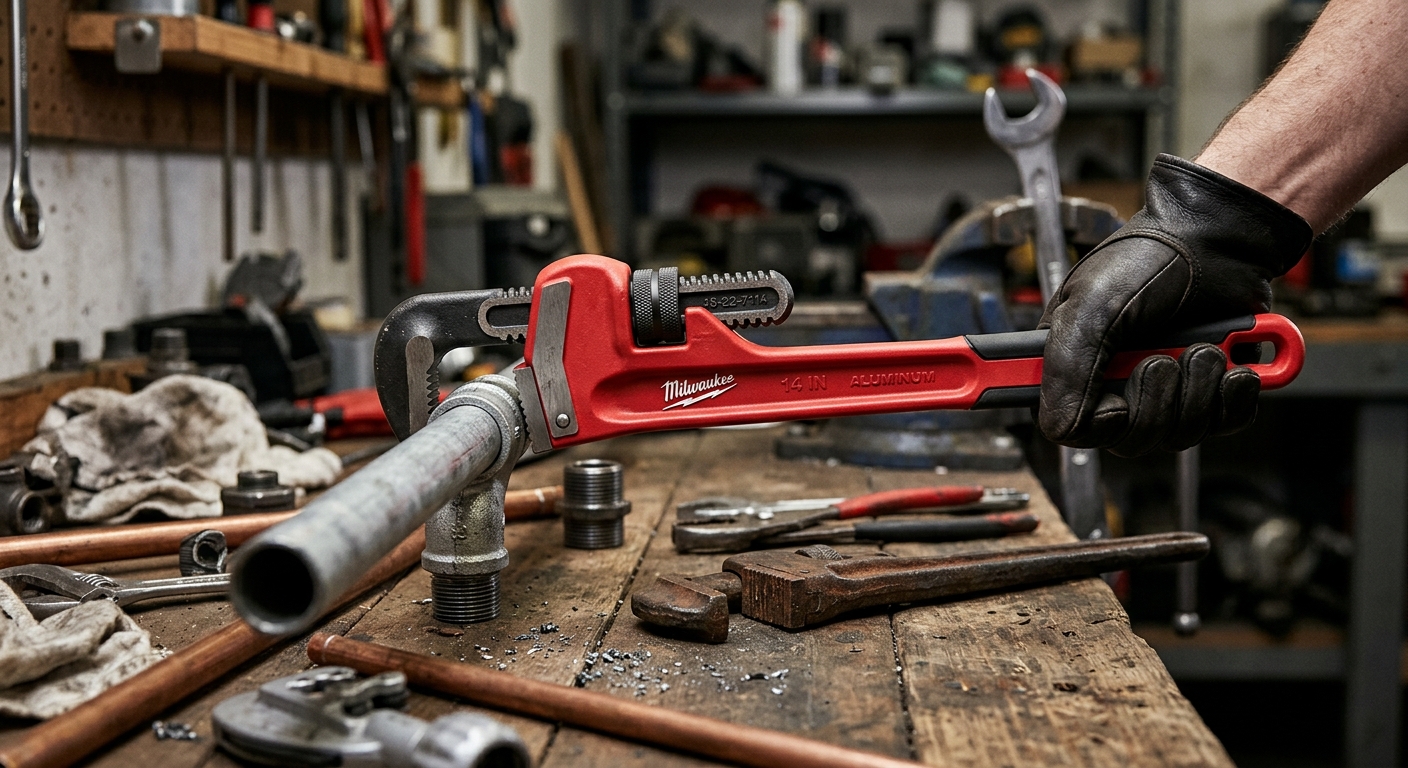
Milwaukee brings their commitment to professional-grade tools to pipe wrenches. The Milwaukee aluminum pipe wrench features induction-hardened teeth (longer wear life), a strong spring with positive jaw reset, and excellent balance. A direct competitor to Ridgid that many contractors prefer for the Milwaukee ecosystem.
4. Jet 876514 14-Inch Aluminum Pipe Wrench
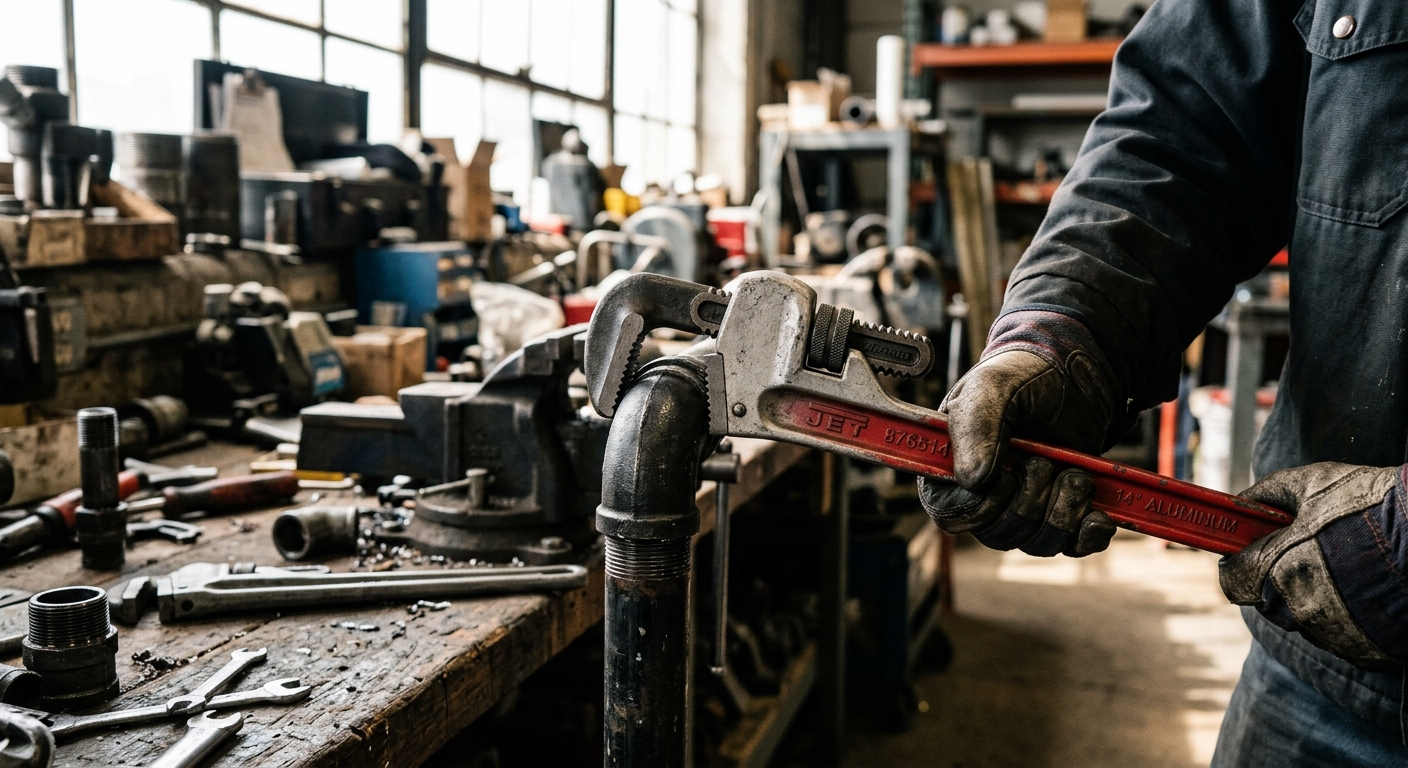
Jet tools make professional-grade shop equipment and their pipe wrenches reflect that quality. The aluminum I-beam design, replaceable jaw components, and strong spring make this an excellent alternative to Ridgid at a similar price. Less widely known but consistently well-reviewed by professional users.
5. Irwin 2078114 14-Inch EX Occupation Pipe Wrench
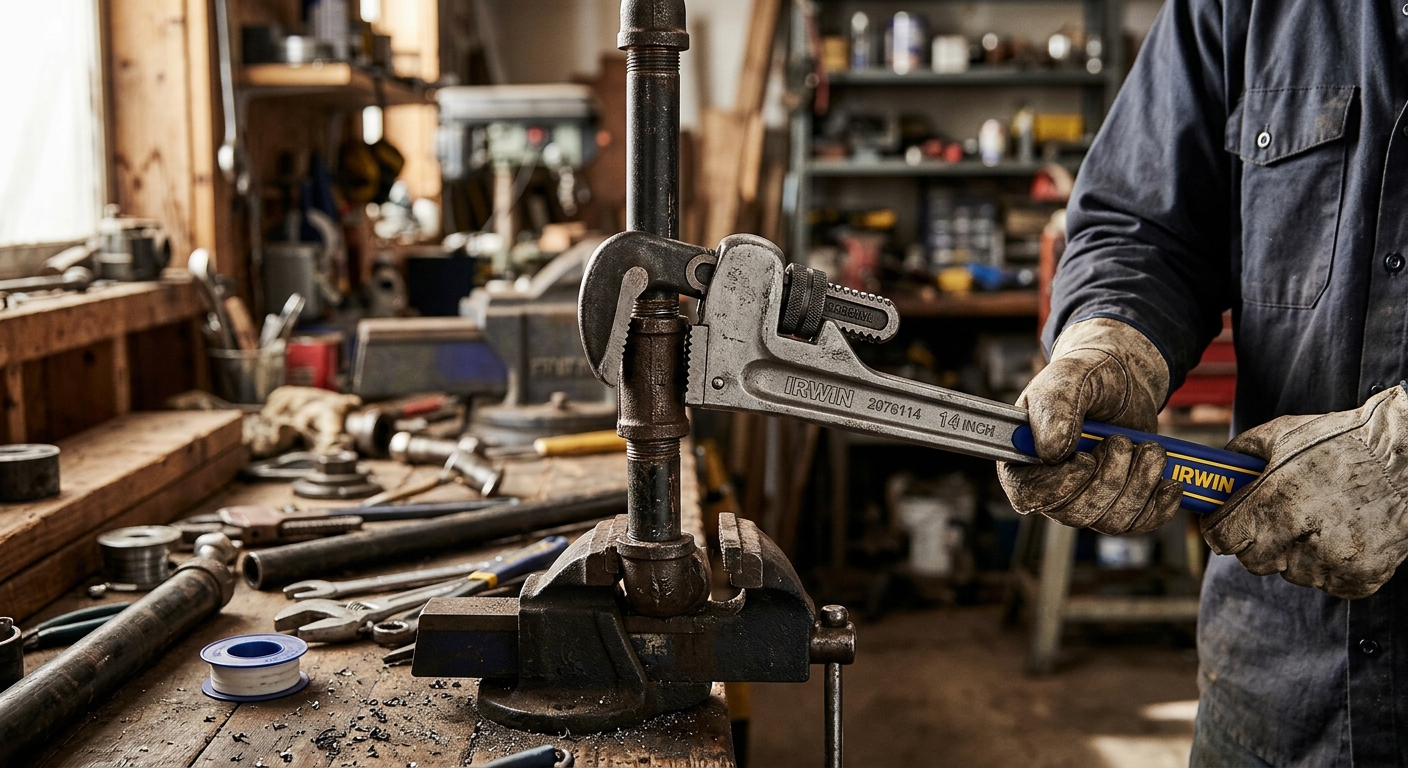
A traditional cast steel pipe wrench at a very accessible price. Not as refined as Ridgid or Milwaukee, but adequate for homeowners who need a pipe wrench for occasional use and do not want to pay professional prices. The jaw quality is acceptable for light residential use.
What to Avoid
- Pipe wrenches on chrome or polished fittings: The serrated teeth will permanently scar the finish. Use a strap wrench for finished hardware.
- Using pipe wrenches on plastic pipe: The serrated jaw crushes PVC and CPVC. Use PVC-compatible strap wrenches or channel-lock pliers with soft jaw pads.
- Extending a pipe wrench handle with a “cheater” pipe: Excessive leverage breaks the wrench and strips pipe threads. If you need more torque, use a larger wrench designed for the task.
FAQ
Do I need two pipe wrenches?
For most plumbing work on threaded pipe, yes. One wrench holds the pipe or fitting stationary while the other turns the coupling or fitting. Working with a single wrench puts all the torque through the pipe into whatever supports it, often damaging the pipe or supports.
What size pipe wrench do I need?
A 10-inch and a 14-inch wrench cover most residential plumbing (1/2-inch through 1-1/2-inch pipe). Add an 18-inch if you work with 2-inch pipe (main stack connections, large supply lines).
Why does my pipe wrench slip on the pipe?
The teeth are worn and need replacing, or the wrench is the wrong size for the pipe diameter and not making full contact. Ridgid’s replaceable jaw components solve the wear issue. Size the wrench correctly – the jaw should grip the pipe with the opening adjusted to about two-thirds of maximum capacity.
Affiliate Disclosure: DIY Arsenal participates in the Amazon Associates Program and other affiliate programs. When you purchase through links on this site, we may earn a small commission at no additional cost to you. We only recommend products we have personally tested and genuinely believe in.