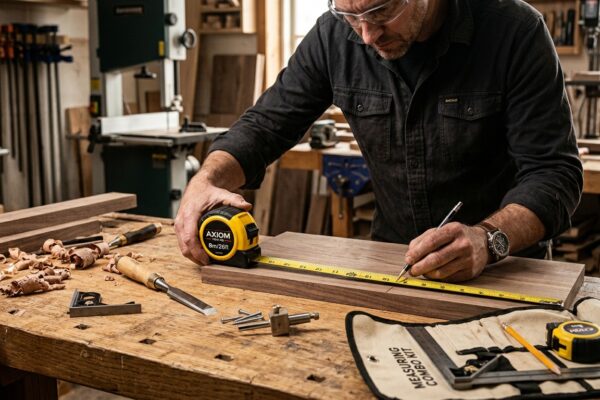
Best Levels – 24-Inch, 48-Inch, and Torpedo Levels Compared
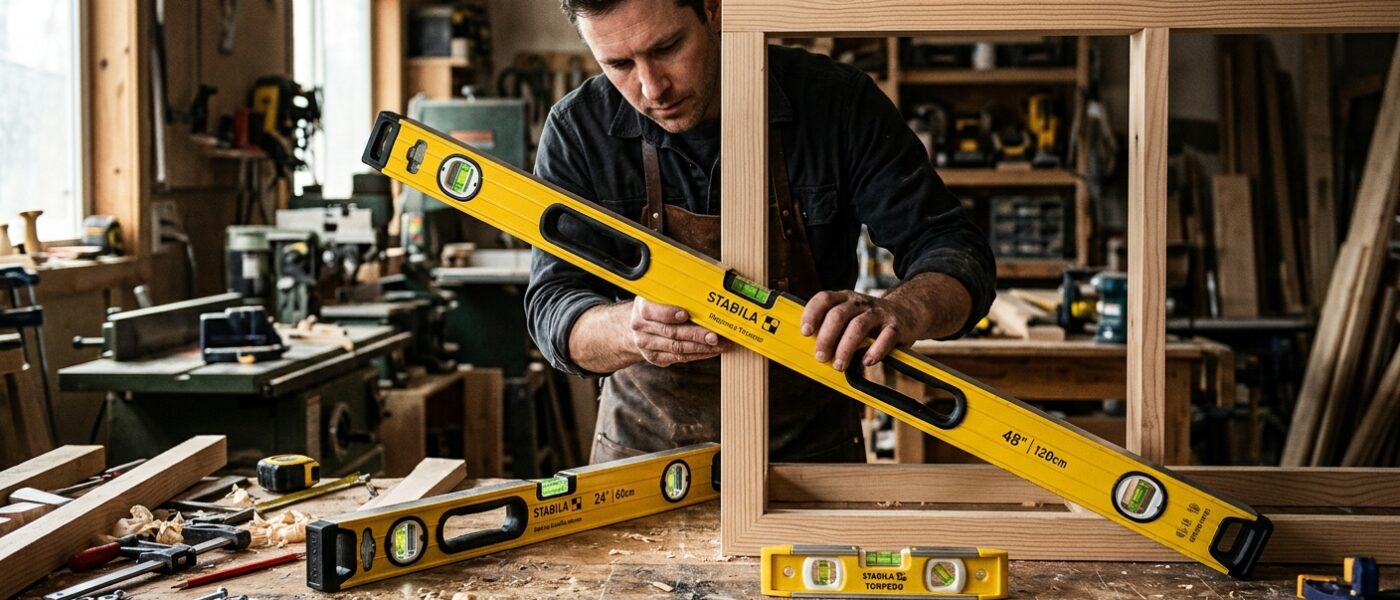
The Milwaukee 48-22-5124 sets the standard in professional box-beam levels; pair it with a Klein Tools torpedo level for your tool belt and you have all the leveling covered for any DIY project.
As an Amazon Associate, we earn from qualifying purchases.
A level is the one layout tool that literally every construction and DIY task depends on. Hanging shelves, setting tile, building walls, installing appliances, aligning fence posts, and running baseboards all require a reference that tells you what truly horizontal and vertical look like. A quality level makes this trivially easy; a cheap or damaged level makes everything look wrong even when you think it is right. This guide covers the levels that earn a permanent place on your tool belt.
Types of Levels
Torpedo Levels
Short (6 to 9 inches), narrow levels with three vials: horizontal, vertical, and 45-degree. Light enough to carry in a tool belt pouch, small enough to use in tight spaces. Perfect for plumbing individual pipes, setting outlet boxes, and quick checks on small surfaces.
Box-Beam Levels (24-inch, 48-inch)
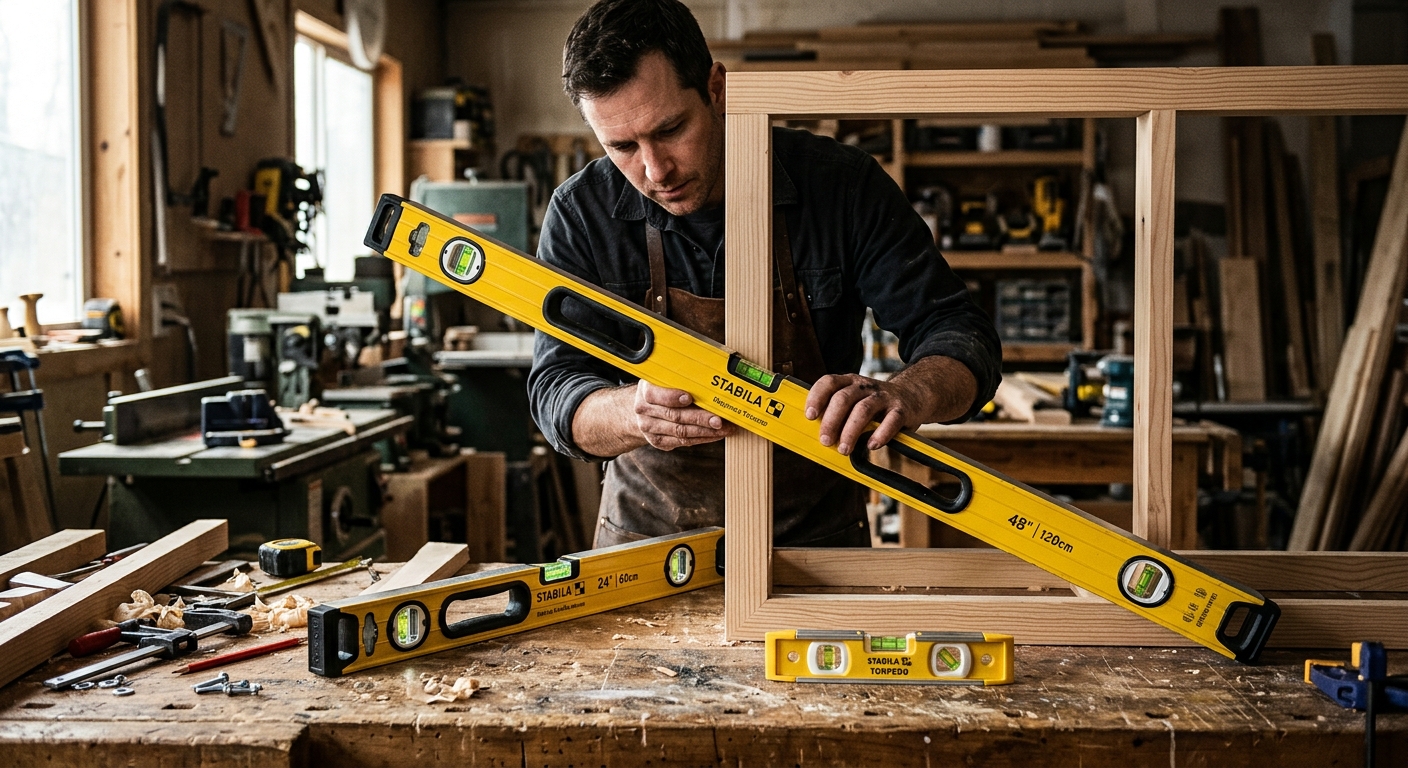
The standard work level. A 24-inch level handles most interior finish work – installing cabinets, setting appliances, hanging shelves. A 48-inch level spans studs in a partition wall, covers a full course of tile, and is the minimum size for leveling countertops. Professional framers often use 72 to 96-inch levels for setting walls.
I-Beam vs. Box-Beam Construction
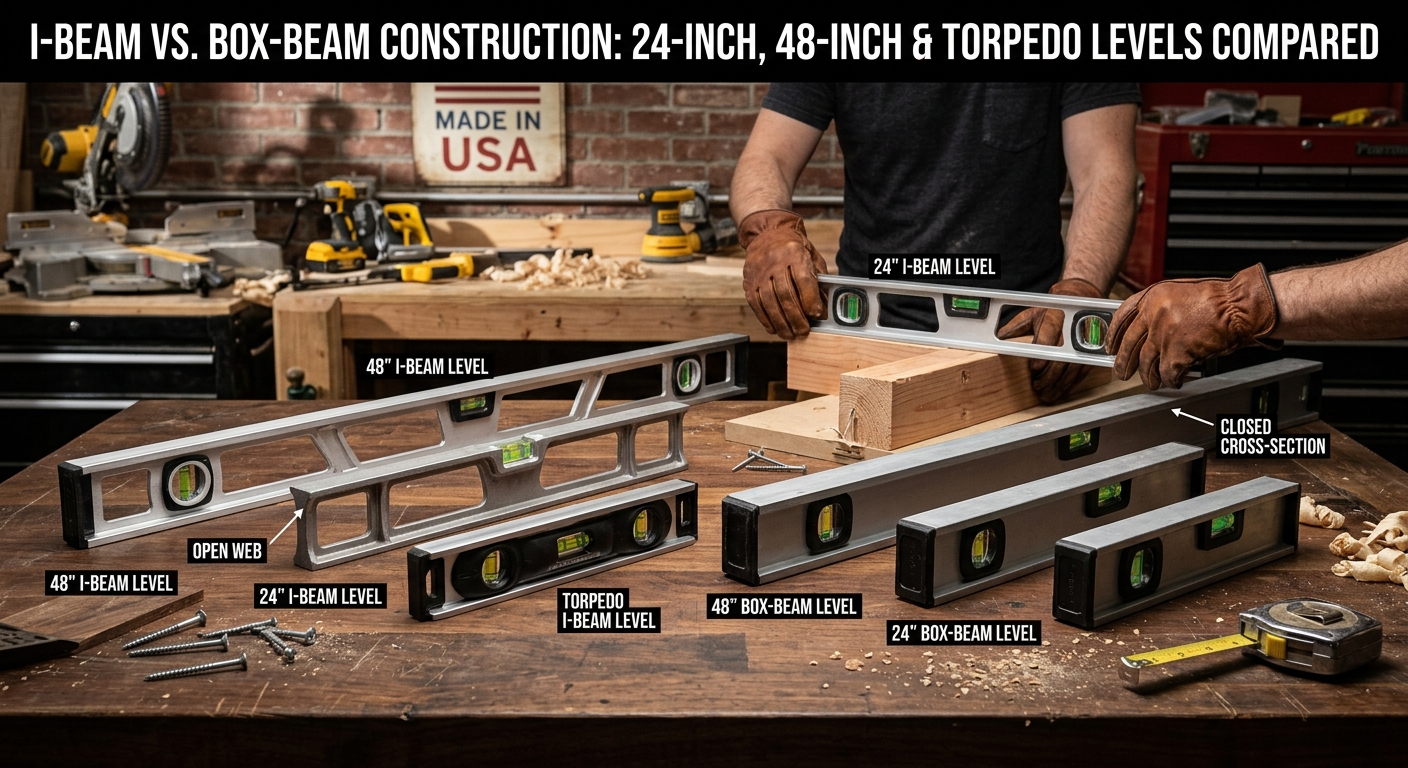
I-beam levels are lighter but can flex under their own weight if not supported. Box-beam construction is more rigid and maintains accuracy along the full length. For 48-inch and longer levels, box-beam is preferred.
Digital Levels
Replace or supplement bubble vials with a digital display showing angle in degrees or slope as a percentage. Useful for setting drains, gutters, and any application where a specific slope is required.
Key Features to Look For
Vial Accuracy
The vial is everything. Quality levels use acrylic vials with a precision-ground bubble that centers clearly and consistently. Budget levels use glass vials or low-tolerance acrylic that make it difficult to read the bubble precisely. Look for vials accurate to 0.0005 inch per inch (0.029 degrees).
Frame Material
Aluminum I-beam or box-beam frames are standard. Milled aluminum edges ensure the level sits flat against the surface it is checking. Plastic frames warp. Magnesium is lighter than aluminum with similar strength – preferred for long professional levels.
Shock Protection
The biggest enemy of a level is being dropped. Rubber end caps and rubber vial protectors prevent the most common impact damage. Some levels include replaceable vials so a damaged vial can be swapped rather than replacing the whole tool.
Magnetic Base
Torpedo levels and some box-beam levels include rare-earth magnets on one face, allowing hands-free attachment to metal pipe, conduit, and structural steel. Extremely useful for plumbing and HVAC work.
Our Top Picks
1. Milwaukee 48-22-5124 (48-Inch Box Beam)
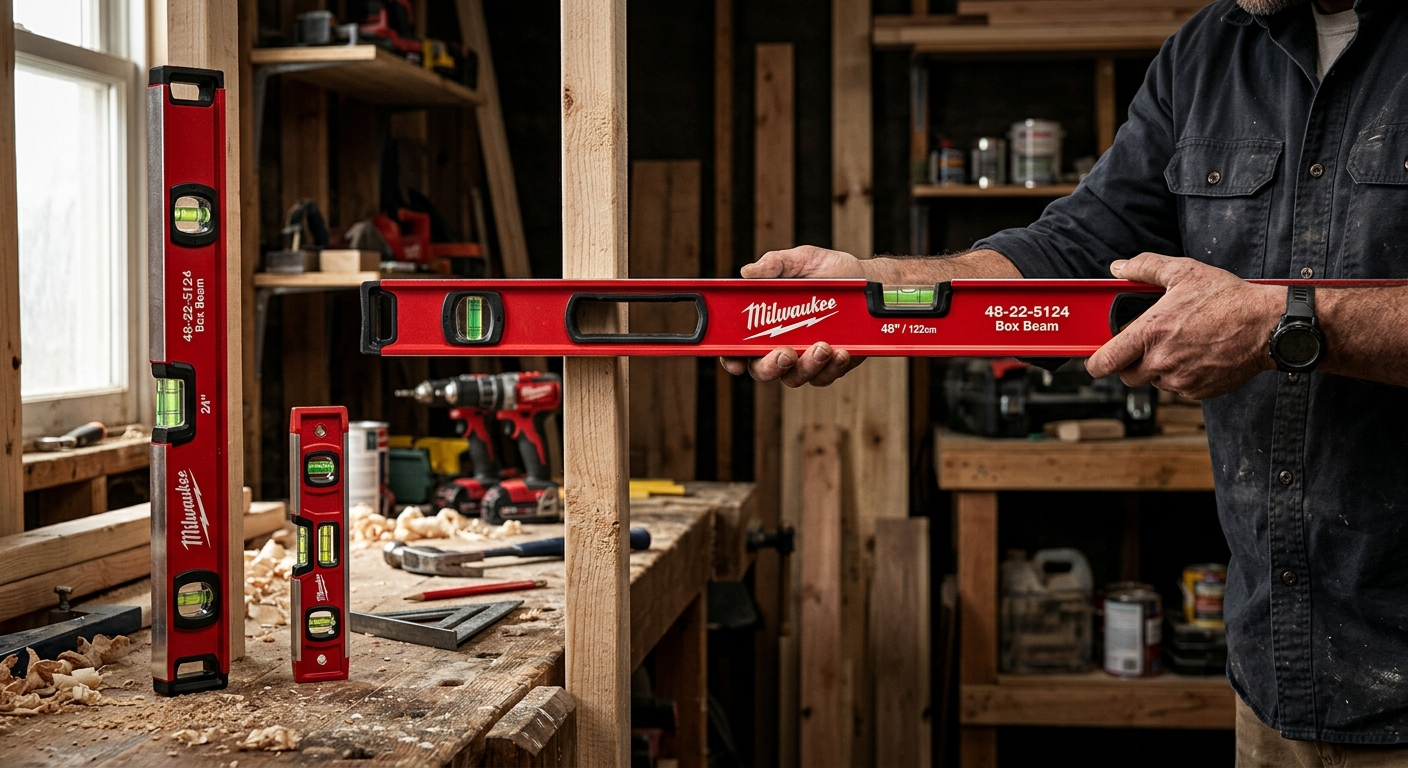
The current benchmark in professional-grade levels. The box-beam construction is fully sealed against dust and moisture, the vials are accurate to 0.0005 inch per inch, and the over-mold rubber on the ends and vial windows protects against drops. The magnets on the bottom face are strong enough to hold the level hands-free on metal studs. Highly recommended.
2. Stanley FatMax 42-474 (48-Inch)
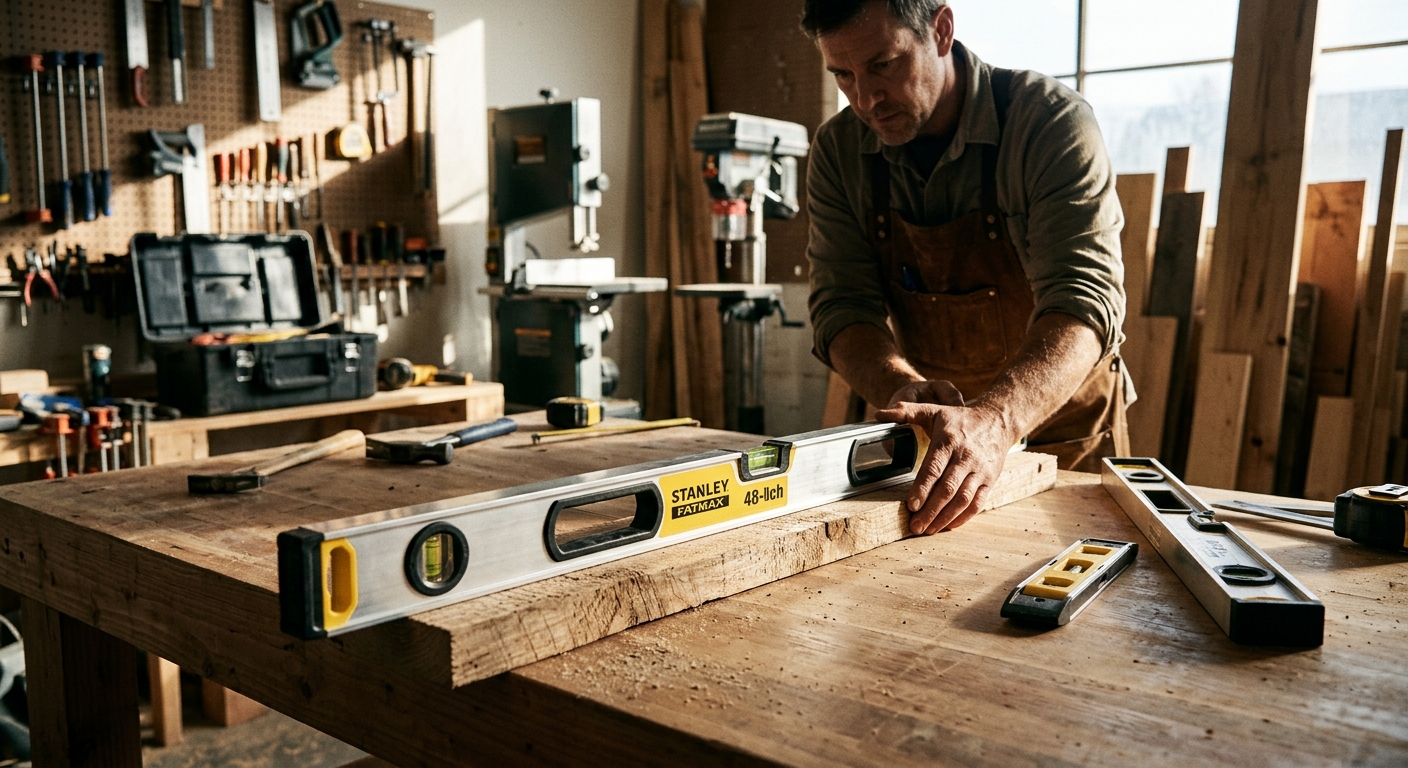
An industry staple for over a decade. The FatMax uses a reinforced frame, color-coded vials, and shock-resistant end caps. Not quite as rigid as the Milwaukee box beam, but accurate, durable, and widely available. An excellent value at its price point.
3. Empire Level TRUE BLUE 24-Inch Box Beam
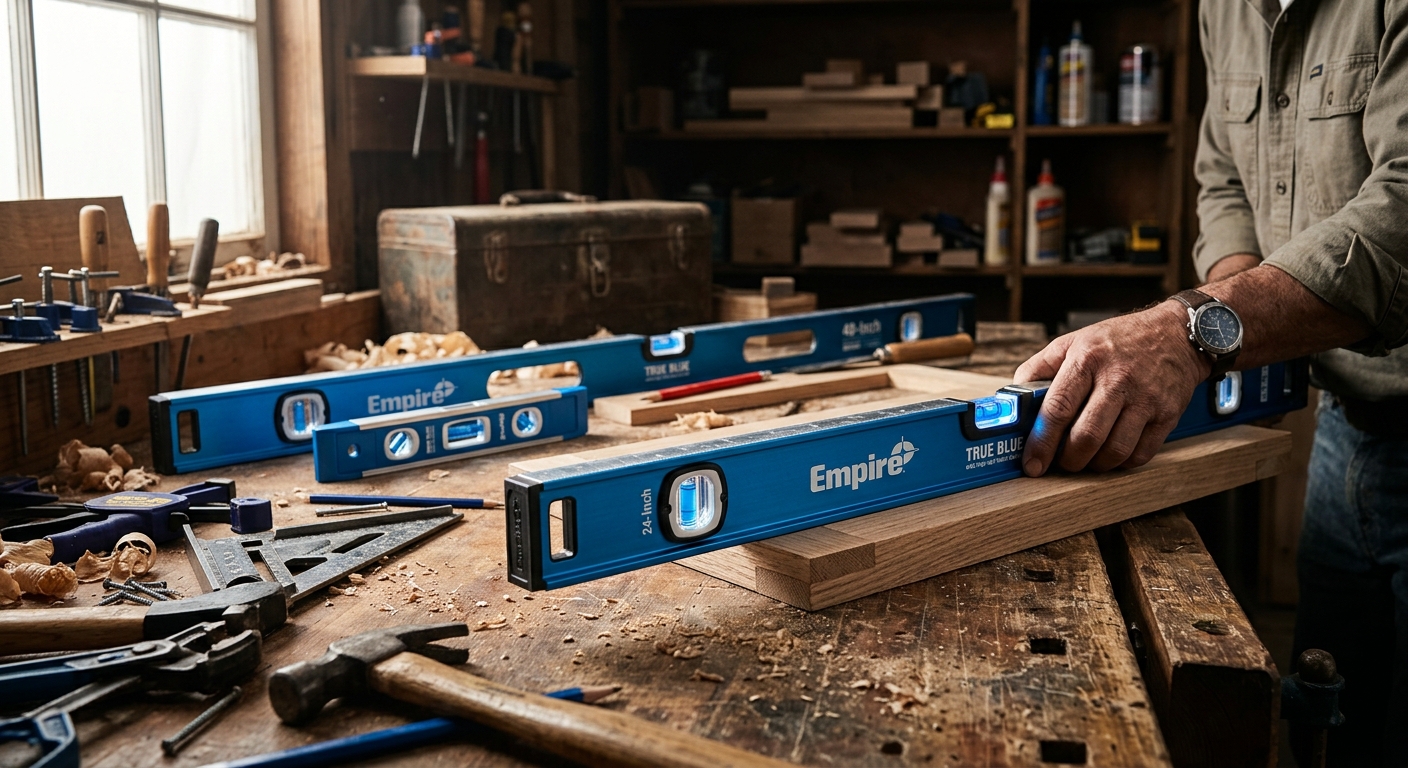
Empire’s TRUE BLUE vials use a precision-ground center line that makes the bubble center easy to see even in low light. The 24-inch size is perfect for cabinet installation, plumbing fixtures, and finish work. Solid aluminum construction with excellent vial accuracy.
4. Klein Tools 935-4V Torpedo Level (9-Inch Magnetic)
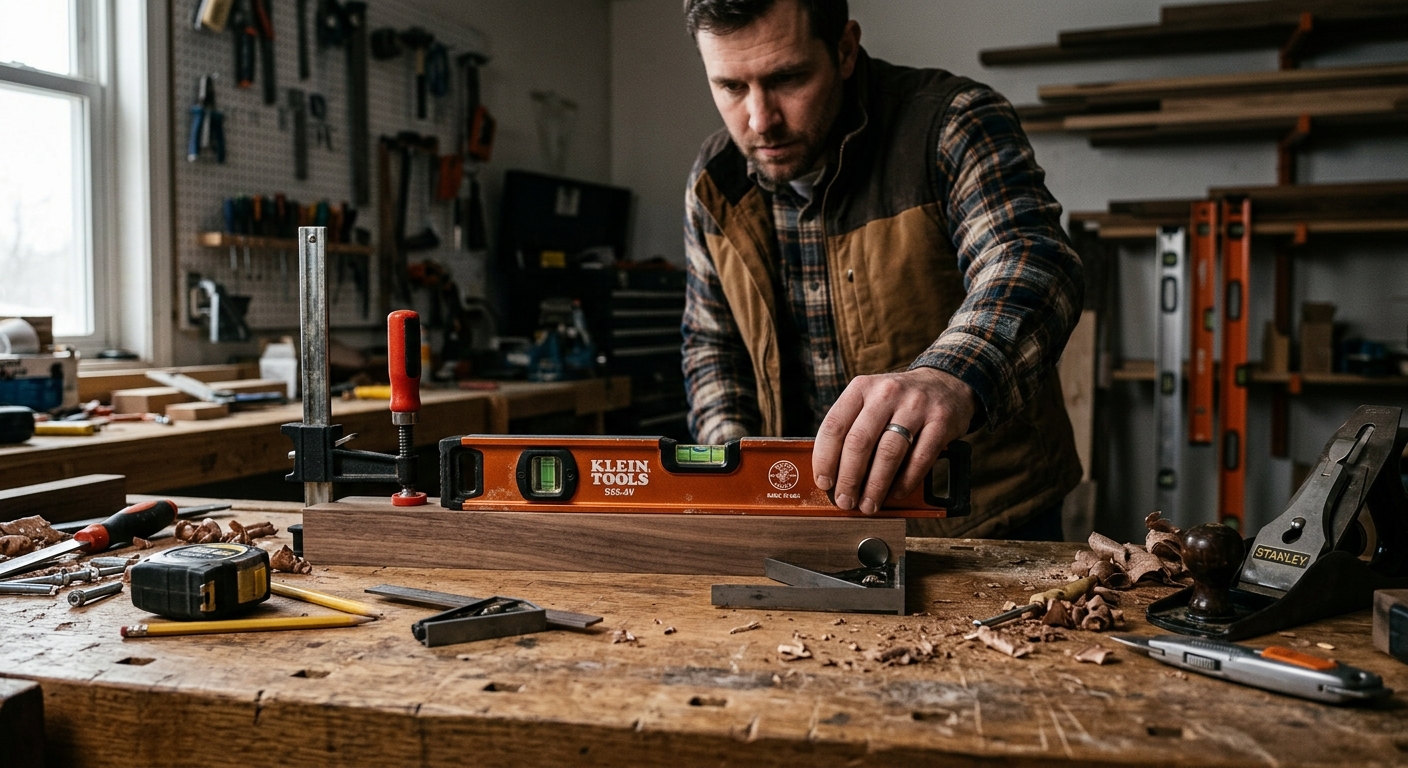
The best torpedo level for electricians and plumbers. Three vials (horizontal, vertical, 45 degrees), powerful magnets on the bottom, a ruler edge, and a compact form that clips to a tool belt. Klein makes tools for trades professionals – this torpedo level is built accordingly.
5. Johnson Level 1717-7200 (72-Inch Aluminum)
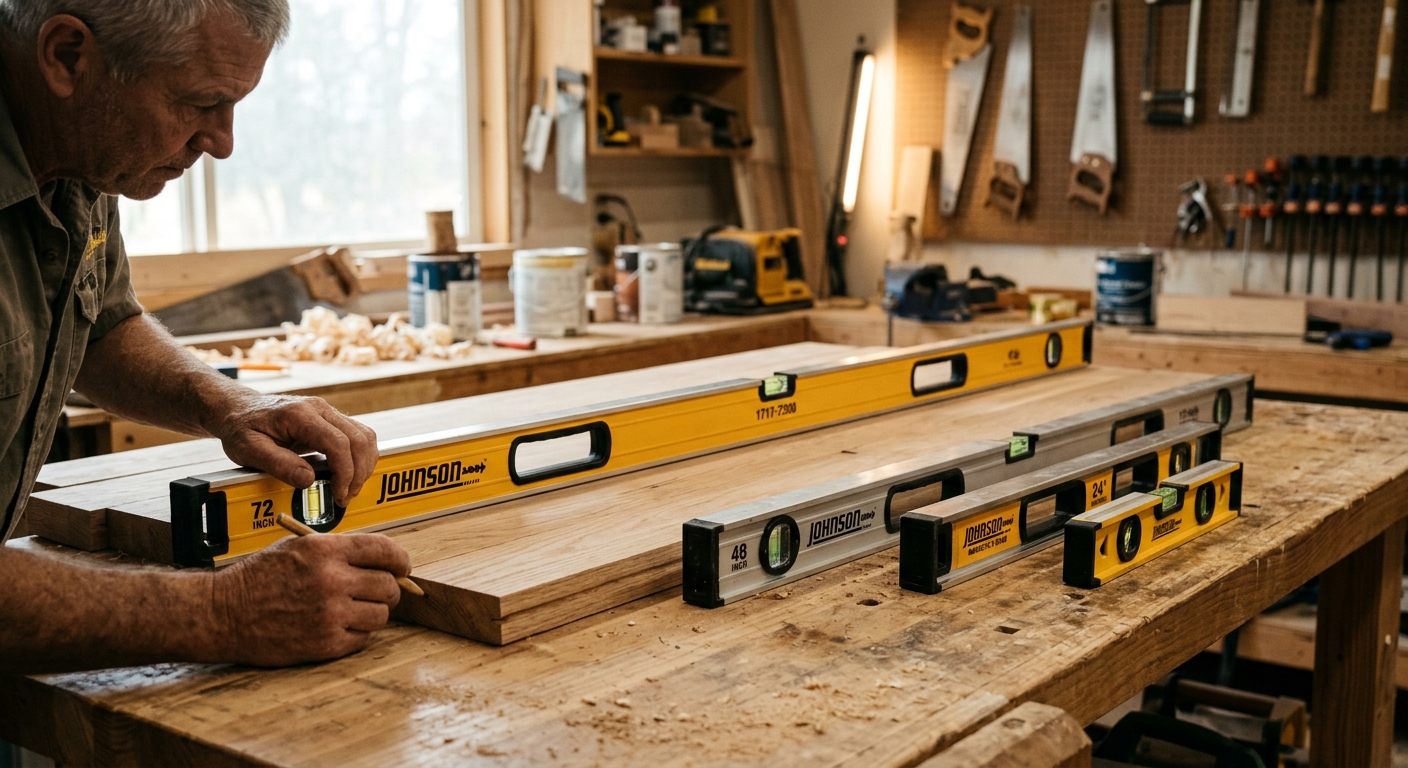
For framers, masons, and tile setters who need a longer reference: the Johnson 72-inch provides a full-wall-height reference surface, sturdy aluminum I-beam construction, and three accurate vials. At this length, accuracy across the full span matters – Johnson delivers it at a reasonable price.
How to Check Your Level for Accuracy
- Place the level on a flat surface and note the bubble position.
- Mark the ends of the level with a pencil.
- Flip the level end-for-end (180 degrees) and place it in the same spot between your marks.
- If the bubble reads the same in both positions, the level is accurate. If the bubble shifts, the level is off and should be replaced or recalibrated.
FAQ
How often should I check my level for accuracy?
At minimum, once per season or after any significant drop. Levels dropped from scaffolding or knocked hard on a hard floor can go out of calibration even if the frame looks intact.
Can I use a smartphone level app instead?
For rough checks, yes – but smartphone levels are not calibrated to tool-grade accuracy and vary between devices. For hanging a picture, fine. For tile work, cabinet installation, or structural layout, use a real level.
What length level should I buy first?
A 24-inch level handles most homeowner tasks. If you do any framing or tile work, add a 48-inch. A torpedo level is the useful everyday carry tool that lives in the tool belt.
Affiliate Disclosure: DIY Arsenal participates in the Amazon Associates Program and other affiliate programs. When you purchase through links on this site, we may earn a small commission at no additional cost to you. We only recommend products we have personally tested and genuinely believe in.